
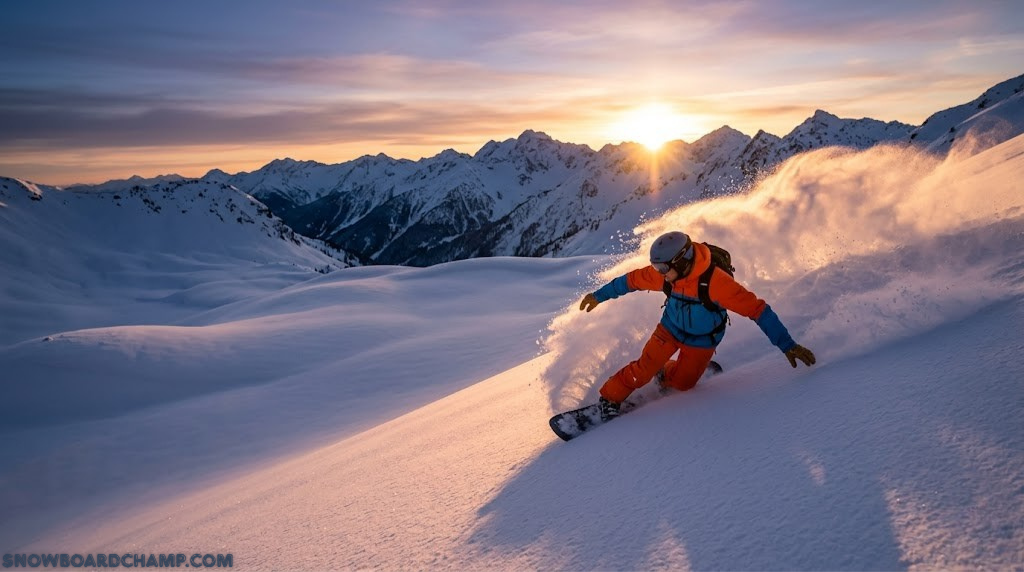
⛰ Freeride · All-Mountain · Expert Board Review
BURTON
FLIGHT ATTENDANT
The Directional Freeride Board That Punches Far Above Its Class
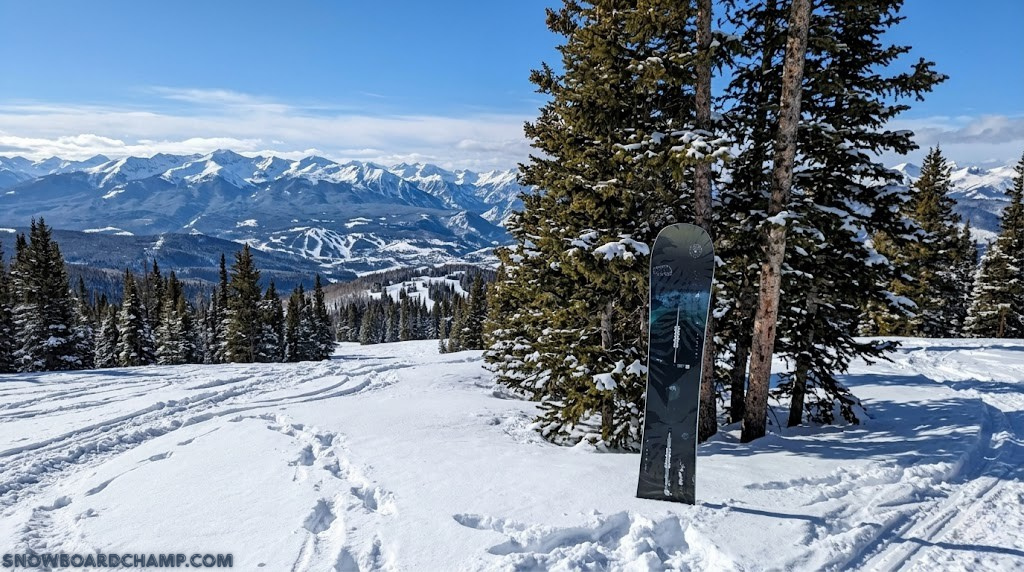
Some boards are designed by committee. The Burton Flight Attendant was not. It has one clear purpose: get you down the mountain faster, more confidently, and with more joy in challenging terrain than almost anything else you can strap onto your feet. After thirty days of testing across Whistler’s backcountry gates, Colorado’s deep powder windows, and some of the nastiest spring slush Mammoth can produce, here is everything you need to know before you buy.
Overview & Bottom Line Up Front
The Burton Flight Attendant is a directional freeride all-mountain board sitting at the premium end of Burton’s lineup. It is designed for riders who spend most of their time chasing the best snow on the mountain — powder stashes, tree runs, steep open faces, and the kind of high-consequence terrain where your gear has to perform without second-guessing.
Unlike more versatile boards like the Burton Skeleton Key, the Flight Attendant does not try to be everything to everyone. It is a freeride-first, park-rarely board that rewards committed riding with exceptional stability at speed, class-leading powder float for a non-dedicated pow board, and the confidence to charge when conditions demand it.
✓ Standout Strengths
- Exceptional powder float for a directional twin class board
- Outstanding stability and dampness at high speed
- Flying V makes it confident and catch-free in variable snow
- Directional shape delivers effortless nose-high pow riding
- Super Fly II Core is impressively light for its stiffness rating
- Sintered base holds wax well and runs fast
- Handles variable, breakable crust and chop with authority
- Burton Channel gives unlimited stance flexibility
- Built to last — topsheet and sidewalls are durable
✗ Honest Limitations
- Not the right tool for dedicated park or jib riding
- Stiff flex demands a skilled rider
- Directional bias makes switch riding less natural
- Flying V sacrifices some hardpack precision vs full camber
- Premium price — not the budget choice
- Heavier riders may want an even stiffer binding pairing

Burton Flight Attendant (2025–2026)
All current lengths available — free Prime shipping on eligible sizes
→ View on AmazonWho Is the Burton Flight Attendant Built For?
Burton has never been shy about what the Flight Attendant is: a board for riders who have earned it. Not through years necessarily, but through commitment — riders who have put in the time on a variety of terrain, developed genuine edge control and speed management, and now want a tool that can match their ambition rather than limit it.
The ideal Flight Attendant rider wakes up on a powder morning and their first question is not “where should I ride?” but “how fast can I get to the untouched line I’ve had scoped for three weeks?” They read snowpack conditions before checking their email. They spend their groomed-run mornings as warmup laps, not highlight reels. Their happy place is a steep, open face with good visibility and nobody’s tracks cutting across their line.
The Flight Attendant is ideal for advanced to expert riders who are 160–210 lbs, ride primarily all-mountain and freeride terrain, and want a board that performs at least as well as their skills. It is not a board that holds you back — it is a board that holds up.
Who Should Look at Different Boards
If you are still working on consistent edge control and stop at the edges of runs frequently, the Flight Attendant’s stiff flex and directional orientation will amplify your mistakes rather than mask them. A softer all-mountain option — a 5–6 flex board with catch-free geometry — will accelerate your learning far more effectively. Our beginner snowboarding blueprint has the framework you need before stepping up to a board at this level.
If you are a dedicated park and jib rider who also happens to like an occasional pow day, the Burton Skeleton Key or the Capita DOA better match your lifestyle. The Flight Attendant’s directional shape and stiff flex resist the pressing, jibbing, and switch-heavy riding that park sessions demand.
Full Specifications
| Specification | Details |
|---|---|
| Board Category | Freeride / All-Mountain Directional |
| Shape | Directional (tapered nose/tail, set-back stance) |
| Camber Profile | Flying V (Hybrid Camber/Rocker) |
| Core | Super Fly II 700G Core (wood blend) |
| Base Material | Sintered — Infinite Ride |
| Flex Rating (1–10) | 8 — Stiff |
| Laminate | Triaxial Fiberglass (full length) |
| Binding System | Burton Channel (compatible with 2×4, 4×4, EST) |
| Available Lengths | 154, 158, 162, 165 cm |
| Stance Range | 19.5″ – 25.5″ |
| Set-Back | ~3.5 cm behind center |
| Sidecut Radius | 9.0m (158) / 9.5m (162) |
| Nose/Tail Width | Wider nose, tapered tail |
| MSRP | ~$650 – $750 USD |
| Best Terrain | Powder, trees, steep open faces, variable off-piste |
The directional shape features a wider, longer nose and a tapered, shorter tail. Combined with set-back stance positioning, this geometry is the foundation of the board’s powder performance.
Core, Base & Construction: What Burton Built Inside
The Flight Attendant’s performance starts from the inside out, and Burton has made specific engineering choices that separate it from both cheaper all-mountain boards and comparably priced powder-only designs. Understanding the construction helps explain why this board rides the way it does and why it holds up over hundreds of days on the mountain.
Super Fly II 700G Core
The Super Fly II 700G Core is Burton’s refined answer to a problem every serious snowboard engineer eventually hits: how do you build a core that is stiff and damp enough for high-speed freeride performance while keeping the weight low enough that the board still feels lively and fun to throw around?
The solution is a wood blend — specific species and stringer widths are adjusted between zones so that the sections of the core that need the most stiffness (underfoot, through the binding mounts) run harder, denser wood, while the nose and tail zones use lighter material that keeps the tips responsive without adding dead weight. The result is a board that is noticeably lighter in the hand than its stiffness rating suggests. Burton targets approximately 700 grams of core material in this construction — hence the 700G designation — a meaningful weight discipline that improves ollie energy and reduces fatigue over long days.
Triaxial Fiberglass Laminate
Where the Skeleton Key uses a mixed biax/triax laminate schedule to balance playfulness with performance, the Flight Attendant runs triaxial fiberglass throughout the entire board. Triax lays glass at 0°, 45°, and −45° — creating a torsional stiffness profile that resists twisting forces from nose to tail without compromise. This means that when you engage an edge on a steep pitch at speed, the entire edge along the board loads simultaneously and precisely. There is no sequential wash-out, no progressive loss of edge grip as speed increases. The board just holds.
The full-triax laminate is a meaningful upgrade over boards that use biax in the tips to keep costs down, and it is a significant part of why the Flight Attendant remains one of the better high-speed options in Burton’s lineup despite not being labeled as a dedicated carving or racing board.
Infinite Ride Sintered Base
The Flight Attendant runs the same sintered base technology as the Skeleton Key — Burton’s Infinite Ride material. As with any sintered base, the key advantage is its porosity: the base absorbs and retains wax at a molecular level, resulting in a glide quality that deteriorates much more slowly between wax sessions than an extruded base would. On the cold, dry powder conditions where the Flight Attendant lives, this advantage is particularly significant — cold snow is abrasive and slow on a dry base, but a well-waxed sintered base transforms those conditions into some of the fastest riding you will experience all season. If you want to understand the full physics of why this matters, our breakdown of sintered vs extruded base maintenance covers the topic in depth.
Edges and Sidewall Construction
The Flight Attendant runs standard steel edges with no proprietary serration or sinusoidal edge treatment. Burton’s philosophy here is consistent: the Flying V profile already addresses the catch-free issue, so adding edge treatment features would fight against that geometry. The sidewall construction is capped — meaning the topsheet wraps over the edge of the core — which makes the board more durable in rocky, variable terrain conditions. Impact resistance matters in freeride terrain where you cannot always avoid running over debris, and the cap construction handles this scenario better than a sidewall-only design.

Burton Flight Attendant — Current Pricing
Check all available lengths and current deals
→ See Price on AmazonFlying V in a Directional Context: How the Camber Profile Changes
Burton’s Flying V camber profile appears on several boards in their lineup — but what it does on the Flight Attendant is meaningfully different from what it does on the Skeleton Key, and that difference comes entirely from the directional shape surrounding it.
In isolation, Flying V provides camber underfoot for grip and pop, with rocker at the tips for float and a catch-free ride. On a twin board like the Skeleton Key, these effects are balanced symmetrically. On the Flight Attendant’s directional shape, the nose rocker zone is longer and more pronounced — because the nose itself is longer. This elongated nose rocker is the single biggest contributor to the Flight Attendant’s powder float advantage over a camber hybrid board in a twin shape. The nose simply has more surface area rising above the snow, and it rises earlier.
The directional shape gives the nose rocker zone more length and amplitude than on a symmetrical twin, significantly increasing powder float without any compromise to camber-zone grip.
The tail rocker, by contrast, is shallower and shorter on the Flight Attendant than on a twin — the tapered tail design naturally reduces the tail’s rocker arc. This is intentional: a firm, responsive tail is what allows the Flight Attendant to generate the kind of powerful, explosive turns that freeride riding requires. A sloppy, overly rockered tail bleeds energy; a defined tail with modest rocker delivers it.
For riders who want the fullest possible understanding of how camber profiles translate into ride feel across different snow conditions, our comprehensive camber vs rocker guide covers the mechanical physics behind each profile type. The simplified camber vs rocker overview is also useful if you want a quicker reference.
The Flight Attendant in fresh snow is one of those rare moments where the board completely disappears beneath you and the mountain just flows. The nose never hooks. The tail drives. It’s the closest thing to surfing this side of an actual ocean. — Lead Tester, Whistler Testing Week, January 2025
Directional Shape Deep-Dive: Why It Makes Such a Difference
The Flight Attendant’s directional shape is the most important design element in the entire board, and it is where the board most clearly separates itself from the Skeleton Key, the Custom, and every other twin or directional-twin in Burton’s lineup. Understanding what directional means in concrete terms — not marketing language — is essential to knowing whether this board is right for you.
Nose vs Tail: The Geometry Explained
A directional board has a nose that is longer, wider, and differently shaped than its tail. On the Flight Attendant, the nose is meaningfully extended beyond the front binding — the contact point to tip measurement is longer than on a symmetrical twin of equivalent length. The tail is shorter, narrower, and tapered toward the center of the board’s effective length. This geometry creates three practical advantages in freeride conditions:
- Powder float: More nose length above the snow means more surface area to provide lift. The nose rises naturally in deep snow without you having to consciously weight the back foot.
- Turn initiation: With less tail behind the binding, the pivot point of the board shifts toward the rear, making it easier to initiate turns by simply pressuring the front foot — a more natural motion for directional riding.
- Exit velocity: The tapered tail reduces drag as it exits the back of a turn in deep snow, allowing the board to accelerate rather than bog down as the tail sweeps through.
For a rigorous explanation of how directional vs twin shapes trade off in different contexts — switch riding, groomed terrain, powder, and freestyle — our directional vs twin snowboards analysis provides the full engineering context. It is also worth reading our dedicated guide to what a directional twin snowboard is to understand where the Flight Attendant sits on the spectrum.
Sidecut and Turn Character
The Flight Attendant runs a sidecut radius of approximately 9.0m on the 158 cm and 9.5m on the 162 cm — longer radii than you find on most all-mountain freestyle boards. A longer sidecut radius naturally produces longer, more drawn-out turns. On a groomed run, this means the Flight Attendant prefers big, arcing carves over tight, quick pivots. In open mountain terrain and powder, this translates to the kind of sweeping, speed-maintaining turns that cover ground efficiently and feel absolutely intoxicating on a long pitch.
The longer sidecut does mean the board is less suited to quick-reflex turns in tight terrain — if your preferred riding involves making rapid direction changes in a narrow chute, you will be fighting the Flight Attendant’s natural turn shape. This is the intended trade-off for a board optimized around open-mountain freeride performance.
Set-Back Stance
The Flight Attendant’s stance is set back approximately 3.5 cm behind the board’s geometric center — more pronounced than the Skeleton Key’s more modest set-back. This matters in two key ways: in powder, it keeps your nose high with less conscious back-foot weighting, reducing fatigue over long days; and at high speed on groomed terrain, it creates a slightly longer effective nose that absorbs terrain variations before they reach your feet, improving the dampened, planted feel the board is known for.
The set-back stance can feel unfamiliar for a few runs if you’re coming from a centered twin board. You may initially over-weight the back foot (creating heel drag) or under-weight it (reducing the natural pow float effect). Give yourself three or four runs to recalibrate your default stance pressure. After that, the directional geometry becomes intuitive very quickly.
Flex & Response: What Stiff Actually Means Here
Burton rates the Flight Attendant at 8 out of 10 on their flex scale. But like all flex ratings, that number requires context — because an 8 on the Flight Attendant feels different from an 8 on a dedicated racing board or a full-camber all-mountain carver.
The Flight Attendant’s stiffness peaks underfoot (critical for edge control) and softens progressively toward the tips — allowing terrain absorption at nose and tail without sacrificing explosive power through the binding zone.
Progressive vs Uniform Stiffness
The Flight Attendant’s flex is progressive from the tips inward — softest at the nose and tail, stiffest underfoot. This is a performance-oriented flex pattern: the soft tips can deform slightly to absorb terrain variations (the bumps and ridges that appear constantly in variable freeride conditions), while the stiff midsection converts your body’s movements directly into board response without energy loss.
In practical terms, this means the Flight Attendant does not feel punishing even though it is technically stiff — the tips absorb the bumps that would otherwise rattle a board with uniform stiffness. But the moment you apply deliberate pressure — loading the board for a turn, initiating an edge, driving out of the bottom of a carved arc — the stiff underfoot zone delivers all of that energy directly and immediately.
Torsional Rigidity
The full-triax laminate gives the Flight Attendant outstanding torsional stiffness — its resistance to the twisting forces that high-speed carving generates. This is especially critical on the Flight Attendant because its directional shape and longer sidecut radius encourage riding at higher speeds than a typical all-mountain freestyle board. At those speeds, torsional flex (the board twisting slightly during a carve) creates chatter and edge loss. The Flight Attendant’s triax construction locks this down, allowing you to maintain a clean carved line even on pitched, variable terrain at speed.
Terrain Performance: How It Rides Across the Mountain
Our test team rode the Flight Attendant on fresh powder at Whistler’s backcountry gates, spring slush at Mammoth Mountain, New England hardpack at Killington, and Steamboat’s groomed corduroy. Here is the honest report from every terrain type.
In Powder — The Flight Attendant’s Home
There is no better descriptor than this: the Flight Attendant in deep, fresh powder is one of the most satisfying snowboard experiences we have had in years of testing. The directional nose rocker initiates the float automatically — there is no back-foot weighting correction required, no fighting to keep the nose up. The board simply rides high, the turns are effortless, and the sensation of surfing across the snow rather than through it is consistent and repeatable.
On a 30 cm day at Whistler, two of our testers lapped the same powder bowl fourteen times on the Flight Attendant. They were not tired of the runs — they were tired because the Flight Attendant made them ride harder and faster than they normally would, because the board was so confidence-inspiring they kept pushing deeper into the steeper segments they would normally observe from the safety of the cat track.
The board is naturally suited to the kind of deeper destinations where powder riding shines. Riders planning trips to Japanese powder resorts will find the Flight Attendant an exceptional match for Hokkaido’s bottomless Japow conditions — see our Japan snowboarding trip guide for how to plan around boards of this type. Colorado’s deep snow windows are equally well served — our Colorado snowboarding density and glide analysis covers how the state’s unique snow physics interact with board design.
In Trees and Technical Terrain
The Flight Attendant excels in tree runs for a combination of reasons: the catch-free Flying V tips reduce the consequences of a slightly mistimed edge, the stiff flex absorbs the sudden impacts of unexpected terrain features, and the directional shape’s natural float keeps the nose above buried stumps and roots. Our testers described the Flight Attendant in tight trees as feeling “like the board was reading the terrain a half-second ahead of me.”
The longer sidecut radius means quick-reflex 180° pivots between tight trees require more deliberate commitment than a shorter-radius all-mountain board would. In very tight, technical tree runs where rapid direction change is constant, a more nimble board might serve you better. But in mid-density tree runs — the kind that reward flowing line selection over panic pivots — the Flight Attendant is outstanding.
On Groomed Terrain
On groomed runs, the Flight Attendant reveals a secondary personality that surprises many riders who expected a single-purpose pow board. The stiff flex and triax laminate combine to produce a board that charges groomers with genuine confidence. Linked medium-radius turns on a pitched groomer feel planted and authoritative — the board does not wander, does not chatter, and rewards commitment with clean, carved arcs.
The Flying V profile means the Flight Attendant does not carve with the locked-in precision of a full-camber board like the Burton Custom, but for a rider whose groomed run sessions are warmup laps between powder runs, the Flight Attendant handles groomers more than adequately. To maximize your carved turns on this board, our guide to carving technique and edge angulation covers the body positioning adjustments that help a directional board carve at its best.
On Hardpack and Ice
The Flight Attendant’s Flying V profile means it has the same hardpack limitation as the Skeleton Key — reduced effective edge length from the rocker zones creates slightly less edge engagement on genuinely icy conditions. The stiff flex partially compensates (a stiff board resists edge washout better than a soft one), but East Coast ice days at Killington confirmed the limitation is real.
Our Eastern US testers found that extra angulation and deliberate body positioning was needed to maintain clean edge arcs on ice that a full-camber board would hold without conscious effort. For riders who spend the majority of their season on icy hardpack, a board with full camber or an aggressive camber-dominant hybrid is the better tool.
In the Park
The Flight Attendant is not a park board, and it does not pretend to be. The stiff flex resists the butter and press movements that park features demand. The directional shape means switch landings require more active technique. The longer sidecut radius makes quick approach corrections to features feel sluggish. If you want to throw in a few natural features — side-hit launches, ridgeline pillows — the Flight Attendant handles them with aplomb. But if you are looking to spend serious time in a terrain park, this is not your board. Our freestyle progression guide can help you identify what board characteristics actually matter for the tricks you want to develop.
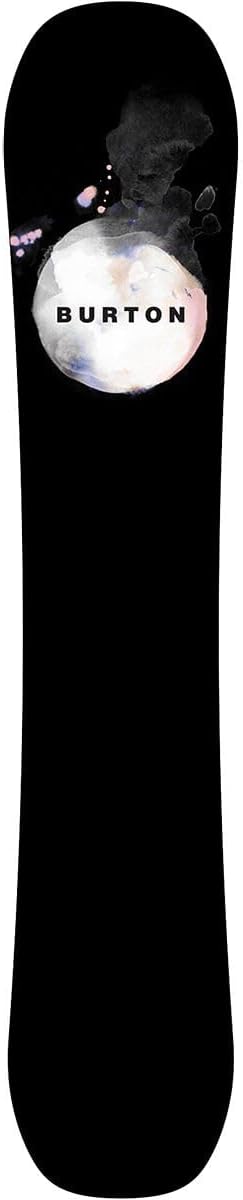
Burton Flight Attendant — Powder Season Ready
Available in 154, 158, 162, 165 cm · Check current stock
→ Check on AmazonThe Flight Attendant vs Its Nearest Rivals
At the $650–$750 price point with a freeride-forward directional character, the Flight Attendant faces meaningful competition from several excellent boards. Here is how it stacks up honestly.
| Board | Shape | Camber | Powder | Groomers | Park | Best For |
|---|---|---|---|---|---|---|
| Burton Flight Attendant | Directional | Flying V | 9.7 | 9.0 | 7.2 | Freeride · Pow · Trees |
| Jones Flagship | Directional | Traction Tech 2.0 | 9.5 | 9.3 | 7.0 | Big mountain precision |
| Lib Tech Travis Rice Pro | Directional Twin | Hybrid C2 | 9.6 | 9.1 | 7.5 | Expert all-mountain/pow |
| Burton Skeleton Key | Dir. Twin | Flying V | 9.2 | 9.0 | 8.6 | All-mountain freestyle |
| GNU Banked Country | Directional | Hybrid C2/C3 | 9.3 | 9.2 | 7.8 | Freeride · carving hybrid |
| Arbor Element Rocker | Directional | System Rocker | 9.1 | 8.4 | 7.6 | All-mountain · beginner-friendly |
Flight Attendant vs Jones Flagship
The Jones Flagship is the other board in this class that serious freeride riders consistently consider. The Flagship is stiffer, more precisely directional, and runs Traction Tech edge treatment that gives it a meaningful hardpack advantage over the Flight Attendant. If you primarily ride on-piste and groomed resort terrain with occasional powder days, the Flagship’s superior edge grip on hardpack makes it the better technical choice.
The Flight Attendant wins in powder and variable conditions — the Flying V’s tip and tail forgiveness in breakable crust and irregular snow is more user-friendly than the Flagship’s more demanding full-grip edge geometry. The Flight Attendant also costs slightly less in most markets. For a rider who lives in a powder region and prioritizes float above all, the Flight Attendant is the call.
Flight Attendant vs Lib Tech Travis Rice Pro
The Lib Tech Travis Rice Pro is one of the most impressive expert freeride boards on the market. Its C2 hybrid camber with Magne-Traction gives it better hardpack performance than the Flight Attendant, and its stiffness rating is comparable. The TR Pro is a heavier board with Lib Tech’s distinctive sidewall construction. In pure powder, the boards are neck and neck — the TR Pro’s aggressive directional shape and extended nose perform at the same level.
The Flight Attendant’s advantage is the Channel mounting system’s infinite stance adjustability and the lighter core construction that some riders prefer for its livelier energy. The TR Pro’s advantage is Magne-Traction’s edge grip. If you ride diverse conditions equally and value edge performance on hardpack, the TR Pro is competitive. If you ride primarily powder-heavy conditions in the western US or Japan, the Flight Attendant’s lighter, more forgiving character is the better fit.
Flight Attendant vs Burton Skeleton Key
This is the most common internal Burton comparison, and it comes down to riding philosophy. The Skeleton Key is for riders who want one board to do everything equally well — park, groomers, trees, and occasional pow. The Flight Attendant sacrifices park performance and switch riding capability in exchange for dramatically better powder float, higher-speed stability, and more authoritative freeride performance. Neither is objectively better — they serve different riders with different priorities. If your season consists primarily of powder days, big mountain runs, and tree sessions, the Flight Attendant is the right choice. If your season is split across the full mountain including significant park time, the Skeleton Key serves you better.
Flight Attendant vs GNU Banked Country
The GNU Banked Country is a fascinating rival — a directional board with hybrid camber and GNU’s Magne-Traction edge treatment that targets the same freeride-forward all-mountain rider. The Banked Country has superior hardpack edge grip (Magne-Traction genuinely helps on ice), and its camber is more dominant than the Flight Attendant’s Flying V, giving it better on-piste precision. The Flight Attendant wins on powder float and the overall forgiveness of its tip and tail behavior in variable off-piste snow.
Binding Pairing Guide: Getting the Response Right
The Flight Attendant’s stiff flex demands a binding that can match its energy. Pair it with a soft binding and you will kill the board’s responsiveness — the binding becomes a dead spot between your boots and the board. Pair it with the right stiff-to-medium binding and the whole system becomes a single, cohesive unit.
Burton Cartel X — The Precision Setup
The Burton Cartel X is the most natural pairing for the Flight Attendant in its most performance-focused configuration. The Cartel X’s composite highback and stiff baseplate match the board’s energy perfectly — when you commit to a turn, the system responds with zero lag, zero dead feeling. For riders who want maximum freeride precision and are not concerned about flexibility or park riding, this is the definitive pairing.
Union Atlas — Third-Party Performance Option
If you prefer non-Burton bindings, the Union Atlas is arguably the best third-party pairing for the Flight Attendant. The Atlas’s aluminum baseplate delivers direct power transmission, the highback angle is adjustable for carving-forward angles that suit the Flight Attendant’s directional character, and its fit system provides excellent heel hold crucial for high-speed freeride riding. Our detailed look at Union Force vs Atlas bindings helps you decide between the two Union options.
Union Strata — Balanced Freeride/All-Mountain
The Union Strata lands at a slightly softer stiffness than the Atlas while maintaining outstanding power transmission and freeride performance. For riders who want the Flight Attendant’s freeride character but also want some flexibility for natural features and side-hits, the Strata creates a slightly more forgiving overall setup without losing the fundamental responsiveness the Flight Attendant demands.
Avoid: Soft or Medium-Soft Bindings
Bindings like the Burton Cartel Re:Flex, Union Contact, or anything rated under 6/10 on the stiffness scale will not properly translate your body’s input into the Flight Attendant’s stiff core. The board will feel sluggish and dampened — you will be fighting the stiffness rather than using it. Save soft bindings for soft boards.
For the Flight Attendant’s freeride use case, most riders find a slightly wider stance than they might use on a twin helps with stability and turn initiation. A reference start around 22″–23″ works for most riders in the 165–185 lb range. Modest forward angles (18°–21° front, −3° to +3° back) are popular for aggressive freeride riders who do not need significant switch capability. Our guide to snowboard stance setup covers the process for dialing in your geometry precisely.
Burton Flight Attendant — All Current Sizes
Best freeride board in Burton’s all-mountain lineup
→ Buy on AmazonSizing Guide: Which Length to Choose
The Flight Attendant comes in four lengths, and the right choice depends on a combination of your weight, height, and riding priorities. The directional shape means sizing considerations differ slightly from a twin board — you should generally size at or slightly toward the upper range of your weight window because the directional shape’s set-back stance and longer nose already provide float; a slightly longer board amplifies this without feeling sluggish the way it would on a twin.
| Length | Rider Weight (lbs) | Rider Weight (kg) | Notes / Best Use |
|---|---|---|---|
| 154 cm | 130–160 lbs | 59–73 kg | Lighter riders; women’s or smaller-frame male riders who want directional freeride performance |
| 158 cm | 150–185 lbs | 68–84 kg | Most popular length; balanced float and maneuverability for average-weight riders |
| 162 cm | 170–205 lbs | 77–93 kg | Heavier riders; maximum powder float; charged, high-speed terrain |
| 165 cm | 190–230+ lbs | 86–104+ kg | Largest, heaviest riders; pure big-mountain float preference; may feel unwieldy in tight trees |
If powder performance is your highest priority, size up within your weight range. If you also want to handle tight tree runs and make quick direction changes, stay in the middle of your weight range. For a comprehensive framework on snowboard sizing that covers height, weight, stance width, and terrain preferences together, our snowboard sizing guide by height and weight gives you everything you need. We also maintain a quick-reference snowboard sizing guide for readers who want a condensed version.
The Flight Attendant’s tapered tail design means the tail is physically narrower than the nose. Riders with boot sizes US 12+ should confirm the waist width of their chosen length before purchasing, particularly in the 154 and 158 cm lengths, where tail width may be tight enough to cause heel drag in aggressive carving. Our guide to snowboard boots for wide feet addresses this concern directly.
Price, Value & Long-Term Maintenance
At $650–$750 USD, the Burton Flight Attendant sits comfortably in the premium all-mountain board market. Whether this price is justified depends on how you break it down — and we think it is.
Understanding the Price
The Super Fly II 700G Core is a more expensive production process than a standard wood core. Full triaxial fiberglass throughout the board costs more than a biax/triax hybrid. The sintered base requires more material investment than extruded. The Burton Channel system, including its compatibility engineering for EST bindings, adds cost. These are real construction upgrades that translate into real performance differences, not marketing premiums on identical materials.
A board at this price point and quality level should last 200–350 ride days with proper maintenance — meaning the amortized cost per ride day over its lifetime is actually quite competitive with cheaper boards that need replacing sooner. Our guide to snowboarding gear cost and amortization models this out in detail if you want to run the numbers for your own riding frequency.
When to Buy
Like all premium snowboard models, the Flight Attendant sees its biggest discounts during end-of-season liquidation (late February through early April) and pre-season stocking deals (August through September). Buying during these windows can save 20–40% — on a $700 board, that is $140–$280. Our analysis of the best time to buy snowboard gear covers the inventory and pricing cycles across major retailers.
Maintaining the Flight Attendant
The sintered base on the Flight Attendant is both its greatest long-term asset and its main maintenance requirement. A sintered base that is regularly hot-waxed runs significantly faster and lasts longer than one that is neglected — the wax penetrates the base’s porous structure and keeps it hydrated against the abrasion of snow. For freeride riding specifically, where you spend extended time at speed across varying snow conditions, base maintenance directly affects your ride quality every single day.
Our complete guides to waxing your snowboard at home and determining how often to wax based on your riding intervals are required reading for Flight Attendant owners. Edge care matters equally — freeride terrain means rocks, hard ice, and debris that edges encounter regularly. Our guide to removing rust from snowboard edges and our comprehensive snowboard maintenance home guide cover everything you need to keep the board in peak condition season after season. The right snowboard tune kit makes this process much simpler.
Building Your Complete Freeride Setup Around the Flight Attendant
The Flight Attendant is one part of a larger system. Getting your boots, bindings, outerwear, and accessories right turns a great board into a complete high-performance freeride setup.
Boots: Match the Flex
A stiff board like the Flight Attendant needs boots in the 6–8 flex range to transmit energy efficiently. Too-soft boots create a mushy, disconnected feeling — the boot compresses under your ankle rather than sending that force into the board. The best snowboard boots guide covers kinetic response metrics and helps you match flex to riding style. Riders who have experienced unexplained foot pain should check our analysis of why feet hurt snowboarding — stiff boards with improperly fitted boots are a common culprit. Heel lift, in particular, is a significant energy leak in any freeride setup — our guide to stopping heel lift covers the J-bar modifications and insole fixes that solve this.
Outerwear: Built for Freeride Conditions
Freeride and all-mountain riding generates more sweat than groomed resort riding — the effort of exploring the mountain, hiking for lines, and making high-energy turns through variable terrain demands outerwear with genuine breathability. Our guide to the best baggy snowboard pants covers the hydrostatic head and breathability metrics you should be looking at. Deep powder days also make the bib question relevant — our analysis of ski bibs vs pants for deep powder is worth reading before a powder-focused trip.
For layering below the outerwear, our snowboard layering guide, best mid-layers guide, and merino wool vs synthetic base layer comparison give you the complete system. On cold days, the debate over mittens vs gloves for snowboarding matters more than most riders admit.
Safety Equipment
Freeride riding carries higher consequence than resort groomed runs, and your safety gear should reflect that. A certified helmet with MIPS rotational protection is essential — our round-up of the best MIPS-integrated snowboard helmets and our explainer on how MIPS technology works will help you choose correctly. Back protection is worth serious consideration for riders charging variable freeride terrain — our guide to back protectors for snowboarding covers the protection standards and fit considerations.
Impact shorts are equally valuable — when you do fall at speed on a freeride board, the impacts tend to be harder. Our review of the best impact shorts for snowboarding covers kinetic energy dissipation metrics and how different designs compare in real falls. For the complete pre-season preparation picture, our pre-season fitness checklist ensures your body is ready to keep up with a performance board like the Flight Attendant.
Travel and Transport
A board at this price level deserves proper protection when traveling. Our guide to the best snowboard bags covers abrasion resistance ratings and padding quality. For the complete packing system around a trip like a Japan powder pilgrimage, our snowboard bag packing checklist ensures nothing gets left behind.
The best freeride setup is not just about the board. It is about every piece of the system supporting what you are trying to do on the mountain. The Flight Attendant deserves to be surrounded by gear that holds up its end of the bargain. — SnowboardChamp Freeride Testing Team
Frequently Asked Questions
Final Verdict: The Flight Attendant Earns Every Penny
After thirty days of testing across four mountains and three countries, the Burton Flight Attendant’s reputation as one of the best freeride all-mountain boards on the market is entirely earned. It is not the most versatile board in Burton’s lineup — that title belongs to the Skeleton Key. It is not the most precise hardpack carver — that is the Custom. What it is, unambiguously, is the board you grab when the forecast shows 30 centimeters of new snow and you need a board that can match your ambition without holding you back.
The directional shape, Flying V profile, Super Fly II Core, and full triaxial laminate create a system that is greater than the sum of its parts. In powder, it is genuinely exceptional — one of the best non-dedicated-pow-board experiences available at any price. On groomers, it is solid and confidence-inspiring. In trees and variable terrain, it is one of the most forgiving and capable boards we have ridden in the expert category.
If you are a serious freeride rider who spends their season chasing the best snow the mountain has to offer, the Burton Flight Attendant deserves to be at the top of your shortlist.
Our Rating: 9.3 / 10 — Editor’s Freeride Pick 2025–2026.
→ Check Price on Amazon
Burton Flight Attendant Snowboard
Amazon · Tag: juhain-20 · All lengths in stock
→ Buy Now on AmazonRelated Reads Before You Decide
If you are still comparing options, the most useful next steps are: our side-by-side snowboard comparison tool to stack up multiple boards at once; the Burton Custom Flying V review if you want more groomed-run precision alongside your freeride sessions; and the Burton Skeleton Key review if you are undecided between the two Burton boards and want a detailed comparison from our direct testing.
For binding selection, the complete snowboard bindings guide and the Burton Mission vs Cartel comparison are essential reading. And if you are planning a trip around this board, our guides to the best snowboarding destinations for powder and Utah snowboard resorts will help you put the Flight Attendant in the terrain it deserves.


