
Utah Snowboard Resorts: Conquer The Greatest Snow on Earth
From the massive terrain of Park City to the legendary steep and deep of Snowbird, this guide unlocks the best Utah snowboard resorts for every type of rider.
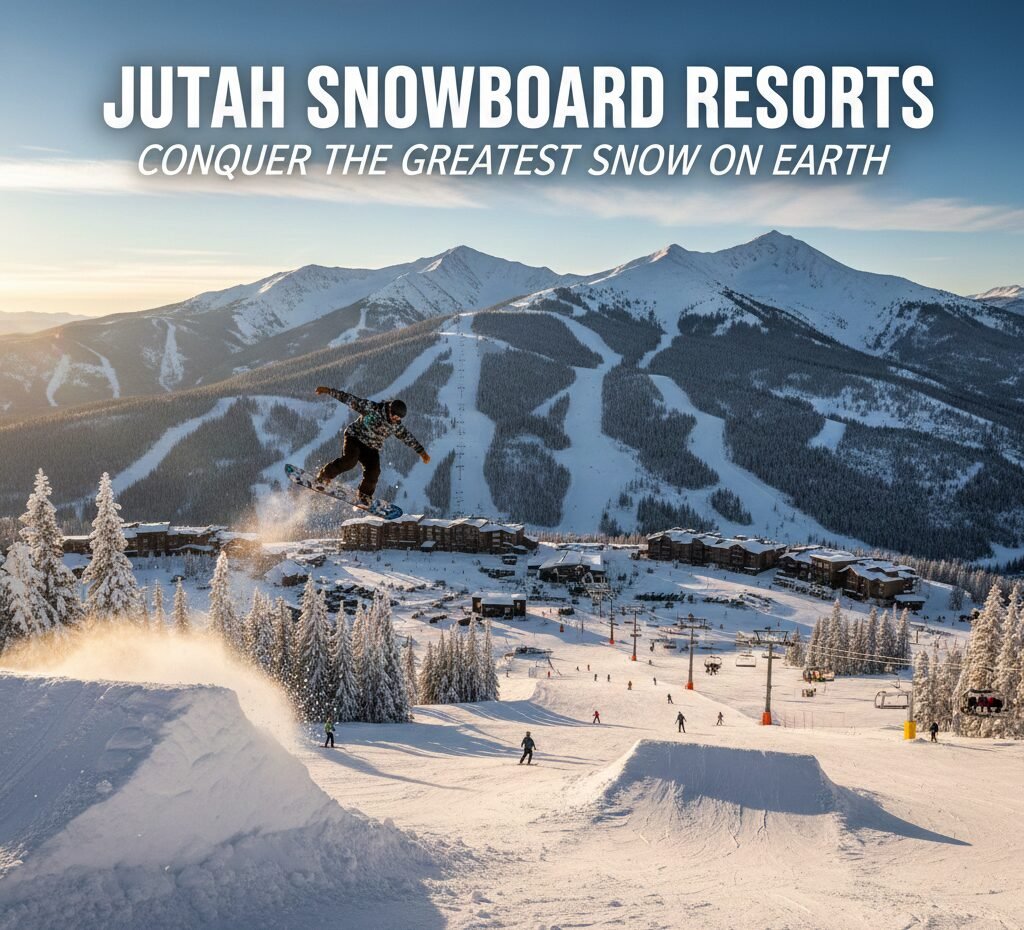
1. Why Utah’s Snow is Legendary: The Lake Effect
Utah’s claim to “The Greatest Snow on Earth” is backed by science. Storms sweep across the Great Salt Lake, picking up moisture that falls as ultra-light, low-density powder on the Wasatch Mountains. This creates an average of 500 inches of annual snowfall with a moisture content often below 8%—making it some of the driest, most forgiving powder in the world. It’s not just marketing; it’s meteorology.
Pro Tip: Utah’s dry snow is perfect for learning to ride powder. It’s less dense and more forgiving than coastal snow. A good all-mountain board with a directional twin or directional shape works wonders here. For more on choosing the right profile, check out our guide on camber vs rocker snowboard profiles for control and float.
2. When to Go & What to Expect
The season runs from mid-November to late April. Prime time is January through March, with the deepest base and most frequent storms. February is typically the snowiest month. Spring riding in March and April offers longer, sunnier days and corn snow. Crowds peak around holidays (Christmas, New Year’s, President’s Day). For fewer crowds and good snow, target late January or early March.
3. Resort Overview: The Big Players
Utah’s resorts are concentrated in two main areas: The Park City Area (east of Salt Lake City) and Little Cottonwood & Big Cottonwood Canyons (southeast of SLC). Park City offers convenience and massive interconnected terrain. The Cottonwood Canyons deliver the steepest, deepest, and most challenging terrain, but are subject to canyon road closures during storms.
4. Park City Mountain: The Colossus
As the largest resort in the US (over 7,300 acres), Park City Mountain (PCMR) is a behemoth. It’s actually two historic mountains (Park City and Canyons) connected by a gondola. You’ll find everything: perfectly groomed cruisers, massive beginner areas, eight world-class terrain parks, and hidden powder stashes in the trees. The town of Park City is a major perk, with top-tier dining, lodging, and apres.
Park City Mountain Quick Facts
Best For: Everyone, especially intermediates, park riders, and those who want a vibrant town.
Terrain: 7,300+ acres, 17% Beginner, 44% Intermediate, 39% Advanced.
Pass: Epic Pass.
Vibe: Upscale, bustling, convenient.
5. Deer Valley: Skiers Only (A Note for Snowboarders)
Deer Valley is a world-class, luxury ski resort that does not allow snowboarding. It’s important to know this when planning, as it’s a major resort in the Park City area. Snowboarders should focus their attention on the other incredible resorts that welcome us.
6. Snowbird: The Expert’s Playground
Snowbird is legendary for its steep, technical terrain, deep powder, and long vertical drops. The tram accesses 3,240 vertical feet of some of the most challenging in-bounds terrain in North America. It’s less about parks and more about big-mountain riding. Mineral Basin offers expansive, sun-soaked advanced terrain. The snow here is often the deepest in the state. Not for the faint of heart.
Snowbird Quick Facts
Best For: Advanced and expert riders seeking steep, technical, big-mountain terrain.
Terrain: 2,500 skiable acres, 3,240 vertical feet, aerial tram plus multiple chairlifts.
Pass: Ikon Pass.
Vibe: Rugged, serious, powder-hound culture.
7. Alta: Another Skiers-Only Sanctuary
Adjacent to Snowbird, Alta is also skiers-only. However, it’s worth mentioning because a combined Alta-Snowbird pass exists for skiers, and snowboarders staying nearby may have friends who ski. For snowboarders, the terrain between the two resorts is not interconnected for us.
8. Brighton & Solitude: The Local Favorites
Located in Big Cottonwood Canyon, these sister resorts (on the Ikon Pass) offer a more laid-back, local vibe with fantastic terrain.
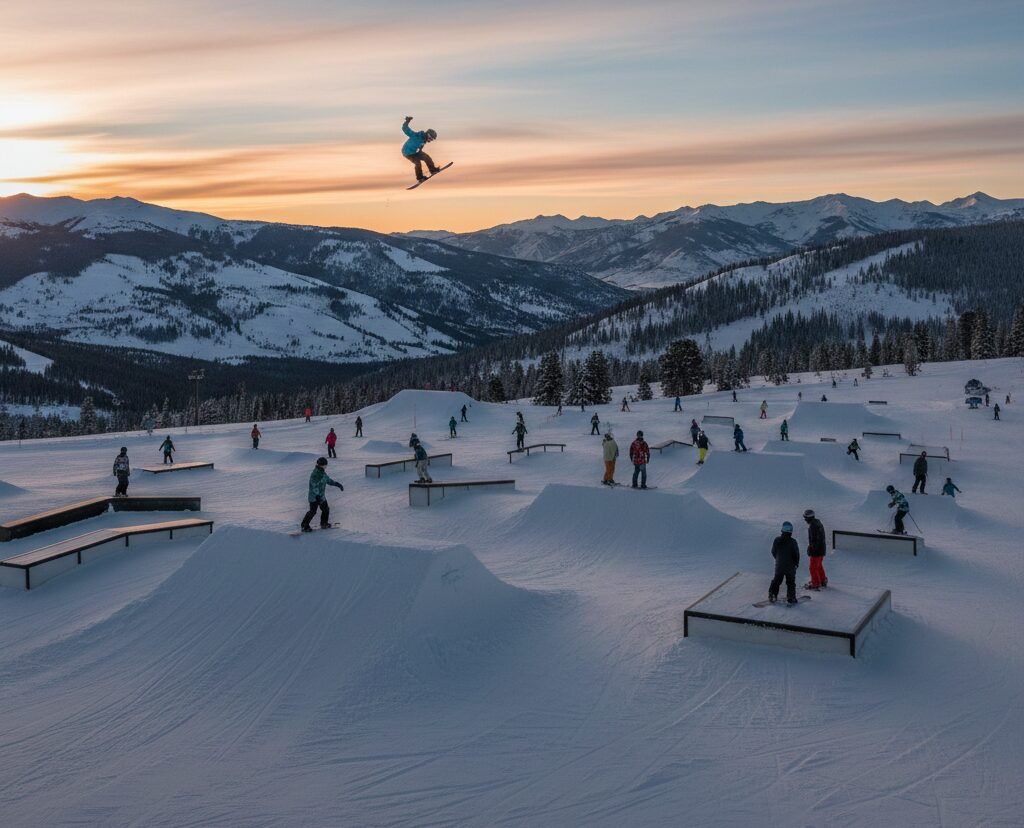
Brighton is a snowboarder’s paradise. It’s incredibly beginner-friendly yet has gnarly advanced terrain in the Milly Bowl and Snake Creek areas. The night riding is some of the best in the country, and the park scene is strong.
Solitude lives up to its name. It’s quieter, with fantastic tree skiing and a charming European-style village. Honeycomb Canyon offers serious advanced terrain that often holds powder days after a storm.
Brighton Quick Facts
Best For: Beginners through experts, night riders, and terrain park fans.
Terrain: 1,050 skiable acres, strong beginner zones plus advanced bowls.
Pass: Ikon Pass.
Vibe: Local, laid-back, snowboarder-friendly.
Solitude Quick Facts
Best For: Riders wanting tree runs, a quiet village, and fewer crowds.
Terrain: 1,200 skiable acres, notable tree skiing and Honeycomb Canyon.
Pass: Ikon Pass.
Vibe: Quiet, European-style village, unhurried.
9. Snowbasin & Powder Mountain: The Northern Gems
About an hour north of Salt Lake City, these resorts offer a different experience.
Snowbasin (Ikon Pass) is opulent, with stunning lodges and Olympic legacy. The terrain is vast and varied, with incredibly long, groomed runs and challenging chutes. Crowds are minimal.
Powder Mountain (Independent) is the anti-resort. It limits daily lift ticket sales, preserving its 8,464 acres of raw, untracked terrain. A true adventure, with cat-skiing and hike-to terrain that makes you feel like you’re in the backcountry. A must for purists seeking solitude.
Local Secret: Powder Mountain’s vibe is unmatched. To truly experience it, plan to stay nearby in Eden or Ogden Valley. The lack of crowds and abundance of untouched snow is a throwback to snowboarding’s golden era.
Snowbasin Quick Facts
Best For: Riders wanting long groomers, minimal crowds, and upscale lodges.
Terrain: 3,000+ skiable acres, mix of groomers and challenging chutes.
Pass: Ikon Pass.
Vibe: Opulent, uncrowded, Olympic legacy.
Powder Mountain Quick Facts
Best For: Adventure-seekers and purists who want raw, untracked terrain.
Terrain: 8,464 acres, limited daily ticket sales, cat-skiing available.
Pass: Independent (not on Ikon or Epic).
Vibe: Backcountry-adjacent, uncrowded, adventurous.
10. Ikon vs. Epic Pass: Choosing Your Access
Your pass choice dictates your resort access. The Epic Pass gives you Park City Mountain. The Ikon Pass gives you access to Snowbird, Brighton, Solitude, Snowbasin, Alta (skiing only), and Deer Valley (skiing only). Many Utah locals opt for the Ikon Base Pass or the Mountain Collective (which includes Snowbird and Alta). If you’re visiting for a week, crunch the numbers—a multi-resort pass often pays for itself.
11. Transportation & Staying: SLC vs. Park City
Staying in Salt Lake City (SLC): More affordable, with endless dining options. You’ll have a 30-60 minute drive up the canyons each morning. Check canyon road conditions (UDOT Cottonwoods) before you go—4WD/traction laws are strictly enforced during storms.
Staying in Park City: More expensive, but you can often walk to lifts or take free buses. Ideal for accessing PCMR and a more immersive resort experience.
Renting a car is recommended for flexibility. The best ski and snowboard racks can make shuttling gear with a group much easier.
12. Pro Tips & Local Secrets for Your Trip
1. Start Early: Utah powder gets tracked out by midday. Be on the first lift.
2. Respect the Canyon Closures: If UDOT closes Little or Big Cottonwood for avalanche control, don’t try to go up. Wait it out.
3. Altitude Hydration: You’re at 7,000-11,000 feet. Drink twice as much water as you think you need.
4. Sunscreen is Non-Negotiable: High altitude + sun reflection off snow = instant burn.
5. Explore Beyond the Obvious: At Park City, venture into the Canyons side. At Snowbird, don’t miss Mineral Basin.
6. Après Scene: Hit the Hog Wallow Pub near Brighton, or No Name Saloon in Park City.
Final Advice: Utah delivers a snowboarding experience that balances epic terrain with surprising convenience. Whether you’re hunting for steep chutes, perfect park laps, or endless powder fields, you’ll find it here within an hour of a major airport. That’s the magic of the Wasatch.
13. Complete Gear Guide for Utah’s Dry, Cold Powder
Utah’s snow is a different animal than the wet, heavy snow you’ll find in the Pacific Northwest or the Sierra. It’s light, dry, and often bitterly cold, which changes what you should pack and buy. Here’s how to gear up specifically for the Wasatch.
Snowboard Selection
For Utah’s mix of groomers, trees, and deep-powder days, a directional or directional-twin all-mountain board in the 158-162cm range (adjust for your height and weight) is the sweet spot for most intermediate to advanced riders. If you’re chasing storm days at Snowbird, Alta-adjacent terrain, or Powder Mountain’s cat-skiing zones, a swallowtail or setback stance board with extra nose float will make deep days dramatically easier. Beginners and park-focused riders at Park City or Brighton are better served by a true twin tip with softer flex for forgiving landings and switch riding.
Boots & Bindings
Because Utah’s storms can drop several feet in a single push, a stiffer boot with a solid BOA or traditional lace system helps with control in variable, wind-affected snow above treeline. Pair with mid-to-stiff flex bindings if you’re riding aggressive terrain at Snowbird or the steeps off Jupiter Peak at Park City. Softer boots and bindings are fine for beginners sticking to groomers and mellow park laps.
Outerwear for Wasatch Cold
Base elevations sit around 6,800-8,000 feet and summits climb past 11,000 feet, so temperature swings throughout the day are common. A three-layer system works best: a moisture-wicking base layer, an insulating mid-layer (fleece or synthetic puffy), and a waterproof/breathable outer shell rated at least 10,000mm for both water resistance and breathability. Because Utah powder is so dry and light, it tends to find its way into every zipper and cuff—look for jackets and pants with powder skirts and gaiters built in.
Pro Tip: Bring or buy goggles with at least two lens options: a low-light/storm lens for the frequent flat-light powder days and a darker mirrored lens for Utah’s intense high-altitude sun on bluebird days.
Essential Accessories
Beyond the board and outerwear, a few small items make an outsized difference in the Wasatch: mid-weight merino wool socks (one pair per day, no cotton), glove liners for quick warmth on the lift, a neck gaiter or balaclava for wind protection on exposed ridgelines like Snowbird’s tram-served terrain, and hand/toe warmers for the coldest days in January and February. Don’t forget lip balm with SPF and a small microfiber cloth for wiping goggles at altitude.
14. Renting vs. Bringing Your Own Gear
Whether you should rent or fly with your own setup depends on how often you ride and how much your baggage fees will cost. Here’s how to decide.
When Renting Makes Sense
If you’re a first-timer, an occasional rider, or you don’t want to deal with checked bags and oversized-item fees, renting is the easier call. Utah has dozens of ski shops in Park City, Salt Lake City, and Sandy that offer high-performance demo boards, boots, and outerwear. Renting also lets you demo different board shapes across a trip—useful if you’re deciding whether to buy a directional powder board for future trips.
When to Bring Your Own
If you already own a board and boots dialed to your stance and riding style, bringing them usually pays off on trips longer than four or five days, since most airlines don’t charge extra for a snowboard bag (though policies vary and it’s worth confirming before you fly). A dedicated padded snowboard bag protects your edges and base during transit, and packing boots and a helmet inside the bag saves a checked-bag fee.
Where to Rent in Utah
Shops in Salt Lake City and Sandy near the mouths of Big and Little Cottonwood Canyon often have better rates than resort-base rental shops, and many offer free delivery to your hotel or condo. Park City has a dense cluster of rental shops along Main Street and near the Park City Mountain base areas, which is convenient if you’re staying in town. Booking rentals online in advance typically saves both money and time compared to walking in.
Local Secret: Ask about “demo” packages at resort-affiliated shops—these use current-season, high-performance boards rather than older rental fleet stock, often for only a slightly higher price.
15. Lift Ticket Costs & Money-Saving Strategies
Utah resort lift tickets are priced dynamically, meaning the cost rises the closer you get to your travel date and on high-demand days like holidays and weekends. Buying single-day tickets at the ticket window on a powder day is almost always the most expensive way to ride. Here’s how to keep costs down.
- Buy in advance online: Purchasing directly through a resort’s website weeks ahead of your trip is consistently cheaper than day-of window pricing.
- Consider a multi-resort pass: If you’re riding more than three or four days across different resorts, an Ikon Pass, Epic Pass, or the Mountain Collective can be more economical than paying for individual day tickets, especially if you plan to sample both the Park City area and the Cottonwood Canyons.
- Ride midweek: Tuesday through Thursday pricing and crowd levels are noticeably lower than weekends, particularly at Park City and Snowbird.
- Look into half-day and night tickets: Brighton’s night riding sessions, in particular, are priced well below full-day tickets and let you log laps under the lights after a day of sightseeing.
- Check locker-room deals: Local gear shops in Sandy and Salt Lake City occasionally sell discounted lift ticket vouchers for Cottonwood Canyon resorts—worth a quick search before your trip.
- Watch for kids’ and youth pricing: Several Utah resorts offer free or steeply discounted tickets for young children with a paying adult, and youth/senior rates that are worth confirming directly with the resort.
Pro Tip: If your group has mixed skill levels or you’re unsure which resorts you’ll favor, price out both a multi-resort pass and a handful of advance single-day tickets before committing—your route around the Wasatch and how many days you’ll actually ride determine which is the better value.
16. Where to Stay: A Neighborhood-by-Neighborhood Guide
Utah’s compact geography means you’re rarely more than an hour from any resort, but where you base yourself shapes your whole trip. Here’s a breakdown by area.
Park City / Old Town
Walkable Main Street, ski-in/ski-out condos and hotels, top-tier restaurants, and free town buses. Best for travelers who want a resort-town vibe and easy access to Park City Mountain without a car.
Salt Lake City (Downtown & Sugar House)
The most affordable lodging by a wide margin, with a bigger, more varied dining and nightlife scene. You’ll need a car (or the ski bus system) to reach the Cottonwood Canyons, roughly 30-45 minutes away depending on traffic and conditions.
Sandy & Cottonwood Heights
The sweet spot for Cottonwood Canyon access—closer to the canyon mouths than downtown SLC, generally cheaper than Park City, with plenty of chain hotels and grocery stores for self-catering trips.
Eden & Ogden Valley
The base for Snowbasin and Powder Mountain. Quieter, more rural, and noticeably cheaper than Park City, with a small-town feel that pairs well with Powder Mountain’s uncrowded, independent character.
Whichever base you choose, book lodging well ahead of peak weeks (Christmas through New Year’s, and Presidents’ Day weekend), when rates in Park City in particular can spike significantly.
17. Getting to Utah: Flights & Salt Lake City Airport
One of Utah’s biggest advantages over other major snowboard destinations is Salt Lake City International Airport (SLC). It’s a major hub with extensive domestic and growing international service, and it sits remarkably close to the resorts—Park City is about a 35-40 minute drive from baggage claim, and the Cottonwood Canyons are even closer.
Flying With a Snowboard Bag
Most airlines treat a snowboard bag as standard checked luggage rather than an oversized item, though policies and fees vary by carrier, so confirm before booking. Pack boots, a helmet, and soft layers inside the board bag around the board to save space in your main suitcase and add cushioning.
Rental Cars vs. Shuttles vs. Ski Buses
A rental car offers the most flexibility, particularly if you want to bounce between resorts or explore beyond the ski areas. Shared shuttle services run direct routes from SLC to Park City and the Cottonwood Canyons and are a solid no-hassle option if you’re staying at one base resort for your whole trip. Utah Transit Authority also runs public ski buses from the Salt Lake Valley into Big and Big Cottonwood Canyon, a budget-friendly option if you’re based in Sandy or SLC and don’t mind a fixed schedule.
Pro Tip: During and after storms, canyon roads can require 4WD or approved traction devices, and are sometimes closed entirely for avalanche mitigation. A shuttle or ski bus sidesteps the stress of navigating those closures yourself.
18. Lessons for Beginners & Adults
Even experienced riders benefit from a lesson or two when visiting a new mountain range—an instructor who knows the terrain can save you hours of wrong turns and show you where the powder stashes hide. Every major Utah resort runs a snowboard school with options ranging from group lessons to full-day private instruction.
First-Timers
Most resorts bundle a beginner lift ticket, rental package, and a multi-hour group lesson into a single “learn to ride” package, which is almost always cheaper than buying the three components separately. Park City and Brighton are particularly well set up for this, with dedicated beginner zones served by their own lifts, away from faster-moving traffic.
Adults Leveling Up
If you already know the basics but want to tackle steeper terrain, trees, or your first powder day, a half-day or full-day private lesson focused specifically on powder technique or off-piste line choice is a worthwhile investment—especially at a resort like Snowbird, where the learning curve on tram-served terrain can be steep for the unprepared.
Booking Tips
Book lessons in advance, particularly around holidays, when slots fill up quickly. Group lessons are cheaper than private ones and are often more fun if you’re traveling with a partner or friend of similar ability. Midweek lessons tend to have smaller class sizes than weekend sessions.
19. Family & Kids Snowboarding Guide
Utah is one of the more family-friendly snowboard destinations in the country, thanks to short drives from the airport, dedicated kids’ terrain, and resorts that actively cater to first-timers of all ages.
Best Resorts for Families
Park City Mountain and Brighton stand out for families, with large, gently pitched beginner zones, dedicated kids’ lift access away from faster traffic, and childcare or kids’ camp options at the base. Snowbasin is a strong pick for families who want a quieter, less crowded day with wide, well-groomed cruisers that build confidence.
Kids’ Programs
Most Utah resorts run half-day and full-day kids’ snowboard camps that combine instruction with supervised lift-served riding, typically grouped by age and ability. Many resorts also offer free or discounted lift tickets for young children accompanied by a paying adult—policies vary by resort and season, so confirm current age cutoffs and pricing directly before you go.
Practical Family Tips
Pack extra base layers and mittens (kids run colder than adults and won’t always tell you), plan for shorter riding days with an early lodge break, and consider booking a private family lesson rather than splitting up into separate adult and kids’ group lessons—it keeps everyone on the same run and schedule.
20. Backcountry & Sidecountry Safety Basics
Utah’s easy access to steep, deep terrain is part of its appeal, but that same terrain carries real avalanche risk once you step outside resort boundaries. This is general awareness information, not a substitute for formal avalanche training.
Know Before You Go
Never leave a resort’s marked boundary into backcountry or sidecountry terrain without checking the day’s avalanche forecast from the Utah Avalanche Center, carrying a beacon, shovel, and probe, and knowing how to use them. Ideally, travel with partners who have completed formal avalanche education, such as an AIARE Level 1 course.
Common Access Points
Terrain accessed via gates at resorts like Snowbird, Alta, Brighton, and Solitude often leads directly into unpatrolled, avalanche-prone terrain in the Wasatch backcountry. Some of this terrain looks deceptively similar to in-bounds runs, which is part of why avalanche education and proper gear are non-negotiable before ducking a rope.
Pro Tip: If backcountry riding interests you but you’re new to it, hire a certified guide for your first few tours. A guide provides real-time terrain and snowpack assessment that no amount of pre-trip reading can fully replace.
21. Best Runs by Resort: Insider Line Picks
Beyond the marquee terrain, each resort has runs that locals gravitate toward. Here are a few to seek out.
Park City Mountain
McConkey’s Bowl for open, high-alpine powder turns; Jupiter Peak’s steeper chutes for advanced riders; and the Canyons side’s tree runs off the Peak 5 lift for quieter laps away from crowds near the main base.
Snowbird
Mineral Basin for wide-open, sun-soaked powder fields; Gad Valley for steep, technical tree lines; and the tram-accessed upper mountain for the resort’s most serious terrain on a powder morning.
Brighton
Milly Bowl and Snake Creek for advanced terrain with a local feel; the beginner-friendly Explorer and Crest lifts for building confidence; and the terrain park under the lights for Brighton’s celebrated night sessions.
Solitude
Honeycomb Canyon for advanced powder that holds up days after a storm, and the mellower groomers off the Moonbeam lift for a relaxed, low-crowd cruising day.
22. Where to Eat: On-Mountain & Off-Mountain Guide
Utah’s food scene has grown up alongside its resorts, and you won’t have trouble eating well after a big powder day.
On-Mountain Favorites
Look for mid-mountain lodges with table service rather than just cafeteria lines—several resorts, including Snowbasin and Deer Valley’s base areas, have earned a reputation for surprisingly polished on-mountain dining. At Park City, the Canyons side base has a wider range of quick-bite options than the historic Park City side.
Après-Ski
The Hog Wallow Pub near Brighton is a laid-back local favorite for a post-riding beer. In Park City, No Name Saloon on Main Street draws a lively crowd, and the town’s Main Street corridor has dozens of other options within walking distance of most lodging. Near the Cottonwood Canyons, Sandy and Cottonwood Heights have a growing list of breweries and casual restaurants that make for an easy stop on the drive down from the mountain.
Dinner in Salt Lake City
If you’re basing yourself in SLC, the city’s dining scene has expanded well beyond its reputation, with strong options in New American, Southeast Asian, and Mexican cuisine concentrated downtown and in the Sugar House neighborhood—both an easy drive from the Cottonwood Canyons.
23. Non-Snowboarding Activities & Rest Days
A multi-day trip is more sustainable with at least one rest day built in, and Utah has plenty to fill it.
- Utah Olympic Park: Near Park City, tour the venues from the 2002 Winter Olympics, watch ski jump training, or try the bobsled experience.
- Natural hot springs and pools: Several resort-town spas and public pools offer a low-key way to soothe sore legs.
- Downtown Salt Lake City: Museums, the historic Temple Square area, and a walkable downtown core make for an easy half-day outing.
- Snowmobiling and Nordic skiing: Several outfitters near Park City and Ogden Valley offer guided snowmobile tours and groomed Nordic trails for a change of pace from downhill riding.
- Shopping and galleries: Park City’s Main Street is packed with galleries, boutiques, and outdoor gear shops worth a slow afternoon browse.
24. Photography & Content Creation Tips
Utah’s light-angle and dry snow make for some of the most photogenic riding conditions anywhere, but high-altitude glare and fast-changing weather take some adjusting to.
Camera Settings for Snow
Bright snow tricks most cameras’ light meters into underexposing your shot—dial in slight positive exposure compensation to keep snow looking white rather than gray. A polarizing filter cuts glare and deepens blue skies on bluebird days, which are common at higher elevations like Snowbird’s tram-served terrain.
Action Shots
Fast shutter speeds (1/1000s or faster) freeze spray and motion on powder turns. Position yourself below and slightly to the side of the rider’s line for the most dynamic angle, and shoot into gladed tree runs for natural framing—Solitude’s Honeycomb Canyon and Brighton’s Milly Bowl are particularly photogenic for this.
Cold-Weather Gear Care
Batteries drain faster in the cold—carry a spare in an inside jacket pocket where body heat keeps it warmer. Let cameras and phones warm up gradually inside a bag before bringing them into a heated lodge to avoid condensation damage.
25. Packing List for a Utah Snowboard Trip
A quick-reference checklist to make sure nothing gets left behind.
- Snowboard, boots, and bindings (or rental confirmation)
- Helmet and two goggle lenses (low-light and dark/mirrored)
- Waterproof shell jacket and pants with powder skirt
- Insulating mid-layer and moisture-wicking base layers (at least two sets)
- Merino wool socks (one pair per riding day, no cotton)
- Waterproof gloves or mittens, plus a thin liner pair
- Neck gaiter or balaclava and a warm beanie for après
- Sunscreen (SPF 30+) and lip balm with SPF
- Hand and toe warmers for the coldest days
- Reusable water bottle for altitude hydration
- Casual, warm layers for evenings in town
- Backpack for carrying layers and snacks on the mountain
Pro Tip: Pack one extra pair of gloves or mittens. Wet gloves on day two of a trip are one of the most common—and most avoidable—trip regrets.
26. Mountain Etiquette & Sustainability
Utah’s popularity has brought real pressure on its canyons and trailheads, and a little consideration goes a long way toward keeping the experience good for everyone, including future visitors.
On-Mountain Etiquette
Riders below you on the slope have the right of way—look uphill before merging into a run. Give other riders space in the trees and bowls rather than dropping in right on top of an existing line, and never stop where you’re invisible to riders above, such as just below a roller or blind convex pitch.
Canyon & Environmental Considerations
The Cottonwood Canyons supply a significant share of the Salt Lake Valley’s drinking water, which is part of why development and access are tightly managed there. Carpool or use ski buses when possible to reduce canyon road congestion, stay on marked runs and trails to protect fragile alpine vegetation, and pack out all trash, including at trailheads and pullouts.
Respecting Local Communities
Small mountain towns like Eden and Ogden Valley depend on tourism but also value their quiet character—keep noise down in residential areas, tip service staff generously during the demanding winter season, and support local, independent restaurants and shops when you can.
27. Sample 7-Day Utah Snowboard Itinerary
A balanced week that samples both the Park City area and the Cottonwood Canyons.
Days 1-2: Park City
Settle in and ride Park City Mountain, exploring both the historic Park City side and the Canyons side. Use the second day to hit the terrain parks or venture into the trees off Jupiter Peak.
Day 3: Rest & Explore
Tour the Utah Olympic Park, wander Main Street, and relocate to Sandy or Cottonwood Heights for canyon access.
Days 4-5: Snowbird & Solitude
Ride Snowbird’s tram-served terrain and Mineral Basin on a powder day if you can time it right, then head to Solitude for a quieter, tree-filled day at Honeycomb Canyon.
Day 6: Brighton
A full day of Brighton’s beginner-friendly-yet-gnarly terrain, finishing with a night riding session under the lights.
Day 7: Snowbasin or Powder Mountain
Head north for a final day at Snowbasin’s long groomers and Olympic-legacy terrain, or Powder Mountain if you want one last uncrowded, adventurous finish before flying home from SLC.
28. Budget Breakdown: What a Utah Trip Really Costs
Costs vary widely based on when you travel, where you stay, and how far in advance you book, but a few categories consistently make up the bulk of a Utah snowboard trip’s budget.
- Flights: Often the most variable cost—booking early and flying midweek typically brings the biggest savings into SLC’s well-connected hub.
- Lodging: The single biggest lever you control. Salt Lake City and Sandy run noticeably cheaper than Park City, especially over holiday weeks.
- Lift tickets or passes: Buying in advance and considering a multi-resort pass for longer trips usually beats stacking up individual window-priced tickets.
- Rentals or gear: A moderate cost if renting; a one-time investment if you already own gear and are simply flying with it.
- Food: On-mountain dining runs higher than off-mountain options—packing a lunch or grabbing groceries if you’re staying somewhere with a kitchen can meaningfully cut costs over a multi-day trip.
- Transportation: A rental car offers flexibility but adds parking and fuel costs; shuttles and ski buses trade some flexibility for lower, more predictable costs.
Pro Tip: Traveling in January (excluding holiday weeks) or the first half of March often delivers the best combination of good snow, thinner crowds, and lower lodging rates than the December holidays or February’s peak season.
29. Month-by-Month Snow & Crowd Breakdown
Timing your trip well can be the single biggest factor in how it turns out. Here’s a general look at how the season typically unfolds in the Wasatch.
Mid-November to Mid-December: Early Season
Coverage builds gradually and can be thin, especially at lower elevations. Crowds are light and lift lines are practically nonexistent, making it a good window for confident intermediate and advanced riders willing to gamble on conditions.
Late December: Holiday Rush
Christmas through New Year’s is the single busiest and most expensive stretch of the season. Lodging books up early and lift lines lengthen considerably, particularly at Park City and Snowbird.
January: The Sweet Spot
Outside of the first week, January typically offers a strong combination of consistent storms, cold and dry snow quality, and noticeably thinner crowds than the holidays.
February: Peak Powder
Often the snowiest month of the season, but also home to Presidents’ Day weekend, one of the busiest of the year. Expect the deepest average base of the season alongside bigger crowds.
March-April: Spring Riding
Longer daylight hours, warmer temperatures, and softer corn snow in the afternoons. Storms can still deliver significant powder days, especially at higher elevations like Snowbird and Alta-adjacent terrain, while crowds thin out after spring break.
30. Terrain Parks Deep Dive
If jumps, rails, and jibs are your priority, a few Utah resorts stand out from the pack.
Park City Mountain
With eight distinct terrain parks spread across the resort, Park City offers progression for every level, from small, mellow features for first-timers to large jump lines and technical rail setups for advanced park riders. The variety here rivals almost any resort in North America.
Brighton
Brighton has built a dedicated park culture over decades, with well-maintained features and a community of local riders who treat the park scene seriously. Its parks stay in good shape deep into the season thanks to reliable snowmaking and grooming.
Snowbird
Less park-focused than Park City or Brighton, but still maintains a solid park for riders who want to mix jib laps with big-mountain terrain in the same day.
Pro Tip: Park features change daily based on grooming and weather—always inspect a jump or rail from the side and check landings before committing, even on a park you’ve ridden before.
31. Night Riding Guide
Riding under the lights is one of Utah’s underrated experiences, and Brighton is the standout destination for it, with lift-served night sessions covering a meaningful chunk of its terrain, including groomers and terrain park features.
Why Ride at Night
Night tickets are typically priced well below full-day rates, crowds thin out dramatically after dinnertime, and cold nighttime temperatures often mean firmer, faster groomers that are a fun change of pace from daytime softer snow.
What to Bring
Temperatures drop quickly after sundown at altitude, so layer up more than you would during the day. A clear or low-light goggle lens performs far better under artificial lighting than a dark, mirrored lens.
32. Multi-Resort Pass Comparison
Choosing between Utah’s major multi-resort pass options comes down to which resorts you plan to prioritize.
Epic Pass
Your ticket to Park City Mountain, plus resorts across the country and world under the same ownership group. Best if Park City is your primary destination or you already ski other Epic-affiliated resorts elsewhere.
Ikon Pass
Covers Snowbird, Brighton, Solitude, and Snowbasin for snowboarders (plus Alta and Deer Valley for skiers only). The strongest option if you want to sample the Cottonwood Canyons and northern Utah in one trip.
Mountain Collective
A lighter-weight option offering a set number of days at partner resorts, including Snowbird, often at a lower upfront cost than a full Ikon or Epic pass—worth considering if you’re only planning a handful of days across multiple resorts.
For a single-resort trip focused entirely on Park City, individual day tickets or an Epic Pass day pass may be simpler and cheaper than a full season product. For a Wasatch-hopping itinerary that touches several Cottonwood Canyon resorts, Ikon or Mountain Collective usually wins out.
33. A Brief History of Snowboarding in the Wasatch
Utah’s ski resorts have deep roots stretching back to the mid-20th century, built around mining-era towns turned winter destinations. Snowboarding arrived later and, for years, faced resistance at some Utah resorts before gradually gaining acceptance through the 1980s and 1990s as the sport grew nationally.
Today, most Utah resorts fully embrace snowboarding with dedicated terrain parks, snowboard schools, and events, though Alta and Deer Valley remain notable holdouts that continue to operate as skiers-only. The 2002 Winter Olympics, hosted in and around Salt Lake City, put the Wasatch on the global map and left a lasting legacy still visible today at the Utah Olympic Park near Park City, where ski jumping and bobsled venues remain active.
34. Trip Planning Timeline
A rough guide to when to handle each piece of your trip for the best combination of availability and price.
- 8-12 weeks out: Book flights and lodging, especially if traveling over a holiday week. Decide on your base (Park City vs. SLC/Sandy vs. Ogden Valley).
- 4-6 weeks out: Purchase lift tickets or a multi-resort pass in advance for the best pricing. Book any lessons, especially for holiday-week travel.
- 2-3 weeks out: Reserve rental gear if needed, and book any add-on activities like the Utah Olympic Park tour or a snowmobile outing.
- 1 week out: Start watching the extended forecast and Utah Avalanche Center reports to fine-tune which days you’ll prioritize which resorts.
- Day before: Check canyon road conditions if you’re headed to the Cottonwood Canyons, and confirm any lesson or rental appointment times.
35. Board Shapes Explained for Utah Conditions
Board shape has an outsized effect on how a snowboard performs in Utah’s specific mix of groomers, trees, and deep powder days.
True Twin
Symmetrical nose and tail, centered stance—ideal for park riders and beginners who want to ride switch easily. A solid choice for Park City’s terrain parks or Brighton’s beginner zones.
Directional Twin
Similar shape to a true twin but with a setback stance and slightly stiffer tail, giving a bit more stability at speed and float in powder while still handling switch riding reasonably well. A strong all-around choice for a first Utah-specific board.
Directional
Distinct nose and tail shapes, built to be ridden one direction. Excels on groomers and in powder but sacrifices switch performance—a good pick for riders who spend more time carving and charging than riding park.
Powder / Swallowtail
Wider nose, tapered or notched tail, and significant setback stance for maximum float on the deepest days. Purpose-built for resorts like Snowbird or Powder Mountain on big storm days, though it’s a specialty board rather than an everyday driver.
36. Snow Report & Conditions Resources
Checking conditions the night before and morning of your riding day helps you choose the right resort and pack appropriately.
- Resort snow reports: Each Utah resort publishes daily snowfall totals, base depth, and open-terrain updates directly on its website and app.
- Utah Avalanche Center: Essential for anyone considering backcountry or sidecountry terrain, with daily danger ratings and detailed forecasts for the Wasatch zones.
- UDOT road cameras and alerts: Critical for checking Cottonwood Canyon road conditions and closures before you drive up, especially during and after storms.
- Resort webcams: A quick visual check of current conditions and visibility before committing to a resort choice for the day.
37. Solo Travel & Meeting Other Riders
Utah is a genuinely solo-friendly destination. Resort towns like Park City have a built-in social scene, and many riders travel alone specifically because it’s easy to fall in with a group.
Where to Meet People
Group lessons and clinics are a natural way to meet riders of similar ability. Hostels and shared lodging in Park City and Salt Lake City often attract other solo travelers. Lift lines and mid-mountain lodges are also surprisingly social spots—striking up a conversation about where the powder stashes are hiding is practically a Wasatch tradition.
Solo Safety Basics
Let someone know your general plan for the day, avoid dropping into ungroomed trees or backcountry-adjacent terrain alone, and consider a buddy system even if it’s someone you just met at the lift line—Utah’s tree wells and steep terrain are safer with a partner nearby.
38. Adaptive & Accessibility Programs
Several Utah resorts run adaptive snow sports programs offering specialized instruction and equipment for riders with physical, cognitive, or sensory disabilities. These programs typically require advance booking, particularly during peak weeks, and can include everything from mono-ski and bi-ski setups to visually impaired guiding services. Contact individual resorts directly ahead of your trip to confirm program availability, staffing, and equipment on the dates you plan to visit.
39. Altitude & Cold Weather Health Basics
Utah’s resorts sit at elevations most visitors aren’t used to, and the combination of altitude and cold introduces a few health considerations worth planning for.
Altitude Adjustment
Base elevations around 6,800-8,000 feet and summits above 11,000 feet can cause mild altitude symptoms, especially in the first day or two—headaches, fatigue, and shortness of breath being the most common. Staying well hydrated, moderating alcohol intake on arrival, and easing into your first day rather than pushing hard immediately all help.
Cold Weather Risks
Watch for early signs of frostbite (numbness or a waxy appearance on exposed skin, fingers, and toes) and warm up promptly if you notice them. Layer appropriately and change out of wet base layers between runs when possible, since wet layers accelerate heat loss dramatically compared to dry ones.
Sun Exposure
High-altitude UV exposure is significantly stronger than at sea level, and reflection off snow compounds it. Reapply sunscreen throughout the day, wear UV-protective goggles or sunglasses, and don’t skip sun protection just because it’s cold out.
40. Gear Maintenance Before Your Trip
A well-tuned board performs noticeably better in Utah’s mix of firm groomers and variable powder, and a pre-trip tune-up is one of the most overlooked ways to improve your trip.
Wax & Base Care
A fresh coat of wax matched to expected temperatures reduces friction and helps your board glide through both packed groomers and the flatter sections between powder stashes. Cold, dry Utah snow in particular rewards a good wax job, since friction increases in colder, drier conditions.
Edge Tuning
Sharp, properly beveled edges make a real difference on the firmer, wind-affected snow you’ll encounter on exposed ridgelines and early-morning groomers before the sun softens things up. If you’re bringing your own board, get it tuned in the week before your trip rather than assuming last season’s edges are still sharp.
Binding & Boot Check
Inspect straps, ratchets, and boot liners for wear before you fly. A failed binding strap or blown-out boot liner is a frustrating, avoidable way to lose riding time on a trip you’ve planned for months.
41. Travel Insurance Considerations
Snowboarding carries injury risk, and a multi-day Utah trip often represents a meaningful financial investment in flights, lodging, and lift tickets—both good reasons to think through trip protection before you go.
Look for a policy that explicitly covers snow sports injuries, since some general travel insurance policies exclude or limit coverage for skiing and snowboarding. If you’re bringing expensive gear, check whether your policy (or your homeowner’s/renter’s insurance) covers loss or damage to equipment in transit. Trip cancellation coverage is also worth considering given how far in advance many Utah trips get booked and paid for.
42. Utah vs. Other Major Snowboard Destinations
Understanding how Utah stacks up against other popular destinations can help you decide where to put your vacation days.
Utah vs. Tahoe
Utah’s snow is drier and lighter thanks to the lake-effect storms crossing the Great Salt Lake, while Tahoe tends to see heavier, wetter “Sierra cement.” Both offer strong airport access, though SLC’s proximity to the resorts is generally shorter than the drive from Reno or Sacramento to most Tahoe resorts.
Utah vs. Colorado
Colorado offers more high-alpine terrain and a larger number of massive, iconic resort towns spread across a bigger geographic area, which often means longer drives between resorts. Utah’s resorts are more tightly clustered around Salt Lake City, making multi-resort days and short drives between them more practical.
Utah vs. Japan
Japan is famous for exceptionally deep, consistent powder and a unique cultural experience, but involves a much longer flight and a bigger overall trip commitment for most North American travelers. Utah delivers a strong powder experience with dramatically easier logistics for a long weekend or week-long trip.
43. Planning Trips for Larger Groups
Coordinating a group trip to Utah adds a few extra logistics on top of a solo or couple’s trip, but the state’s resort density makes it manageable.
Lodging for Groups
Condos and larger vacation rentals in Park City or Sandy often work out cheaper per person than booking multiple hotel rooms, and give the group a shared kitchen and living space for down time between riding days.
Mixed Ability Levels
If your group spans beginners to experts, a resort like Park City or Brighton works well since both have extensive beginner terrain alongside genuinely challenging advanced runs, letting the group split up during the day and reconvene at a central base area for lunch or après.
Group Lift Tickets & Lessons
Many resorts offer group rates on lift tickets and lessons above a certain headcount—worth calling ahead to confirm, since group discounts aren’t always advertised as prominently as individual pricing online.
44. Glossary of Utah Snowboarding Terms
A handful of terms come up constantly when planning or talking about a Utah trip—here’s a quick reference.
- Bluebird day: A clear, sunny day following a storm, often paired with fresh snow still on the ground.
- Corn snow: Granular, softened spring snow that forms as the surface freezes overnight and thaws during the day, common at Utah resorts in March and April.
- Sidecountry: Terrain accessed through a resort’s backcountry gate that is not patrolled or avalanche-controlled, despite often being reached from within resort boundaries.
- Cat-skiing: Riding accessed via a snowcat rather than a chairlift, used at Powder Mountain to reach more remote, untracked terrain.
- Tree well: A dangerous void of loose snow that forms around the base of a tree, capable of trapping a rider face-down; a real hazard in Utah’s deep-snow tree runs.
- Corduroy: Freshly groomed snow with visible ridges left by a snowcat’s tiller, prized for fast, predictable carving early in the morning.
- Face shots: Powder deep enough that it sprays up over a rider’s face on each turn—a signature Utah bragging point on a good storm day.
- Skinning: Ascending a slope using climbing skins attached to the base of a splitboard or skis, common in Wasatch backcountry touring.
45. Understanding Lake-Effect Storms in More Detail
Utah’s “Greatest Snow on Earth” reputation comes down to a specific combination of geography and meteorology worth understanding if you want to time your trip around the best storms.
How Lake-Effect Snow Forms
As cold storm systems track across the relatively warmer Great Salt Lake, they pick up additional moisture from the lake’s surface. That extra moisture gets carried directly into the Wasatch Mountains, where the range’s steep terrain forces the air to rise rapidly—a process called orographic lift—wringing out even more snow as the air cools at higher elevations.
Why the Snow Stays So Dry
Because the storms originate from cold continental air masses rather than warmer, moisture-heavy Pacific systems, the resulting snow tends to have very low water content. That’s what produces the light, fluffy powder Utah is famous for, as opposed to the heavier, wetter snow common in coastal ranges like the Sierra Nevada or Cascades.
Reading a Storm Cycle
Multi-day storm cycles often build gradually, peak with the heaviest snowfall, and taper into a clearing, colder bluebird day—frequently the best combination of fresh snow and good visibility. Watching the forecast for this pattern, rather than just total snowfall numbers, can help you plan which day of a multi-day storm to prioritize for the deepest, most rideable powder.
46. Which Resort Should You Ride Today? A Decision Guide
With multiple resorts within an hour of each other, deciding where to ride on any given day is a genuinely useful Utah skill. Here’s a simple way to think it through.
Fresh Powder Day
Head for Snowbird or Powder Mountain if you’re an advanced rider chasing the deepest, most technical terrain. Solitude’s Honeycomb Canyon is a strong alternative that tends to hold powder longer and draws smaller crowds than Snowbird on the same storm cycle.
Bluebird Day After a Storm
Get out early anywhere, since tracked-out snow is inevitable by midday on a clear day following fresh snowfall. Park City’s sheer size means there are more untouched pockets to find later in the day compared to smaller resorts.
Windy or Stormy Day With Poor Visibility
Lower-elevation, tree-lined terrain holds up best in flat light and wind. Solitude and the lower mountain at Brighton, both well-treed, are better bets than fully exposed, above-treeline terrain like Snowbird’s upper tram zone.
Crowded Holiday Weekend
Snowbasin and Solitude consistently see lighter crowds than Park City or Snowbird on peak weekends and holidays, making them a smart choice if you’d rather ride than wait in lift lines.
Beginner or Family Day
Park City and Brighton offer the best combination of extensive, well-groomed beginner terrain and dedicated kids’ programs, keeping first-timers away from faster, more advanced traffic.
47. Common Beginner Mistakes to Avoid in Utah
A few avoidable mistakes trip up first-time Utah visitors more than anything else.
- Underestimating altitude: Pushing hard on day one without adjusting for elevation often leads to an exhausting, headache-filled afternoon. Ease in and hydrate.
- Ignoring canyon road conditions: Driving up to Snowbird, Alta, Brighton, or Solitude without checking UDOT alerts during a storm can mean getting turned around or stuck in traction-law enforcement.
- Packing cotton base layers: Cotton holds moisture and loses insulating value when wet—stick to merino wool or synthetic layers instead.
- Skipping sun protection because it’s cold: High-altitude UV exposure is intense even on cold, overcast days; sunscreen and eye protection matter every single day on the mountain.
- Not checking which resorts are skiers-only: Showing up at Alta or Deer Valley with a snowboard leads to a wasted trip up the canyon—both are skiers-only.
- Booking lessons or rentals too late: Popular time slots during holiday weeks fill up fast; book these well in advance rather than assuming you can walk in.
Final Word: Most of what makes a Utah trip go smoothly comes down to a little advance planning—book early, dress in real layers, respect the canyon roads, and the rest is just enjoying some of the best snow on the planet.
48. Elevation & Vertical Stats by Resort
Elevation affects everything from snow quality to how hard you’ll feel the altitude on day one. Here’s a quick reference for how the major snowboard-friendly resorts compare.
Park City Mountain
Base sits around 6,800 feet with the summit near 10,000 feet, giving a substantial vertical drop across its sprawling, two-mountain footprint. The wide elevation range means conditions can vary noticeably between the base and the upper mountain on any given day.
Snowbird
Base elevation near 8,100 feet with the tram-served summit above 11,000 feet, producing 3,240 feet of vertical—among the largest lift-served vertical drops in the country and a major reason it draws advanced and expert riders specifically.
Brighton
Sitting at a base elevation around 8,700 feet, Brighton already starts higher than many other Utah resorts, which helps it hold snow quality well and keeps its night riding sessions consistently cold and firm.
Solitude
Base around 7,988 feet with a summit near 10,035 feet, giving a solid vertical drop concentrated in tree-covered terrain that holds powder particularly well at these elevations.
Snowbasin
Base near 6,400 feet with a summit above 9,300 feet, giving long, sustained vertical runs that are part of why the resort is known for its groomers and Olympic downhill-legacy terrain.
Powder Mountain
Base around 6,900 feet climbing past 9,400 feet at its highest cat-skiing access points, spread across the largest skiable acreage of any resort on this list.
Pro Tip: If you’re flying in and heading straight to the mountain, easing into a lower-elevation resort like Snowbasin or Park City on day one before tackling Brighton’s or Snowbird’s higher base elevations can make altitude adjustment noticeably more comfortable.
49. Quick Reference: Snowboard-Friendly vs. Skiers-Only Resorts
Since it’s easy to lose track after reading about a dozen resorts, here’s the essential snowboarder’s cheat sheet before you plan your itinerary.
Fully Snowboard-Friendly (Ride Freely): Park City Mountain, Snowbird, Brighton, Solitude, Snowbasin, and Powder Mountain all welcome snowboarders without restriction, covering the vast majority of terrain and vertical feet in the Wasatch region.
Skiers-Only (Skip These on a Board): Alta and Deer Valley remain two of the last major North American resorts to prohibit snowboarding entirely. Plan around them unless you’re accompanying skiing friends and family who want to ride there separately.
Keeping this list in mind before you book lodging or a multi-resort pass saves the headache of accidentally centering a trip around a resort you won’t actually be able to ride.
Utah Snowboard Resorts: Your Questions Answered
What is the best Utah resort for snowboarders?
It depends. Park City Mountain is best for overall variety, parks, and town life. Brighton is the local snowboarder favorite with a great vibe and night riding. Snowbird is for experts seeking steep, deep terrain. Powder Mountain is for adventure and untracked lines.
Can you snowboard at Alta or Deer Valley?
No. Both Alta and Deer Valley maintain a skiers-only policy. They are two of the last major resorts in the US with this restriction. Snowboarders should focus on the many other incredible resorts that welcome us.
Which is better, the Ikon or Epic Pass for Utah?
If you want to ride Park City, you need the Epic Pass. If you want to ride Snowbird, Brighton, Solitude, and Snowbasin, you need the Ikon Pass. If you have time, you could buy both or get individual lift tickets.
Is it better to stay in Salt Lake City or Park City?
SLC is cheaper and closer to the Cottonwood Canyon resorts (Snowbird, Brighton, etc.). Park City is more expensive but offers ski-in/ski-out convenience and a vibrant walkable town. Choose based on which resorts you plan to ride most.
How bad are the crowds in Utah?
Park City and the Cottonwoods can get very crowded on weekends and holidays. To avoid crowds: ride on weekdays, start early, head to less popular resorts like Solitude or Snowbasin, or explore the further reaches of each mountain.
Do I need a 4×4 vehicle to get to the resorts?
During or immediately after a storm, yes. Utah law requires 4WD or approved traction devices (snow chains/tires) in the Cottonwood Canyons. If you don’t have 4WD, you may be turned around. For Park City, the roads are generally well-plowed and less restrictive.
What’s the best time of year for powder in Utah?
January and February are the most reliable months for consistent powder days. The “January thaw” is less pronounced in Utah, so conditions stay cold and dry. March can also have epic powder storms, especially in the higher elevations of Snowbird.
Are there good terrain parks in Utah?
Absolutely. Park City Mountain has one of the world’s best park systems. Brighton has innovative parks and a dedicated culture. Even Snowbird has a decent park. Utah is a top destination for park riders.
Can beginners have fun at Utah resorts?
Yes! Park City and Brighton have massive, well-groomed beginner areas. The easy runs are wide, gentle, and meticulously maintained. Utah’s dry snow is also softer to fall in. Don’t be intimidated.
How does Utah compare to Colorado for snowboarding?
Utah generally has drier, lighter snow and resorts are closer to the airport (SLC). Colorado has more high-alpine terrain and a wider variety of massive resort towns. Both are world-class. Utah wins on snow quality and convenience; Colorado wins on sheer number of huge, iconic resorts.
Should I rent or bring my own snowboard to Utah?
Renting is easiest for first-timers or short trips, and lets you demo different board shapes. Bringing your own setup usually pays off on trips longer than four or five days, since most airlines treat a snowboard bag as standard checked luggage rather than an oversized item—though it’s worth confirming your airline’s policy first.
How can I save money on Utah lift tickets?
Buy online well in advance rather than at the ticket window, ride midweek instead of weekends, consider a multi-resort pass like Ikon or Epic if you’re riding several resorts, and look into half-day or night tickets, such as Brighton’s night riding sessions.
Where should I stay: Park City, Salt Lake City, or Sandy?
Park City is best for a walkable resort-town feel near Park City Mountain. Salt Lake City is the most affordable with the widest dining scene, about 30-45 minutes from the Cottonwood Canyons. Sandy and Cottonwood Heights split the difference, sitting closer to Snowbird, Alta, Brighton, and Solitude than downtown SLC.
How close are Utah’s resorts to the airport?
Remarkably close. Salt Lake City International Airport (SLC) is roughly 35-40 minutes from Park City and even closer to the mouths of the Cottonwood Canyons, making Utah one of the most convenient major snowboard destinations to fly into.
Is Utah good for families and kids learning to snowboard?
Yes. Park City Mountain and Brighton both have large, gently pitched beginner zones with dedicated kids’ lift access, and many resorts offer discounted or free tickets for young children with a paying adult. Snowbasin is a good pick for families wanting a quieter, less crowded day.
Is backcountry riding near Utah resorts dangerous?
Terrain accessed through backcountry gates at resorts like Snowbird, Alta, Brighton, and Solitude carries real avalanche risk. Never leave marked resort boundaries without checking the Utah Avalanche Center forecast, carrying a beacon, shovel, and probe, and ideally completing formal avalanche education first.
How many ski resorts are there in Utah?
Utah has around 15 ski and snowboard resorts statewide, though snowboarders will want to skip Alta and Deer Valley, which remain skiers-only. Most visitors focus on the Park City area and the Cottonwood Canyons, home to the majority of the state’s snowboard-friendly terrain.
What is the best resort for tree riding in Utah?
Solitude is widely considered the best tree-riding resort in Utah, with extensive gladed terrain that holds powder well after a storm. Snowbird’s Gad Valley and Park City’s Canyons-side glades are also strong options for riders who prefer trees over open bowls.
Do I need avalanche gear to ride at Utah resorts?
No, in-bounds terrain at Utah resorts is patrolled and avalanche-controlled, so avalanche gear isn’t necessary for typical resort riding. It only becomes essential if you plan to exit through a backcountry gate into unpatrolled sidecountry or backcountry terrain.
What should I wear snowboarding in Utah’s cold, dry climate?
A three-layer system works best: a moisture-wicking base layer, an insulating mid-layer, and a waterproof, breathable outer shell rated at least 10,000mm. Merino wool socks, glove liners, and a neck gaiter help manage Utah’s frequent temperature swings between the canyon floor and exposed high-altitude ridgelines.


