Affiliate Disclosure: Snowboard Bible is a reader-supported site. When you buy through links on our site, we may earn an affiliate commission. This comes at no extra cost to you and helps us keep the lifts running!
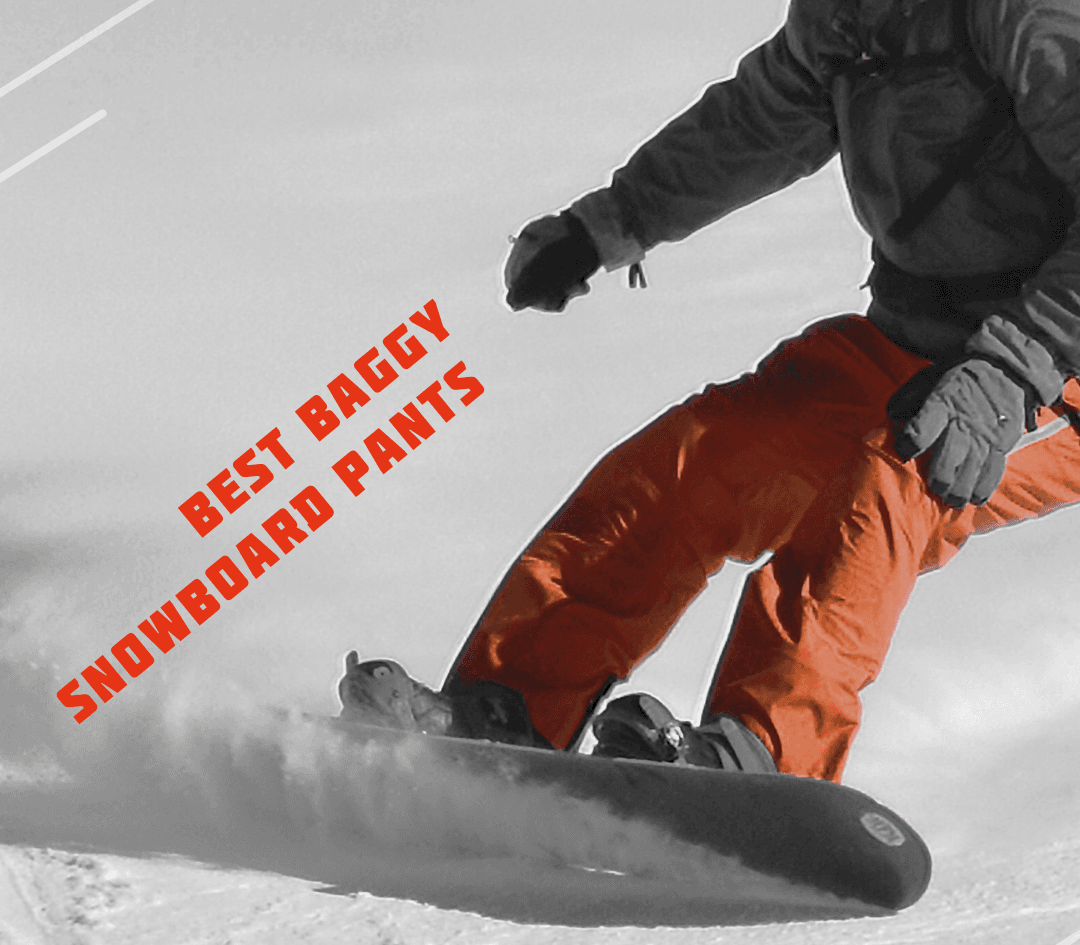
A snowboarder wearing baggy pants mid-air against a snowy mountain backdrop

7 Best Baggy Snowboard Pants: Ride with Freedom and Style

There’s a rebellious freedom baked into the very soul of snowboarding, and nothing captures that spirit quite like a pair of baggy snowboard pants. More than just a throwback to the 90s, the baggy fit is a conscious choice for riders who prioritize unrestricted movement, a laid-back aesthetic, and ultimate comfort on the mountain. Whether you’re dialing in grabs in the park, slashing through deep powder, or just cruising the groomers, the right pair of baggy pants can elevate your entire experience.

But with a flood of options on the market, how do you separate the genuinely great from the merely oversized? It’s not just about sizing up. True baggy snowboard pants are intentionally designed with a wider cut, articulated knees for mobility, and all the technical features you need to stay warm and dry. After countless hours on the snow, rigorous testing, and poring over tech specs, I’ve compiled the definitive list of the best baggy snowboard pants available today. We’ll dive deep into what makes each pair stand out, from bombproof waterproofing to rider-approved features.

Your Ultimate Guide to Baggy Snowboard Pants

In this comprehensive guide, we’ll cover:

  • In-Depth Reviews: A detailed breakdown of the top 7 baggy snowboard pants for men and women.
  • Buyer’s Guide: Everything you need to know about waterproofing, breathability, insulation, and essential features.
  • Layering System Guide: How to build the perfect base-to-shell system under your baggy pants.
  • Care & Maintenance: How to wash, re-DWR, and store your pants to extend their life.
  • Comparison Table: A quick-glance chart to see how our top picks stack up.
  • Expert FAQs: Answering your most pressing questions about fit, function, and style.

What to Look For in Baggy Snowboard Pants: A Complete Buyer’s Guide

Before we drop into the reviews, let’s get you up to speed on the key tech and terminology. Choosing the right pants goes beyond just the look; it’s about performance. Knowing these factors will help you make an informed decision and ensure you’re not just comfortable, but protected from the elements. After all, figuring out when is the best time to buy snowboarding gear is only half the battle โ€” knowing what to buy is the other half.

1. Waterproofing and Breathability Ratings (The “K” Numbers)

This is arguably the most critical factor. These ratings are presented as two numbers โ€” for example, 15K/10K.

  • The First Number (Waterproofing): Measured in millimeters (mm), this tells you how much water pressure the fabric can withstand before it leaks. A higher number means more waterproof. For a good resort day, 10K is a decent starting point, but for wetter conditions or if you spend time sitting on the snow, 15K to 20K โ€” or premium tech like GORE-TEX โ€” is ideal.
  • The Second Number (Breathability): Measured in grams (g), this indicates how much water vapor (sweat) can escape from the inside out over 24 hours. A higher number means more breathable, which is crucial for preventing that clammy, damp feeling inside your pants. 10K is adequate for resort riding; active backcountry riders should look for 15K or higher.

2. DWR: The Invisible Shield That Matters More Than You Think

DWR stands for Durable Water Repellent โ€” a chemical treatment applied to the outer face fabric of your pants that causes water to bead and roll off rather than soaking in. Think of it as a second line of defense that takes pressure off the waterproof membrane beneath. A fresh DWR coating is why a new pair of pants looks like water is rolling off glass. Over time, through washing and abrasion, DWR degrades and the face fabric starts to “wet out” โ€” absorbing water and feeling damp even though the membrane underneath is still technically waterproof.

The practical effect of a wet-out fabric is significant. When the face fabric is saturated, the breathability of the entire system drops dramatically, because moisture can no longer migrate from the inside to the outside efficiently. This is why washing and re-proofing your pants regularly is one of the highest-leverage maintenance habits you can develop. More on this in our Care & Maintenance section below.

3. Insulation: Shell vs. Insulated

Your choice here depends on your body temperature, the climate you ride in most, and your preferred layering philosophy.

  • Shell Pants: No insulation โ€” just a waterproof and breathable outer layer. The major advantage is versatility. You can wear them with just a base layer on warm spring days or layer up heavily on frigid mid-winter days. Most park riders, backcountry tourers, and those who run warm prefer shells.
  • Insulated Pants: Built-in synthetic insulation (measured in grams per square meter). They are warmer and simpler, requiring fewer layers underneath. Perfect for riders who get cold easily or those who spend time standing around on chairlifts in very cold climates.
  • Lightly Insulated / Hybrid: Some pants, like the Picture Organic Object, use just 25g of insulation โ€” enough to take the edge off cold days without the bulk or warmth ceiling of a fully insulated pant. This is an excellent middle-ground for riders who want versatility with just a touch of warmth built in.

4. Fit, Articulation, and the “Baggy” Factor

A “baggy” fit isn’t just about extra fabric โ€” a poorly designed oversized pant will bunch in the wrong places, restrict movement in others, and feel like wearing a sleeping bag. A well-designed baggy pant has an ergonomic cut with articulated knees (pre-bent sections that mirror a natural riding stance), a gusseted crotch that prevents binding when you squat low for a grab, and a seat cut that doesn’t pull down at the waist when you bend your knees. This engineered approach to bagginess is what separates a $300 technical pant from a $40 pair of waterproof over-trousers. That freedom of movement is a core reason why snowboarding is so fun โ€” your gear should enhance that feeling, not fight it.

5. Seam Taping: Fully Taped vs. Critically Taped

Your waterproof membrane does the heavy lifting on the face of the fabric, but seams โ€” the stitched joins between panels โ€” are by definition holes in the membrane. Seam tape is a waterproof tape applied over the inside of seams to seal them. Fully taped means every seam in the pant is covered โ€” the gold standard for wet conditions and powder days. Critically taped (also called “partially taped”) means only the high-exposure seams โ€” typically the yoke, seat, and waistband โ€” are sealed. Critically taped is fine for most resort riding; fully taped is the right choice for backcountry, freeride, or anywhere you expect extended exposure to heavy snow or rain.

6. Must-Have Features

  • Venting System: Zippered vents, usually on the inner or outer thighs, allow you to dump heat quickly after a strenuous run. Non-negotiable for active riders and anyone who laps the park on warm days.
  • Boot Gaiters: An internal elastic or neoprene cuff that goes over your boot to seal out snow. Look for a lace hook that attaches to your boot laces for a secure, permanent connection that won’t creep up your leg mid-run.
  • Reinforced Cuffs (Kickpatches): The bottom hem gets scuffed constantly by edges and bindings. Reinforced material โ€” typically Cordura, Kevlar-blend, or a doubler of the main fabric โ€” in this area significantly extends pant life.
  • Waist Adjustability: Internal Velcro tabs, a ratchet strap, or an external belt allow you to dial the waist fit precisely, especially important after layering up underneath.
  • Jacket-to-Pant Interface: A snap or zip system that connects your jacket hem to your pant waistband, preventing jacket ride-up and snow ingress at the waist during falls. Different brands use proprietary systems โ€” check compatibility with your jacket before buying.
  • RECCO Reflector: A passive SAR (Search and Rescue) reflector that requires no battery and allows rescue teams with RECCO detector equipment to locate an avalanche victim. Found on premium backcountry-oriented pants.

Quick Comparison: The Best Baggy Snowboard Pants

Pant Waterproof / Breathability Insulation Best For Our Rating
Volcom Guch Stretch GORE-TEX GORE-TEX 3L (28K+/20K+) Shell Ultimate Performance & Backcountry 9.8/10
Burton Cargo Pant (Relaxed Fit) 10K/5K (DRYRIDE 2L) Shell (Living Lining) All-Mountain Value & Reliability 9.2/10
686 Everywhere Relaxed Fit Pant 20K/15K (infiDRY 20K) Shell Park Laps & Spring Shredding 9.5/10
DC Code Pant 15K/10K (Weather Defense 15) 40g ProFill Insulation Insulated Comfort & Style 8.9/10
The North Face Freedom Bib 15K/15K (DryVent 2L) 60g Heatseeker Eco Deep Powder & All-Day Warmth 9.4/10
Flylow Baker Bib 20K/20K (Intuitive 3L) Shell Bombproof Durability & Freeride 9.6/10
Picture Organic Object Pant 20K/20K (Dryplay Membrane) 25g Thermal STD Eco-Conscious All-Rounder 9.1/10

The 7 Best Baggy Snowboard Pants: In-Depth Reviews

1. Volcom Guch Stretch GORE-TEX Pant

Volcom Guch Stretch GORE-TEX snowboard pants

Best For: The Rider Who Demands Uncompromising Performance

If you’re looking for the absolute pinnacle of performance in a baggy, articulated fit, the Volcom Guch Stretch GORE-TEX Pant is in a class of its own. Designed with input from legendary backcountry rider Bryan Iguchi, these pants are built to handle the harshest conditions without restricting movement. They prove that you don’t have to sacrifice technical prowess for a relaxed style.

Performance & Weatherproofing

The GORE-TEX 3-Layer Stretch C-KNIT fabric is the star of the show. GORE-TEX C-KNIT is a specific construction where a knit backer is used instead of a standard membrane, resulting in a dramatically softer, quieter, and more packable fabric without any sacrifice in waterproofing or breathability. The three-layer construction bonds the outer face fabric, the membrane, and the knit backer into a single integrated material โ€” there’s no separate inner lining to bunch or shift. On a deep powder day in Utah, these pants felt genuinely impenetrable. The fully-taped seams and YKK AquaGuard water-repellent zippers are the finishing touches on a truly weatherproof construction. The breathability is exceptional โ€” even on strenuous boot-pack approaches, I rarely needed to open the massive outer-thigh vents.

Fit & Features

The fit is what Volcom calls “GPT Articulated Fit” โ€” loose and baggy through the legs but engineered to move precisely with you. The stretch in the GORE-TEX fabric is a genuine differentiator; it provides a level of mobility that stiff, non-stretch shell fabrics simply cannot replicate. The pant is packed with rider-centric details: Volcom’s patented Zip Techยฎ pant-to-jacket interface creates a seamless connection with compatible Volcom jackets; a built-in RECCOยฎ Advanced Rescue reflector adds passive avalanche safety; and reinforced back hems protect the highest-abrasion area. The fleece-lined hand-warmer pockets โ€” a detail that costs almost nothing to manufacture but makes an enormous difference on cold chairlift rides โ€” are a small example of how experience-informed design shows up in a product. If you care about hand protection, the debate of mittens vs gloves for snowboarding is one consideration, but cold hands start with keeping your core and legs warm.

Waterproofing
10
Breathability
9.8
Fit & Mobility
9.8
Durability
9.6
Value
8.0

Pros

  • Top-tier GORE-TEX 3L Stretch waterproofing and breathability
  • Exceptional articulation and freedom of movement
  • Packed with high-end, backcountry-ready features
  • Incredibly durable โ€” built to last multiple seasons
  • RECCO reflector for passive avalanche safety

Cons

  • Premium price point โ€” a significant investment
  • Can be overkill for resort-only riders in mild climates
  • GORE-TEX requires specific washing protocol to maintain performance
Check Price on Amazon

2. Burton Cargo Pant (Relaxed Fit)

Burton Cargo Snowboard Pants in a relaxed fit

Best For: The All-Mountain Rider Seeking Classic Style and Value

The Burton Cargo is an absolute icon, and for good reason. For years it has been the go-to choice for riders who want a reliable, stylish, and feature-rich pant without breaking the bank. The Relaxed Fit version offers that classic baggy silhouette that so many riders love, combined with Burton’s proven tech and rider-focused design. It’s a workhorse that looks good doing its job.

Performance & Weatherproofing

With a 10K/5K DRYRIDE 2-Layer fabric, the Cargo pant provides solid protection for most resort conditions. It’s not GORE-TEX and the breathability rating is the lowest on this list โ€” riders who generate a lot of heat will want to open the vents liberally โ€” but it held up perfectly through average snowfall and remained dry on slushy spring days. The standout technical feature is Burton’s Living Liningยฎ, a mesh liner made from smart-pore technology that expands to release heat when you’re warm and contracts to trap it when you cool down. In practice it works as a surprisingly effective form of automatic climate regulation for a pant that doesn’t have traditional insulation.

Fit & Features

The Relaxed Fit is exactly what it sounds like โ€” plenty of room for layering underneath and freedom of movement for tweaking grabs. But the main practical draw here is storage: two massive cargo pockets, two hand-warmer pockets, and two rear pockets give you the capacity to carry everything you need for a full day without a bag. The Test-I-Cool crossflow venting system โ€” zippers running from knee to knee through the inner crotch โ€” is one of the most effective venting architectures available, allowing you to open the pants completely and dump heat fast. A lace hook gaiter, SureFitโ„ข waistband with Velcro adjusters, and Burton’s unique Sure-Lock jacket-to-pant interface round out a feature set that’s more comprehensive than most pants at this price point. Understanding how expensive snowboarding is makes you appreciate the value the Burton Cargo consistently delivers.

Waterproofing
8.2
Breathability
7.2
Fit & Mobility
9.0
Durability
8.8
Value
9.7

Pros

  • Excellent value for the price
  • Tons of storage with oversized cargo pockets
  • Proven durability and classic style
  • Highly effective Test-I-Cool crossflow venting
  • Living Liningยฎ provides automatic climate adjustment

Cons

  • 5K breathability can feel low for very active riders on warm days
  • Not ideal for extremely wet, prolonged storm conditions
  • Cargo pockets can feel bulky when fully loaded
Check Price on Amazon

3. 686 Everywhere Relaxed Fit Pant

686 Everywhere Relaxed Fit snowboard pants

Best For: Park Riders and Style-Conscious Shredders

686 has its finger on the pulse of snowboard culture, and the Everywhere Relaxed Fit Pant is proof. This pant blends street-inspired style with mountain-grade tech in a way that feels entirely authentic. It has that skate-influenced baggy look that park riders crave while backing it up with serious 20K/15K ratings โ€” making it far more than just a fashion statement.

Performance & Weatherproofing

The 2-Layer infiDRYยฎ 20K Stretch Fabric is a standout performer, particularly for park riding โ€” a discipline that involves significantly more sitting, kneeling, and crawling in the snow than any other style. High waterproofing is critically important when you’re sessioning a rail and spending time on your knees at the bottom of a feature. The 15K breathability is a genuine advantage for lapping the park, where the short, intense exertion of hitting a kicker is followed by the full stop of waiting at the top of the lift line. The DWR coating beads water impressively even after extended use, and the 2-layer stretch construction gives the fabric a suppleness that makes movement feel completely natural.

Fit & Features

The fit is the main story โ€” a modern, relaxed cut that’s genuinely baggy without looking sloppy or disproportionate. The BOAยฎ Compatible Boot System integrated into the gaiter is a clever touch: if you ride BOA-laced boots, you can attach the gaiter directly to the BOA dial and adjust both simultaneously, removing the constant battle of getting your gaiter back over your boot after every bathroom break. The Pant-Jacket Connectโ„ข system, reinforced kick panels, and air-flo mesh-lined inner leg vents round out a feature set tuned precisely for the modern freestyle rider. Many riders find their passion in the park โ€” it’s a big reason why snowboarding is the best winter sport for them.

Waterproofing
9.3
Breathability
8.8
Fit & Mobility
9.5
Durability
9.0
Value
9.0

Pros

  • Authentic modern baggy style that holds up on and off the mountain
  • High 20K/15K waterproof/breathability ratings
  • Durable construction built for park abuse
  • Clever BOA-compatible gaiter integration

Cons

  • Shell design requires proper layering in very cold conditions
  • Freestyle aesthetic may not suit every riding context
Check Price on Amazon

4. DC Code Pant

DC Code insulated snowboard pants

Best For: Insulated Warmth with a Dose of Skate Style

For riders who prefer the convenience of built-in insulation but still want that classic baggy, skate-inspired silhouette, the DC Code Pant is a top contender. DC’s roots run deep in skate culture, and that influence shows in every line of their apparel. The Code offers a comfortable, regular fit that feels roomy and relaxed, combined with solid weather protection and just enough insulation to take the edge off cold mornings without cooking you through the afternoon.

Performance & Weatherproofing

The DC Weather Defense 15K technology strikes a great balance of waterproofing and breathability at 15K/10K โ€” more than capable for the vast majority of resort conditions. The 40g ProFillยฎ Insulation is the pant’s defining feature: it’s not so thick that it creates bulk or significantly limits your temperature range, but it provides a noticeable warmth boost that shell-only wearers would need a full fleece layer beneath to replicate. For riders who are consistently on the cold side, this is a massive quality-of-life upgrade. This pant is a strong example of why DC snowboard gear is genuinely good โ€” they blend function and style without forcing you to choose.

Fit & Features

The fit is straight, relaxed, and generous without going full street-style oversized. It comes with all the essentials: fully taped seams, mesh-lined leg venting, a jacket-to-pant attachment system, and DWR-coated boot gaiters with a lace hook. The articulated legs maintain good mobility despite the insulation layer. Zippered hand-warmer pockets and hook-and-loop back pockets provide secure storage without the bulk of cargo-style side pockets, keeping the overall silhouette clean. This is the grab-and-go pant for riders who don’t want to think too hard about their layering system.

Waterproofing
8.8
Breathability
8.0
Warmth
8.4
Fit & Mobility
8.7
Value
8.8

Pros

  • Lightweight 40g insulation adds warmth without bulk
  • Solid 15K waterproofing handles all resort conditions
  • Classic, clean skate-inspired styling
  • Comfortable, easy to wear โ€” no complex layering required

Cons

  • Insulation reduces versatility on warm spring days
  • Breathability is adequate but not top-tier for high-exertion riding
Check Price on Amazon

5. The North Face Freedom Bib

The North Face Freedom Bib snowboard pants

Best For: Deep Powder Days and Unbeatable Snow Protection

When the snow starts piling up, bibs are king. The North Face Freedom Bib, in its relaxed and generous fit, is one of the best in the business. A bib design delivers two things that pants can’t: complete elimination of the gap between your jacket and your pants waist (the place where snow most commonly invades during a fall), and a significant extra layer of insulation across your core where you lose heat fastest. For powder days and cold climates, the upgrade in comfort and protection is hard to overstate.

Performance & Weatherproofing

Built with The North Face’s proprietary DryVentโ„ข 2-Layer fabric, these bibs handle everything from deep powder to wet sleet comfortably. The DryVent membrane is TNF’s in-house alternative to GORE-TEX โ€” not quite at the same level for breathability under hard exertion, but entirely adequate for resort and light backcountry riding. The 60g Heatseekerโ„ข Eco insulation provides significant warmth with relatively low bulk; it’s made from recycled materials, a thoughtful environmental detail from a brand that has increasingly focused on sustainable production. I’ve worn these in waist-deep powder and stayed completely dry โ€” not just from the snow outside, but also from the insulation managing perspiration effectively during sustained activity.

Fit & Features

The fit is generous and supremely comfortable, held up by adjustable, cross-body suspenders that distribute the weight of the bib evenly and never dig in like shoulder straps on a backpack. The Chimney Ventingโ„ข system โ€” inner-thigh vents paired with StretchVentโ„ข gaiters โ€” manages temperature effectively on everything from slow lift-served runs to more active touring. Multiple secure-zip pockets on the chest and thighs provide accessible, well-organized storage. The reinforced edge guards and kickpatches on the lower legs are clearly designed to survive seasons of chairlift and binding scuffing. The main trade-off is bathroom logistics โ€” bibs always require more effort than pants, but the performance benefits on a proper storm day are worth it.

Waterproofing
8.8
Breathability
8.5
Warmth
9.2
Snow Protection
9.8
Value
8.8

Pros

  • Bib design delivers superior snow protection and core warmth
  • Durable, reliable construction from a trusted outdoor brand
  • Effective insulation for cold climates and long lift-served days
  • Comfortable fit with great storage organization
  • Eco insulation made from recycled materials

Cons

  • Can be too warm for spring riding or high-output backcountry touring
  • Less convenient for bathroom breaks than traditional pants
Check Price on Amazon

6. Flylow Baker Bib

Flylow Baker Bib for snowboarding and skiing

Best For: Bombproof Durability and Backcountry-Ready Performance

Originally born from the demanding world of freeskiing, the Flylow Baker Bib has been wholeheartedly adopted by snowboarders who demand rugged, no-compromise gear. This is the bib you buy if you’re genuinely tough on your equipment โ€” if you’re pushing through tight trees, crawling through rocky terrain, and spending 80+ days a year on snow. It has a notoriously generous fit and is constructed from materials that feel practically indestructible.

Performance & Weatherproofing

The Baker Bib uses Flylow’s proprietary 3-layer Intuitiveโ„ข fabric with a 20K/20K rating, placing it in the upper tier of performance outerwear. This fabric is tough, consistently waterproof, and highly breathable โ€” it handles both the low-exertion cold of a chairlift and the intense sweating of a boot-pack approach without compromising in either direction. The knees and cuffs are reinforced with 1000-denier Corduraยฎ โ€” the same material used in military-grade packs and industrial workwear. Massive outer-thigh vents run almost the full length of the leg, providing unparalleled airflow when you really need it. This bib is built for the storm and equally built for the rider who treats their gear hard.

Fit & Features

The fit is intentionally loose and baggy through the legs, providing ample room for layering without constriction. This is a pure shell, so your warmth management comes entirely from what you wear beneath it โ€” a strength for versatility and a potential issue for riders who rely on their pants to do thermal work. The features are all function-focused: a large kangaroo chest pouch for essentials like skins, food, and a radio; cross-body suspenders that stay put regardless of how aggressively you move; and powder gaiters that seal against your boot. The long side zipper โ€” running from the thigh all the way down โ€” makes getting in and out significantly easier than the typical bib, and is a lifesaver in the bathroom. The Baker is a testament to designing for real use rather than marketing specs.

Waterproofing
9.5
Breathability
9.5
Durability
10
Fit & Mobility
9.3
Value
8.2

Pros

  • Extremely durable with Cordura-reinforced knees and cuffs
  • High-performance 20K/20K waterproofing and breathability
  • Massive outer-thigh vents for superior temperature control
  • Long side zipper makes bathroom breaks far less painful
  • Functional, backcountry-focused features throughout

Cons

  • Stiff 3-layer fabric can feel crinkly when new โ€” softens with use
  • Premium price reflects its durability
  • Pure shell โ€” requires thoughtful layering in cold conditions
Check Price on Amazon

7. Picture Organic Object Pant

Picture Organic Object snowboard pants

Best For: The Eco-Conscious All-Rounder

Picture Organic is a brand on a mission to reduce the environmental footprint of snowboard gear without compromising on mountain performance, and the Object Pant is a shining example of how far that mission has come. Made primarily from recycled and bio-sourced materials, these pants offer top-tier technical performance with a conscience. The relaxed, slightly baggy fit works all over the mountain โ€” from park laps to powder hunts.

Performance & Weatherproofing

The 20K/20K Dryplay membrane is impressive at any price point, and the fact that the face fabric is derived from bio-sourced sugarcane waste polyester makes it even more remarkable. The technical performance genuinely stands up to petroleum-derived alternatives โ€” waterproofing that stayed effective through a full wet-snow day, and breathability that was noticeably better than many pants at lower ratings. The light 25g Thermal STD insulation layer is a versatile touch โ€” enough warmth to ride comfortably on cold mornings without a thick mid-layer, but not so much that you’re cooking by noon. It’s the perfect amount for a three-season, do-it-all pant.

Fit & Features

The fit is a relaxed straight leg โ€” not aggressively oversized, but clearly not slim-cut. The high, stretchy waist gaiter is the feature that makes the Object stand out from its competitors: it extends several inches above a traditional waistband, acting almost like a mini-bib to seal out snow at the waist without the full commitment of a bib design. The jacket-to-pant interface uses three attachment points for a secure connection. Fully taped seams, waterproof zippers, and inner-thigh vents complete a package that is both technically serious and environmentally responsible. For many riders, knowing their gear is made with genuine sustainability intent is part of why snowboarders embrace the culture of the mountain so fully.

Waterproofing
9.3
Breathability
9.3
Sustainability
10
Fit & Mobility
8.8
Value
8.7

Pros

  • Excellent 20K/20K performance from eco-friendly materials
  • Made from recycled and bio-sourced fabrics without performance trade-off
  • Innovative high waist gaiter bridges the gap between pants and bibs
  • Light insulation offers versatility across a wide temperature range

Cons

  • Fit may not be baggy enough for hardcore freestyle riders
  • Bio-sourced fabrics can have a slightly different texture initially
Check Price on Amazon

Which Pants for Which Conditions? A Terrain Guide

Choosing the right pants depends as much on where and how you ride as it does on personal preference. Here’s a breakdown of which picks from our list serve each common riding context best.

๐ŸŒจ๏ธStorm Days & Heavy Snow
You need maximum waterproofing and ideally a bib design to keep snow out at the waist. Full seam taping is essential. Warmth is secondary to dryness.
Top Pick: Volcom Guch GORE-TEX or Flylow Baker Bib
๐Ÿ‚Park & Freestyle
You need a genuinely baggy cut for unrestricted movement, high waterproofing for kneeling on snow, and durability for repeated impact on rails and boxes.
Top Pick: 686 Everywhere Relaxed Fit
๐ŸŒฒBackcountry & Touring
High breathability is the priority โ€” you’ll be working hard on ascents. Durability matters too. A bib offers core warmth without insulation bulk.
Top Pick: Flylow Baker Bib or Volcom Guch GORE-TEX
โ›ท๏ธResort All-Mountain
You want a balance of everything โ€” waterproofing, breathability, storage, and style. Value matters here since you’re not pushing to extremes on any single axis.
Top Pick: Burton Cargo Relaxed or 686 Everywhere
๐ŸŒก๏ธCold Climate / Frequent Rider
Built-in insulation simplifies your layering system and keeps you comfortable throughout the day. Look for 40g+ of synthetic fill in a reliable waterproof shell.
Top Pick: DC Code Pant or TNF Freedom Bib
โ™ป๏ธEco-Conscious Riders
You want high-performance gear that doesn’t compromise your environmental values. Look for recycled face fabrics, bluesignยฎ certification, and PFC-free DWR treatments.
Top Pick: Picture Organic Object Pant

Building the Perfect Layering System Under Your Baggy Pants

A high-performance pair of baggy shell pants is only as effective as what you wear beneath them. The layering system is the foundation of temperature regulation and moisture management, and getting it right transforms the performance of even a modest outer layer. Here’s how to build it correctly for snowboard-specific demands.

Layer 1: The Base Layer โ€” Your Second Skin

The base layer sits directly against your skin and has one critical job: move moisture away from your body as quickly as possible. Sweat that stays against your skin is the primary cause of that clammy, chilling feeling mid-run โ€” and once you’re cold and wet, it’s very hard to recover without stopping to change. The cardinal rule of base layers is never, ever cotton. Cotton absorbs moisture readily and holds it against your body, creating exactly the conditions you’re trying to avoid.

Merino wool is the gold standard for base layers: naturally moisture-wicking, odor-resistant, and temperature-regulating across a remarkable range of conditions. It’s softer against the skin than synthetic alternatives and can be worn multiple days in a row on a ski trip without becoming unpleasant. The downside is cost and durability โ€” merino is more expensive than synthetic and requires more careful washing.

Synthetic base layers (polyester, polypropylene) are faster-drying than merino, more durable, and considerably cheaper. They’re the choice for high-intensity riders who soak through their base layer regularly and need it to dry quickly between runs or overnight. The downside is odor accumulation after repeated use โ€” synthetic fabrics hold bacteria more effectively than wool.

For snowboarding specifically, choose a mid-weight base layer as your default. Lightweight layers are too cold for most winter conditions; heavyweight layers are too warm once you start exerting yourself. Mid-weight hits the sweet spot for the variable intensity of a full riding day.

Layer 2: The Mid Layer โ€” Your Thermal Buffer

The mid layer provides insulation โ€” it traps warm air close to your body and buffers temperature swings between high-exertion moments and stationary ones like chairlift rides. Not everyone needs a dedicated lower-body mid layer; if you have insulated pants, you can skip this layer entirely on most days.

For shell pants, your options are a lightweight fleece pant, a thin synthetic-insulated pant (essentially a lighter version of a ski pant worn underneath), or a wool thermal legging worn over your base layer. Fleece pants are the most common choice โ€” they’re inexpensive, packable, and versatile across a wide temperature range.

The key with a mid layer is fit: it needs to sit comfortably under your baggy outer pants without bunching or creating pressure points around the knees. This is where the roominess of a genuinely baggy outer pant earns its keep โ€” you simply cannot layer meaningfully under a slim-fit technical pant.

Layer 3: The Outer Layer (Your Baggy Pants)

Your outer layer handles wind, snow, and rain, manages breathability, and defines your silhouette. This is the layer you’ve already addressed by choosing from our list above. The main consideration from a layering-system perspective is ensuring your outer pants aren’t so fitted that they compress your mid layer (which destroys its insulating properties) or restrict your articulation.

Layering Tip: Always err slightly looser with your outer pants than you think you need. A pair that fits perfectly over a thin base layer will be uncomfortably tight when you add a mid layer, and restricting your freedom of movement in your lower body will affect your riding technique directly. The baggy pants on this list all provide enough room for a comprehensive layering system.

Socks: The Forgotten Layer

Snowboard-specific socks are genuinely worth the investment and often overlooked. They’re taller than standard athletic socks, extending to or above the boot cuff to prevent the boot edge from rubbing directly on bare skin (which causes blisters almost immediately). Cushioned at the shin and heel but thin across the foot to maintain board feel, they’re typically made from merino wool or a merino-synthetic blend for the same moisture-wicking and odor-resistance properties as a base layer. Wearing skiing or general athletic socks in snowboard boots is a recipe for cold, wet, blistered feet within half a day.


Caring for Your Baggy Snowboard Pants: The Complete Maintenance Guide

A quality pair of baggy pants is an investment. The right care routine extends their waterproof performance, preserves the DWR treatment, and ensures they last many seasons rather than failing prematurely. The bad news: most people wash their outerwear incorrectly. The good news: the correct method isn’t complicated.

How to Wash Snowboard Pants Correctly

The single most common mistake riders make is washing their outerwear with standard laundry detergent. Standard detergents contain surfactants, brighteners, and fragrances that leave a residue on waterproof fabrics โ€” and that residue directly degrades DWR performance. Over time, it can even affect the waterproof membrane underneath. Always use a dedicated technical outerwear cleaner (Nikwax Tech Wash and Grangers Performance Wash are the most widely available) that is specifically formulated to clean waterproof fabrics without leaving residue.

  • 1
    Close All Zippers and VelcroOpen zippers can snag and damage fabric; open Velcro will grab and pull the waterproof membrane. Fully close every zip and fold all Velcro tabs onto themselves before washing.
  • 2
    Use the Right DetergentUse Nikwax Tech Wash, Grangers Performance Wash, or a similar technical cleaner at the recommended dose. Use no fabric softener โ€” softeners coat fibres and destroy breathability permanently.
  • 3
    Wash on a Gentle Cycle at 30ยฐC / 86ยฐFA gentle cycle prevents mechanical damage to seam tape and laminated membranes. Higher temperatures can delaminate 2-layer and 3-layer constructions over time.
  • 4
    Tumble Dry on Low HeatThis is the step most people skip โ€” and it’s arguably the most important. Heat reactivates the DWR treatment that washing has temporarily disrupted. Without it, your pants will wet-out even if the membrane is perfectly intact. Tumble dry on a low-heat setting for 20โ€“30 minutes after washing.
  • 5
    Re-Apply DWR When NeededWhen water no longer beads and rolls off your pants (it soaks in instead), it’s time to re-proof. Spray-on DWR treatments (Nikwax TX.Direct Spray-On, Grangers Clothing Repel) are the easiest to apply correctly and don’t require a separate wash cycle. Apply evenly to a clean, damp pant and tumble dry or iron on low to set it.

Storage and Off-Season Care

How you store your pants over the off-season has a meaningful impact on their performance the following winter. Heat and UV light are the primary enemies of waterproof membranes and DWR coatings โ€” both degrade the molecular structure of the treatments over time. Avoid storing your pants in a car during summer, in a garage that gets hot, or in direct sunlight. A cool, dark wardrobe or a dedicated gear storage bin is ideal.

Before putting pants away for the off-season, give them a wash with technical cleaner and a tumble dry to reactivate the DWR. Storing them clean means they’re ready to go at the first snowfall without requiring a wash cycle when you’re eager to get on the mountain. Hang them rather than folding if possible โ€” tight folds maintained over months can leave permanent crease lines in the face fabric and, over many seasons, can stress seam tape along fold lines.

Never store outerwear in a compressed stuff sack or tight storage bag for extended periods. The compression damages insulation (if present) and can stress the laminate in waterproof membranes. Store loosely hung or folded loosely in a breathable bag.


How We Test and Choose the Best Gear

Our selection process is built on experience and expertise. We don’t just read spec sheets. Our team, made up of seasoned snowboarders with decades of collective experience, puts this gear to the test in real-world conditions โ€” from the icy slopes of the East Coast to the deep powder of the Rockies and the wet spring slush of the Pacific Northwest. We evaluate each product based on:

  • On-Snow Performance: How does it handle a full day of riding in varied conditions? We don’t test in controlled environments โ€” we ride in whatever the weather provides.
  • Durability: We look for signs of wear and tear after repeated use, focusing on seam integrity, zipper function, and high-abrasion areas like cuffs and knees.
  • Fit & Comfort: Does the gear allow unrestricted movement through the full range of riding positions โ€” from a deep squat for a grab to standing upright on a chairlift?
  • Value: We assess whether the price is justified by performance, features, and expected lifespan, not just by brand name.
  • Rider Feedback: We cross-reference our findings against community forums, verified buyer reviews, and feedback from riders across skill levels to ensure our conclusions are representative.

Frequently Asked Questions (FAQ)

Is it better to have baggy or tight snowboard pants?

It’s largely a matter of personal preference and style, but there are functional differences. Baggy pants offer more room for layering, greater freedom of movement for grabs and tweaks, and are generally more comfortable over a long riding day. Tight or “slim-fit” pants suit riders who prefer a cleaner silhouette and may offer slightly less fabric to snag on terrain features, but require high-stretch fabric to deliver the same mobility as a well-designed baggy cut. The majority of snowboarders โ€” particularly those who ride all-mountain and freestyle โ€” prefer the baggy fit.

How baggy should my snowboard pants be?

They should be baggy enough to allow you to squat fully, bend your knees completely, and lift your legs without any pulling or restriction. A practical test: put them on over your snowboard boots and get into your riding stance. Your knees should bend freely, the seat should not pull down at the waist, and there should be no tension across the thighs. They should not be so long that they drag heavily under your boot heel โ€” excessive length increases the risk of catching on edges and accelerates cuff wear dramatically.

Can I just wear regular cargo pants or jeans to snowboard?

No โ€” and for safety reasons, not just comfort ones. Regular pants, especially cotton-based fabrics like denim, are dangerous for snowboarding. They have zero waterproofing and will be fully saturated within minutes of contact with snow. Wet cotton leaches heat from your body at an alarming rate, dramatically increasing the risk of hypothermia in cold conditions. Always wear technically rated waterproof and breathable snowboard pants, even on mild days.

What do you wear under shell snowboard pants?

A moisture-wicking base layer is the foundation โ€” merino wool or synthetic, never cotton. On cold days, add a lightweight fleece pant over your base layer for additional insulation. On warm spring days or if you run hot, a thin base layer alone may be entirely sufficient. The key advantage of shell pants is the ability to adjust your layering precisely to conditions โ€” carry a mid layer in your jacket pocket and add or remove it as the temperature shifts through the day.

Are pants or bibs better for snowboarding?

Bibs offer objectively superior snow protection โ€” particularly around the waist, where snow most commonly enters during falls in deep powder โ€” and provide an additional layer of warmth across the core where heat loss is most significant. The trade-offs are convenience (bathroom breaks require more effort) and reduced versatility on warm days. Pants offer simpler on/off convenience and work better in warm conditions. For powder-focused and freeride riders, bibs are generally preferred. For resort all-mountain and park riding, pants are the more common choice.

How often should I wash my snowboard pants?

Every 8โ€“10 full days of riding is a good rule of thumb. Washing too infrequently allows body oils, sunscreen, and dirt to accumulate and degrade the DWR coating from the inside out โ€” particularly around the waist and seat area. Washing too frequently with the wrong detergent damages the membrane unnecessarily. Always use a technical fabric cleaner and tumble dry on low heat after washing to reactivate the DWR treatment.

What is the difference between 2-layer and 3-layer fabric construction?

In a 2-layer construction, the waterproof membrane is bonded to the outer face fabric, and a separate inner lining hangs free inside the pant. In a 3-layer construction, the membrane is bonded to both the face fabric and a knit or mesh backer โ€” creating a single integrated material with no separate lining. Three-layer fabrics are more durable, more breathable, softer against mid-layers, and more expensive. Two-layer fabrics are lighter, cheaper, and the inner lining can sometimes feel more comfortable against the skin for riders who ride without a base layer (though this is not recommended).

What does DWR mean and how do I restore it?

DWR stands for Durable Water Repellent โ€” a chemical treatment applied to the outer face fabric that causes water to bead and roll off rather than soaking in. Over time, through washing, abrasion, and contamination from sunscreen and body oils, DWR degrades and the face fabric begins to wet-out. To restore it: wash the pants with a technical fabric cleaner, then tumble dry on low heat or apply a spray-on re-proofer like Nikwax TX.Direct. The heat activates the DWR molecules and restores their water-beading effectiveness.

Do I need to size up for baggy snowboard pants?

Baggy snowboard pants are designed with intentional extra room, so you typically do not need to size up from your regular trouser size to achieve the intended fit. Check the brand’s sizing chart using your waist and inseam measurements. Some riders with athletic builds (wider hips or thighs relative to their waist) may find they need to go up one size to achieve comfortable movement through the seat and thighs โ€” but this is a body-specific consideration rather than a general rule.

What is GORE-TEX and is it worth the premium?

GORE-TEX is a specific brand of waterproof-breathable membrane technology, owned and licensed by W.L. Gore & Associates, that sets the industry benchmark for combined waterproofing and breathability. GORE-TEX products are independently tested and certified to meet strict performance standards that most proprietary alternatives don’t reach โ€” particularly for breathability under sustained heavy exertion. Whether the premium is worth it depends on how you ride: for backcountry touring, high-output freeride riding, and extreme weather conditions, GORE-TEX’s superior breathability is a meaningful advantage. For lift-served resort riding in average conditions, high-quality proprietary membranes at 20K/20K deliver excellent performance at a significantly lower price.


Final Thoughts: The Right Pants for Your Ride

Choosing the right baggy snowboard pants is one of the highest-impact gear decisions you’ll make โ€” you wear them every single run, in every condition, and they define both your comfort and your on-snow performance more directly than almost any other piece of kit. The baggy fit, once synonymous with 90s skate culture and oversized rebellion, has matured into a technically refined and functionally deliberate choice embraced by riders of all abilities and styles.

For the rider who wants the absolute best and will use every bit of the technology, the Volcom Guch Stretch GORE-TEX Pant is an investment that pays back in seasons of exceptional performance. For an unbeatable combination of value, features, and timeless style, the Burton Cargo Pant remains the clear choice for the majority of mountain riders. If you spend serious time in the park, the 686 Everywhere Relaxed Fit was designed precisely for you. And when deep powder is the plan, the extra protection of the North Face Freedom Bib or the bombproof durability of the Flylow Baker Bib is the smartest investment you can make.

Ultimately, the best pants are the ones that fit your body, your budget, your riding style, and the mountains you call home. Use this guide as your starting point, consider what you genuinely need from your gear, build your layering system correctly beneath them, and take care of them so they last. Do all that, and a great pair of baggy pants will serve you reliably for many seasons to come. Happy shredding.

Leave a Comment

Editor's Picks

Essential Snowboarding Gear

Burton Custom Flying V

Burton Custom Flying V

The one-board answer to all terrain. A legendary all-mountain ride.

View on Amazon
Lib Tech Skate Banana

Lib Tech Skate Banana

The original rocker board that makes snowboarding fun and easy.

View on Amazon
Jones Flagship

Jones Flagship

A powerful freeride board for carving lines and charging steeps.

View on Amazon
Capita Horrorscope

Capita Horrorscope

A soft, forgiving park board perfect for jibbing and pressing.

View on Amazon
Salomon Sight

Salomon Sight

An entry-level board that's stable and easy to progress on.

View on Amazon
Burton Moto BOA Boots

Burton Moto BOA Boots

Lightweight comfort and an effortless BOA fit system for all-day riding.

View on Amazon
DC Boots

DC Boots

Classic skate style with dual-zone BOA for a customized fit.

View on Amazon
Union Force Classic Bindings

Union Force Classic Bindings

A durable, high-performance binding trusted by pros for all-terrain use.

View on Amazon
Burton Mission Re:Flex

Burton Mission Re:Flex

A reliable workhorse binding that offers pro-grade comfort and response.

View on Amazon
Salomon Trigger Bindings

Salomon Trigger Bindings

Freestyle-focused bindings with a forgiving flex for park and groomers.

View on Amazon
Burton ak GORE-TEX Cyclic Jacket

Burton [ak] GORE-TEX Cyclic Jacket

Bombproof waterproofing and breathability for the harshest conditions.

View on Amazon
Volcom GORE-TEX Pants

Volcom L GORE-TEX Pants

Durable, waterproof pants with a modern fit and great mobility.

View on Amazon
Smartwool Merino 250 Base Layer

Smartwool Merino 250 Base Layer

Warm, moisture-wicking, and odor-resistant first layer for cold days.

View on Amazon
Smith Mission MIPS Helmet

Smith Mission MIPS Helmet

Lightweight helmet with MIPS technology for enhanced impact protection.

View on Amazon
Anon M4 Toric Goggles

Anon M4 Toric Goggles

Features quick-change magnetic lenses for any light condition.

View on Amazon
Burton Total Impact Shorts

Burton Total Impact Shorts

Low-profile padded shorts to protect your hips and tailbone.

View on Amazon
Hestra Fall Line Mitts

Hestra Fall Line Mitts

Premium leather mittens known for their warmth, durability, and comfort.

View on Amazon
Burton Performance Socks

Burton Performance Midweight Socks

Warm, breathable, and strategically padded for a perfect boot fit.

View on Amazon
Dakine Super Tune Kit

Dakine Super Tune Kit

All the tools you need for waxing, edging, and repairing your board.

View on Amazon
Burton Wheelie Gig Board Bag

Burton Wheelie Gig Board Bag

A padded, wheeled bag to protect your gear during travel.

View on Amazon
HotHands Hand Warmers

HotHands Hand Warmers

An essential, long-lasting heat pack for freezing snowboarding trips.

View on Amazon
Destinations

Best Snowboarding Resorts in the USA

Scroll to Top