
Are YES. Snowboards Good? A Rider-Owned Revolution Reviewed
In the snowboard industry, some brands are born in corporate boardrooms fuelled by market analysis. And then there are brands born out of pure, unfiltered passion and a little rebellion. YES. Snowboards falls squarely into the latter category. Behind the cool story and slick graphics, are YES. snowboards actually any good?
As a rider who has tested hundreds of boards over the years, I can tell you that YES. is more than just “good”—they are a benchmark for innovation, quality, and rider-focused design. This isn’t just another brand; it’s a movement started by some of the most legendary riders in the sport’s history. If you’re just getting started, see our guide to choosing your first snowboard to understand what to look for.
The Quick Answer: Are YES. Snowboards Good?
Yes, YES. snowboards are fantastic. They are widely regarded as one of the most innovative and high-quality brands on the market. They excel in all-mountain and freeride categories, delivering powerful carving and superior edge hold through their proprietary UnderBite technology—all backed by an industry-leading lifetime warranty. An excellent choice for intermediate to advanced riders who want a high-performance board designed by and for passionate snowboarders.
Born from Rebellion: The Story That Defines YES.
In 2009, three of the biggest names in the sport—Romain De Marchi (RDM), JP Solberg, and David Carrier-Porcheron (DCP)—were dropped from Burton Snowboards during a corporate restructuring. Instead of fading away, they channelled their frustration into creating a brand that put riders first. With the backing of the Nidecker factory, they launched YES. on a simple premise: a brand owned and operated by snowboarders, building boards they and their friends actually wanted to ride. That philosophy is baked into every product they make.
The Tech Breakdown: What Is “UnderBite” and Why Does It Matter?
Core Tech Explained: UnderBite Edges
UnderBite creates deliberate disruptions in the sidecut arc—the sidecut is pulled inward under your binding areas. When you lay the board on edge to carve, pressure concentrates on the sections just outside your bindings, distributing load far more effectively where you need it most.
- Increases Edge Pressure: By reducing the edge area directly underfoot, it magnifies pressure on the sections leading into and out of your bindings—creating a locked-in, powerful edge hold.
- Smooths Turn Initiation: The board rolls onto its edge predictably and without the “catchy” bite some other enhanced-grip technologies produce.
- Maintains Rider Control: You can drive, redirect, and power through a turn with total confidence.
The YES. Lineup: On-Snow Reviews
| Model | Profile | Edge Tech | Riding Style | Best For |
|---|---|---|---|---|
| YES. Basic | CamRock | UnderBite | All-Mountain / Freestyle | Beginner–Intermediate |
| YES. Typo | Camber Dominant | UnderBite | Aggressive All-Mountain / Freestyle | Intermediate–Advanced |
| YES. Standard | Directional Volume Twin | MidBite | All-Mountain / Freeride | Intermediate–Advanced |
| YES. PYL | Directional CamRock | Tapered UnderBite | Freeride / Powder | Advanced |

YES. Basic
- Riding Style: All-Mountain / Freestyle
- Edge Tech: UnderBite
- Profile: CamRock
- Shape: True Twin
- Base: Extruded (durable)
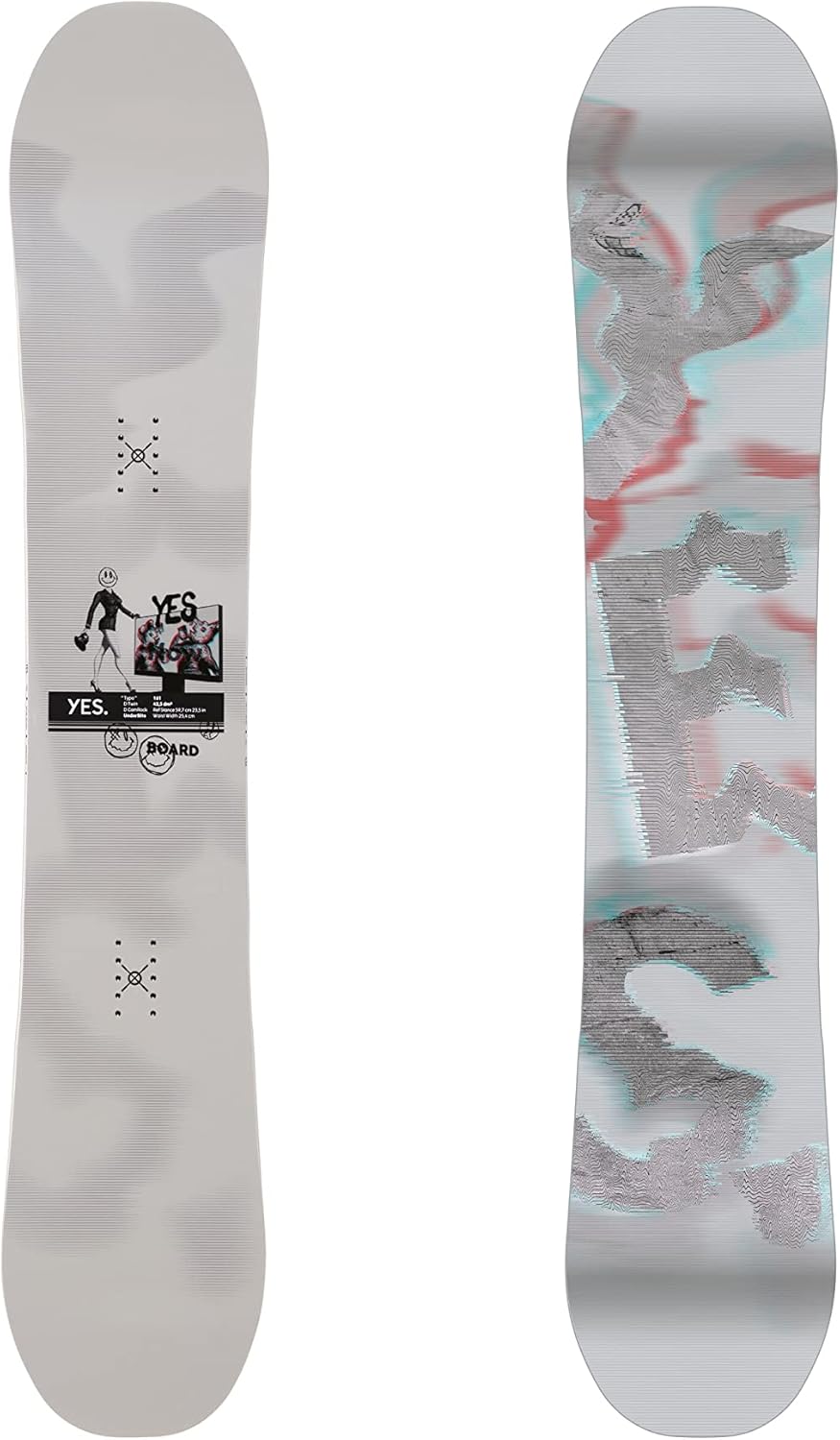
YES. Typo
- Riding Style: Aggressive All-Mountain / Freestyle
- Edge Tech: UnderBite
- Profile: Camber Dominant
- Shape: True Twin
- Base: Sintered (fast)
YES. Basic — The People’s Champion
The CamRock profile delivers camber between the feet for stability and pop, with rocker in the tip and tail for a catch-free feel. Paired with UnderBite edges, the Basic is one of the most intuitive and confidence-inspiring rides at any price point. It holds an edge far better than competing boards in its class, allowing riders to learn proper carving technique from day one. For more on why the sport is worth this investment, see our why snowboarding is so fun guide.
Pros
- Exceptional value for the price
- UnderBite provides confident edge hold
- Forgiving yet capable CamRock profile
- True twin shape—great for learning switch
- Backed by lifetime warranty
Cons
- Not aggressive enough for expert chargers
- Extruded base is slower than sintered
- Flex feels soft at higher speeds
YES. Typo — The Basic’s Evil Twin
The Typo takes the award-winning shape of the Basic and injects it with high-octane energy. The main differences are a more aggressive, camber-dominant profile and a faster sintered base. The UnderBite edges feel even more alive at pace, letting you lay down deep, powerful carves. It’s the kind of board that reminds you why snowboarding is so fun.

YES. Standard
- Riding Style: All-Mountain / Freeride
- Edge Tech: MidBite
- Profile: Directional Volume Twin
- Shape: Volume Shift (ride shorter)
- Base: Sintered (fast)
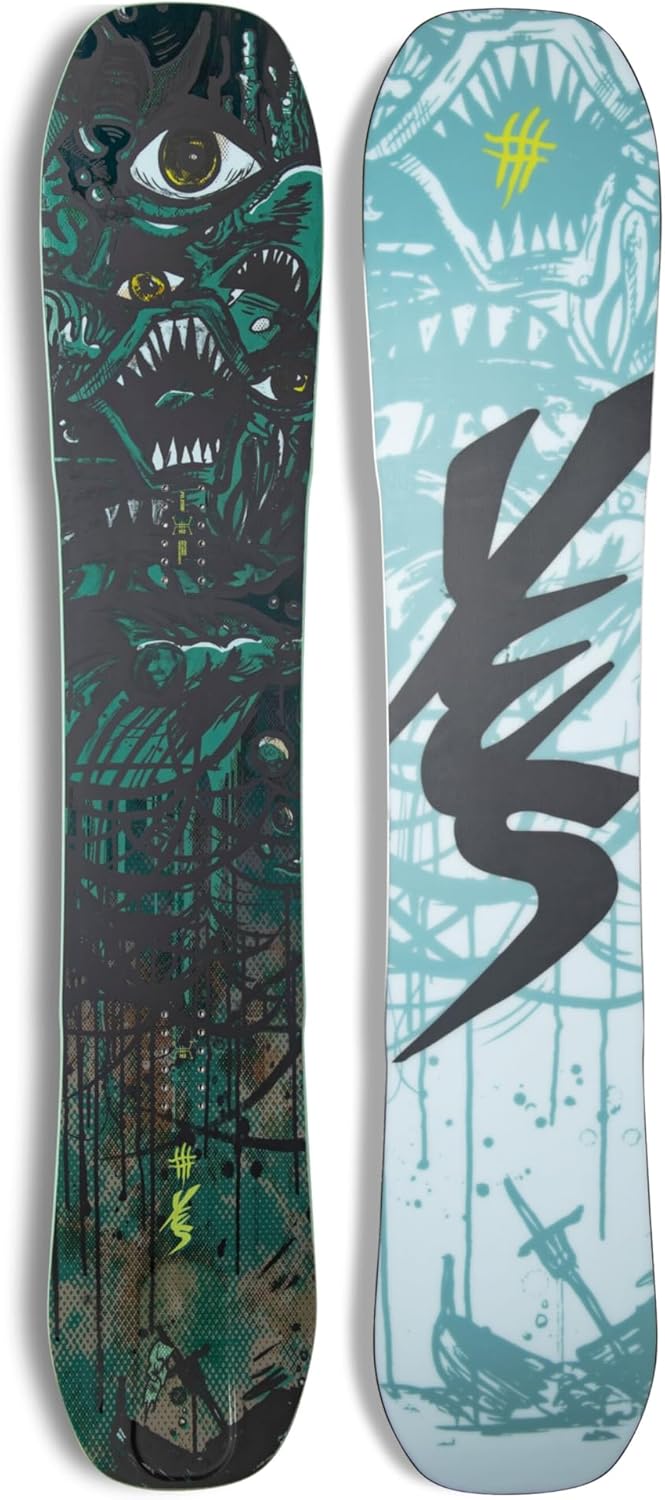
YES. PYL (Pick Your Line)
- Riding Style: Freeride / Powder
- Edge Tech: Tapered UnderBite
- Profile: Directional CamRock
- Shape: Tapered Directional
- Base: Sintered (fast)
YES. Standard — The Modern All-Mountain Benchmark
The Standard is YES.’s take on the volume-shift concept, and it’s executed brilliantly. A wider-than-traditional width lets you ride 3–5 cm shorter without sacrificing stability or float. The MidBite edge tech creates a narrower waist underfoot, intensifying grip. For more on why snowboarding beats skiing in all-mountain performance, see our snowboarding vs skiing comparison.
YES. PYL — When the Forecast Is Powder
The Pick Your Line is built for exactly what its name implies. Tapered UnderBite gives you the edge security of a carving board married to the float of a true powder weapon. This is an advanced rider’s board—it speaks to why snowboarding remains the best winter sport for those who seek the mountain on its own terms.
YES. UnderBite vs. Magne-Traction: How Do They Compare?
Both technologies aim to improve edge hold, but they take different routes. Magne-Traction (used by Lib Tech and Gnu) adds multiple serrations along the full edge—like a serrated knife—delivering a magnetic, almost mechanical grip on ice. UnderBite works through sidecut geometry rather than physical serrations. The result is subtler and smoother: YES. boards provide a significant boost in grip without the sometimes “grabby” feel of Magne-Traction.
Inside the Board: Construction, Materials, and Build Quality
Every board in their lineup is built at the SWS facility in Tunisia—the same factory that produces boards for several of the most respected brands in the industry. YES. uses wood-core construction across their entire lineup, with specific wood blends varying by model: lighter poplar-dominant cores for the Basic, paulownia strips and bamboo stringers for higher-end models. For more on why gear maintenance matters, see our snowboard waxing guide.
YES. Snowboard Sizing Guide
For the YES. Basic and Typo—both traditional-width true-twin boards—standard sizing rules apply. Lighter riders under 60 kg typically ride 148–152 cm; riders between 60–75 kg gravitate to 152–156 cm; riders above 75 kg often prefer 156–162 cm or longer. For more on sizing, see our snowboard sizing guide.
Which YES. Board for Which Terrain?
YES. vs. The Competition
| Feature | YES. | Burton | Lib Tech / Gnu | Capita | Jones |
|---|---|---|---|---|---|
| Edge Hold Tech | UnderBite / MidBite ✓✓ | Frostbite ✓✓ | Magne-Traction ✓✓✓ | Standard ~ | Standard ~ |
| Rider-Owned Brand | ✓ | ✗ | ✓ | ~ | ✓ |
| Lifetime Warranty | ✓ | ✗ 3-year | ~ 2-year | ✗ 2-year | ~ 3-year |
| Park / Freestyle | ~ | ✓✓✓ | ✓✓ | ✓✓✓ | ✗ |
Caring for Your YES. Snowboard
For more on waxing and maintenance, see our snowboard waxing guide. A quality pair of gloves will keep your hands warm while you work — see our mittens vs gloves comparison.
- 1Dry Immediately After Every RideWipe edges and base dry with a clean cloth to prevent overnight rust and corrosion.
- 2Wax at the Start of Every SeasonEven if you waxed at the end of last season, wax again before your first ride.
- 3Inspect Edges Before RidingA quick visual and thumb-nail check along the edges catches burrs and rust spots early.
- 4Remove Binding Hardware for StorageLoosen or remove your bindings before off-season storage.
- 5Store in a Cool, Dry PlaceNever store a snowboard in direct sunlight, in a car during summer, or in a damp garage.
- 6Apply a Rub-On Storage Wax Before SummerA thick layer of hard storage wax protects the base from oxidising.
Who Should Buy a YES. Snowboard?
YES. is the Right Choice If: You’re an intermediate or advanced rider who prioritises carving and all-mountain performance. Long-term value matters to you (lifetime warranty). You care about the story behind your gear. You ride variable snow conditions.
When to Consider an Alternative: Dedicated park/jib focus → Burton, Capita, or Lib Tech. Tightest possible budget → look at entry-level options. Dedicated powder quiver → Gentemstick, Weston, or specialist Jones shapes.
Frequently Asked Questions
Are YES. snowboards good for beginners?
Absolutely. The YES. Basic is one of the best boards on the market for beginners. For first-timer guidance, see our guide to choosing your first snowboard.
Should I size down on a volume-shifted YES. board?
Yes. Sizing down 3–5 cm from your usual all-mountain board gives you a more agile ride without sacrificing stability. For more on sizing, see our snowboard sizing guide.
How does UnderBite compare to Magne-Traction?
UnderBite modifies sidecut geometry for smoother, more powerful carving. Magne-Traction adds physical serrations for maximum grip on ice. Both are legitimate solutions — it comes down to personal preference and conditions.
What is the difference between the YES. Basic and YES. Typo?
They share the same true-twin shape and UnderBite edges, but the Typo features a more aggressive camber-dominant profile and a faster sintered base. For more on board differences, see our snowboard comparison guide.
Does YES. offer a warranty?
YES. offers a lifetime warranty covering manufacturing defects. This is one of the most generous warranties in the industry.
Are YES. snowboards worth the price?
Yes, particularly when you factor in the lifetime warranty. Over a multi-year ownership period, the cost-per-ride is hard to beat. For more on why the sport is worth investing in, see our why snowboarding is so fun guide.
The Final Verdict: A Resounding YES.
Are YES. snowboards good? Without a shred of doubt, yes. They represent the pinnacle of rider-driven design—a brand built on an authentic story, pro-rider expertise, and a relentless drive for innovation you can genuinely feel under your feet. For more on why the sport is worth this level of investment, see our guide to why snowboarding is the best winter sport.
Where Are YES. Snowboards Made? Inside the Nidecker/SWS Factory Model
One of the most-searched questions about this brand has nothing to do with flex ratings or sidecut geometry — riders simply want to know where their board comes from. Every YES. snowboard rolls off the line at the SWS (Swiss Wood Solutions) manufacturing facility in Ghannouch, Tunisia, a plant owned and operated by the Nidecker Group. This is important context, because Nidecker isn’t a contract manufacturer stamping out budget boards for anyone who pays — SWS is the same facility responsible for Nidecker’s own flagship line, along with several other well-regarded pro-driven brands. Building a board in a factory that also produces high-end Nidecker decks means YES. benefits from decades of composite layup expertise, established quality-control checkpoints, and a supply chain for materials like paulownia and bamboo that smaller independent brands simply can’t access on their own.
The Tunisia location itself is worth unpacking. Since the early 2000s, Tunisia has quietly become one of the snowboard industry’s manufacturing hubs, in large part because of the vertical integration Nidecker built there — it controls everything from timber sourcing and core-pressing to base grinding and topsheet lamination under one roof. That vertical control matters for consistency: when a brand relies on multiple subcontracted factories, quality can vary board to board and batch to batch. Because YES. boards are all produced at a single, tightly managed site, riders get far more consistency in flex, camber profile, and edge tuning across production runs than they would from a brand juggling several overseas factories.
It’s also worth addressing a related question that comes up constantly in gear forums: is a Tunisia-built snowboard automatically a lower-quality product than one built in Austria or the United States? The manufacturing-origin-equals-quality assumption doesn’t really hold up under scrutiny. Manufacturing quality is a function of tooling, process control, and material sourcing — not geography. GST in Austria, SWS in Tunisia, and various U.S. facilities all produce boards ranging from entry-level to flagship depending on the brand’s own specs and cost targets, and YES. has consistently specced its boards toward the premium end of what that Tunisian facility can produce.
YES. All-In: The Budget-Friendly All-Mountain Freestyle Option
While the Basic, Typo, Standard, and PYL make up the core lineup most retailers stock, YES. also produces the All-In, a lower-priced all-mountain freestyle board built around a Tapered Mid-Bite profile — a scaled-back derivative of the tech used on the brand’s more advanced Warca and All-Out (formerly Pyzel) shapes. At a typical street price well under the flagship models, the All-In is positioned as an entry point into YES.’s edge-hold technology without the premium cost of a fully sintered, high-end freeride deck.
On snow, the All-In earns its reputation as a forgiving, easy-riding board that still holds its own in the park. The flex is intentionally softer than the Typo or PYL, which makes landings more forgiving and rail presses easier to control, while the tapered Mid-Bite geometry still provides noticeably more grip on hardpack than a generic sidecut. Riders coming from a basic twin-tip with no enhanced edge tech consistently report that the All-In feels like a meaningful step up in confidence on firm groomers, without sacrificing the playful, poppy character that freestyle-minded riders want.
All-In Pros
- Most affordable board in the current YES. catalog
- Forgiving flex is friendly to newer park riders
- Tapered Mid-Bite still delivers real edge-hold gains
- Locks onto rails and boxes predictably
All-In Cons
- Softer flex limits high-speed stability
- Less aggressive edge tech than the Typo or PYL
- Not the choice for dedicated freeride charging
Legacy Models: YES. 20/20 and The Greats — Are They Still Worth Buying?
Because YES. has been producing boards since 2009, secondhand marketplaces and closeout retailers are full of older models that no longer appear on the brand’s current site — most notably the YES. 20/20 and the various boards in The Greats series. Both come up constantly in “should I buy a used YES. board” searches, so it’s worth addressing them directly.
The 20/20 is built as a near-full-camber true twin engineered specifically to still float in powder despite its aggressive camber-dominant profile — an unusual combination, since most full-camber boards feel like they want to dive nose-first in deep snow. Riders who’ve spent extended seasons on it describe it as a wide, grippy, all-conditions ride that rewards an aggressive, front-foot-heavy riding style. If you find a used 20/20 in good structural condition (no core shots, edges intact, base not heavily oxidized), it remains a genuinely capable board for an experienced all-mountain rider, even years after its original release.
The Greats series is a different story — it’s less a single model and more a rotating set of graphics-driven pro collaborations (The Great Beauties of History, The Great Dudes of History, and boards featuring legends like Terje Haakonsen) built on freestyle-oriented shapes that YES. classifies as freestyle boards but that testers consistently describe as punching above that category, with carving and on-piste performance that rivals dedicated all-mountain decks. If you can find one secondhand at a fair price, the biomechanical shaping theory behind The Greats still holds up; just budget for a full edge tune and fresh wax, since these boards have often sat in garages for years.
YES. Women’s Basic and Kids/Groms Sizing
YES. doesn’t limit the Basic’s reputation to a single unisex outline — there’s a dedicated Women’s Basic that keeps the same tried-and-tested CamRock profile and UnderBite edges but adjusts the platform for a typically lighter, narrower rider: a narrower waist width, a softer overall flex, and a slightly mellower profile that make it an easier board to load up and release through a turn. Testers who’ve spent full seasons on it consistently rank it among the best value-for-money women’s boards on the market, noting that even though faster, higher-spec boards exist, very few come close to the Basic’s blend of price and performance.
Underneath the graphics, the Women’s Basic uses the same durable, easy-to-repair extruded base and full poplar wood core as the standard Basic, with mellow biax fiberglass laminates that prioritize a smooth, stable ride over outright speed. It won’t set any land-speed records, but as a platform for progression through a full season of resort riding, it holds up extremely well — which is exactly the reputation the standard Basic has built with its own reviewers.
YES. also extends sizing down into groms/youth territory for younger riders on the true-twin Basic and Typo shapes, generally starting in the low-100s of centimeters for the smallest sizes and scaling up through the low-140s before transitioning into adult sizing. As with the adult lineup, weight is the more reliable sizing input than height — a lighter, taller kid should still size toward the shorter end of the recommended weight range for better maneuverability while learning.
Flex Ratings, Camber Profiles, and Stance Setup Explained
A recurring gap in most YES. buying guides is a plain-English explanation of how flex, camber, and stance actually interact on these boards — most articles just repeat the marketing terms without explaining what they mean for an actual rider.
Stance width and setback also change how any of these boards ride. As a starting point, most riders set their stance roughly shoulder-width apart, then adjust based on riding style: freestyle-oriented riders on the Basic or Typo often centre their stance for balanced switch riding, while riders on the directional Standard or PYL typically set back 1–3 cm (or use the board’s built-in setback inserts) to improve float and reduce fatigue in variable snow. Stance angles follow a similar logic — a duck stance (front foot positive, back foot negative, such as +15/-9) suits freestyle and switch riding on the true-twin Basic and Typo, while a more forward-facing stance (such as +21/+6) complements the directional shape of the Standard and PYL for aggressive carving.
YES. Snowboards vs. Salomon and Jones: A Deeper Look
Beyond the Burton, Lib Tech/Gnu, and Capita comparison covered earlier, two other brands come up constantly when riders are cross-shopping YES.: Salomon and Jones. Salomon brings a ski-brand engineering pedigree to its snowboard line, with a heavier emphasis on dampening technology and construction consistency across a broad, accessible range — it’s a strong pick for riders who want predictable performance without much personality in the marketing. Jones, founded by big-mountain rider Jeremy Jones, leans hard into backcountry and splitboard-specific shapes with an environmental sustainability angle that YES. doesn’t emphasize nearly as much.
| Feature | YES. | Salomon | Jones |
|---|---|---|---|
| Backcountry / Splitboard Range | ~ limited | ~ limited | ✓✓✓ extensive |
| Carving / All-Mountain Focus | ✓✓✓ | ✓✓ | ✓✓ |
| Sustainability Messaging | ~ | ~ | ✓✓✓ |
| Price Point (Flagship Model) | $$–$$$ | $$–$$$ | $$$ |
Neither Salomon nor Jones currently offers a warranty as generous as YES.’s lifetime coverage, which remains one of the clearest differentiators in the brand’s favour when the on-snow performance gap between competitors is otherwise fairly narrow.
YES. Snowboard Pricing: What You’ll Actually Pay
Pricing is another area where most reviews stay vague. Street prices shift by retailer and season, but the relative positioning across the lineup is consistent: the All-In sits at the entry-level end of the catalog, the Basic and Women’s Basic occupy the mid-tier value position, the Typo carries a modest premium over the Basic for its faster base and more aggressive profile, and the Standard and PYL sit at the top of the range given their volume-shift or freeride-specific construction. Buying at end-of-season closeout, or picking up a prior model year once the newest graphics drop, is consistently the best way to get flagship-level tech at a mid-tier price — the underlying core construction and edge tech rarely change dramatically year to year on a given model.
Registering Your Warranty and Making a Claim
Getting the most out of that lifetime warranty means understanding how the claims process actually works, since a warranty is only as good as your ability to use it.
- 1Keep Your Proof of PurchaseSave your original receipt or order confirmation — most manufacturer warranty claims require proof of purchase from an authorized retailer.
- 2Document the DefectTake clear photos of the issue (delamination, edge failure, base crack) as soon as you notice it, before it worsens with continued riding.
- 3Contact the Retailer or Nidecker Support FirstMost warranty claims are processed either through the original retailer or directly through Nidecker/YES. customer support — start with whichever you purchased from.
- 4Understand What’s CoveredManufacturing defects (delamination, core issues, defective edges) are covered; normal wear and tear, impact damage, and improper storage typically are not.
- 5Be Patient With Processing TimeWarranty evaluations can take several weeks, especially in peak season — plan around this if the board is your primary daily driver.
Pairing Bindings and Boots With Your YES. Board
A snowboard’s edge-hold technology only translates to real-world confidence if your bindings and boots are matched to the board’s flex and intended use. For a softer-flexing board like the Basic or All-In, a similarly soft-to-medium binding highback lets the board’s forgiving character come through rather than fighting against a stiff, overly damp binding. For the Typo, Standard, or PYL, a medium-to-stiff binding with a responsive highback helps translate the board’s more aggressive camber and edge tech into precise, powerful turns rather than absorbing that energy in the binding itself.
Boot stiffness should generally scale the same way: softer boots for park- and beginner-oriented riding on the Basic, and stiffer boots for the driving, forward pressure needed to unlock the Typo’s camber-dominant profile or the PYL’s directional freeride shape at speed. Boot sizing matters just as much as board sizing — a boot that’s too large will introduce toe-and-heel drag that undermines even the best edge-hold technology, effectively cancelling out much of the benefit that UnderBite or MidBite is designed to provide.
Where to Buy YES. Snowboards and What to Watch For
YES. boards are sold through a mix of authorized specialty snowboard shops, larger outdoor retailers, and online marketplaces. Buying from an authorized retailer matters more than it might seem, because it directly affects your ability to make a warranty claim — boards purchased through unauthorized grey-market sellers can run into trouble getting manufacturing defects honoured, since the retailer has no established relationship with Nidecker’s support team. When shopping online, check listings carefully for the correct model year and confirm the seller is an authorized dealer before assuming a lower price is simply a good deal rather than a sign of grey-market stock.
End-of-season sales (typically spring, as shops clear inventory ahead of the next model year) and Black Friday promotions are consistently the two windows where meaningful discounts appear on current-model-year boards, while closeout pricing on the prior year’s graphics can appear at almost any point once a shop needs to make room for new stock.
Additional Frequently Asked Questions
Where are YES. snowboards made?
YES. snowboards are manufactured at the SWS facility in Ghannouch, Tunisia, which is owned by the Nidecker Group — the same operation behind Nidecker’s own flagship boards.
Is the YES. All-In a good beginner board?
Yes. Its softer flex and Tapered Mid-Bite edge tech make it a forgiving, confidence-building option, particularly for riders splitting time between all-mountain runs and the park.
Are older YES. models like the 20/20 still worth buying used?
Generally yes, provided the board passes a basic structural check for delamination, base oxidization, and edge rust. Core construction and edge technology don’t change dramatically year to year, so a well-maintained used board can still perform close to a current model.
Does YES. make a women’s-specific board?
Yes, the Women’s Basic uses the same CamRock profile and UnderBite edges as the standard Basic, with a narrower waist width, softer flex, and slightly mellower profile tuned for a typically lighter rider.
What stance angles work best on a YES. board?
Duck stances (such as +15/-9) suit the true-twin Basic and Typo for freestyle and switch riding, while more forward-facing angles (such as +21/+6) complement the directional Standard and PYL for carving.
Do I need stiffer boots for the YES. PYL than the Basic?
Yes. The PYL’s more aggressive directional freeride profile responds best to stiffer boots and bindings that can translate forward pressure into the board’s camber, whereas the softer-flexing Basic pairs well with softer, more forgiving boots.
How do I make a warranty claim on a YES. snowboard?
Keep your proof of purchase, photograph the defect, and contact either your original retailer or Nidecker/YES. customer support directly — manufacturing defects like delamination are covered, while impact damage and normal wear are not.
Is it safe to buy a YES. snowboard from a third-party online seller?
It’s safest to buy from an authorized retailer, since warranty claims can be harder to process on boards bought through unauthorized or grey-market sellers.


