
Mittens vs. Gloves for Snowboarding: The Ultimate Showdown
You’re on the chairlift, and the wind is howling. Your fingers are starting to feel like frozen sausages, and you’re fumbling to reply to a text or adjust your goggle strap. This is the moment every snowboarder faces, the moment you question your life choices—or, more specifically, your handwear choices. Welcome to the age-old debate that has echoed from bunny slopes to backcountry peaks: mittens vs. gloves.
It sounds simple, but this choice is one of the most crucial gear decisions you’ll make, directly impacting your comfort, performance, and overall enjoyment on the mountain. One path leads to unparalleled warmth and a cozy haven for your digits. The other offers the nimble dexterity to conquer zippers, bindings, and phones with ease. For years, I’ve ridden in every conceivable condition, testing dozens of pairs of both, and I’m here to tell you there’s no single right answer—but there is a right answer for you. This guide will dissect every aspect of the debate, from the science of warmth to the real-world functionality of each style. We’ll explore the best of both worlds, dive into the tech that matters, and review the top options on the market today to ensure your hands are the last thing you’re worried about on your next powder day.
Full Transparency: Snowboard Bible is a reader-first publication. We personally test and review gear to help you make the best choices. When you buy through links on our site, we may earn a small affiliate commission at no extra cost to you. This helps us keep the lights on and the reviews coming. Thanks for your support!
The Quick Answer (TL;DR)
- Choose Mittens if: Your hands get cold easily, you primarily ride in very cold climates, or you prioritize maximum warmth and comfort over everything else.
- Choose Gloves if: You need maximum dexterity for adjusting gear, using your phone, or handling equipment (like a camera), you tend to run hot, or you ride in milder spring conditions.
- Consider Hybrids (3-Finger) if: You want the best of both worlds—better warmth than gloves with more dexterity than traditional mittens.
The Deep Dive: Why Warmth and Dexterity Are at War
At its core, the mittens vs. gloves debate is a classic battle between two opposing forces: thermal efficiency and articulation. To make the best choice, you need to understand the fundamental design principles of each and how they affect your hands in the real world. This isn’t just about fashion; it’s about physics.
The Case for Mittens: A Toasty Paradise for Your Paws 🧤
Ask any seasoned rider or instructor what they wear on the coldest days, and you’ll likely hear a resounding chorus of “mittens.” The reason is simple and scientific. By keeping your fingers together in a single compartment (with the thumb separate), mittens create a shared pocket of air. Your fingers work as a team, sharing body heat and creating a self-contained furnace. This design is significantly more thermally efficient than isolating each finger, as gloves do. For those who believe snowboarders wear mittens for a reason, this is the primary one.
Key Advantages of Mittens:
- Unmatched Warmth: The shared heat makes mittens the undisputed king of warmth. If you suffer from Raynaud’s syndrome or simply have poor circulation, mittens are a game-changer.
- Increased Comfort: There’s a certain cozy, relaxed feeling to mittens. Your fingers can move freely within the main compartment, which many riders find more comfortable over a long day.
- Often More Durable: With fewer seams and a simpler construction, high-quality mittens can sometimes be more durable than their glove counterparts, as there are fewer failure points.
The Downside: The Dexterity Dilemma
The obvious trade-off for all that glorious warmth is a major loss in dexterity. Simple tasks become Herculean efforts. Zipping up your jacket, adjusting your binding straps, grabbing your wallet for a mid-day snack, or—heaven forbid—trying to use a smartphone become frustrating charades. You’ll often find yourself taking your mittens off completely, exposing your bare hands to the cold and defeating the purpose of wearing them in the first place.
The Case for Gloves: Ultimate Control at Your Fingertips 🖐️
Gloves are the choice for the tactile rider, the one who values control and freedom. By separating each finger, gloves allow for a full range of motion, mimicking the natural movement of your hand. This level of dexterity is invaluable for countless small tasks that define a day on the mountain.
Key Advantages of Gloves:
- Superior Dexterity: The ability to grip, pinch, and manipulate objects is unparalleled. You can easily adjust your bindings, vents, and buckles without a second thought.
- Better Grip: With each finger able to wrap around an object individually, gloves provide a more secure grip on your board, a ski pole (if you’re splitboarding), or your phone.
- Enhanced Breathability: The higher surface area and separation of fingers can sometimes lead to better moisture management, as sweat has more avenues to escape.
The Downside: The Cold Shoulder
The very feature that gives gloves their dexterity—individual finger pockets—is also their greatest weakness in the cold. Each finger is left to fend for itself, isolated from its neighbors. This leads to significantly faster heat loss compared to mittens. On truly frigid days, even well-insulated gloves can leave your fingertips feeling the bite of the cold.
The Hybrid Solution: 3-Finger “Lobster” Mitts
What if you could have your cake and eat it too? Enter the hybrid, or “3-finger” glove, often affectionately called the “lobster claw.” This design combines the best of both worlds by grouping your pinky, ring, and middle fingers together like a mitten for warmth, while leaving your index finger and thumb free for dexterity. It’s a brilliant compromise that has become increasingly popular for good reason.
You get most of the thermal benefit of a mitten with much of the dexterity of a glove. You can point, zip, and buckle with relative ease, all while keeping the core of your hand significantly warmer. For many riders, myself included, a 3-finger mitt is the perfect daily driver for all but the most extreme temperature swings.
Snowboard Gloves vs. Ski Gloves: Are They Actually Different?
One of the most common questions we get from newer riders is whether they can simply use ski gloves for snowboarding—or vice versa. It’s a totally fair question, especially when ski and snowboard gloves look nearly identical hanging on a shop wall. The honest answer is: technically yes, but there are meaningful design differences that make snowboard-specific gloves worth seeking out.
The Key Design Differences That Actually Matter
Ski gloves and snowboard gloves are engineered around the different ways each sport stresses your hands. Skiers grip poles in a forward-facing stance, so their gloves prioritize a firm cylindrical grip and often have reinforced palm areas optimized for pole gripping. Snowboarders, on the other hand, spend far more time with hands open—carving, catching themselves during falls, doing grabs, and strapping into bindings. This leads to a set of design priorities that diverge in some important ways.
- Palm Reinforcement Location: Snowboard-specific gloves tend to have extra abrasion resistance across the entire palm and the base of the fingers—exactly where you drag and push off the snow when falling or buckling your bindings. Many ski gloves concentrate that reinforcement around the thumb saddle and center palm where a pole grip sits.
- Cuff Design: Snowboard gloves heavily favor long gauntlet cuffs that cinch over the jacket sleeve to seal out snow during wipeouts and powder plunges. Ski gloves more commonly use short, under-the-cuff designs that pair with the tighter, fitted sleeves of a ski jacket.
- Wrist Leash Placement: Snowboard gloves almost always include a wrist leash because there’s no pole strap to keep the glove on your wrist. Ski gloves sometimes omit this feature since the pole strap provides security.
- Dexterity Focus: Because snowboarders regularly adjust their own bindings, many snowboard glove designs prioritize better fingertip dexterity—particularly at the index finger and thumb—than an equivalent ski glove at the same price point.
Can you cross over? Absolutely. A premium ski glove with a solid waterproof membrane will keep your hands warm and dry on a snowboard. But if you’re choosing between two otherwise-equivalent options, the snowboard-specific pair will almost always serve you better on the mountain.
How to Find the Perfect Fit: Snowboard Glove & Mitten Sizing Guide
No amount of expensive insulation or GORE-TEX technology will save you if your gloves or mittens don’t fit correctly. Fit is probably the single most overlooked factor when buying handwear, and it directly affects both warmth and dexterity. A glove that’s too big creates air pockets that your body has to heat, and excess material bunches up when you try to grip things. A glove that’s too small restricts circulation—which is one of the fastest ways to end up with numb fingers on a cold day.
How to Measure Your Hand Size
To find your correct glove size, you only need a flexible measuring tape or a piece of string and a ruler. There are two measurements that matter:
- Hand Circumference: Wrap the tape around your dominant hand at the widest point—across your knuckles, excluding the thumb. Keep your fingers together but relaxed. Note the measurement in inches.
- Hand Length: Measure from the tip of your middle finger to the base of your palm at the wrist crease.
Once you have both numbers, use the circumference as your primary guide and the length as a secondary check. Most brands publish their own sizing charts; always check the specific brand’s chart before ordering, as sizing varies. Below is a general guide for adult sizing:
| Size | Hand Circumference (inches) | Hand Length (inches) | Typical Fit For |
|---|---|---|---|
| XS | 6.5 – 7″ | 6.5 – 7″ | Small women’s / youth |
| S | 7 – 7.5″ | 7 – 7.5″ | Average women’s / small men’s |
| M | 7.5 – 8″ | 7.5 – 8″ | Average men’s / large women’s |
| L | 8 – 8.5″ | 8 – 8.5″ | Large men’s |
| XL | 8.5 – 9″ | 8.5 – 9″ | XL men’s |
| XXL | 9″+ | 9″+ | XXL men’s |
What the Right Fit Should Feel Like
When you slip on a glove or mitten, the fit should be snug but not constricting. Run through this quick checklist in the shop or when you receive an online order:
- Fingertips: In a glove, there should be approximately 1/4 inch of space between the end of your finger and the tip of the glove’s finger pocket—no more, no less. Too much space is bad; too little is also bad. In a mitten, your fingers should rest naturally in the compartment without being squished.
- Palm Tension: Make a fist. The palm should feel comfortably taut, not tight or restrictive. If the seams at the base of your fingers dig in, go up a size.
- Cuff Fit: The cuff should seal cleanly around your wrist without gaps. If you’re going over-the-cuff, the gauntlet should cinch down without excessive bunching.
- Liner Fit: If the glove has a removable liner, try the liner on by itself. It should fit like a second skin—snug enough to use as a standalone glove in mild conditions but not so tight it cuts off circulation.
💡 Pro Tip: Sizing Up for Thick Liner Gloves
If you plan to wear a dedicated liner glove inside your mitten or glove shell for extra warmth on extreme cold days, size up half a size or one full size on the outer shell. This ensures there’s enough room for the extra layer without compressing the insulation or cutting off circulation—both of which will make your hands colder, not warmer.
Women’s-Specific Snowboard Mittens and Gloves: Do They Make a Difference?
Yes, significantly. Women’s-specific handwear is not just marketing. Women’s hands have a fundamentally different shape than men’s—typically narrower palms, longer fingers relative to palm width, and a different thumb set point. Wearing a unisex or men’s glove in a smaller size attempts to compensate for this but usually results in a poor fit: the fingers are the right length but the palm is too wide, creating that sloppy, bunching feeling that kills dexterity.
Women’s-specific patterns are cut with a narrower palm and a properly proportioned thumb. They’re also frequently filled with slightly more insulation per gram, accounting for the fact that women, on average, have a higher surface-area-to-volume ratio in their extremities and thus lose heat faster. If you’re a woman and you’re currently riding in unisex handwear and wondering why your fingers are always cold, switching to a women’s-specific fit is often a revelation. Top brands like Hestra, Burton, and Dakine all produce excellent women’s lines that mirror the technology of their men’s counterparts in a properly engineered fit.
The Power of Liner Gloves: Your Secret Weapon Against the Cold
A liner glove—sometimes called an inner glove or glove liner—is a thin, lightweight glove worn underneath your main shell mitten or glove. It’s one of the most underutilized pieces of kit in a snowboarder’s arsenal, and adding a quality liner to your setup can dramatically extend the range of conditions your current handwear can handle. Think of it like the base layer system you use for your torso, but for your hands.
What Liner Gloves Are Made Of
The best liner gloves use performance materials engineered to wick moisture away from your skin while providing a small but meaningful additional layer of insulation. The most common materials are:
- Merino Wool: The premium choice. Merino is naturally temperature-regulating—it keeps you warm when cold and prevents overheating when you’re working hard. It’s naturally odor-resistant, soft against skin, and retains warmth even when damp. Merino liners are pricier but last for years and feel luxurious.
- Polypropylene / Polyester Fleece: The budget-friendly workhorse. Lightweight synthetic fleece liners dry very quickly and wick moisture well. They’re less comfortable directly against skin for long periods compared to merino, but they’re incredibly warm for their weight and wash easily.
- Silk: Ultra-thin and surprisingly warm for their weight, silk liners are a niche but excellent option when you need the minimal possible bulk. They feel incredibly smooth against skin but are more delicate than synthetic or wool options.
- Conductive Materials (Touchscreen Compatible): Most modern liners weave conductive silver or copper fibers into the fingertips, allowing you to use a smartphone or GPS device without removing the liner or your outer shell.
When and How to Use Liner Gloves
There are several strategic ways to incorporate liners into your mountain kit:
- As an Emergency Backup: Stash a thin liner in your jacket pocket. If your main glove gets soaked through or you drop one off the chairlift, you have a backup to get you back to the lodge safely.
- As a 3-Season Setup: Pair a mid-weight liner with a light shell on warm spring days. Ditch the liner on a 40°F bluebird day and you still have hand protection against the wind and any unexpected snow.
- For Extreme Cold: Layer a 200g fleece or thick merino liner inside your primary mitten on days when the temperature drops below 0°F (-18°C). This extra layer can be the difference between a comfortable ride and a day-ending case of numb fingers.
- For Driving and Post-Ride: Wear your liner as a standalone glove for the car ride up the mountain, in the lodge while you’re eating lunch, or for any errand where your big bulky mittens are overkill.
Heated Snowboard Gloves and Mittens: Are They Worth It?
Battery-powered heated gloves have made enormous leaps in quality over the past five years, and they’re now a genuinely viable option for riders who struggle chronically with cold hands—not just a gimmick for the overly cautious. If you have Raynaud’s phenomenon, poor circulation, or if you simply ride in extreme cold (we’re talking Alaska, Hokkaido, or deep Whistler winters), a quality pair of heated mittens or gloves can be truly life-changing.
How Heated Snowboard Gloves Work
Modern heated gloves use rechargeable lithium-ion battery packs—typically stored in a waterproof compartment in the cuff or on the back of the glove—to power thin resistive heating elements. These elements are woven into the back of the hand and sometimes the fingers, distributing heat evenly. Most heated gloves offer two or three heat settings (low, medium, high), controlled by a button on the cuff or, increasingly, via a smartphone app via Bluetooth. Battery life varies widely, but quality options typically provide 2–6 hours of heat on a full charge at the medium setting—enough for a full day of riding if you only activate the heat when you truly need it.
What to Look for in a Heated Snowboard Glove
- Battery Life: Look for a minimum of 2.5 hours on the highest setting and 5+ hours on low. Replaceable or easily swappable batteries are a significant advantage for multi-day trips.
- Waterproofing: The waterproof shell is non-negotiable. If the battery compartment or charging port isn’t properly sealed, moisture ingress will destroy the electronics quickly. Look for a waterproof rating of at least 10K/10K, preferably with a GORE-TEX insert.
- Heating Element Coverage: Some budget heated gloves only heat the back of the hand. Better options heat both the back of the hand and the fingers—the places that actually get cold.
- Charging Speed and Type: USB-C charging is now the standard and makes life much easier. Check whether the gloves charge simultaneously (both gloves on the same charger) or need to be charged one at a time.
- Warmth Without Heating Active: This is critical. A heated glove should also function as a solid, well-insulated glove even when the heating element is turned off. Some budget heated gloves are poorly insulated, leaving you with cold hands the moment the battery dies.
⚠️ Important: Heated Gloves Are a Supplement, Not a Replacement
Heated gloves work best when you treat them as an enhancement to a solid base of quality insulation and waterproofing—not as a substitute for it. The heating elements are designed to top off your warmth, not to compensate for a thin, cheap shell. Invest in a well-insulated heated glove from a reputable brand, and you’ll have a setup that handles the widest possible range of conditions.
Hand Warmers as an Alternative
For riders who don’t want the complexity and cost of battery-powered heated gloves, disposable hand warmers (like HeatMax or Grabber brand air-activated packs) are a tried-and-true solution. Slip one into the mitten compartment against the back of your hand and you’ll get several hours of gentle, even warmth. The key is placement: the back of your hand, not the palm, is where hand warmers work best since they warm the blood returning to your fingers. Reusable hand warmers—liquid-based click-to-activate packs that you boil to reset—are a more eco-friendly option and work well for short sessions. Neither solution is as seamless as a purpose-built heated glove, but both are effective and cost a fraction of the price.
Best Kids’ Snowboard Mittens: Keeping Little Hands Warm on the Mountain
Choosing handwear for kids on the mountain deserves its own deep-dive, because children have very different needs from adults. Kids lose body heat faster than adults—they have a higher surface area relative to their body mass—and they’re far less likely to tell you their fingers are cold until they’re already miserable. Wet, cold hands are also one of the most common reasons kids decide they hate skiing or snowboarding after one or two trips, so getting this right is genuinely important for building a lifetime of stoke.
Mittens vs. Gloves for Kids: The Answer is Easy
For young children—toddlers through roughly age 8—mittens are almost always the right choice, full stop. The warmth advantage is even more pronounced in small hands, and young children don’t yet need the dexterity that gloves provide since an adult is handling their bindings for them. Look for mittens with the following kid-specific features:
- Waterproof Insert: Kids spend more time with their hands in the snow than adults—they’re falling, making snowballs, and dragging their hands through powder. A robust waterproof membrane (10K minimum, GORE-TEX if budget allows) is essential. Wet hands become cold hands in minutes.
- Long Gauntlet with a Simple Closure: A long cuff that goes well over the jacket sleeve and fastens with a single easy-to-operate strap or Velcro tab prevents snow from getting inside. Avoid designs with complicated double closures that small kids can’t manage themselves.
- Over-the-Glove (OTG) Design: Some kids’ mittens are specifically designed to go over a thin knit liner glove that stays on the hand for warmth and backup when the main mitt comes off. This two-layer system is extremely effective.
- Buddy Clips / Mitten Clips: Attach mittens to the jacket cuffs so they can’t be lost. You’ll thank yourself for this feature approximately 15 times per trip.
- Sizing Room for Growth: A slightly generous fit (with the liner system as described above) can often get you two seasons out of a single pair rather than one. Just don’t go so big that the warmth is compromised.
For older children and teenagers (roughly age 9+), the choice starts to mirror the adult debate. Kids who are progressing quickly in the park or on steeper terrain may prefer gloves for the dexterity to handle their own bindings and gear. But if warmth is a priority—especially on ski school days or in very cold conditions—continue with mittens or explore the 3-finger hybrid style.
Over-the-Cuff vs. Under-the-Cuff: Which Gauntlet Style is Right for You?
The gauntlet style—how the cuff of your mitten or glove interfaces with your jacket sleeve—is a frequently overlooked detail that can have a real impact on your day on the mountain. This is not merely a style preference; it affects snow entry, warmth, and convenience in ways that matter.
Over-the-Cuff (Gauntlet) Style
An over-the-cuff design features a long, wide cuff that pulls up over your jacket sleeve and cinches around your forearm. This is the classic “gauntlet” style, and it’s the preferred choice for most serious snowboarders and anyone riding in deep powder, blizzard conditions, or very cold temperatures. The key advantage is a fully sealed system: with the cuff pulled over your sleeve and cinched tight, there is no gap between your jacket and your glove through which snow can enter. On a powder day when you’re burying your hands repeatedly with each turn, this seal is invaluable.
The trade-off is bulk and occasional difficulty with jacket cuffs that are cut close to the wrist. Some jacket-glove combinations can bunch up or make it feel like your jacket is being pulled up your arm. If you’re building a new kit, choose a jacket with a compatible cuff design, or look for gloves with adjustable, elastic over-cuff systems that accommodate a range of jacket sleeves.
Under-the-Cuff Style
Under-the-cuff gloves have a shorter, fitted cuff that tucks inside the jacket sleeve. This creates a cleaner, lower-profile look and can be more comfortable for everyday wear—it’s less bulky around the wrist area and feels less restrictive when you’re bending and flexing. Many freestyle and park riders prefer under-the-cuff designs because they allow for a closer, more articulate fit that doesn’t interfere with their style.
The downside is obvious: an under-the-cuff design relies on your jacket’s cuff closure to seal out snow, and on very deep days or in heavy snowfall, powder can still creep in between the jacket and glove. If your jacket has an excellent powder cuff built into the sleeve, this is a minor issue. If your jacket cuff is more open, you’ll feel the difference on a powder day.
🏔️ Powder / Backcountry / Very Cold Days
You need every avenue for snow and cold air sealed shut.
→ Over-the-Cuff Gauntlet
🛹 Park / Freestyle / Mild Conditions
You want a clean, unrestricted feel and aesthetic.
→ Under-the-Cuff
🌤️ Resort All-Mountain / Variable Conditions
You want versatility and aren’t sure what you’ll encounter.
→ Over-the-Cuff (adjustable fit)
Wrist Guard Gloves for Snowboarding: Do You Actually Need Them?
The wrist is the most commonly injured body part in snowboarding. When we fall—and everyone falls—the natural instinct is to extend your arms to catch yourself, transmitting significant impact force through the wrist. Studies have consistently shown that wrist injuries account for anywhere from 20–30% of all snowboarding injuries. This makes a compelling case for wrist protection, and the most convenient way to get it is through a glove or mitten with an integrated wrist guard.
How Wrist Guard Gloves Work
Wrist guard gloves incorporate a rigid or semi-rigid splint—usually made from hard plastic or a composite material—into the palm side of the glove. In a fall, this splint acts as a buffer against hyperextension, preventing the wrist from bending backwards beyond its natural range of motion. Some designs use a single dorsal (back of hand) splint to prevent over-extension, while others use a double-splint system (both front and back) that resists bending in both directions. Most modern wrist guard gloves are designed to feel relatively natural during normal riding, with the splint only engaging in a fall situation.
Who Should Consider Wrist Guard Gloves?
- Beginners: The learning phase is when falls are most frequent and least controlled. This is statistically when wrist injuries most commonly occur. If you or your child are just starting out, wrist guard gloves are a smart investment.
- Riders Returning from Injury: If you’ve already injured a wrist once, the likelihood of re-injury is higher. Wrist guards provide valuable protection and peace of mind during recovery and beyond.
- Freestyle Riders: Park and halfpipe riding involves deliberate aerial maneuvers with crash landings—a higher-risk environment for wrist impacts. Many freestyle riders use wrist guards as standard protective equipment.
💡 Standalone Guards vs. Integrated Gloves
You can also purchase standalone wrist guards that are worn underneath any glove or mitten. This approach allows you to use the handwear you already own and love while still getting wrist protection. Brands like Burton, Dakine, and DEF offer excellent standalone guards. The trade-off versus an integrated wrist guard glove is slightly more bulk, but the protection level is often superior.
Snowboard Glove & Mitten Price Guide: What Do You Actually Get at Each Budget?
Snowboard handwear ranges from $20 gas-station impulse buys to $400+ premium leather gauntlets. Understanding what you actually get—and don’t get—at each price tier helps you make an informed decision rather than defaulting to the cheapest option (which rarely pays off) or overspending on features you’ll never use.
💚 Budget: Under $50
You’ll get basic waterproofing (typically a 5K or lower-rated insert), minimal insulation, and a synthetic shell. These are fine for occasional riders who mostly stay in mild conditions or who are testing the sport before committing to gear. Expect limited durability—seams and zippers may fail after one season of regular use. Avoid if you ride more than 5–10 days per season or in genuinely cold temperatures.
💙 Mid-Range: $50 – $150
This is the sweet spot for most recreational riders. At this price point you’ll find reliable 10K–15K waterproof inserts (sometimes GORE-TEX at the higher end), meaningful synthetic insulation (PrimaLoft or Thinsulate), durable synthetic shells, and key features like removable liners, wrist leashes, and touchscreen compatibility. Brands like Dakine, Burton, and Roxy offer excellent mid-range options that will genuinely last 3–5 seasons with proper care.
💜 Premium: $150+
Premium handwear uses GORE-TEX or equivalent membranes, leather shells (goatskin or cowhide), top-tier insulation (PrimaLoft Gold, Gore Warm), and construction that will last a decade or more with basic care. Brands like Hestra, Oyuki, and Black Diamond operate in this space. The performance gap between a $100 mid-range glove and a $200 premium option is real but narrowing; the durability gap, however, is substantial. A $200 leather Hestra mitten that lasts 10 years costs less per season than a $75 synthetic mitten replaced every two.
Spring Snowboarding Handwear: What Changes When It Warms Up?
Late-season spring riding is a completely different animal from a mid-January blizzard session. Temperatures can swing from below freezing in the early morning to 45°F (7°C) or warmer by early afternoon. The snow goes from firm and fast to soft, wet, and heavy. Your handwear choice needs to adapt accordingly—wearing your heavy powder mittens on a 40°F April afternoon will leave you with sweaty, clammy hands and a miserable experience.
The Spring Riding Handwear Toolkit
The most versatile approach for spring riding is a layering system rather than a single heavy-duty option. Here’s how to build it:
- A Light Shell Glove: A thin, hardshell glove with a basic waterproof membrane (10K is plenty for wet spring snow) and no insulation, or minimal 60–80g synthetic fill. This is your main tool for the afternoon when temperatures have risen. It provides wind and water protection without causing overheating.
- A Warm Liner for Morning: Pair the light shell with a mid-weight fleece or merino liner for the first runs when it’s still chilly. Stuff the liner in your pocket once the sun takes over—an easy, two-minute adjustment that keeps your hands comfortable all day.
- Strong DWR is Essential: Spring snow is wet snow. DWR (Durable Water Repellency) on your shell is even more important in spring than in winter because you’re dealing with wet, heavy snow that soaks through a compromised shell quickly. Re-proof your gear before spring season (see the care section below).
The Complete Care and Maintenance Guide for Snowboard Gloves & Mittens
Even the best pair of GORE-TEX mittens will fail you if you don’t care for them properly. The good news is that maintaining your handwear is straightforward—it takes maybe 30 minutes of active effort per season and pays massive dividends in performance and longevity. This section covers how to wash, dry, re-waterproof, and store your gloves and mittens to keep them performing at their peak year after year.
How to Wash Snowboard Gloves and Mittens
Most synthetic shell gloves and mittens can be machine washed. Leather gloves and mittens should always be hand washed or spot cleaned only—the mechanical action of a washing machine is too harsh for leather and will cause cracking and deformation. Follow this process for synthetic handwear:
- Remove any removable liners and wash them separately.
- Close all velcro tabs and zippers before washing to prevent them from snagging or damaging the shell fabric.
- Use a technical fabric cleaner like Nikwax Tech Wash or Grangers Performance Wash rather than regular laundry detergent. Standard detergents contain surfactants that strip the DWR coating from the outer shell and can clog the pores of waterproof membranes.
- Wash on a cold, gentle cycle.
- Run an extra rinse cycle to ensure all detergent residue is removed.
How to Re-Waterproof Your Gloves and Mittens (DWR Treatment)
The DWR (Durable Water Repellency) coating on the outer shell of your gloves is the first line of defense against moisture. When new, water beads up and rolls off the surface. Over time—and especially after washing—this coating degrades and the shell fabric starts to “wet out,” absorbing water and feeling cold and heavy. Re-applying a DWR treatment is simple and should be done once or twice per season or whenever you notice your gloves losing their bead-off performance.
DO: Reproofing Right
- Wash gloves before reproofing for best penetration.
- Use a spray-on DWR like Nikwax TX.Direct Spray-On or Grangers Performance Repel.
- Apply evenly to the damp outer shell immediately after washing.
- Tumble dry on low heat to activate the DWR—the heat bonds the coating to the fabric fibers.
- Reapply at the start of each season and mid-season if you ride frequently.
DON’T: Common Mistakes
- Don’t use regular laundry detergent—it destroys DWR and clogs membranes.
- Don’t dry on high heat or place directly on a radiator—it damages insulation and membranes.
- Don’t store gloves damp—mold and mildew will grow inside the lining.
- Don’t use aerosol spray DWR in a poorly ventilated space—fumes are potent.
- Don’t machine wash leather—you’ll ruin the shell and void any warranty.
How to Dry Snowboard Gloves and Mittens Overnight
Drying your gear properly after a day on the mountain is one of the most impactful things you can do to extend its life and ensure it’s ready to perform again the next day. Never place handwear directly on a heater, radiator, or next to an open fire. Direct, intense heat damages the waterproof membrane, causes insulation to clump, and can warp or crack leather shells. Here’s the right approach:
- Step 1 – Shake out excess water: Give your gloves a firm shake to dislodge any large water drops inside and out.
- Step 2 – Remove the liners: Pull out any removable liners and lay them flat separately. They dry much faster when air can circulate around them independently.
- Step 3 – Turn inside out if possible: If the design allows, turn the shell partially inside out to expose the damp interior lining to air.
- Step 4 – Use a glove/boot dryer: A powered dryer with glove tube attachments (like the DryGuy or Peet brand dryers) is the best tool for overnight drying. They circulate warm (not hot) air through the glove from the inside out, drying efficiently without overheating.
- Step 5 – Air dry if no dryer available: Hang gloves in a warm room with good airflow—near (but not directly on) a vent or radiator, or propped open on a rack. With 6–8 hours of good airflow, most gloves will dry adequately overnight.
How to Care for Leather Snowboard Gloves
Leather handwear is an investment, and it rewards proper care with years—sometimes decades—of outstanding performance. The key is preventing the leather from drying out and cracking, and maintaining its natural water resistance. Here’s a seasonal care routine:
- Start-of-Season: Inspect for cracks, worn seams, or damaged stitching. Apply a leather conditioner (Leather Honey, Otter Wax, or Hestra’s own Leather Balm) with a soft cloth, working it into the leather evenly. Let it absorb for several hours before conditioning again if the leather looks particularly dry.
- Mid-Season (every 3–4 weeks of regular riding): Apply a leather-safe waterproof treatment (Nikwax Leather Proof or similar) to restore water repellency. This is different from conditioning—conditioning keeps the leather supple; waterproofing keeps the water out.
- End-of-Season: Clean any salt or dirt deposits with a damp cloth and mild soap, condition thoroughly, allow to dry completely, and store in a cool, dry place away from direct sunlight. Stuffing the fingers with tissue paper or a glove form helps the leather maintain its shape during storage.
- Spot Treatment: If you scrape a seam on a binding edge or scuff the palm, treat it immediately with a dab of leather conditioner. Untreated abrasions dry out and crack quickly.
How Long Should Snowboard Gloves and Mittens Last?
With proper care, here’s a realistic durability expectation by category:
- Budget synthetic gloves (under $50): 1–2 seasons of regular riding (20–30 days/season). Seams and waterproofing tend to fail first.
- Mid-range synthetic gloves ($50–$150): 3–5 seasons with proper washing and reproofing. The waterproof membrane outlasts the DWR coating by a wide margin, so regular reproofing extends life significantly.
- Premium synthetic gloves ($150+) or leather gloves ($150–$300+): 5–10+ seasons. The shell and membrane are built to a higher standard, and leather, when properly conditioned, can outlast synthetic materials many times over. Several Hestra and Black Diamond devotees ride the same pair for a decade or more.
Troubleshooting Common Snowboard Glove Problems
Even quality handwear can cause frustration if you’re not using it correctly or if a specific issue isn’t addressed. Here are the most common glove and mitten complaints we hear from riders, along with practical solutions.
Problem: My Fingers Are Still Cold Even in Good Mittens
This is the most common complaint, and it almost always has a fixable cause. Work through this checklist:
- Check the fit first. Gloves that are too tight compress insulation and restrict blood flow. If you can feel pressure when you flex your fingers, size up.
- Add a liner glove. Even a thin 100-weight fleece liner adds meaningful warmth and is often the simplest fix.
- Re-proof your shell. A wetted-out shell (where water soaks in rather than beading off) dramatically reduces the effectiveness of the insulation inside. If your gloves feel heavy and cold when wet, it’s time for a DWR treatment.
- Warm up before going out. Cold hands at the start of the day are often a circulation issue—your body takes time to push blood to your extremities. Swing your arms in a windmill motion to force blood to your fingertips before your first run.
- Consider circulation issues. If you have Raynaud’s phenomenon or poor peripheral circulation, even the best mittens may need to be supplemented with heated gloves or chemical hand warmers.
Problem: My Hands Get Too Hot and Sweaty in Gloves
This is the flip side of cold hands and is a real comfort issue that leads to wet hands and subsequent chill. The solution is almost always a more breathable design or a lighter insulation weight. Consider a glove with a GORE-TEX membrane (which is more breathable than most proprietary inserts), or move to a lighter-weight option for the conditions you typically ride in. A removable liner system also helps—you can dial the warmth up or down as the day progresses by pulling the liner out mid-ride and stashing it in your pocket.
Problem: My Gloves Are Soaking Through From the Inside Out
If you feel dampness building up inside your gloves over the course of a day, the culprit is almost always sweat rather than external moisture penetration. The fix is a more breathable design. Membranes with higher breathability ratings (GORE-TEX, in particular, excels here) allow sweat vapor to escape before it condenses inside the glove. You can also improve airflow by loosening the wrist closure on moderate-temperature days to allow some air circulation.
Problem: My Touchscreen Compatibility Has Stopped Working
The conductive fibers in touchscreen-compatible fingertips can degrade over time, especially if the gloves are washed frequently with standard detergent. Switching to a technical fabric wash (which doesn’t strip or damage the fibers) often restores some function. Some riders also find that lightly sanding the fingertip area of the glove (with very fine sandpaper) can restore conductivity by roughing up the surface and exposing more conductive fibers—though this is a last resort and may shorten the material’s lifespan.
The Ultimate Buyer’s Guide: Deconstructing Snowboard Handwear
Now that you understand the core concepts, let’s get into the nitty-gritty. The tech in modern handwear is incredible, but the marketing jargon can be confusing. Here’s what you actually need to know before you spend your hard-earned cash. Remember, investing in good gear is a key part of the experience, and while it’s important to understand how expensive snowboarding is, quality handwear is a place you don’t want to skimp.
1. Waterproofing & Breathability: The GORE-TEX Factor
Wet hands are cold hands, period. A waterproof and breathable membrane is the most critical feature of any quality mitten or glove. This membrane is a special layer laminated between the outer shell and the insulation. It’s filled with microscopic pores that are too small for liquid water to penetrate from the outside, but large enough for water vapor (sweat) to escape from the inside.
- GORE-TEX: This is the industry gold standard. It’s guaranteed to be waterproof and is highly breathable. You’ll often see variations like “Gore Warm” or “Gore Grip,” which indicate added insulation or dexterity features. If your budget allows, GORE-TEX is almost always worth the investment.
- Proprietary Membranes: Brands like Dakine (DK Dry™), Burton (DRYRIDE™), and others have their own excellent in-house waterproof technologies. These are often very effective and can provide GORE-TEX-level performance at a slightly lower price point.
2. Insulation: Down vs. Synthetic
The insulation is the engine of your handwear’s warmth. The main choice is between natural down and synthetic fills.
- Synthetic (e.g., PrimaLoft®, Thinsulate™): This is the most common and practical choice for snowboard handwear. Synthetic insulation is fantastic because it retains most of its insulating properties even when it gets damp from sweat. It’s also durable and less expensive than down. PrimaLoft® is a top-tier synthetic that offers an incredible warmth-to-weight ratio.
- Down: Down offers the absolute best warmth for its weight and is incredibly compressible. However, its major drawback is that once it gets wet, it clumps together and loses all of its insulating power. For this reason, it’s less common in snowboarding gear unless it’s protected by a high-end waterproof membrane like GORE-TEX.
3. Shell Materials: Leather vs. Synthetic Fabrics
The outer material needs to be tough enough to handle sharp edges, abrasive rope tows, and general mountain abuse.
- Leather: A premium choice, leather (especially goatskin) offers incredible durability, dexterity, and natural water resistance. It requires some maintenance (periodic conditioning with a waterproof treatment), but a well-cared-for leather glove can last for many seasons. It also molds to your hand over time for a custom fit.
- Synthetic (e.g., Nylon, Polyester): The most common shell material, synthetics are lightweight, require no maintenance, and are often treated with a Durable Water Repellent (DWR) finish to make water bead off. They offer excellent performance but may not have the same long-term durability as high-quality leather.
4. Must-Have Features You Shouldn’t Overlook
- Removable Liners: This is a huge plus for versatility. You can wear the shell alone on warm spring days, the liner alone for the drive up, or both together for maximum warmth. They also speed up drying time significantly.
- Wrist Leashes: These simple elastic straps are lifesavers. They let you take off your mittens on the chairlift without the terrifying risk of dropping one into the abyss below. Don’t buy handwear without them.
- Nose Wipe Thumb Panel: A small patch of soft, absorbent material on the thumb. It sounds gross, but on a cold day with a runny nose, you’ll be thankful it’s there.
- Gauntlet Style: This refers to the cuff. “Over the cuff” gauntlets go over your jacket sleeve and cinch down, offering maximum snow protection. “Under the cuff” styles are less bulky and fit under your jacket sleeve. It’s a matter of personal preference.
The Best Mittens & Gloves for Snowboarding
After testing dozens of pairs in conditions ranging from bluebird park days to sideways blizzards, here are my top picks. I’ve focused on performance, durability, value, and the specific needs of snowboarders. Finding the right gear is a big part of why snowboarding is fun, and these selections will not let you down.
1. Burton GORE-TEX + Gore Warm Mittens
Best Overall Mittens for All-Around Performance and Value
The Burton GORE-TEX Mitten is a legendary piece of gear for a reason. It’s the perfect intersection of high-end technology, rider-focused design, and a reasonable price point. For the vast majority of resort riders, this is the only mitten you’ll ever need. It’s a workhorse that consistently delivers warmth and dryness.
Performance and Features
The combination of a GORE-TEX membrane and Burton’s Thermacore™ insulation is a one-two punch against the cold and wet. The “Gore Warm” certification means it meets a higher standard for insulation and thermal performance. What I love most is the versatility of the removable, four-way stretch Screen Grab® liner. You can wear the liner on its own, and it’s fully touchscreen compatible. The shell features Burton’s tough DRYRIDE 2-layer fabric, and the palm has a durable synthetic leather for grip. It’s the complete package.
Pros
- GORE-TEX + Gore Warm provides elite-level waterproofing and warmth.
- Includes a high-quality, removable touchscreen liner.
- Incredible value for the level of technology.
- Durable and comfortable for all-day riding.
Cons
- Classic mitten dexterity limitations.
- Synthetic leather palm isn’t as durable as real leather.
2. Hestra Fall Line 3-Finger Glove
Best Hybrid “Lobster” Mitt for Premium Performance
Hestra is a Swedish brand with a heritage of crafting impeccable gloves, and the Fall Line 3-Finger is a masterpiece. Made from supple, impregnated cowhide leather, this is a premium option for riders who demand durability, warmth, and dexterity. If you’re ready to invest in a pair of handwear that will last for years and perform flawlessly, this is it.
Performance and Features
The beauty of the Fall Line is in its materials and construction. The all-leather shell is incredibly tough yet breaks in beautifully, molding to your hand. The Bemberg polyester lining is soft and comfortable, while the G-Loft synthetic insulation provides excellent warmth without bulk. The 3-finger design truly offers the best of both worlds—I can easily adjust my bindings and open my pack, tasks that are a struggle in a full mitten. The neoprene cuff fits snugly under your jacket, and the included wrist leashes are top-notch. It’s a testament to the idea that simplicity and quality materials are the ultimate features.
Pros
- Incredibly durable and supple all-leather construction.
- 3-finger design provides a perfect balance of warmth and dexterity.
- Premium materials and craftsmanship.
- Molds to your hand for a custom fit over time.
Cons
- Premium price point.
- Leather requires occasional maintenance/conditioning.
3. Dakine Titan GORE-TEX Gloves
Best Overall Gloves for Dexterity and Versatility
The Dakine Titan has been a bestseller for over a decade, and it’s easy to see why. It’s a feature-packed, high-performance glove that delivers reliable warmth and waterproofing without the dexterity sacrifice of a mitten. For snowboarders who are constantly adjusting their gear or riding park, the Titan is a fantastic choice.
Performance and Features
The Titan uses a GORE-TEX insert with “Gore Warm” tech, so you know you’re getting top-tier protection. The shell is a durable polyester with a DWR coating, and the palm is a tough, grippy Rubbertec material. What sets the Titan apart is its feature set: it comes with a removable, touchscreen-compatible Storm Liner glove, a massive external waterproof zipper pocket (perfect for a hand warmer or locker key), and a soft nose wipe panel. The over-the-cuff gauntlet with a one-hand cinch closure is brilliant for sealing out snow on deep days.
Pros
- Excellent dexterity for a well-insulated glove.
- GORE-TEX protection ensures dry hands.
- Packed with useful features like a pocket and removable liner.
- Great value and proven long-term durability.
Cons
- Not as warm as a comparable mitten on the absolute coldest days.
- Can feel slightly bulky with the liner in.
4. Oyuki The Pep GORE-TEX Trigger Mitt
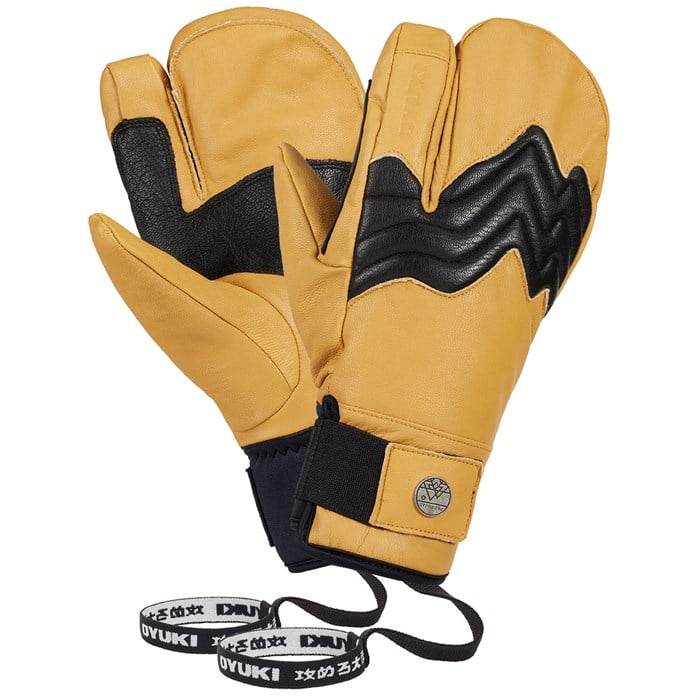
Best Trigger Mitt for Backcountry and Freeride Enthusiasts
Oyuki is a brand born out of the deep powder of Niseko, Japan, and their gear is built for the harshest conditions. The Pep is a “trigger mitt”—a variation of the 3-finger design—created in collaboration with pro rider Pep Fujas. It’s an exceptionally well-crafted piece of equipment that blends premium leather with top-tier tech for riders who push the limits.
Performance and Features
Constructed with a premium goatskin leather shell and backed by a GORE-TEX membrane, the Pep is both bombproof and breathable. It’s insulated with 133g of PrimaLoft® Gold, one of the best synthetics on the market, offering incredible warmth. The trigger finger design provides fantastic dexterity for manipulating bindings, zippers, and splitboard hardware. I found the double-layer leather palm and fingers to be incredibly durable when handling sharp snowboard edges. The over-the-cuff design and simple wrist leash are all function, no fuss. It’s a prime example of why many feel snowboarding is the best winter sport—the gear is just so purpose-built and cool.
Pros
- Premium goatskin leather and GORE-TEX construction.
- Top-of-the-line PrimaLoft Gold insulation.
- Excellent balance of warmth and trigger-finger dexterity.
- Built for extreme conditions and durability.
Cons
- High-end price tag.
- Can be too warm for mild conditions.
5. DC Franchise Mittens
Best for Style-Conscious Park Riders on a Budget
DC brings its signature skate-inspired style to the snow, and the Franchise Mitten is a perfect example. It’s a stylish, comfortable, and surprisingly capable mitten that offers excellent value. For park riders or anyone looking for a solid mitten without the GORE-TEX price tag, the Franchise is a fantastic pick.
Performance and Features
The Franchise uses DC’s proprietary Weather Defense 10K waterproof insert, which is more than enough protection for most resort days. It’s packed with 150g of Thinsulate™ insulation, making it a very warm option. The pill-pattern faux leather palm is grippy and durable enough for grabbing and park abuse. What stands out is the huge range of colorways and designs available, allowing you to match your kit perfectly. It also includes essential features like wrist leashes and touchscreen compatibility on the index finger. It’s a great reminder that DC snowboards and gear are good choices for riders who value both style and function.
Pros
- Excellent warmth with 150g insulation.
- Great price point and value.
- Wide array of stylish colorways.
- Includes key features like leashes and touchscreen tech.
Cons
- 10K waterproofing isn’t ideal for very wet, slushy conditions.
- Not as breathable as higher-end options.
Head-to-Head: Comparison Chart
| Model | Type | Waterproofing | Insulation | Best For | Our Rating |
|---|---|---|---|---|---|
| Burton GORE-TEX Mitt | Mitten | GORE-TEX + Gore Warm | Thermacore™ Synthetic | All-Around Resort Dominance | 9.5/10 |
| Hestra Fall Line 3-Finger | Hybrid (3-Finger) | Impregnated Leather | G-Loft Synthetic | Premium Durability & All-Mountain | 9.8/10 |
| Dakine Titan GORE-TEX Glove | Glove | GORE-TEX + Gore Warm | High Loft Synthetic | Maximum Dexterity & Features | 9.3/10 |
| Oyuki The Pep Trigger Mitt | Hybrid (Trigger) | GORE-TEX + Leather | PrimaLoft® Gold | Freeride, Backcountry & Harsh Weather | 9.7/10 |
| DC Franchise Mitt | Mitten | 10K Weather Defense | 3M™ Thinsulate™ (150g) | Park Riding & Style on a Budget | 8.8/10 |
Frequently Asked Questions (FAQ)
Are mittens or gloves better for beginners?
For most beginners, mittens are the better choice. Beginners tend to spend more time with their hands in the snow while learning to stand up, strapping in, and during falls. The extra warmth of mittens will keep them more comfortable and allow them to stay out on the slopes longer. The dexterity of gloves is less critical when you’re just focused on learning the basics.
How do I dry my gloves or mittens overnight?
Never place them directly on a heater or radiator, as intense direct heat can ruin the waterproof membrane and damage leather. The best method is to pull out the liners (if they’re removable) and place both the shells and liners in a warm, dry room with good air circulation. A boot dryer with glove attachments works wonders. If you don’t have one, just leaving them in the open is best.
Is touchscreen compatibility actually useful?
Yes and no. While it’s great for quickly checking a message or changing a song without exposing your skin, the bulky nature of insulated handwear means you won’t be typing out long emails. It’s useful for simple taps and swipes but don’t expect fine control. A removable, touchscreen-compatible liner offers the most practical solution.
How do I take care of leather snowboard gloves?
Leather is a skin and needs conditioning to stay supple and water-resistant. Most high-quality leather handwear comes with a packet of Nikwax or a similar leather treatment. Apply it once or twice a season (or whenever the leather looks dry). This will drastically extend their lifespan and performance. Taking care of all your gear is important, just like knowing why you should wax your snowboard regularly.
Can I use ski gloves for snowboarding?
Technically yes, but snowboard-specific gloves are better suited to the demands of riding. They typically feature palm reinforcement in locations that matter for snowboarders (the full palm and finger bases), longer gauntlet cuffs to seal out powder, and wrist leashes to prevent losing them on the chairlift. If you only ride occasionally and already own quality ski gloves, they’ll work fine. For regular snowboarders, a snowboard-specific design is the smarter choice.
What temperature rating should I look for in snowboard gloves?
Unfortunately, glove manufacturers don’t follow a standardized temperature rating system the way sleeping bag manufacturers do, so these ratings are difficult to compare across brands. Instead of focusing on temperature ratings, look at the insulation weight (grams of fill) and the type: 80–100g of PrimaLoft or Thinsulate is suitable for mild to moderate cold (20–35°F / -7 to 2°C); 120–180g is excellent for colder conditions (0–20°F / -18 to -7°C); above 180g is reserved for extreme cold or riders with poor circulation. Combine this with a waterproof-breathable membrane and you have all the information you need.
How do I stop my gloves from smelling after a season?
The inside lining of snowboard gloves can develop an odor from accumulated sweat and bacteria over a season. The solution is regular washing using a technical fabric cleaner (not standard detergent). For persistent odors, add a small amount of Mirazyme (an enzyme-based odor eliminator designed for technical fabrics) to the wash cycle. Between washes, letting gloves air out fully after each day on the mountain rather than stuffing them in a bag prevents the bacteria buildup that causes odor in the first place.
Should kids wear mittens or gloves for snowboarding?
For children roughly age 8 and under, mittens are almost always the right choice. Young children lose body heat faster than adults, spend more time with hands in the snow, and don’t yet need the dexterity for adjusting their own bindings. Look for a waterproof insert (10K minimum), a long gauntlet cuff, and buddy clips to prevent losing them. For older kids progressing in the sport, the choice mirrors the adult debate—mittens for warmth, gloves for dexterity, hybrids for the best of both.
Do heated snowboard gloves really work?
Modern battery-powered heated gloves are genuinely effective, especially for riders who struggle with chronically cold hands, Raynaud’s phenomenon, or extremely cold conditions. The key is choosing a quality pair that also functions as a well-insulated, waterproof glove when the heating isn’t active—not a thin shell that relies entirely on battery power for warmth. Look for at least 2.5 hours of battery life on the highest setting and a 10K+ waterproof rating on the shell.
How often should I re-waterproof my snowboard gloves?
As a general rule, re-apply a DWR treatment at the start of each season and once more mid-season if you ride frequently (20+ days). A reliable signal that it’s time to re-proof is when water no longer beads off the shell and instead soaks into the fabric, making the gloves feel heavy and reducing the warmth of the insulation inside. Always wash gloves with a technical cleaner before reproofing for best results, and use a dryer on low heat to activate the new DWR coating after application.
The Final Verdict: Making the Right Choice for Your Ride
So, we’ve reached the end of the trail. The great debate of mittens vs. gloves doesn’t have a single victor, because the winner is entirely dependent on you—your circulation, your riding style, and your priorities.
Think of it this way:
- If your internal monologue on the lift is consistently, “My fingers are blocks of ice,” stop hesitating and buy a quality pair of mittens like the Burton GORE-TEX Mittens. The warmth is a revelation.
- If you’re constantly taking off your handwear to adjust your kid’s gear, send a photo, or tweak your bindings, the freedom of a dexterous glove like the Dakine Titan GORE-TEX will dramatically improve your day.
- And if you’re like me and find yourself torn between these two worlds, the elegant compromise of a 3-finger or trigger mitt like the Hestra Fall Line or Oyuki Pep offers a near-perfect solution that you won’t regret.
Your hands are your connection to your board and the mountain environment. Investing in the right protection for them is one of the smartest moves you can make. It’s just as important as choosing the right board or finding the best snowboard bag for your travels. So, assess your needs, pick your champion, and get ready to wave goodbye to cold, fumbling fingers for good. After all, a warm and capable rider is a happy rider, and that’s ultimately what it’s all about.
