

How to Stop on a Snowboard: Every Technique You Need to Know
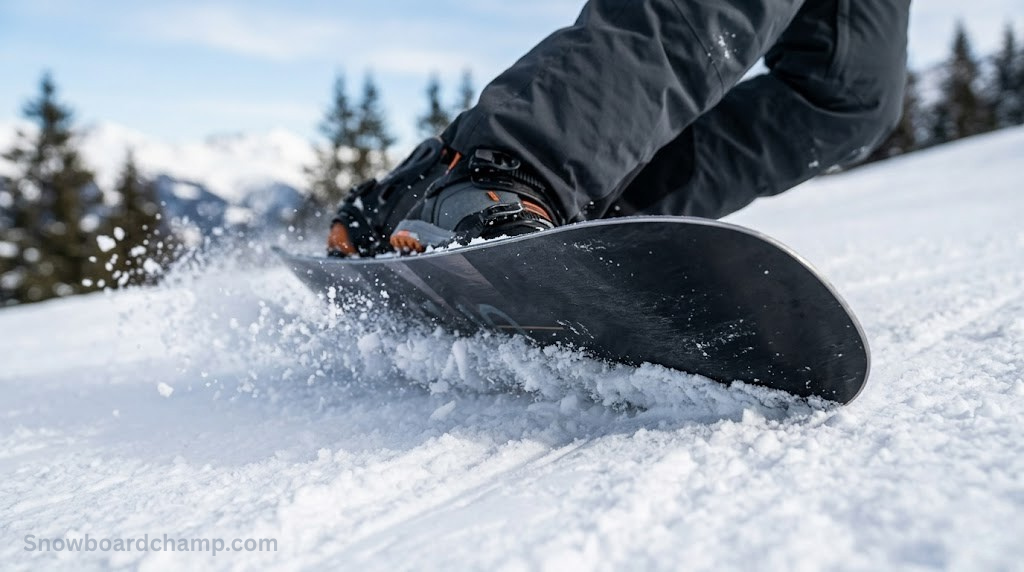
Let’s get one thing straight: learning to stop is the most important skill in snowboarding. You can ride a magic carpet, shuffle onto a beginner slope, and somehow point yourself down the hill — but if you can’t reliably arrest your speed, you are a danger to yourself and every other person on the mountain. Resorts have kicked people off lifts for less.
The good news? Stopping on a snowboard is learnable in a single morning session with the right mental model. The even better news? There are actually multiple stopping techniques, each suited to different terrain, speed, and conditions. Beginners need the foundational heel-edge brake. Intermediate riders need skidded turns and the hockey stop. Advanced riders need to understand terrain-based speed management and carve-to-stop mechanics. This guide covers all of it.
What you won’t find here is vague advice like “dig your edge in more.” Every technique is broken down into body position, weight distribution, edge engagement mechanics, and the specific movement sequence that makes it work — with diagrams for each. If you’re heading to the hill soon, bookmark the section for your current skill level and work through it methodically before you touch a steeper run.
1. Why Stopping Matters More Than You Think
Skiing culture has the “pizza wedge” — an imperfect but universally taught stopping method. Snowboarding has no equivalent shortcut built into the equipment design. A snowboard points you sideways to the slope; stopping requires actively engaging an edge perpendicular to your direction of travel. That’s a less intuitive motion than anything skiing asks of a beginner, and it’s the reason new snowboarders struggle with speed control far more than new skiers do.
Understanding stopping is also understanding the snowboard. Every stop uses the same fundamental principle as every turn: edge engagement. When you learn to stop reliably, you’ve already learned the first half of turning. The muscle memory you build stopping on a flat beginner slope is the same muscle memory you’ll later redirect into linked turns on blues and blacks.
There’s also a social dimension. Snowboarding has an image problem on some mountains — partly because beginners who can’t stop tend to blow through merge zones, cut off skiers, and lose control through congested lift lines. Nothing changes that reputation faster than a new rider who can actually stop on demand. If you’re just starting out, our beginner snowboarding tips guide puts stopping in the full context of your first-ride success blueprint.
Heel-Edge Brake
Your first and most important stop. Learned on flat terrain, works on all groomed runs.
Toeside Brake
Mirror of the heel stop. Requires forward lean confidence but opens up full-terrain riding.
Falling Leaf
Traverse → stop → traverse → stop. Builds edge comfort without committing to turns.
Skidded Turns
Controlled sideways slides through turns. Primary speed management for mid-level terrain.
Hockey Stop
Aggressive broadside skid. Fast, reliable, and satisfying when it clicks.
Carve-to-Stop
Speed control through high-angle carving. The elegant way to manage velocity.
2. The Physics of Stopping on Snow
Every snowboard stopping technique is ultimately an application of the same physics: converting kinetic energy into heat through friction between your board’s edge and the snow surface. The more edge you bring in contact with the snow at a perpendicular angle to your travel direction, the more friction you generate, and the faster you decelerate.
FIGURE 1 — Edge perpendicular to velocity creates maximum friction and deceleration
Three variables control how quickly you stop:
- Edge angle: The closer to 90° your board is to your direction of travel, the more braking force. A board angled at 45° to your travel direction creates much less stopping power than one at 90°.
- Edge pressure: How hard you push your edge into the snow. This comes from your body weight distribution and muscular engagement — primarily your ankles and shins pressing against the binding’s highback or toe strap.
- Snow hardness: A sharp edge on groomed hard pack grips and stops quickly. The same edge on wet spring slush requires more angle and pressure. Fresh powder absorbs energy differently — more on that in the deep-snow section.
The critical insight for beginners: your board’s edge is not a passive element you steer. It’s an active force tool you engage with muscle tension in your lower legs and ankles. Most beginner stopping failures come not from technique errors but from releasing edge tension at the wrong moment — usually out of fear, which causes the rider to lean back, reducing edge pressure exactly when they need it most.
For context on how edges interact with different base materials and snow types, our sintered vs. extruded base comparison explains why base porosity affects glide speed — and implicitly, how much braking effort different setups require.
3. The Heel-Edge Brake — Your First Stop
The heel-edge brake is the single most important technique in this entire guide. Before you link turns, before you ride a chairlift, before you touch anything steeper than a bunny hill — you learn this stop. It is the foundation everything else builds on, and it can be practiced on completely flat terrain before you ever point downhill.
Find Your Athletic Position
Stand on your board on flat snow, strapped in, board perpendicular to the fall line (across the slope). Flex your ankles and knees — you want a slight bend in both, not locked straight legs. Your weight should be centered over the board, neither pitched forward nor leaning back. Arms out slightly for balance, shoulders relaxed. This is your base position for everything.
FIGURE 2 — Heel-Edge Brake: Athletic base position — bent knees, arms out, centered weight
Lift Your Toes to Engage the Heel Edge
This is the key movement. Keeping your heels on the board, lift your toes upward — as if trying to point your toes at the sky while your feet remain in the bindings. This dorsiflexion motion tilts the board onto its heel edge, digging the back edge into the snow. Simultaneously, push your hips slightly forward (toward the nose of the board) to prevent leaning back, which would decrease edge pressure.
FIGURE 3 — Heel-Edge Brake: Lifting toes tilts board onto heel edge, creating braking friction
Progressively Increase Edge Angle Until You Stop
Don’t slam your edge down all at once — that causes the board to catch and throw you forward. Instead, gradually increase your toe-lift and push your heels more firmly into the snow. As edge angle increases, braking force increases smoothly. Maintain your forward hip position throughout. When fully stopped, hold the position for a count of two to make sure you’re stable before releasing.
FIGURE 4 — Progressive heel-edge engagement: gliding → slowing → full stop
The heel-edge brake works on any groomed run and most off-piste terrain. It remains useful at every skill level — advanced riders use it as a quick speed-check in congested areas and as the entry move into the hockey stop. Nail this first, and everything else becomes easier.
Heel-Edge Brake Pros
- Most intuitive stop for beginners
- Works on all groomed terrain
- Builds fundamental edge-control muscle memory
- Can be practiced on flat ground
- Forms the base for skidded turns and hockey stop
Heel-Edge Brake Cons
- Sitting-back tendency causes edge pressure loss
- Less effective at high speeds without technique refinement
- Can catch on icy hardpack and throw you forward
- Only works while facing uphill (riding on heel edge)

via amazon.com | juhain-20
4. The Toeside Brake — Stopping While Facing Downhill
The toeside brake is the heel-edge brake’s mirror image — everything is reversed. You engage the toe edge (the front edge of the board as you face the slope) by driving your toes and knees into the snow, bringing the board to a sideways stop while your body faces down the mountain. New riders often find this more frightening than the heel stop because you’re facing the slope, which feels more exposed.
Set Up in a Toeside Traverse
Start across the slope with your toe edge uphill and your heel edge toward the valley — the opposite of heelside position. Your chest faces the slope. Weight centered. Knees bent. Many beginners practice this by sitting down on the slope, placing the board perpendicular to the fall line, then standing up into the toeside position from there.
FIGURE 5 — Toeside Brake: Chest faces downhill, toe edge digs in uphill, knees drive toward slope
Drive Knees and Toes Into the Slope
The stopping movement is all in your ankles and knees. Push your toes down (plantarflexion) while simultaneously driving your knees toward the slope — toward the snow in front of you, not backward. Imagine kneeling down on the slope. This tips the board onto its toe edge, creating the friction you need. Keep your back straight; the temptation is to hunch forward, which actually reduces edge angle.
The toeside brake unlocks the ability to ride the full mountain. Once you have both the heel and toe stops, you can traverse in either direction and stop reliably from either edge — the core requirement for the “falling leaf” technique and eventually linked turns. If you’re struggling with either stop, our guide to beginner snowboard turns explains the movement progression in detail.
5. The Falling Leaf — Controlling Descent Without Turning
The falling leaf (also called the pendulum method) is the bridge between stopping and turning. Rather than completing full turns, you traverse the slope in one direction while controlling speed with edge pressure, then stop, then traverse back the other way — never rotating the board to switch directions. The result is a zigzag descent that resembles a leaf drifting to the ground.
FIGURE 6 — Falling Leaf: Zigzag traversal using heel edge stops to control descent speed
The falling leaf is excellent for building confidence on steeper terrain before you’re ready to link turns. By staying on a single edge (usually the heel edge) throughout, you reduce the cognitive load while still learning to manage speed across a full descent. Think of it as a controlled experiment — each traverse gives you a chance to practice smooth edge engagement and release without committing to a full turn.
The technique is also useful on sections where the snow is too variable to trust a full turn. Even advanced riders use falling-leaf traverses on icy spots or narrow chutes where maintaining a consistent edge is safer than committing to a rotation.

via amazon.com | juhain-20
6. Skidded Turns — The Primary Intermediate Speed Tool
Once you can stop reliably on both edges and link basic turns, skidded turns become your primary speed management tool for the vast majority of mountain terrain. A skidded turn is fundamentally different from a carved turn: instead of the edge cutting cleanly through the snow, the board slides sideways during the turn, scrubbing speed through friction across the full base.
FIGURE 7 — Skidded vs Carved turns: skidding scrubs speed; carving maintains it
The key to effective skidded turns as a speed control tool is intentional rotation of the board during each turn. Rather than letting the nose carve cleanly, you actively rotate your back foot toward the tail’s downhill direction mid-turn — essentially pointing the nose across the slope while the tail slides outward. This creates the lateral friction that slows you down.
Controlling your skid depth is a skill that takes time. Beginners tend to either under-skid (not enough rotation, so speed builds) or over-skid (so much rotation that they wash out and fall). The target is a consistent, moderate skid on each turn that keeps speed roughly constant as you descend. Once you can maintain a consistent speed through ten linked skidded turns on a blue run, you’re ready for more advanced terrain.
Skidded turns are also the foundation of the hockey stop — you’re simply taking the skid phase and committing to it fully until you reach zero velocity. Understanding carving edge control helps you understand why skidded turns feel different and how to transition between them depending on terrain.
| Variable | More Skid (slower) | Less Skid (faster) | How to Control |
|---|---|---|---|
| Board rotation | Rotate nose more across slope | Keep nose more downhill | Back foot push timing |
| Edge pressure | More edge dig = more resistance | Flat base = less friction | Ankle flex depth |
| Turn shape | Rounder, longer arc | Shorter, tighter arc | Hip rotation speed |
| Lean angle | More lean = deeper skid | Upright = shallower skid | Knee flex degree |
7. The Carve-to-Stop — Elegant Speed Management
The carve-to-stop takes a high-angle carved turn and extends it past the fall line until you’re travelling directly across or slightly uphill — at which point gravity naturally decelerates you to zero. It’s the smoothest, most controlled stop available to intermediate and advanced riders, and it looks effortless when done correctly.
FIGURE 8 — Carve-to-Stop: extending turn arc past fall line until uphill travel decelerates to zero
The technique requires enough edge angle and carving ability to maintain a clean rail through the arc without skidding. If your edges wash out before you complete the turn, you either don’t have enough edge angle or your weight shifted backward during the turn. Practice the full carve turn first — stopping at the end is just adding more commitment to the arc.
The carve-to-stop is particularly useful on steep, groomed terrain where a sudden stop from skidding would either ice up the surface for others or catch an edge on hard pack. On a smooth groomed black run, stringing together a series of high-angle carves that naturally decelerate at the end of each arc is both elegant and physically efficient — your legs do far less work than during repeated aggressive skidded turns. For riders working on carving technique, our carving edge control guide covers the full mechanics.

via amazon.com | juhain-20
8. The Hockey Stop — Fast, Aggressive, and Satisfying
The hockey stop is the stop every intermediate snowboarder chases. Named after the ice hockey version (which works the same way), it involves rotating the board sideways to your direction of travel in one committed movement while simultaneously digging both edges into the snow — producing the dramatic spray of snow and near-instant deceleration that looks great and feels even better.
Build Speed on a Consistent Line
The hockey stop requires speed to work — you need enough momentum that the board has something to resist against. Pick a wide, uncrowded run. Start your approach with a straight run down the fall line or a very slight traverse. Medium speed (not fast, not slow) is ideal for learning.
Commit to the Rotation
This is the hardest part mentally. In one decisive motion, pivot your entire lower body so the board rotates perpendicular to your direction of travel. Your upper body stays relatively forward-facing (don’t twist your shoulders in the same direction as your feet). The rotation comes from your hips and legs, not your arms. Hesitation is the enemy — a partial rotation at speed just shifts your fall trajectory.
FIGURE 9 — Hockey Stop: Approach speed → decisive body rotation → perpendicular edge bite → stop
Dig Both Edges and Hold
As the board swings perpendicular, immediately engage your edge. For a heel-side hockey stop, your toes lift; for a toeside hockey stop, your toes drive down. Don’t ease in gradually — commit to a firm edge angle that matches your incoming speed. Hold the position as snow builds up against your edge and the board decelerates. Keep your weight centered (slightly forward if anything) and your upper body calm.
Practicing the hockey stop on different snow conditions dramatically builds edge awareness. A hockey stop on hard ice requires a much faster, more committed rotation (the edge catches quickly) while soft spring snow allows a more gradual approach. As you work on this technique, also pay attention to your boot stiffness — a stiffer boot with firmer forward lean support translates your hip rotation to the board more directly, which helps the hockey stop feel snappier. Our analysis of boot flex and kinetic response explains why this matters.
9. The Emergency Fall Stop — When Everything Else Fails
Sometimes stopping isn’t a choice — it’s something that happens to you. A fall at speed, a collision with another skier, an unexpected icy patch that washes out your edge — any of these can put you in an uncontrolled slide. The emergency fall stop is about managing that slide to reduce injury and halt as quickly as possible.
Protect Your Head and Wrists Immediately
As you fall, resist the instinct to extend arms straight out to catch yourself — that’s how wrists and collarbones break. Instead, make fists, bring forearms close to your body with elbows bent, and tuck your chin toward your chest. If you’re wearing wrist guards, they’ll handle the impact energy; if not, closed fists and bent arms distribute it better than outstretched palms.
FIGURE 10 — Emergency fall: wrong (arms out) vs correct (tucked fists, chin in) body position
Use Your Edge to Arrest the Slide
Once you’re on the snow and sliding, immediately attempt to get your board’s heel edge into the snow. Flex your ankles, lift your toes, and try to swing the board perpendicular to your slide direction. Even partial edge engagement slows you significantly. If the board is up the hill from you (you fell forward), you may need to roll onto your back first to get the board back under you.
A good helmet is non-negotiable for high-speed riding. Head impacts during uncontrolled falls are the leading cause of serious snowboarding injuries, and modern helmets with MIPS technology dramatically reduce rotational brain injury risk. Our best snowboard helmets guide breaks down the MIPS integration science. Similarly, impact shorts and back protectors significantly reduce the consequence of uncontrolled falls on hard pack.

via amazon.com | juhain-20
10. Stopping in Deep Snow — Powder-Day Speed Control
Deep snow changes the physics of stopping significantly. Your edge no longer bites a hard surface — it sinks through loose powder, which provides resistance through drag rather than friction. The conventional heel-edge brake loses much of its effectiveness; instead of an edge gripping a firm surface, you’re pushing a plank through a compressible medium.
FIGURE 11 — Deep snow stop: weight shift toward tail creates drag through powder displacement
The most effective powder stop technique is the tail press deceleration: gradually shift your weight toward the tail (1–2 cm of setback in your stance helps here), which sinks the tail into the snow and creates a plowing action. As resistance builds, begin rotating the board across the fall line until the powder itself brings you to a halt.
Alternative approach: traverse into progressively deeper snow off the main run. A quick side-step off into unpacked powder creates immediate resistance that slows you naturally without any technical stopping movement.
If you’re riding specifically for powder and backcountry conditions, your setback and board shape matter enormously here. Our guides on backcountry snowboarding and best powder bindings cover how to optimize your entire setup for conditions where stopping works differently.
11. Terrain-Based Speed Control — Using the Mountain to Manage Velocity
Advanced riders don’t just stop — they read terrain to continuously manage speed without relying on edge braking alone. This is the highest-level “stopping” technique because it eliminates the need for hard stops entirely, replacing them with smooth, continuous speed regulation through intelligent line selection.
Reading Fall Lines and Transitions
Every slope has flat spots, transitions between pitch angles, and natural contours that affect your speed. An experienced rider chooses lines that use these features: riding slightly below a crest where pitch decreases, using the transition into a flatter section as a natural deceleration zone, or carving onto a side slope that temporarily increases resistance.
Cat Tracks and Runouts
The flat connector trails between runs (called cat tracks) naturally slow speed. Positioning yourself to hit these at moderate speed, rather than arriving at terminal velocity, is a skill that takes entire seasons to develop but prevents countless edge-catch incidents on narrow, crowded paths.
Using Natural Berms and Side Slopes
A subtle angle up a side berm or into a banked turn on the side of the run uses gravitational potential energy to absorb your kinetic energy — exactly the same way a velodrome slows cyclists. This is actually a critical skill for backcountry riding, where groomed stopping zones don’t exist and terrain features are your primary speed control tool.

via amazon.com | juhain-20
12. Common Stopping Mistakes and How to Fix Them
Most stopping failures come down to a small set of repeating errors. If you’re struggling, diagnose which of these patterns you recognize in yourself.
| Mistake | What Happens | Root Cause | Fix |
|---|---|---|---|
| Leaning back during heel stop | Board speeds up or doesn’t brake | Fear response — sitting back reduces edge pressure | Practice “hips forward, toes up” on flat ground first |
| Arms flailing | Upper body rotates, shifts weight off edge | Using arms for balance instead of core | Keep arms lower, focus on ankle and knee flex |
| Looking at feet | Body rotates down, weight forward, tip catches | Instinct to watch the board | Eyes up always — focus 10m ahead on the slope |
| Locking knees straight | No shock absorption, rigid edge engagement, falls | Tension and fear stiffening the legs | Exaggerate knee bend in practice; think “athletic ready” |
| Sudden edge slam | Board catches and rider goes forward | Too much edge angle too quickly | Progressive edge engagement — build pressure gradually |
| Twisting shoulders in hockey stop | Weight pitches to tail, edge washes out | Rotating upper body with lower body | “Quiet shoulders” drill: cross arms on chest while practicing |
| Stopping too late | Skidding into people/obstacles | Starting stop sequence at obstacle | Begin stop early — establish edge engagement far before target point |
The Fear Loop
Many beginner stopping problems are fundamentally psychological: fear of speed causes leaning back, which reduces stopping ability, which increases speed, which increases fear. Breaking this loop requires deliberate practice on terrain well within your ability. Do not try to practice stops on slopes that feel fast — go back to the bunny hill. Confidence at slow speeds on gentle terrain transfers upward; struggling at scary speeds does not.
Working with a qualified instructor can dramatically accelerate stopping skill development. The investment pays off across your entire snowboarding career — our snowboard instruction cost-benefit analysis shows why even two lessons have compounding returns across hundreds of future riding days.
13. Adapting Your Stop to Different Snow Conditions
The same stopping technique produces wildly different results on different snow types. Developing condition awareness — understanding how to adjust your technique for what you’re riding on — separates intermediate riders from advanced ones.
| Snow Condition | Stopping Challenge | Technique Adjustment | Priority |
|---|---|---|---|
| Hard pack / groomed | Edge catches fast; aggressive edge → pitched forward | Progressive engagement; avoid slamming edge | Gradual pressure |
| Ice | Edge barely grips; hard to stop at all | Maximum edge angle possible; very progressive; plan extra distance | Double stop distance |
| Fresh powder | Edge doesn’t grip; drag-based stopping only | Tail press; cross-slope traverse into deeper snow | Terrain awareness |
| Wet/spring slush | Snow sticks to base; unpredictable grip | More edge angle than expected; waxed base helps glide consistency | More edge pressure |
| Moguls | No flat stopping surface; must stop on side of mogul | Use mogul troughs; stop on the uphill face of bumps | Line selection |
| Variable/wind crust | Unpredictable — soft then hard — edge engagement changes suddenly | Shorter, more frequent speed checks; avoid relying on single long stop | Constant vigilance |
One of the least-discussed variables is base condition. A dry, waxed base glides faster and more predictably — which means edge engagement is cleaner and stopping is more consistent. An unwaxed base creates unpredictable drag that can cause sudden catches mid-stop. Keeping your base properly waxed isn’t just about speed on the way down; it’s about consistent stopping behavior. Our guides on how to wax at home and how often to wax keep your base performing predictably all season.
Edge sharpness matters equally on hard pack and ice. A dull edge on groomed snow has noticeably less grip than a tuned one — meaning stopping requires more angle and pressure to achieve the same deceleration. Learning to remove edge rust and maintain your edge tuning as part of regular snowboard maintenance directly improves your stopping ability on harder conditions.
14. Safety Gear That Makes Stopping Safer
Stopping technique keeps you from collisions; safety gear reduces the consequence when stopping fails. Here’s the gear most relevant to stopping-related injury prevention:
| Gear | Protects | Most Important For | Our Recommendation |
|---|---|---|---|
| Wrist guards | Wrists, forearms | Beginners learning heel/toe stops (falls forward) | Best wrist guards guide |
| MIPS helmet | Head, brain (rotational impact) | All riders, all conditions | Best helmets guide |
| Impact shorts | Hips, tailbone, thighs | Learning hockey stop and toeside falls | Best impact shorts |
| Knee pads | Kneecap, patellar tendon | Park riders, toeside stop practice | Best knee pads |
| Back protector | Spine, lower back | High-speed riding, icy conditions | Back protector guide |
| Stomp pad | Prevents unstrapped foot slip near lift | Anyone riding lifts unstrapped | Best stomp pads |
The most frequently overlooked gear for beginners learning stops is impact shorts. When you’re practicing heel-edge brakes repeatedly, falling backward onto your tailbone is the most common failure. Even one good tailbone impact can end your day and keep you off the mountain for weeks. A padded short under your pants is invisible, comfortable, and makes learning dramatically less punishing. Our impact shorts review covers the best options across price points.

via amazon.com | juhain-20
Frequently Asked Questions
Most beginners can perform a basic heel-edge brake within 1–3 hours of practice on flat or very gentle terrain. A reliable, controlled stop on a beginner slope typically takes half a day to a full day of focused practice. The toeside stop takes a bit longer — usually another half-day once the heel stop is solid. Full confidence stopping in both directions on a blue run typically requires 2–3 full days on snow. Having a clear mental model of the technique (lifting toes, hips forward) dramatically shortens this timeline compared to trial-and-error learning.
The most common cause is leaning back during the heel-edge brake. Fear causes an instinctive backward lean, which lifts the heel edge off the snow and actually accelerates you. The fix is counter-intuitive: push your hips slightly forward as you lift your toes. Another common cause is slamming the edge too aggressively, which pitches you forward over the catching edge. Practice on completely flat terrain: strap in, stand up, and practice lifting toes rhythmically without moving. Build muscle memory for the correct movement before attempting it while in motion.
The heel-edge brake is universally the easiest starting stop. Stand across the slope (board perpendicular to the fall line), flex your knees, then lift your toes while keeping your heels down. Think of it as pushing your toes up toward the sky while your heels dig into the snow. As your toes rise, the board tips onto its heel edge and friction slows you. The key mental cue: “hips forward, toes up.” Practice this on flat ground before trying it while moving. Once you can do it reliably at slow speed on the gentlest slope available, gradually attempt it at higher speeds.
A hockey stop requires three simultaneous actions: (1) rotate your lower body so the board swings perpendicular to your direction of travel, (2) keep your upper body relatively stable and forward-facing (don’t twist your shoulders), and (3) immediately engage your edge — toe lift for heelside, toe press for toeside — the moment the board reaches perpendicular. The key failure point is hesitating on the rotation. At speed, a half-rotation is worse than no rotation. Commit fully and quickly. Practice at moderate speed on a wide uncrowded run. Knee flex throughout helps absorb the sudden deceleration without pitching forward.
When going too fast, your best option depends on your skill level. Beginners should aim for the hockey stop — commit to a fast perpendicular rotation and dig in. Intermediate riders can use a series of aggressive skidded turns, each one scrubbing more speed. Advanced riders can carve out onto a side slope or natural berm to use gravitational potential energy to decelerate. If you’ve genuinely lost control and stopping technique isn’t working, aim for soft snow (side of the run, ungroomed) rather than hard pack, and use the emergency fall position. Never attempt to outrun the situation on a crowded slope.
Yes, stopping is harder to learn on a snowboard than on skis, particularly in the first one to two days. Skis allow a pizza-wedge stop that’s intuitive and works from almost the first moment you’re moving. Snowboarding requires engaging an edge in a way that’s less natural — the toe-lift dorsiflexion movement isn’t something most people do in daily life, and the sideways stance means your body orientation is unfamiliar. Once past the beginner stage (usually by day 3–5), many riders find snowboard stopping becomes more intuitive because there are only two edges to manage rather than four ski edges. By the intermediate level, the difference in stopping difficulty largely disappears.
This almost always means you’re leaning back when trying to engage the heel edge. Leaning back shifts weight off the heel edge and onto the flat base, reducing friction. In extreme cases, leaning back can tip you onto your toe edge while pointing downhill — which actively accelerates you. The cure: practice “hips forward” as your primary stopping cue. Before lifting your toes, push your hips toward the nose of the board. This pre-loads the heel edge and ensures weight stays on it throughout the stopping motion. It feels counter-intuitive at first but is the exact movement pattern that makes heel stops work.
The three most important pieces of safety gear for beginner stop practice are: (1) wrist guards — worn under or over gloves, they prevent the most common beginner fracture from falls; (2) impact shorts — protect the tailbone and hips from the repeated backward falls that happen during heel-edge brake practice; and (3) a properly fitted helmet with MIPS technology. Knee pads are worth adding if you’re specifically practicing toeside stops. A quality pair of well-fitted boots with adequate forward lean support also improves stop mechanics directly by giving better ankle and shin contact against the binding highback.
Yes, but stopping in deep powder requires a different approach than on groomed snow. Your edge doesn’t grip a hard surface — instead, stopping comes from creating drag through the powder. The most effective method is a tail-press deceleration: gradually shift weight toward the tail, which sinks it into the powder and creates resistance. You can supplement this by rotating the board across the fall line to increase the surface area dragging through snow. An alternative is to traverse into deeper, softer snow off the run — the increased density of undisturbed powder provides more drag. Expect stopping distances to be significantly longer than on groomed terrain.
More important than most riders realize. Edge sharpness directly affects grip on hard pack and ice — a dull or rusty edge can reduce braking effectiveness by 20–40% in hard conditions. Base wax affects glide consistency, which in turn affects how predictably your edge engages (an unwaxed base drags unpredictably, causing sudden edge catches). Even binding setup matters: a binding with properly set highback rotation and adequate forward lean transmits your stopping movements to the board more efficiently. Keeping your base waxed every 3–5 days of riding and your edges deburred before hard-pack sessions is basic maintenance that has direct safety implications.
Conclusion: Stop First, Ride Everything
Every advanced snowboarding skill — carving, park, backcountry, switch riding — requires a foundation of reliable stopping. Not because stopping is the destination, but because confidence comes from control, and control means being able to halt your momentum when you choose to, not when the terrain forces you to.
Work through the techniques in order of difficulty. Heel-edge brake first. Then toeside. Then falling leaf to link them. Then skidded turns for real terrain management. Then the hockey stop for speed and confidence. By the time you’re throwing hockey stops consistently, you’ll have the edge awareness and body mechanics that unlock everything above beginner terrain.
Don’t rush the progression. Two sessions of deliberate practice on the right terrain beats two weeks of tentative riding on runs that are too steep. Every stop you nail is a deposit into a bank of muscle memory that will pay dividends for every season you ride. Now go find a gentle slope, strap in, and learn to stop.
Ready to Take Your Riding Further?
Once your stopping is solid, the whole mountain opens up. Explore our complete beginner-to-advanced riding guides and gear recommendations.
Beginner Tips Blueprint →
via amazon.com | juhain-20


