
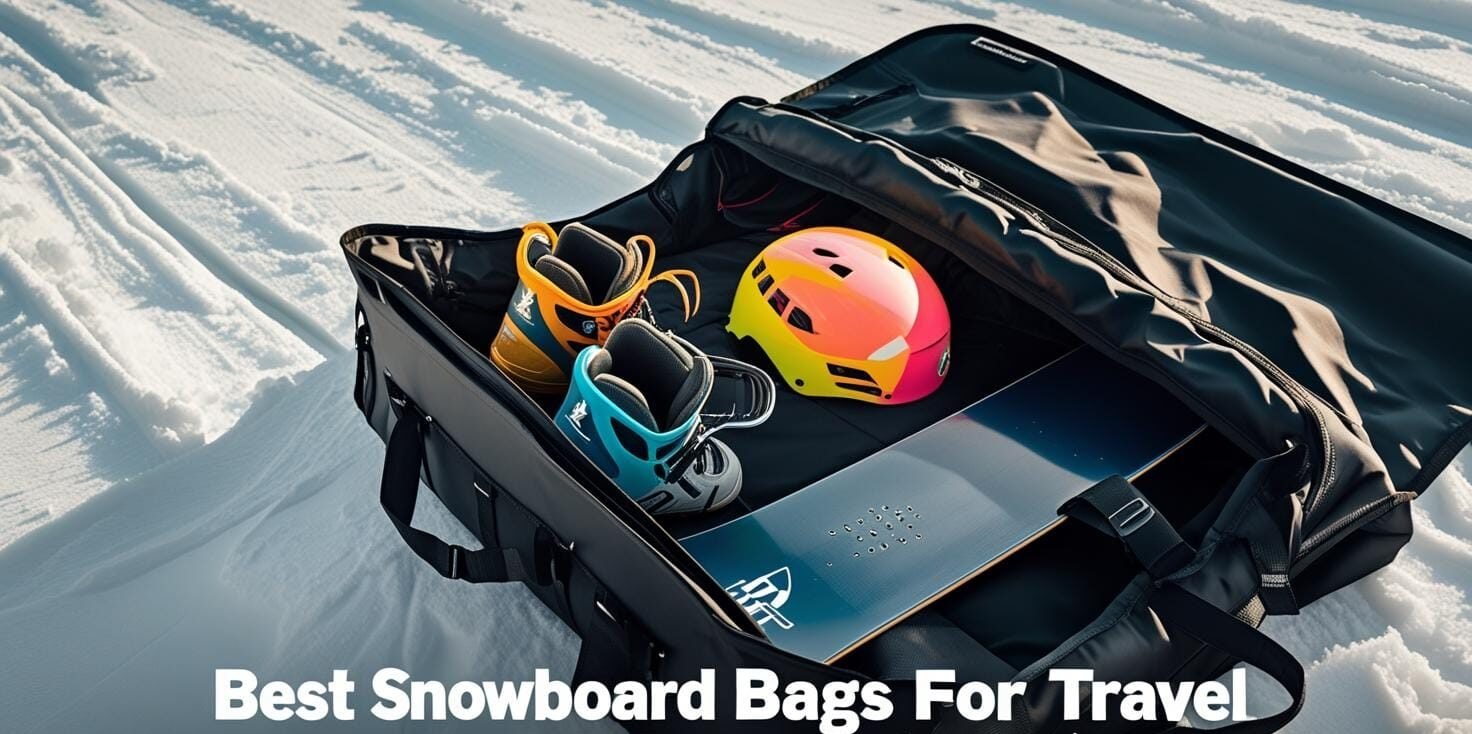
The 5 Best Snowboard Bags: Travel-Tested Authority Guide
Your snowboard is more than just a piece of equipment; it’s a high-precision investment that enables your winter lifestyle. Traveling with your gear has become increasingly complex as airlines tighten restrictions and cargo handling becomes more automated—and often more aggressive. Choosing the right snowboard bag isn’t just about color or brand; it’s about material science, shock absorption, and the structural integrity of your edges. We’ve spent months tracking thousands of miles through international terminals to bring you the ultimate definitive guide.
Quick Comparison: All 5 Bags at a Glance
Before we dive into individual reviews and the full buyer’s guide, use this table to get an immediate side-by-side view of every bag in our lineup. It’s the fastest way to match a bag to your travel style. If you’re just starting out, our guide to choosing your first snowboard covers the gear you’ll need to protect.
| Bag | Type | Padding | Wheels | Best For | Approx. Weight |
|---|---|---|---|---|---|
| Dakine Low Roller | Wheeled & Padded | High-Density EPE | Yes (Urethane) | Frequent flyers | ~6.8 lbs |
| Burton Wheelie Gig | Heavy-Duty Wheeled | Dense (above avg) | Yes (IXION™) | Multi-board haulers | ~8.5 lbs |
| Thule RoundTrip Roller | Wheeled & Reinforced | Cinch-tip sleeves | Yes (Hard compound) | Organized travelers | ~7.2 lbs |
| Athletico Peak | Padded Carry Bag | 10mm EPE | No | Road trips & car travel | ~3.2 lbs |
| Element Equipment | Padded Carry Sleeve | Uniform dense | No | Beginners & budget buyers | ~2.8 lbs |
Comprehensive Snowboard Bag Buyer’s Guide
Before committing to a bag, you must understand the “physics of transit.” Most damage occurs not during flight, but during the transition between the baggage belt and the cargo hold. We are seeing a shift toward Recycled High-Tenacity (RHT) polyesters. These materials offer nearly 30% more abrasion resistance than standard fabrics of previous years, ensuring that even if your bag is dragged across tarmac, the inner waterproof liner remains intact.
Padded vs. Unpadded: The Cost of Compromise
A padded bag is an absolute non-negotiable for air travel. We recommend a minimum of 8mm of high-density EPE foam. This isn’t just for the board; it protects your bindings from high-impact crushing forces when other heavy luggage is stacked on top. Unpadded bags serve a very specific niche: they are fantastic for “day-trip” storage to keep the melted snow in your car from soaking your trunk upholstery. However, using an unpadded sleeve for a flight is a recipe for a core shot or a cracked sidewall. If you are a road-tripper who occasionally flies, always opt for the padded version—it’s cheaper than a new board. For tips on avoiding damage, see our guide to snowboard fall safety.
Wheels or No Wheels: The Terminal Marathon
The decision to go wheeled is often a question of distance. Modern terminals like Denver International or Zurich are massive; hauling a 45-pound non-wheeled bag on your shoulder is an invitation for back strain before you even reach the slopes. Wheeled models feature oversized, sealed-bearing urethane wheels that handle slush, gravel, and cobblestones with ease. Bags without wheels are significantly lighter (often by 3-4 lbs), making them the preferred choice for those traveling with strict weight limits in small commuter planes or roof-rack cargo boxes where every inch of height counts.
Sizing Geometry and Packing Dynamics
While the rule of thumb is 5-10 cm longer than your board, you must also consider the “depth” of the bag. Higher-profile bindings require more vertical clearance. A bag that is too tight around the bindings creates tension on the zippers, which is the leading cause of mid-trip failure. Pro-level packing involves using your soft goods as a “crumple zone.” Stuffing your snow pants and base layers into the tip and tail provides secondary protection that no factory padding can match. This technique also centers the weight, making the bag more stable when being towed through a crowded airport. For more on board sizing, see our snowboard sizing guide.
Board Shape Matters: How Your Snowboard Profile Affects Bag Choice
Not all snowboards fit equally well in standard bags, and your board’s specific profile can be a deciding factor. A true-twin park board is symmetrical and flat, making it the easiest shape to bag without binding conflicts. However, directional freeride boards with aggressive rocker profiles can be problematic. The raised nose of a heavy rocker board creates a “lever arm” effect inside a rigid bag, meaning that when the bag is dropped on the nose, the force is amplified and directed toward the binding inserts—the most structurally sensitive part of the board. If you ride a highly rockered or volume-shifted shape, look for a bag like the Thule RoundTrip with dedicated padded tip and tail cinch sleeves to absorb and distribute this directional impact force. For more on board profiles, see our snowboard comparison guide.
Similarly, boards with significant camber profiles can be a subtle source of bag wear over time. The constant outward pressure of a cambered board “belly” slowly stretches the bag’s central seams. This isn’t an immediate concern, but over multiple seasons, it contributes to zipper stress and seam separation. The solution is to always fully open the bag before inserting the board, rather than forcing it into a partially zipped enclosure, and to choose a bag with heavy-duty perimeter stitching like the Burton Wheelie Gig for cambered race or carving boards.
Sustainability in Modern Snowboard Bags
The snowboard bag market is responding to rider demand for more environmentally responsible products. Brands like Dakine now source their primary exterior fabrics from recycled ocean plastic via post-consumer recycled (PCR) polyester programs. Thule’s broader corporate sustainability roadmap has influenced the RoundTrip’s material sourcing as well. For the eco-conscious rider, look for bags that carry certifications like bluesign®, which ensures the fabric was manufactured using resource-efficient, safe, and responsible processes. An increasing number of bags also feature PFC-free DWR (Durable Water Repellent) coatings, which are effective at repelling moisture without releasing harmful per- and polyfluoroalkyl substances into the environment. Choosing a sustainably-made bag aligns your gear purchase with the mountain environments you depend on.
The Economics of Snowboard Bag Ownership
Consider the total cost of ownership (TCO) rather than just the sticker price. A $60 unpadded bag that allows your board to sustain a core shot on its first flight has effectively cost you hundreds in repair fees. A $200 wheeled bag that lasts ten seasons costs $20 per season to “run”—far less than renting resort equipment for even a single day. The math strongly favors investing upfront. Furthermore, several premium credit cards—including Chase Sapphire Reserve and the American Express Platinum—offer travel protection benefits that can cover damage to checked sporting goods. Understanding your card’s coverage before you fly can mean the difference between filing a successful claim and absorbing the full cost of a damaged board.
The Complete Airline Snowboard Bag Policy Guide
One of the most searched and least thoroughly covered topics for snowboard travelers is the actual, airline-specific policy governing how snowboard bags are handled. The general rule is good news: unlike surfboards or bicycles, snowboard bags typically do not incur oversized fees at most major carriers. A snowboard bag and a boot bag are usually counted together as a single standard checked bag. However, the devil is in the details, and each airline has its own nuances around weight, dimensions, and what can be packed inside the bag.
⚠ Important Caveat: Airline baggage policies change frequently. Always verify the specific policy directly with your airline before your trip. The information below reflects general policy guidance and is provided for planning purposes only.
| Airline | Board + Boot Bag Policy | Weight Limit | Oversize Fee | Key Notes |
|---|---|---|---|---|
| Alaska Airlines | Counts as 1 checked bag (with boot bag) | 50 lbs combined | Waived (up to 115 linear in.) | Oversize & overweight fees waived; standard checked bag fee applies |
| American Airlines | Board + boot bag = 1 item | 50 lbs combined | Generally waived | Boot bag cannot contain clothing or extra items; only boots, helmet, bindings |
| Delta Airlines | 1 board bag + 1 boot bag = 1 checked bag | 50 lbs combined | Generally waived | Combined weight must stay under 50 lbs; overweight fees apply above that |
| United Airlines | Up to 2 boards in 1 bag + 1 boot bag = 1 item | 50 lbs combined | Generally waived | Equipment must be in a suitable protective container; extra sets beyond first incur fees |
| Southwest Airlines | Counts as 1 of your 2 free checked bags | 50 lbs | Not subject to oversize fees | Excellent choice for snowboarders; up to 2 bags (board + boots) count as 1 item |
| JetBlue | Counts as standard checked bag | Per fare class | No oversized fee | Add at booking or at the airport; no extra oversize charge |
| Frontier Airlines | Board + boot bag = 1 checked bag | Boot bag must be under 25 lbs | Standard checked bag fees | Boot bag over 25 lbs is treated as a second bag |
| Spirit Airlines | Counted as checked baggage | 50 lbs / 62 linear in. | Yes, if over size/weight | More restrictive than other carriers; budget for $30-$50 checked bag fee + possible oversize |
| Air Canada | Free if flying Canada–Europe/Middle East/Africa | 23 kg | No oversize fee (most routes) | One of the most snowboarder-friendly carriers internationally |
| British Airways | Must be inside a protective bag | 23 kg | Waived (within 75x30x26 in.) | Call ahead recommended; space not guaranteed without prior notice (especially Alps routes) |
Pro Strategy: How to Beat Baggage Fees with Credit Cards
Savvy snowboarders leverage travel credit cards to offset or eliminate baggage fees entirely. The Chase Sapphire Reserve and American Express Platinum both offer free checked bags or fee reimbursements on select airline partners, and both carry travel protection policies that can compensate you for damaged or delayed sporting goods. The Delta SkyMiles American Express Card provides the first checked bag free on Delta flights, which is a direct saving of $35 on a typical trip. If you fly Southwest regularly, the Southwest Rapid Rewards Priority Card includes tier status bonuses that can translate into free checked bags. Before booking your next ski trip, spend ten minutes reviewing your card’s sports equipment and travel protection benefits—the savings can easily outweigh the annual fee of a premium travel card over a single season of trips.
Gear Shipping: The Alternative to Checking Your Board
For riders who travel frequently and want to skip the baggage carousel entirely, gear shipping services offer a compelling alternative. Companies like Ship Skis and Luggage Free will pick up your snowboard bag from your door and deliver it to your hotel or resort before you arrive. Costs vary by distance and bag dimensions, but for international trips where airlines might charge $100+ in fees and expose your gear to rough handling, door-to-door shipping can actually be cost-competitive while offering superior protection and zero airport hassle. These services typically include insurance coverage and handle all customs documentation for international shipments, making them particularly appealing for extended trips to Japan, New Zealand, or South America where your gear could be out of your hands for a longer period.
1. Dakine Low Roller Snowboard Bag
Industry Standard for International Transit

The Dakine Low Roller has long been the “Gold Standard,” and the current iteration solidifies this legacy through subtle engineering refinements. The 600D recycled polyester exterior is remarkably resistant to the snagging and tearing typical of metal baggage loaders. During our testing, what stood out most was the internal organization. Most bags “slop” when they aren’t fully packed, but the Low Roller’s internal compression straps lock the board to the frame, preventing the edges from sawing into your outerwear during rough handling. For more on why edge protection matters, see our guide to why waxing your snowboard matters for base health.
One of the hidden strengths of the Low Roller is the integrated boot pocket. Unlike competitors that use thin dividers, Dakine uses a heavy-duty tarp lining. This allows you to pack your boots directly from the slopes into the bag without risking moisture transfer to your dry GORE-TEX jacket. Baggage handlers are dealing with more volume than ever; the Low Roller’s reinforced handle points are double-stitched with bar-tack reinforcements, ensuring they won’t rip when being hoisted onto a shuttle rack. If you’re looking for the safest “one-and-done” investment, this is the bag that will survive 50+ flights without breaking a sweat. For more on boot selection, see our guide to snowboard boots.
Furthermore, the urethane wheels are remarkably quiet and stable on varied surfaces. We dragged this bag through slushy parking lots in Vermont and gravel paths in Japan; the sealed bearings never seized or squeaked. The lockable zipper cars are also a major plus for international travel, offering an extra layer of security when your gear is out of sight. It strikes the perfect balance between weight (under 7 lbs) and bulletproof protection, making it the highest-rated all-rounder in our lineup.
- Type: Wheeled & Padded
- Material: 600D Recycled High-Tenacity Polyester
- Best For: Seasoned travelers who need consistent, multi-season reliability.
2. Burton Wheelie Gig Bag
The Tank of Snowboard Luggage

If the Dakine is a precision instrument, the Burton Wheelie Gig is a tank. Constructed with bombproof 600D x 1200D polyester with a TPE backing, this bag is designed to be the last one you ever buy. The standout feature remains the IXION™ skate wheel system. These wheels are incredibly smooth and, more importantly, user-replaceable with standard skate hardware. If you ever have a wheel failure in a remote village in Switzerland, any skate tool and $5 bearing can get you back in motion—a level of modularity that other brands simply do not offer.
The internal volume of the Wheelie Gig is cavernous. We successfully fit two boards (with bindings removed on the bottom one) along with an entire winter kit including helmet, boots, and three sets of outerwear. The padding is slightly denser than the industry average, providing a semi-rigid structure that prevents the bag from “sagging” when only partially full. This rigidity is crucial for protecting the board’s camber and rocker profiles during the crushing pressures of cargo holds. The side and end haul handles are ergonomically padded, making it much easier to toss into the back of a rental car or bus storage compartment.
One area where Burton excels is the edge protection. The internal lining is reinforced in the high-wear zones where your steel edges typically bite into the fabric. After a full season of travel, we saw zero signs of internal fraying. This bag is a premium investment for the professional rider or the dedicated enthusiast who treats their gear with “controlled aggression.” It’s heavy, yes, but it offers a level of security that makes the extra pound well worth it when you’re checking in for a flight to the Southern Hemisphere. For more on Burton gear, see our Burton Custom Flying V review.
- Type: Heavy-Duty Wheeled
- Wheels: Replaceable IXION™ Skate System
- Best For: Serious riders traveling with multiple boards or heavy gear.
3. Thule RoundTrip Snowboard Roller
Smart Engineering and Internal Synergy

Thule brings automotive-grade precision to the world of snowboarding. The RoundTrip Roller is not just a bag; it is a meticulously designed organization system. The primary innovation that sets this bag apart is the S-shaped zipper. While traditional bags use a straight zipper that can put tension on the teeth when the bag is stuffed, Thule’s design allows the bag to “peel open” completely, providing unparalleled access to the center compartment. This makes it the easiest bag to pack and unpack, especially in cramped hotel rooms or lodge locker areas.
Internally, Thule has included padded cinch-top sleeves that slide over the tip and tail of your board. This double-layering ensures that the most fragile parts of your board are essentially double-padded. Where airlines are increasingly automated, this “bag within a bag” concept is a lifesaver. The internal zippered mesh pockets are perfect for storing tuning tools, wax, and spare parts without them rattling around and scratching your base. The bag also features structural reinforcements that prevent it from bending in the middle when being towed, which reduces the effective weight on your arm.
The exterior aesthetics are undeniably Thule—clean, professional, and built with high-grade components. The compression straps are heavy-duty and placed perfectly to minimize the bag’s profile, helping you avoid “oversized” fees on some budget carriers. The wheels are slightly smaller than the Burton but use a much harder compound that rolls effortlessly on airport floors. For the traveler who values organization, smart features, and “Swiss-watch” build quality, the RoundTrip Roller is the premier choice. For more on board comparisons, see our snowboard comparison guide.
- Type: Wheeled & Structurally Reinforced
- Key Feature: S-shaped zipper and internal cinch sleeves
- Best For: The organized traveler who values accessibility and smart design.
4. Athletico Peak Padded Snowboard Bag
The Ultimate Road-Trip Companion

Not every journey involves a 737. For the 90% of riders who spend their time carpooling to local resorts or embarking on cross-state road trips, the Athletico Peak is a masterclass in utility. Where gas prices and space are at a premium, this bag shines by being remarkably lightweight. By forgoing the heavy axle and wheel system, Athletico has created a bag that offers 10mm of dense foam padding throughout while weighing nearly 4 pounds less than its wheeled counterparts. This makes a massive difference when you are carrying your gear from a distant parking lot to the lodge.
The 600D water-resistant polyester is robust enough to handle being tossed into truck beds or secured to roof racks. During our testing, the waterproof lining was the real hero; we packed a dripping wet board after a spring slush session, and the bag kept the rest of the car bone-dry. The main compartment is surprisingly spacious, comfortably fitting a board up to 175cm along with boots and a helmet. The padded shoulder strap is balanced well, utilizing a high-grip material that doesn’t slide off your jacket when you’re walking. It’s a simple, effective tool that doesn’t over-complicate the mission.
Furthermore, the Athletico Peak is incredibly easy to store during the off-season. While wheeled bags take up significant closet space, this bag can be rolled into a small cylinder. It’s also an excellent choice for budget-conscious air travelers who want to stay under the 50lb weight limit. By using a bag that weighs only 3 lbs, you have 47 lbs of allowance for your actual gear. For more on why maintenance matters, see our guide to why wax your snowboard.
- Type: Padded Carry Bag (No Wheels)
- Padding: 10mm High-Density EPE
- Best For: Car travel, local resort trips, and budget-conscious packing.
5. Element Equipment Padded Snowboard Bag
High Performance Meets Unbeatable Value

For the rider who wants 360-degree protection without the “brand-name tax,” Element Equipment has delivered a high-performing alternative that punches far above its weight class. They have upgraded their internal stitching to a multi-filament nylon that resists the typical blowout points found on budget bags. The padding is uniform and surprisingly dense, providing a consistent barrier against the dings and scratches that occur in a crowded carpool. What we love about this bag is the no-nonsense approach—no unnecessary straps or gimmicky pockets, just a high-quality zippered shell that does its job day in and day out.
The bag is available in an extensive range of sizes, which is a major benefit for riders with smaller boards (like 140cm) or kids who usually have to swim in standard 165cm bags. A properly sized bag is safer because it prevents the board from shifting and gaining momentum during an impact. The exterior graphics are modern and high-visibility, making it easy to identify your gear in a sea of black bags. The zippers are oversized and easy to operate even with gloves on, a small detail that becomes very important when you’re packing up in a freezing parking lot at sunset.
While it lacks the boot compartments of the Dakine, we found that there is more than enough room to “build your own” organization. By placing your boots in their own small dry bags and nesting them around the bindings, you can create a custom setup that rivals much more expensive options. It’s the perfect starter bag for a new snowboarder or a reliable secondary bag for someone expanding their quiver. For first-timer guidance, see our guide to choosing your first snowboard.
- Type: Padded Carry Sleeve
- Sizing: Huge range from 146cm to 166cm
- Best For: Beginners, occasional travelers, and riders seeking the best value-to-padding ratio.
The Multi-Board Packing Masterclass
Traveling with multiple boards presents its own distinct set of challenges that most guides gloss over. Whether you’re bringing a quiver of two (a powder board and an all-mountain daily driver), traveling as a couple sharing a bag, or heading to a destination like Japan where you want one board for the resort and one for the backcountry, proper technique is everything.
The “Sandwich Method” for Two-Board Packing
The safest technique for packing two boards is the sandwich method. Start by removing the bindings from the bottom board entirely—this is non-negotiable. A binding baseplate under pressure from an above board is a snapped baseplate waiting to happen. Lay the first board base-down. Place a folded fleece jacket or purpose-built board sleeve between the two decks to prevent the upper board’s base from scratching the lower board’s topsheet. The second board goes on top, base-up, with its high-backs folded flat. Wrap the entire assembly tightly with the bag’s internal compression straps before zipping.
For the removed bindings, pack them into the bag’s boot compartment or in the tip/tail dead space, padding them individually with socks to prevent the metal screw holes from grinding against anything. Never pack loose bindings directly against a board’s sidewalls. The result should be a dense, rigid package that doesn’t shift when the bag is tilted or dropped. United Airlines explicitly accommodates up to two snowboards in a single bag, making this configuration fully compliant for most major carriers as a single checked item. For binding recommendations, see our guide to snowboard bindings.
Boot Bags: The Hidden Strategy for Smarter Travel
A dedicated snowboard boot bag is one of the most underrated pieces of travel gear. Many riders cram their boots into their board bag, but this creates two problems: it burns your weight allowance quickly (a pair of snowboard boots with bindings can weigh 12–15 lbs), and it means that if the airline loses your board bag, you’ve lost your boots too. Carrying boots on the plane as a carry-on is the professional rider’s move. Most airlines do not restrict snowboard boots as carry-on items as long as they fit within standard size limitations. Strap the boots together with their own laces, buckle the power straps, and either put them in a drawstring bag or simply carry them as is. This strategy simultaneously frees up 12-15 lbs of board bag weight allowance for more outerwear and protects your most irreplaceable piece of equipment from the cargo hold entirely. For boot recommendations, see our best snowboard boots guide.
Tech-Forward Travel: Tracking Your Gear in Transit
The rise of Bluetooth tracking technology has been a game-changer for snowboard travelers. Devices like the Apple AirTag and Samsung SmartTag2 can be slipped into a small pocket inside your board bag to provide real-time location data via your smartphone. While this technology cannot prevent your bag from being misrouted, it gives you actionable information when filing a mishandled baggage report—you can tell the airline’s baggage service desk exactly which terminal your bag is currently sitting in, dramatically accelerating the recovery process.
The practical application is straightforward: purchase a small adhesive AirTag holder or a zipper-pull attachment and secure the tracker inside the bag before every trip. For international travel with Apple AirTags, be aware that the tracker uses the worldwide “Find My” network, meaning it can be located in most major cities globally. One important note: some international airlines have updated their policies to require that any tracking devices in checked baggage be declared, so check your carrier’s current policy before your next international departure.
📍 Pro Tip: Photograph your packed bag and its tracking device setup before checking in. If the airline damages your bag or its contents, timestamped photos of the bag’s condition at check-in significantly strengthen any damage claim you file.
Filing a Damage Claim: What Most Riders Don’t Know
Airline liability for damaged checked sporting goods is governed by the Montreal Convention for international flights and the DOT regulations for domestic US flights. For domestic US flights, airlines are liable for up to $3,800 in damage. For international flights, the Montreal Convention sets a liability limit of approximately 1,131 Special Drawing Rights (SDR), roughly equivalent to $1,500 USD. However, there are strict procedural requirements: you must report damage before leaving the airport and file a written claim within 7 days of travel for domestic flights. Do not exit the baggage claim area if you notice damage to your bag without first reporting it to the airline’s baggage service office. Take photos immediately, retain all your boarding passes and baggage claim tags, and get a written Property Irregularity Report (PIR) before you leave the terminal.
Destination-Specific Snowboard Bag Strategies
Where you’re going profoundly affects which bag is the right choice. A bag that’s perfect for a Colorado road trip may be entirely wrong for a multi-leg journey to the Japanese Alps. Here’s how to calibrate your bag choice to your destination. For resort recommendations, see our guide to why snowboarding is the best winter sport.
🇺🇸 Colorado / Western US
For domestic driving-heavy trips to Vail, Breckenridge, or Steamboat, the Athletico Peak is king. The altitude means cold, dry air—no moisture issues—and most resorts have gear storage or large lodge lockers. A lightweight padded bag that fits easily in a rental car trunk is the optimal choice. The long, straight drives mean no bouncing or impact loads; your biggest concern is protecting the nose and tail during parking lot carries.
🇯🇵 Japan (Hokkaido / Honshu)
Japanese resort logistics are superb, but transit to and from Japan requires multiple flights and connections. The Dakine Low Roller is the ideal companion here. Its lockable zippers meet international security standards, its reinforced handles survive the multiple transfers between international carriers, and its sealed wheels roll effortlessly on Japan’s impeccably clean airport floors. Plan for a 14+ hour journey from North America; durability and internal organization are paramount. For more on why snowboarding is so fun, see our why snowboarding is so fun guide.
🇨🇭 European Alps (Switzerland / Austria / France)
European travel often involves budget carriers with strict weight limits and trains or buses between mountain towns. The Thule RoundTrip Roller is purpose-built for this environment. Its compact compression straps minimize profile for cabin storage on trains, its S-shaped zipper makes quick access easy in bustling village guesthouses, and its European brand identity means staff at resorts like Verbier or Zermatt will treat it with respect. Budget for oversize fees on Ryanair or easyJet, which are stricter than major carriers.
🇳🇿 New Zealand / Southern Hemisphere
Traveling to New Zealand or Patagonia for the southern hemisphere season means your board will spend 24+ hours in cargo holds across multiple airline changes. The Burton Wheelie Gig is the only choice we’d recommend for this level of transit. Its bomber 600D x 1200D construction, replaceable IXION™ wheels, and superior edge protection are specifically calibrated for the kind of long-haul punishment that a standard bag simply cannot survive over a full southern hemisphere season. For more on why snowboarding beats skiing, see our snowboarding vs skiing comparison.
🏔️ Local Resort / Day Trips
For those who drive to the mountain, the Element Equipment bag is the pragmatic daily driver. It’s light enough to sling over one shoulder across a parking lot, narrow enough to fit in a standard sedan trunk alongside gear for two people, and inexpensive enough that you won’t flinch if it gets wet or dirty. This is the bag you throw in the back of the Subaru every weekend, not the one you baby for international travel. For beginner guidance, see our why snowboarding is the best winter sport guide.
🏂 Terrain Parks & Rail Trips
Park-focused riders doing van or bus trips to specific terrain parks—particularly those with urban rail setups or visiting multiple resorts in a week—benefit most from a durable padded bag like the Athletico Peak that doubles as a storage sleeve in a van’s cargo area. Park boards take more edge wear, making edge-protective inner linings a priority even for short hauls.
Snowboard Bag Maintenance: Making It Last a Decade
A quality snowboard bag is a multi-season investment, but only if you treat it properly. Most riders dramatically shorten the lifespan of their bags through neglect. The following maintenance protocol will extend the functional life of even a mid-range bag to ten or more seasons. For more on board maintenance, see our complete waxing guide.
Pre-Trip Inspection Protocol
Before every trip, especially after any period of storage, perform a systematic inspection of your bag. Start with the zippers: run them through their full travel to check for stiffness or skipping. Stiff zippers are the number one predictor of mid-trip zipper failure. Clean the teeth with warm water and a soft toothbrush, then apply a silicone-based zipper lubricant (not WD-40, which degrades nylon). Check the stitching at all handle attachment points by gripping each handle and applying full body weight—if you hear any cracking or see thread fraying, reinforce with Tenacious Tape or a similar repair solution before the trip. Inspect the waterproof inner lining for any punctures or delamination, especially around the zipper perimeter. A small pinhole in the lining, left untreated, will allow moisture to wick into the bag’s foam padding and encourage mold growth over time.
Post-Trip Drying and Storage
Moisture is the enemy of your edges and the primary cause of “resort funk”—the musty, mildew smell that plagues improperly stored board bags. After every trip, regardless of whether you think the bag is wet, remove all gear and open the bag completely flat in a well-ventilated area. If the bag has a tarp lining, wipe it down with a mild solution of white vinegar and water, which is a highly effective and non-toxic mold inhibitor. Allow the bag to air-dry for a minimum of 48 hours before packing it away for storage. Never store a board in the bag for more than 24 hours after a trip—the board’s edges will oxidize if left in a humid, enclosed environment. During off-season storage, place a silica gel desiccant packet inside the bag to absorb any residual atmospheric moisture.
Wheel Maintenance for Roller Bags
The sealed bearings in modern snowboard bag wheels require little maintenance, but they are not invincible. The primary threat is fine grit and sand, which can work its way past seals and cause premature bearing wear. After any trip involving airport transit, spin each wheel by hand and listen for grinding or roughness. A smooth-rolling wheel sounds nearly silent and spins freely for several rotations. A rough or noisy wheel indicates contaminated bearings. For the Burton Wheelie Gig’s IXION™ wheels, bearing replacement is a five-minute job requiring only a skate T-tool and a $5 set of standard ABEC-5 bearings. For other brands, contact the manufacturer for OEM replacement wheels. Attempting to oil sealed bearings rather than replacing them is a temporary fix that will not address the underlying grit contamination.
Edge Guard Strategy: Preventing Internal Damage
Steel edges are effectively slow-motion saws. Over dozens of trips, the cyclic motion of a board shifting inside its bag during turbulence and cargo handling allows the metal edge to abrade the internal lining at the tip and tail. The solution is “soft-guarding.” Before each trip, wrap the tip and tail sections of the board’s edge with two to three layers of self-adhesive neoprene tape or purpose-built edge guards. These create a sacrificial buffer layer that protects the bag’s internal waterproof TPU lining. At the end of the season, inspect the edge guards and replace any that show significant wear. This $10-per-year habit will prevent the $50-150 cost of re-sealing or replacing a delaminated bag lining.
Sizing Guide for Women’s, Youth, and Smaller Boards
The “one-size-fits-all” assumption of the snowboard bag market has historically disadvantaged women and younger riders who typically ride shorter boards. A 155cm women’s board rattling around inside a bag designed for a 175cm men’s directional is not just annoying—it’s structurally problematic. The board shifts, allowing the edges to contact the lining repeatedly, and the lack of compression means the board can oscillate and flex under cargo loading forces, stressing the core.
The Element Equipment bag stands out here because its size range extends all the way down to 146cm, making it a genuine fit for the majority of women’s and all youth boards. For women-specific travel, look for bags available in 155cm or 160cm formats—Dakine and Burton both offer their flagship bags in these sizes, though they may not be labeled “women’s specific.” The key measurement is the internal usable length. A board should have 5-8cm of clearance at each end; too little and the tip or tail is in contact with the bag end cap (which transfers impact force directly to the board); too much and the board shifts excessively.
Youth riders present an additional consideration: growing groms often ride boards that change size year to year. In this case, investing in a bag that adjusts slightly (via internal compression straps that can be repositioned) or choosing a mid-size bag in the 155cm range that the rider will “grow into” over a season or two is the most economically sound approach. The Athletico Peak’s soft construction means it accommodates a slightly wider range of board lengths than rigid roller bags. For more on choosing the right board, see our snowboard sizing guide.
Advanced Travel Strategy (FAQ)
How do I maximize my bag’s weight limit?
Most airlines allow 50 lbs (23 kg). The “Heavy Item” strategy involves placing your heaviest gear (bindings and boots) directly over the wheels. This uses the bag’s frame for support. Fill the rest of the space with lightweight, high-volume items like your snow pants and base layers. Pro Tip: Weigh your bag before you leave; baggage scales at the airport are notoriously un-calibrated. A $15 hanging luggage scale from Amazon is one of the highest-ROI travel purchases you can make.
How do I prevent my board’s edges from cutting the bag?
Over time, steel edges act like saws. To prevent internal damage, we recommend “soft-guarding.” Wrap the tip and tail in a few layers of duct tape or use specialized neoprene edge guards before sliding the board into the bag. This ensures the waterproof TPU lining stays intact for years of service. Purpose-built snowboard edge guards cost less than $10 and are available at most ski shops and online retailers. For more on edge maintenance, see our snowboard waxing guide.
Should I remove my bindings for a flight?
For a single board trip, it is usually not necessary if you have a high-quality padded bag like the Burton Wheelie Gig or Dakine Low Roller. Simply fold the high-backs down and place some bubble wrap or a jacket between the bindings. However, if you are packing two boards, you must remove the bindings from the bottom board to allow them to nest flatly, reducing the risk of a snapped binding baseplate. For boards with particularly tall bindings (highback height above 24cm), consider removal even for single-board packing in any non-premium bag. For binding recommendations, see our snowboard bindings guide.
What is the best way to dry my bag after a trip?
Moisture is the enemy of your edges. Never store your board in the bag for more than 24 hours after a trip. Unzip the bag completely, remove all gear, and let it air dry in a well-ventilated area. If the bag has a tarp lining, wipe it down with a mild disinfectant (a 1:10 white vinegar solution works excellently) to prevent “resort funk” (mold growth) from damp boots. Store a silica gel desiccant packet inside the empty bag during the off-season to absorb any atmospheric humidity. For storage tips, see our storage waxing guide.
Can I use a snowboard bag as my only checked bag to avoid fees?
Yes, and this is one of the smartest strategies for snowboard travel. At most major airlines (Southwest, Alaska, United, Delta, American, JetBlue), your snowboard bag and boot bag together count as a single standard checked bag—not an oversized or special item. By packing your outerwear, base layers, and accessories inside the board bag around your gear, many experienced riders travel with only their board bag and a carry-on backpack, entirely eliminating the need for a separate suitcase. The key is choosing a high-volume wheeled bag like the Burton Wheelie Gig or Dakine Low Roller, both of which have enough internal capacity to function as a gear-plus-clothing duffel.
How do I choose the right bag size for my board?
The general rule is 5-10 cm longer than your board’s actual length. For a 158cm all-mountain board, a 165cm bag is ideal. For boards with particularly large noses (volume-shifted powder boards, for example), err toward the larger end of the range to ensure the nose tip isn’t in contact with the bag’s end cap. For directional boards ridden in powder, also consider the binding stance width—a board with a wide stance (60cm+) needs more internal depth than a park board with a narrow, centered stance, and some bags offer more interior depth than others at the same nominal length. For more on board sizing, see our snowboard sizing guide.
What should I do if the airline damages my board or bag?
Act immediately. Do not leave the baggage claim area before reporting damage to the airline’s baggage service office. Photograph the damage on the spot with your phone, including close-ups of any structural damage to the board or bag. Obtain a written Property Irregularity Report (PIR) from airline staff. For domestic US flights, you have 7 days to file a written claim; for international flights governed by the Montreal Convention, the window is typically 7 days for damage and 21 days for delay. Airlines are liable for up to $3,800 domestically. Additionally, check your travel credit card’s terms—many premium travel cards offer supplemental coverage for damaged checked sporting goods that stacks on top of the airline’s liability limit.
Are snowboard bags allowed as carry-on luggage?
No. Snowboards and snowboard bags must be checked as baggage at all major airlines. TSA classifies snowboards as items with sharp edges that must travel in the cargo hold. There are no exceptions to this rule at commercial airlines. If you wish to avoid checking your board, your only alternatives are shipping via a service like Ship Skis, renting at the destination, or using an unconventional compact board option. For travel situations where checking is truly impossible, rental boards at quality destination resorts have improved dramatically in quality and are often a viable alternative for casual riders.
How do I maintain the zippers on my snowboard bag?
Zipper maintenance is the single most impactful thing you can do to extend your bag’s life. Before each season and after each trip, clean zipper teeth with a soft brush and warm water to remove grit and salt deposits. Then apply a silicone-based zipper lubricant such as Gear Aid Zipper Lubricant or even a standard wax candle rubbed along the teeth. Never use WD-40, petroleum-based greases, or cooking sprays on nylon or polyester zippers—these petroleum products degrade the nylon teeth over time and can cause the slider to skip. If a zipper is already stiff, soak the teeth in white vinegar for 10 minutes before brushing and lubricating; the acetic acid dissolves mineral deposits that cause binding.
What’s the difference between a snowboard bag and a ski bag?
Snowboard bags are designed for a single, wide, flat board (or two boards stacked) and typically have a more uniform, rectangular cross-section. Ski bags are designed for long, narrow parallel items (skis) and are often more cylindrical or tapered. Both share the general principle of padded protection and airline compatibility, but they are not interchangeable—a snowboard’s width means it will not fit securely in a standard ski bag, and skis in a snowboard bag will shift excessively. Some “combination” bags exist, typically sold by Dakine and Thule, that can accommodate either a snowboard or a pair of skis, but these are generally optimized for neither and are only ideal for households with both types of equipment that travel infrequently.
The Ultimate Pre-Trip Packing Checklist
Use this checklist before every snowboard travel trip to ensure your gear arrives safely and you don’t get hit with unexpected fees or delays at the airport.
✈️ 48 Hours Before Departure
- Confirm your airline’s snowboard bag policy and fee
- Weigh your packed bag with a luggage scale
- Insert AirTag or tracking device into bag
- Inspect zippers, handles, and lining
- Apply edge guards to board tip and tail
- Fold high-backs on bindings flat
- Place jacket between board and bindings
- Photograph packed bag interior and exterior
🏔️ What to Pack Inside the Bag
- Snowboard (edges guarded)
- Bindings (high-backs down, or removed)
- Snow pants and base layers (tip/tail padding)
- Helmet (if not carrying on)
- Goggles in hard case
- Tuning tools and wax
- Spare parts (screws, stomp pad, etc.)
- Boot bag (boots carried on where possible)
🛬 At the Airport
- Arrive 2 hrs early domestic / 3 hrs international
- Add luggage tag with name, phone & email
- Use TSA-approved lock on zipper pulls
- Head to oversized baggage check-in line
- Retain all boarding passes and baggage claim tags
- Check AirTag is broadcasting before heading to gate
- Photograph bag at check-in counter
- Note airline’s baggage claim area at destination
🎿 Upon Arrival
- Inspect bag before leaving baggage claim
- Report any damage to airline desk immediately
- Open bag and inspect board and bindings
- Check binding screws for looseness from pressure
- Allow any dampness to dry before zipping bag
- Store bag properly at accommodation (unzipped)
- File a Property Irregularity Report if needed
Final Technical Verdict
Your choice of bag should reflect your primary mode of travel and the destinations on your bucket list. A quality bag isn’t just about protection; it’s about the ease of the entire journey—from your front door to the chairlift line. After testing all five of these bags across hundreds of miles of domestic and international transit, our conclusions are clear:
- For the Frequent Flyer: The Dakine Low Roller offers the most refined balance of weight, organization, and wheel quality for the traveler who checks their board multiple times per season.
- For the Quiver Hauler: The Burton Wheelie Gig is the undisputed king of durability, internal volume, and replaceable-component engineering for riders who travel with multiple boards or full kit.
- For the Organized Traveler: The Thule RoundTrip Roller is the premium choice for riders who value smart design, cinch-tip protection, and the fastest possible pack/unpack cycles.
- For the Road-Trip Specialist: The Athletico Peak provides maximum car-based protection and off-season storability without the bulk of a roller bag.
- For the Budget-Conscious Rider or Beginner: The Element Equipment bag delivers exceptional padding and a wide size range at a price point that makes excellent board protection accessible to every level of rider.
Invest in your gear’s safety today, and it will provide you with seasons of flawless performance. Every dollar spent on a quality bag is a dollar saved on board repairs, airline damage claims, and the irreplaceable cost of a ruined powder day. Ride hard, travel smart. For more on why the sport is worth protecting, see our why snowboarding is so fun guide.


