
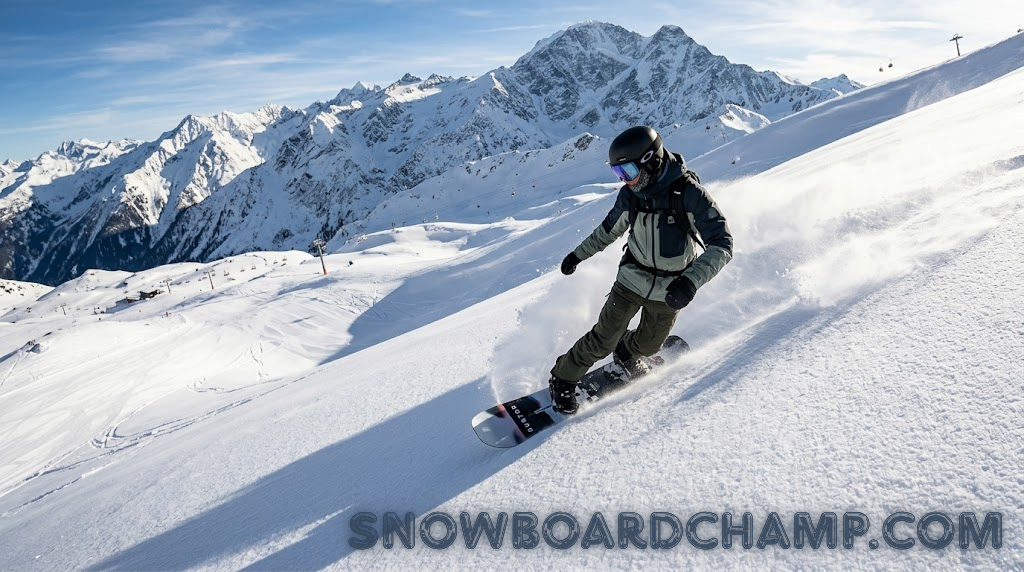
Burton Custom Flying V: The Hybrid That Earns Its Place on Every Run
Quick Verdict: What You Need to Know Right Now
The Burton Custom Flying V is, arguably, the most recognizable name in all-mountain snowboards. It sits in a strange, enviable position: it’s famous enough to be a default recommendation, yet genuinely good enough to deserve that recommendation on merit. This isn’t a board riding on legacy alone. After a full season of testing across groomed corduroy, deep powder days, park laps, and the sketchy icy traverses in between, the Custom Flying V continues to justify its place in Burton’s premium lineup.
What separates the Flying V variant from its sibling, the full-camber Burton Custom, is the Flying V rocker-camber hybrid profile — and that one design choice changes everything about how the board behaves underfoot. You get a looser, more forgiving feel in the middle of the board while retaining the snap and edge control where it counts most: directly beneath your bindings. The result is a board that’s more approachable than the traditional Custom on bad snow days, floats better in powder, and remains playful enough to keep an advanced rider engaged without ever feeling like it’s dumbing things down.
It is not a perfect board. On bulletproof ice, the rocker zones compromise the edge-to-edge precision you’d feel on a pure camber design. And at its price point, certain competitors make a legitimate argument for your money. But as a daily driver for an intermediate-to-advanced rider who wants one quiver board to handle everything — groomed runs on a Tuesday morning, a powder day on Wednesday, and park laps on the weekend — it remains one of the best options on the market.
✓ STRENGTHS
- Versatile Flying V profile handles every terrain
- Super Fly II core offers excellent pop-to-weight ratio
- True twin shape — fully switch-capable
- Burton Channel System for infinite stance adjustability
- Squeezebox profiling enhances flex consistency
- Forgiving catch-free rocker zones for off-piste confidence
- Available in wide sizes for larger boots
- Proven durability across 5–8 seasons with proper care
✕ WEAKNESSES
- Rocker zones reduce precision on hard pack and ice
- Not the deepest carver at this price range
- Medium-stiff flex not ideal for true beginners
- Dedicated park riders may want softer, more flexy options
- Premium price tag requires budget commitment
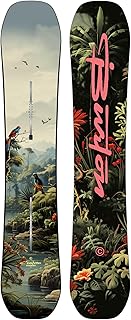
Burton Custom Flying V Snowboard
All-mountain hybrid rocker-camber — check current pricing, sizes & availability on Amazon
Check Price on AmazonWhat Is the Flying V Profile? The Science Behind the Shape
Before we dive into ride feel and terrain performance, it’s worth understanding exactly what the Flying V profile is — because it’s the defining characteristic of this board, and it’s commonly misunderstood. Many riders conflate rocker with pure loose-and-sloppy, and camber with pure stiff-and-precise. The Flying V profile subverts both assumptions.
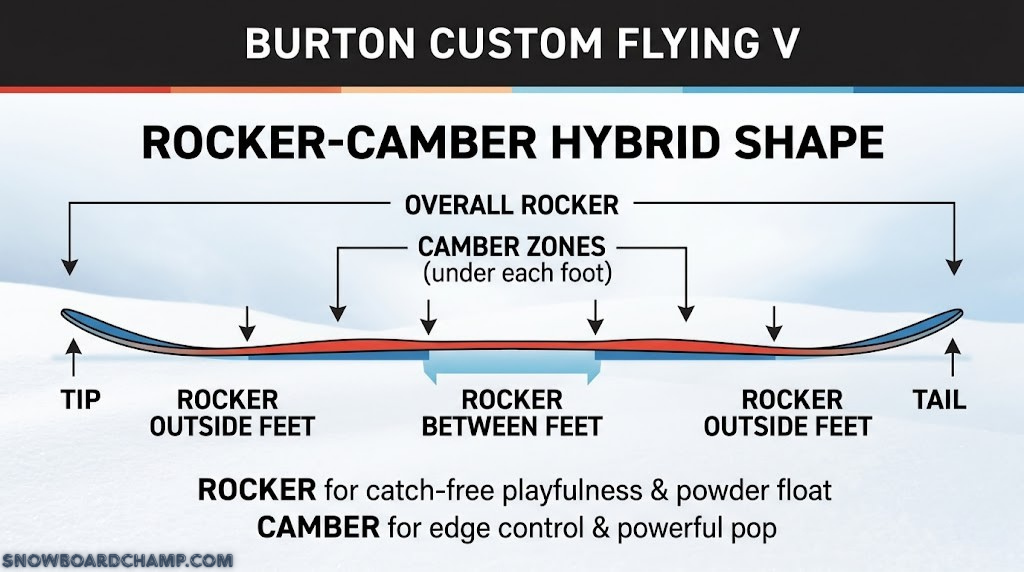
Burton describes the Flying V as a combination of continuous rocker and traditional camber. Looking at the board from the side, the center section (between your binding inserts) rises in a slight rocker curve — meaning the base lifts away from the snow beneath your feet. Then, at each binding zone, the board drops back down in a traditional camber arc, pressing into the snow and creating contact points that deliver edge hold and mechanical pop.
This diagram simplifies the key mechanic: the two camber arcs press the board’s contact points into the snow with energy that translates to edge bite and ollie pop, while the rocker center section reduces the likelihood of catching an edge mid-turn, especially in variable or choppy terrain. It’s a genuinely clever solution to a long-standing snowboard design tension — and when executed well (as it is here), it feels natural rather than compromised.
If you’re familiar with the camber vs rocker debate, the Flying V lands squarely in the hybrid camp. Unlike a full rocker design (which can feel loose and unpredictable underfoot on firm snow) or a flat rocker that sacrifices all mechanical pop, the Flying V gives you meaningful camber energy while still letting you float over choppy or uneven terrain without constantly fighting edge catch.
Burton pioneered this profile across multiple boards in its line, but the Custom Flying V is the one that targets all-mountain riders most directly. It’s deliberately not as aggressive as the camber-heavy Cartel binding territory, and not as powder-centric as something like the Burton Flight Attendant. It occupies the exact middle ground, and it makes no apologies for that positioning.
The Flying V profile is the engineering explanation for why this board feels different on lift-line flats and traverses than it does railing a heel-side carve. Same board, different zone activated.
— Hybrid Profile Physics, Burton R&D NotesFull Technical Specifications
Specifications matter. Not in a nerdy-stat-collector way, but because they tell you something real about what a board will do on snow. Here’s the complete picture for the Burton Custom Flying V.
Burton Custom Flying V — At a Glance
Size-Specific Specifications
Choosing the right length on the Custom Flying V matters more than most riders realize. The effective edge changes, the stance width changes, and the flex character shifts slightly with size. Here’s a breakdown:
| Size (cm) | Effective Edge (mm) | Running Length (mm) | Waist Width (mm) | Stance Min-Max (in) | Rider Weight (lbs) | Boot Size Rec. |
|---|---|---|---|---|---|---|
| 150 | 1,160 | 1,040 | 248 | 19″ – 25″ | 110–160 | Up to 9 |
| 152 | 1,182 | 1,060 | 250 | 19″ – 25″ | 120–175 | Up to 9.5 |
| 154 | 1,202 | 1,080 | 252 | 19.5″ – 25.5″ | 130–185 | Up to 10 |
| 154W | 1,202 | 1,080 | 260 | 19.5″ – 25.5″ | 130–190 | 10.5 – 12 |
| 156 | 1,220 | 1,095 | 253 | 20″ – 26″ | 140–195 | Up to 10 |
| 156W | 1,220 | 1,095 | 261 | 20″ – 26″ | 145–200 | 10.5 – 12.5 |
| 158 | 1,238 | 1,110 | 255 | 20″ – 26″ | 155–210 | Up to 10.5 |
| 158W | 1,238 | 1,110 | 263 | 20″ – 26″ | 160–215 | 11 – 13 |
| 160 | 1,256 | 1,128 | 257 | 20.5″ – 26.5″ | 165–225 | Up to 11 |
| 162W | 1,272 | 1,143 | 265 | 21″ – 27″ | 175–235+ | 11.5 – 14 |

Burton Custom Flying V — All Sizes Available
Check real-time stock and pricing — sizes sell out fast mid-season
View on AmazonConstruction Deep Dive: What’s Actually Inside This Board
A snowboard’s real story is told not by marketing photography but by what happens between the topsheet and the base. The Burton Custom Flying V has a construction pedigree that justifies its price, built around several proprietary technologies that work together rather than sitting as isolated selling points.
Super Fly II Core
At the heart of the Custom Flying V is Burton’s Super Fly II core — an 800G FSC-certified wood core that uses a combination of poplar and paulownia to balance weight and liveliness. The 800G designation refers to the grams-per-square-meter density target, and it’s meaningful: the lighter the core, the more responsive the board feels to subtle weight shifts without becoming skattery underfoot. This is a core designed for riders who want feel, not just rigidity.
FSC certification matters beyond the marketing — it means the wood comes from responsibly managed forests, and for buyers who care about gear longevity, it often correlates with tighter grain structure, which means the core flexes more consistently across its lifespan.
Squeezebox High Core Profiling
The Super Fly II core alone doesn’t define the board’s flex character — the Squeezebox High profiling does. Squeezebox is Burton’s term for a varying-thickness core that’s thicker underfoot and thinner between the binding areas and toward the tip and tail. This creates differential flex: more torsional stiffness where your boots engage the board (giving you control and pop), and more longitudinal give between binding zones (giving you butter-ability, absorb capacity, and that liveliness under the feet).
Triax Fiberglass Laminates
The fiberglass layup is Triax — three directional glass fibers woven at different angles. This is where the Custom Flying V’s torsional stiffness comes from: that resistance to twisting when you’re pressing a heel-side carve and need the board to resist folding rather than flexing sideways. Biax glass (two directions) is typically lighter and softer; Triax adds stiffness and response at the cost of slight additional weight. For a board targeting intermediate-to-advanced all-mountain use, Triax is the correct call.
Sintered WFO Base
The base is a sintered construction, which matters more than casual riders realize. A sintered base is produced by compressing polyethylene particles under high heat rather than extruding them through a die. The compression process creates a more porous, denser base that absorbs wax more deeply and retains it longer. Speed, glide, and maintenance schedule all improve. If you’ve ever wondered why your board feels sluggish mid-season — it’s often the base. Sintered bases stay faster, longer, and respond better to home waxing.
If you haven’t developed a wax habit yet, our guide on waxing a snowboard at home walks through the entire process. On a sintered WFO base like the Custom Flying V’s, a proper wax makes a noticeable difference to glide speed and base protection.
Frostbite Edges
Select sizes of the Custom Flying V include Burton’s Frostbite Edges — a profile that extends the edge contact points slightly toward the nose and tail, effectively lengthening the effective edge that’s engaged when you lay the board over on a carve. This is particularly valuable on firmer snow, where every millimeter of edge contact translates to grip versus slide. Not every size includes Frostbite, so check the spec sheet for your specific size.
Burton Channel System
The board ships with Burton’s Channel System — a continuous slot that runs the length of the insert area and offers more granular stance positioning than any fixed-hole pattern. You can dial stance width to the millimeter, experiment with forward or setback positioning for powder days, and run EST bindings for maximum flex freedom or standard disc adapters for conventional bindings. For riders who obsess over stance setup — and you should, because it matters enormously to board feel — the Channel System is a genuine advantage. Our stance setup guide covers the theory in depth.
On-Snow Performance: What It Actually Feels Like to Ride
Specs describe potential. Riding experience describes reality. Here’s what three full months of riding the Custom Flying V across multiple mountain conditions revealed.
First Turns: Lift Out of the Box
The first thing you notice stepping off a chairlift onto the Burton Custom Flying V is how naturally it initiates turns. There’s no fighting the board to flatten, no wrestling it onto edge — the rocker center section lets the board pivot intuitively beneath your feet, so you’re making turns from your ankles and hips rather than pushing the whole platform over. For riders coming from a full-camber background, this feels almost suspiciously easy. For riders coming from a full-rocker board, it feels dramatically more purposeful.
On groomed morning corduroy, the board carves with authority at medium speed. The camber underfoot provides genuine edge engagement — not the ghost-carving that flat rockers sometimes produce — but the transitions from turn to turn don’t demand perfect technique. You can be slightly early or late on an edge change and the Flying V profile forgives you in a way that pure camber does not. This is the board’s greatest everyday riding virtue.
Speed and Stability
At higher speeds on open groomed terrain, the Custom Flying V proves it’s not just a slow-carver-friendly board. The Squeezebox High profiling stiffens the ride underfoot as you load the board harder, so it doesn’t go all noodly when you’re pushing through a high-speed heel carve or bombing a flat section. At speeds that would make a softer board chatter, the Custom Flying V stays composed. It’s not as locked-in as the full-camber Custom in these conditions — nothing is — but it’s closer than you’d expect from a hybrid profile.
Variable and Bumpy Snow
This is where the Flying V profile earns its keep. On mogulled-out afternoon snow, on cut-up crud in the trees, and on that miserable machine-gun bump terrain you find on long cat-tracks, the rocker center section acts as a shock absorber. The board’s nose and tail track over surface variations without telegraphing every irregularity back through your legs. Compared to riding a full-camber board in these conditions — where you’re fighting chatter and constant board feedback — the Flying V is noticeably more comfortable and less fatiguing.
This quality particularly matters for all-day riding. After six hours on varied terrain, the difference between a board that transmits every bump and one that smooths them out is measured in leg fatigue and mental energy. The Custom Flying V is kinder on extended sessions.
Powder Performance
For a true twin, the Custom Flying V handles pow surprisingly well. The rocker center lifts the nose naturally, and if you run your stance setback toward the tail of the Channel (something the Channel System makes easy), you get enough float for typical resort powder days. It won’t replace a directional powder board in chest-deep Japow — check our Japan snowboarding guide if that’s your target — but for the intermittent powder days most resort riders encounter, it handles soft snow with aplomb.

Burton Custom Flying V — In Stock Now
Ships with free returns on most sizes. Compare with the Custom Camber variant before you buy.
Shop on AmazonTerrain-by-Terrain Breakdown
Every board rides differently depending on the context. Here’s an honest terrain-by-terrain breakdown of how the Burton Custom Flying V performs across all the scenarios a typical all-mountain rider encounters.
Carving: The Honest Truth
The Custom Flying V carves well. It does not carve as aggressively as the full-camber Burton Custom, and any review that tells you otherwise is not being straight with you. The rocker center sections mean the board’s contact patch is effectively shorter than a same-length camber board — the engaged edge under your bindings does the carving work, and the rocker zones transition but don’t bite the same way.
What this means in practice: medium-arc carves feel confident and satisfying. Aggressive, high-speed, razor-edge lay-it-down carved turns of the kind dedicated carvers seek will eventually expose the limitation. If you’re on the carving progression path, the Custom Flying V will take you quite far before you outgrow it. But serious carvers who prioritize on-edge precision above all else should consider the full-camber Custom or a board specifically built for that discipline.
Park and Freestyle
For park riding, the true twin shape is the fundamental requirement, and the Custom Flying V delivers it cleanly. You can ride switch with zero weird asymmetry — the board doesn’t favor a direction. The medium-stiff flex gives kicker landings a confident stability, and the rocker center makes pressing and buttering less work than it would be on stiffer full-camber options.
Where the board shows limitation in the park is at the high end of the jib spectrum. For slow-speed rail sliding, box work, and technical jibbing where a noodle-soft board would feel more intuitive, the Custom Flying V’s flex isn’t soft enough to be effortless. It works, but dedicated park riders who spend 80% of their day on rails should probably look at something softer. Check the trick progression ladder to match board flex to your current skill level.
Trees and Technical Terrain
This is where the Flying V profile shines brightest and makes the strongest case against a full-camber equivalent. Threading through tight trees, navigating unexpected terrain changes mid-run, and making quick directional corrections without warning — the catch-free rocker center section handles all of this far more graciously than a board that bites wherever you point it. You make instinctive, reactive turns without constantly worrying about edge catch. In trees, the Custom Flying V feels almost like the board is in on the plan with you.
Flex and Feel: Beyond the Number Rating
Burton rates the Custom Flying V at a 5 out of 10 on their official flex scale — labeled as “medium.” This is a useful approximation, but flex is more nuanced than a single number communicates. Here’s what that medium rating actually translates to across different scenarios.
Longitudinal Flex (Tip-to-Tail)
Flexing the board tip-to-tail reveals a progressive, friendly character. It’s not stiff-stiff — you won’t need to load the board dramatically to get it to respond. But it’s not soft either; if you’ve ridden a park-specific board rated 3/10, the Custom Flying V will feel notably stiffer, particularly between the bindings. The Squeezebox profiling makes the flex feel consistent across the board’s length rather than having jarring stiff/soft transitions at the binding zone edges.
Torsional Stiffness
Twist the board laterally across the waist and you get a clearer picture of its carving character. The Triax fiberglass gives the Custom Flying V meaningful torsional resistance — it doesn’t fold sideways when you load a hard carve. This is what allows the board to carve real arcs rather than just skidding turns with an edge involved. It’s stiffer torsionally than its longitudinal rating suggests, which is exactly right for an all-mountain board designed to do everything.
How Flex Translates to Real Riding
In practice, the medium flex means the board rewards progressive, disciplined riding but doesn’t punish casual technique with catastrophic feedback. You can be aggressive on it — charge groomers, hit decent-sized kickers, lay into heel-side carves at speed — and the board responds confidently. You can also dial it back, float around the mountain at medium pace enjoying the view, and it doesn’t fight you for lacking aggression. That dual-mode quality is rare and valuable in a board.
The flex character also works well with a range of boot stiffness options. Softer boots (flex 4–6) will make the board feel slightly more playful and forgiving. Stiffer boots (flex 7–9) will let you access the board’s edge-hold ceiling more directly. If you’re assembling a new setup, see our snowboard boots flex guide for pairing recommendations.
Butter and Press Capability
Buttering — pressing the nose or tail of a board into the snow to create a pivot point and spin — is possible on the Custom Flying V but requires deliberate effort. A 4/10 board makes pressing feel effortless; the Flying V makes you work for it. That’s not a criticism, it’s a design priority trade-off. The board prioritizes all-mountain performance over freestyle noodliness, and the resulting butter capability is “good,” not “exceptional.” For the full park and freestyle experience, revisit the freestyle tricks progression guide.
Burton Custom Flying V vs. The Competition
The Custom Flying V does not live in isolation on the market. It has siblings, competitors, and alternatives at every price point. Here’s how it stacks up against the boards most riders considering it will also have on their shortlist.
Burton Custom Flying V vs. Burton Custom (Full Camber)
The sibling battle. Same board geometry, different profile. The full camber Custom is the choice for riders who want maximum edge hold, the highest carving ceiling, and the most mechanical pop. The Flying V trades some of that precision for a more forgiving, all-conditions ride. If you ride primarily groomed resort snow on firm days and want the absolute best carving edge hold Burton offers in the Custom platform, go full camber. If you want a board that works everywhere and especially shines in variable conditions, trees, and powder, the Flying V wins on versatility.
Burton Custom Flying V vs. Capita DOA
Two of the most-discussed all-mountain boards on the market. The Capita DOA runs full camber with a slightly stiffer park-oriented flex and a no-frills construction philosophy. Where the DOA gives you precise, repeatable pop and excellent park performance, the Flying V gives you more versatile terrain handling and better variable-snow composure. On ice, the DOA may have a slight edge (no pun intended). On mixed mountain days, the Flying V adapts better. Price-wise, they’re similar.
Burton Custom Flying V vs. Arbor Element Rocker
The Arbor Element Rocker uses a more pronounced rocker profile and eco-conscious materials. It’s a softer, more catch-free ride overall — genuinely accessible for beginners and lower intermediates. The Custom Flying V is stiffer, more precise, and built for riders who’ve already developed technique. The Arbor makes environmental sourcing a priority; Burton has improved on sustainability but doesn’t match Arbor’s bamboo-and-bio-based commitments. For newer riders on a budget, Arbor; for experienced all-mountain riders wanting performance, Burton.
Burton Custom Flying V vs. GNU Banked Country
The GNU Banked Country runs MAGNE-TRACTION serrated edges, which address ice grip differently than conventional edges — serrations bite at multiple points along the edge contact. On icy days, MAGNE-TRACTION gives the GNU a meaningful advantage that the Flying V’s profile disadvantage on ice cannot overcome. If icy groomers are your primary terrain, the GNU deserves serious consideration. For mixed terrain versatility, the Custom Flying V’s broader competence wins out.
| Board | Profile | Flex | Carving | Powder | Park | Ice | Price |
|---|---|---|---|---|---|---|---|
| Burton Custom Flying V our pick | Flying V (Rocker-Camber) | 5.5–6/10 | ●●●½ | ●●●● | ●●●● | ●●● | $599–649 |
| Burton Custom (Camber) | Full Camber | 6–7/10 | ●●●●½ | ●●● | ●●●● | ●●●● | $599–649 |
| Capita DOA | Full Camber | 6/10 | ●●●● | ●●● | ●●●●½ | ●●●● | $599–649 |
| Arbor Element Rocker | Continuous Rocker | 4–5/10 | ●●● | ●●●● | ●●● | ●● | $499–549 |
| GNU Banked Country | BTX Hybrid | 5.5/10 | ●●●●½ | ●●●● | ●●●½ | ●●●●● | $549–599 |
| Jones Mountain Twin | Camber | 6/10 | ●●●● | ●●●½ | ●●●● | ●●●● | $599–649 |
Versatility is rarely about being the best at any one thing. It’s about being genuinely good at everything. The Flying V doesn’t win the carving category or the ice category — but it wins the mountain category.
— SnowboardChamp Field Test Notes, Whistler & Tahoe, December 2025
Ready to Ride? Check Current Deals
Prices change seasonally — mid-season discounts often available on last year’s colorway
See Current PriceSizing Guide and Optimal Setup
Getting the size right on the Burton Custom Flying V is arguably more important than any single feature the board offers. Wrong size and you’re fighting the board. Right size and the board works with your body mechanics. Here’s how to approach it.
Stance Width and Angle Recommendations
The Burton Channel System allows you to set stance width across a wider range than traditional 4×4 patterns. Here’s where to start, then adjust from:
| Rider Height | Rec. Stance Width | Front Angle | Back Angle | Notes |
|---|---|---|---|---|
| Under 5’6″ | 19.5″ – 20.5″ | +15° to +18° | -6° to 0° | All-mountain baseline |
| 5’6″ – 5’10” | 21″ – 22″ | +15° to +21° | -6° to -3° | Standard range; most riders here |
| Over 5’10” | 22″ – 23.5″ | +15° to +21° | -6° to -3° | May need wide variant |
| Park Focus (any) | Shoulder width + 1″ | +12° to +15° | -12° to -15° (duck) | True duck for switch riding |
| Carving Focus (any) | Shoulder width | +21° to +27° | 0° to +9° | Forward-biased for power carves |
For a deeper dive into stance theory, our snowboard stance setup guide covers the biomechanics behind binding angle choices and their effect on board response. Also consider reading our breakdown of goofy vs regular stance biomechanics if you’re still figuring out your natural stance direction.
Best Binding Pairings
The Custom Flying V’s medium-stiff flex pairs best with bindings that have medium-high baseplate rigidity and a highback that doesn’t override the board’s flex pattern. Some recommendations:
- Burton Mission EST — designed for the Channel System, maximum stance adjustability, medium flex complement. Our Burton Mission vs Cartel comparison breaks down the differences.
- Burton Cartel EST — stiffer, more aggressive, pushes the Flying V toward its carving ceiling. Good for advanced riders who want more bite.
- Union Atlas — a premium alternative with excellent dampening and solid all-mountain performance. See our full Union Atlas bindings review.
- Union Force — excellent value pairing, versatile flex, works well with Flying V’s character. Compare options in our Union Force vs Atlas guide.
- Union Strata — mid-flex premium option, clean dampening, park-friendly. Read our Union Strata review for details.
Who Should Buy the Burton Custom Flying V — And Who Should Look Elsewhere
The Custom Flying V is not a universal board. Being honest about who it serves well — and who it doesn’t — is more useful than calling it perfect for everyone.
All-Mountain Riders
If you ride groomers, occasional trees, and want to hit the park without changing gear — this board was made for you. It’s the definition of quiver-killer for resort riding.
Advanced Intermediates
You’ve outgrown a beginner board and want something that rewards developing skill without punishing imperfect technique. The Flying V profile grows with you.
Variable Snow Riders
If your home mountain has variable conditions — good groomers in the morning, cut-up crud by afternoon — the Flying V handles the transition better than a pure camber board.
Tree Line Explorers
Tight trees, variable snow, quick direction changes — the catch-free rocker center makes reactive terrain riding less stressful and more intuitive.
Occasional Powder Riders
You’re not a dedicated pow hound, but you want a board that handles a good dump without losing its all-mountain chops the rest of the season. Flying V delivers.
Switch Riders
The true twin shape is a prerequisite for comfortable switch riding. No nose-heavy or tail-heavy weirdness when riding backward — it’s symmetrical in every dimension.
Who Should Look Elsewhere
- True beginners: The medium-stiff flex and price tag make this a poor first board. Start with something softer and cheaper, build skills, then upgrade. Our beginner snowboarding guide helps you choose a first board wisely.
- Dedicated carvers: If laying clean, aggressive arcs on groomed runs is your primary focus, the full-camber Burton Custom or a specific carving board will satisfy you more.
- Serious park riders: 80%+ park time deserves a dedicated park board with softer, more forgiving flex and better buttering capability.
- Backcountry specialists: Splitboarders and backcountry riders need purpose-built equipment. The Custom Flying V is a resort board. Check our splitboard guide for that path.
- Ice-dominant riders: If your home mountain is notorious for bulletproof conditions, MAGNE-TRACTION boards like the GNU lineup or full-camber boards with aggressive edge geometry will serve you better.

Burton Custom Flying V
Multiple sizes and colorways — verify stock and get the best price today
Buy on AmazonValue and Longevity: Is $600 Worth Spending?
At $599–$649 USD retail, the Burton Custom Flying V sits firmly in the premium all-mountain category. That’s not an impulse purchase price for most riders, and it deserves an honest value assessment.
The Per-Season Math
A well-maintained Custom Flying V will realistically last 5–7 seasons for a rider logging 15–30 days per year. At $625 mid-price, that’s $89–$125 per season for the board — before you factor in bindings. Compared to entry-level boards that may need replacement in 2–3 seasons, the Custom Flying V’s build quality and durability make the math favorable over time. The sintered WFO base resists damage better than extruded bases and responds better to regular waxing. The Super Fly II core doesn’t delaminate easily if the board is stored properly.
Understanding snowboarding gear amortization over life cycles helps put board pricing in perspective: a $625 board ridden for 6 seasons is cheaper per-use than a $350 board replaced every 2.
When to Buy for Maximum Value
Burton typically releases the new season’s Custom Flying V colorways in September. The previous season’s colorway often drops 20–40% by February or March. If you’re not attached to the latest graphic, buying a prior-year model in late season offers significant savings. Understanding when to buy snowboarding gear during inventory liquidation cycles can save you $150–$200 on a board of this tier.
Comparing Value to the Competition
At the same price as the Capita DOA and Jones Mountain Twin, the Custom Flying V competes on quality rather than cost. Burton’s warranty support, the Channel System’s long-term versatility, and the board’s documented durability make it a defensible purchase at full retail. The real value question is whether the Flying V profile is the right profile for your riding — because the construction quality across all three boards is comparable.
Keeping Your Custom Flying V Fast and Long-Lasting
A premium board deserves premium maintenance habits. The good news: the Custom Flying V’s sintered WFO base and solid construction make it genuinely easy to maintain at home. Here’s the essential maintenance protocol.
Waxing Schedule
The sintered WFO base rewards consistent waxing. A good rule of thumb: wax every 3–5 riding days, or whenever the base looks dry, slightly white, or loses glide speed noticeably. Hot waxing at home is straightforward and saves significant tuning shop fees over a season. The home waxing guide walks through the exact process — and our analysis of how often you should wax based on riding intervals helps you calibrate the schedule.
Understanding why waxing works at a base porosity level also helps you care for the board more intelligently — it’s not just about speed, it’s about base health and longevity.
Edge Care
The Flying V’s rocker zones mean the edge is less loaded than a full camber board at the center, but the camber zones under your bindings take significant load on every run. Keep those sections sharp. A diamond stone touch-up every few sessions and a full edge tune monthly (or after any rock strikes) keeps edge hold consistent. If you pick up surface rust on the edges, our guide to removing rust without damaging the base covers the technique safely.
Base Repair
P-tex candles for small gouges, professional repair for deep cuts that breach the core. The sintered base on the Custom Flying V is more durable than extruded options, but no base is immune to rock strikes. Catch base damage early — small gouges that go untreated become structural issues. See our best snowboard tune kits guide for home repair tools that make base maintenance accessible.
Summer Storage
Before putting the board away for summer: clean the base, do a final hot wax and leave it on (don’t scrape it — the thick wax layer protects the base during storage), store bindings separately, and keep the board somewhere cool and dry away from direct sunlight. Don’t store it in a bag in a hot car or garage; heat and UV damage topsheets and loosen binding screws. Our snowboard maintenance basics guide covers the full summer prep protocol.
Frequently Asked Questions
Flying V refers to Burton’s hybrid rocker-camber profile. The board has rocker (upward bend) between the feet and camber (downward flex into the snow) beneath each binding zone. This creates catch-free maneuverability in the middle with edge grip and pop at the contact points — giving you the best of both profile styles.
The Custom Flying V can work for advanced beginners and intermediates. The Flying V profile is forgiving and catch-free, but the medium-stiff flex (5.5–6/10) is not the softest option. True beginners are better served by a softer board first — build your skills, then upgrade. Our first snowboard guide will help you find the right starting point.
The Burton Custom uses a traditional full-camber profile for maximum edge hold and pop. The Custom Flying V uses the Flying V hybrid profile — rocker between the bindings plus camber underfoot — making it looser, more playful, and easier to initiate turns while sacrificing some edge grip on hard ice. Same core construction; entirely different ride character.
Yes, for a twin-shaped all-mountain board. The rocker in the middle lifts the nose naturally, helping the board float better than a full-camber equivalent. Combined with a setback stance option via the Channel System, it performs well in soft snow for an all-mountain twin. It is not a dedicated powder board, but it handles powder days at the resort better than the standard Custom.
Burton officially rates the Custom Flying V at 5 out of 10 — medium flex. In practice, the Triax fiberglass laminates make it ride closer to 5.5–6 in feel, particularly in torsional stiffness. It’s stiff enough for hard carving and charging but has enough longitudinal give to butter and press in the park.
The Capita DOA runs full camber with a slightly stiffer park-oriented flex. It delivers sharper precision and consistent pop. The Custom Flying V’s rocker-camber hybrid is more forgiving, floats better in powder, and handles variable terrain more gracefully. On ice, the DOA may have a slight edge. On mixed mountain days, the Flying V adapts better. Price-wise, they’re similar.
The Custom Flying V pairs excellently with Burton Cartel EST, Burton Mission EST, Union Atlas, or Union Force bindings. Medium-high baseplate rigidity bindings complement the board’s medium-stiff flex. The EST Channel compatibility is a real advantage — it gives you maximum stance flexibility and reduces binding-to-board torsional transfer for a more natural flex feel.
The Burton Custom Flying V is typically offered in sizes from 150cm to 162W cm. Standard sizes include 150, 152, 154, 156, 158, 160, and wide variants 154W, 156W, 158W, 160W, and 162W. Refer to the size chart and use boot size as your secondary filter — boot US 10.5 or larger should default to the W variant.
It is park-capable but not a dedicated park board. Its true twin shape, medium flex, and catch-free profile work well for jibbing, small kickers, and buttering. Dedicated park riders who spend most of their day on large features and technical rails will find a purpose-built park board with softer flex more satisfying.
With proper maintenance — regular waxing, edge tuning, and base repair — a Burton Custom Flying V can last 5 to 8 seasons for average-frequency riders (10–30 days per season). Board longevity depends heavily on maintenance habits, terrain type (rocks kill boards), and storage conditions. Proper summer storage with a thick wax coat left on significantly extends lifespan.
Yes. The Burton Custom Flying V includes Burton’s Channel System, which offers infinite stance width and angle adjustability along the board’s length. It is compatible with Burton EST bindings for maximum flex freedom, and also works with standard 4×4 and 2×4 binding patterns via included disc adapters — so you’re not locked into Burton bindings.
At $599–$649 retail, the Custom Flying V competes on quality and versatility rather than pure budget value. Given its Super Fly II core, Triax fiberglass, sintered WFO base, and Channel System, it delivers strong all-mountain performance that lasts multiple seasons. For intermediate-to-advanced riders who want one versatile resort board, the value proposition is solid — especially if you buy at end-of-season discounts.
Final Verdict: Should You Buy the Burton Custom Flying V?
After a full season riding the Burton Custom Flying V across groomed runs, variable crud, powder days, park laps, and icy morning traverses, the conclusion is straightforward: this board earns its reputation without resting on it.
The Flying V profile is not a gimmick. It’s a thoughtfully engineered hybrid that makes a real, tangible difference to how the board behaves in daily, varied, unpredictable mountain conditions. You get catch-free fluidity in the middle of turns without giving up the mechanical snap and edge grip that make all-mountain riding feel purposeful rather than passive.
The Super Fly II core, Triax fiberglass laminates, and sintered WFO base are not marketing buzzwords — they represent genuine construction quality that translates to durability, glide speed, and consistent performance across seasons. The Channel System is, practically speaking, the best binding mounting system on the market for the adjustability it offers.
Is it perfect? No board is. On bulletproof ice, the rocker zones concede ground to full camber. For dedicated carvers, the camber Custom or a specialist board goes further. For true park obsessives, a purpose-built softer option serves better. But for the vast majority of intermediate-to-advanced all-mountain riders who want one excellent board they can take everywhere without obvious compromise — the Burton Custom Flying V delivers that experience as well as anything in its price range.
It’s the board you don’t have to think about on the chairlift. You just ride whatever’s in front of you, and it handles it. That’s a difficult thing to engineer, and Burton has been doing it well on this platform for years. The 2025–26 iteration continues that tradition.
Check Price & Availability on Amazon
Burton Custom Flying V Snowboard
All sizes · Wide variants available · Free returns on many sizes. Check today’s price before it changes.
Shop Burton Custom Flying VRelated Articles You’ll Find Useful
- Camber vs Rocker Profiles: Control, Pop & Float Explained
- Capita DOA Full Review
- Burton Cartel X Binding Review
- Best Snowboard Boots by Flex & Weight
- Snowboard Sizing Guide by Height & Weight
- Sintered vs Extruded Bases: Speed & Maintenance
- How to Wax a Snowboard at Home
- Union Atlas Bindings Review
- Burton vs Capita: Which Brand Wins?
- GNU Banked Country Review
- Best Bindings for Powder Riding
- Affordable Park/All-Mountain Bindings Under $200


