
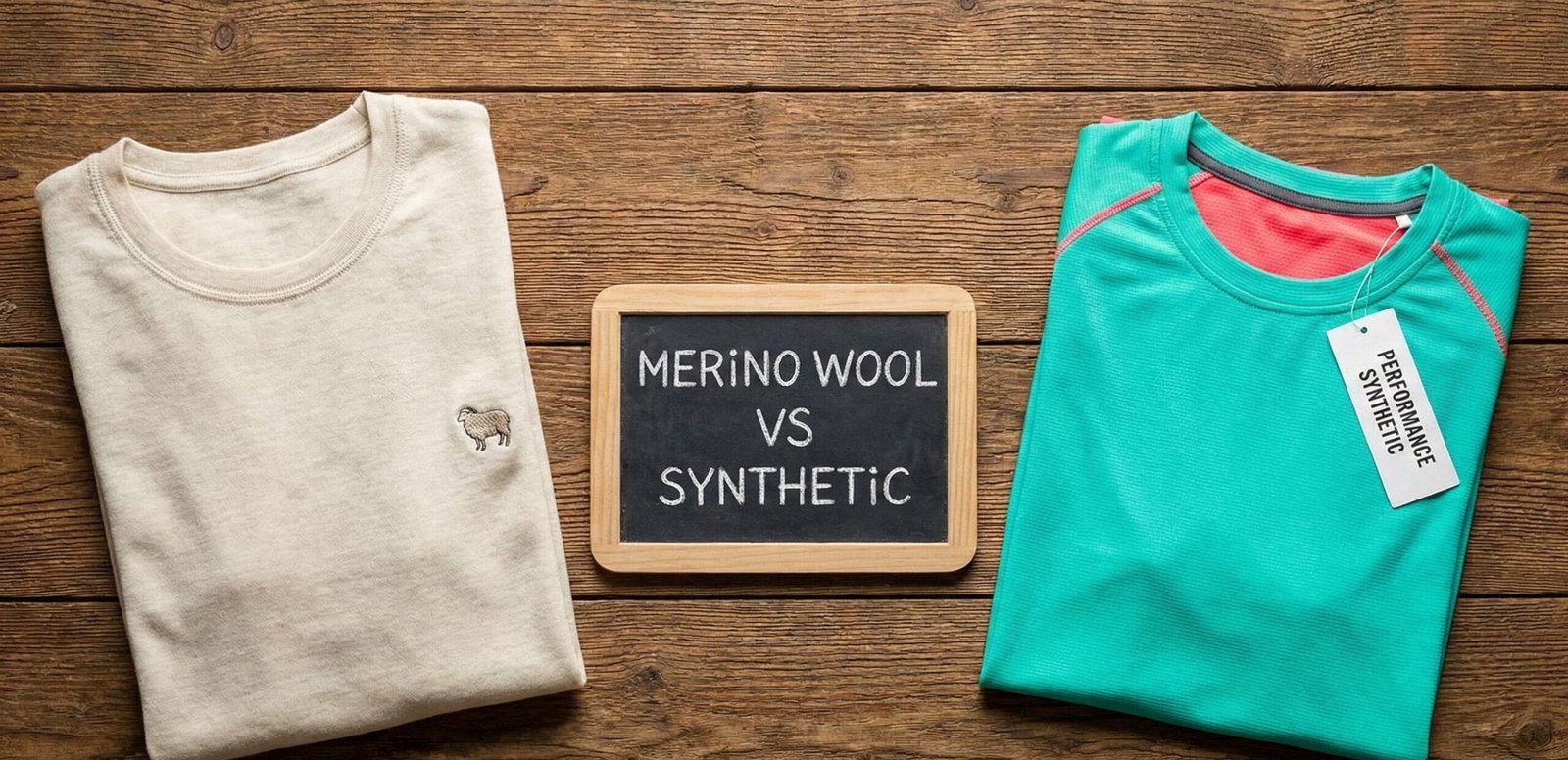
Merino Wool vs. Synthetic Base Layers: Which Is Best for Snowboarding?
It is the age-old debate of the snowboard world: Nature vs. Science. On one side, you have Merino Wool, the miracle fiber from New Zealand sheep that naturally regulates temperature. On the other, you have Synthetic (Polyester/Nylon), the lab-engineered fabric designed to wick sweat faster than anything else.
Choosing the wrong one can lead to a clammy, freezing chairlift ride or a stinky car ride home. But the “best” choice depends entirely on how you ride. Are you a sweaty park rat doing high-output laps? Or a backcountry explorer needing warmth for 8 hours? Let’s break it down.
Your base layer is arguably the most important piece of snowboarding gear you own. It sits directly against your skin, regulates your body temperature for the entire day, and determines whether you feel comfortable at -10°F on a January dawn patrol or 40°F on a slushy spring afternoon. Yet most riders spend months researching their board and boots while grabbing whatever is cheapest at the sporting goods store for a base layer. This guide fixes that. We will cover the science behind both fabrics, compare them across every metric that matters, and give you specific product recommendations at every price point so you can make an informed decision for your exact riding style and budget.
We also need to address the elephant in the room: the snowboarding industry has marketed both materials aggressively, and a lot of what you read online is repetition of marketing claims rather than honest analysis. Merino wool is not perfect. Synthetic fabrics are not cheap garbage. Both have genuine strengths and real weaknesses, and understanding those nuances is what separates a rider who stays warm and dry all day from one who is constantly adjusting layers, dealing with chafing, or peeling off a drenched shirt on the chairlift. This guide is designed to give you the complete picture, backed by fiber science, real-world testing, and honest comparisons.
If you want the absolute simplest answer: Merino wool wins for cold-weather comfort, multi-day trips, and odor resistance. Synthetics win for warm-weather high-output riding, durability, and budget-friendliness. If you can afford it, modern hybrid blends give you the best of both worlds. Keep reading for the full breakdown of why each material excels where it does.
The Cheat Sheet: At A Glance
Don’t have time for the science? Here is the winner in every major category. This expanded comparison covers 15 key metrics that matter for snowboarders specifically, not just general outdoor enthusiasts.
| Feature | Merino Wool | Synthetic |
|---|---|---|
| Warmth | Winner (Warm when wet) | Good |
| Moisture Wicking | Good (Absorbs vapor) | Winner (Moves liquid fast) |
| Odor Resistance | Winner (Days without smell) | Poor (Gets “perma-stink”) |
| Durability | Fragile | Winner (Lasts years) |
| Price | Expensive ($80-$150) | Winner ($30-$70) |
| Dry Time | Slow (6-12 hours) | Winner (1-3 hours) |
| Weight | Winner (Lighter per warmth) | Heavier for same warmth |
| Breathability | Winner (Natural fibers) | Good (Vents well) |
| UV Protection | Winner (UPF 50+ natural) | Variable (UPF 15-50) |
| Fire Resistance | Winner (Naturally flame resistant) | Melts under heat |
| Static Resistance | Winner (No static cling) | Generates static |
| Sustainability | Winner (Biodegradable) | Poor (Microplastics) |
| Softness | Winner (Ultra-soft at low micron) | Variable (Some are silky) |
| Wet Comfort | Winner (Doesn’t feel wet) | Feels wet against skin |
| Availability | Limited (Specialty stores) | Winner (Everywhere) |
The Science of Moisture Management
To understand why Merino and synthetic fabrics behave differently, you need to understand how moisture moves through fabric at a microscopic level. This is not just marketing talk — it is real fiber science that directly affects your comfort on the mountain.
How Your Body Produces Sweat While Snowboarding
Your body is a heat engine. When you snowboard, your muscles generate enormous amounts of thermal energy. To prevent overheating, your sweat glands activate and release moisture to your skin surface. That moisture needs to evaporate to cool you down. But here is the problem: in cold, dry mountain air at 8,000-12,000 feet, that evaporative cooling happens so fast that if the moisture stays on your skin, it pulls heat away from your body at an alarming rate — up to 25 times faster than dry air. This is why a damp base layer on a chairlift ride feels absolutely frigid even when the temperature is above freezing.
The key to staying warm and comfortable is managing two types of moisture: vapor (gas-phase water molecules from light perspiration) and liquid sweat (actual droplets from heavy exertion). Different fabrics handle these two phases in fundamentally different ways, and understanding this distinction is the single most important concept in base layer selection.
Vapor (Gas Phase): Light perspiration where moisture molecules pass through fabric as gas. This is what happens during moderate activity — gentle hiking, riding groomers, standing in the lift line.
Liquid (Droplet Phase): Heavy sweating where actual water droplets form on your skin. This happens during intense activity — bootpacking uphill, aggressive park laps, spring riding in warm temperatures. Your base layer must handle BOTH types to keep you comfortable all day.
Merino Wool: The Hydrophilic Sponge
Merino wool is hydrophilic — it loves water. The fiber has a complex internal structure made of overlapping scales (called the cuticle) surrounding a cortex that contains cells packed with keratin proteins. These proteins have amino acid side chains that attract and bind water molecules through hydrogen bonding. When moisture vapor touches a Merino fiber, it is absorbed into the fiber’s core through a process called sorption.
This absorption is not just passive storage. When Merino wool absorbs moisture, it undergoes an exothermic reaction — it releases a small amount of heat (called the “heat of sorption”). This is a chemical reaction where the bonding of water molecules to the keratin proteins releases energy as heat. The practical effect is remarkable: when you step off a hike onto a windy ridgeline with a damp Merino base layer, the fabric actually generates warmth as it absorbs moisture. This is the secret behind the legendary “warm when wet” property of wool.
Merino fibers can absorb up to 30-35% of their dry weight in moisture before they begin to feel wet to the touch. The absorbed water is held inside the fiber’s cortex, not on the surface, so your skin stays dry even when the fabric is technically damp. The fiber also swells as it absorbs moisture, which opens up microscopic channels between fibers and increases breathability — the more you sweat, the more the fabric breathes. This self-regulating behavior is something synthetic fabrics simply cannot replicate.
Synthetic Fabrics: The Hydrophobic Conveyor Belt
Synthetic base layer fabrics are made from hydrophobic polyester or nylon fibers — they actively repel water. The fibers themselves are essentially plastic, with a smooth, non-porous surface. Instead of absorbing moisture into the fiber core, synthetics use a completely different strategy: they wick liquid moisture away from your skin and spread it across a large surface area where it can evaporate quickly.
This wicking happens through capillary action. Synthetic fibers are engineered with specific cross-sections — often with channels, grooves, or “chimney” shapes — that create tiny capillary pathways. When liquid sweat contacts the inner surface of a synthetic base layer, these capillaries pull the moisture along the fiber surface via surface tension, spreading it outward toward the fabric’s exterior. Think of it like a paper towel touching a puddle — the liquid races along the fibers until it reaches the surface where air can evaporate it.
The advantage of this system is speed. Synthetic fabrics move liquid moisture much faster than Merino wool. In a head-to-head wicking test, a quality synthetic base layer can move sweat from skin surface to outer face in under 30 seconds, while Merino might take 2-5 minutes for the same volume. For high-output activities where you are generating liquid sweat faster than vapor, this speed advantage is significant. The disadvantage is that synthetic fibers do not generate heat when they absorb moisture — they simply move it. And because the fibers are smooth and non-porous, they can feel clammy and cold against your skin once they are saturated, since liquid sweat sits on the surface rather than being locked inside the fiber.
Capillary Action in Detail
Capillary action is the ability of a liquid to flow in narrow spaces without the assistance of external forces. In synthetic fabrics, this works because of two competing forces: adhesion (water molecules sticking to the fiber surface) and cohesion (water molecules sticking to each other). When these forces are balanced correctly in a fiber’s geometry, moisture is pulled along the fiber surface like a conveyor belt.
Manufacturers engineer this by creating fibers with non-circular cross-sections. Standard polyester fibers are round, which limits wicking. High-performance synthetic base layers use fibers shaped like a “+” (four-channel), “W” (wavy), or hollow tube design. These shapes create more surface area and more capillary channels, accelerating moisture transport. The most advanced synthetics, like those used in Under Armour ColdGear or Patagonia Capilene Air, use a blend of hydrophobic fibers on the inner face and hydrophilic-treated fibers on the outer face, creating a “push-pull” moisture gradient that actively drives sweat from inside to outside.
Why This Matters on the Mountain
The practical difference between these two systems shows up in specific scenarios:
- Chairlift after a run: You stop generating heat. Sweat on your skin starts cooling you rapidly. Merino absorbs that vapor, releases heat, and keeps you warm. Synthetic moves the liquid quickly, but if you were sweating hard, the fabric surface may still be damp and feeling cold against your skin.
- Bootpacking to a line: You are working hard, generating liquid sweat. Synthetic pulls that sweat off your skin faster, keeping your skin drier. Merino absorbs it but can get saturated in extreme exertion, at which point it stops feeling dry against skin.
- Spring riding in 40°F: You are warm and sweating intermittently. Synthetic’s fast wicking prevents that clammy feeling. Merino might feel too warm because its natural insulation traps heat — fine in January, potentially uncomfortable in March.
- Multi-day backcountry trip: You cannot wash your gear. Merino stays fresh for days. Synthetic develops odor within hours of first wear. This is not a moisture management issue, but it profoundly affects your comfort on extended trips.
The 3-Layer System: Where Base Layers Fit
Before diving deeper into specific fabrics, it is important to understand that a base layer is just one component of a complete snowboarding layering system. Understanding how layers work together helps you choose the right base layer weight and material for your specific needs.
Layer 1: Base Layer
Moisture management. Regulates body temperature. Sits against skin.
Layer 2: Mid Layer
Insulation. Traps body heat. Fleece, puffy, or wool sweater.
Layer 3: Shell
Wind and waterproof protection. Blocks elements.
Layer 1: The Base Layer (What This Guide Covers)
The base layer is the foundation of the entire system. Its primary job is moisture management, not insulation. A good base layer moves sweat away from your skin to prevent the “clammy chill” that ruins a day on the mountain. It also provides a thin layer of insulation by trapping a small amount of warm air next to your body, but this is secondary to its wicking function.
Base layers come in different weights, measured in grams per square meter (g/m²). For snowboarding, you will typically encounter three weights:
- Lightweight (120-150 g/m²): Best for high-output riding and warm spring conditions (35°F+). These prioritize wicking speed over insulation. Good for park riders who generate a lot of heat.
- Midweight (180-220 g/m²): The all-around choice for most resort snowboarding. Balances warmth and wicking. This is the weight most riders should start with.
- Heavyweight (250+ g/m²): Maximum warmth for cold conditions (under 20°F) and low-output riding like long chairlift sessions or casual cruising. These trap more air but can cause overheating during intense activity.
Layer 2: The Mid Layer
The mid layer’s job is insulation. It traps warm air between the base layer and shell to keep you warm. Common mid layer materials include fleece (polyester), down (goose or duck), synthetic insulation (like PrimaLoft), and heavier wool sweaters. Your choice of mid layer depends on conditions: fleece for moderate cold, puffy jackets for extreme cold. The key rule is that the mid layer must breathe — if it traps moisture, it defeats the purpose of a good base layer.
Layer 3: The Shell
The shell is your defense against wind, rain, and snow. It should be waterproof (or highly water-resistant) and windproof while still allowing moisture vapor to escape. Snowboard shells use membranes like Gore-Tex, eVent, or proprietary waterproof-breathable fabrics. A good shell completes the system by protecting all the work your base and mid layers are doing.
Each layer has ONE job. The base layer manages moisture. The mid layer provides insulation. The shell blocks wind and water. When you try to make one layer do everything (like wearing a heavy fleece as your base), the system breaks down. Choose each layer for its specific purpose, and your overall comfort will be dramatically better.
Deep Dive: Merino Wool
Merino wool is not the scratchy sweater your grandma gave you. It comes from Merino sheep, primarily in New Zealand and Australia, which produce ultra-fine fibers that are soft against the skin. The fiber is a natural protein (keratin) — the same protein found in human hair and fingernails — which gives it unique properties that no synthetic fabric has been able to fully replicate.
The Magic of “Warm When Wet”
The superpower of wool is that it can absorb up to 30% of its weight in water without feeling wet. It generates a small amount of heat as it absorbs moisture (a chemical process called “heat of sorption”). This means if you sweat on a hike and then stop on a windy peak, you won’t freeze instantly. This property is rooted in wool’s molecular structure: the keratin proteins in each fiber have hydrophilic (water-loving) amino acid groups that attract and bond with water molecules. The energy released during this bonding process is the “heat of sorption” — typically around 1,000 joules per gram of water absorbed. While this sounds small, it is enough to noticeably warm you in the critical minutes after you stop exerting yourself on a cold ridge.
Compare this to synthetic fibers, which are made from polyester or nylon — essentially plastic. These fibers cannot absorb moisture into their core. Instead, they sit on the surface and channel liquid away through capillary action. The result is that synthetic fabrics can move sweat faster, but they do not generate any warming effect when they do so. In cold conditions, a damp synthetic base layer against your skin can feel surprisingly cold, while a damp Merino layer still feels warm. This is not marketing — it is the direct result of wool’s chemical structure versus plastic’s inert behavior.
How Merino Sheep Produce This Fiber
Merino sheep evolved in the harsh, variable climate of New Zealand and southeastern Australia, where temperatures can swing 40°F in a single day. Their wool grew to meet this challenge: fine, crimped fibers that trap air for insulation while also managing moisture from rain, sweat, and morning dew. The average Merino sheep produces about 5-10 pounds of wool per year, and each fiber is between 15-24 microns in diameter (for reference, a human hair is about 70 microns). The finer the fiber, the softer it feels against skin, because thinner fibers bend more easily when they contact your skin rather than poking into it like thicker, coarser fibers do.
The crimp (the natural wave in each fiber) is another critical property. Merino fibers have between 15-30 crimps per inch, and each crimp creates a tiny pocket of trapped air. These air pockets provide insulation without bulk. They also create channels that help move moisture vapor along the fiber surface toward the outer face of the fabric. The combination of fine diameter, natural crimp, and protein-based chemistry is what makes Merino wool simultaneously warm, breathable, soft, and moisture-managing. No single synthetic fiber replicates all four properties at once.
Temperature Regulation: Nature’s Thermostat
Merino wool is a natural thermoregulator. In cold weather, the crimped fibers trap warm air close to your skin, creating an insulating barrier. In warm weather, the fiber’s breathability allows excess heat and moisture to escape, preventing overheating. This bi-phasic behavior is why Merino base layers are effective across a wider temperature range than synthetics — a single Merino base layer can keep you comfortable from roughly 15°F to 45°F, while a synthetic base layer typically has a narrower comfort window.
This temperature regulation works through a combination of mechanisms. First, the fiber’s moisture management actively moves sweat away from your skin, preventing the cooling effect of standing moisture. Second, the fiber’s natural structure breathes — air circulates through the crimped fibers, carrying away excess heat. Third, and most uniquely, the heat of sorption provides a warming boost as the fiber absorbs moisture. When all three mechanisms work together, the result is a fabric that keeps you in a comfortable temperature zone across a remarkably wide range of conditions.
Odor Resistance: The Bacterial Barrier
This is where Merino wool has an insurmountable advantage over any synthetic fabric. Wool fibers contain natural lanolin (a waxy substance produced by sheep) and have a complex surface structure with overlapping scales. These scales create a jagged, uneven surface that makes it extremely difficult for odor-causing bacteria to attach and reproduce. Additionally, the keratin proteins in wool are naturally antimicrobial — they absorb bacteria and prevent their growth through a process that researchers call “sorption and sequestration.”
In practical terms, this means you can wear a Merino base layer for 3-5 consecutive days of snowboarding without washing it, and it will not develop significant odor. Compare this to synthetic base layers, which are smooth, hydrophobic tubes that bacteria colonize within hours of first wear. Even “anti-microbial” synthetic treatments (silver ions, polygiene coatings, etc.) typically last only 20-50 washes before wearing off. Merino’s odor resistance is a permanent, inherent property of the fiber itself. For multi-day backcountry trips, resort vacation weeks, or anyone who simply hates doing laundry daily, this is a game-changing advantage.
Because Merino is an investment, it affects your overall budget. Check our breakdown of how expensive is snowboarding to see where to prioritize your spending (hint: boots and base layers come first).
Moisture Absorption Capacity
Merino wool can absorb up to 30-35% of its dry weight in moisture before it begins to feel wet against your skin. This is significantly more than cotton (which absorbs moisture but does not release it) and more than most synthetic fabrics. However, Merino’s absorption is a double-edged sword: while it keeps moisture away from your skin by pulling it into the fiber core, the absorbed water is slow to evaporate. A fully saturated Merino base layer can take 6-12 hours to dry completely, compared to 1-3 hours for a synthetic base layer.
This slow dry time is the primary weakness of Merino wool in high-output scenarios. If you are doing aggressive bootpacking or riding in warm spring conditions where you are producing liquid sweat faster than the fiber can absorb it, Merino can become saturated. Once saturated, it loses its temperature regulation properties and can feel heavy and damp against your skin. For these scenarios, a synthetic or hybrid base layer is the better choice. For moderate exertion in cold conditions — which describes most resort snowboarding — Merino’s absorption capacity is more than sufficient, and the heat of sorption makes it the superior choice.
The Ethical Dimension: Sourcing and Animal Welfare
One aspect of Merino wool that synthetic fabrics do not face is the ethical question of animal sourcing. The vast majority of Merino wool comes from Australia and New Zealand, where sheep farming is a major industry. Most modern Merino operations practice non-mulesed farming (mulesing is a controversial surgical procedure historically used to prevent flystrike), and many brands now offer certified ethical sourcing through programs like the Responsible Wool Standard (RWS) or ZQ Merino certification.
When shopping for Merino base layers, look for these certifications. Brands like Smartwool, Icebreaker, and Ridge Merino have committed to fully traceable, ethical sourcing. The cost of ethically sourced Merino is slightly higher, but it ensures that the sheep are treated humanely and the land is managed sustainably. This is an area where the “you get what you pay for” principle applies: cheaper Merino products sometimes come from operations with lower welfare standards.

The Gold Standard: Smartwool Merino 250
100% Merino wool. The softest, warmest base layer on the market. Perfect for cold resort days where you aren’t sweating buckets. 250 g/m² heavyweight construction for maximum warmth. Indestructawool technology for improved durability.
Check PriceUnderstanding Merino Micron Count
The “micron count” of Merino wool is the single most important specification to understand when shopping for a Merino base layer. Microns (μm) measure the diameter of each individual fiber. The lower the micron count, the finer and softer the fiber feels against your skin. This measurement directly determines comfort, price, and intended use.
| Micron Range | Classification | Feel Against Skin | Typical Use | Price Range |
|---|---|---|---|---|
| 15.5-17.5 μm | Ultrafine | Silky smooth, almost cashmere-like | Luxury base layers, next-to-skin garments | $120-$200+ |
| 17.5-19.5 μm | Superfine | Very soft, imperceptible to most people | Premium base layers, all-day wear comfort | $80-$150 |
| 19.5-22.5 μm | Fine | Soft, occasional light prickle for sensitive skin | Mid-range base layers, hiking, skiing | $60-$100 |
| 22.5-25.0 μm | Medium | Noticeable prickle for sensitive skin | Outer layers, sweaters (not next-to-skin) | $40-$70 |
| 25.0+ μm | Strong/Coarse | Scratchy, uncomfortable against bare skin | Outerwear, blankets, rugs | $20-$40 |
What Micron Count Means for Snowboarding
For a snowboarding base layer, you want to be in the 17.5-19.5 micron range (superfine). This gives you the best balance of softness, warmth, and durability at a reasonable price. Ultrafine (15.5-17.5 μm) Merino is incredibly luxurious but significantly more expensive and slightly less durable, making it better suited for casual wear than the rigors of daily snowboarding. Anything above 22.5 microns will feel itchy against bare skin and is not suitable for a base layer.
Most premium Merino base layers from Smartwool, Icebreaker, and Ridge Merino use 17.5-18.5 micron fibers. This is the sweet spot: soft enough that even people with sensitive skin find it comfortable, yet durable enough to withstand the friction of a base layer rubbing against your skin and mid layer all day. Budget Merino base layers sometimes use 19.5-21 micron fibers to reduce cost, which is still comfortable for most people but may feel slightly less premium.
Research has shown that most people cannot feel individual Merino fibers that are below 18 microns in diameter — they bend too easily to trigger the pain receptors in your skin. The “prickle threshold” for most people is around 22-25 microns. If you have ever found a wool sweater itchy, it was almost certainly made with fibers above 22 microns. Modern Merino base layers for snowboarding are designed well below this threshold.
Deep Dive: Synthetics (Polyester/Nylon)
Synthetics are plastic-based fibers derived from petroleum. Unlike wool, which absorbs moisture into the fiber core, synthetics are hydrophobic — they hate water. This forces moisture to the surface where it can evaporate. The key advantage of synthetic base layers is their speed: they move liquid moisture faster than any natural fiber, making them the choice for high-output activities where you are generating sweat faster than wool can absorb it.
How Synthetic Fibers Are Made
Polyester and nylon fibers are created through a process called melt spinning. Polymer pellets (derived from petroleum) are heated until they melt, then forced through a spinneret — a metal plate with hundreds of tiny holes — to create continuous filaments. These filaments are stretched, cooled, and wound onto spools. The shape of the spinneret holes determines the fiber’s cross-section, which directly affects wicking performance. Standard polyester has a round cross-section, but performance fabrics use shaped fibers (4-channel, 8-channel, hollow, or wavy) that create more surface area and capillary channels for faster moisture transport.
After spinning, the fibers are typically texturized (adding crimp for bulk and insulation), knitted or woven into fabric, and then treated with various finishes. These finishes can include anti-microbial treatments (silver ions, zinc pyrithione, or proprietary chemicals), moisture-wicking coatings (hydrophilic treatments applied to the fiber surface), and UV protection treatments. The base fiber is just the starting point — the fabric construction and finishes determine the final performance.
Best For High Output
If you are riding park, spring slush, or hiking aggressively, you will generate liquid sweat faster than wool can absorb it. Synthetics act like a pump, moving that sweat off your skin instantly. You might feel cooler (which is good in spring), but you will stay drier. This is because synthetic fibers do not absorb moisture — they transport it. The liquid sits on the fiber surface and is wicked outward through capillary action, leaving your skin relatively dry even during intense exertion.
High-intensity riding leads to massive sweat output. See our fitness guide for snowboarding to understand how your body generates heat on the mountain.
The Odor Problem
Here is where synthetics lose badly. Synthetic fibers are smooth, non-porous tubes with no antimicrobial properties. Bacteria — the organisms that cause body odor — thrive on these surfaces. The hydrophobic nature of the fiber means sweat and dead skin cells sit on the surface where bacteria can feast. Within 1-2 hours of vigorous activity, a synthetic base layer starts to develop noticeable odor.
Manufacturers have tried to address this with anti-microbial treatments. The most common are silver-based (like X-Static or Polygiene) and zinc-based (like Polygiene). These treatments work by disrupting bacterial cell membranes, preventing them from reproducing. However, these treatments degrade over time — typically lasting 20-50 washes before effectiveness drops significantly. Even when new, they only slow odor development, not eliminate it. After a full day of hard riding, even an “anti-microbial” synthetic base layer will smell noticeably worse than a Merino base layer worn for the same period. For multi-day trips or riders who hate washing gear daily, this is the biggest drawback of synthetic base layers.
Durability: Where Synthetics Shine
Synthetic fibers are extremely durable. Polyester and nylon have high tensile strength, resist abrasion, and maintain their shape through hundreds of wash cycles. A quality synthetic base layer can last 3-5+ years of regular use without significant degradation. The fibers do not felt, pill, or shrink the way natural fibers can. They also dry extremely fast — typically 1-3 hours air dry or 30-45 minutes in a dryer — which is a huge practical advantage when you are washing gear between riding days on a multi-day trip.
This durability advantage is significant for snowboarders specifically. The constant friction between base layer and shell, the abrasion from sitting on chairlifts, and the general wear of an active sport all take their toll on fabric. Synthetic base layers withstand this abuse much better than Merino wool, which can develop thin spots, holes, and pilling after a season or two of hard use. If you ride 50+ days per year, the durability of synthetics becomes a major factor in your cost-per-wear calculation.
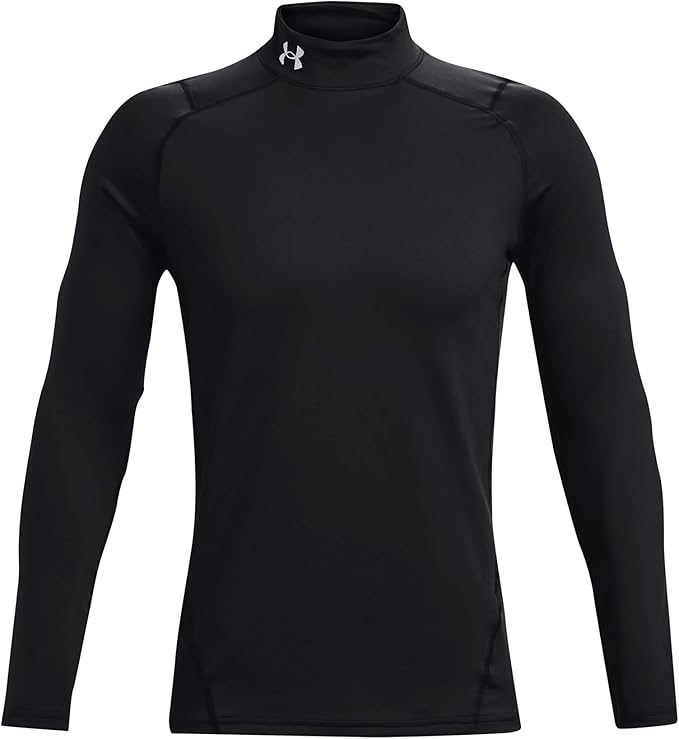
The Action Pick: Under Armour ColdGear
A compression-fit synthetic that wicks sweat violently fast. Ideal for park riders and warm spring days. Dual-layer fabric: soft brushed interior, smooth wicking exterior. 4-way stretch for unrestricted movement.
View DealsSynthetic Fabric Types Compared
Not all synthetic base layers are created equal. The specific polymer and fabric construction make a significant difference in performance. Here is how the major synthetic base layer fabrics compare to each other.
| Fabric Type | Polymer | Wicking Speed | Warmth | Softness | Price |
|---|---|---|---|---|---|
| Standard Polyester | PET | Good | Low | Average | $25-$45 |
| Brushed Polyester | PET | Good | Medium | Good (fleece-like) | $35-$60 |
| Polyester/Nylon Blend | PET/PA6 | Very Good | Medium | Good | $40-$70 |
| Capilene (Patagonia) | Recycled PET | Excellent | High | Very Good | $55-$90 |
| HeatGear/ColdGear (UA) | PET/EA Blend | Excellent | High (ColdGear) | Good | $45-$75 |
| Polypropylene | PP | Good (hydrophobic) | High | Poor (waxy feel) | $30-$55 |
Patagonia Capilene: The Premium Synthetic
Capilene is Patagonia’s proprietary synthetic fabric line, and it represents the best of what synthetic base layers can offer. Made from recycled polyester, Capilene uses a unique grid fleece construction on the interior that traps warm air while the smooth exterior wicks moisture. The result is a synthetic base layer that comes closest to matching Merino’s warmth-to-weight ratio while maintaining synthetic’s superior wicking speed and durability. Capilene is available in four weights (Midweight, Thermal, Heavyweight, and Expedition), and the Thermal weight is the most popular for snowboarding — it provides excellent warmth without excessive bulk.
Polypropylene: The Forgotten Alternative
Polypropylene deserves a mention as an alternative synthetic base layer material. It is the most hydrophobic common fiber — it absorbs less than 0.1% of its weight in water — making it the fastest to dry of any base layer material. However, it has significant drawbacks: it feels waxy and somewhat unpleasant against skin, it degrades under UV light (not a problem under layers but worth noting), and it has a strong odor retention problem that rivals or exceeds standard polyester. Polypropylene was popular in the 1990s and 2000s for extreme cold base layers but has largely been displaced by more advanced polyester constructions. It still has a niche following among winter mountaineers and ice fishermen who prioritize absolute minimum moisture absorption.
The Smell Test: No Contest
This is where Merino wins, hands down. Wool fibers contain lanolin and have a jagged structure that traps bacteria, preventing them from reproducing. You can wear a Merino shirt for 3-4 days of riding without washing it, and it won’t smell.
Synthetics, on the other hand, are smooth tubes that bacteria love to grow on. Even with “anti-microbial silver treatments,” a synthetic shirt will usually smell like a locker room after one hard day of riding.
Why Odor Matters More Than You Think
Odor might seem like a minor annoyance, but it has real practical consequences for snowboarders. On a week-long resort trip, you are sharing a condo with friends. After two days in a synthetic base layer, your gear will permeate the room, your car, and your luggage. Washing machine access is often limited or expensive at ski resorts. On a multi-day backcountry trip, you cannot wash your gear at all — and a stinky base layer becomes a morale problem that affects your entire group.
There is also a health dimension. Odor-causing bacteria on your base layer feed on dead skin cells and sweat compounds. Prolonged exposure to bacteria-laden fabric against your skin can contribute to folliculitis (infected hair follicles), skin irritation, and in rare cases, fungal infections. While these are not common or dangerous for most people, they are easily prevented by choosing a base layer with natural antimicrobial properties — i.e., Merino wool.
Real-World Odor Comparison Test
To put this in perspective, here is a typical real-world comparison. Day 1: Both base layers smell fine. Day 2: The Merino base layer has no noticeable odor. The synthetic base layer has a mild but detectable smell by evening. Day 3: Merino still smells fresh. Synthetic needs washing — it is noticeably unpleasant. Day 4-5: Merino is starting to develop a faint, earthy scent (barely noticeable). Synthetic is unwearable without washing. Day 6-7: Merino still functionally odor-free. Synthetic is a biohazard. This pattern holds regardless of whether the synthetic has “anti-microbial” treatment, though treated synthetics may last 1-2 extra days before reaching the unwearable stage.
Durability & Cost: The Long Game
Merino wool’s biggest weakness is durability. The natural fibers are delicate — they can felt (mat together), pill, develop holes, and lose their softness over time. A 100% Merino base layer, even a high-quality one, will typically last 1-3 seasons of regular snowboarding use before showing significant wear. Synthetics, by contrast, can last 3-5+ seasons with proper care.
Understanding the Cost Per Wear
The sticker price of Merino wool is higher, but the real question is cost per wear. Let’s do the math:
- Merino base layer ($100): Lasts 60 days of riding (2 seasons). Cost per day: $1.67. But it stays fresh for 3-5 days between washes, so fewer laundry cycles and less water/energy usage.
- Synthetic base layer ($50): Lasts 120 days of riding (3 seasons). Cost per day: $0.42. But needs daily washing, adding laundry costs and the environmental impact of microplastic shedding with each wash.
When you factor in laundry costs and the environmental impact, the gap narrows considerably. And if you value the comfort advantage of Merino (better odor resistance, warm when wet, softer feel), the premium is often worth it for dedicated riders. Budget-conscious riders who prioritize durability and low cost per wear will find better value in synthetic options.
How to Extend the Life of Merino
Merino’s durability issues can be significantly mitigated with proper care. The key rules are:
- Wash cold, always. Hot water causes Merino fibers to felt and shrink. Use cold water and a gentle/delicate cycle.
- Use wool-specific detergent. Regular detergent contains enzymes and surfactants that strip Merino’s natural oils and damage the fiber. Use a pH-neutral, wool-specific wash like Eucalan or Soak.
- Never put Merino in the dryer. Heat and tumbling action cause felting and shrinkage. Lay flat to air dry, or hang on a padded hanger.
- Hand wash when possible. If you have access to a sink, hand washing in cold water with a tiny amount of wool detergent is the gentlest cleaning method.
- Store properly. Fold Merino garments and store in a drawer. Do not hang for long periods — the weight of the fabric can stretch shoulders and seams. Store with cedar blocks or lavender sachets to repel moths.
- Use a mesh laundry bag. If you must machine wash, put your Merino in a fine mesh bag to reduce abrasion from the drum.
The single most common way people ruin Merino base layers is putting them in the dryer. Even one cycle in a hot dryer can shrink a Merino garment by 1-2 sizes and cause irreversible felting. Always air dry. Always. If you are in a rush and need your base layer dry for the next day, hang it near a heat source (not ON a heat source) and use a fan to circulate air. It will dry in 4-6 hours.
How to Extend the Life of Synthetics
Synthetic base layers are naturally durable, but you can extend their life further:
- Wash in cold water. Even though synthetics can handle warm water, cold water extends fiber life and reduces energy usage.
- Avoid fabric softener. Fabric softener coats synthetic fibers with a hydrophobic film that kills wicking performance. Use a sport-specific detergent like Nikwax BaseWash or Grangers Performance Wash instead.
- Air dry when possible. Dryer heat breaks down elastic fibers (spandex/elastane) that provide stretch. Air drying preserves the garment’s shape and stretch.
- Wash inside out. This reduces abrasion on the outer face and helps remove body oils and bacteria from the inner surface where they accumulate.
Fit & Compression Guide
The fit of your base layer is just as important as the fabric. A poorly fitting base layer can bunch, restrict movement, or fail to wick moisture properly. There are two main fit categories for snowboarding base layers, and each serves a different purpose.
Compression Fit
Compression base layers are designed to fit tightly against your skin, like a second skin. The snug fit serves several purposes: it maximizes moisture wicking by keeping the fabric in constant contact with your skin, it provides muscle support that can reduce fatigue during long days, and it eliminates bunching that can cause chafing under a mid layer and shell. Compression base layers are the preferred choice for aggressive riders, park athletes, and anyone who prioritizes performance over casual comfort.
However, compression fit is not for everyone. Some riders find it uncomfortable or restrictive, especially around the neck and wrists. If you have never worn compression gear before, try it on before committing. A compression base layer that is too tight will restrict circulation and actually make you colder. It should feel snug but not binding — you should be able to move freely without the fabric pulling or pinching.
Regular (Relaxed) Fit
Regular-fit base layers have a more traditional shirt fit — close to the body but not skin-tight. They provide good moisture wicking (though not as fast as compression) and more comfortable all-day wear for casual resort riders. Regular fit is also more forgiving if you are between sizes. Most Merino base layers come in regular fit, since the natural fiber’s stretch and drape make a compression fit less necessary for moisture management.
The downside of regular fit is that it can bunch up under your mid layer, especially around the waist when you are sitting on a chairlift. This bunching can create cold spots and cause chafing. To mitigate this, look for base layers with a slightly longer hem that stays tucked in, and flatlock seams that minimize bulk at seam lines.
The Neckline Decision: Crew vs. Mock vs. Half-Zip
Base layer necklines matter more than most riders realize. Crew neck (round neck) is the most versatile — it works under any jacket and sits flat without bunching. Mock neck (a short standing collar) provides extra warmth around your neck and is great for cold conditions, but it can feel restrictive if your shell collar is also high. Half-zip (a zippered opening from chest to collar) gives you the most ventilation control — unzip when you are warm, zip up for cold chairlift rides. This is the most versatile option but also the most expensive and heaviest due to the zipper hardware.
Top vs. Bottom Base Layers: What to Know
Many riders buy a base layer top and forget about base layer bottoms. But your legs generate enormous heat and moisture during snowboarding, and the right base layer bottom can make a significant difference in comfort. Here is what to consider for each.
Base Layer Tops
Your base layer top is the more important of the two pieces. It manages moisture from your torso — the area with the most sweat glands and the greatest heat output. For the top, prioritize fabric quality, fit, and neckline style. A well-chosen base layer top will regulate your temperature better than any other piece of gear.
Weight recommendations for tops: go midweight (180-220 g/m²) for all-around use, lightweight (120-150 g/m²) for warm conditions or high output, and heavyweight (250+ g/m²) for extreme cold. When in doubt, go midweight — you can always add or remove mid layers to adjust warmth, but your base layer sets the foundation.
Base Layer Bottoms
Base layer bottoms (sometimes called “leggings” or “tights”) serve the same moisture management function for your legs. They are especially important for riders who experience cold legs, which is common because your legs are less insulated by your jacket and more exposed to wind and snow spray. Base layer bottoms also provide a smooth layer between your skin and snowboard pants, reducing friction and improving comfort during long days.
For bottoms, weight matters less than for tops — your legs generate less heat than your torso, and the insulation from your snowboard pants provides additional warmth. A lightweight or midweight base layer bottom is usually sufficient. Look for a flat waistband that does not dig in, and articulated knees for unrestricted movement. If you ride in very cold conditions, a heavyweight base layer bottom with a fleece interior provides excellent warmth.
When to Skip Base Layer Bottoms
If you ride in warm spring conditions (40°F+), base layer bottoms can be overkill and cause overheating. Many spring riders wear only a base layer top under their shell jacket and regular underwear or athletic shorts under their snowboard pants. This is perfectly fine — your legs will generate enough heat from riding to stay warm, and skipping the bottom layer improves ventilation. On warm days, the base layer top is the priority, not the bottom.
Best Base Layer for Your Riding Style
The best base layer depends heavily on how you ride. Different riding styles generate different amounts of heat and sweat, and the ideal base layer varies accordingly. Here is a breakdown by riding discipline.
Park & Freestyle Riders
Park riders generate enormous amounts of heat. You are constantly hiking back up features, dropping in, landing (or crashing), and doing it all over again. You also spend time in terrain parks where you might hit 20+ features in an hour. This is high-output, anaerobic activity that produces liquid sweat.
Best choice: Lightweight synthetic (120-150 g/m²). You need maximum wicking speed to handle the volume of sweat you produce. Merino is too slow to manage the moisture output of aggressive park riding, and you will overheat in anything heavier than lightweight. A synthetic compression base layer from Under Armour or a lightweight Capilene top is ideal. The compression fit also helps with muscle fatigue from repeated jumps and impacts.
All-Mountain Resort Riders
All-mountain riders have the most variable output levels. You might hike a ridge in the morning (high output), cruise groomers in the afternoon (moderate output), and sit on a chairlift for 15 minutes (low output). This variability is where Merino excels, because its natural temperature regulation adapts to changing conditions.
Best choice: Midweight Merino (180-220 g/m²). The Merino fiber’s ability to absorb moisture during high output, release heat when you stop, and maintain consistent comfort across a wide temperature range makes it the perfect match for variable-intensity riding. If your budget is tight, a midweight synthetic will also work well — just be prepared for odor issues on multi-day trips.
Backcountry & Touring Riders
Backcountry riders face the most extreme range of conditions: high-output uphill skinning followed by cold, windy descents. The transition from exertion to exposure is where base layer performance matters most. You need a fabric that handles intense sweat output uphill AND keeps you warm when you stop on a cold ridge.
Best choice: Hybrid blend (Merino/Nylon, midweight). This is where hybrid fabrics shine — the Merino provides warmth and odor resistance for multi-day trips, while the nylon core adds durability for the abrasion of carrying a pack. A 60/40 Merino/nylon blend like Smartwool’s Intraknit or Black Diamond’s NuYarn gives you the best balance. Pure Merino is a close second if you are willing to manage its durability limitations. Pure synthetic is viable for single-day tours but develops severe odor on multi-day trips.
Freeride & Powder Hunters
Freeride riders prioritize warmth above all. You are riding deep powder in cold temperatures, often in remote terrain with limited sun exposure. You are not working as hard as park riders — powder riding is more about flow and less about explosive exertion — so wicking speed is less important than insulation.
Best choice: Heavyweight Merino (250+ g/m²). The superior warmth and temperature regulation of heavy Merino is ideal for cold-weather freeriding. The “warm when wet” property means that even if you get caught in a storm or fall in deep powder, your base layer continues to insulate. A heavyweight Merino base layer from Smartwool or Icebreaker, paired with a warm mid layer and a waterproof shell, creates a system that will keep you comfortable in the coldest conditions.
Spring & Warm Weather Riders
Spring riders face a unique challenge: temperatures can range from 30°F in the morning to 50°F+ by afternoon, and you are often riding in slush, sun, and warm breezes. Overheating is the primary concern, and moisture management needs to keep up with heavy sweating in warm conditions.
Best choice: Lightweight synthetic (120-150 g/m²). Synthetics move sweat away from your skin faster in warm conditions, and the slight cooling effect of a damp synthetic against skin is actually pleasant when it is warm out. Merino’s warmth becomes a liability in spring — it can trap too much heat and leave you sweating uncontrollably. A lightweight synthetic with good ventilation (mesh panels, half-zip neck) is the spring rider’s best friend.
Ice Coast & Cold-Climate Resort Riders
Riders on the East Coast, Midwest, or other cold-climate resorts face consistently cold temperatures (often below 10°F), wind-chill from chairlift rides, and shorter but intense riding sessions. Warmth is the priority, and you are not generating as much sweat as backcountry or park riders because the cold keeps your output moderate.
Best choice: Heavyweight Merino or heavyweight synthetic (250+ g/m²). The primary battle is staying warm, not managing sweat. Heavyweight base layers provide maximum insulation. Merino is preferred for its “warm when wet” property, which helps when you break a sweat during a particularly aggressive run and then sit on a frigid chairlift. But a heavyweight synthetic like Under Armour ColdGear will also keep you warm in these conditions, and at a lower price point.
Weather Condition Guide: What to Wear When
Temperature is the single biggest factor in base layer selection, but it is not the only one. Wind, humidity, precipitation, and sun exposure all affect how your base layer performs. Here is a detailed guide for every condition you might encounter on the mountain.
| Condition | Temp Range | Best Merino Choice | Best Synthetic Choice |
|---|---|---|---|
| Extreme Cold | Below 0°F | Heavyweight (250g) + Mid layer | Heavyweight ColdGear + Mid |
| Very Cold | 0°F – 15°F | Heavyweight (250g) | Heavyweight synthetic |
| Cold | 15°F – 25°F | Midweight (200g) | Midweight thermal |
| Moderate Cold | 25°F – 35°F | Midweight (180g) – Ideal zone | Midweight standard |
| Cool | 35°F – 45°F | Lightweight (150g) | Lightweight wicking |
| Warm | 45°F – 55°F | Ultralight or skip | Lightweight with venting |
| Hot Spring | 55°F+ | Skip or ultralight top only | Mesh/lightest synthetic |
Wind Chill Factor
Wind chill dramatically affects how cold you feel, but it does not change the ideal base layer choice much — your base layer is under multiple layers that block wind. The bigger factor is chairlift wind exposure: sitting on a chairlift in a 10 mph wind at 20°F feels like -5°F. The “warm when wet” property of Merino is particularly valuable in these conditions, because you will likely have some sweat from your last run, and Merino’s heat of sorption provides a warming boost as you sit in the cold wind. Synthetic base layers in the same scenario can feel clammy and cold if they are damp.
Precipitation: Snow vs. Rain
In light to moderate snow, precipitation does not reach your base layer — your shell handles it. But in heavy snow, wet snow, or rain (which happens at lower elevations and in spring), moisture can penetrate your shell and reach your mid layer. If your shell leaks significantly, moisture can reach your base layer. In these conditions, Merino’s ability to absorb moisture and continue insulating is a significant advantage. A saturated synthetic base layer loses most of its insulating value, while a wet Merino base layer still provides meaningful warmth.
Humidity and Altitude
At high altitude (most ski resorts are 6,000-12,000 feet), the air is very dry. This means sweat evaporates quickly, which is good for moisture management but can lead to dehydration and skin dryness. Merino wool performs exceptionally well at altitude because its natural moisture management works with the dry air to keep you comfortable without over-drying your skin. At lower-altitude resorts in humid climates, the air holds more moisture, which can slow evaporation from synthetic fabrics. In humid conditions, Merino’s absorption-based moisture management is more effective than synthetic’s evaporation-based approach.
Brand vs. Brand: The Head-to-Head Matchups
Within each material category, specific brands have earned reputations for quality, innovation, and value. Here is how the top brands stack up against each other in direct comparison.
Merino Brand Showdown
Smartwool vs. Icebreaker
These are the two giants of Merino base layers, and the comparison is the most common question among Merino shoppers. Smartwool (owned by VF Corporation) tends to produce slightly softer fabrics with better all-around comfort. Their Indestructawool technology adds nylon to high-wear areas for improved durability without sacrificing the soft Merino feel against skin. Icebreaker (owned by VF Corporation as well) focuses more on performance and durability, using slightly heavier constructions and their proprietary 200 Oasis fabric that is a workhorse for cold-weather riding. Smartwool edges out Icebreaker in softness and day-one comfort; Icebreaker wins in long-term durability and performance under hard use. Both are excellent choices, and the difference is more about personal preference than objective quality. Price points are similar ($80-$130 for midweight tops).
Ridge Merino vs. Smartwool
Ridge Merino is a newer, direct-to-consumer brand that has quickly earned a loyal following by offering Merino quality comparable to Smartwool at lower prices ($70-$100 for midweight tops). Their fabrics are sourced from the same New Zealand Merino cooperatives, and their fit is designed specifically for active outdoor use. The main advantage of Ridge Merino is value: you get comparable softness, odor resistance, and warmth for 20-30% less than Smartwool. The disadvantage is a more limited product range and less retail availability. If you are comfortable ordering online and want premium Merino without the premium price tag, Ridge Merino is the best value in the category.
Minus33 vs. Icebreaker
Minus33 is a budget-friendly Merino option that offers surprisingly good quality for the price ($50-$80 for midweight tops). Their fabrics are slightly coarser than Icebreaker’s (typically 19.5-21 microns vs. 18.5-19.5), which means they are not quite as soft against skin, but they still provide the core benefits of Merino: odor resistance, temperature regulation, and moisture management. Minus33 is an excellent choice for riders who want to try Merino without committing to the full price of Smartwool or Icebreaker. The main trade-off is a slightly itchier feel for people with very sensitive skin.
Synthetic Brand Showdown
Under Armour ColdGear vs. Patagonia Capilene
Under Armour ColdGear is designed specifically for cold-weather athletic activity, with a dual-layer construction: a brushed fleece interior for warmth and a smooth exterior for moisture wicking. It excels at moving large volumes of sweat while maintaining warmth, making it the top choice for high-output park and freestyle riders. Patagonia Capilene is a more versatile line with weights ranging from lightweight to expedition, and its recycled polyester construction appeals to environmentally conscious riders. Capilene’s Thermal weight is the snowboarding sweet spot — comparable warmth to ColdGear but with better breathability for moderate-output all-mountain riding. ColdGear wins for pure wicking speed; Capilene wins for versatility and environmental responsibility.
REI Co-op Merino vs. Smartwool
REI Co-op offers its own branded Merino base layers that are significantly cheaper than Smartwool ($50-$80 vs. $80-$130) while using comparable New Zealand Merino fiber. The REI Merino base layers are softer and more comfortable than their price suggests, and REI’s satisfaction guarantee means you can return them if they do not meet your expectations. The main differences from Smartwool are slightly less refined fit and construction, and fewer weight/style options. For budget-conscious riders who want real Merino without paying Smartwool prices, REI’s house brand is an excellent entry point.
Smartwool Merino 250
Softness:
Warmth:
Durability:
Odor Resistance:
Value:
Under Armour ColdGear
Softness:
Warmth:
Durability:
Odor Resistance:
Value:
Price Tier Roundup: Best Base Layers at Every Budget
Whether you have $30 or $150 to spend, there is a base layer that will serve you well. Here are our top picks at each price tier, organized by material type.
Budget Tier: Under $50
REI Co-op Active Warm
Brushed polyester, midweight, great wicking for the price. A reliable all-around synthetic that outperforms its price point.
~$35
Minus33 Kancamagus
100% Merino, midweight. Slightly coarser micron but delivers real Merino odor resistance and warmth at an entry-level price.
~$50
Mid Tier: $50-$100
Patagonia Capilene Midweight
Recycled polyester, grid fleece interior, excellent temperature regulation. The gold standard for sustainable synthetic performance.
~$65
Ridge Merino Journey
18.5 micron Merino, midweight, fantastic fit and comfort. Premium quality at a direct-to-consumer price.
~$80
Smartwool Classic Thermal
Merino/Nylon blend, midweight. Great durability with Merino comfort. The smart money pick for resort riders.
~$90
Premium Tier: $100+
Arc’teryx Rho Heavyweight
Phasic synthetic with exceptional fit and finish. The luxury option for synthetic riders who demand the best construction.
~$110
Smartwool Merino 250
100% Merino, heavyweight, Indestructawool construction. The most comfortable base layer on the market for cold conditions.
~$120
Icebreaker 260 Tech
Ultrafine Merino, heavyweight, body-mapped zones for optimized warmth and breathability. The ultimate cold-weather base layer.
~$140
The Rise of Hybrid Blends
Today, you don’t always have to choose. Brands like Black Diamond (NuYarn) and Smartwool (Intraknit) are wrapping Merino wool fibers around a strong Nylon core. This gives you the touch and warmth of wool against your skin, but the durability and stretch of nylon. If you can afford it, Hybrid Blends are the superior choice.
How Hybrid Construction Works
Traditional Merino base layers use 100% Merino yarn, which means every fiber in the fabric is a delicate wool fiber. Hybrid constructions use a core-spun technique where a strong nylon or polyester filament forms the structural core of the yarn, and Merino fibers are wrapped around it. The Merino fibers sit on the outer surface of the yarn, so your skin contacts only Merino (preserving softness and odor resistance), while the nylon core provides tensile strength and abrasion resistance. The result is a fabric that is significantly more durable than 100% Merino — some hybrid constructions last 50-100% longer — while maintaining 90%+ of Merino’s comfort properties.
Hybrid blends also tend to dry faster than pure Merino, because the nylon core does not absorb moisture. This means the fabric handles high-output situations better, with the Merino managing vapor and the nylon providing structural integrity. For snowboarders who ride 30+ days per year and want Merino comfort without replacing their base layer every season, hybrids are the logical evolution.
Top Hybrid Base Layers Right Now
- Smartwool Intraknit (51% Merino, 35% Nylon, 14% Polyester): Body-mapped construction with Merino against skin and nylon reinforcement at high-wear zones. Excellent fit and outstanding durability.
- Black Diamond CoEfficient Hybrid (60% Merino, 40% Nylon): NuYarn technology wraps Merino around nylon for exceptional strength-to-weight ratio. Great for backcountry.
- Icebreaker Merino 200 Oasis (95% Merino, 5% Elastane): Not a true hybrid but with elastane for stretch and durability. The closest to pure Merino with enhanced performance.
- Ministry of Supply Merino Performance (55% Merino, 35% Nylon, 10% Polyester): 3D-knit construction with zoned ventilation and reinforcement. A tech-forward approach to hybrid design.
Timing your purchase matters for these high-tech fabrics. Read when is the best time to buy snowboarding gear to snag these hybrids on sale.
For most snowboarders, a 60/40 Merino/Nylon blend offers the ideal balance: enough Merino for excellent odor resistance and temperature regulation, enough nylon for year-after-year durability. If you ride resort only and wash your gear regularly, 100% Merino is fine. If you ride 40+ days per year or do backcountry trips, invest in a hybrid. You will replace it half as often and save money in the long run.
Sustainability & Environmental Impact
Today, sustainability is no longer optional — it is a factor in every purchasing decision. When comparing Merino wool and synthetic base layers, the environmental picture is more nuanced than you might expect. Neither material is perfectly “green,” but each has distinct advantages and disadvantages.
Every time you wash a synthetic base layer, it sheds thousands of microplastic fibers into the water system. A single wash of a polyester garment can release 700,000+ microfibers. These fibers are too small to be filtered by wastewater treatment plants and end up in rivers, lakes, and oceans. Microplastic pollution is now found in every ocean, in drinking water, and even in human blood. Merino wool fibers, being natural protein, biodegrade in soil and water within months to years. This is not a trivial difference — it is one of the most significant environmental distinctions between the two materials.
Merino Wool: Environmental Profile
- Carbon footprint: Sheep farming produces methane (a potent greenhouse gas), and Merino wool has a higher carbon footprint per garment than polyester. However, Merino sheep also graze on land unsuitable for crops, and well-managed grazing can improve soil health and sequester carbon.
- Water usage: Merino production requires significant water for sheep farming and processing. However, Merino garments require far fewer washes over their lifetime (due to odor resistance), reducing lifetime water consumption.
- Biodegradability: Merino wool biodegrades in 1-5 years in soil conditions, releasing nutrients back into the earth. No microplastic residue.
- Chemical treatments: Some Merino garments use chemical treatments for moth resistance or anti-shrink processing. Look for brands that use non-toxic alternatives or minimal chemical processing.
- Animal welfare: Ethical concerns exist around shearing practices and mulesing. Look for RWS (Responsible Wool Standard) or ZQ certified products to ensure humane treatment.
Synthetic Fabrics: Environmental Profile
- Carbon footprint: Polyester production is less greenhouse-gas-intensive per garment than Merino, as it is derived from petroleum refining (an existing industrial process). Recycled polyester reduces this further by 30-50%.
- Microplastic shedding: This is the critical environmental problem with synthetics. Each wash releases microplastics that persist in the environment for hundreds of years. A synthetic garment shed microplastics for its entire useful life and beyond.
- Recyclability: Most synthetic garments are not recycled. Polyester recycling infrastructure is growing but still handles less than 1% of production. Patagonia and some other brands offer take-back programs.
- Wash frequency: Synthetic garments need frequent washing due to odor retention, multiplying their microplastic shedding per garment lifecycle.
- End of life: Synthetic garments persist in landfills for 200+ years, leaching chemicals and shedding microplastics as they slowly fragment.
The Sustainability Scorecard
| Factor | Merino Wool | Synthetic |
|---|---|---|
| Biodegradable | Yes | No (200+ years) |
| Microplastic shedding | None | Significant (700k fibers/wash) |
| Production carbon footprint | Higher (methane) | Lower (industrial) |
| Lifetime wash frequency | Low (every 3-5 days) | High (daily) |
| Recyclable | Compostable | Technically, but rare in practice |
| End-of-life impact | Minimal (returns to earth) | Persistent (landfill burden) |
Making the Sustainable Choice
If environmental impact is a priority for you, Merino wool is the more sustainable choice overall — primarily because of its biodegradability and zero microplastic shedding. The higher production carbon footprint of Merino is partially offset by its longer functional life (with proper care) and fewer wash cycles. However, the most sustainable choice is always to buy fewer, higher-quality garments that last longer, regardless of material. A single well-made Merino base layer that lasts 3 years and is washed every 5 days produces less environmental impact than three cheap synthetic base layers that each last a year and are washed daily.
For synthetic riders who want to minimize environmental impact: choose recycled polyester (like Patagonia Capilene), wash in a Guppyfriend washing bag to capture microplastics, use cold water and eco-friendly detergent, and air dry to extend garment life and reduce energy usage.
If you own synthetic base layers, you can significantly reduce your microplastic footprint by: (1) using a Guppyfriend washing bag, which captures 86%+ of microfibers; (2) washing in cold water on a gentle cycle; (3) air drying instead of tumble drying; (4) washing less frequently by using odor-resistant treatments between washes; (5) choosing recycled polyester when possible. These steps won’t eliminate microplastic shedding, but they can reduce it by 70-80%.
Complete Care & Maintenance Guide
Proper care extends the life of your base layer significantly. Different materials require different care protocols, and the wrong approach can ruin an expensive garment in a single wash cycle.
Merino Wool Care: The Complete Protocol
- Pre-treat stains: Before washing, treat any stains (sunscreen, food, dirt) with a small amount of wool-safe stain remover. Gently work it in with your fingers. Do not scrub — this can felt the fibers.
- Fill a basin with cold water: Use lukewarm to cold water (never above 85°F/30°C). Add a small amount of wool-specific detergent (Eucalan, Soak, or Nikwax Wool Wash). Swish to dissolve.
- Submerge and gently agitate: Place your Merino garment in the water and gently squeeze and release it. Do not twist, wring, or scrub. Let it soak for 15-30 minutes.
- Rinse thoroughly: Drain the soapy water and refill with clean cold water. Gently squeeze the garment to rinse. Repeat until no soap residue remains. You can add a splash of white vinegar to the final rinse to help restore the fiber’s pH balance and reduce static.
- Remove excess water: Lay the garment flat on a clean, dry towel. Roll the towel up with the garment inside, pressing gently to absorb water. Do not wring or twist.
- Air dry flat: Lay the garment flat on a drying rack or clean towel in a well-ventilated area away from direct sunlight and heat sources. Reshape to original dimensions while damp. Dry time: 6-12 hours depending on humidity and air flow.
- Store properly: Once completely dry, fold and store in a drawer with cedar blocks or lavender sachets to repel moths. Never hang Merino for long-term storage — the weight will stretch the shoulders and seams.
Machine Washing Merino (When You Must)
If you do not have time for hand washing, machine washing is acceptable with precautions: (1) turn the garment inside out; (2) place in a fine mesh laundry bag; (3) select the delicate/wool cycle with cold water; (4) use wool-specific detergent; (5) spin on low speed; (6) remove immediately and lay flat to dry — never leave in the machine. This method is less gentle than hand washing but far better than throwing Merino in with your regular laundry.
Synthetic Base Layer Care
- Turn inside out: This helps remove body oils, sweat, and bacteria from the inner surface where they accumulate.
- Wash in cold or warm water: Synthetics can handle warm water (up to 105°F/40°C), but cold water preserves fiber life and reduces energy usage. Use a sport-specific detergent or mild liquid detergent. Avoid powder detergents, which can leave residue in synthetic fibers.
- Skip the fabric softener: Fabric softener coats fibers with a hydrophobic film that destroys wicking performance. This is the single most common mistake with synthetic care. If you need to reduce static, use a wool dryer ball or a splash of white vinegar in the rinse cycle instead.
- Air dry or tumble dry low: Air drying preserves elastic fibers (spandex/elastane) and extends garment life. If you use a dryer, use the lowest heat setting and remove while slightly damp. High heat degrades elastic fibers and can cause pilling.
- Deep clean periodically: Every 10-15 washes, do a deep clean by soaking the garment for 30 minutes in warm water with a sport-specific detergent (Nikwax BaseWash or Grangers Performance Wash). This removes the buildup of body oils, detergent residue, and bacteria that regular washing misses.
Removing Odor from Synthetic Base Layers
If your synthetic base layer has developed a persistent odor that regular washing does not remove, try these methods:
- Baking soda soak: Dissolve 1/4 cup of baking soda in a gallon of cool water. Soak the garment for 1-2 hours, then wash as normal.
- White vinegar soak: Add 1 cup of white vinegar to a gallon of cool water. Soak for 30 minutes, then wash as normal. Vinegar breaks down the bacteria and organic compounds causing odor.
- Sunlight exposure: UV light naturally kills bacteria. Hang your synthetic base layer in direct sunlight for 2-3 hours. This is especially effective for killing the bacteria that cause deep-set odor.
- Enzyme-based cleaner: Products like Enzyme Stain & Odor Remover break down the organic compounds that cause odor. Follow the product instructions for best results.
Merino: Never use bleach, never use fabric softener, never machine dry, never iron directly (use a pressing cloth on low), never dry clean (the chemicals strip natural oils).
Synthetic: Never use fabric softener (kills wicking), never use bleach (damages fibers), never iron on high heat (melts polyester). Both materials: wash separately from cotton and towels (which create excessive friction), and always close zippers and velcro before washing to prevent snags.
Common Myths Debunked
The base layer market is full of misinformation, repeated marketing claims, and outdated assumptions. Here are the most persistent myths about Merino wool and synthetic base layers, debunked with facts.
“Merino wool is itchy”
Reality: Modern Merino base layers use fibers below 19.5 microns, which are below the “prickle threshold” for 95%+ of people. If a Merino base layer feels itchy, it is either not true Merino, uses coarser fibers (22+ microns), or is not the right fit for your body. Premium Merino feels softer than most synthetic fabrics.
“Merino can only be hand washed”
Reality: Merino can be machine washed on the delicate/wool cycle with cold water and a mesh laundry bag. The “hand wash only” recommendation is overly cautious. What you must NOT do is machine dry Merino or wash it in hot water. Machine washing is fine as long as you follow basic precautions.
“Synthetic base layers are cheap and low quality”
Reality: High-end synthetic base layers from Under Armour, Patagonia, and Arc’teryx use advanced fiber engineering, body-mapped construction, and premium finishes. A $70 Patagonia Capilene is a high-performance garment that competes with Merino in comfort and outperforms it in wicking speed and durability. Price does not equal quality in either material.
“You should always wear a base layer snowboarding”
Reality: In warm spring conditions (55°F+), many experienced riders skip the base layer entirely and wear a moisture-wicking t-shirt or just a light long-sleeve. Your shell jacket provides enough moisture management in warm weather, and an extra layer can cause overheating. Base layers are essential below 40°F but optional above that.
“Merino wool regulates temperature better than synthetic”
Reality: This is broadly true. Merino’s combination of moisture absorption, heat of sorption, and breathability gives it a wider effective temperature range (roughly 15-45°F) compared to synthetic (roughly 25-40°F). However, the difference is most noticeable in cold conditions — in warm weather, synthetics perform comparably or better.
“Anti-microbial treatments make synthetics as odor-resistant as Merino”
Reality: Anti-microbial treatments slow odor development but do not eliminate it. They also degrade with washing (typically lasting 20-50 washes). After a full day of hard riding, an “anti-microbial” synthetic will still smell noticeably worse than Merino. And once the treatment wears off, the synthetic is back to square one.
“The thicker the base layer, the warmer it is”
Reality: Weight (g/m²) correlates with warmth, but fabric construction matters more than raw weight. A well-constructed midweight base layer with air-trapping fleece interior can be warmer than a poorly constructed heavyweight. Smartwool’s 200 weight often feels warmer than competitors’ 250 weight due to superior crimp density and fabric construction. Do not rely on weight alone as a warmth indicator.
“Merino wool gets warmer when wet”
Reality: This is the most misunderstood claim about Merino. Merino does not get “warmer” when wet — it generates a small amount of heat (heat of sorption) as it absorbs moisture, and then it continues to insulate even when damp. A dry Merino base layer is warmer than a wet one. But a wet Merino base layer is significantly warmer than a wet synthetic base layer, because the absorbed moisture is held inside the fiber (not against your skin) and the fiber continues to trap insulating air.
Final Verdict: Which Should You Buy?
After covering the science, the brands, the riding styles, and the sustainability picture, here is the bottom line. There is no single “best” base layer — the best choice depends on your priorities, your riding style, and your budget.
Buy Merino Wool If:
- You ride in very cold temperatures (under 20°F) where the “warm when wet” property matters most.
- You are on a multi-day trip and can’t do laundry — Merino stays odor-free for days.
- You hate the “clammy” feel of plastic fabrics against your skin.
- You have the budget ($80-$150) and are willing to invest in quality.
- Comfort and softness are your top priorities.
- You value sustainability and want to avoid contributing to microplastic pollution.
- You ride all-mountain with variable intensity and want a fabric that adapts to changing conditions.
- You are a cold-climate rider (East Coast, Midwest, Northern Rockies) where temperatures regularly drop below 20°F.
Buy Synthetic If:
- You ride in the park or in warm spring conditions (over 30°F) where you need maximum wicking speed.
- You sweat heavily and need the fastest possible moisture management.
- You are on a tight budget ($30-$70) and need the best performance per dollar.
- You are vegan and prefer to avoid animal products.
- Durability is your top priority — you ride 50+ days per year and need a base layer that lasts.
- You need your gear to dry quickly for multi-day use (synthetics dry in 1-3 hours vs. 6-12 for Merino).
- You ride spring conditions regularly where the slight cooling effect of a damp synthetic is actually pleasant.
- You are hard on gear and want something that can withstand aggressive use without developing holes or thin spots.
Buy a Hybrid Blend If:
- You want Merino comfort but need synthetic durability.
- You ride 30+ days per year and your 100% Merino base layers keep developing holes or thin spots.
- You want the best of both worlds and can afford the premium price ($90-$140).
- You do backcountry touring where you need both high-output wicking (uphill) and cold-weather insulation (ridge/descent).
- You want to invest in a single base layer that handles the widest range of conditions and riding styles.
The Three-Base-Layer Strategy
If you ride frequently and have the budget, the ideal quiver is three base layers:
- A midweight Merino for cold-weather resort riding (your everyday workhorse).
- A lightweight synthetic for park, spring, and warm-weather riding (your high-output piece).
- A hybrid blend for backcountry touring and multi-day trips (your versatile adventure piece).
This three-layer quiver covers every condition and riding style, giving you the optimal base layer for any scenario. Of course, most riders can start with a single midweight base layer and add to their quiver over time as they discover their preferences.
Comfort starts at the base layer but ends at your feet. Don’t let bad socks ruin your day; check out why do my feet hurt when I snowboard to complete your comfort kit.
Frequently Asked Questions
Generally, no. High-quality Merino uses ultra-fine fibers (measured in microns) that bend when they touch your skin rather than poking it. Fibers below 18.5 microns are imperceptible to most people. However, if you have extremely sensitive skin, you might still prefer high-end synthetic or a Merino/nylon hybrid blend. Budget Merino (above 21 microns) may feel slightly scratchy to sensitive skin.
Wash on cold/delicate cycle and never put it in the dryer. Heat shrinks wool. Lay it flat to air dry. Use wool-specific detergent (Eucalan, Soak, or Nikwax Wool Wash) instead of regular detergent, which contains enzymes that damage Merino fibers. Synthetics can usually be thrown in the dryer on low heat, but air drying extends their life and preserves wicking performance.
Yes! A 50/50 blend often solves the durability issues of wool while reducing the smell issues of synthetic. It’s a great middle-ground for resort riders. For the best balance, look for 60/40 Merino/Nylon blends, which give you enough Merino for excellent odor resistance and temperature regulation with enough nylon for year-after-year durability.
Silk is an old-school base layer. While it feels nice, it is terrible at moisture management compared to wool or modern synthetics. It gets wet and stays wet. It also lacks the temperature regulation and odor resistance of Merino, and the wicking speed of synthetic. Avoid silk for snowboarding.
For most resort snowboarding, a midweight (180-220 g/m²) is the ideal all-around choice. Go heavyweight (250+ g/m²) if you ride in consistently cold temperatures (below 15°F). Go lightweight (120-150 g/m²) if you ride park, spring conditions, or tend to run hot. When in doubt, midweight is the safest starting point.
Synthetics should be washed after every 1-2 uses due to odor buildup. Merino can go 3-5 days of active use without washing. Both should be washed immediately after getting heavily sweaty to prevent bacteria growth. If you are on a multi-day trip without laundry access, air out your base layer each night and it will stay fresher longer (especially Merino).
Absolutely not. Cotton absorbs moisture (up to 27% of its weight) and holds it against your skin with no wicking ability. When cotton gets wet, it loses all insulating value and stays wet for hours. The outdoor industry has a saying: “Cotton kills” — and it is not an exaggeration for cold-weather activities. Even in mild conditions, cotton base layers feel clammy and uncomfortable compared to Merino or synthetic alternatives. Use Merino or synthetic, never cotton, for snowboarding.
Regular wool (from most sheep breeds) has fibers 25-40 microns in diameter, which is thick enough to feel itchy and scratchy against skin. Merino wool comes from Merino sheep and has fibers 15-22 microns — fine enough to bend rather than poke your skin. Merino also has higher crimp (more waves per inch), which improves insulation and moisture management. The result is a fiber that is soft, warm, and functional rather than itchy and uncomfortable.
For most riders, yes — especially if you value comfort, odor resistance, and temperature regulation. The higher upfront cost is offset by superior comfort for 3-5 days of use between washes, natural temperature regulation that adapts to changing conditions, and the “warm when wet” property that synthetics cannot match. However, if you are on a tight budget or prioritize durability above all else, a quality synthetic base layer at $40-$60 offers excellent performance per dollar.
You can, but you might overheat. Merino’s natural insulation traps more heat than lightweight synthetics, which can cause discomfort in temperatures above 40°F. For warm spring riding, a lightweight synthetic (120-150 g/m²) or even skipping the base layer entirely is often more comfortable. If you only own a midweight Merino, try wearing it with your shell jacket vented (open zippers) to improve air circulation.
With proper care: Merino wool base layers last 1-3 seasons of regular use (50-100 days). High-quality brands with reinforced construction (Smartwool Indestructawool, Icebreaker) can last closer to 3 seasons. Synthetic base layers last 2-5+ seasons (100-250 days). The key factor is washing care — proper washing extends garment life significantly for both materials.
Half-zip base layers provide the most ventilation control — you can unzip for cooling on a warm day or zip up for warmth on a cold chairlift. They are the most versatile option but also heavier (due to the zipper hardware) and more expensive. Crew neck (no zipper) is lighter, simpler, and works well in consistently cold conditions. For all-around use, a half-zip is the most flexible choice.
Merino wool is biodegradable (compostable in soil within 1-5 years), but it is not typically “recycled” in the same way plastic bottles are turned into polyester. Some brands (like Smartwool) have programs to reclaim and repurpose used Merino garments, and Merino fibers can be mechanically shredded and blended into new yarns. However, the infrastructure for Merino recycling is less developed than for synthetic materials. The environmental advantage of Merino is primarily its biodegradability rather than recyclability.
The top is essential — your torso generates the most heat and has the most sweat glands. The bottom is optional and depends on conditions: essential in cold weather (below 25°F), helpful in moderate cold (25-35°F), and often unnecessary in warm conditions (above 40°F). Many riders own 2-3 base layer tops but only 1 bottom, reflecting the top’s greater importance.
“Warm when wet” means two things: (1) Merino generates a small amount of heat (heat of sorption) as it absorbs moisture, providing a warming effect in the critical minutes after you stop exerting yourself; and (2) Merino continues to trap insulating air even when damp, because absorbed moisture is held inside the fiber core rather than on the surface. A wet Merino base layer is not warmer than a dry one — it is just significantly warmer than a wet synthetic base layer, which loses most of its insulating value when saturated.
If you have a true wool allergy (contact dermatitis from lanolin or wool proteins), no Merino base layer will work for you, regardless of micron count. True wool allergies are rare (estimated at 1-2% of the population), but they are real. If you suspect a wool allergy, try wearing a Merino garment for 30 minutes on a small area of skin (like your forearm) to test for a reaction before committing to a full base layer. If you react, synthetic is your only option.
Micron count is the most important factor in softness, but fabric construction also matters. Two base layers with identical 18.5 micron fibers can feel different because of: (1) knit construction (tighter knits feel smoother, looser knits feel fuzzier), (2) yarn spinning technique (worsted-spun yarns feel smoother than woolen-spun), (3) fabric finishing (some brands use mechanical softening processes), and (4) fabric weight (heavier fabrics tend to feel softer because they drape more). Always try on Merino garments when possible, as the feel varies more than the spec sheet suggests.
Yes. Recycled polyester (made from melted-down PET bottles) has identical performance characteristics to virgin polyester — same wicking speed, same durability, same warmth. The only differences are environmental: recycled polyester uses 30-50% less energy to produce and diverts plastic from landfills. Performance-wise, there is no reason to prefer virgin polyester over recycled. Patagonia’s Capilene line uses 100% recycled polyester and performs at the top of the synthetic category.
You can, but it is generally not recommended. Layering two base layers creates bulk, reduces breathability, and can trap moisture between layers — defeating the purpose of wicking. Instead, use a single appropriate-weight base layer and add warmth through your mid layer (fleece or puffy). This is more efficient, more comfortable, and the layering system works as designed. The only exception is extreme cold (below -10°F) where a lightweight base layer under a heavyweight base layer can provide additional insulation in emergency situations.
Alpaca wool is a legitimate alternative to Merino. It is softer than most Merino (alpaca fibers average 18-25 microns), naturally hypoallergenic (no lanolin), and highly insulating. However, alpaca is less moisture-wicking than Merino (the fiber is smoother and does not absorb moisture as readily), more expensive, and less widely available. For snowboarding, Merino is generally the better choice due to its superior moisture management and temperature regulation. Alpaca excels in dry, cold conditions where moisture management is less critical.
Merino: Wash gently, air dry completely, fold (never hang), and store in a breathable cotton bag or drawer with cedar blocks or lavender sachets to repel moths. Store in a cool, dry, dark location. Synthetic: Wash, air dry, fold, and store in any clean, dry location. Synthetics are not prone to moth damage, so no special repellents are needed. Both materials should be stored away from direct sunlight, which can degrade fibers over time.
The fabrics work the same way regardless of gender — Merino’s properties and synthetic wicking performance are not sex-dependent. However, women’s base layers are designed with different fit proportions: narrower shoulders, a more tapered waist, and sometimes a slightly longer torso. Women also tend to have a wider comfort temperature range (research shows women’s thermoneutral zone is slightly different from men’s), so a midweight base layer may feel warm enough for women in conditions where men would want a heavyweight. These are generalizations, though — individual preferences vary enormously.


