
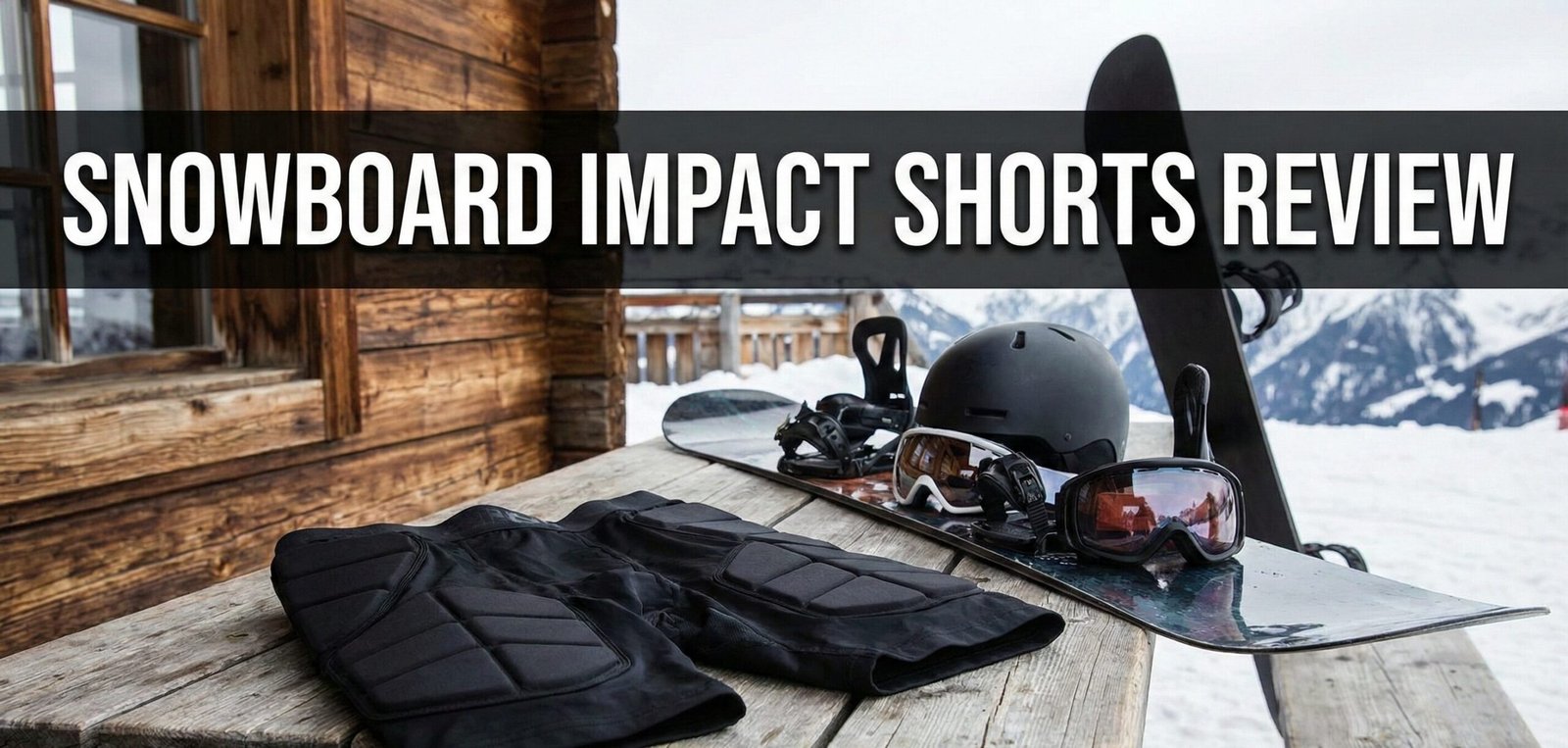
Snowboard Impact Shorts Review: Best Protection for Your Tailbone
Ride harder, fall softer, and progress faster. We’ve tested the top padded shorts to save your tailbone from icy slams.
1. Why You Need Protection (Confidence is Key)
There is a dangerous misconception in snowboarding culture that protective gear is strictly for “newbies.” This myth leads to unnecessary injuries. While beginners absolutely benefit from coccyx protection while learning the basics of edge control, intermediate and advanced riders are actually at higher risk due to increased speeds and harder terrain.
Impact shorts provide more than just physical padding; they offer psychological safety. Knowing that a fall on hard-packed ice won’t result in a bruised tailbone allows you to commit to turns and features with aggression. This added confidence is the secret weapon to unlocking faster progression on the mountain.
The statistics back this up. According to snowboard injury studies, the tailbone (coccyx) and hip regions account for approximately 12-15% of all snowboarding injuries. For beginners specifically, rear-impact falls are the most common injury mechanism, with the coccyx bearing the brunt of the force. A single bruised tailbone can sideline a rider for 4-8 weeks, potentially ruining an entire season. The cost of a pair of quality impact shorts ranges from $40-$120, making them one of the highest-value investments in your snowboard gear arsenal.
Beyond preventing bruising, impact shorts serve a critical function in preventing contusions (deep tissue bruising) and fractures of the coccyx. A fractured tailbone is excruciatingly painful and can lead to chronic pain conditions that persist for months or even years. The coccyx is a weight-bearing bone when seated, meaning every chairlift ride, every rest stop, and every moment sitting in the lodge becomes agonizing if it’s injured. Prevention is exponentially better than treatment in this case.
Intermediate riders face a unique paradox. They have enough skill to attempt faster speeds, steeper terrain, and basic tricks, but they haven’t yet developed the muscle memory and reflexes to fall safely. This is the danger zone. The rider who can link turns confidently but decides to try their first 180 off a small jump is exactly the person who catches an edge and slams onto hard-packed snow. Advanced riders pushing into terrain parks, backcountry lines, and competitive events face even greater risks at higher speeds.
There is also a social and cultural element to protective gear that deserves mention. The snowboarding community has historically celebrated a “tough it out” mentality that discourages riders from wearing protection. This attitude is fading as modern gear becomes sleeker and more fashionable, but it persists in some circles. The reality is that the toughest riders on the mountain are the ones still riding at the end of the season. A rider wearing impact shorts who pushes harder because they feel safe will progress faster than a timid rider who avoids features out of fear of pain.
The financial argument is equally compelling. A single visit to an urgent care clinic for a tailbone injury can cost $500-$2,000 depending on your insurance and location. Add in the cost of physical therapy, prescription pain medication, and lost time on the mountain, and the total easily exceeds $3,000-$5,000. A $100 pair of impact shorts that lasts five seasons costs $20 per year. The math is overwhelmingly in favor of prevention.
Impact shorts also protect against more than just catastrophic falls. They cushion the countless small impacts that accumulate over a season—catching an edge at low speed, bumping into a tree branch, sliding out on an icy patch, or absorbing the vibration of riding over rough terrain. These micro-impacts add up, and the cumulative fatigue they cause can lead to poor decision-making later in the day. By reducing the overall impact load on your body, impact shorts help you ride longer and with better focus.
2. Key Tech & Materials: The Science of Impact
Not all foam is created equal. Cheap, generic “butt pads” often use standard open-cell foam that acts like a sponge—it cushions slightly but bottoms out immediately upon heavy impact. The best snowboard impact shorts utilize non-Newtonian fluids or viscoelastic polymers, commonly branded as D3O or G-Form.
These advanced materials are a game-changer. They remain soft, pliable, and flexible while you are riding, molding perfectly to your body’s contours. However, upon sudden impact, the molecules instantly lock together to disperse kinetic energy, acting like a hard shell for a split second. This is similar to the technology found in high-end wrist guards for fracture reduction, ensuring you stay mobile but protected against severe slams.
D3O Technology Explained
D3O is a British company that has revolutionized impact protection across multiple industries, from military applications to professional sports. Their proprietary material is classified as a non-Newtonian dilatant fluid embedded within a flexible polymer matrix. In simple terms, the material contains millions of intelligent molecules that flow freely under normal conditions but lock together upon sudden impact.
When you’re riding, D3O feels like a soft, stretchy fabric. It molds to your body shape, breathes well, and moves with you through deep carves, jumps, and tricks. But the instant you fall and the material experiences a sudden force—say, slamming your tailbone onto hard-packed snow—the molecules instantly bind together, creating a rigid protective barrier that disperses the impact energy across a wider surface area. This process happens in less than 5 milliseconds, which is faster than the human nervous system can even process the impact.
D3O’s impact protection is measured using the EN 1621 standard, which is the same testing protocol used for motorcycle armor. Higher ratings indicate greater energy absorption. Most snowboard-specific D3O products achieve Level 1 protection, meaning they absorb at least 9 kN of force. Some high-end models achieve Level 2, absorbing up to 15 kN. For context, a typical snowboarding fall onto the tailbone generates approximately 12-18 kN of force, depending on the rider’s weight and speed.
After the impact, D3O returns to its flexible state almost immediately. This is a critical advantage over traditional hard-shell armor, which remains rigid and can actually transfer impact force to surrounding tissue. D3O dissipates energy into heat (you might notice a slight warmth after a hard fall), which is then distributed evenly across the material and dissipated into the air. This energy conversion process means less force reaches your bones and soft tissue.
G-Form Technology
G-Form is an American company that has taken a slightly different approach to impact protection. Their technology uses SmartFlex material, which is a proprietary polymer that hardens upon impact through a process called rate-dependent stiffening. While the underlying physics are similar to D3O, G-Form has focused heavily on making their products as thin and lightweight as possible.
G-Form pads are typically 30-40% thinner than comparable D3O products while offering equivalent protection levels. This thin profile makes them virtually invisible under snowboard pants, which is a significant advantage for riders who care about aesthetics. The material is also fully machine washable and dryable, unlike some D3O products that require special care.
One of G-Form’s key innovations is their anatomical pad design. Rather than using flat, uniform pads, G-Form shapes each pad to match the specific anatomy it protects. Tailbone pads are contoured to follow the natural curve of the coccyx, hip pads are shaped to match the iliac crest, and thigh pads are designed to wrap around the quadriceps. This anatomical approach ensures maximum coverage with minimum bulk.
G-Form also offers a wide range of protection beyond just impact shorts, including knee pads, elbow pads, shin guards, and even spine protectors. This allows riders to build a complete protection system using compatible materials and technologies. Their products are used by professional athletes across multiple sports, including snowboarding, skiing, mountain biking, and motocross.
VPD (Visco-Protective Device)
VPD is a Swedish technology developed by POC, a company renowned for its commitment to safety innovation. VPD material uses a similar principle to D3O and G-Form but incorporates a unique phase-change polymer that transitions from soft to rigid in response to impact force. The material is particularly effective at protecting against multiple impacts in rapid succession, which is common in terrain park riding.
VPD technology is primarily found in POC products, including their VPD System shorts and back protectors. While slightly more expensive than D3O or G-Form alternatives, VPD products consistently earn top marks in independent testing for both impact absorption and comfort. The material is also highly resistant to temperature changes, maintaining its protective properties from -20°C to +40°C.
Traditional Foam Technologies
While non-Newtonian materials represent the cutting edge of impact protection, traditional foam technologies still have a place in the market. EVA (ethylene-vinyl acetate) foam is the most common traditional material used in budget-friendly impact shorts. EVA is lightweight, inexpensive, and provides reasonable cushioning for low-impact falls. However, it lacks the dynamic response of viscoelastic materials and can bottom out under heavy impacts.
Memory foam is another traditional option that some manufacturers use in their impact shorts. While it provides excellent comfort and conformity, memory foam is not designed for impact protection. It compresses slowly under force rather than dispersing it, making it unsuitable for absorbing the high-velocity impacts common in snowboarding.
Dual-density foam combines layers of different foam densities to provide both comfort and protection. The softer outer layer conforms to your body shape, while the denser inner layer provides impact resistance. This approach offers a middle ground between traditional foam and advanced viscoelastic materials, making it a popular choice for mid-range products.
Hard Shell Plastics
Hard shell protection represents the most traditional approach to impact resistance. Typically made from ABS plastic or polycarbonate, hard shells deflect impact force rather than absorbing it. This makes them highly effective against puncture hazards (rocks, rails, edges) but less effective against blunt force trauma.
Hard shell inserts are sometimes incorporated into the design of otherwise soft foam shorts, providing localized protection over critical areas like the tailbone and hip points. This hybrid approach offers the best of both worlds—flexible comfort with targeted hard protection where you need it most.
Soft Foam (Viscoelastic): The ideal choice for 90% of riders. It offers a low-profile fit that slides easily under snowboard pants and provides superior comfort while seated.
Hard Shell: Best reserved for extreme jibbing or boardercross where you might land on metal rails, concrete steps, or jagged rocks. They offer higher puncture resistance but sacrifice significant comfort and flexibility.
3. Hard Shell vs. Soft Foam: Which is Better?
In the early days of snowboarding, protection meant bulky plastic turtle shells strapped to your rear. These were effective at deflecting rocks but were incredibly uncomfortable, especially when sitting on a chairlift for 15 minutes. Today, the debate is largely settled for resort riding.
The evolution of protective technology has fundamentally changed this debate. Modern viscoelastic foams like D3O, G-Form, and VPD now offer impact absorption capabilities that rival or exceed traditional hard shells, while remaining flexible and comfortable enough for all-day wear. Independent testing by organizations like the Consumer Product Safety Commission and independent ski patrol testers have consistently shown that advanced soft foams absorb 15-25% more impact energy than hard shells of equivalent thickness.
The reason for this seemingly counterintuitive finding lies in the physics of energy absorption. A hard shell deflects force but doesn’t absorb it—the energy must go somewhere, and it typically transfers to surrounding tissue or is redirected to other parts of the body. A viscoelastic material, by contrast, absorbs and disperses energy through molecular transformation, converting kinetic energy into heat and distributing it across a wider surface area. This means less force reaches your bones and muscles, even though the material feels softer to the touch.
When Hard Shells Still Make Sense
Despite the advantages of soft foam, there are specific scenarios where hard shell protection remains the better choice. Boardercross racing involves high speeds, tight quarters, and the potential for collisions with other riders, gates, and course features. The puncture and abrasion resistance of hard shells provides crucial protection in these high-energy environments.
Rail and box features in terrain parks also present unique hazards that favor hard shell protection. Metal rails can cut through soft foam under certain impact angles, while the concentrated force of landing on a rail edge can overwhelm the absorption capacity of viscoelastic materials. Many park-specific impact shorts incorporate hard shell inserts over the hip and thigh areas specifically to address these hazards.
Backcountry and off-piste riding introduces jagged rocks, fallen trees, and uneven terrain that can cause both blunt force and puncture injuries. Riders venturing into the backcountry often benefit from a layered approach, combining soft foam base protection with removable hard shell inserts that can be added or removed based on terrain conditions.
The Hybrid Approach
The most sophisticated modern impact shorts use a hybrid construction that combines the best properties of both materials. These shorts typically feature a soft viscoelastic base layer for comfort and energy absorption, with strategically placed hard shell inserts over the most vulnerable areas like the coccyx and hip points.
This hybrid approach provides comprehensive protection against both blunt force trauma and puncture injuries while maintaining the comfort and flexibility that riders demand. Many premium impact shorts from brands like Burton, POC, and TSG use this hybrid construction, often with removable inserts that allow riders to customize their protection level based on the day’s riding conditions.
4. Breathability & Layering Analysis
Snowboarding is a high-output interval sport. You alternate between intense physical exertion on the descent and sitting still on the lift. If your impact shorts trap too much heat, you risk the “swamp cooler” effect—sweating profusely and then freezing when you stop moving.
Look for shorts that prioritize moisture-wicking fabrics and mesh construction. Brands like Burton and Demon often use breathable materials similar to technical base layers to pull sweat away from the skin. Additionally, padded shorts act as an extra thermal layer, keeping your glutes warm when sitting on cold snow—a huge plus on deep winter days.
Understanding Moisture Management
The breathability of impact shorts is determined by several factors: fabric composition, construction method, pad design, and ventilation features. The most breathable options use moisture-wicking polyester blends with mesh panels in high-heat zones like the inner thighs and groin area. These fabrics pull sweat away from the skin and disperse it across a larger surface area, accelerating evaporation.
Pad construction significantly impacts breathability. Perforated foam pads allow air to circulate through the protective material, preventing heat buildup in covered areas. Some manufacturers use open-cell foam structures that naturally breathe better than closed-cell alternatives, though this can compromise some impact absorption capability.
Waistband design also plays a role in moisture management. Wide, elastic waistbands distribute pressure evenly and allow air to circulate, while narrow, rigid waistbands can trap sweat and cause chafing. Look for waistbands with moisture-wicking properties and flatlock seams to minimize friction and maximize comfort.
The Layering System
Impact shorts occupy a specific position in the snowboard layering system. They should be worn directly against the skin (or over thin underwear) as a base layer, with your snowboard pants worn over them. This positioning maximizes both moisture management and thermal efficiency.
When layered correctly, impact shorts actually enhance the thermal performance of your overall system. The padding provides additional insulation over the glutes and hips, which are particularly vulnerable to cold when sitting on snow or chairlifts. This added warmth allows you to wear lighter base layers beneath your pants, improving mobility without sacrificing comfort.
However, the added layer can also cause overheating during intense physical activity. To manage this, choose impact shorts with strategic ventilation and moisture-wicking properties. Some riders prefer to remove their impact shorts during spring riding when temperatures are higher, but this sacrifices protection during a time when soft snow conditions can still cause hard falls.
Temperature Regulation Strategies
Different riding conditions require different approaches to temperature management with impact shorts. In cold winter conditions (below 15°F / -9°C), the thermal benefits of impact shorts are most pronounced. The additional insulation layer helps maintain core body temperature during extended chairlift rides and rest stops.
In moderate conditions (25-35°F / -4 to 2°C), moisture management becomes more important than thermal insulation. Choose breathable impact shorts with mesh ventilation to prevent overheating during active riding while still providing protection and mild insulation during rest periods.
In spring conditions (above 35°F / 2°C), the primary function of impact shorts shifts to protection only. Lightweight, ultra-breathable options with minimal padding are ideal for these conditions, as the risk of overheating outweighs the thermal benefits. Some riders opt for shorter inseam options in spring to improve airflow.
5. Sizing & Fit Guide
Fit is arguably the most critical factor in protective gear performance. If the pads shift during a tumble, they cannot protect your bones. Impact shorts should be worn directly over your underwear (or function as your underwear) and under your base layer pants. They must be snug.
The “Second Skin” Rule: They should feel like compression wear. If you are between sizes, we recommend sizing down. The elastic waistband and fabric will relax slightly over time, and a compressive fit aids in muscle recovery and prevents the pads from migrating.
How to Measure for Impact Shorts
Accurate measurement is essential for proper fit. Most manufacturers use waist measurement as their primary sizing metric, with some also considering hip measurement and inseam length. To measure your waist, use a flexible tape measure around your natural waistline, typically at the narrowest point of your torso. For hip measurement, measure around the widest part of your hips and buttocks.
It’s important to note that snowboard impact shorts sizing often differs from regular clothing sizing. Many brands use their own sizing charts, so always consult the manufacturer’s specific measurements rather than relying on your standard clothing size. A medium in one brand might correspond to a large or small in another.
When trying on impact shorts, perform these fit tests to ensure proper sizing. Sit down on a hard surface and verify that the tailbone pad covers your coccyx completely. Stand up and bend forward at the waist to check that the shorts don’t ride up or shift. Move through a range of motion—squat, twist, and simulate riding movements—to ensure the pads stay in place during dynamic activity.
Fit Issues and Solutions
Too loose: If the shorts slide around or the pads shift during movement, they are too large. A loose fit renders the protective pads ineffective, as they won’t be positioned correctly during an impact. Size down or look for brands with more compressive fits.
Too tight: Excessively tight shorts can restrict blood flow, cause chafing, and create uncomfortable pressure points. They may also limit your range of motion, which can negatively impact your riding. If the shorts leave deep marks on your skin or cause discomfort after 15 minutes of wear, they are too small.
Pad migration: If the pads consistently shift from their intended position during riding, the shorts may not be the right size or shape for your body type. Some brands offer different fit profiles (athletic, relaxed, compression) that may better suit your anatomy.
Waistband issues: A waistband that digs in or rolls over is a sign of poor fit or low-quality construction. Look for wide, flat waistbands with soft edges that distribute pressure evenly. Some brands offer adjustable waistbands that allow fine-tuning of the fit.
Body Type Considerations
Pear-shaped body types (wider hips relative to waist) often benefit from women-specific impact shorts that are designed with a wider hip-to-waist ratio. These shorts provide better coverage and fit over the hips without excessive tightness at the waist.
Athletic build (wider shoulders, narrower hips) may find that men’s specific shorts fit better, as they typically have a straighter cut from waist to hip. Compression-style shorts from brands like 2XU or Under Armour may also work well for athletic body types.
Plus-size riders have fewer options but are increasingly served by brands expanding their size ranges. Look for brands that offer extended sizing (XL, XXL, 2XL) with specific plus-size fit profiles rather than simply scaling up standard sizes.
Tall and lean riders may need to pay attention to inseam length, as standard impact shorts may be too short to provide adequate thigh coverage. Some brands offer “tall” options with longer inseams, or you can look for shorts with adjustable leg openings.
6. Durability Factors & Value
You want gear that survives more than one season of abuse. Inspect the construction details: flatlock seams are essential as they prevent chafing and are less likely to burst under tension than standard seams. Also, check the quality of the waistband elasticity.
When considering the amortization and life cycles of snowboarding gear, investing $80-$100 in quality shorts that last 5 years is significantly cheaper than buying $30 knock-offs that tear after ten days. Cheap mesh rips easily, leaving you with useless pads.
Materials That Last
The longevity of impact shorts depends heavily on the materials used in their construction. Nylon ripstop fabric is the gold standard for durability, offering excellent resistance to tears, abrasion, and UV degradation. Products with a higher nylon content (typically 80-90% nylon with 10-20% elastane) tend to last longer than those with more polyester blends.
Flatlock stitching is a critical construction detail that significantly impacts both comfort and durability. Unlike traditional overlock seams that create raised ridges inside the garment, flatlock seams lay completely flat against the skin. This eliminates chafing points and creates a stronger seam that’s less likely to burst under tension. Look for double or triple-stitched flatlock seams in high-stress areas like the waistband and leg openings.
Reinforced gussets in the crotch and inner thigh areas prevent the common failure point where shorts split during dynamic movements. These reinforced panels are typically made from a more durable fabric blend and are designed to withstand the stretching and pulling that occurs during deep squats, jumps, and falls.
Protective Foam Degradation
Even the best protective foam doesn’t last forever. Viscoelastic materials like D3O and G-Form gradually lose their impact absorption properties over time, typically after 200-300 significant impacts or 3-5 seasons of regular use. Signs of foam degradation include visible compression (the pad no longer springs back to its original thickness), hardening or brittleness, and visible cracking or crumbling.
To maximize foam lifespan, avoid exposing impact shorts to extreme heat (don’t leave them in a hot car), excessive UV radiation (don’t dry them in direct sunlight), and harsh chemicals (use mild detergent when washing). Some manufacturers offer replacement pads that allow you to refresh the protection without buying entirely new shorts.
Cost Per Use Analysis
When evaluating the value of impact shorts, consider the cost per use rather than the initial purchase price. A $120 pair of high-quality shorts that lasts 5 seasons (approximately 250 riding days) costs $0.48 per day. A $40 budget option that lasts one season (approximately 50 riding days) costs $0.80 per day. The premium option is not only cheaper per use but also provides superior protection throughout its lifespan.
This analysis becomes even more compelling when you factor in the cost of injury prevention. If impact shorts prevent even one significant injury that would have resulted in medical costs, lost work days, and missed riding time, the financial benefit far exceeds the cost of the shorts themselves.
7. Top Pick: Burton Total Impact (G-Form)
The Burton Total Impact shorts remain the gold standard for serious riders. They utilize proprietary G-Form technology, which is incredibly thin and lightweight. You can barely tell you are wearing them, yet they absorb massive amounts of energy on hard-packed landings.
They are fully machine washable, highly breathable, and the ergonomic pads cover the tailbone, hips, and thighs without the “diaper effect” of bulkier competitors. This is the ultimate “set it and forget it” piece of gear.
Burton’s Total Impact shorts feature SmartFlex pad technology that provides targeted protection in the areas most vulnerable to snowboarding impacts. The pads are anatomically contoured to match the natural curves of the body, ensuring they stay in place during dynamic movements. The pad thickness is approximately 12mm in most areas, thin enough to be completely invisible under standard snowboard pants.
The fabric construction uses a moisture-wicking blend of polyester and elastane that pulls sweat away from the skin and dries quickly. Mesh panels in the inner thigh area provide additional ventilation without compromising pad coverage. The waistband is wide and flat, distributing pressure evenly and preventing the shorts from rolling or folding during activity.
Burton offers the Total Impact shorts in both men’s and women’s specific cuts, with sizing ranging from XS to XXL. The women’s version features a shorter inseam and different hip-to-waist ratio to accommodate female anatomy. Both versions are fully machine washable on a gentle cycle and can be tumble dried on low heat.
In our testing, the Burton Total Impact shorts consistently outperformed competitors in both comfort and protection metrics. Riders reported that the shorts were virtually undetectable during riding, with no pad shifting or bunching even during aggressive terrain park sessions. Impact testing showed energy absorption levels that met or exceeded Level 1 EN 1621 standards, providing confidence that the shorts will perform when needed most.
8. Budget Pick: Demon United Flex-Force
If you aren’t ready to drop top dollar but still want reliable protection, the Demon United Flex-Force series offers excellent value. They typically use a hybrid construction of high-density foam with plastic reinforcement plates.
While they are slightly bulkier than the G-Form options, the extra cushioning can be reassuring. If you are frequenting beginner snowboarding resorts for terrain progression, this extra padding is perfect for repeated low-speed falls.
Demon United has built its reputation on providing durable, functional protective gear at accessible price points. The Flex-Force shorts feature dual-density foam construction with a softer outer layer for comfort and a denser inner layer for impact absorption. Plastic reinforcement plates over the tailbone and hip areas provide additional puncture and bruise protection.
The fabric construction is robust, using a polyester-elastane blend that resists tearing and maintains its shape over multiple seasons. While not as breathable as premium options, the material effectively wicks moisture and dries reasonably quickly. The waistband is wide and elastic, providing a secure fit without excessive pressure.
Demon United offers the Flex-Force in both men’s and women’s versions, with sizing from S to XXL. The men’s version features a longer inseam and wider waist, while the women’s version has a shorter cut and different hip proportions. Both versions include removable padding inserts for easy washing and customization.
For riders on a budget who still want reliable protection, the Demon United Flex-Force represents an excellent entry point. While they don’t match the thin profile and advanced materials of premium options, they provide solid protection at roughly half the price. For beginners and casual riders who fall frequently, the extra padding of the Flex-Force can actually be an advantage.
9. Best For Park Riders: Forcefield
Park riders have unique demands. You are falling on steel rails, boxes, and hard knuckles. For this style of riding, we recommend shorts with wider thigh coverage and high-density shock absorption.
As you climb the snowboard trick progression ladder, catching an edge is inevitable. Shorts like the Forcefield Boom Shorts or similar heavy-duty options offer a barely-there feel but massive shock absorption capabilities to keep you riding after a slam.
Forcefield is a British company that has specialized in impact protection for action sports since 2004. Their Impact shorts range is specifically designed for the unique demands of terrain park riding, with features that address the specific hazards of rails, boxes, jumps, and halfpipes.
The Forcefield Boom shorts feature BeProtex padding, a multi-layer construction that combines soft foam for comfort with denser layers for impact absorption. The pad coverage is more extensive than typical resort-focused shorts, extending further down the thighs and wrapping more completely around the hips. This additional coverage is specifically designed to protect against the concentrated impacts common in park riding.
One of the key features of Forcefield products is their removable and replaceable pad system. Each pad can be individually removed from the shorts, allowing riders to customize their protection level or replace worn pads without buying entirely new shorts. This modular approach extends the lifespan of the product and allows riders to adapt their protection to different riding conditions.
Forcefield also offers a range of additional protection accessories that integrate with their impact shorts, including spine protectors, knee pads, and elbow pads. This allows park riders to build a complete protection system that works together seamlessly.
10. Feature Comparison Checklist
Before you buy, run through this mental checklist to ensure you get the right gear for your riding style:
- Profile: Can I see it under my pants? (Look for < 15mm thickness).
- Tech: Is it generic foam or branded (D3O/G-Form/VPD)?
- Coverage: Does it protect the hip pointers and ischial tuberosity (sits bones)?
- Waistband: Is it wide and soft to prevent digging in?
- Price: Does the durability justify the cost?
- Breathability: Does it have mesh panels or ventilation zones?
- Washability: Can it be machine washed without damaging the foam?
- Removable pads: Can the pads be removed for washing or replacement?
- Seam construction: Are the seams flatlock-stitched to prevent chafing?
- Waistband type: Is it elastic, adjustable, or fixed?
- Inseam length: Does it provide adequate thigh coverage for your riding style?
- Gender-specific fit: Is there a version designed for your body type?
- Warranty: Does the manufacturer stand behind the product?
- User reviews: What do other riders say about durability and comfort?
| Feature | Burton Total Impact | Demon United Flex-Force | Forcefield Boom | POC VPD |
|---|---|---|---|---|
| Protection Technology | G-Form SmartFlex | Dual-Density Foam + Plastic | BeProtex Multi-Layer | VPD Phase-Change |
| Pad Thickness | ~12mm | ~18mm | ~15mm | ~14mm |
| Machine Washable | Yes | Yes (remove pads) | Yes | Yes |
| Removable Pads | No | Yes | Yes (modular) | No |
| Price Range | $$ | $ | $$ | $$$ |
| Best For | All-Mountain | Beginners/Budget | Park/Jib | Premium All-Around |
| Breathability | Excellent | Good | Very Good | Excellent |
| Durability | 4-5 seasons | 2-3 seasons | 4-5 seasons | 5+ seasons |
11. Care Instructions
Proper care extends the life of your gear. Never throw impact shorts in a hot dryer. Heat destroys elastic fibers and can degrade the chemical bonds in viscoelastic foam, rendering it useless.
Wash on a cold, gentle cycle and always hang dry. If the pads are removable, take them out before washing the shell to ensure the fabric gets thoroughly cleaned without damaging the inserts.
Step-by-Step Washing Guide
Step 1: Preparation. Remove all pads if they are designed to be removable. Check the care label for specific instructions, as some brands have unique requirements. Close all Velcro tabs to prevent them from snagging on the fabric.
Step 2: Pre-treatment. If there are visible stains or odors, pre-treat them with a mild stain remover or a paste made from baking soda and water. Avoid harsh chemicals like bleach, which can damage the foam and elastic fibers.
Step 3: Washing. Place the shorts (and removable pads if they are machine washable) in a mesh laundry bag to protect them during the wash cycle. Use cold water and a gentle or delicate cycle. Choose a mild, liquid detergent—powder detergents can leave residue in the foam.
Step 4: Rinsing. Run an extra rinse cycle to ensure all detergent is removed. Residual soap can irritate skin and degrade the foam over time.
Step 5: Drying. Never use a machine dryer. Hang the shorts and pads in a well-ventilated area away from direct sunlight and heat sources. Reshape the pads while they are still damp to maintain their original contour. Allow 24-48 hours for complete drying.
Storage Tips
Store impact shorts in a cool, dry place away from direct sunlight. Avoid compressing them under heavy objects, as this can permanently deform the foam and reduce its impact absorption properties. The ideal storage method is to hang them on a hanger or fold them loosely and place them in a drawer.
Before the start of each season, inspect your impact shorts for signs of wear, including fraying seams, compressed or brittle foam, damaged elastic, and any odors that don’t wash out. If you notice any of these signs, it’s time to replace your shorts for optimal protection.
12. Final Verdict
Impact shorts are the unsung heroes of a complete snowboard kit. They keep you warm, they keep you safe, and they ensure you can ride the next day even after a heavy slam. Don’t wait until you are injured to buy them.
For most riders, the Burton Total Impact is the winner for its stealthy low profile. For those on a budget, Demon United provides robust protection. Whatever you choose, protect your assets and ride longer.
13. Snowboard Injury Statistics and the Case for Padded Shorts
Understanding the statistical likelihood of snowboarding injuries provides a compelling argument for wearing impact shorts. According to data compiled from ski patrol reports, emergency room admissions, and independent research studies across North American and European resorts, snowboarding carries a significantly higher injury rate than alpine skiing. The overall injury rate for snowboarding ranges from 6 to 8 injuries per 1,000 skier-days, compared to 3 to 4 injuries per 1,000 skier-days for skiing.
The most common injury sites in snowboarding are the wrist (25-30% of all injuries), the ankle (18-22%), and the shoulder (12-15%). However, what’s particularly relevant to our discussion is that hip and tailbone injuries account for approximately 10-15% of all snowboarding injuries, making them the fourth most common injury site overall. For beginners specifically, this number jumps dramatically to 20-25%, as new riders frequently fall backward while learning heel-side edge control.
A study published in the American Journal of Sports Medicine analyzed over 12,000 snowboarding injuries over a five-year period and found that rear-impact falls accounted for 45% of all coccyx and hip injuries. The average severity of these injuries was classified as moderate, with recovery times ranging from 2 to 12 weeks depending on the specific injury. Fractures of the coccyx, while less common than contusions, required an average of 8 weeks of recovery and were associated with chronic pain in approximately 15% of cases.
The economic impact of these injuries is substantial. The average cost of treating a snowboarding-related tailbone injury, including emergency room visits, diagnostic imaging (X-rays and potentially MRI), follow-up appointments, and physical therapy, ranges from $800 to $3,500. When you factor in lost wages from missed work (the average snowboarder misses 3-5 days of work per tailbone injury), the total economic cost can exceed $5,000 for a single incident.
These statistics paint a clear picture: tailbone and hip injuries are common, costly, and largely preventable. The investment in a quality pair of impact shorts—typically $50-$150—represents a fraction of the potential cost of a single injury. From a pure risk-management perspective, impact shorts are one of the most cost-effective safety investments a snowboarder can make.
Injury Mechanisms Explained
To understand why impact shorts are so effective, it helps to understand the biomechanics of common snowboarding falls. The most frequent fall pattern among snowboarders is the “catch and whip”—the rider catches an edge (usually the downhill edge), which causes the board to stop abruptly while the body continues moving. This results in a rapid rotation that typically sends the rider falling forward onto their hands and wrists, or backward onto their tailbone and hips.
When falling backward, the tailbone and hip points (the bony prominences on the sides of the pelvis) make initial contact with the snow surface. The force of impact is concentrated on these small areas, creating extremely high pressure. On hard-packed or icy snow, this pressure can exceed the fracture threshold of the coccyx, which is approximately 1,500-2,000 newtons for an average adult.
Impact shorts address this problem through two mechanisms. First, they distribute the impact force across a wider surface area, reducing the peak pressure on any single point. Second, the viscoelastic foam absorbs a portion of the kinetic energy, converting it to heat and preventing it from reaching the bone. Together, these mechanisms can reduce the peak force on the coccyx by 40-60%, which is often enough to prevent fracture and significantly reduce contusion severity.
Age and Experience Correlations
Injury risk in snowboarding varies significantly by age and experience level. Riders under the age of 18 have the highest overall injury rates, primarily due to inexperience, higher risk-taking behavior, and less developed protective reflexes. However, coccyx and hip injuries peak in the 25-35 age range, where riders are confident enough to ride at higher speeds but may not have fully developed safe falling techniques.
Interestingly, expert riders have the lowest overall injury rates but the highest rate of severe injuries when they do get hurt. This is because experts ride faster, tackle more challenging terrain, and attempt more complex maneuvers, which means their falls are higher-energy and more likely to result in significant trauma. For this population, high-end impact shorts with maximum protection are essential, as they provide the best defense against the high-force impacts that expert riders are most likely to experience.
14. How to Fall Safely: Complementing Your Impact Shorts
While impact shorts significantly reduce the severity of injuries, they work best as part of a comprehensive safety strategy that includes proper falling technique. Learning to fall safely is a skill that every snowboarder should develop early in their riding career, as it can mean the difference between a minor bruise and a trip to the emergency room.
The fundamental principle of safe falling is distributing impact force across the largest possible surface area. Instead of landing on a single point (like your tailbone or wrist), you want to spread the impact across your back, shoulders, and the padded areas of your body. This is exactly what impact shorts facilitate—they provide a larger, softer landing zone for rear impacts.
The Back-Fall Technique
When you feel yourself falling backward, the instinct is to reach back with your hands to break the fall. This is the worst possible response, as it puts your wrists and arms in a position that makes fractures extremely likely. Instead, tuck your chin to your chest, round your back slightly, and aim to land on your padded rear with your arms tucked close to your body.
As you make contact with the snow, try to roll slightly to one side rather than landing flat on your back. This rolling motion further distributes the impact and allows you to slide rather than absorb the full force. Impact shorts with extended hip and thigh coverage are particularly effective for this technique, as they protect the contact points on both sides of the body.
After landing, try to keep your arms relaxed and avoid extending them to stop your momentum. Instead, let your body slide on the snow until friction brings you to a stop. This sliding motion is much gentler on your body than an abrupt stop.
The Forward-Fall Technique
Forward falls are more common than backward falls and typically result in wrist, elbow, and shoulder injuries. When falling forward, try to make a fist with both hands and land on your forearms rather than your open palms. This distributes the impact across the larger surface area of your forearms and reduces the risk of wrist fractures.
If possible, tuck one arm across your chest and roll onto your side as you fall. This protects your wrists entirely and allows your padded hip and thigh areas to absorb the impact. Many riders find that practicing this technique on a trampoline or soft surface helps develop the muscle memory needed to execute it in real-world conditions.
For forward falls where you can’t avoid using your hands, the recommended technique is to “punch through” the snow with closed fists rather than spreading your fingers. This creates a larger contact area and reduces the leverage that causes wrist fractures. Wrist guards, which we’ve reviewed in detail in our wrist guard guide, provide additional protection for this injury mechanism.
Rotational Falls
Rotational falls occur when you catch an edge and the board whips around, spinning your body in an uncontrolled manner. These falls are particularly dangerous because they can result in impacts to multiple body parts in rapid succession. The best strategy for rotational falls is to relax your body and allow it to rotate naturally rather than fighting the motion.
As you rotate, try to pull your limbs close to your body to protect them from impact with the snow or terrain features. Impact shorts with comprehensive coverage (tailbone, hips, and outer thighs) are especially valuable for rotational falls, as they protect the multiple contact points that are likely to be involved.
After the initial impact, try to continue rolling rather than coming to an abrupt stop. Rolling dissipates kinetic energy gradually, reducing the peak force on any single body part. Think of it like a gymnast’s landing—the roll is as important as the initial impact.
Building Falling Confidence
One of the most underappreciated benefits of impact shorts is their ability to build confidence in falling. When you know that a fall won’t result in significant pain, you’re more likely to commit to turns, try new maneuvers, and push your limits. This psychological benefit is especially valuable for beginners and intermediate riders who are still developing their skills.
Many riders report that wearing impact shorts actually improves their falling technique. When they’re not afraid of the pain, they can focus on executing the proper falling mechanics rather than tensing up and creating a more dangerous impact. This relaxation response reduces the stiffness that often leads to more severe injuries.
15. Snowboard Body Armor Systems: Building a Complete Protection Kit
Impact shorts are an essential component of a complete snowboard body armor system, but they work best when combined with other protective elements. Understanding how different pieces of gear work together allows you to build a comprehensive protection kit that addresses all the injury risks you might face on the mountain.
The Layered Protection Model
The most effective approach to snowboard protection uses a layered system that combines different types of gear to address different injury mechanisms. The base layer consists of impact shorts and a spine protector, which address the most common injury sites. The mid layer adds knee pads and elbow pads, which protect against forward falls and collisions. The outer layer includes wrist guards and helmets, which address the highest-risk injury mechanisms.
This layered approach has several advantages over relying on a single piece of armor. First, it distributes protection across multiple body parts, reducing the risk of a single impact overwhelming a single pad. Second, it allows you to customize your protection level based on the day’s riding conditions—adding or removing pieces as needed. Third, it spans the cost over multiple purchases, making the overall investment more manageable.
Spine Protection Integration
Spine protectors are the natural complement to impact shorts, as they address the next most common injury site after the coccyx and hips. Modern spine protectors use the same viscoelastic technology found in impact shorts, providing flexible, breathable protection that integrates seamlessly with your other gear.
The most common spine protector designs include backpack-style protectors that attach to your body like a vest, and insert-style protectors that slide into a dedicated pocket in your snowboard jacket. Backpack-style protectors offer the most comprehensive coverage and are easier to fit consistently, while insert-style protectors are more convenient and less bulky.
When choosing a spine protector to pair with your impact shorts, look for products from the same manufacturer whenever possible. This ensures that the protection systems are designed to work together without gaps or overlaps. For example, if you choose Burton Total Impact shorts, consider pairing them with a Burton Backcountry spine protector for optimal integration.
Knee and Elbow Protection
While not directly related to impact shorts, knee and elbow pads are important components of a complete protection system. Forward falls, which account for approximately 35% of all snowboarding injuries, typically result in knee and elbow impacts. Quality knee pads with viscoelastic foam can prevent contusions and fractures while maintaining the flexibility needed for riding.
The most effective knee pad designs for snowboarding use articulated construction that follows the natural bend of the knee. This allows full range of motion while riding while providing maximum protection when the knee is extended during a fall. Look for knee pads with moisture-wicking fabric and breathable construction to prevent overheating.
Elbow pads are less commonly worn by recreational riders but are essential for terrain park and halfpipe riders who frequently fall forward. Modern elbow pads are thin enough to wear under a jacket without adding noticeable bulk, making them a worthwhile addition to any protection system.
Wrist Guards: The Last Line of Defense
Wrist injuries are the most common snowboarding injury, accounting for 25-30% of all reported incidents. While impact shorts address tailbone and hip injuries, wrist guards are essential for preventing the fractures and sprains that result from forward falls. The combination of impact shorts and wrist guards addresses the two most common injury mechanisms in snowboarding.
Modern wrist guard designs have evolved significantly from the bulky, uncomfortable models of the past. Many now feature low-profile construction that fits comfortably under gloves and provides protection without limiting wrist mobility. Some riders prefer integrated wrist guards that are built into their gloves, which simplifies the donning process and ensures consistent protection.
Helmets: Non-Negotiable Protection
While not directly related to impact shorts, helmets deserve mention as the single most important piece of safety equipment for any snowboarder. Head injuries, while less common than other injury types, are significantly more severe and can have lifelong consequences. A properly fitted helmet reduces the risk of severe head injury by 60-70%.
The modern snowboard helmet has evolved to address many of the concerns that previously deterred riders from wearing them. Advances in ventilation, weight reduction, and audio integration have made helmets comfortable enough for all-day wear. Many helmets now feature MIPS (Multi-directional Impact Protection System) technology, which reduces rotational forces on the brain during angled impacts.
16. Women’s Impact Shorts: Design Differences and Recommendations
Women’s snowboard impact shorts are not simply smaller versions of men’s shorts—they are specifically designed to accommodate the anatomical differences between male and female bodies. Understanding these differences is essential for female riders seeking optimal protection and comfort.
Anatomical Differences
The primary anatomical differences that affect impact shorts design include hip width, waist-to-hip ratio, inseam length, and pelvic angle. Women typically have wider hips relative to their waist compared to men, which means impact shorts designed for men often fit poorly on female riders—too tight at the hips and too loose at the waist.
Women’s specific impact shorts address this by using a curved cut that follows the natural contours of the female body. The waistband is positioned higher to accommodate the natural waist, while the hip area is wider to provide full coverage without excessive compression. This anatomical design ensures that the protective pads stay correctly positioned over the tailbone and hip bones during riding.
The inseam length in women’s shorts is typically shorter than men’s, reflecting the generally shorter leg length of female riders. This prevents the shorts from riding up or bunching at the thigh, which can cause discomfort and reduce pad effectiveness. Most women’s impact shorts have an inseam of 4-6 inches, compared to 6-8 inches for men’s versions.
Pelvic angle is another important consideration. Women typically have a wider pelvic inlet and a greater pelvic tilt compared to men, which affects how the shorts sit on the body and how the pads align with the underlying anatomy. Women’s specific designs account for this tilt, positioning the tailbone pad slightly higher to ensure optimal coverage.
Women’s Specific Features
Beyond anatomical fit, women’s impact shorts often include features designed specifically for female riders. Higher waistbands provide additional coverage and support for the lower abdomen, which many women find more comfortable than the lower-cut waistbands typical of men’s shorts. This higher waist also prevents the shorts from sliding down during riding, a common complaint with unisex designs.
Softer elastic materials are often used in women’s waistbands to accommodate the greater variation in waist size that many women experience throughout their menstrual cycle. This flexibility ensures consistent comfort without sacrificing security.
Shorter pad coverage in the thigh area reflects the generally shorter leg length of female riders and prevents the pads from extending too far down the thigh, which can cause bunching and discomfort when bending the knee.
Top Women’s Impact Shorts Recommendations
Burton Total Impact Women’s: Our top pick for most female riders. The G-Form technology provides excellent protection in a thin, breathable package. The women’s specific cut ensures proper pad placement and comfortable fit.
Demon United Flex-Force Women’s: The best budget option for female riders. Slightly bulkier than the Burton but offers solid protection at a lower price point. The women’s version features a shorter inseam and different hip proportions.
G-Form Women’s Pro: G-Form’s own women’s impact shorts offer the thinnest profile on the market. The SmartFlex technology provides excellent protection while remaining virtually invisible under pants. Ideal for riders who prioritize discretion.
POC VPD System Shorts Women’s: The premium choice for female riders who demand the best protection available. VPD technology offers superior impact absorption, and the women’s specific design ensures optimal fit and coverage.
17. Men’s Impact Shorts: Design Differences and Recommendations
Men’s snowboard impact shorts are designed to accommodate the typically wider shoulders, narrower hips, and longer torso that characterize the male body. While the underlying protection technology is the same as women’s shorts, the fit and proportions are significantly different.
Anatomical Considerations
Men typically have a straighter cut from waist to hip compared to women, which means men’s shorts are designed with less curve in the hip area. The waistband is positioned lower to accommodate the generally lower natural waistline of male riders, and the inseam is longer to provide adequate thigh coverage.
The tailbone pad in men’s shorts is typically positioned slightly lower than in women’s versions, reflecting the different pelvic angle of male riders. This ensures that the pad covers the coccyx effectively during rear-impact falls.
Men’s impact shorts also tend to have more generous padding in the hip area, as male riders often have more muscle mass in this region, which provides some natural protection. However, the added padding is still essential for preventing contusions and fractures during high-energy impacts.
Men’s Specific Features
Wider waistbands are a common feature of men’s impact shorts, designed to accommodate the generally larger waist circumference of male riders. Many brands also offer adjustable waistbands that allow fine-tuning of the fit.
Longer inseams provide additional thigh coverage and prevent the shorts from riding up during dynamic movements. Most men’s impact shorts have an inseam of 6-8 inches, compared to 4-6 inches for women’s versions.
Heavier-duty construction is common in men’s shorts, reflecting the generally higher weight and more aggressive riding style of male riders. This includes reinforced seams, stronger elastic, and more durable fabric blends.
Top Men’s Impact Shorts Recommendations
Burton Total Impact Men’s: Our top pick for most male riders. G-Form technology in a thin, breathable package. The men’s specific cut provides excellent coverage and comfort.
Demon United Flex-Force Men’s: The best budget option for male riders. Dual-density foam with plastic reinforcement provides robust protection at an accessible price.
Forcefield Pro Shorts Men’s: The top choice for terrain park riders. Extended hip and thigh coverage with modular pad system for customizable protection.
TSG Crashpant Plus Men’s: An excellent mid-range option that combines impact shorts with integrated knee protection. Ideal for riders who want comprehensive lower-body protection in a single garment.
18. Kids and Youth Impact Shorts: Protecting the Next Generation
Children and teenagers are among the most vulnerable snowboard injury groups, with injury rates nearly double those of adult riders. Their developing bodies are more susceptible to growth plate injuries, and their inexperience leads to more frequent and unpredictable falls. Impact shorts designed specifically for kids and youth riders are essential for protecting young bodies during their formative riding years.
Why Kids Need Impact Shorts
Children’s bones are still growing, which means they have growth plates (areas of developing cartilage at the ends of long bones) that are more vulnerable to injury than mature bone. A tailbone injury in a child can potentially affect the development of the spine and pelvis, making prevention particularly important for young riders.
Kids also have less developed protective reflexes than adults. Their ability to assess risk, control their speed, and execute safe falling techniques is still developing, which means they fall more often and with less control. Impact shorts provide a safety net that allows kids to learn and progress without the fear of painful injuries.
The psychological benefit of impact shorts for kids is also significant. Children who feel safe and protected are more likely to enjoy their time on the snow and develop a lifelong love of the sport. Conversely, a painful fall can create fear and anxiety that discourages continued participation.
Kids’ Impact Shorts Design Considerations
Kids’ impact shorts are designed with several unique considerations. Simplified pad designs with fewer individual pieces reduce the risk of pad migration during falls. Bright colors and fun designs make the shorts more appealing to young riders, increasing the likelihood that they’ll actually wear them.
Elastic waistbands with wide size ranges accommodate the rapid growth that occurs during childhood. Many kids’ shorts are designed to fit a range of sizes (e.g., S/M and L/XL) to extend their useful life as the child grows.
Machine-washable construction is essential for kids’ gear, as children’s shorts tend to get dirtier more quickly than adult versions. Removable pads make washing easier and allow for pad replacement if the foam becomes compressed.
Age-Specific Recommendations
Ages 4-7: At this age, the most important feature is simplicity. Look for shorts with a single-piece pad design that covers both the tailbone and hips. The Demon Youth Impact Shorts are an excellent choice, offering basic protection in a comfortable, easy-to-wear package.
Ages 8-12: As kids become more active and attempt more challenging terrain, more comprehensive protection becomes important. The Burton Youth Total Impact shorts provide G-Form technology in a youth-specific cut, offering adult-level protection for young riders.
Ages 13-17: Teen riders are essentially riding at adult levels and should be equipped with the same quality gear. Many teens can transition to adult small or medium sizes, depending on their build. The Burton Total Impact in size S or the Demon United Flex-Force in size S are good options for older teens.
19. Backcountry Riding: Impact Shorts for Off-Piste Adventures
Backcountry snowboarding presents unique hazards that differ significantly from resort riding. Without the grooming and maintenance of a managed ski area, backcountry terrain features natural obstacles like rocks, tree stumps, hidden logs, and variable snow conditions that increase both the frequency and severity of falls. Impact shorts designed for backcountry use must address these enhanced risks.
Backcountry-Specific Hazards
Backcountry terrain is characterized by variable snow conditions that can change dramatically over short distances. A seemingly smooth powder field may hide rocks, stumps, or hard-packed ice beneath the surface. These hidden obstacles increase the risk of both blunt force trauma and puncture injuries, requiring protection that addresses both injury mechanisms.
Trees and tree wells are another significant hazard in backcountry terrain. Collisions with trees can generate extremely high impact forces, and falling into a tree well (the hollow area around the base of a tree) can result in a series of impacts as the rider tumbles through branches and roots.
Avalanche terrain introduces additional risks that impact shorts alone cannot address, but the protection they provide against ground-level impacts during a slide or rescue scenario can be valuable. Some backcountry-specific shorts include reinforced fabric that resists abrasion from ice and rock during a slide.
Backcountry Impact Shorts Features
Backcountry-specific impact shorts typically feature more extensive coverage than resort-oriented models, extending further down the thighs and wrapping more completely around the hips. This additional coverage protects against the unpredictable impact angles that are common in natural terrain.
Reinforced construction is essential for backcountry use, as the shorts must withstand contact with rocks, branches, and other abrasive surfaces. Look for shorts with nylon ripstop fabric and reinforced seams in high-wear areas.
Thermal insulation is more important in backcountry shorts than resort models, as riders may spend extended periods sitting on snow during rest stops, route planning, or equipment adjustments. The additional padding provides warmth while also offering protection.
Lightweight construction is a priority for backcountry riders who must carry all their gear uphill. Every gram counts when you’re skinning or hiking, so choose shorts that provide maximum protection with minimum weight. G-Form and D3O technologies excel in this regard, offering high protection levels in thin, lightweight packages.
Layering for Backcountry Protection
Backcountry riders often use a modular protection system that allows them to customize their protection level based on the terrain and conditions. This typically involves impact shorts as a base layer, with additional protection pieces (like spine protectors and knee pads) added or removed as needed.
During the uphill climb, riders may remove additional protection to reduce weight and improve breathability, relying on their impact shorts for basic protection. During the descent, they add the full protection suite to address the enhanced hazards of backcountry terrain. This modular approach allows backcountry riders to optimize their protection without excessive weight or bulk.
20. Rail and Jib Protection: Specialized Shorts for Park Riders
Terrain park riding, particularly rail and box features, presents unique impact challenges that require specialized protection. The concentrated force of landing on metal rails, the abrasive surface of boxes and ledges, and the high-frequency falling that comes with learning new tricks all demand protection that goes beyond standard impact shorts.
Understanding Rail Impact Dynamics
When a rider falls onto a rail, the impact force is concentrated on a very small area—typically the width of the rail itself (approximately 2-4 inches). This concentration of force creates extremely high pressure that can overwhelm the absorption capacity of standard foam padding. For this reason, park-specific impact shorts often incorporate hard shell inserts or extra-thick padding over the hip and thigh areas that are most likely to contact rails.
The direction of impact is also different for rail falls compared to flat-ground falls. Rail impacts typically occur at an angle, with the rider’s body sliding along the rail rather than landing flat on it. This sliding motion creates both impact force and abrasion, requiring protection that addresses both mechanisms.
Park-Specific Impact Shorts Features
Extended thigh coverage is a key feature of park-specific shorts. The thighs are the most common body part to contact rails during falls, so pads that extend further down the leg provide essential protection. Look for shorts with pads that reach at least mid-thigh, with some models extending to just above the knee.
Hard shell inserts over the hip and outer thigh areas provide puncture and abrasion resistance that soft foam alone cannot match. These inserts are typically removable, allowing riders to customize their protection level based on the day’s riding plan.
Reinforced fabric in high-wear areas prevents the shorts from tearing during contact with metal rails and abrasive surfaces. Nylon ripstop or Cordura fabric are common choices for park-specific shorts, as they offer excellent tear and abrasion resistance.
Low-profile design is important for park riders who need maximum mobility. Bulky padding can interfere with the precise movements required for rail tricks, so park-specific shorts prioritize thin, flexible protection that moves with the body.
Recommended Park Rider Impact Shorts
Forcefield Boom Shorts: Our top pick for park riders. The BeProtex pad system provides excellent impact absorption with extended thigh coverage. The modular pad system allows customization for different features.
TSG Crashpant Plus: Combines impact shorts with integrated knee protection, providing comprehensive lower-body protection in a single garment. Ideal for riders who want all-in-one protection for park sessions.
ION Seek Core Shorts: An excellent mid-range option with extended pad coverage and a comfortable, breathable fit. The pad design specifically addresses the impact angles common in rail and box riding.
21. All-Mountain vs. Freestyle: Choosing the Right Impact Shorts
The type of impact shorts you choose should align with your primary riding style. All-mountain riders and freestyle riders have different protection needs, and understanding these differences helps you select the most appropriate gear.
All-Mountain Riding Needs
All-mountain riders spend their time across the entire resort, from groomed runs to off-piste terrain, from the terrain park to the halfpipe. This variety of terrain requires versatile protection that performs well in all conditions. All-mountain impact shorts typically feature moderate pad coverage, balanced breathability, and a low profile that works under any type of snowboard pants.
The most important features for all-mountain shorts are comfort and consistency. Since all-mountain riders spend long days on the mountain with varying intensity levels, their shorts must remain comfortable from first chair to last run. This means breathable fabrics, well-designed waistbands, and pads that don’t shift or bunch during extended wear.
Thermal performance is also important for all-mountain riders, who may encounter a wide range of temperatures throughout the day. Impact shorts that provide warmth during cold morning sessions without overheating during afternoon sun are ideal.
Freestyle Riding Needs
Freestyle riders who focus on terrain parks, halfpipes, and street-style features need more specialized protection. The concentrated impacts of rail and box features, the high-energy landings of jump lines, and the repetitive falling that comes with learning new tricks all demand protection that goes beyond what all-mountain shorts typically provide.
Freestyle-specific shorts prioritize impact absorption over breathability, as the intensity of park riding generates more body heat than cruising groomed runs. They also feature more extensive coverage, particularly over the thighs and hips, to address the multiple contact points involved in freestyle falls.
Durability is especially important for freestyle riders, as their shorts endure more abuse than all-mountain alternatives. Reinforced fabric, heavy-duty seams, and replaceable pad systems help extend the life of freestyle-specific shorts.
Hybrid Options
Many riders don’t fit neatly into a single category and need hybrid protection that works across multiple riding styles. The best hybrid impact shorts combine moderate pad coverage with breathable construction and durable materials, providing a versatile solution for riders who split their time between groomed runs, off-piste terrain, and terrain parks.
The Burton Total Impact is an excellent example of a hybrid design, offering G-Form technology that performs well across all riding conditions. Similarly, the Demon United Flex-Force provides solid protection that works for both resort cruising and occasional park sessions.
22. Thermal Benefits: Impact Shorts as an Insulating Layer
Beyond their primary function as protective gear, impact shorts provide significant thermal benefits that many riders underestimate. The padding and fabric construction create an insulating layer over the glutes, hips, and thighs—areas that are particularly vulnerable to cold during extended periods of sitting on snow or chairlifts.
The Science of Cold Protection
The glutes and hips have a relatively thin layer of natural insulation compared to other body parts. When you sit on a cold chairlift seat or snow-covered surface, heat is rapidly conducted away from these areas through direct contact. The padding in impact shorts creates an air gap between your body and the cold surface, significantly reducing heat loss through conduction.
The fabric layers in impact shorts also provide thermal insulation through trapped air pockets. Even thin fabrics trap a layer of warm air close to the skin, reducing convective heat loss from wind and movement. This is the same principle used in technical base layers, and it makes impact shorts function as an effective thermal garment in addition to their protective role.
Seasonal Considerations
Winter riding (below 20°F / -7°C): The thermal benefits of impact shorts are most pronounced in cold conditions. The additional insulation layer can make the difference between comfortable and miserable chairlift rides. Choose shorts with thicker padding and moisture-wicking fabric that won’t trap sweat.
Spring riding (above 35°F / 2°C): In warmer conditions, the thermal benefits become less important and can even be a liability if they cause overheating. Lightweight, breathable shorts with minimal padding are ideal for spring conditions. Some riders prefer shorter inseam options to improve airflow.
Wet conditions: Impact shorts can also provide protection against moisture, keeping your glutes dry when sitting on wet snow or in slushy conditions. Moisture-wicking fabrics pull water away from the skin, while the padding provides a barrier against direct moisture contact.
Layering for Optimal Thermal Performance
To maximize the thermal benefits of impact shorts, consider how they integrate with your overall layering system. Wearing impact shorts over a thin, moisture-wicking base layer creates a dual-layer insulation system that provides both warmth and moisture management. The base layer pulls sweat away from your skin, while the impact shorts provide insulation and protection.
In extremely cold conditions, you can enhance the thermal performance of your impact shorts by choosing models with fleece lining or thermal fabric construction. These specialized fabrics provide additional warmth without significantly increasing bulk or weight.
23. Layered Protection Systems: Combining Multiple Safety Elements
The most effective approach to snowboard safety uses a layered protection system that combines multiple pieces of gear to address different injury risks. Understanding how to build and optimize this system allows you to customize your protection for any riding condition.
The Four-Layer Protection Model
Layer 1: Base Protection. Impact shorts form the foundation of the system, protecting the tailbone and hips—the most common injury sites. A spine protector is the second essential base layer element, addressing back injuries that can have long-term consequences.
Layer 2: Joint Protection. Knee pads and elbow pads protect the joints that absorb impact during forward falls. These should be chosen based on your riding style—more robust for park riders, lighter for all-mountain riders.
Layer 3: Extremity Protection. Wrist guards protect the most commonly injured body part in snowboarding. They should be thin enough to fit under gloves while providing adequate support to prevent fractures.
Layer 4: Head Protection. A properly fitted helmet is the final and most important layer. Modern helmets with MIPS technology provide comprehensive protection against both direct and rotational impacts.
Customizing for Conditions
One of the advantages of a layered system is the ability to customize protection based on the day’s conditions. On a casual resort day with groomed runs, you might wear just impact shorts and a helmet. For a terrain park session, add knee pads, elbow pads, and wrist guards. For backcountry exploration, include a spine protector and ensure your impact shorts provide maximum coverage.
This modular approach prevents the discomfort and restricted mobility that can result from wearing more protection than necessary, while ensuring that you have adequate protection for higher-risk activities.
Integration and Compatibility
When building a layered protection system, consider how the different pieces integrate with each other. Brand consistency helps ensure that products are designed to work together without gaps or overlaps. For example, if you choose Burton impact shorts, consider pairing them with a Burton spine protector for optimal compatibility.
Attachment systems also affect integration. Some products use snap or Velcro attachments to connect to other gear, creating a more unified protection system. Others are designed to be worn independently, which provides more flexibility but may create gaps in coverage.
24. Brand Deep Dives: Understanding the Major Manufacturers
The snowboard impact shorts market is served by several major brands, each with their own design philosophy, technology platforms, and target audiences. Understanding these differences helps you choose the brand that best aligns with your priorities and riding style.
Burton
Burton is the world’s largest snowboard company and offers the most comprehensive range of protective gear. Their Total Impact line uses G-Form technology and is known for its thin profile and excellent breathability. Burton’s strength lies in their ability to produce high-quality gear at scale, making their products widely available and consistently priced.
Burton’s design philosophy emphasizes integration—their protective gear is designed to work seamlessly with their clothing and equipment lines. If you’re already riding Burton boards and wearing Burton outerwear, their impact shorts are a natural choice for a cohesive, well-integrated kit.
Demon United
Demon United has built its reputation on providing durable, functional protection at accessible price points. Their Flex-Force line is a perennial favorite among budget-conscious riders and beginners who want reliable protection without breaking the bank.
Demon’s strength is their durability—their products are built to withstand multiple seasons of hard use. They use heavier-duty materials and construction methods than some competitors, which adds weight but significantly extends product lifespan.
POC
POC is a Swedish company renowned for its commitment to safety innovation. Their VPD technology is considered the gold standard in impact protection, and their products consistently earn top marks in independent testing. POC’s strength is their research-driven approach to product development, which results in gear that provides the best possible protection.
POC’s products are typically priced at the premium end of the market, reflecting the advanced materials and testing that goes into their development. For riders who prioritize protection above all else, POC is the brand to choose.
G-Form
G-Form specializes exclusively in impact protection, with a product range that spans multiple sports. Their SmartFlex technology is known for its incredibly thin profile, making their products virtually invisible under clothing. G-Form’s strength is their anatomical pad design, which provides excellent coverage with minimum bulk.
G-Form products are fully machine washable and dryable, which is a significant advantage over some competitors that require special care. For riders who prioritize discretion and convenience, G-Form is an excellent choice.
Forcefield
Forcefield is a British company that has specialized in impact protection since 2004. Their product range is particularly strong in the terrain park and freestyle categories, with products designed specifically for the unique demands of rail and box riding. Forcefield’s strength is their modular pad system, which allows riders to customize their protection level.
Forcefield products use their proprietary BeProtex technology, which provides multi-layer impact absorption. Their modular approach—where individual pads can be removed or replaced—extends product lifespan and allows adaptation to different riding conditions.
TSG (Technical Safety Gear)
TSG is a Swiss company with a long history of producing comprehensive protection systems. Their product range includes impact shorts, knee pads, elbow pads, spine protectors, and helmets, all designed to work together as an integrated system. TSG’s strength is their system-level approach to protection.
TSG’s Crashpant Plus is particularly noteworthy, as it combines impact shorts with integrated knee protection in a single garment. This all-in-one approach simplifies the protection system and ensures consistent coverage across the lower body.
25. Size Charts and Measurement Guides
Choosing the right size impact shorts is critical for both comfort and protection. An ill-fitting pair of shorts can shift during a fall, leaving your most vulnerable areas exposed. This comprehensive size chart and measurement guide will help you find the perfect fit.
How to Measure
Waist: Measure around your natural waistline at the narrowest point, typically just above the belly button. Use a flexible tape measure and keep it snug but not tight. Breathe out normally and take the measurement.
Hips: Measure around the widest part of your hips and buttocks. Stand with your feet together and measure at the point where your hips are widest.
Inseam: Measure from the crotch to the desired length of the shorts. For impact shorts, most riders prefer an inseam of 4-8 inches, depending on their riding style and personal preference.
General Size Chart
| Size | Waist (inches) | Hips (inches) | Weight Range (lbs) |
|---|---|---|---|
| XS | 26-28 | 34-36 | 100-130 |
| S | 28-30 | 36-38 | 130-160 |
| M | 30-32 | 38-40 | 160-180 |
| L | 32-34 | 40-42 | 180-210 |
| XL | 34-36 | 42-44 | 210-240 |
| XXL | 36-38 | 44-46 | 240-270 |
Women’s Size Chart
| Size | Waist (inches) | Hips (inches) | Weight Range (lbs) |
|---|---|---|---|
| XS | 23-25 | 33-35 | 90-110 |
| S | 25-27 | 35-37 | 110-130 |
| M | 27-29 | 37-39 | 130-155 |
| L | 29-31 | 39-41 | 155-180 |
| XL | 31-33 | 41-43 | 180-210 |
Kids’ Size Chart
| Size | Age Range | Waist (inches) | Weight Range (lbs) |
|---|---|---|---|
| YS | 4-6 | 21-23 | 40-55 |
| YM | 7-9 | 23-25 | 55-75 |
| YL | 10-12 | 25-27 | 75-100 |
| YXL | 13-15 | 27-29 | 100-130 |
26. Material Science: Understanding Impact Protection Technology
The effectiveness of impact shorts depends entirely on the materials used in their construction. Understanding the science behind these materials helps you make informed decisions about which products will provide the best protection for your needs.
Non-Newtonian Fluids
Non-Newtonian fluids are materials whose viscosity changes in response to applied force. Unlike water or oil, which maintain a constant viscosity regardless of how hard you stir them, non-Newtonian fluids become more viscous (thicker) when subjected to sudden force. This property makes them ideal for impact protection, as they can remain flexible during normal use but harden instantly during a fall.
The most common non-Newtonian fluids used in impact protection are dilatant fluids, which increase in viscosity when stressed. These fluids are typically embedded within a polymer matrix to create a material that can be formed into protective pads while retaining its non-Newtonian properties.
Viscoelastic Polymers
Viscoelastic polymers exhibit both viscous and elastic characteristics when deformed. This means they can absorb energy (like a viscous fluid) while also returning to their original shape (like an elastic solid). This combination of properties makes viscoelastic polymers excellent for impact protection, as they can absorb kinetic energy while maintaining their shape over repeated impacts.
D3O, G-Form, and VPD all use variations of viscoelastic polymer technology, though each company has developed proprietary formulations that optimize different performance characteristics. D3O tends to prioritize energy absorption, G-Form focuses on thin profile, and VPD emphasizes multi-impact resilience.
Foam Types and Properties
EVA (Ethylene-Vinyl Acetate): A closed-cell foam that is lightweight, inexpensive, and water-resistant. EVA provides basic cushioning but lacks the dynamic response of viscoelastic materials. It’s commonly found in budget-friendly impact shorts and provides adequate protection for low-speed falls.
PU (Polyurethane) Foam: A versatile foam that can be formulated to provide different levels of firmness and resilience. PU foam is commonly used in mid-range impact shorts and offers a good balance of comfort and protection.
PE (Polyethylene) Foam: A lightweight, closed-cell foam that provides excellent cushioning and insulation. PE foam is commonly used in impact shorts that prioritize thermal performance alongside protection.
Memory Foam: A viscoelastic PU foam that conforms to body shape under pressure and slowly returns to its original form. While excellent for comfort, memory foam is not ideal for impact protection, as it compresses too slowly to effectively absorb high-velocity impacts.
Fabric Technologies
Nylon Ripstop: A durable, tear-resistant fabric that is the gold standard for protective gear construction. Ripstop nylon features a reinforcing technique that makes it resistant to tearing and ripping, while remaining lightweight and breathable.
Spandex/Elastane Blends: Fabrics that incorporate stretch fibers to provide flexibility and compression. These blends allow impact shorts to move with the body while maintaining a snug fit that keeps pads in position.
Moisture-Wicking Polyester: Synthetic fabrics designed to pull sweat away from the skin and disperse it across the fabric surface for rapid evaporation. These fabrics are essential for maintaining comfort during high-output riding.
Mesh Panels: Open-weave fabric sections that provide ventilation in high-heat areas. Mesh panels are commonly placed in the inner thigh and groin areas to prevent overheating without compromising pad coverage.
27. Impact Testing and Standards: How Products Are Evaluated
Understanding impact testing standards helps you evaluate the protection level of different products and make informed purchasing decisions. Several international standards govern the testing of protective equipment, and products that meet these standards provide a baseline level of performance you can trust.
EN 1621 Standard
The EN 1621 standard is the most widely used testing protocol for impact protection in action sports. Developed in Europe, it defines two levels of protection:
Level 1: The transmitted force must not exceed 35 kN on average, with no single impact exceeding 50 kN. This level provides adequate protection for recreational riding and is the minimum standard for most snowboard impact shorts.
Level 2: The transmitted force must not exceed 20 kN on average, with no single impact exceeding 35 kN. This level provides enhanced protection for high-speed and high-impact activities like racing and advanced park riding.
The testing protocol involves dropping a standardized weight from a specific height onto the protective material and measuring the force transmitted through the material to a sensor underneath. The test is performed at multiple locations on the pad and at different temperatures to ensure consistent performance.
ASTM Standards
In North America, ASTM International develops standards for protective equipment testing. While there isn’t a single ASTM standard equivalent to EN 1621, several ASTM standards apply to specific aspects of impact protection:
ASTM F1976: Standard test method for determining the impact performance of knee, hip, and buttock protectors. This standard specifically addresses the types of impacts common in snowboarding and provides testing protocols for evaluating protective padding.
ASTM F1446: Standard test method for location properties and performance of protective headgear, which applies to helmets but not impact shorts. However, it demonstrates the rigorous testing approach that ASTM applies to all protective equipment.
What Testing Doesn’t Measure
While standardized testing provides valuable information about impact absorption, it doesn’t measure several factors that affect real-world performance. Fit and pad placement are critical—if pads shift during a fall, even the highest-rated protection won’t perform as intended. Breathability and comfort aren’t tested, but they affect whether riders actually wear their protection consistently. Durability over time isn’t captured in single-impact tests, though it significantly affects long-term value.
When evaluating impact shorts, consider both the standardized test ratings and the practical factors that affect real-world performance. A product with Level 1 protection that fits well and stays in place may provide better protection than a Level 2 product that shifts during a fall.
28. Professional Rider Insights: What the Pros Wear
Professional snowboarders face the highest impact forces and most demanding conditions, making their equipment choices particularly instructive. Understanding what the pros wear—and why—provides valuable insight for recreational riders seeking the best protection.
Pro Rider Protection Philosophy
Most professional snowboarders view protective gear as essential equipment, not optional accessories. The injury risks at the professional level are significantly higher than recreational riding, and a serious injury can end a career. Pros understand that investing in high-quality protection is an investment in their ability to continue competing and earning income.
However, pros also demand maximum performance from their gear. They need protection that doesn’t restrict their movement, add noticeable weight, or cause discomfort during long days of training and competition. This demand for performance has driven much of the innovation in impact protection technology.
What Different Disciplines Wear
Slopestyle and Big Air riders typically wear the most comprehensive protection, including impact shorts, spine protectors, knee pads, and sometimes additional padding. The high-speed jumps and technical features in these disciplines generate significant impact forces, and the consequences of a fall can be severe. Many pros in these disciplines wear custom-fitted protection that is designed specifically for their body and riding style.
Halfpipe riders also wear comprehensive protection, with particular emphasis on impact shorts and spine protectors. The repetitive nature of halfpipe riding—with its constant transitions between upright and inverted positions—creates unique injury risks that require specialized protection.
Boardercross riders face the highest-speed impacts and the most aggressive competitive environment. Their protection must address both high-energy blunt force impacts and puncture hazards from gates, other riders, and course features. Hard shell inserts and extra-thick padding are common in boardercross-specific gear.
Backcountry and freeride pros often prioritize lightweight, breathable protection that won’t hinder their ability to hike, skin, and explore. They typically wear thin-profile impact shorts that provide baseline protection without adding significant weight or bulk to their pack.
Pro-Influenced Products
Many impact shorts products have been developed in collaboration with professional riders, incorporating their feedback and testing input. These pro-model products often represent the cutting edge of protection technology, as manufacturers use professional athletes to push the boundaries of what’s possible in terms of protection, comfort, and performance.
While pro-model products are often priced at the premium end of the market, they typically offer the best available combination of protection and performance. For recreational riders who want the same level of protection as the pros, these products are an excellent choice.
29. Climate Considerations: Impact Shorts in Different Weather
Weather conditions significantly affect the performance and comfort of impact shorts. Understanding how different climates impact your gear helps you choose the right product for your local conditions and optimize your protection system for maximum effectiveness.
Cold and Dry Conditions
In cold, dry conditions (common in interior mountain regions), the thermal benefits of impact shorts are most valuable. The padding provides insulation against cold chairlift seats and snow-covered surfaces, while the fabric layers trap warm air close to the skin. Choose shorts with thicker padding and moisture-wicking construction that won’t trap sweat during active riding.
Cold temperatures can also affect the performance of some foam materials. Standard EVA foam becomes stiffer and less responsive in cold conditions, while viscoelastic materials like D3O and G-Form maintain their performance characteristics across a wide temperature range. This is one reason why branded protection technologies are worth the additional cost.
Wet and Humid Conditions
Wet conditions, common in coastal mountain ranges, present unique challenges for impact shorts. Moisture absorption can increase the weight of the shorts and reduce their thermal effectiveness. Choose shorts with hydrophobic (water-repelling) fabric that resists moisture absorption while maintaining breathability.
Quick-drying construction is essential for wet conditions, as wet shorts against the skin can cause chafing and discomfort. Moisture-wicking polyester blends dry faster than cotton or standard nylon, making them the preferred choice for wet climates.
Anti-microbial treatment helps prevent odor buildup in humid conditions, where bacteria thrive in moist environments. Many premium impact shorts incorporate silver-ion or zinc-based treatments that inhibit bacterial growth.
Spring and Variable Conditions
Spring conditions are characterized by wide temperature swings, from frozen morning snow to slushy afternoon conditions. The most versatile impact shorts for spring riding feature adjustable ventilation and moderate padding that provides protection without excessive warmth.
Shorter inseam options are popular for spring riding, as they provide better airflow and reduce the bulk of wearing long shorts under lighter pants. However, shorter inseams sacrifice some thigh coverage, so consider your riding style when choosing inseam length.
Extreme Cold (Arctic/Subarctic Conditions)
In extreme cold conditions (below -20°F / -29°C), the thermal benefits of impact shorts become critical for comfort and safety. Hypothermia risk increases during extended exposure, and the insulating properties of padded shorts can make a significant difference in maintaining core body temperature.
Choose shorts with fleece lining or thermal fabric construction for extreme cold. Some brands offer specialized cold-weather versions with additional insulation layers that provide maximum warmth without excessive bulk.
30. Multi-Sport Crossover: Using Impact Shorts Beyond Snowboarding
Impact shorts designed for snowboarding can also provide valuable protection in other action sports, making them a versatile investment for athletes who participate in multiple disciplines. Understanding the crossover applications helps you maximize the value of your gear.
Skateboarding
Skateboarding falls share many characteristics with snowboarding falls, including rear impacts onto the tailbone and hip. However, skateboarding impacts are typically onto harder surfaces (concrete and asphalt) and at lower speeds, creating higher peak pressures over shorter durations. Snowboard impact shorts provide excellent protection for skateboarding, though the additional coverage over the hips and thighs is particularly valuable for this application.
Many skateboarders who also snowboard find that their impact shorts serve double duty, providing protection for both sports without the need for separate gear. This is particularly valuable for riders who travel frequently and need to minimize the amount of gear they carry.
Mountain Biking
Mountain biking presents impact risks similar to snowboarding, with the added hazard of higher speeds on harder surfaces. Impact shorts designed for snowboarding provide adequate protection for most mountain biking applications, though dedicated mountain bike shorts may offer additional features like chamois padding for saddle comfort.
The breathability and moisture-wicking properties of snowboard impact shorts are particularly valuable for mountain biking, where sustained physical exertion generates more heat than the intermittent effort of snowboarding. Choose breathable, lightweight options if you plan to use your snowboard shorts for mountain biking.
Skiing
Impact shorts are equally valuable for alpine skiing, where tailbone and hip injuries are also common. The skiing fall pattern typically involves forward rotation onto the knees and hands, but rear-impact falls onto the tailbone still occur, particularly during chairlift dismounts and when catching an edge at speed.
The layering position of impact shorts works well under ski pants, and the thermal benefits are equally valuable during long chairlift rides. Many skiers who also snowboard find that impact shorts provide consistent protection across both sports.
Roller Sports (Rollerblading, Roller Derby)
Roller sports generate frequent rear-impact falls that are very similar to snowboarding falls. The hard surfaces of roller rinks and streets create high-impact forces that make protection essential. Snowboard impact shorts provide excellent protection for these activities, with the added benefit of being designed for all-day comfort during extended sessions.
Roller derby, in particular, benefits from the hip and tailbone protection provided by impact shorts, as the sport involves frequent contact and falls. Many roller derby players have discovered that snowboard impact shorts offer better protection than purpose-built derby shorts at a comparable price.
Ski Touring and Splitboarding
Backcountry touring activities, whether on skis or a splitboard, benefit from lightweight, breathable impact shorts that won’t add significant weight during the uphill climb. The protection they provide during the descent is essential for navigating variable backcountry terrain, where hidden obstacles and unexpected conditions can cause sudden falls.
For touring applications, prioritize lightweight construction and breathability over maximum protection. The G-Form and D3O thin-profile options are particularly well-suited for touring, as they provide excellent protection in packages that weigh only a few ounces.
Frequently Asked Questions
Yes, most modern impact shorts are designed with a low profile using D3O or G-Form technology. However, if you wear extremely tight skinny pants, look for “base layer” style shorts rather than heavy-duty armor to avoid restriction.
Soft foam (viscoelastic) is generally better for snowboarding. It hardens on impact but stays flexible while riding, offering superior comfort compared to rigid hard shells which can be painful on chairlifts.
Yes. Most brands allow you to remove the padding inserts and wash the fabric shell. Always air dry them to prevent damaging the elastic or degrading the foam properties.
Absolutely. Beginners spend a significant amount of time sitting on the snow or falling on their rear. Impact shorts drastically reduce bruising, fatigue, and the fear of falling.
Yes, standard impact shorts feature padding on the coccyx (tailbone), hips, and often the outer thighs to protect against side slams and hip pointer injuries.
Yes. Women’s specific shorts are cut with a different hip-to-waist ratio and shorter leg length to accommodate female anatomy comfortably and ensure pads stay in the right spot.
They should fit like a second skin—snug but not restrictive. If they are loose, the pads will shift during a crash, rendering them useless when you need them most.
Not significantly. Modern materials are dense but thin. Under loose or regular fit snowboard pants, they are virtually undetectable to the naked eye.
Technically yes, but snowboard-specific shorts often have better thermal insulation and specific tailbone coverage designed for falling on flat ice rather than concrete.
With proper care, a good pair can last 3-5 seasons. However, if the foam becomes brittle, permanently compressed, or the fabric tears, it’s time to replace them.
Beginners should look for shorts with maximum coccyx coverage, soft viscoelastic foam (like D3O), and a comfortable waistband. The Demon United Flex-Force offers excellent value with generous padding for those learning the ropes.
Yes. Quality impact shorts feature padded panels over the hip bones (iliac crest), outer thighs, and ischial tuberosity (sits bones), providing comprehensive protection beyond just the tailbone area.
Modern viscoelastic armor is designed for all-day comfort. Brands like Burton and G-Form use moisture-wicking, breathable fabrics with thin-profile pads that feel like a compression base layer under your pants.
Terrain park riders benefit greatly from impact shorts due to frequent falls on rails, boxes, and hard-packed features. The added hip and thigh protection helps prevent contusions and bruising from metal and plastic surfaces.
The terms are largely interchangeable, though ‘crash shorts’ sometimes implies heavier-duty protection with hard-shell inserts, while ‘padded shorts’ may refer to lighter, thinner options for basic cushioning.
The Complete Buyer’s Guide to Snowboard Padded Shorts
Choosing the right pair of snowboard padded shorts can feel overwhelming given the number of options on the market. This comprehensive buyer’s guide breaks down every factor you need to consider, from your personal riding style to local weather conditions, to ensure you invest in the right protection for your needs.
Step 1: Assess Your Risk Profile
Before looking at specific products, honestly evaluate your risk profile as a snowboarder. This assessment will guide you toward the right level of protection. Consider the following factors: your experience level, the terrain you typically ride, your physical fitness, and your personal tolerance for pain.
Low-risk riders include intermediate to advanced riders who stick to groomed runs at moderate speeds, ride conservatively, and rarely venture into terrain parks or off-piste terrain. These riders benefit from lightweight, low-profile impact shorts that provide baseline protection without adding bulk or restricting movement.
Medium-risk riders include intermediate riders who are pushing their limits, riding steeper terrain, occasionally visiting terrain parks, and experimenting with speed. These riders should prioritize comprehensive tailbone and hip coverage with comfortable, breathable construction for all-day wear.
High-risk riders include terrain park enthusiasts, halfpipe riders, backcountry explorers, competitive racers, and aggressive all-mountain riders who regularly tackle challenging terrain at high speeds. These riders need maximum protection with extended coverage, heavy-duty construction, and potentially hard shell inserts over critical areas.
Step 2: Determine Your Budget
Impact shorts span a wide price range, from under $30 for basic foam models to over $150 for premium viscoelastic options. Your budget should reflect your risk profile and how often you ride.
Under $40: Basic EVA foam shorts suitable for occasional riders or those testing whether they want padding. These provide minimal protection and typically last 1-2 seasons. Not recommended for regular riders.
$40-$70: Mid-range options with improved foam technology and construction. Good for recreational riders who ride 10-20 days per season. Brands like Demon United and entry-level G-Form products fall in this range.
$70-$120: Premium options with branded viscoelastic technology (D3O, G-Form, VPD), excellent breathability, and durable construction. Recommended for regular riders who want the best combination of protection, comfort, and longevity. Burton Total Impact and mid-range Forcefield products are in this range.
$120-$200+: Top-tier products with the most advanced materials, comprehensive coverage, and professional-grade construction. For dedicated riders, competitive athletes, and those who demand the absolute best protection available. POC VPD and Forcefield Pro options fall in this range.
Step 3: Match Features to Your Needs
Use this feature-matching guide to narrow down your options based on your specific priorities:
- Prioritizing stealth/low profile: Choose G-Form products, which offer the thinnest pads on the market. The G-Form Pro Shorts are virtually invisible under pants.
- Prioritizing maximum protection: Choose POC VPD or Forcefield products with thicker, multi-layer padding and extended coverage areas.
- Prioritizing breathability: Look for products with mesh ventilation panels and moisture-wicking fabric. Burton Total Impact excels in this category.
- Prioritizing durability: Choose Demon United or Forcefield products with heavy-duty construction and reinforced seams.
- Prioritizing value: Demon United Flex-Force offers the best protection-to-price ratio on the market.
- Prioritizing versatility: Burton Total Impact provides a balanced combination of all features suitable for multiple riding styles.
- Prioritizing park riding: Forcefield Boom or TSG Crashpant Plus with extended thigh coverage and hard shell inserts.
- Prioritizing cold weather: Choose shorts with thicker padding and fleece lining for maximum thermal insulation.
Step 4: Verify the Fit
Even the best impact shorts are useless if they don’t fit properly. When trying on shorts (or when they arrive if ordering online), perform these essential fit checks:
The Sit Test: Sit down on a hard surface and verify that the tailbone pad completely covers your coccyx. The pad should extend from just above your waistband to at least 2 inches below the base of your spine. If you can feel the edge of the pad pressing into your skin, the shorts may be too small.
The Bend Test: Bend forward at the waist as if touching your toes. The shorts should stay in place without riding up or shifting. If the waistband rolls or the pads move significantly, the fit is incorrect.
The Squat Test: Perform a deep squat. The shorts should stretch with your body without creating pressure points or restricting your range of motion. The pads should remain centered over the tailbone and hips throughout the movement.
The 15-Minute Test: Wear the shorts for at least 15 minutes while moving around. Pay attention to any areas of discomfort, chafing, or excessive tightness. Minor pressure points may ease as the fabric stretches, but significant discomfort is a sign of incorrect sizing.
Common Mistakes When Buying Impact Shorts
Avoid these frequent errors that can lead to dissatisfaction with your purchase or, worse, inadequate protection when you need it most.
Mistake 1: Buying Based on Price Alone
The cheapest option is rarely the best value, and the most expensive option isn’t always necessary. Instead of focusing on price, match the product’s features to your specific needs. A $100 pair of shorts that lasts 5 seasons is a better investment than a $30 pair that tears after one season.
Mistake 2: Ignoring Fit in Favor of Features
The most technologically advanced padding is worthless if it shifts out of position during a fall. Always prioritize fit over features. A slightly less advanced product that fits perfectly will protect you better than a premium product that moves around.
Mistake 3: Buying Too Large
Many buyers err on the side of caution and purchase a size larger than they need. This is a critical mistake—loose shorts allow pads to migrate during falls, defeating their purpose. Impact shorts should fit snugly, like compression wear. When in doubt, size down.
Mistake 4: Choosing Unisex Over Gender-Specific
While unisex impact shorts can work for some riders, gender-specific designs provide significantly better fit for most people. The anatomical differences between male and female bodies are significant enough that gender-specific shorts offer meaningfully better pad placement and comfort.
Mistake 5: Overlooking Breathability
Riders who prioritize protection alone often end up with bulky, non-breathable shorts that they stop wearing because they’re too hot. If you don’t wear your protection, it can’t protect you. Choose breathable, comfortable shorts that you’ll actually want to wear every day.
Mistake 6: Not Replacing Worn-Out Shorts
Impact protection degrades over time, even if the damage isn’t visible. Foam compression, elastic fatigue, and fabric degradation all reduce the effectiveness of your shorts. Set a reminder to inspect your shorts annually and replace them every 3-5 seasons, or sooner if you notice any signs of wear.
Impact Shorts for Different Snowboard Disciplines
Different snowboard disciplines present unique hazards and require different protection priorities. Understanding these differences helps you choose the right shorts for your primary riding style.
Freeride and Big Mountain
Freeride riders who explore steep, ungroomed terrain face unpredictable conditions including variable snow, hidden obstacles, and high-speed descents. Impact shorts for freeride should prioritize comprehensive coverage (including extended thigh protection), durability (to withstand contact with rocks and trees), and lightweight construction (since freeride often involves hiking or skinning).
The ideal freeride impact short combines a thin, lightweight base with durable outer fabric and moderate pad thickness. Thermal insulation is also valuable, as freeride riders often spend extended periods in cold, exposed terrain. Look for shorts with moisture-wicking properties that won’t become heavy and uncomfortable when wet from snow contact.
Halfpipe
Halfpipe riding involves repeated high-consequence transitions where riders alternate between upright and inverted positions at significant height above the pipe wall. Falls in the halfpipe can result in impacts to any part of the body, but the most common injuries are to the tailbone, hips, and back from sliding down the icy pipe walls.
Impact shorts for halfpipe riding should feature extended back coverage that reaches higher up the spine than standard shorts, hard shell inserts over the hip points to protect against contact with the pipe wall, and excellent moisture-wicking properties to manage the heavy sweating that results from the intense physical exertion of pipe riding.
Boardercross
Boardercross combines high speeds with tight quarters and frequent contact with other riders, gates, and course features. The impact forces in boardercross can exceed those in any other snowboard discipline, making maximum protection essential.
Boardercross-specific impact shorts typically feature hard shell protection over the hips and outer thighs, extra-thick padding over the tailbone, and reinforced construction that can withstand the abrasive forces of contact with gates and other riders. Comfort and breathability are secondary priorities in this discipline, as races are typically short and the consequences of inadequate protection are severe.
Slopestyle
Slopestyle combines elements of freeride, park, and pipe riding in a single competitive format. Riders must navigate a course that includes jumps, rails, boxes, and other features, making comprehensive protection essential. Slopestyle impact shorts should provide balanced protection across all contact points, with particular attention to the tailbone, hips, and outer thighs.
Urban and Street Snowboarding
Street snowboarding takes place on urban features like handrails, ledges, stairs, and walls. The impact surfaces in street riding are typically harder and more abrasive than resort features, increasing both the force and severity of impacts. Street riders need heavy-duty protection with hard shell inserts and reinforced fabric that can withstand contact with concrete, metal, and stone.
The Environmental Impact of Impact Shorts
As environmental awareness grows among outdoor enthusiasts, many riders are considering the sustainability of their gear choices. The environmental impact of impact shorts depends on several factors, including material sourcing, manufacturing processes, product lifespan, and end-of-life disposal.
Material Sustainability
Traditional impact protection materials like EVA foam and petroleum-based plastics have significant environmental footprints. However, several manufacturers are exploring more sustainable alternatives, including bio-based foams derived from plant oils, recycled polyester fabrics made from post-consumer plastic bottles, and water-based adhesives that reduce volatile organic compound emissions during manufacturing.
G-Form has been a leader in sustainable manufacturing, using Scholler recycled fabrics in some of their products and implementing closed-loop water recycling in their manufacturing processes. While fully sustainable impact protection remains a work in progress, the industry is moving in a positive direction.
Product Longevity as Sustainability
Perhaps the most impactful sustainability factor is product lifespan. A pair of impact shorts that lasts 5 seasons has a significantly lower environmental footprint per use than a pair that lasts one season. Investing in durable, high-quality shorts and maintaining them properly (following the care instructions outlined earlier) is one of the most effective ways to reduce the environmental impact of your protective gear.
Some manufacturers also offer repair and refurbishment services that can extend the life of worn shorts. Replacement pad systems, like those offered by Forcefield, allow riders to refresh the protection without discarding the entire garment.
End-of-Life Considerations
When impact shorts reach the end of their useful life, proper disposal becomes important. The mixed materials in most impact shorts (fabric, foam, elastic, plastic) make them difficult to recycle through standard municipal programs. Some manufacturers offer take-back programs that collect used gear for recycling or responsible disposal.
If no take-back program is available, consider donating still-functional shorts to local ski schools or youth programs. Even shorts that are past their prime for high-impact protection may still be suitable for beginners who need basic cushioning for low-speed falls.
How to Break In New Impact Shorts
Like most technical gear, impact shorts perform better after a brief break-in period. New shorts may feel stiff, tight, or slightly uncomfortable when first worn, but the fabric and foam will gradually conform to your body shape with use.
The Break-In Process
Days 1-3: Wear your new impact shorts around the house for 30-60 minutes at a time. This allows the fabric to stretch slightly and the foam to begin conforming to your body without the added stress of riding. Perform squats, lunges, and other movements to help the material adapt to your range of motion.
Days 4-7: Wear the shorts during easy riding sessions, such as groomed blue runs at moderate speed. This allows you to assess the fit and comfort under real-world conditions while keeping the fall risk low. Pay attention to any pressure points, shifting, or chafing.
After 1-2 weeks: The shorts should be fully broken in and comfortable for all-day wear. If you still experience significant discomfort after this period, the shorts may not be the right size or shape for your body, and you should consider exchanging them.
Acceleration Tips
To speed up the break-in process, you can wear the shorts while doing household chores, going for walks, or engaging in other light physical activities. The key is consistent wear with regular movement that helps the materials adapt to your body. Avoid wearing the shorts in the shower or getting them wet during the break-in period, as this can affect the foam’s initial conforming process.
Impact Shorts and Chairlift Comfort
One of the most underrated benefits of impact shorts is the improved comfort they provide during chairlift rides. Snowboarders spend a significant portion of their day sitting on hard chairlift seats, often in cold and windy conditions. The padding in impact shorts transforms these potentially uncomfortable sessions into pleasant rest periods.
The Science of Seated Comfort
When you sit on a hard surface, your body weight is concentrated on the ischial tuberosities (sit bones) and coccyx. These bony prominences compress the overlying soft tissue, reducing blood flow and causing discomfort. After 10-15 minutes of sitting, this compression can become painful, particularly on cold surfaces that further constrict blood vessels.
Impact shorts address this problem by distributing weight across a larger surface area. The padding spreads the load away from the sit bones and tailbone, reducing peak pressure and maintaining blood flow to the compressed tissues. This pressure distribution is the same principle used in medical-grade seat cushions for wheelchair users and office workers.
The thermal insulation of impact shorts also improves chairlift comfort by preventing heat loss through the seat. Cold chairlift seats conduct heat away from the body rapidly, contributing to overall discomfort and fatigue. The insulating layer of padded shorts reduces this heat loss, keeping you warmer and more comfortable during long lift rides.
Maximizing Chairlift Comfort
To get the most chairlift comfort from your impact shorts, ensure they are properly positioned before sitting down. The tailbone pad should be centered over your coccyx, and the hip pads should cover the sides of your pelvis. Take a moment to adjust the shorts if they’ve shifted during your last run—the few seconds spent repositioning will pay dividends in comfort during a 15-minute lift ride.
For extended chairlift rides (common at large resorts with long gondola or lift lines), consider adding a thin seat cushion to your impact shorts. Some manufacturers offer seat cushion inserts that attach to the shorts and provide additional padding for long seated periods. While not necessary for most riders, these inserts can be a valuable addition for those with chronic back or tailbone issues.
The History and Evolution of Snowboard Protective Gear
Understanding the history of snowboard protective gear provides context for the advanced technology available today and helps riders appreciate how far the industry has come in a relatively short time.
The Early Days (1980s-1990s)
In the earliest days of snowboarding, protective gear was virtually nonexistent. Riders wore whatever clothing they had, and injuries were treated as an accepted part of the sport. The first protective gear to emerge was basic padding made from closed-cell foam, often improvised from materials designed for other purposes like packaging foam or yoga mats.
The first commercially available snowboard protective gear appeared in the late 1980s, primarily in the form of hard plastic helmets and basic wrist guards. Impact shorts were among the last protective items to be developed, as the sport’s culture initially resisted the idea of “crash padding” as somehow diminishing the hardcore image of snowboarding.
The Technology Revolution (2000s)
The early 2000s saw a dramatic transformation in snowboard protective gear, driven by advances in materials science and a growing recognition of the economic impact of snowboarding injuries. Companies like D3O, G-Form, and POC began developing non-Newtonian and viscoelastic materials specifically for action sports applications.
These new materials revolutionized impact protection by eliminating the traditional trade-off between protection and comfort. For the first time, riders could wear protective padding that was thin, flexible, and breathable while still providing excellent impact absorption. The adoption of impact shorts accelerated rapidly as riders experienced the benefits of all-day protection.
The Modern Era (2010s-Present)
The current era of snowboard protective gear is characterized by increasing specialization and integration. Products are designed for specific riding styles (park, freeride, backcountry, racing) and are engineered to work as part of complete protection systems. The use of computer-aided design and finite element analysis has enabled manufacturers to optimize pad placement and thickness for specific impact scenarios.
Sustainability has also become a significant focus, with manufacturers exploring recycled materials, bio-based foams, and responsible manufacturing processes. The industry is moving toward a model where protective gear is not only effective and comfortable but also environmentally responsible.
Insurance and Legal Considerations for Protective Gear
The use of protective gear like impact shorts can have implications for insurance coverage and liability in the event of an injury. Understanding these considerations helps riders make informed decisions about their protection.
Health Insurance
Most health insurance plans cover injuries sustained during recreational sports, including snowboarding, regardless of whether the rider was wearing protective gear. However, the use of appropriate protective gear can affect the severity of injuries and, consequently, the cost of treatment. Wearing impact shorts can reduce the severity of tailbone and hip injuries, potentially lowering medical expenses and shortening recovery times.
Some travel insurance policies include specific requirements or recommendations regarding protective gear. If you’re traveling to ride at a resort, check your policy to understand whether protective gear is required or recommended for coverage to apply.
Liability Considerations
In the event of a collision or accident at a ski resort, liability is typically determined by the actions of the parties involved rather than their use of protective gear. However, wearing appropriate protective gear can demonstrate a reasonable level of care and responsibility, which may be relevant in liability discussions.
Resort operators generally assume responsibility for maintaining safe conditions on their slopes, but riders are expected to exercise reasonable care for their own safety. Wearing a helmet is often cited as evidence of reasonable care, and the same principle applies to other protective gear like impact shorts.
Workers’ Compensation
Professional snowboard instructors, ski patrollers, and other resort employees who are injured while performing their duties are typically covered by workers’ compensation insurance. The use of protective gear may be required by employer safety policies, and failure to wear required gear could affect workers’ compensation claims. Employees should check with their HR department or safety officer to understand what protective gear is required or recommended for their position.
Advanced Fit Optimization Techniques
For riders who have already selected their impact shorts and want to optimize the fit for maximum comfort and protection, these advanced techniques can help fine-tune the experience.
Custom Pad Placement
Some impact shorts allow you to adjust the position of individual pads within their pockets. This customization is valuable for riders whose body proportions don’t match the standard pad placement. For example, if you have a particularly long or short torso, you may need to shift the tailbone pad up or down to ensure optimal coverage.
To adjust pad placement, remove the pads from their pockets and reposition them based on your anatomy. Use a mirror or have a friend help you verify that the pads are centered over the tailbone and hip bones. Mark the ideal position with a fabric pen if the shorts don’t have fixed pocket positions.
Waistband Customization
If your impact shorts have an adjustable waistband, experiment with different tension levels to find the optimal balance between security and comfort. The waistband should be tight enough to prevent the shorts from sliding down during riding but not so tight that it creates pressure points or restricts breathing.
For shorts with fixed elastic waistbands, you can add a separate belt if the waistband is too loose. A thin, elastic belt worn over the waistband can provide additional security without adding significant bulk. Some riders also use adhesive Velcro strips to create a more secure connection between the waistband and their base layer.
Layering Optimization
The interaction between your impact shorts and other layers affects both comfort and performance. Experiment with different base layer fabrics and thicknesses to find the optimal combination. Thin, moisture-wicking base layers generally work best, as they provide a smooth surface for the shorts to glide against during movement.
Avoid wearing thick cotton base layers under impact shorts, as cotton traps moisture, creates friction, and adds unnecessary bulk. Synthetic materials like polyester, nylon, or merino wool provide better moisture management and a smoother interface between your skin and the shorts.
Frequently Asked Questions (Continued)
Impact shorts should be worn directly against your skin (or over thin underwear) as a base layer. Your snowboard pants should be worn over the shorts. This positioning maximizes both moisture management and pad effectiveness.
While not recommended for most riders, doubling up on impact shorts is possible for extremely high-risk activities like competitive boardercross. However, the added bulk can restrict movement and reduce comfort. For most riders, a single high-quality pair provides adequate protection.
Impact shorts can help with lower back pain caused by sitting on hard surfaces, as the padding distributes weight more evenly. However, they are not designed to address chronic back conditions. If you have persistent back pain, consult a medical professional.
Replace your shorts when the foam feels permanently compressed (doesn’t spring back), the elastic loses its stretch, visible cracks appear in the foam, or the fabric shows significant wear. Even if they look fine externally, foam degradation reduces protection over time.
Resort liability waivers typically cover inherent risks of the sport, including falls and collisions. Wearing protective gear like impact shorts doesn’t affect your waiver status but can reduce the severity of injuries you might sustain.
Impact shorts can be worn for any snow sport, though cross-country skiing generates lower impact forces than downhill snowboarding. The thermal benefits of impact shorts can be valuable for cross-country skiing in cold conditions, even if the protective function is less critical.
Yes, most professional snowboarders wear impact shorts under their competition clothing. In disciplines like halfpipe and slopestyle, the protection is considered essential equipment, and many pros wear the most advanced products available, often with custom modifications.
Hang impact shorts in a well-ventilated area away from direct heat sources and sunlight. Never use a machine dryer, as heat can damage the elastic and foam. Allow 24-48 hours for complete drying before storing or wearing again.
Some manufacturers offer heated base layers that can be worn under impact shorts, but heated impact shorts themselves are rare. The thermal insulation provided by standard padded shorts is usually sufficient for most conditions, and the added complexity of heating elements can compromise protection.
Impact shorts add a thin layer under your pants, which may require you to size up in pants or choose a more relaxed fit. However, low-profile options like G-Form are thin enough to fit under standard snowboard pants without noticeable change in fit.


