
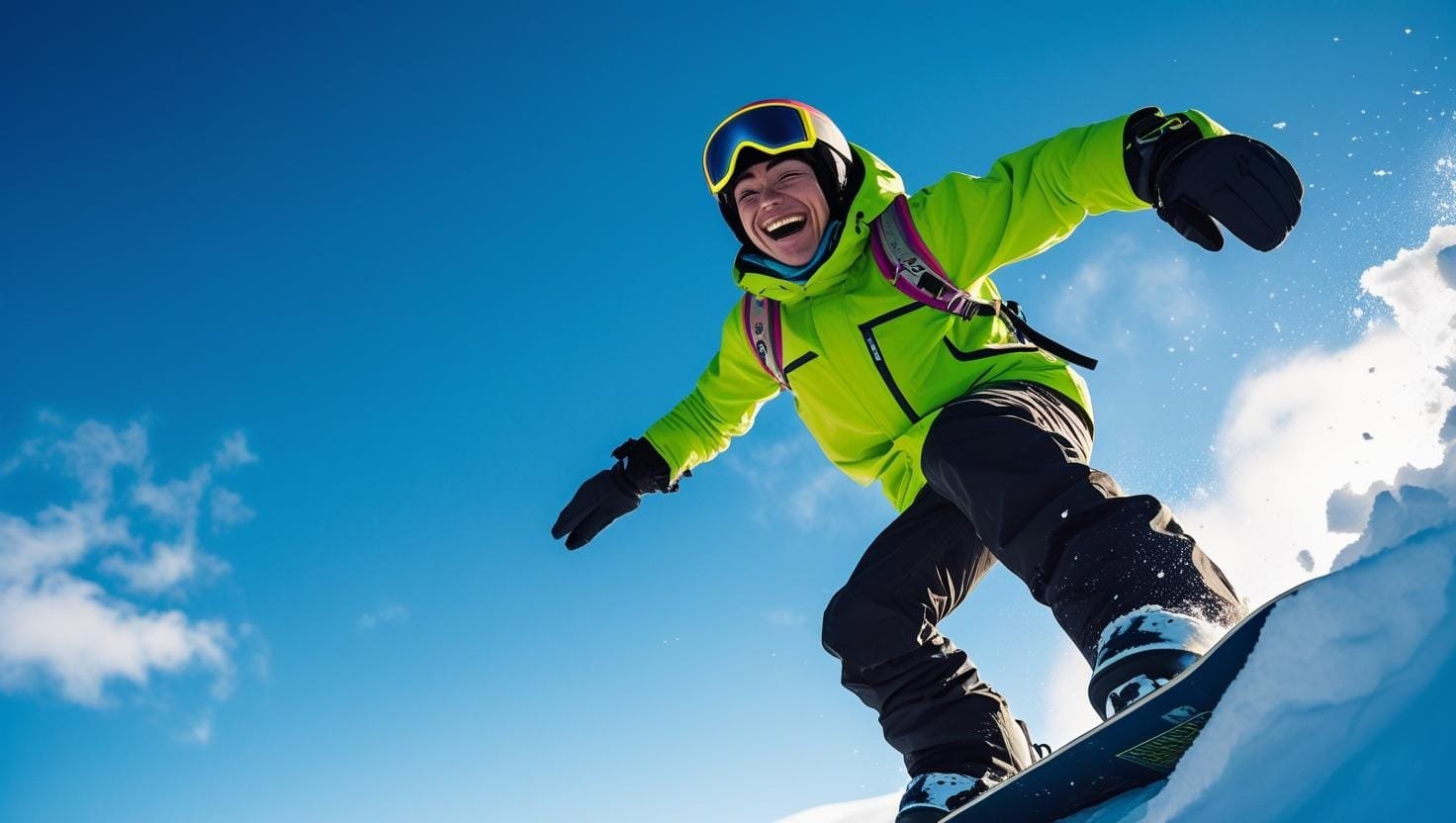
Why is Snowboarding So Fun? 7 Reasons to Get Hooked
Imagine floating through a silent world of white, with nothing but the crisp sound of your edge cutting through snow. That’s a feeling every snowboarder chases. More than just a sport, snowboarding is a unique blend of adrenaline, creativity, and freedom that gets deep under your skin. In this deep dive, we explore why this mountain pursuit is the ultimate source of winter joy — plus everything you need to know to experience that joy yourself.
The Unmatched Feeling of Floating in Powder
Ask any snowboarder about their best day ever, and they’ll likely describe a deep powder day. Because of a snowboard’s shape and surface area, it’s designed to float on top of fresh, soft snow. Directional powder boards like the Burton Skeleton Key are specifically built for this sensation. This creates a weightless, three-dimensional feeling akin to surfing a wave or flying. It’s a pure, exhilarating connection to the elements that is profoundly joyful and addictive.
This “float” is technically rooted in physics. Unlike skis, which provide two independent platforms, a snowboard acts as a single, large displacement hull. When you lean back slightly, the nose rises, and the board begins to plane on the crystalline structure of the snow. This transition from “sinking” to “surfing” is one of the most visceral sensations in sports. The silence of powder—where the snow absorbs all sound—heightens the sense of being in a different world. It’s an immersive experience where the laws of friction seem to vanish, replaced by a fluid, sweeping dance across the mountain’s topography.
Beyond the physical sensation, there is the visual reward. The “white room”—the moment when a turn throws up a wave of snow so high it temporarily obscures your vision—is the holy grail of snowboarding. It represents a total synchronization between rider, equipment, and terrain. In these moments, the fun isn’t just about speed; it’s about the soul-stirring beauty of being enveloped by nature in its most pristine state. This is why riders will wake up at 4:00 AM and stand in sub-zero temperatures just to be the first to drop into an untracked bowl.
The Freedom of Expression and Style
There is no single “correct” way to snowboard. The sport is a canvas for personal style. Do you want to lay down deep, powerful carves like a jet fighter banking through the sky? Or do you prefer a playful, surfy style, “buttering” your board and slashing wind lips? Maybe you love the technicality of the terrain park. Snowboarding gives you the freedom to interpret the mountain in your own unique way.
Style in snowboarding is a language. From the way you “bone out” a grab to the subtle counter-rotation of your shoulders during a carve, every movement reflects your personality. This lack of rigid, “Olympic-style” form (unlike some aspects of alpine skiing) encourages experimentation. You can be a “soul shredder” focused on flow, or a “park rat” focused on geometric precision. The equipment itself reflects this variety—camber profiles, flex ratings, and graphic designs allow you to build a kit that is an extension of your own identity. Our snowboard bindings guide breaks down how each component of your setup affects your riding style. If you’re comparing top bindings, our Union Force vs Atlas bindings comparison is a great place to start.
This creative freedom extends to “buttering”—the art of flexing the board on its nose or tail to perform flat-ground tricks. Buttering turns a boring, flat catwalk into a playground where you can spin, press, and dance. The fun here is in the constant discovery; you are never “done” learning how to express yourself on a snowboard. Every run is a new opportunity to try a different line, a different grab, or a different rhythm. This creative agency is what keeps the sport fresh and prevents it from ever feeling like a repetitive exercise.
The Thrill of Linking Your First Turns
For any beginner, the journey to becoming a snowboarder is marked by one magical moment: linking your first S-shaped turns. After the initial struggle of learning to balance and control your edges, the first time you flow seamlessly from your heel edge to your toe edge without falling is a massive rush of accomplishment. It’s the “aha!” moment where everything clicks, and it’s a feeling of pure triumph.
This milestone is significant because of the “progression wall” beginners face. Unlike walking, snowboarding requires you to move perpendicular to your direction of travel while having both feet locked to a single board. The first few days often involve “catching an edge”—a painful reminder of gravity. However, the moment you learn to “pedal” your feet and trust the sidecut of the board to pull you through a turn, the agony is replaced by a sense of god-like control. You are no longer fighting the mountain; you are collaborating with it.
The fun of linking turns is the fun of mastery. It’s the transition from being a passenger on your board to being the pilot. Once you can link turns, your world expands from the bunny hill to the entire resort. You can suddenly navigate blue runs, explore glades, and feel the wind in your face. This rapid leap in capability—usually happening between day three and day five—provides a psychological “high” that hooks people for life. It proves that perseverance pays off, and that sense of hard-won competence is a core pillar of why we find sports fun. It’s also why snowboarding is objectively better than skiing for many riders who crave that creative, expressive freedom.
The Mountain Becomes Your Playground
A fun part of snowboarding is developing “snowboarder’s eyes.” You stop seeing just a ski run; you see a world of possibilities. A small mound of snow on the side of the trail becomes a launch ramp for an ollie. A row of trees becomes a natural slalom course. A gentle roller becomes a feature to pop off of. This creative perspective makes every run different and exciting.
This is known as “all-mountain freestyle” thinking. To a snowboarder, the grooming marks on a trail are “corduroy” to be carved, and the “chunder” on the edges is a challenge to be conquered. You begin to look for “side hits”—natural transitions and lips at the edge of the trail that allow you to get a few feet of air before landing back on the run. These side hits turn a standard descent into a custom-built skatepark. The mountain stops being a static obstacle and starts being a dynamic partner in your fun.
Even the “bad” terrain becomes fun with the right mindset. An icy patch becomes a test of edge-tuning and pressure management. A narrow trail becomes a test of quick-twitch agility. This shift in perspective is mentally stimulating; it keeps your brain engaged and prevents boredom. You are constantly “reading” the snow, looking for the best line, the softest pocket, or the steepest drop. This constant problem-solving, done at high speed in a beautiful environment, is a recipe for a perfect “flow state”—the ultimate fun. It’s also why snowboarders are among the most passionate advocates for understanding the risks of the sport — knowing what you’re getting into makes the fun even better.
A Welcoming and Laid-Back Community
Snowboarding culture is famously relaxed and inclusive. At its core, it’s about a shared passion for being in the mountains and having a good time. Whether you’re a seasoned pro or a first-timer, you’ll find a community that celebrates effort and progression. The camaraderie in lift lines, the cheers from the chairlift for a trick landed (or a good fall), and the shared stories at après-ski are a huge part of the fun.
This community was forged in rebellion. When snowboarding first started, many resorts banned it. This “us against the world” beginning created a tight-knit culture that values authenticity over status. On a snowboard, it doesn’t matter what your job is or how much money you have; it only matters that you love to shred. This egalitarian spirit makes the resort a friendly place. It’s common to strike up a conversation with a stranger on the lift and find yourself riding together for the rest of the afternoon. The “stoked” factor is contagious.
Progression is celebrated collectively. If you’re in the park and finally land that 360 you’ve been working on, expect “tapping” of boards and high-fives from people you don’t even know. Even “bailing” (falling) is respected if you were trying something new. This supportive atmosphere reduces the fear of failure, which is essential for having fun. You’re not being judged; you’re being encouraged. This social fabric turns a solitary physical activity into a meaningful communal experience.
A Full-Body Workout That Never Feels Like Work
You’ll be having so much fun that you won’t even realize you’re getting an incredible workout. Snowboarding engages your entire body, from your legs and glutes for power, to your core for stability and balance. It improves your cardiovascular health, flexibility, and coordination—all while you’re focused on the thrill of the ride, not counting reps at a gym.
Biomechanically, snowboarding is a “closed-chain” exercise that demands constant isometric and eccentric muscle contractions. Your quads and calves are the engines, but your core—your obliques and abdominals—is the steering wheel. Maintaining a “ready” stance on varying terrain builds incredible functional strength. Because the surface you ride on is constantly changing, your stabilizer muscles are always firing. This leads to improved proprioception—your body’s ability to sense its position in space.
The “fun” aspect comes from the fact that this exercise is goal-oriented and environmentally driven. You aren’t lifting a weight just to lift it; you are engaging your core to stay upright through a bumpy glade. The endorphin rush from the physical exertion, combined with the dopamine hit from the speed and the adrenaline from the height, creates a “runner’s high” on steroids. You come off the mountain exhausted but energized, with a tired-body-happy-soul feeling that is the hallmark of a great day of fun.
The Mental Escape and Connection with Nature
When you’re snowboarding, it’s hard to think about anything else. The focus required to read the terrain, control your board, and link your turns provides a powerful mental escape from daily stresses. It’s a form of active meditation. Combining this mental clarity with the stunning beauty of a snow-covered mountain landscape creates a profound sense of peace and well-being.
In our modern, hyper-connected world, snowboarding offers a rare “analog” experience. When you’re dropping into a steep face, you can’t be checking your emails or worrying about a deadline. You are forced into the “now.” This mindfulness is deeply therapeutic. The sensory input—the cold air on your cheeks, the smell of pine trees, the blinding white of the snow—roots you in the present moment. This mental “reset” is a primary reason why many people find the sport essential for their mental health.
The scale of the mountains also provides perspective. Being a small speck on a giant, ancient peak reminds you of the grandeur of the natural world. It’s humbling and inspiring. Whether you’re watching a sunset turn the peaks pink during “golden hour” or watching a storm roll in across a valley, the aesthetic beauty of snowboarding is a constant source of wonder. Fun, in this context, is about more than excitement; it’s about awe. If you’re worried about safety, our guide to snowboard fall safety covers everything you need to know.
Essential Beginner Snowboarding Tips: How to Actually Get Good, Fast
The gap between watching snowboarding and doing snowboarding is the steepest learning curve in mainstream winter sports. But here’s what no one tells beginners clearly enough: the path from falling every 30 seconds to linking smooth turns is shorter than you think if you do the right things in the right order. The riders who progress fastest aren’t necessarily the most athletic—they’re the ones who approach the learning process intelligently, respect the fundamentals, and stay patient through the inevitable “baptism by ice” of the first two days. These are the tips that matter most for a beginner trying to maximize fun from Day 1. If you haven’t figured out your regular vs goofy stance yet, start there. Some beginners find a playful board like the GNU Pickle BTX makes the learning curve more enjoyable.
🏫 Take a Lesson (Non-Negotiable)
Even a half-day group lesson from a certified instructor will save you three days of self-taught frustration. Instructors catch bad habits before they become ingrained, teach you to read the terrain correctly, and most importantly, know exactly which drill will break through your specific learning block. YouTube is useful before you go; a real instructor is irreplaceable once you’re on snow. We answer the question are snowboard lessons worth it in depth — the short answer is always yes.
🦵 Bend Your Knees — Always
The single most common beginner error is riding with locked, straight knees. Bent knees act as shock absorbers, let you react to terrain changes, lower your center of gravity for stability, and allow you to shift weight between edges smoothly. If you catch an edge and your knees are bent, you’ll absorb it. If they’re locked, you’ll be skywriting.
👀 Look Where You Want to Go
On a snowboard, your body follows your eyes. If you stare at your feet or at a rock you want to avoid, you’ll go there. Instead, look 10–20 feet down the slope in the direction of your intended line. Your body will naturally initiate the movements needed to get there. This sounds simple but is genuinely one of the most transformative tips for linking turns faster.
⚖️ Weight Your Front Foot in Turns
Many beginners lean back and “hang on,” especially on steeper terrain. This is natural instinct but actively works against you—a light front foot means no steering input and a runaway board. Commit to weighting your front foot as you initiate each turn. It feels scary at first, but it’s what tells the board where to go. Trust the sidecut: the board’s curved edge is designed to carve a turn for you once you give it the signal.
🎯 Learn to Stop on Both Edges
Before you leave the beginner area, you must be able to stop on both your heel edge and your toe edge. A stop is just a very aggressive turn — you pivot the board across the slope and load the uphill edge until you come to a halt. Practice this equally on both sides. One-sided stopping is a common intermediate trap that leads to anxiety and bad habits on steeper terrain. Our guide to snowboard stopping techniques covers every method in detail.
🗓️ Ride Consecutive Days
Snowboarding is a skill built on muscle memory, and muscle memory develops fastest with daily repetition. Two consecutive days of riding will improve you more than four days spread across a month. If you can only afford one trip, make it at least three days back-to-back. Day 1 is struggle. Day 2 things start clicking. Day 3 you’re a snowboarder.
📐 Don’t Traverse — Turn
Beginners often cope with speed by traversing across the slope (riding sideways) rather than turning to control speed. This feels safer but actually prevents you from learning the one thing that makes snowboarding fun: flowing turns. Trust that a linked turn will slow you down more effectively than traversing, and force yourself to turn toward the fall line even when it feels fast.
💪 Build Pre-Trip Fitness
Snowboarding demands quad strength, calf stability, and core endurance. If your legs are burning out by 11 AM, your form collapses and injuries follow. A basic pre-trip routine of squats, wall sits, calf raises, and planks for six to eight weeks before your trip will make a dramatic difference in how long you can ride well and how much fun you have on Day 1.
🎬 Film Yourself Riding
You cannot feel what you’re doing wrong when you’re in the middle of doing it. A phone video of even two runs, shot from the side by a friend, reveals everything: your posture, your edge timing, your hip position, whether you’re looking down. Many intermediate riders shave months off their progression simply by seeing themselves ride for the first time.
🛑 Know When to Stop for the Day
The most preventable injuries in snowboarding happen in the last hour of the day, when fatigue causes form to collapse and reaction time slows. When your legs feel like jelly and your turns are getting sloppy, stop. Pushing through fatigue earns you a hospital visit, not progression. Call it at 3:00 PM on your first days and gradually extend your sessions as fitness builds.
🌡️ Stay Hydrated and Fed
Altitude and dry mountain air dehydrate you at twice the normal rate, and cold weather masks thirst. A hydrated rider has better reaction time, better muscle function, and better decision-making. Carry water or an insulated bottle in your jacket pocket. Eat a real breakfast and have a mid-day snack. Hypoglycemia on the slopes is not just uncomfortable — it’s the fast lane to a bad fall.
🎽 Protect the Vulnerable Bits
Wrist guards are the single most impactful piece of protective gear for beginner snowboarders — wrist fractures are the most common snowboarding injury and are almost entirely preventable with proper guards worn inside gloves. Add impact shorts for tailbone and hip protection. A helmet is non-negotiable. None of these items are expensive compared to an ER co-pay and six weeks in a cast.
🏆 The Golden Rule of Beginner Progression
Master each skill fully before moving to the next terrain. If you can’t stop confidently on both edges on a green run, a blue run will terrify you. If you can’t carve a blue run, a black run will hurt you. Each level of mastery is the foundation for the next. Respect the progression and you’ll reach advanced riding faster than someone who rushes ahead out of ego.
What to Wear Snowboarding: The Complete Layering Guide
Staying warm, dry, and comfortable on the mountain is not just a comfort issue—it’s a safety and performance issue. A snowboarder who is cold, wet, or wearing the wrong fabrics will have a miserable experience, cut their day short, and make poor decisions on the mountain. Conversely, a rider who is properly layered feels energized, confident, and can ride longer with better form. Our guide to the best snowboard bags also helps you keep your gear organized and protected between sessions. The good news is that the layering system for snowboarding is straightforward once you understand the logic behind each layer’s role.
Base Layer: Moisture Management
Purpose: Wick sweat away from your skin and keep you dry. Wet skin loses heat 25x faster than dry skin, so this layer is the foundation of warmth. Materials: Merino wool (best — naturally odor-resistant, stays warm even when damp, regulates temperature) or synthetic polyester blends (cheaper, dries faster). Check out our picks for the best snowboard socks to find the right base layer for your feet. Avoid at all costs: Cotton. Cotton absorbs moisture and holds it against your skin, guaranteed to make you hypothermic on a cold day. This applies to every layer, but especially here. Wear a base layer top and bottom (thermal leggings or long underwear).
Mid Layer: Insulation
Purpose: Trap body heat and provide warmth. This layer is adjustable — on warm spring days you may skip it entirely; on cold deep-winter days it’s essential. Materials: Fleece jackets (best for active snowboarding as they’re breathable and wick moisture), down insulation (warmest but loses insulation when wet), or synthetic insulated vests/jackets (best of both — warm and water-resistant). For snowboarding, a midweight fleece pullover or insulated hoodie is the most versatile mid layer choice.
Outer Shell: Wind and Waterproofing
Purpose: Block wind, repel snow and water, and keep your inner layers dry. This is your snowboard jacket and pants, and it’s where you should spend the most money if you’re choosing where to invest. Look for: A waterproof rating of at least 10,000mm (the higher the number, the more waterproof; 20,000mm+ is ideal for heavy snow or wet spring conditions), sealed seams (critical — taped seams prevent water entering at the stitching), and underarm vents (pit zips) for temperature regulation on high-output days. Never buy denim jeans for snowboarding — they’re cotton, have no waterproofing, and will be soaked through within 20 minutes of sitting in snow. Many riders prefer the relaxed fit of baggy snowboard pants for style and mobility. Curious about helmet cameras? Check our guide to the best skiing helmet cameras to capture your runs.
Accessories: The Warmth Details That Matter
Socks: Wool snowboard-specific socks that reach mid-shin. Single pair, well-fitting. Never double-sock — it cuts circulation and causes cold feet. Gloves or mittens: Waterproof outer shell, insulated interior. Mittens are warmer; gloves offer more dexterity. For beginners who will have their hands in the snow frequently, warmth wins — go mittens. Neck gaiter or balaclava: The neck and lower face are wind-chill exposure points that most beginners neglect. A simple tube gaiter solves this completely. Helmet: Always. Modern helmets are ventilated and comfortable; the days of feeling claustrophobic in ski helmets are gone. Goggles: UV protection and anti-fog coating are non-negotiable. Your eyes at 10,000 feet are exposed to far more solar radiation than at sea level, even on overcast days.
How to Fall Safely on a Snowboard: The Skill Nobody Teaches First
Falling is not a failure state in snowboarding — it’s a fundamental part of the sport, especially in the early stages. Understanding why snowboarding can be dangerous helps you prepare better. Every professional snowboarder has fallen thousands of times; the difference between them and an injured beginner is not that they fall less, but that they fall better. Learning how to fall safely is genuinely the most important protective skill a new snowboarder can develop, and it’s the one skill that most beginner lessons spend the least time on. The following principles will keep you riding longer and spending less time in the resort medical center.
✅ DO: Fall Like This
- Tuck your chin to your chest to protect your head from whiplash
- Fall uphill rather than downhill — let momentum carry you up the slope
- Land on your forearms, not your wrists (this is what wrist guards help with)
- Relax your body — a rigid body transmits impact force directly to your joints
- Let yourself slide to a stop — fighting a slide creates torque injuries
- Roll into the fall rather than fighting it — roll like a ball, not a plank
- For forward falls: drop to your knees first, then forearms
- For backward falls: sit down and roll to one side to spread impact
❌ DON’T: Common Fall Mistakes
- Never reach out with straight arms and locked wrists — this is how wrists break
- Don’t jam your edge into the snow to stop a slide — use the full slide instead
- Don’t stiffen your whole body — rigid muscles transfer energy directly to joints and bones
- Don’t get up immediately — take a moment to assess for pain before moving
- Don’t panic mid-air — tuck rather than flailing, which makes landings harder
- Don’t stop on a steep slope after a fall — get to the side of the run first
The physics of falling on a snowboard are somewhat different from other sports. Because your feet are fixed to the board, your falls tend to be more sudden and complete than in skiing, where the body can twist away from the board. This means you hit the ground faster and with less time to react. The instinct to catch yourself with outstretched palms is hardwired and difficult to override, which is precisely why wrist guards are so important for beginners — they do the protective work that your instincts can’t. Over time and with experience, your proprioceptive system learns to detect an impending fall earlier, giving you more time to position your body correctly before impact. Until that neurological training happens, the gear does the work. Embrace the learning process, expect falls as part of the education, and treat each tumble as valuable data about where your technique needs attention.
🛡️ The Non-Negotiable Fall Protection Kit
Wrist guards worn inside your gloves. Impact shorts with built-in coccyx protection. A certified helmet. Consider adding a back protector for snowboarding and knee pads for additional coverage. These items together address the most common snowboarding injury sites — wrists, tailbone, and head — and collectively reduce your risk of a day-ending or season-ending injury by the vast majority. None of them are expensive. All of them are worth every cent.
Snowboarding Progression Roadmap: From Green Runs to Black Diamonds
One of the most exciting aspects of snowboarding is how rapidly a motivated, consistent rider can progress from total beginner to genuinely accomplished mountain rider. The progression is not linear — there are long plateaus followed by sudden breakthroughs — but it does follow a recognizable pattern that lets you set meaningful goals and understand where you are on the journey. The following roadmap represents a realistic timeline for a rider who is taking at least one lesson in their first session, riding several consecutive days, and approaching their progression with intention rather than just pointing downhill and hoping for the best. First, make sure you know how to size your snowboard correctly.
| Days on Snow | Where You Are | Key Skills to Develop | Terrain |
|---|---|---|---|
| Days 1–2 | Complete Beginner | Strapping in, standing up, skating on one foot, falling safely, heel-side sliding, toe-side sliding, J-turns | Dedicated beginner area / magic carpet / easiest green runs only |
| Days 3–5 | Breakthrough Zone | Linking heel-to-toe turns, stopping on both edges, riding the chairlift solo, controlling speed through turns | Green runs, easiest blue runs with supervision |
| Days 6–10 | Early Intermediate | Consistent linked turns, beginning carving, riding in variable snow (slush, ice patches, groomed), side hits | All blue runs, easier groomed terrain at various pitches |
| Days 11–20 | Solid Intermediate | Carving on edge, basic butters and presses, first terrain park boxes, beginning off-piste and powder turns | Blue runs confidently, beginning black runs, small terrain park features |
| Days 21–40 | Advanced Intermediate | Confident black runs, ollies and small jumps, switch riding basics, tree runs, more complex park features | Black runs, all-mountain terrain, small-medium park features |
| Days 40+ | Advanced / Expert | Double-black terrain, aggressive powder riding, bigger park features, switch riding, spin tricks. Advanced riders might consider a premium all-mountain board like the Burton Flight Attendant or the Lib Tech Travis Rice Pro for aggressive terrain. Freeride enthusiasts should check our GNU Mullair review. | Full mountain including off-piste, all park sizes, advanced terrain. At this stage, you’ll want to explore board-specific comparisons like our Jones Flagship vs Mountain Twin review. |
The most important thing to understand about this roadmap is that the numbers are guidelines, not deadlines. Some riders link their first turns on Day 1; others need five days before the breakthrough happens. Age, fitness, prior board sport experience (skateboarding, surfing, wakeboarding), lesson quality, and sheer volume of focused practice all influence the timeline. What doesn’t change is the sequence: each skill genuinely builds on the one before it, and trying to skip stages typically results in bad habits that plateau your riding for months. When you’re ready to invest in your first board, our guide to choosing your first snowboard will help you pick the right one for your stage of progression. Many beginners start with a versatile all-mountain board like the Capita DOA, which handles everything from groomers to park. Our Warpig vs Kilroy comparison is popular among riders looking for volume-shifted options. The riders who progress most dramatically are almost always the ones who overinvested in fundamentals in their first 10–15 days rather than rushing to harder terrain before they were ready.
Snowboard Tricks for Beginners: The Fun Starts Here
Many beginners assume that snowboard tricks are reserved for expert riders who spend years in the terrain park. This is completely wrong, and it’s one of the most unfortunate misconceptions in the sport because it delays people from discovering one of snowboarding’s greatest sources of fun. The truth is that some of the most enjoyable tricks in snowboarding — the ones that make every run more playful and expressive — can be learned as early as Day 5 to Day 10, on gentle terrain, without ever going near a jump. These “flat-ground tricks” and simple pressing movements are the foundation of freestyle riding, and they’re accessible to anyone who can link basic turns. Understanding your snowboard stance setup is critical before attempting tricks. Boards with a rocker profile like the Lib Tech Skate Banana are more forgiving for learning presses and butters.
The Ollie
The gateway trick. Load pressure onto your tail, then spring upward off the tail while pulling your front foot up. The board pops off the snow and becomes level in the air. Land with both feet simultaneously and absorb with bent knees. This is the foundation for every jump, rail, and box trick in the sport.
Tail Press
While riding, shift your weight aggressively to your back foot until the nose of the board lifts off the snow. Hold the press while traversing across the slope. Start on gentle terrain and hold it for just one second, then build duration. This is buttering’s foundational move and looks instantly stylish.
Nose Press
The reverse of a tail press — weight shifts to your front foot until the tail rises. Harder than a tail press because it requires committing your weight forward, which feels counterintuitive. Once you can hold both nose and tail presses smoothly, you can start combining them into butters.
Butter / Flat Spin
A butter is a spin performed on the snow surface using a nose or tail press — you pivot the board around the pressed end rather than lifting off. The flat-spin 360 uses this principle to spin a full circle on gentle terrain. No jumps needed, just board flex, weight shifting, and commitment to the spin.
Ollie off a Side Hit
Use a natural snow lip or side hit at the edge of a run to add amplitude to an ollie. Approach the lip straight, ollie off the edge, get momentarily airborne, and land back on the piste. The “air” might only be a foot, but the sensation and the visual are unmistakably snowboarder. This is the gateway to jumps and half-pipe.
Box Slide (50/50)
The gateway terrain park trick. Approach a wide, beginner-friendly box straight on, ride onto it with a flat board, balance across it, and ride off the end. A 50/50 means both feet are parallel to the box. Keep knees bent, look ahead (not at your feet), and stay centered. Most resorts have small “ride-on” boxes specifically designed for first-timers.
180° Spin
A frontside or backside 180 is the first aerial rotation trick. Take off from a slight natural feature or side hit, use your shoulders to initiate the spin, rotate 180 degrees, and land riding switch (backward). The switch landing is the challenge — you need to have at least rudimentary switch riding skills first. The 180 is the direct precursor to 360s and beyond.
First Grab
Once you’re comfortable getting air off a side hit or natural feature, reach down and touch your board mid-air. An Indy grab (trailing hand grabs the toe edge between the bindings) is the most natural first grab. Nose grabs (front hand grabs the nose) and tail grabs (back hand grabs the tail) follow. Grabs slow your rotation, add style, and are the visual signature of skilled snowboarding.
The key to learning flat-ground tricks safely is to practice them on terrain where your speed is completely under control. A gentle green run or even a flat runout is the ideal practice space for ollies, presses, and butters. The mistake most beginners make is trying to learn tricks while simultaneously managing speed on terrain that’s too steep — you cannot focus on the subtlety of a weight shift when you’re also worried about going too fast. Slow down, find a gentle slope, and practice the movement ten times in a row until it becomes automatic. Then you can start applying it to progressively faster and steeper situations.
Your First Terrain Park Session: A Beginner’s Complete Guide
The terrain park is where the imagination of snowboarding truly lives. Jumps, rails, boxes, half-pipes, and creative features of every conceivable shape transform a ski resort into a sculptural, interactive playground. And despite its sometimes-intimidating appearance, the modern terrain park is designed with progression in mind — every well-designed resort park has zones ranging from “extra-small” beginner features that a new rider can hit safely in their first week to massive competition-grade jumps and rails that challenge the world’s best freestyle athletes. Here is everything you need to know to take your first park laps confidently. If you’re still shopping for equipment, check our snowboard comparison guide to find the right board for park riding. The Burton Custom Flying V is another popular all-mountain choice for progressing riders.
XS / Beginner Zone
Low boxes with flat “ride-on” entries (no jump needed), tiny 3–5 ft tabletop jumps with very forgiving landings, gentle banked features. Perfect for anyone who can link turns on blue runs.
Small / S Zone
Longer rails, slightly narrower boxes, 10–15 ft jumps. Where you build ollies and first rotation tricks. Requires solid carving and stopping ability on blue terrain.
Medium / M Zone
20–40 ft jumps, full-length rails, creative jib features. Intermediate and advanced riders. Expect to see sponsored athletes and confident switch riders here.
Large / L Zone
60–80 ft jumps, big kickers, competition-grade rails and half-pipes. Expert only. If you need to ask whether you’re ready, you’re not ready.
The Cardinal Rule of Terrain Park Entry: You must be able to make confident, controlled turns on at least easy blue terrain before entering any terrain park. The park is not the place to develop basic riding skills — it requires the ability to adjust speed, stop quickly, and react to unexpected situations. Riders who enter the park before they have these fundamentals create danger for themselves and for others. Once you meet that baseline, the park becomes one of the most welcoming and exciting environments in snowboarding.
Park Etiquette — Follow These or You’re That Person: Always take one full visual lap before hitting any feature — conditions change daily and you need to see the feature, assess the approach speed, and identify the landing zone before committing. Wait your turn at the top of each feature — there is always an informal queue. Only drop in when the previous rider has completely cleared the landing zone. If you bail (fall) on a feature, get out of the landing zone as quickly as possible — the next rider is coming. Never hit a feature at a sideways angle — always approach straight. Call out your intention to drop in to people behind you (a hand raise or nod is conventional). Film your friends’ attempts — it builds community and helps everyone improve.
Speed is Everything in the Park: The most common beginner park mistake is either going too slow (resulting in a painful flat landing on a jump) or too fast (resulting in an over-rotated crash). Before hitting any jump for the first time, watch several other riders hit it and use their approach line as your speed reference. It’s also acceptable to ride past the feature a couple of times at park speed to get a feel for the approach. Most features are built to be forgiving at a specific speed range — once you find that sweet spot, the tricks follow naturally. Need the right setup? Our snowboard comparison tool helps you match a board to your park goals. If you’re considering Capita, read our detailed Capita snowboard review for the full picture. We also compare brands head-to-head, like our Arbor vs Salomon snowboards breakdown.
🎿 First Park Session Checklist
Start in the XS or S zone. Take a full visual lap first. Wear a helmet and wrist guards. Hit every feature going straight before attempting any trick. Watch the previous rider clear the landing before dropping. Ride with a friend who can film you. Stop when you’re tired. Celebrate landing your first box — it’s a genuine milestone.
The Science Behind Why Snowboarding is Good for Your Mental Health
Snowboarding has always been talked about as mentally rewarding — “it clears my head,” “I leave everything behind on the mountain,” “it’s the best therapy I’ve ever had.” For decades, this was anecdote. But a growing body of research now backs up what every rider already knew intuitively: snowboarding is genuinely, measurably beneficial for mental health, through multiple distinct and well-documented mechanisms. Understanding these mechanisms doesn’t just validate the feeling; it gives you language to explain to the non-snowboarders in your life why a season pass isn’t an extravagance — it’s medicine.
🧬 Endorphin Release
Physical exercise reliably triggers the release of endorphins — natural neurotransmitters that reduce pain perception and produce feelings of euphoria. Snowboarding, as an aerobic and anaerobic interval sport, produces endorphin release comparable to running, cycling, or any sustained cardiovascular activity. The “tired but happy” feeling at the end of a full day on the mountain is largely an endorphin signature, and it’s why regular riders describe the sport as genuinely addictive in the most positive sense.
☀️ Vitamin D and Sunlight Exposure
Vitamin D deficiency is a significant contributor to depression, anxiety, and seasonal mood disorders — and it’s extremely common in populations who spend winters indoors or in northern latitudes with limited sunlight. Snowboarding forces you outside into full-spectrum daylight, even in winter. At high altitude, UV exposure is increased significantly, and even with sunscreen applied correctly, meaningful Vitamin D synthesis occurs. A weekend of mountain riding can dramatically restore Vitamin D levels that have been depleted through weeks of indoor winter routines.
🌲 Nature Immersion
A Stanford University study found that spending time in natural settings reduces activity in the brain region associated with negative rumination — the kind of repetitive negative self-talk linked to depression and anxiety. Snowboarding is an immersive natural experience in one of Earth’s most dramatic landscapes. The combination of altitude, snow, open sky, and physical movement creates a neurological environment profoundly different from an urban or indoor setting, and the mental health benefits of this nature immersion are dose-dependent: more mountain time means more benefit.
🎯 Forced Mindfulness
Many forms of meditation require deliberate, difficult effort to achieve a state of present-moment focus. Snowboarding creates this state involuntarily. When you are managing edge pressure, terrain reading, speed control, and balance simultaneously at 30 miles per hour, your conscious mind is fully occupied with the task. Worries, anxieties, and ruminations about the past or future don’t simply fade — they have nowhere to go. The mountain fills your mental bandwidth completely. This forced mindfulness is one of the most powerful mental health mechanisms in the sport.
💪 Self-Efficacy and Mastery
Research in positive psychology consistently shows that one of the most reliable sources of lasting wellbeing is the experience of growing competence in a meaningful skill. Snowboarding provides this in concentrated doses. Every day you ride, you become measurably better at something that demands real skill and effort. Linking your first turns, conquering your first black run, landing your first ollie — each of these is a genuine achievement that builds self-efficacy and produces a sense of pride that carries into other areas of life.
🤝 Social Connection
Research from Yonsei University found that the social dimension of snow sports produces measurable positive psychological outcomes, and that even a single day snowboarding with others contributes to improved wellbeing and stress reduction. The snowboard community is particularly warm and inclusive by the standards of outdoor sports. Riding with a crew, shared experiences on lifts and runs, and the après-ski social tradition all provide the social connection that is one of the most consistently documented contributors to human mental health and life satisfaction.
A study published in the Journal of Adventure Education and Outdoor Learning found that snowboarders experienced significant reductions in stress and measurable improvements in mood after just a few sessions. Separate research has documented snowboarding’s use in therapeutic programs for veterans with PTSD, helping participants reconnect to their bodies, to nature, and to a sense of agency and accomplishment that can be profoundly healing for people dealing with trauma. While snowboarding is obviously not a clinical intervention, the mechanisms it activates — physical exertion, nature immersion, social connection, mastery, and mindfulness — are the same mechanisms that clinical researchers have identified as most effective in non-pharmacological approaches to depression, anxiety, and stress management.
The Flow State: Why Snowboarding Creates the Ultimate “In the Zone” Experience
Psychologist Mihaly Csikszentmihalyi spent decades studying what humans describe as their most joyful, meaningful experiences. What he found across cultures, professions, and activities was a consistent state he called “flow” — a condition of complete, effortless immersion in a challenging activity where self-consciousness disappears, time distorts, and performance becomes automatic. Snowboarding is among the most potent flow-state generators that humans have discovered, and understanding why helps explain the almost fanatical dedication that the sport inspires in its practitioners.
🔑 Stage 1: Challenge Meets Skill
Flow occurs at the intersection of high challenge and high skill — not when a task is too easy (boredom) or too hard (anxiety). Snowboarding provides this balance naturally. A beginner on a green run is at the right challenge level for their skill. An intermediate on a mogul field is at theirs. An expert charging a steep, untracked face is at theirs. The mountain always offers a challenge level that matches your current ability, and progressing through ability levels means you’re always finding new edges to this sweet spot.
🧠 Stage 2: Full Sensory Engagement
Flow requires that the mind cannot wander — it must be fully occupied by the task at hand. Snowboarding achieves this by demanding simultaneous management of edge pressure, terrain reading, speed assessment, wind, visibility, other mountain users, and physical balance. There is no idle cognitive bandwidth left for intrusive thoughts. The mind is fully commandeered by the ride, and this is experienced not as stress but as freedom — the rare freedom of a mind at rest from itself.
⏱️ Stage 3: Time Distortion
One of the universal markers of flow is that time perception changes dramatically. A two-hour morning session feels like 20 minutes, while the specific memory of a particularly perfect run seems to stretch into slow motion. Many snowboarders describe this as one of the most valuable aspects of the sport — days on the mountain are days that genuinely feel long, rich, and memorable, rather than the featureless blur of a routine workday.
💫 Stage 4: Effortless Action
In the deepest flow states, riders describe their movements as automatic — the board simply goes where it needs to go without deliberate thought. Turns initiate themselves. Lines open up. The body knows what to do before the mind can think to instruct it. This is what experienced riders mean when they say they feel “at one with the board” or “like the mountain is speaking through me.” It’s not mystical — it’s the deeply familiar sensation of a high-skill automatic state taking over from conscious control.
😊 Stage 5: Post-Flow Satisfaction
Csikszentmihalyi found that the joy of flow is often not experienced during the flow state itself — because self-consciousness is suspended — but intensely in the moments after. The run ends and you feel a wave of profound satisfaction, clarity, and vitality. This is the feeling every snowboarder recognizes: coming off the lift after a perfect run, exhaling, and saying “That was it.” That feeling is what drives people to drive three hours each way, wake at 5 AM for first tracks, and spend significant money on season passes year after year. It is, in the deepest sense, the purest fun available to a human being. This is why so many people consider it the best winter sport on Earth.
Snowboarding Over 40: Yes, You Can — and Here’s How to Do It Smart
One of the most persistent myths in snowboarding is that it’s a young person’s sport and that starting after 40 is either impossible or inadvisable. This is completely wrong, and it denies an enormous number of adults one of the most rewarding physical and mental experiences available to them. Adults over 40 learn to snowboard regularly, and many describe it as one of the most meaningful challenges of their adult lives precisely because it is genuinely hard, genuinely rewarding, and completely outside the usual envelope of adult experience. Here is how to approach learning as an older adult — and why you should invest in lessons from day one.
Invest More Heavily in Protective Gear
This is not optional for riders over 40. The recovery time from a wrist fracture, tailbone bruise, or head impact is substantially longer for older adults. Wrist guards, impact shorts, a quality MIPS helmet, and knee pads (if you have any joint history) are not optional extras — they are the infrastructure that makes learning safe. Budget for quality protection before you budget for a nice board. Also, make sure you’re fitted with the right boots — consider our guide to the best snowboard boots for wide feet if that applies to you, and read our Vans snowboard boots sizing guide if you’re eyeing that brand.
Allow More Recovery Time Between Sessions
Teenagers and twenty-somethings can ride eight hours on Day 1, fall a hundred times, and wake up ready for more. Riders over 40 need more recovery between sessions. Plan your first few trips with a rest day between riding days, or commit to shorter sessions (3–4 hours) rather than full mountain days. Your muscles, ligaments, and joints need time to consolidate the physical demands of learning, and giving them that time prevents the overuse injuries that cut many adult learners short.
Prioritize Private Lessons Over Group Sessions
Group lessons are efficient and fun for people in their 20s who can match the group pace and fall without significant consequence. For adults over 40, private instruction is a better investment. A skilled instructor tailors every drill to your specific movement patterns, biomechanical history, and fitness level. They also have the authority to set your learning pace correctly — which for many older adults means slightly slower, more deliberate progressions that build more durable skill with less injury risk. The right bindings setup also matters — talk to your shop about what’s right for your stage.
Leverage Your Adult Mental Strengths
Here is the honest advantage you have over a 16-year-old learner: you are better at following instructions, understanding explanations, analyzing your own errors, and maintaining deliberate practice over time. Older adults who engage analytically with the learning process often progress more efficiently than young riders who learn primarily through reckless repetition. Ask your instructor to explain the biomechanics of what they’re asking you to do. Understanding why a technique works helps your body execute it correctly.
Pre-Trip Conditioning is More Important for You
Arriving at the mountain already fit makes an enormous difference for adult learners. A six-to-eight week pre-trip program of squats, single-leg balance work, hip flexor stretching, and core strengthening will dramatically reduce Day 1 fatigue, reduce injury risk, and give your body the reserves to keep good form throughout the session. This is advice for any age, but it’s non-negotiable for adults over 40 who want to have a genuinely enjoyable first experience rather than a painful one.
Embrace the Long Game
Adults over 40 who learn to snowboard almost universally report that the sport becomes more enjoyable every single year, not less. The initial physical demands of learning plateau fairly quickly, and what remains is a sport that rewards experience, terrain knowledge, and thoughtful riding style — all things that improve with age. Many of the most graceful, stylish snowboarders on any given mountain are in their 40s and 50s, because they’ve had years to refine a flowing, efficient technique that looks effortless. You are not entering a sport that will leave you behind as you age. You are entering one that rewards exactly what age gives you.
Après-Ski and the Full Mountain Day Lifestyle: The Fun Doesn’t Stop at the Lift
No exploration of why snowboarding is so fun would be complete without honoring the culture surrounding the sport — and particularly the tradition of après-ski. The French phrase (literally “after skiing”) describes the social ritual that follows a day on the mountain, and in snowboarding culture it has taken on a life of its own as a celebration of shared experience, hard-won progression, and the simple joy of being alive in the mountains with people who understand why you drove three hours to fall down a hill all day. Après is not just a party — it’s an essential part of the snowboard experience.
The Chairlift Debrief
The first après begins on the last lift of the day. The communal debrief of the day’s highlights, crashes, and breakthroughs happens naturally as the lifts slow and people ride down for the last time. This informal storytelling is a core social ritual of mountain culture.
The Base Lodge Ritual
Unstrapping at the bottom, swapping your boots for warm shoes, and settling into a lodge with hot drinks and food is a deeply satisfying transition. The physical warmth after a cold day of riding is one of life’s simple pleasures.
The Mountain Town Dinner
Ski towns worldwide have developed exceptional food cultures because riders who’ve burned 3,000+ calories in a day are ravenously hungry and genuinely deserve a great meal. From Jackson Hole to Chamonix to Whistler, mountain town dining is a highlight of the snowboard trip.
The Après Bar Scene
Many mountain resorts have vibrant après bars that operate from 3 PM through the evening. Live music, shared celebration of the day’s riding, and the contagious “stoke” energy of a crowd of people who just spent the day doing something they love creates an atmosphere found nowhere else on Earth.
The Video Session
Modern snowboard culture has been transformed by the ease of filming. Reviewing the day’s footage with your crew — replaying the best runs, analyzing technique errors, and sharing clips — is both entertaining and genuinely valuable for progression. Many riders have their first major technique breakthrough from watching their own riding rather than being told about it.
The Earned Rest
Perhaps the most underrated pleasure of a full snowboard day is the extraordinary quality of sleep that follows. Physical exhaustion, fresh air, altitude, and the emotional satisfaction of a good day combine to produce the kind of deep, dreamless, completely restorative sleep that most adults spend years trying to manufacture with supplements and routines. One mountain day provides it naturally.
The lifestyle surrounding snowboarding — the early morning buzz of a powder alert, the sunrise drive to the mountain, the first run through untracked terrain, the mountain town streets, the après traditions, the late-night boot-drying and wax sessions — creates a total experiential package that is qualitatively different from most recreational activities. It’s not just a sport you do; it’s a world you enter. This is why snowboarders talk about “the culture” the way they do, and why the sport inspires a level of identity and community belonging that most hobbies simply don’t generate. The fun of snowboarding is not contained within the boundaries of the slope — it overflows into everything around it. Even customizing your board — like learning can you repaint a snowboard — becomes part of the experience.
Ready to Experience the Fun?
The best way to understand the fun is to try it yourself! Here are a few tips for your first day:
- Take a Lesson: This is the single best tip. A professional instructor will dramatically shorten your learning curve and teach you the fundamentals safely. We explain why snowboard lessons are worth every penny.
- Rent Your Gear First: Don’t invest in a full setup until you know you love it. Rental shops will fit you with the right size gear. When you’re ready to buy, use our guide to choosing your first snowboard.
- Be Patient & Persistent: Your first day will involve falling. Everyone does! Embrace it, laugh it off, and focus on the small victories. The reward is more than worth it.
Frequently Asked Questions About the Fun of Snowboarding
1. Is snowboarding harder than skiing?
Initially, snowboarding has a steeper learning curve. Most people find the first two days harder because you’re locked onto one board. However, many agree that once you “get” it, snowboarding is easier to master and progress to an intermediate level compared to skiing. See our full breakdown of why snowboarding is objectively better than skiing.
2. How old is too old to start?
Never! People start in their 40s, 50s, and even 60s. As long as you have reasonable fitness and a sense of adventure, you can learn. Using protective gear like impact shorts and wrist guards can make the process much more comfortable for older beginners. Adults over 40 often progress more efficiently than young riders because they’re better at following instruction and analyzing their own errors.
3. Why do my feet hurt when I snowboard?
Foot pain is usually caused by boots that are too tight or not the right shape for your foot, or by “the claw”—subconsciously tensing your toes to grip the board. Proper boot fitting and learning to relax your feet once you’re comfortable with edge control usually solve this.
4. Do I need to be athletic to have fun?
You don’t need to be a marathon runner, but some basic core and leg strength helps. Snowboarding will actually help build that athleticism as you go. The most important “muscle” is your persistence! For board-specific insights, check reviews like our are Nitro snowboards good breakdown.
5. Is the terrain park only for experts?
Not at all. Most parks have “Extra Small” and “Small” features—low boxes and tiny jumps—designed specifically for beginners to learn the fun of freestyle safely. You can start hitting beginner boxes as soon as you can link turns on blue terrain.
6. What is “buttering”?
Buttering is using the flex of the board to perform tricks on flat snow. It’s like doing a manual on a skateboard. You press onto your nose or tail and spin around the pressed end. It’s one of the most fun ways to add style to your riding without needing big jumps, and beginners can learn the basics as early as Day 5–7 on snow.
7. How can I stay warm so I keep having fun?
Layering is key. Use moisture-wicking base layers (no cotton!), an insulating middle layer, and a waterproof outer shell. Keeping your core warm keeps your blood flowing to your toes and fingers. Quality wool socks, waterproof gloves, a neck gaiter, and goggles complete the system.
8. Why is it called “shredding”?
It’s a term borrowed from surfing and skating. It refers to riding with high energy and skill, effectively “shredding” the snow with your edges. It captures the powerful, active nature of the sport. If you want to see how different boards handle when you’re truly riding, our snowboard showdown comparisons are a great place to start.
9. Can I snowboard if I’m afraid of heights?
Yes. While you are on a mountain, you are focused on the snow 10–20 feet in front of you. Most people with a fear of heights find that they are so engaged with the board and the terrain that the “cliff” feeling never really bothers them.
10. Is it expensive to start?
The initial cost can be high due to gear and lift tickets, but renting gear and looking for mid-week “beginner packages” can make it much more affordable. Once you have your own gear, the “fun-per-dollar” ratio is incredible. Check out our picks for the best snowboard boots when you’re ready to buy. Our K2 snowboard boots review is a popular starting point for beginners.
11. How do I fall safely on a snowboard?
Try to fall uphill rather than downhill. Tuck your chin to protect from whiplash. Relax your body rather than stiffening up — a rigid body transfers impact directly to your joints. Land on your forearms rather than outstretched palms. Never try to stop a slide by jamming your edge into the snow — let yourself slide to a stop naturally. See our complete guide to snowboard fall safety for more detail. Wear wrist guards and impact shorts to absorb the impact of the most common fall types.
12. What should I wear snowboarding for the first time?
Moisture-wicking thermal base layers (top and bottom, no cotton), a fleece or insulating mid-layer, and a waterproof jacket and snow pants as the outer shell. Add wool snowboard socks, a certified helmet, goggles with UV protection, and waterproof gloves or mittens. A neck gaiter is inexpensive and makes a significant warmth difference. Never wear denim jeans — they’re cotton, have no waterproofing, and soak through within 20 minutes. For a complete breakdown, see our snowboard boots and gear guide. We also review brands like YES Snowboards, Gilson, and DC Snowboards to help you find the right fit.
13. How long does it take to learn snowboarding?
Most people link basic turns and can ride easy blue runs by the end of Days 3–5. Reaching a confident intermediate level (comfortable on all blue terrain, beginning blacks) typically takes 10–20 days on snow. Riding black runs consistently and comfortably usually requires one to two full seasons of regular riding. The single biggest variable is lesson quality in the first five days.
14. Is snowboarding good for mental health?
Yes, significantly. Research published in the Journal of Adventure Education and Outdoor Learning found snowboarding produces significant stress reduction and mood improvement after just a few sessions. The sport activates multiple well-documented mental health mechanisms simultaneously: endorphin release from exercise, Vitamin D production from sunlight exposure, nature immersion effects, forced mindfulness through terrain demands, the wellbeing boost of genuine skill mastery, and social connection with the community of riders. For more on this, read our deep dive into why snowboarding is the best winter sport.
15. What snowboard tricks can beginners learn first?
The best beginner tricks to learn first (roughly in order of accessibility): ollies, tail presses and nose presses, butters and flat-spin 360s, ollies off natural side hits, beginner box slides (50/50 on flat ride-on boxes), and first grabs (Indy grab is the most natural first grab). All of these can be practiced outside the terrain park on gentle terrain before you take them to the park. Focus on flat-ground mastery before attempting anything aerial.
16. How do I progress from green to blue to black runs?
Green runs: Link turns and stop confidently on both edges. Blue runs: Carve consistently, control speed on varied terrain, ride in different snow conditions. Black runs: Maintain edge control on steep terrain, navigate moguls and variable snow, ride confidently in trees. Most riders reach blue confidence in 5–10 days and begin riding blacks in 15–25 days. The key is mastering each level fully before moving to the next — and starting with the right board. Use our snowboard sizing guide to make sure your gear matches your skill level.
17. What is après-ski and is it part of snowboarding culture?
Après-ski (French for “after skiing”) refers to the social culture of food, drinks, and celebration that follows a mountain day. In snowboarding culture, après is a beloved institution — sharing stories of runs, crashes, and breakthroughs over food and drinks with your crew is an essential part of the full mountain experience. It’s one of the reasons snowboarding creates such strong community bonds: the shared experience doesn’t end when you click out of your bindings. Part of that experience includes waxing your snowboard for the next day — a ritual that’s as much about preparation as it is about the meditative act of caring for your gear. Many riders also spend downtime researching their next board — our Burton vs Capita comparison is one of the most-read guides in the community.
18. Can adults over 40 learn to snowboard?
Absolutely. Adults over 40 who are reasonably fit regularly learn to snowboard successfully. Key differences from younger learners: invest more heavily in protective gear (wrist guards, impact shorts, quality helmet), allow more recovery time between sessions, prioritize private lessons over group instruction, and arrive pre-conditioned with 6–8 weeks of leg and core fitness work before your first trip. Many riders over 40 describe snowboarding as one of the most rewarding challenges of their adult lives. Our lessons guide has specific advice for adult learners.
19. What is the flow state in snowboarding?
Flow state — being “in the zone” — is a psychological state of complete immersion where self-consciousness disappears, time distorts, and movement becomes automatic and deeply satisfying. Snowboarding is one of the most potent natural flow-state generators because it demands full sensory and cognitive attention (managing edge, terrain, speed, balance, and other mountain users simultaneously), creating the exact conditions for the conscious mind to step aside and let trained movement take over. The post-flow feeling — the wave of satisfaction after a perfect run — is one of the most powerful positive experiences available to a human being.
20. How do I get better at snowboarding faster?
The fastest improvement strategies: take professional lessons from a certified instructor (especially in your first 10 days), ride consecutive days rather than spreading sessions far apart, film yourself riding and analyze the footage, ride with people who are slightly better than you, set one specific technical goal per session rather than just riding around, and always warm up on easier terrain before pushing your limits. Fitness matters — riders who are physically prepared progress dramatically faster than those who are not.
It’s More Than Just a Sport
Ultimately, the fun of snowboarding comes from the powerful combination of physical freedom, creative expression, hard-earned mastery, and a deep connection to nature and community. It’s a lifestyle, a passion, and an endless source of joy. The mountain is always there. The powder is always waiting. The question is whether you’re going to strap in.
This article was updated for the 2026 season. All opinions are in good fun.


