
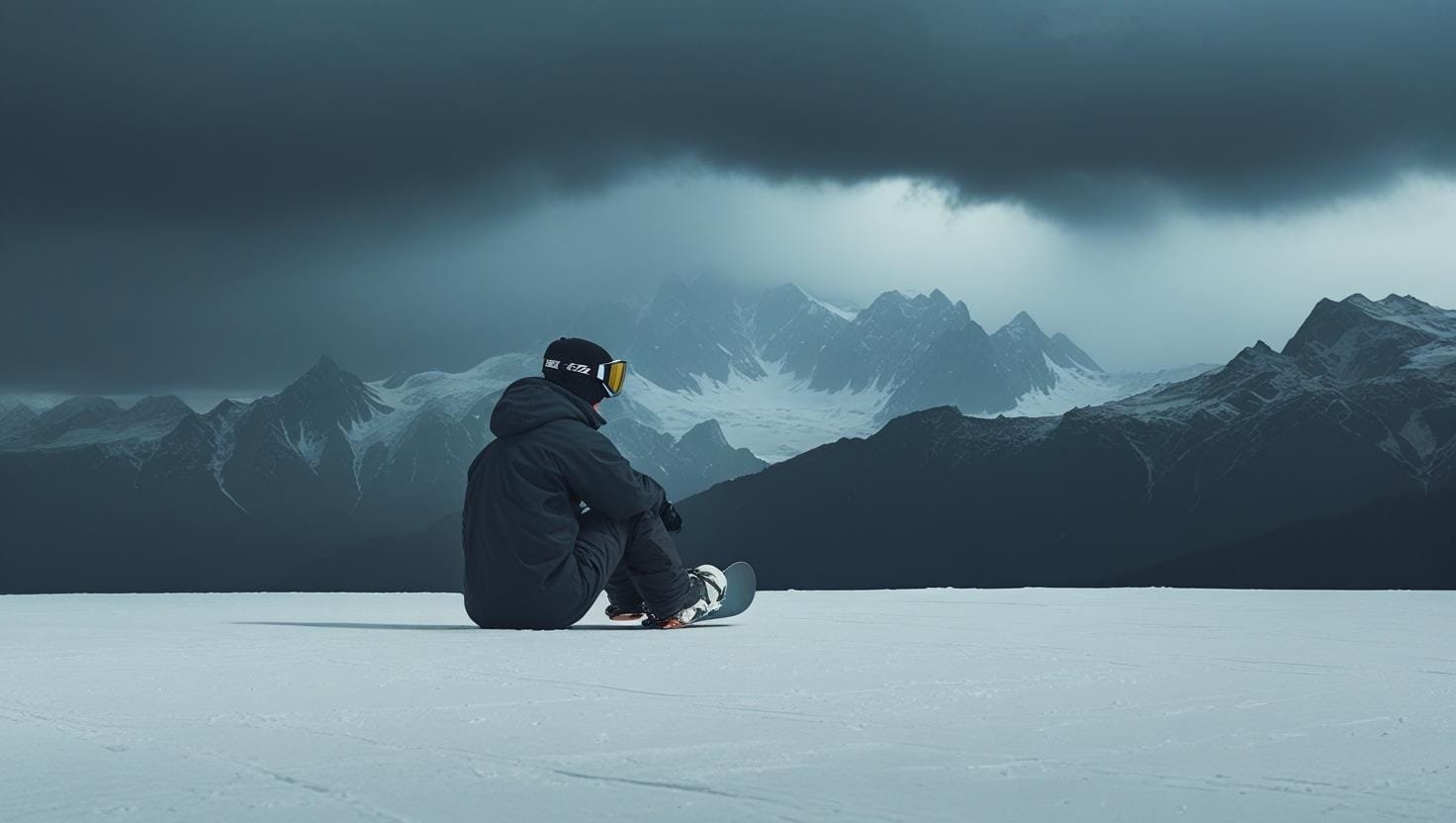
The Dangers of Snowboarding: Understanding the Risks & How to Stay Safe
Snowboarding is one of the most thrilling and rewarding sports on the planet, offering an incredible sense of freedom on the mountain. But like any action sport, that thrill comes with inherent risks. Understanding why snowboarding is dangerous is the first, most crucial step towards injury prevention and ensuring you can enjoy a long, healthy riding career. Whether you’re choosing your first snowboard or lapping the park for the tenth season, this guide covers every risk factor you need to know.
How Dangerous Is Snowboarding, Really? A Look at the Numbers
Before diving into the specific mechanisms of injury, it helps to understand how snowboarding’s overall risk profile compares to other winter sports and to everyday activities. Long-term clinic data spanning multiple decades has found that snowboarders fracture their wrists at a rate roughly eighteen times higher than skiers, a gap driven almost entirely by the fact that a snowboarder’s hands are free while their feet are locked to a single plank. That single biomechanical difference explains much of why snowboarding has earned its reputation as a “wrist sport” in orthopedic circles, while skiing is more often associated with knee trauma.
At the same time, broader injury-location data complicates the simple “snowboarding equals wrist injuries” narrative. A recent multi-study review of snowboarding injury patterns found that the knee is actually the single most frequent injury site among snowboarders, ahead of the shoulder and clavicle, with the head and face close behind. This matters because many beginner riders assume that wearing wrist guards alone solves their risk exposure, when in reality a comprehensive approach to conditioning, technique, and protective gear needs to account for the knees, shoulders, and head as much as the wrists.
Age and experience also shape the risk curve in ways that aren’t always intuitive. Hospital-based research from European trauma centers tracking ski and snowboard injuries has found that patients who sustained fractures tended to be meaningfully older, on average, than those with soft-tissue injuries like sprains, suggesting that bone density and recovery capacity play a larger role than raw athleticism once a fall happens. Meanwhile, the same research found that the majority of injuries occurred not on advanced black-diamond runs but on intermediate “red” or moderate-difficulty terrain, where riders often push their speed beyond their actual skill level while feeling falsely confident.
The Primary Dangers of Snowboarding
Most injuries in snowboarding stem from a few key scenarios. While the sport has become significantly safer over the last two decades thanks to better gear and improved trail maintenance, the physics of a body moving at 30mph over frozen water remain unforgiving. To ride safely, you must respect the biomechanics of impact and the unpredictability of the alpine environment.
1. Falling Injuries: Wrists, Shoulders, and Tailbones
Because both feet are strapped to the board, you cannot “step out” of a fall like a skier might. This forces your body to absorb kinetic energy in concentrated zones. Research shows that upper-extremity injuries account for nearly 50% of all snowboard-related hospital visits. The most common snowboarding injury is a distal radius fracture, typically caused by the “FOOSH” mechanism (Fall On an Outstretched Hand). When a rider loses balance, the human instinct to extend the hands is nearly impossible to override without training.
Beyond the wrists, the shoulders are highly vulnerable. A fall onto the side can cause an AC joint separation or a full glenohumeral dislocation. For beginners, the tailbone (coccyx) is the most targeted area. Because learners spend a significant amount of time catching a heelside edge, they tend to drop vertically onto the ice. Without impact shorts, a fractured tailbone can lead to months of chronic pain and limited mobility. To mitigate this, riders must learn the “Safety Roll” technique, where you tuck your chin and use your forearms and torso to spread the impact force over a larger surface area rather than a single joint.
A Closer Look: “Skier’s Thumb” and the Ulnar Collateral Ligament
One injury that rarely gets attention outside of orthopedic literature is damage to the ulnar collateral ligament (UCL) of the thumb, colloquially known as “skier’s thumb” even though it affects snowboarders too. This happens when a rider falls while still gripping a ski pole strap or, in a snowboarder’s case, jams a thumb awkwardly into the snow or against a binding during a fall. A multi-season study of distal upper-limb injuries at a high-volume European trauma center found that nearly half of all patients with forearm-to-finger injuries sustained an actual fracture, while a substantial minority presented with isolated UCL lesions rather than broken bone. The takeaway is that “just a sprained thumb” should never be dismissed; an untreated UCL tear can destabilize the thumb permanently and require surgical repair months after the original fall if it isn’t evaluated promptly.
Knee Injuries: The Most Underrated Snowboarding Risk
While wrist fractures get most of the headlines, broader injury-location research consistently ranks the knee as the single most commonly injured body part among snowboarders overall, slightly ahead of the shoulder and clavicle region. Unlike skiers, snowboarders don’t typically tear their ACL from a twisting fall the same way, since both feet move together on a single board rather than independently. Instead, snowboarder knee injuries more often result from awkward landings after jumps, hyperextension during a toeside catch, or repetitive impact loading on hardpack and groomed runs. Because many riders associate snowboarding almost exclusively with wrist and head risk, knee-specific conditioning and landing mechanics are frequently neglected in beginner instruction — a genuine gap in how most riders are taught to protect themselves. Our fall safety guide covers the body mechanics that reduce knee stress during both falls and normal riding.
2. Catching an Edge
This is the most infamous and violent type of fall for a snowboarder. Technically known as a “centrifugal whip,” it happens when your downhill edge digs into the snow while you are moving in the opposite direction. This causes the board to act as a fulcrum, and your body acts as the lever. The resulting slam happens so fast that most riders don’t even have time to react. A heelside edge catch—where the board flips you backward—is particularly dangerous because it risks a direct impact of the occipital lobe against the snow, often resulting in severe concussions or whiplash.
A toeside edge catch, conversely, slams the rider face-first into the slope. This frequently results in facial lacerations, broken noses, and fractured collarbones (clavicles). The clavicle is designed to break to protect the neck and chest, but it is a grueling injury for a rider to recover from. In 2026, many modern board designs utilize “3D Base” technology or “uplifted edges” to reduce the frequency of these catches, but the danger remains present for any rider who fails to maintain proper edge pressure and weight distribution. Understanding your board’s sidecut and effective edge length is vital for preventing these high-velocity slams. For a deeper understanding of how board design affects edge-catching behavior, our snowboard comparison guide breaks down the specifications that matter most.
Why Beginners Catch Edges More Than Anyone Else
Edge catches are not evenly distributed across skill levels. Beginners catch edges far more frequently than intermediate or advanced riders for a simple reason: they have not yet internalized the forward-weighted stance that steering a snowboard correctly requires. Instructional resources consistently flag “leaning back” as one of the most common technical errors among new riders, since the natural instinct when nervous is to shift weight toward the back foot and crouch low, which actually increases the odds of catching the uphill edge. Correcting this requires deliberate, repeated practice of shifting weight onto the front foot when initiating a turn, which feels counterintuitive at first but becomes automatic with mileage. Ill-fitting boots and over-tightened bindings compound the problem; if a rider has to cinch boots or bindings uncomfortably tight just to feel “locked in,” that is usually a sign the gear is the wrong size rather than a sign of proper fit. Our guide to snowboard boot fitting covers the fit principles that prevent the most common equipment-related edge catches.
3. Collisions with Obstacles & People
A snowboarder is effectively a high-velocity projectile. At a speed of just 20 mph, a 180-pound rider carries enough kinetic energy to cause a fatal collision. The most dangerous aspect of mountain riding is the uncontrolled nature of the slopes. Stationary objects such as lift towers, snowmaking hydrants, and trees do not move; they absorb 100% of your impact energy. Collisions with trees, in particular, are responsible for the majority of fatalities in organized resort settings. These impacts often involve massive internal trauma and head injuries that even the best helmets cannot fully mitigate.
The danger is compounded by “Blind Spots.” Because snowboarders ride in a sideways stance, they have a natural “blind side” (their back). This creates a high risk of collisions during heelside turns if the rider does not actively scan uphill. Furthermore, the varying speeds between skiers and snowboarders can cause “Merging Chaos” at trail junctions. To stay safe, you must treat the mountain like a highway: check your mirrors (uphill), signal your turns with predictable body language, and never stop in a blind spot underneath a roller or jump landing. Defensive riding is the only way to survive a crowded weekend on the slopes.
The Skier’s Responsibility Code, In Practice
Most resorts post some version of the Skier’s Responsibility Code at the base of every lift, but few riders actually internalize what it means in real-world terms. The code is built around a handful of simple priority rules: people downhill of you always have the right of way, since they cannot see you coming; you are responsible for avoiding anyone ahead of or below you on the slope; and you must never stop in a location where you are not visible from above, including directly below a roller, a jump landing, or a blind corner. National safety organizations that track winter sports injuries consistently point to excess speed, loss of control, and collisions with stationary objects like trees and lift towers as the leading factors associated with skiing and snowboarding fatalities. Treating these rules as optional “suggestions” rather than hard constraints is one of the most common — and most preventable — contributors to serious mountain accidents.
4. Off-Piste Dangers: Tree Wells & Avalanches
The allure of deep, untouched powder can lead riders into more dangerous terrain. Tree wells are perhaps the most underestimated killer in the mountains. Around the base of large evergreens, the low-hanging branches prevent snow from consolidating. This creates a hidden hollow of air and loose “sugar snow.” If a rider falls head-first into this well, they become trapped as the snow collapses around them. This leads to Snow Immersion Suffocation (SIS). Statistically, you have a very low chance of self-rescue once fully immersed in a tree well; your only hope is a partner who can dig you out within minutes.
[Image showing the cross-section of a tree well and the danger of snow immersion suffocation]Avalanches represent the pinnacle of mountain danger. While most resort trails are mitigated by ski patrol, anything “beyond the ropes” is a wild environment. Avalanches move at speeds up to 80 mph and can exert forces that snap trees like matchsticks. For a snowboarder, the board acts as an anchor in an avalanche, pulling you deeper into the snowpack. Survival requires not only a beacon, shovel, and probe but also the extensive knowledge of snowpack science (heuristic traps, weak layers, and slope angles). Never venture off-piste without an AIARE (American Institute for Avalanche Research and Education) certification.
Backcountry, Freeride, and Splitboarding: Know the Difference
Not all off-piste riding carries the same risk profile, and understanding the terminology helps riders make informed decisions about where their skill and training actually apply. Freeride snowboarding refers to riding natural, ungroomed terrain — think powder bowls and tree-lined glades — that is still typically within a resort’s patrolled boundary. Backcountry snowboarding, by contrast, means traveling into unpatrolled, unmaintained terrain entirely outside resort boundaries, where there is no avalanche mitigation, no ski patrol response, and no guarantee of cell signal. Many backcountry riders use a splitboard, a snowboard that separates into two ski-like halves for the uphill climb using climbing skins, then reassembles into a normal board for the descent. The critical safety point is this: backcountry and splitboard travel without avalanche-specific training is meaningfully more dangerous than resort riding of any kind, because the terrain offers zero margin for error and rescue times can stretch into hours rather than minutes.
What an Avalanche Certification Actually Teaches
An AIARE Level 1 course (or equivalent international certification) is not a one-and-done credential — it is the foundation of an ongoing decision-making framework. These courses typically combine classroom instruction with hands-on field days, teaching riders how to interpret regional avalanche forecasts, recognize unstable snowpack layers, choose safer travel routes through avalanche terrain, and perform a companion rescue using a beacon, probe, and shovel under real time pressure. Crucially, the training also addresses “heuristic traps” — the psychological shortcuts that cause experienced riders to make poor decisions, such as the pull of fresh tracks, social pressure within a group, or familiarity with a slope that has been safe a hundred times before but isn’t safe today. No piece of gear substitutes for this judgment; a beacon only helps your partners find you after a slide has already happened.
Beyond Avalanches: Navigation, Weather, and Emergency Preparedness
Avalanches dominate the backcountry safety conversation, but they are not the only life-threatening hazard riders face once they leave resort boundaries. Navigation errors — losing the trail, misjudging the location of a ridgeline, or descending into a drainage that terminates in cliffs — are a surprisingly common cause of backcountry emergencies, and they can strand a rider in terrain they cannot escape from without assistance. Carrying a physical topographic map and compass (not just a phone GPS, which can lose signal or battery in cold conditions) and knowing how to use them is a basic backcountry skill that many riders skip because it feels outdated; it becomes genuinely critical when electronic navigation fails at the worst possible moment.
Weather changes in the backcountry can transform a manageable ride into a survival situation with startling speed. A clear morning can deteriorate into a whiteout blizzard within an hour in many mountain environments, reducing visibility to near zero and making it impossible to distinguish sky from snow. Hypothermia becomes a genuine threat when wind chill drops temperatures well below freezing and a rider is exposed without adequate shelter. Lightning is another underappreciated backcountry danger; mountain ridgelines are the worst possible place to be during an electrical storm, and a rider caught above treeline during lightning activity faces a serious risk of strike injury. Checking the weather forecast before departure, carrying emergency shelter (a lightweight bivy sack or space blanket), and having the judgment to turn around when conditions deteriorate are the habits that separate riders who come home safely from those who require rescue.
Self-rescue and first-aid knowledge rounds out the backcountry safety picture. In the absence of ski patrol, riders must be prepared to manage their own injuries — or their partner’s injuries — until external help arrives. A compact first-aid kit, a basic knowledge of splinting, wound management, and hypothermia treatment, and a satellite communication device (like a Garmin inReach) for summoning help when cell signal is unavailable are the baseline preparations that transform a backcountry trip from a gamble into a managed risk. For riders considering their first backcountry experiences, our stance setup guide covers the equipment adjustments that make splitboard travel more efficient, reducing fatigue-related risk during the uphill climb.
5. Gear-Related Risk: The Mistakes Most Riders Don’t Realize They’re Making
A significant share of preventable snowboarding injuries trace back not to the mountain itself, but to equipment that doesn’t fit, isn’t suited to the rider’s ability level, or wasn’t properly inspected before the session. Unlike the dramatic, highly visible dangers of avalanches or tree collisions, gear-related risk is quiet and cumulative — it shows up as a binding that releases unexpectedly, a boot that’s too loose to transmit steering pressure, or an edge so dull it “washes out” the moment the snow turns icy.
Board, Boot, and Binding Fit
Choosing a snowboard that doesn’t match a rider’s weight, height, and skill level is one of the most common and avoidable mistakes in the sport. A board that is too stiff and aggressive for a beginner punishes every small mistake instead of forgiving it, while a board that is too soft and short for an advanced or heavier rider becomes unstable at speed. Equally important is boot fit: boots that are too large — often chosen because they feel more comfortable in the rental line — fail to transmit the precise pressure a rider needs to control the board, leading directly to the kind of edge catches and loss-of-control falls described earlier in this guide. Bindings should hold the boot securely without requiring painful over-tightening; if a rider needs to crank straps down hard just to feel “locked in,” that is a sign the boot or binding size is wrong, not that the straps need to be tighter. For riders with wider feet, our wide-foot boot guide covers the specific models and fit strategies that prevent the most common fit-related control problems.
Clothing and Layering Mistakes
Cold-weather clothing failures don’t just cause discomfort — they cause genuine safety problems. Cotton clothing, including ordinary jeans, absorbs moisture and loses virtually all of its insulating capacity once wet, which can accelerate hypothermia risk during a long day on the mountain, especially after a fall into deep or wet snow. The safer approach is a three-layer system: a moisture-wicking synthetic or merino wool base layer, an insulating mid-layer, and a waterproof, breathable shell on top. Riders who skip this system in favor of “whatever winter coat is in the closet” frequently find themselves cold, wet, and fatigued by early afternoon — and fatigue itself is a well-documented contributor to loss-of-control injuries, since tired muscles react more slowly to the small balance corrections that prevent a fall from becoming a crash. Our sock guide covers the base-layer principles that keep your feet warm and dry without restricting the circulation your toes need to stay frostbite-free.
Pre-Session Equipment Checks
Before clipping into bindings for the first run of the day, a quick equipment check takes less than two minutes and meaningfully reduces risk. This includes confirming that binding screws are snug (a loose binding can release unexpectedly at speed), that edges are free of burrs or nicks that could catch unpredictably, and that the base of the board has no major gouges that would affect glide and control on icy patches. Rental equipment in particular should be inspected before leaving the rental counter, since high-turnover gear sees heavy wear between tune-ups. For riders investing in their own setup, our binding comparison guide covers the durability and maintenance characteristics that affect long-term equipment safety.
6. Terrain Park Hazards: Rails, Jumps, and the Culture of Progression
Terrain parks are where snowboarding’s culture of progression — the drive to learn bigger tricks, higher jumps, and more technical rail features — intersects most directly with physical risk. The park environment is fundamentally different from open mountain riding: features are engineered, speed is deliberate, and the consequences of a mistake are amplified by the hard surfaces (metal rails, hard-packed landings, concrete-edged boxes) that define the terrain. Understanding the specific risk profile of park riding — and the behavioral habits that mitigate it — is essential for any rider who spends time in the features.
Jump injuries are the highest-consequence park risk, and they follow a predictable pattern related to speed, technique, and feature assessment. The most dangerous scenario is an undershot jump — approaching with insufficient speed and landing on the flat “knuckle” rather than the sloped landing zone. The flat landing transmits impact force straight up through the legs and spine rather than being dissipated by the landing transition, creating a high risk of compression fractures in the lumbar spine, ACL tears, and severe ankle injuries. The second most dangerous scenario is over-rotating or under-rotating a spin, which results in landing sideways or backwards with the board perpendicular to the direction of travel — a scenario that frequently produces knee and shoulder injuries. The mitigation strategy is straightforward but requires discipline: start on the smallest jump in the park and progress only when you can land every attempt cleanly and consistently; never hit a feature for the first time without first “speed-checking” it by riding past it to assess the approach, lip angle, and landing zone; and always look for the “spotter” — other riders waiting near the feature who can confirm the landing zone is clear.
Rail and box injuries have their own distinct risk profile, centered on the hard metal and plastic surfaces that define these features. The most common rail injury is the “sack” — catching the inside edge of the board on the rail and being thrown forward onto the rail itself, producing groin, hip, and abdominal injuries that range from painful bruising to internal organ damage in severe cases. Wrist and shoulder injuries are also common when riders catch a hand on the rail during a slide. The key to rail safety is technique: approaching with the board perpendicular to the rail (rather than at an angle), keeping the weight centered over the board rather than leaning back, and maintaining enough speed to slide the full length of the feature rather than stalling midway. Riders who are new to rails should start on the lowest, widest features and progress only when they can slide cleanly and dismount in control.
The culture of peer pressure in terrain parks deserves specific mention because it is a behavioral risk factor that no amount of protective equipment can address. The social dynamic of the park — where riders take turns, watch each other, and implicitly encourage progression — can push riders to attempt features they’re not ready for, simply because they don’t want to appear timid in front of their peers. This “sending it” mentality is celebrated in snowboard culture, and for experienced riders with the skills to back it up, it’s part of what makes park riding exciting. For less experienced riders, however, it can be the direct cause of a serious injury. The antidote is developing what experienced park riders call “honest progression” — the ability to accurately assess whether you have the skill to land a feature before you attempt it, regardless of social pressure. A rider who can say “I’m not ready for that yet” and mean it is safer than a rider who sends a feature they’ve never practiced because their friends are watching.
7. Weather Hazards: Whiteouts, Lightning, and Extreme Cold
The mountain environment is not a static backdrop for snowboarding — it is a dynamic, sometimes hostile system that can change from benign to dangerous in minutes. Understanding weather-related hazards and knowing how to respond to deteriorating conditions is a safety skill that separates riders who enjoy long, uneventful seasons from those who learn the hard way that weather doesn’t care about your plans.
Whiteout conditions — where flat light, fog, or blowing snow eliminate contrast and depth perception — are the most common weather-related hazard on the mountain, and they are particularly dangerous for snowboarders specifically. Because the snowboard stance limits your peripheral vision compared to skiing, and because edge control depends on visual feedback as much as tactile feedback, a snowboarder in a whiteout is operating with degraded senses in both the visual and balance domains simultaneously. The safest response to a whiteout is to slow down dramatically, ride near the tree line where darker tree trunks provide visual reference points, and if visibility drops to the point where you cannot see the trail ahead, stop and wait for conditions to improve rather than continuing blind. Many serious injuries happen when riders push through whiteout conditions on unfamiliar terrain and意外ly encounter a steep drop, a cliff, or an obstacle they couldn’t see.
Lightning is a low-probability but extremely high-consequence weather hazard. Mountain peaks and exposed ridgelines are natural lightning attractors, and a snowboarder standing at the top of a high-alpine run during a thunderstorm is one of the tallest objects in the immediate area. The standard safety guidance is simple: if you hear thunder, you are close enough to be struck by lightning, and you should descend below treeline immediately. Do not shelter under the tallest tree in the area; instead, seek a group of shorter trees at a lower elevation. If you are caught in the open with no trees for shelter, crouch low with your feet together and your head tucked, minimizing your contact with the ground. Lightning injuries in snowboarding are rare, but they are almost always severe when they occur, and the prevention — monitoring weather and descending before the storm arrives — is straightforward.
Extreme cold and frostbite are the slowest-developing weather hazards, which is precisely what makes them dangerous: a rider can be developing frostbite on exposed skin (fingers, nose, cheeks, ears) without feeling pain until the damage is already done, because cold nerve endings become less sensitive as temperature drops. The risk increases with wind chill, altitude, and the duration of exposure. Protective measures include covering all exposed skin with a balaclava or neck gaiter, wearing mittens or gloves rated for the expected temperature, and recognizing the early signs of frostbite — white or grayish skin, numbness, and a waxy appearance — as signals to get indoors immediately. The “rewarming” process for frostbitten tissue is painful and slow, and severe frostbite can result in permanent tissue loss. Prevention through proper layering and coverage is always better than treatment after the fact.
Snowboarding vs. Skiing: Which Sport Carries More Risk?
One of the most frequently asked questions among new winter sports enthusiasts is whether snowboarding is genuinely more dangerous than skiing, or whether that reputation is overstated. The honest answer is that it depends heavily on which kind of risk you’re measuring. Overall injury frequency tends to run higher for snowboarders, largely driven by the dramatically elevated wrist fracture rate discussed earlier in this guide. However, skiers face their own distinct risk profile: because skis allow each leg to move somewhat independently, skiing falls more often generate twisting forces on the knee, leading to a higher rate of severe ligament injuries such as ACL and MCL tears. Skiers also tend to reach higher top speeds on groomed terrain, which is part of why ski-related fatalities involving high-speed collisions are reported at a higher rate than snowboarding fatalities in some safety council data, even though snowboarders are injured more frequently overall.
| Risk Factor | Snowboarding | Skiing |
|---|---|---|
| Most common injury site | Wrist, knee, and shoulder/clavicle | Knee (ACL/MCL), lower leg |
| Typical fall mechanism | FOOSH (fall on outstretched hand), edge catch | Twisting fall, ski not releasing |
| Beginner injury pattern | Frequent, often less severe (sprains, fractures) | Less frequent, can be more severe (ligament tears) |
| Step-out option during a fall | Not possible — both feet locked to one board | Skis can sometimes release independently |
| Top-end speed potential | Generally lower on groomed terrain | Generally higher on groomed terrain |
| Powder safety | Higher float reduces submersion risk | Tips can sink, increasing face-plant risk |
| Collision blind spots | Larger — sideways stance creates natural blind side | Smaller — forward-facing stance has wider forward视野 |
The comparison is further complicated by experience level. Beginner snowboarders fall far more frequently than beginner skiers — a well-known and well-documented pattern — but the severity per fall tends to be lower, because beginner snowboarding falls usually happen at low speed on gentle terrain. Beginner skiers fall less often, but when they do fall on steeper terrain or at higher speed, the resulting knee and ligament injuries can be more severe and require longer recovery. For experienced riders of either sport, the injury profiles converge significantly: advanced snowboarders and advanced skiers both experience fewer falls overall, but the consequences of a fall at high speed on challenging terrain can be severe regardless of which equipment is on your feet.
The Overlooked Risk Factors: Sun, Hydration, and Fatigue
Not every snowboarding danger involves a dramatic fall or collision. Some of the most common contributing factors to mountain injuries are slow-building and easy to dismiss until they cause a problem.
UV Exposure, Snow Blindness, and Goggles
Sun exposure at altitude is far more intense than most riders assume, since UV radiation increases with elevation and reflects off snow and ice at a rate that can approach 80 percent reflectivity. This combination puts riders at meaningful risk of both sunburn and a painful corneal condition called snow blindness, which occurs when ultraviolet light reflecting off bright snow damages the surface of the eye — a risk that persists even under cloud cover. Proper snow goggles that block 100 percent of UV rays are the standard recommendation, since they offer better coverage of the surrounding skin and better protection from wind, falling snow, and tree branches than ordinary sunglasses. Riders should also apply SPF 30 or higher sunscreen and lip balm before heading out, reapplying after a few hours on the mountain.
Hydration and Fatigue
Cold weather suppresses the normal thirst response, which means many riders become dehydrated on the mountain without ever feeling thirsty. Dehydration compounds fatigue, and fatigue is one of the most consistently cited contributing factors in snow-sport injuries because it slows reaction time exactly when split-second balance corrections matter most. Pediatric and adolescent safety guidance specifically recommends staying hydrated before, during, and after a riding session, taking regular breaks, and stopping for the day once genuine fatigue sets in rather than pushing through “just one more run.” A rider who feels pain or experiences any kind of injury, however minor, should stop riding and be evaluated by a doctor, athletic trainer, or ski patrol professional before returning to the slope — riding through pain is one of the more common ways a minor strain becomes a season-ending injury.
Lessons and Skill Progression
A disproportionate share of snowboarding injuries happen to self-taught beginners who skip formal instruction. Certified instruction through organizations such as the Professional Ski Instructors of America–American Association of Snowboard Instructors (PSIA-AASI) teaches the controlled-fall techniques, edge control, and stance fundamentals that take much longer to learn through trial and error — and trial and error on a snowboard tends to mean a lot of falls before the lesson sticks. Progressing gradually from beginner-friendly green runs to intermediate blue runs before attempting advanced black-diamond terrain isn’t just a suggestion for building confidence; injury data consistently shows that riders who push beyond their skill level onto terrain they can’t yet control are disproportionately represented in emergency room visits. Even experienced riders benefit from an occasional refresher lesson, particularly after a long layoff or when adapting to new terrain like backcountry or terrain park features. If you’re considering whether professional instruction is worth the investment, our guide to whether snowboard lessons are worth it makes the case that the upfront cost consistently pays for itself in faster progression and fewer injuries.
The Psychology of Risk: Overconfidence, Peer Pressure, and the “Last Run” Syndrome
The most dangerous moments on the mountain often have nothing to do with terrain difficulty or weather conditions — they happen inside the rider’s head. Understanding the psychological factors that lead to poor decision-making on the slopes is as important as understanding the physical hazards, because the best protective gear and the most advanced safety training can’t prevent an injury that results from a choice the rider made against their own better judgment.
Overconfidence is the most pervasive psychological risk factor in snowboarding, and it follows a predictable arc. After a few successful days on the mountain, riders begin to feel a sense of mastery that outpaces their actual skill development. This “beginner’s confidence” peak typically occurs around days 5–10 of a rider’s first season, right after the initial learning curve has flattened and the rider starts linking turns consistently. The danger is that the rider begins to interpret “I can turn reliably on groomed blue runs” as “I can handle anything,” when in reality the gap between controlled groomed riding and the variable, unpredictable terrain of off-piste, park, or steep black-diamond runs is enormous. The antidote is deliberate humility: consciously remembering that each new terrain type, snow condition, and speed level represents a fresh learning curve, not an extension of the skills you already have.
Peer pressure takes many forms on the mountain, and not all of them are obvious. The most direct form is friends encouraging you to hit a jump or rail feature you’re not ready for, but subtler versions include the implicit competition of a group ride where everyone is pushing pace, the desire to keep up with better riders on terrain that exceeds your ability, or the reluctance to be the one who suggests turning back when conditions deteriorate. The social dynamics of snowboarding — where camaraderie and shared stoke are central to the experience — can make it difficult to advocate for your own safety in a group context. Experienced riders learn to distinguish between healthy encouragement (“You’ve got this, commit to the landing!”) and dangerous pressure (“Don’t be a wimp, everyone else is hitting it”). The ability to say “I’m not ready for that today” without feeling social shame is one of the most important safety skills a rider can develop.
“Last run” syndrome is perhaps the single most preventable cause of serious snowboarding injuries, and it deserves its own discussion because of how reliably it produces exactly the kind of injury it shouldn’t. The pattern is universal: it’s late in the day, legs are tired, visibility is fading, and someone in the group suggests “one more run.” Almost every rider has a story about their worst fall happening on the last run of the day, and the reasons are predictable: fatigue has degraded reaction time and balance; the temptation to take a more challenging or faster line on a familiar run creates unnecessary risk; the fading light reduces visibility; and the psychological desire to end the day on a high note creates pressure to push through conditions that would warrant caution earlier in the session. The best countermeasure is establishing a personal rule — “the last run is always a mellow, familiar blue” — and sticking to it regardless of what the rest of the group is doing. The day you break this rule is statistically likely to be the day you spend in the ski patrol shack or the emergency room instead of the après-ski lodge. For riders interested in the broader appeal of snowboarding, understanding these psychological risk factors is essential to enjoying the sport safely for decades rather than learning the hard way in season one.
High-Altitude Sickness and Its Impact on Injury Risk
Most snowboarding safety guides focus on the mechanical and environmental hazards of the sport itself, but there’s a physiological factor that many riders — especially those from low-elevation areas who travel to high-altitude resorts for vacation — don’t consider: altitude sickness and its effects on physical performance, judgment, and injury susceptibility. Understanding how altitude affects your body is not a medical curiosity; it’s a practical safety consideration that directly impacts your ability to ride safely at mountain resorts that sit above 8,000 feet.
Acute mountain sickness (AMS) affects a meaningful percentage of visitors to high-altitude resorts, particularly those who arrive from sea-level or low-elevation areas and attempt to ride at full intensity on their first day. Symptoms include headache, nausea, fatigue, dizziness, and difficulty sleeping — and every one of those symptoms directly increases injury risk on the mountain. A headache reduces your ability to focus on terrain and maintain spatial awareness; nausea and fatigue slow your reaction time; dizziness compromises your balance system; and poor sleep degrades the cognitive function you need to make good decisions about speed, terrain, and risk. The insidious aspect of AMS is that it doesn’t feel like “being sick” in the traditional sense — riders often attribute their symptoms to dehydration, jet lag, or unfamiliar boots, and they push through riding at full intensity when their body is actually telling them to rest and acclimatize.
The mitigation strategy is straightforward but requires discipline: spend at least 24 hours at altitude before riding at full intensity, stay aggressively hydrated (altitude accelerates dehydration through increased respiration rate), avoid alcohol on your first night at elevation, and ride conservatively on your first day regardless of how good you feel. Riders who are particularly susceptible to AMS — those with a history of altitude sickness, respiratory conditions, or cardiovascular issues — should consult a physician before traveling to high-altitude resorts and may benefit from prescription acetazolamide (Diamox), which helps the body acclimatize more quickly. The practical takeaway for safety planning is that your first day at a high-altitude resort is not the day to attempt your biggest jump, your steepest run, or your most ambitious backcountry line — it’s the day to let your body adjust while you ride conservatively on familiar terrain. For riders planning multi-day trips to high-altitude destinations, understanding the equipment specifications that affect comfort and control at altitude — particularly boot fit and mitten warmth — helps prevent the distraction of discomfort from compounding the physiological effects of elevation.
Speed Management: Understanding and Controlling Velocity
Speed is the factor that transforms a minor mistake into a major injury, and managing your speed is the single most impactful behavioral habit for long-term safety on the mountain. The physics are unforgiving: kinetic energy increases with the square of velocity, meaning that doubling your speed quadruples the energy your body absorbs in a collision. A fall at 10 mph is usually a bruise; a fall at 20 mph is frequently a fracture; a fall at 30 mph can be life-threatening. Understanding this relationship — and developing the discipline to ride at speeds appropriate for your skill level, the terrain, and the current conditions — is more important than any piece of protective equipment you can wear.
The challenge is that speed feels good. The rush of acceleration, the wind in your face, the blurred edges of your peripheral vision — these sensations are part of what makes snowboarding thrilling, and they create a powerful incentive to ride faster than your skill level safely supports. The most dangerous scenario is a rider who has developed enough skill to generate high speed on groomed runs but hasn’t yet developed the edge control, turning technique, and terrain-reading ability to manage that speed on variable terrain. This is the “intermediate danger zone” — riders who are skilled enough to be fast but not skilled enough to be safe at speed — and it’s where a disproportionate share of serious injuries occur. The solution is developing what instructors call “speed awareness”: the ability to honestly assess whether your current speed allows you to stop or turn within the visible terrain ahead of you. If you can’t, you’re going too fast for the conditions, regardless of how in-control you feel.
Speed check techniques are the practical tools for managing velocity, and they’re worth mastering early in your riding career. The most basic is the “hockey stop” — a quick, aggressive turn that uses the full edge of the board to create friction and decelerate. The more advanced technique is “speed checking through turns” — maintaining a series of controlled, medium-radius turns rather than pointing the board straight down the fall line, which naturally limits speed without requiring a full stop. Riders who develop the habit of riding in a straight line (“bombing”) for extended sections are significantly more likely to be involved in high-speed incidents, because straight-line riding eliminates the turning control that allows you to respond to unexpected terrain changes, other riders, or obstacles. For riders working on their turning technique, our turning fundamentals guide and stopping techniques guide cover the specific skills that give you the speed control you need to ride safely at any pace.
Essential Protective Gear: What You Actually Need
Given everything outlined above, a clear picture emerges of what meaningfully reduces snowboarding risk. The good news is that the most effective protective measures are also the most accessible — none of them require elite athleticism, just consistent use.
MIPS-Equipped Helmet
A properly fitted snow-sport-specific helmet with Multi-directional Impact Protection System (MIPS) technology allows a slight rotational slide on impact, helping redirect the rotational forces most associated with concussion. Always use a helmet designed specifically for snow sports rather than repurposing a bike or skate helmet, since impact engineering differs by activity. Our helmet guide covers the specific models and fit considerations that matter most.
Wrist Guards
Specifically engineered wrist guards with both palm and back-of-hand splints are one of the single most effective pieces of protective gear a beginner can wear, given how dominant the FOOSH mechanism is in snowboarding falls. They should fit snugly under or over glove liners without restricting wrist mobility for steering.
Impact Shorts and Knee Pads
Padded impact shorts protect the coccyx and hips from the repeated, low-grade bruising that can develop into painful bursitis over a season of falls, while knee pads add a layer of protection during park sessions and hard-pack falls without overly restricting flexion needed for turns.
UV-Blocking Goggles
Properly fitted goggles that block 100 percent of UV rays protect against both sunburn-related eye damage and the debris, wind, and branches that sunglasses don’t guard against. A snug fit with no gaps against the helmet and face is essential for full protection.
Properly Fitted Boots and Bindings
Boots that are snug without restricting circulation, paired with bindings adjusted to your boot size and riding style, are the foundation of board control. A board you can’t steer precisely is a board that catches edges more easily. Our wide-fit boot guide covers the sizing principles that prevent the most common fit-related safety issues.
Avalanche Safety Kit (Off-Piste Only)
For any backcountry or off-piste travel, a beacon, collapsible shovel, and probe are the minimum equipment — and they are only effective when paired with AIARE-certified training in how to use them under pressure.
How to Mitigate the Risks: Your Safety Masterclass
The good news is that nearly all of these dangers can be significantly reduced with the right knowledge, equipment, and attitude. In 2026, safety tech has advanced to the point where many common injuries are now entirely preventable with the right preparation.
Ride Smart, Stay Safe
- Wear a Multi-Impact MIPS Helmet. Your brain is irreplaceable. A quality, well-fitted helmet featuring MIPS (Multi-directional Impact Protection System) is non-negotiable. MIPS allows the helmet to slide slightly during an impact, redirecting rotational energy that would otherwise cause a concussion. It is the single most important piece of gear you own.
- The “Three-Point” Protection System. For beginners and park riders, the combination of wrist guards, impact shorts, and knee pads is a game-changer. Wrist guards reduce fracture rates by over 70%, while impact shorts protect the coccyx and hips from the repetitive bruising that leads to “Bursitis.”
- Master the Art of the “Controlled Fall.” Never fight a fall by reaching out with straight arms. Instead, “fall like a slinky.” Absorb the energy through your joints, tuck your chin to protect your neck, and roll onto your shoulder. This technical skill is just as important as learning to turn. See our fall safety guide for the specific body mechanics.
- Environmental Awareness and The Responsibility Code. Always look uphill before starting your run or merging. The rider below you has the right of way. Stay in control at all times; if you cannot stop or avoid an object in your path, you are riding too fast for your ability level.
- Tree Well Protocol: Ride with a Buddy. When riding glades or powder, keep your partner in sight at all times. Establish a “shout-and-respond” protocol. If you lose sight of your partner for more than 30 seconds, stop and wait. If you fall into a tree well, try to create an air pocket in front of your face and stay calm.
- Check Your Equipment Before Every Session. Ensure your bindings are tight and your edges are free of burrs. A loose binding screw can lead to an instant loss of control at high speeds, while a dull edge can cause “washing out” on icy patches.
- Invest in Proper Lessons. A certified PSIA-AASI instructor can teach correct falling technique, edge control, and stance fundamentals far faster — and more safely — than learning by trial and error. Even seasoned riders benefit from a refresher after time off the snow.
- Stay Hydrated and Know Your Limits. Cold weather blunts your thirst response, so drink water proactively rather than waiting to feel thirsty. Take breaks before fatigue sets in, and stop riding for the day at the first sign of pain or significant tiredness.
- Protect Your Eyes and Skin. Wear goggles that block 100% of UV rays, even on cloudy days, and apply SPF 30+ sunscreen and lip balm before heading out. Reapply sunscreen periodically during full-day sessions.
- Match Your Gear to Your Ability. Choose a board, boots, and bindings sized and flexed for your skill level and body type — not the flashiest option on the rack. A board that’s too advanced for your current ability punishes mistakes instead of forgiving them. Our snowboard comparison tool helps you match equipment to your riding level.
The Hidden Cost of an Injury: Why Prevention Pays Off
Beyond the physical pain and recovery time, snowboarding injuries carry a financial dimension that rarely factors into a rider’s decision-making in the moment but is worth understanding in advance. A wrist fracture or knee injury sustained on the mountain typically means an emergency room visit, imaging, possible orthopedic follow-up, and in more serious cases, surgery and physical therapy — costs that add up quickly even with insurance coverage, and can be substantial without it. Beyond the medical side, riders who venture off-piste and require a mountain rescue can face significant out-of-pocket fees in many jurisdictions, since search-and-rescue operations are resource-intensive and not always fully covered by standard travel or health insurance. Many backcountry-focused organizations and outdoor retailers now offer rescue insurance add-ons specifically because of this gap, and it is worth checking whether a personal policy actually covers mountain rescue before assuming it does. None of this is meant to discourage off-piste riding for properly trained and equipped riders — it is simply a reminder that the modest upfront cost of a properly fitted helmet, a lesson, or an avalanche course is consistently smaller than the downstream cost of the injuries those investments are designed to prevent.
What to Do If You’re Injured: Emergency Response on the Mountain
Even with every precaution, falls and injuries happen. Knowing how to respond — both as the injured rider and as a bystander — can meaningfully affect outcomes.
If you are injured and able to move, the first priority is getting out of the direct line of travel for other riders. If you cannot move safely, cross your board or skis in an X shape uphill of your position to create a visual warning for approaching skiers and snowboarders, then wait for help rather than attempting to self-rescue down the slope. If you witness another rider go down and appear injured, the same cross-skis-uphill technique should be your first move to protect them from a secondary collision. Do not attempt to move an injured person if there is any possibility of a neck or back injury; moving someone with a spinal injury can cause far more damage than leaving them in place until trained help arrives. Nearly every resort posts ski patrol emergency contact numbers on trail maps and at lift stations — locating that number before you start riding for the day, rather than searching for it in a moment of panic, is a small step that saves critical time.
Concussion symptoms deserve particular caution because they are not always obvious immediately after an impact. Dizziness, nausea, sensitivity to light, confusion, or a vague sense of “fog” are all warning signs that should end a riding session immediately, even if the symptoms feel mild. Because concussion effects are cumulative, a second head impact before the first concussion has fully healed carries a small but real risk of a rare and severe complication. When in doubt about a head injury, the safer choice is always to stop riding and seek evaluation rather than to “shake it off” and continue.
Rehabilitation and Recovery: Getting Back on the Mountain
For riders who do get injured, the path back to the mountain is its own challenge — and understanding the rehabilitation process helps set realistic expectations for recovery timelines and reduces the risk of re-injury during the return-to-riding phase. The most common snowboarding injuries — wrist fractures, shoulder dislocations, knee ligament sprains, and concussions — each have well-established rehabilitation protocols, and riders who follow those protocols consistently return to riding faster and with lower re-injury rates than those who rush back based on how they feel rather than what their body has actually healed.
Wrist fractures — the bread-and-butter snowboarding injury — typically require 6 to 8 weeks of immobilization in a cast or splint, followed by 4 to 8 weeks of physical therapy to restore range of motion and grip strength. The critical mistake riders make is returning to riding before grip strength has fully recovered, because a weakened wrist is dramatically more vulnerable to re-fracture during the next fall. A practical test: if you cannot squeeze a stress ball with the same force as your uninjured hand, your wrist is not ready for the demands of snowboarding. Riders who invest in wrist-specific rehabilitation exercises — wrist curls, reverse curls, grip strengtheners, and proprioceptive balance work — during the recovery period return to riding with significantly better wrist stability than those who simply wait for the cast to come off.
Shoulder injuries — particularly dislocations and AC joint separations — have a rehabilitation timeline that depends heavily on severity. A mild AC sprain may heal in 2 to 4 weeks with rest and progressive strengthening, while a full dislocation that requires surgical repair may take 4 to 6 months before a rider is cleared for full-contact riding. The key rehabilitation focus for shoulder injuries is rotator cuff strengthening and scapular stability, because these are the muscle groups that keep the shoulder joint centered and stable during the dynamic movements of snowboarding. Riders who return to riding without completing shoulder rehabilitation frequently develop chronic instability that leads to repeat dislocations — a pattern that becomes progressively harder to break with each episode.
Concussion recovery follows a graduated return-to-activity protocol that is non-negotiable for safe return to riding. The standard approach begins with complete cognitive and physical rest until symptoms resolve, followed by a stepwise increase in activity intensity: light aerobic exercise (walking), then sport-specific exercise (balancing on a board on flat ground), then non-contact riding on easy terrain, then full-contact riding. Each step requires 24 hours without symptom recurrence before advancing to the next. A rider who returns to full-intensity riding before completing this protocol is taking a genuine neurological risk, because the brain’s vulnerability to re-injury remains elevated for weeks after the initial concussion even after symptoms have resolved. Our stopping techniques guide covers the controlled, low-intensity riding skills that form the early stages of concussion rehabilitation riding.
Age-Specific Risk Factors: Teens, Young Adults, and Senior Riders
Risk is not distributed evenly across the age spectrum, and understanding how age affects both injury probability and recovery trajectory helps riders of every generation make informed decisions about terrain, intensity, and protective measures.
Teenagers and young adults (ages 13–25) represent the highest-risk demographic for snowboarding injuries, driven by a combination of factors: higher average speeds, greater willingness to attempt advanced terrain and features, stronger peer pressure to push limits, and — critically — an underdeveloped prefrontal cortex that governs risk assessment and impulse control. The neurobiological reality is that a 16-year-old rider’s brain is literally not yet equipped to accurately assess risk in the same way a 35-year-old rider’s brain can, which is why teen riders are disproportionately represented in terrain park injuries, high-speed collision incidents, and off-piste accidents. The practical implication is that teen riders benefit disproportionately from structured progression — certified lessons, buddy-system riding, and clear boundaries about terrain and features — even (especially) when they resist those structures as “uncool.” Our lesson guide covers why professional instruction is particularly valuable for this age group.
Adult riders (ages 25–50) generally have the best risk-to-reward ratio in snowboarding: sufficient physical capability to ride confidently, sufficient life experience to make good decisions, and enough self-awareness to recognize their limits. The primary risk factors in this age group are overconfidence (the “I’ve been riding for years, I know what I’m doing” mentality that can lead to complacency about gear maintenance, warm-up routines, and terrain assessment) and time pressure (riders with limited vacation days who try to maximize every minute on the mountain, pushing through fatigue and conditions they would have respected earlier in their riding career). The antidote is maintaining the same deliberate approach to safety that kept you alive during your learning years — checking equipment, warming up on easy runs, and respecting the mountain’s ability to humble even experienced riders.
Senior riders (ages 50+) face a genuinely different risk profile that requires adapted approaches. Bone density decreases with age, meaning the same fall that produces a bruise in a 25-year-old can produce a fracture in a 55-year-old. Reaction time slows, balance systems become less responsive, and recovery from injuries takes meaningfully longer. However, these physical realities don’t mean seniors should stop riding — they mean that seniors should ride with adjusted expectations and enhanced protective measures. “Volume-shifted” board designs that are wider and shorter reduce the effort required to initiate turns, decreasing joint stress. Softer-flexing boots and bindings improve comfort without sacrificing control at the moderate speeds that senior riders typically prefer. And the willingness to ride fewer runs per day — prioritizing quality over quantity — allows senior riders to enjoy the sport without accumulating the fatigue-related risk that comes from pushing through a full day when the body is asking to stop. Many of the most dedicated lifelong riders are in their 60s and 70s, and their longevity in the sport is a direct result of adapting their approach rather than fighting their changing bodies.
Insurance, Medical Preparation, and Mountain Rescue Costs
The financial safety net for snowboarding injuries is more complex than most riders assume, and understanding the gaps in coverage before you need it is an essential part of responsible mountain preparation.
Standard health insurance policies typically cover emergency room visits, imaging, and follow-up care for injuries sustained while snowboarding — but “typically” is doing significant work in that sentence, and the exceptions can be expensive. Many policies have higher deductibles or co-pays for “sports-related” injuries, and some international travel insurance policies explicitly exclude injuries sustained while participating in “hazardous activities,” which can include snowboarding depending on the policy language. Riders who travel to resorts outside their home country should verify their coverage before departure and consider purchasing supplemental travel medical insurance that explicitly covers snow sports. The cost of a supplemental policy — typically $30 to $80 for a week-long trip — is trivially small compared to the cost of an emergency medical evacuation from a foreign country, which can run into five or six figures without coverage.
Mountain rescue costs deserve their own discussion because they represent a financial risk that many riders don’t anticipate. In many jurisdictions — particularly in the United States — search-and-rescue operations are not免费, and riders who require helicopter evacuation from backcountry terrain can face bills ranging from $10,000 to $50,000 or more, depending on the complexity of the rescue and the distance involved. Some states and countries have enacted “recreational rescue” laws that shift the cost of rescue to the person who required it, specifically to discourage reckless behavior in backcountry terrain. The practical mitigation is to carry dedicated rescue insurance — offered by organizations like the American Alpine Club, Global Rescue, and several outdoor retailers — which covers the cost of mountain rescue operations for a modest annual premium. For riders who never leave resort boundaries, this is less critical (resort ski patrol rescue is typically included in the lift ticket price), but for anyone who ventures off-piste even occasionally, understanding the potential cost of a rescue is an important part of the risk calculus.
The Evolution of Snowboard Safety Technology
The good news buried within this comprehensive catalog of risks is that snowboarding has become dramatically safer over the past two decades, and the trajectory of safety technology suggests that the sport will continue to become less dangerous even as it grows in popularity and riders push the boundaries of what’s possible on a board.
Helmet technology has been the single most impactful safety advance in snowboarding history. The adoption rate of helmets among snowboarders has risen from roughly 25% in the early 2000s to over 80% at most resorts in 2026, and this shift alone has prevented thousands of serious head injuries. Modern snow-sport helmets incorporate MIPS (Multi-directional Impact Protection System), which allows the helmet shell to rotate slightly during angled impacts, reducing the rotational forces that are most closely associated with concussion. WaveCel, Koroyd, and other proprietary technologies offer similar rotational-energy management through different mechanical approaches. The result is that a modern helmet provides meaningfully better protection than a helmet from even ten years ago, and riders who are still using an older helmet are missing a significant safety improvement that’s available at a modest price.
Binding release technology — long a standard feature of ski equipment — is beginning to appear in snowboard-specific designs. Traditional snowboard bindings hold the boot fixed to the board with no release mechanism, which means that during a twisting fall, the entire rotational force is transmitted through the knee and ankle rather than being dissipated by a binding release. While fully released snowboard bindings remain niche, some manufacturers have introduced “progressive flex” bindings that are designed to allow controlled boot movement during extreme twisting forces, reducing peak torque on the knee without sacrificing the board control that fixed bindings provide. This technology is still evolving, but it represents a fundamental shift in how the industry thinks about the relationship between boot retention and injury prevention.
Base and edge technology has also contributed to safety improvements, particularly in the terrain park. Modern “3D base” designs — featuring convex or concave profiles that lift the edges slightly off the snow surface — reduce the frequency and severity of edge catches, which as we’ve discussed is one of the most violent and unpredictable fall mechanisms in snowboarding. Some park-specific boards incorporate “upturned” or “beveled” edges along the effective edge length, creating a smaller contact patch that’s less likely to dig into hard snow during flat-base riding. These design innovations don’t eliminate edge catches entirely — rider technique remains the primary determinant — but they raise the threshold of error required to trigger one, which translates directly to fewer injuries per rider per season.
Avalanche safety technology has undergone the most dramatic improvement of any safety category relevant to snowboarding. Modern avalanche transceivers are faster, more accurate, and more user-friendly than their predecessors, with digital signal processing that reduces false signals and search modes that can locate a buried subject in under 5 minutes under ideal conditions. Avalanche airbag backpacks — which deploy a large balloon that increases the rider’s volume and helps them stay on the surface of a moving slide — have become more affordable and lighter over the past decade, making them a realistic option for recreational backcountry riders rather than just professional guides. And smartphone apps that provide real-time avalanche forecasts, terrain mapping, and GPS navigation have democratized access to information that was previously available only to trained professionals. No technology replaces judgment and training, but the tools available to backcountry riders in 2026 are genuinely life-saving in ways that the technology of even a decade ago was not.
A Note for Parents: Snowboarding Safety for Kids and Teens
Younger riders present a slightly different risk and benefit calculation than adults. On one hand, children typically have less far to fall and often approach falls with less fear, which can actually translate into faster skill acquisition and, over time, fewer injuries per session than adult beginners. On the other hand, kids and teens are still developing the judgment needed to assess speed, terrain, and their own limits, which is exactly why instructor-led lessons and close parental involvement in gear selection matter even more for this age group. All of the core protective gear recommendations in this guide — a properly fitted snow-specific helmet, wrist guards, and UV-blocking goggles — apply equally, if not more urgently, to young riders, and should always be professionally fitted rather than handed down oversized from an older sibling. Establishing safety habits early, including the buddy system, looking uphill before merging, and stopping immediately after any fall that causes pain, tends to carry forward into a lifetime of safer riding.
Gear fit deserves special attention for growing riders, since a helmet, boot, or wrist guard that fit well last season may already be too small by the time the next one starts. A loose-fitting helmet is functionally far less protective than a snug one, because excess internal space allows the head to move inside the shell during an impact, partially defeating the purpose of the padding. The same logic applies to boots: a child wearing boots a size too large to “get another season out of them” loses the precise steering control that prevents edge catches, which compounds risk rather than saving money in any meaningful sense once an injury enters the picture. Many resorts and rental shops offer season-long gear swaps for growing kids specifically to address this, and taking advantage of that option is generally a better investment than stretching a single set of gear across multiple growth spurts.
Lesson structure also matters more for younger riders than adults often assume. Group lessons are a reasonable and cost-effective starting point for most kids, but a private lesson — even just for the first session — can be worth the additional cost for especially nervous or especially adventurous children, since a 1-on-1 instructor can calibrate pacing in real time rather than managing a group’s average comfort level. Look specifically for instructors certified through the Professional Ski Instructors of America–American Association of Snowboard Instructors (PSIA-AASI) credentialing system, which trains instructors in age-appropriate teaching progressions rather than simply applying adult instruction techniques to smaller bodies. Finally, parents should model the safety behaviors they want their kids to adopt: wearing a helmet themselves, looking uphill before merging, and stopping at the first sign of pain rather than pushing through it. Kids absorb these habits far more effectively by watching them than by being told about them.
Rental Gear, Tune-Ups, and Long-Term Equipment Maintenance
A meaningful share of riders — particularly beginners and occasional vacation skiers — use rental equipment rather than owning their own gear, and rental equipment introduces its own specific risk considerations worth understanding. Rental boards, boots, and bindings see far higher usage volume per season than personally owned gear, which means edges dull faster, base materials accumulate more scratches and gouges, and binding hardware loosens more frequently from repeated adjustment between different renters. Reputable rental shops tune and inspect equipment on a regular schedule, but it remains worthwhile for any renter to do a quick personal check before leaving the counter: flex the binding straps to confirm they hold firmly, run a finger lightly along the edge to feel for any obvious burrs or nicks, and ask the technician directly when the board was last waxed and the edges were last sharpened. None of this takes more than a minute or two, and it shifts a rider from passively trusting unknown equipment history to actively confirming the gear is in safe working condition.
For riders who own their own equipment, a basic maintenance routine extends both the lifespan of the gear and its safety margin. Edges should be checked for burrs after any rocky or low-snow-coverage session, since a single nick can catch unpredictably on firm snow and contribute to the kind of sudden edge-catch fall described earlier in this guide. Base wax should be reapplied periodically — beyond the cosmetic benefit of a faster glide, a well-waxed base actually responds more predictably underfoot, which matters when a rider is trying to make fine steering adjustments at speed. Binding hardware, including the screws that anchor the binding baseplate to the board, can work loose gradually over a season of riding and should be checked periodically with the appropriate tool rather than assumed to remain tight indefinitely. None of this maintenance is complicated or expensive, but skipping it entirely is one of the quieter ways equipment-related risk accumulates over a season without a rider necessarily noticing until something fails at an inconvenient moment.
Helmets deserve a maintenance note of their own, separate from boards and bindings, because their protective function degrades in ways that are not visually obvious. The expanded polystyrene (EPS) foam liner inside a snow-sport helmet is designed to crush and absorb energy during a single significant impact — which means that once it has done its job, it cannot do that job again, even if the outer shell looks undamaged. Riders who take a hard fall to the head should treat that helmet as compromised and replace it, regardless of whether cracks are visible from the outside. Even without any impact at all, the materials in a helmet degrade gradually from temperature cycling, UV exposure, and the natural breakdown of foam and adhesives over time, which is why most manufacturers recommend replacing a helmet on a multi-year cycle even for a rider who has never crashed hard enough to consciously notice an impact.
Frequently Asked Questions: Snowboarding Safety
1. Is snowboarding more dangerous than skiing?
Statistically, snowboarders have a higher overall injury rate, but skiers tend to have more “catastrophic” knee injuries (ACL/MCL) and higher fatality rates due to higher average speeds. Snowboarding injuries are more frequent but often involve the upper body rather than the legs.
2. Do wrist guards actually work?
Yes. Peer-reviewed medical studies show that snowboarders wearing wrist guards are significantly less likely to suffer a fracture. However, they must be the correct size and type (with palm and back-of-hand splints) to be effective.
3. How can I tell if I have a concussion?
Common signs include dizziness, nausea, light sensitivity, and “brain fog.” If you hit your head and feel any of these symptoms, even mildly, you must stop riding immediately. Concussions are cumulative; hitting your head a second time before the first one heals can be fatal (Second Impact Syndrome).
4. What should I do if I see an injured rider on the trail?
First, cross your skis or board uphill of the person to create a barrier and alert other riders. Do not move the injured person if you suspect a neck or back injury. Call the resort’s Ski Patrol emergency number immediately and stay with the rider until help arrives.
5. Can I snowboard with a GoPro? Is it dangerous?
A camera mounted on a helmet can potentially create a “leverage point” during a slide, increasing the risk of neck strain or helmet failure. Many experts recommend chest mounts or “breakaway” mounts for helmet cameras to reduce this risk.
6. Why is ice so much more dangerous than snow?
Ice has nearly zero friction, meaning your edges cannot “bite.” Once you lose balance on ice, you will accelerate as you slide. Impacts on ice are also much more likely to result in fractures because the surface does not compress or absorb energy.
7. Are “Step-In” bindings safe?
Modern Step-On systems (like Burton’s) are rigorously tested and are just as safe as traditional strap bindings. They actually reduce the risk of hand injuries since you don’t have to sit in the snow and fumble with straps in high-traffic areas.
8. Is night riding more dangerous?
Yes. Visibility is reduced, shadows are deceptive, and the temperature drop usually causes the snow to turn into hard-packed ice. Always use clear or low-light lenses for night riding to maximize depth perception.
9. What is a “Scorpion” fall?
A scorpion fall happens when you catch a toe edge and your heels fly over your head, potentially causing your board to strike the back of your own head or neck. It is a high-risk fall for spinal injuries.
10. How often should I replace my helmet?
After any significant impact, a helmet’s internal foam (EPS) is crushed and will not protect you a second time. Even without an impact, the materials degrade. Most manufacturers recommend replacing your helmet every 3 to 5 years.
11. What is “skier’s thumb” and can snowboarders get it?
Yes — despite the name, snowboarders can sustain this injury too. It refers to damage to the ulnar collateral ligament of the thumb, often from an awkward fall. Symptoms include pain, swelling, and instability at the base of the thumb. Because an untreated tear can cause lasting instability, any persistent thumb pain after a fall should be evaluated by a doctor rather than wrapped and ignored.
12. Why do my knees hurt more than my wrists after a day of riding?
This is more common than many riders expect. While wrist injuries dominate the “sudden fracture” category, broader injury surveys actually find the knee to be the single most frequently injured area in snowboarding overall, often from awkward jump landings or repetitive impact on hardpack rather than a single dramatic fall. Building basic leg strength and practicing soft, bent-knee landings can meaningfully reduce this kind of cumulative strain.
13. Do I really need a lesson if I’m “naturally athletic”?
General athleticism helps with balance and coordination, but it doesn’t teach the specific technical skills — like forward weight distribution through turns and the controlled-fall roll — that meaningfully reduce injury risk on a snowboard. Riders who skip lessons tend to take longer to unlearn bad habits, like leaning back, that directly increase the odds of catching an edge.
14. What’s the difference between freeride, freestyle, and backcountry snowboarding?
Freestyle riding focuses on tricks, jumps, and terrain park features. Freeride riding means seeking out natural, ungroomed terrain like powder and tree glades, typically still within resort boundaries. Backcountry riding means traveling into unpatrolled terrain entirely outside the resort, which requires avalanche-specific training and equipment that the other two styles don’t.
15. Can dehydration actually affect my snowboarding safety?
Yes. Cold weather suppresses your normal thirst signal, so it’s easy to become dehydrated without noticing. Dehydration accelerates fatigue, and fatigue slows the reaction time you rely on to correct small balance errors before they turn into falls — making hydration a genuine, if underrated, safety factor.
16. How does altitude affect my riding safety?
At elevations above 8,000 feet, reduced oxygen availability can cause acute mountain sickness (AMS), with symptoms including headache, nausea, fatigue, and dizziness — all of which directly increase injury risk. The safest approach is to spend 24 hours acclimatizing before riding at full intensity, stay hydrated, and ride conservatively on your first day at a high-altitude resort.
17. What should I do if I’m caught in a whiteout?
Slow down immediately, ride near the tree line where darker tree trunks provide visual reference points, and if visibility drops to the point where you can’t see the trail ahead, stop and wait for conditions to improve. Many serious injuries happen when riders push through whiteout conditions on unfamiliar terrain and unexpectedly encounter steep drops or obstacles they couldn’t see.
18. Is terrain park riding more dangerous than regular trail riding?
Terrain park injuries tend to be more severe per incident (due to harder surfaces and higher fall heights) but less frequent overall than trail-riding injuries. The key to park safety is honest progression: master each feature size before moving up, never hit a feature for the first time without speed-checking it, and resist peer pressure to attempt features you’re not ready for.
19. How do I know when to stop riding for the day?
Watch for these signals: your legs feel heavy and your turns become less precise; you’re making mistakes you wouldn’t make earlier in the day; the weather or light conditions have deteriorated; or you’re tempted to take “just one more run” on challenging terrain when you’re tired. The “last run” of the day statistically produces a disproportionate share of serious injuries — end on a mellow, familiar run while you still have the coordination to ride safely.
20. Does my health insurance cover snowboarding injuries?
Most standard health insurance policies cover emergency treatment for snowboarding injuries, but deductibles, co-pays, and coverage limits vary widely. International travel insurance policies may exclude “hazardous activities” including snowboarding, so verify coverage before traveling abroad. Riders who venture off-piste should also carry dedicated rescue insurance, since mountain rescue and helicopter evacuation can cost tens of thousands of dollars without coverage.
Conclusion: Ride Smart to Ride for a Lifetime
Snowboarding is an inherently dangerous activity, but it doesn’t have to be reckless. By understanding the risks, investing in proper safety gear, committing to learning the right techniques, and making smart decisions on the mountain, you can manage the dangers effectively. A smart rider is a safe rider, and a safe rider gets to enjoy this incredible sport for a lifetime. For more on how to build your snowboarding lifestyle safely and sustainably, explore our complete library of guides.
This article was updated for the 2026 season. Stay safe, respect the mountain, and look out for one another.


