
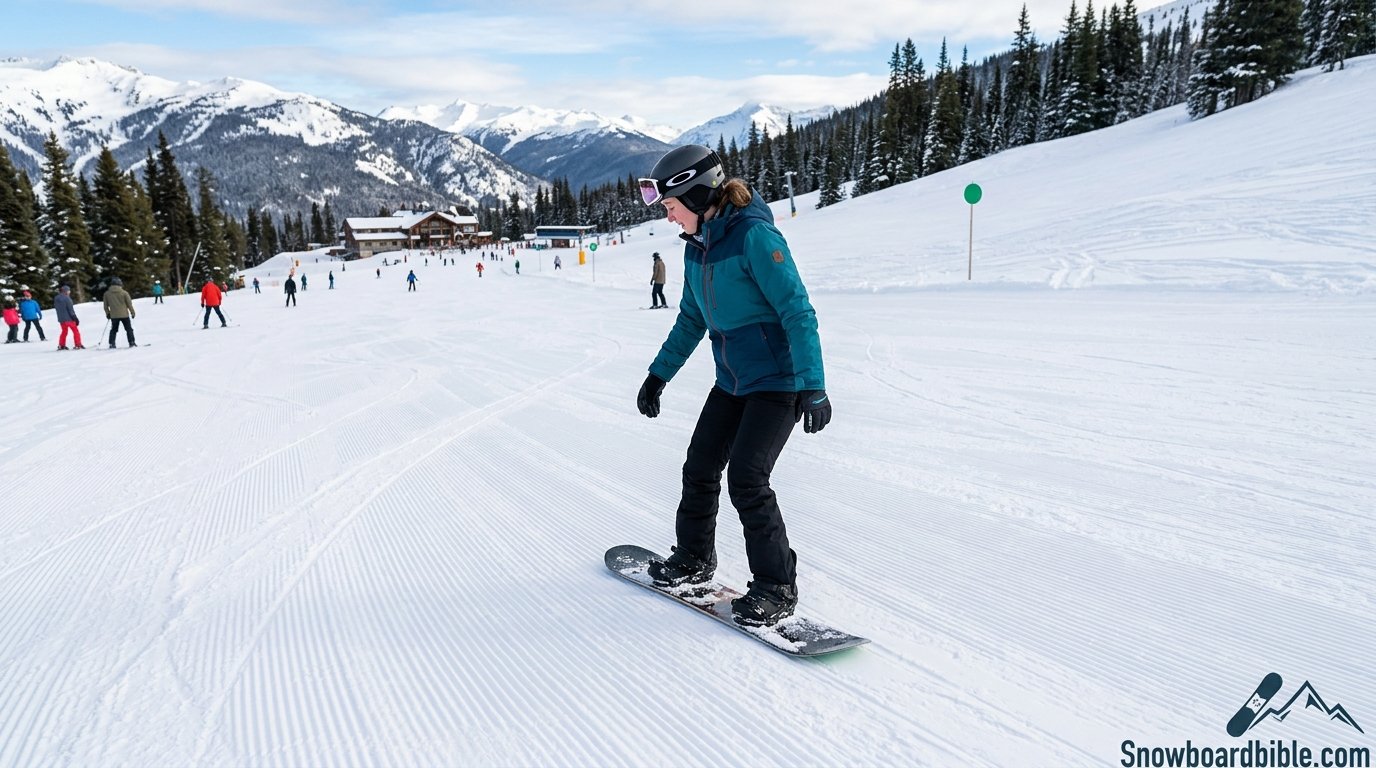
How Long Does It Take to Learn to Snowboard?
A realistic, week-by-week breakdown of the snowboarding learning curve — from your first fall to carving with confidence.
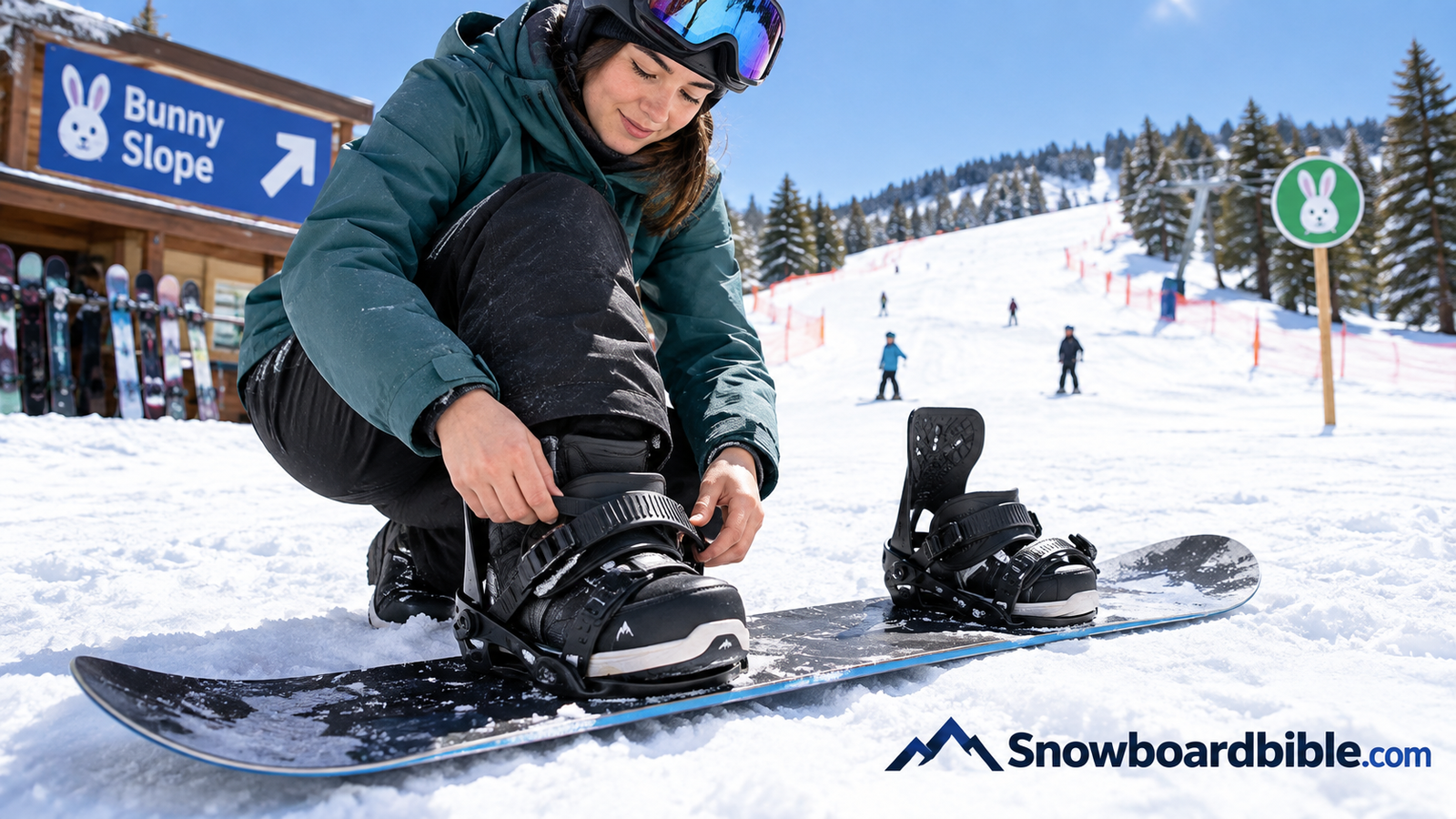
1. The Quick Answer: A Realistic Snowboarding Timeline
Snowboarding has a reputation for a brutal first day and a much friendlier second one, and that reputation is mostly earned. The learning curve is front-loaded: your body has to learn an entirely new relationship with balance, edges, and momentum before anything clicks. Once it clicks, though, progress tends to come in bigger jumps than it does in skiing, where early progress is smoother but the ceiling to “good” is higher.
Here is the timeline almost every rider without prior board-sport experience can expect, assuming they’re riding groomed, beginner-appropriate terrain and getting some form of instruction, even informal instruction from a friend:
These numbers assume a rider who gets on snow for full days, not just a couple of hours here and there. Someone who only snowboards once or twice a season will stretch every stage of this timeline out considerably, because the body’s balance memory fades between sessions faster than most people expect.
Part of why the first day feels disproportionately hard comes down to simple physics. Unlike skiing, where each foot moves independently and can catch a fall on its own, snowboarding locks both feet to a single platform. Any shift in weight, no matter how small, is transferred through the entire board at once, which means small mistakes get amplified rather than absorbed. Once your nervous system adapts to this — usually somewhere between hour three and hour six of actual riding — the same connected-platform design that made day one hard starts working in your favor, because a single, well-timed weight shift can control an entire turn instead of two separate legs needing to cooperate.
2. Day-by-Day: What Actually Happens Your First Time
If you’ve never strapped into a snowboard before, it helps to know exactly what the first few hours look like, mistake by mistake, so the frustration doesn’t catch you off guard.
The First 30 Minutes
Most beginners spend their first half hour just getting used to having one foot strapped to a board while the other is free. You’ll practice skating — pushing yourself along flat snow with your back foot out of the binding — and this alone can feel awkward. It’s normal to fall two or three times before you even reach the lift or the practice hill.
Hours 1–3: Falling Down and Standing Up
Once both feet are strapped in on a gentle slope, the real learning starts. You’ll fall on your heel edge, fall on your toe edge, and slowly figure out how to distribute weight between your front and back foot to glide in a straight line without tipping over. This is, statistically, the part of the day that causes the most sore muscles and the most frustration — and also the part that improves fastest once you understand the mechanics.
Hours 3–5: Your First Real Turns
By the afternoon of day one, most riders with any instruction manage a “J-turn” — starting across the slope on one edge and slowly turning downhill and back up onto the same edge to stop. This is the single biggest breakthrough of day one, because it proves you can control speed without sitting down.
Hours 5+: The First Lift Ride
For many beginners, the biggest psychological milestone of day one isn’t a turn — it’s riding an actual chairlift for the first time with a board strapped to one foot. Loading and unloading a lift while still building basic balance is intimidating, and a surprising number of first-day falls happen at the top of the lift rather than on the run itself. Most resorts run a dedicated beginner lift with a slower speed and a shorter, gentler unload ramp specifically for this reason, and it’s worth asking an instructor or lift attendant to point you toward it rather than guessing.
For a full rundown of what a structured first lesson typically covers, see our guide on beginner snowboarding tips.
3. Week One: What Progress Actually Looks Like
If day one is about surviving, week one is about building a repeatable skill set. Assuming you’re riding several days within that week — whether consecutively or spread across weekends — here’s the realistic arc:
- Days 1–2: Straight gliding, single J-turns, learning to stop on both edges without falling every time.
- Days 3–4: Linking heel-side and toe-side turns into a basic “S” pattern down the slope.
- Days 5–6: Riding an entire green run top to bottom with only occasional falls, and starting to control speed with turn shape instead of just falling to stop.
- Day 7: First attempts at easy blue runs, or at least the flatter sections of them, alongside continued green-run laps to build muscle memory.
The biggest variable in this week isn’t talent — it’s leg fatigue. New riders use muscles (particularly the calves, hip flexors, and core) that don’t get worked the same way in daily life, and fatigue causes far more falls late in the day than lack of skill does. Pacing your days, with breaks every 60–90 minutes, noticeably speeds up how quickly the movements start to feel automatic.
It’s also worth planning for recovery between sessions during this first week, especially if you’re riding multiple days in a row. Sore quads, calves, and wrists are extremely common, and skipping a rest day entirely can actually slow overall progress if soreness starts affecting your form on day three or four. Light stretching, hydration, and simply accepting a lighter half-day rather than a full day when your legs feel shot will usually get you back to sharp technique faster than pushing through exhaustion.
| Day | Typical Skill Reached | Common Struggle |
|---|---|---|
| 1 | Straight glide, single J-turn | Falling on both edges, catching an edge |
| 2 | Linked J-turns both directions | Looking down at the board instead of ahead |
| 3 | Basic S-turns | Speed control on steeper sections |
| 4 | Full green run, fewer falls | Leg fatigue late in the day |
| 5–6 | Confident greens, first blue attempts | Committing weight to the downhill edge |
| 7 | Easy blues, longer runs without stopping | Riding in crowded or icy conditions |
4. The Beginner Plateau: Why Weeks Two Through Four Feel Harder
Almost every new rider hits a frustrating stretch somewhere between their second and fourth week of riding, and it’s important to know this is normal rather than a sign you’re “bad at it.” Early progress feels fast because every session brings an obvious new skill — first glide, first turn, first full run. Once those fundamentals are in place, the next layer of skills (edge control on steeper terrain, riding switch, linking turns at higher speed) requires more subtle adjustments that don’t feel as dramatic day to day.
This plateau is also where bad habits picked up in week one start to show up as limiting factors — things like leaning back on your heel edge out of fear, or staring down at your board instead of down the hill. Riders who push through this stage fastest are usually the ones who get a lesson or honest feedback specifically aimed at breaking one bad habit at a time, rather than trying to fix everything at once.
A typical example: a rider who linked confident S-turns by day three on their first trip returns a few weeks later and finds their turns feel shaky and hesitant again on the very same green run. This isn’t regression — it’s the natural fading of unreinforced muscle memory combined with the fact that the terrain they’re now attempting to progress onto (steeper greens, easier blues) demands a slightly different balance point than the terrain where the original skill was learned. Recognizing this as a normal part of the process, rather than a sign of lost ability, is often enough to keep riders motivated through it.
If you’re wondering whether this stage of the process is just inherently difficult, our breakdown of how hard snowboarding actually is to learn puts the plateau in context alongside other action sports.
5. From Beginner to Confident Rider: The One-to-Three-Season Timeline
Once the first-week fundamentals are solid, the timeline stretches out and becomes more about total days on snow than calendar time. As a rough guide:
Season One (10–20 days on snow)
By the end of a first season with regular riding, most people are comfortable linking turns on blue runs, can ride moderate speed without white-knuckling every turn, and have started experimenting with slightly steeper terrain or their first groomed black run.
Season Two (20–40 cumulative days)
This is typically when carving — using the board’s edge and sidecut to make smooth, arcing turns rather than skidded ones — starts to click. Riders in season two are usually comfortable on most of a resort’s blue and easier black terrain, and many start riding switch (with their non-dominant foot forward) for the first time.
Season Three and Beyond (40+ cumulative days)
By this point, most riders can handle the majority of a mountain’s marked terrain, including moderate powder and bumps, and progress shifts toward specialization — freestyle tricks, backcountry travel, or simply refining carving technique. See our list of common snowboarding tricks for a sense of what typically comes next.
| Milestone | Typical Cumulative Days |
|---|---|
| Comfortable on green runs | 1–3 days |
| Comfortable on blue runs | 8–15 days |
| Carving vs. skidded turns | 20–35 days |
| Comfortable on most blacks | 35–60 days |
| Comfortable off-piste / powder | 50–80+ days |
6. What Speeds Up (or Slows Down) Your Learning Curve
Not everyone follows the exact same timeline, and a handful of factors reliably explain most of the variation between a rider who’s carving confidently in one season and one who’s still struggling with basic turns after several trips.
- Prior board-sport experience: skateboarders, surfers, and wakeboarders already understand sideways balance and often skip the worst of the first-day struggle entirely.
- Consecutive days vs. scattered days: five consecutive days builds muscle memory far faster than five separate single-day trips spread across a season, because balance skills fade between sessions.
- Physical fitness and leg strength: stronger legs and core delay the fatigue that causes late-day falls, letting you get more useful reps per session.
- Quality instruction: a good instructor can shortcut weeks of trial-and-error by identifying the one habit that’s holding you back.
- Terrain choice: practicing exclusively on terrain slightly below your comfort level builds confidence and clean technique faster than constantly pushing onto terrain that’s too steep.
- Fear and tension: riders who stay relaxed and keep their weight centered progress faster than riders who stiffen up and lean back defensively, which is one of the most common technical errors at every level.
For fitness prep specifically, our snowboarding fitness guide and core strength routine both target the muscles that matter most for a faster learning curve.
7. Lessons vs. Self-Teaching: Which Gets You Riding Faster?
One of the biggest variables in how long it takes to learn to snowboard is whether you take lessons, learn from a friend, or try to figure it out entirely on your own. All three paths can work, but they don’t lead to the same timeline.
Formal Lessons
- Structured progression, fewer wasted repetitions
- Instructor corrects bad habits immediately
- Group lessons add a social, low-pressure environment
- Usually fastest path to riding green runs confidently
Self-Teaching / Friends
- Slower to correct bad habits (like leaning back)
- Progress is less consistent day to day
- Can still work well with patient, skilled friends
- Often cheaper and more flexible on scheduling
| Path | Time to Ride Greens Confidently | Time to Ride Blues Confidently |
|---|---|---|
| Private lessons | 1–2 days | 4–8 days |
| Group lessons | 2–3 days | 6–12 days |
| Taught by an experienced friend | 2–4 days | 8–15 days |
| Fully self-taught | 3–6 days | 12–20+ days |
Our full breakdown on whether snowboard lessons are worth it digs deeper into the cost-versus-time trade-off if you’re deciding how to spend your first trip.
8. Age and Learning Speed: Kids vs. Teens vs. Adults
Age changes the learning curve in ways that surprise a lot of first-time parents and adult beginners alike.
Kids (Roughly Ages 5–12)
Young kids often fall more often in absolute terms but recover faster, both physically and psychologically, and they have less fear of speed, which paradoxically helps with the balance-heavy early stages. Many kids reach a controlled green run within a single multi-day lesson series. See our guide on the best age to teach a child to snowboard for a deeper look.
Teens
Teenagers frequently progress fastest of any age group. They combine adult-level coordination with a kid-like willingness to fall repeatedly without overthinking it, and many teens go from beginner to confident blue-run rider within a single season of regular riding.
Adults
Adults tend to overanalyze the mechanics and carry more fear of injury, both of which can slow the first few days. However, adults are also better at following verbal instruction and understanding the “why” behind a technique, which often accelerates the middle stages once the initial fear subsides. Our comparison of snowboarding vs. skiing for kids is also useful context if you’re deciding which sport to introduce a family to first.
9. Snowboarding vs. Skiing: Comparing the Learning Curves
It’s almost impossible to talk about how long snowboarding takes to learn without comparing it to skiing, since most beginners are choosing between the two.
| Stage | Snowboarding | Skiing |
|---|---|---|
| First hour | Harder — both feet fixed to one board | Easier — independent leg movement, natural walking stance |
| Day 1 falls | More frequent | Fewer, but often at higher speed |
| First controlled run | Typically day 2–3 | Typically day 1 |
| Comfortable on blues | ~1–2 weeks of riding | ~3–5 days of skiing |
| Advanced, expert terrain | Similar overall timeline | Similar overall timeline |
The common summary among instructors is that skiing has an easier start but a longer road to true expertise, while snowboarding has a harder start but a steeper improvement curve once the fundamentals click. Our dedicated pieces on the ski vs. snowboard learning curve and whether skiing or snowboarding is easier go into more detail on this trade-off.
10. Gear’s Role in How Fast You Progress
Ill-fitting or mismatched gear is one of the most overlooked reasons beginners progress slower than they should. A board that’s too stiff, too long, or set up with the wrong stance angles fights every turn you try to make.
- Board length and flex: a softer-flexing, appropriately-sized board is far more forgiving of the small mistakes every beginner makes.
- Stance width and angles: too wide or too aggressive a stance makes edge-to-edge transitions harder than they need to be. Our stance setup guide covers beginner-friendly starting points.
- Boot fit: boots that are too loose reduce the precision of every edge input; see our best snowboard boots roundup for beginner-friendly picks.
- Rental vs. owned gear: rental gear is fine for a first day, but riders who invest in their own properly-sized setup after day two or three often notice an immediate jump in control.
Sizing your first board correctly is worth the extra ten minutes at the rental counter or shop; our snowboard sizing guide walks through the process by height and weight.
11. Common Beginner Mistakes That Slow Progress
Most of the riders who take far longer than average to reach a comfortable level are held back by a small handful of repeatable, fixable mistakes:
- Leaning back out of fear. This is the single most common habit that stalls progress, making turns feel unstable and increasing falls on steeper terrain.
- Looking down at the board instead of down the slope in the direction of travel, which throws off balance and timing.
- Pushing to steeper terrain too early before green-run fundamentals are solid, which reinforces defensive, tense riding.
- Skipping breaks and riding through leg fatigue, which causes sloppy, injury-prone falls late in the day.
- Ignoring stance and boot fit, fighting equipment instead of the actual learning curve.
- Inconsistent practice — a single day every few months resets much of the muscle memory gained the last time out.
Our full snowboard fall safety guide also covers how to fall correctly, which reduces both injury risk and the instinct to lean back defensively.
12. Ten Ways to Learn Faster (Backed by How Instructors Actually Teach)
- Book at least one lesson — even a single session can fix the habits that otherwise take weeks to unlearn.
- Ride multiple consecutive days rather than spacing sessions out, especially early on.
- Warm up your legs and core before each session to delay the fatigue that causes late-day falls.
- Practice on a slight decline, not flat ground, since some momentum is actually required to balance effectively.
- Learn to fall safely first so fear doesn’t cause you to tense up and lean back.
- Keep your eyes and chest facing downhill, in the direction you want to go, not down at your board.
- Rent or buy a board sized and flexed for beginners, not an advanced or freestyle-oriented setup.
- Take breaks every 60–90 minutes to keep technique sharp rather than grinding through exhaustion.
- Film a few runs on your phone so you can actually see habits like leaning back that are hard to feel in the moment.
- Stay on green runs longer than feels necessary before progressing, since clean fundamentals compound faster than rushed progression.
Frequently Asked Questions
How many days does it take to learn to snowboard?
Most beginners can ride a green run under control within 2–4 days of instruction, and feel comfortable on easy blue runs within 8–15 cumulative days on snow.
Is it normal to fall a lot on your first day?
Yes. Falling repeatedly during the first few hours is completely normal and doesn’t predict how quickly you’ll progress afterward.
Can you learn to snowboard in one day?
You can absolutely learn the basics — skating, gliding, and a first J-turn — in one day, but riding confidently top-to-bottom on a green run usually takes a second or third day.
Is snowboarding harder to learn than skiing?
The first day or two is generally considered harder for snowboarding, since both feet are fixed to one board, but many riders catch up to or surpass first-time skiers’ comfort level within a week or two.
Do lessons really make a difference in how fast you learn?
Yes. Structured lessons correct bad habits — like leaning back — before they become ingrained, which is one of the biggest factors separating fast and slow progression.
What age is best to start learning to snowboard?
Kids as young as 5–6 and teenagers both tend to progress quickly, thanks to lower fear of falling and fast physical recovery, though adults of any age can also learn effectively.
How many days a season do you need to keep improving?
Most instructors suggest at least 5–10 days per season to retain and build on previous skills; fewer days than that often means re-learning basics each trip.
Why do I keep falling on my heel edge?
This is usually caused by leaning back or bending only at the waist instead of the ankles and knees, which shifts weight off the board’s effective edge.
Does prior skateboarding or surfing experience help?
Significantly. Riders with prior sideways-stance board sports typically skip much of the first-day balance struggle entirely.
How long until I can ride switch (opposite foot forward)?
Most riders who are comfortable on blue runs regular-footed can begin practicing switch riding, usually somewhere in their second season.
How long until I can try park features or jumps?
Most instructors recommend being fully comfortable linking turns on blue runs before attempting park features, which for most riders falls in the one-to-two-season range.
Is renting or buying gear better while learning?
Renting is usually smarter for the first one to three days, but riders who continue past that point often progress faster once they invest in properly sized gear of their own.
Final Takeaway
Learning to snowboard is less about raw talent and more about consistent time on snow, a willingness to fall during the first few hours, and correcting a small handful of common habits early rather than late. Expect a rough first day, a rewarding first week, a plateau somewhere around week two to four, and genuinely confident, all-mountain riding somewhere between your first and third season of regular use.
The single biggest lever you control is consistency: a few consecutive days on snow, ideally with at least one lesson, will move you through this timeline faster than months of once-in-a-while sessions ever will.


