
Bataleon Goliath Review: Is This Directional Freeride Board Worth the Hype?
An honest, deep-dive look at flex, float, edge hold, and everyday ride feel — from a board that keeps showing up on every serious freeride shortlist.
1. Quick Overview
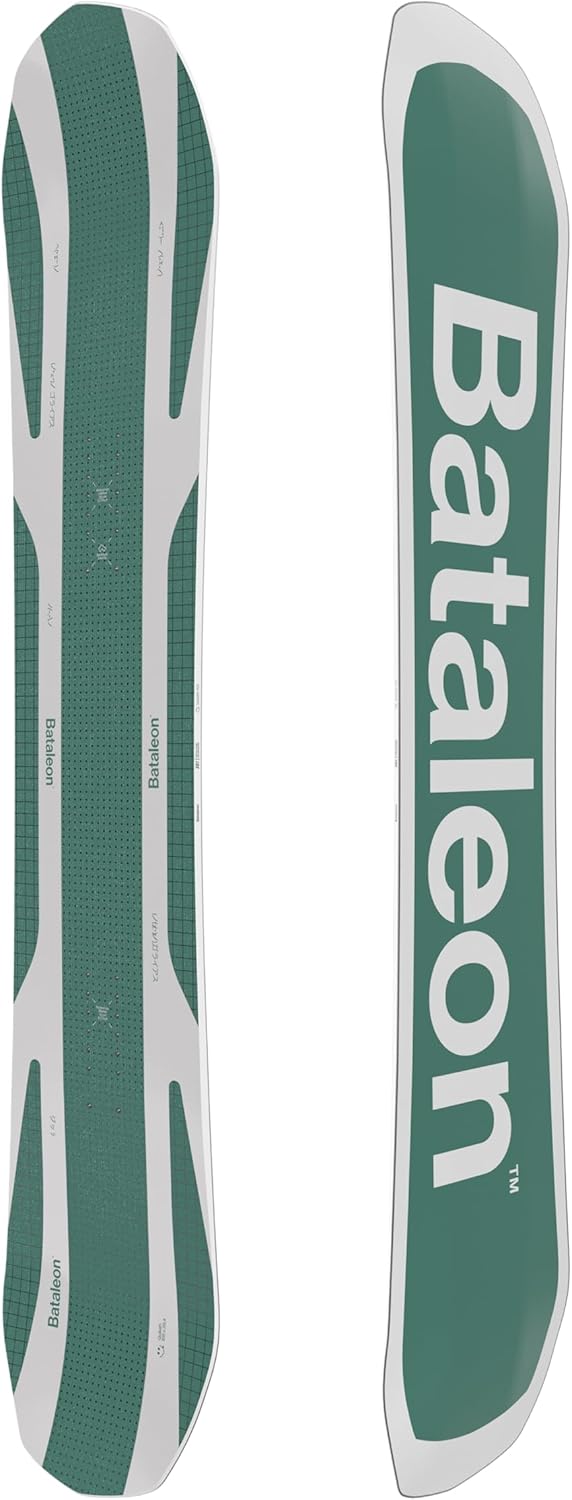
The Bataleon Goliath has built a reputation as one of the more approachable big-mountain freeride boards on the market, blending directional camber underfoot with Bataleon’s signature Triple Base Technology (3BT) at the nose and tail. The result is a board that floats convincingly in soft snow while still carving predictably once you’re back on groomed terrain. If you’ve spent any time comparing directional freeride shapes like the Burton Flight Attendant or the GNU Pickle BTX, the Goliath sits in a similar conversation — but with its own distinct personality.

Check Price on Amazon
What separates a board like the Goliath from the sea of generic “all-mountain” decks is that it doesn’t try to be everything to everyone. Bataleon designed it around a specific problem: most riders want the float and forgiveness of a rockered board when snow gets deep, but they also want the locked-in, predictable carve of a full-camber deck once they’re back on hardpack. Those two goals usually pull in opposite directions, and most manufacturers ask you to pick a side. The Goliath’s answer is 3BT — a way of shaping the nose and tail so the board behaves like two different boards depending on the terrain underneath it.
That’s a bold claim, and it’s the kind of marketing language that shows up on nearly every board’s spec sheet. What actually matters is how it rides day to day, across the kind of mixed conditions most of us actually encounter — a bit of fresh snow in the morning, chopped-up crud by midday, and firm, scraped-off groomers by the last chair. This review breaks down exactly how the Goliath performs across each of those conditions, who it’s genuinely a good fit for, and where its limitations show up.
Bataleon’s broader design philosophy also helps explain why the Goliath rides the way it does. The brand built its reputation on 3BT specifically because riders kept running into the same frustration across the industry: standard camber boards catch edges unpredictably in variable snow, while full rocker boards sacrifice too much edge grip and speed stability to be trusted on serious terrain. Rather than picking one extreme, Bataleon’s engineers focused the lifted portion of the base narrowly at the very tip and tail, leaving the vast majority of the running length under true camber. That’s a meaningfully different approach than a blended rocker-camber profile that curves gradually across a much longer section of the board, and it’s part of why the Goliath rides more like a camber board with insurance against edge catches than a rocker board with occasional camber-like moments.
2. Who the Goliath Is Built For
The Goliath is aimed squarely at riders who spend most of their day chasing terrain rather than laps in the park. If your typical day involves side-country pow stashes in the morning, groomed cruisers after lunch, and the occasional cat-track sprint back to the lift, this board’s directional shape and camber-dominant profile are built exactly for that rhythm.
It’s not the board for someone who wants to spend the day on rails and jibs — for that, riders are usually better served by a true twin shape. But for anyone upgrading from a soft all-mountain board and looking for more confidence at speed and in variable snow, the Goliath is a logical next step. Beginners transitioning out of their first board setups may also want to browse our guide on how to choose your first snowboard before committing to something this performance-oriented.
There’s also a specific rider profile who tends to get the most out of this board: someone who has already logged a season or two, has a stance dialed in, and is starting to notice the limitations of their beginner deck. Maybe that’s chatter at speed, maybe it’s a nose that dives in powder instead of floating, or maybe it’s just a general sense that the board is holding them back rather than helping them progress. The Goliath answers all three of those complaints directly, which is why it tends to show up so often on “next board” recommendation lists.
On the other end of the spectrum, very advanced freeriders who spend entire seasons in the backcountry chasing steep, technical lines might find the Goliath’s do-everything nature slightly less specialized than a purpose-built big-mountain charger. It’s a strong all-mountain freeride board first, and a specialist tool second — which for the vast majority of riders is exactly the right trade-off.
Weight and height matter here too, more than they do with softer, more forgiving boards. Because the Goliath rewards committed, aggressive input, riders who are underpowered for their board length may find it feels stiff and unresponsive, while riders who are appropriately sized will feel the board come alive under pressure. Pay close attention to the sizing chart later in this review, and don’t be afraid to size down slightly if you ride more playful and side-hit-focused lines rather than pure straight-line speed.
3. Shape, Camber Profile & Construction
Bataleon’s 3BT technology is the defining feature here. Instead of a flat or continuously cambered edge from tip to tail, the Goliath lifts the very edges of the nose and tail slightly upward and outward. In practice, this means the effective edge contact zone is shortened just enough to reduce catch-prone corners, while the center of the board retains traditional camber for pop and edge grip.
| Spec | Detail |
|---|---|
| Shape | Directional |
| Camber Type | Camber + Triple Base Technology (3BT) |
| Core | Full wood core with fiberglass laminate |
| Base | Sintered high-speed base |
| Sidecut | Progressive directional sidecut |
| Stance | Setback stance for float |
Riders coming from a purely cambered board — like those in our camber vs rocker breakdown — will notice the Goliath forgives edge catches far more than a traditional camber deck while still holding a stronger edge than a full rocker shape.
The full wood core is worth calling out specifically, because it’s doing a lot of the quiet work behind this board’s ride quality. Wood cores flex more naturally and dampen vibration better than foam or composite cores, which translates directly into a smoother, more predictable ride over chattery, wind-affected snow. Bataleon pairs the core with a fiberglass laminate rather than carbon stringers, which keeps the flex pattern smooth and progressive rather than snappy and aggressive — a deliberate choice that suits the board’s all-mountain freeride identity.
The sintered base is another detail that matters more than most riders give it credit for. Sintered bases are made by compressing polyethylene powder under heat and pressure, which creates a denser, more porous material that absorbs wax deeply rather than sitting on the surface. The trade-off is that sintered bases require more maintenance than cheaper extruded bases, but the payoff is meaningfully faster glide speeds and better durability against rock strikes and rail damage over the life of the board.
Bataleon’s progressive sidecut radius also deserves a mention. Rather than using a single, constant-radius sidecut from nose to tail, the Goliath’s edge curve tightens and loosens at different points along the board, which is part of why turns feel like they naturally want to finish rather than requiring constant rider correction. It’s a subtle engineering choice, but it’s one of the reasons experienced riders often describe this board as feeling “intuitive” within the first few runs.
4. Flex Pattern & Ride Feel
Flex sits in the medium-stiff range, which puts it above beginner-friendly boards but short of the stiffest big-mountain chargers on the market. Nose flex is noticeably softer than the tail, which helps the board plane up in soft snow without requiring an aggressive back-foot stance. The tail, by contrast, stays firm enough to load and pop off natural features.
On edge, torsional stiffness is where the Goliath earns its “confidence-inspiring” reputation. Quick edge-to-edge transitions on firm snow don’t feel vague or delayed, and the board tracks a clean arc rather than washing out mid-turn.
It’s worth breaking flex down into its two components, because they affect ride feel in different ways. Longitudinal flex — how much the board bends from tip to tail — governs how forgiving the board is over bumps and how much pop you get off natural terrain features. The Goliath’s longitudinal flex sits comfortably in the middle of the spectrum, firm enough to hold a high-speed arc without folding, but not so stiff that it feels like a plank underfoot.
Torsional flex — how much the board twists along its length — is a separate measurement, and it’s where the Goliath leans noticeably stiffer. High torsional stiffness means less energy is lost when you tip the board onto a new edge, which is exactly why quick, technical turns through moguls or tight trees feel more direct and less delayed than on a softer, twin-flex freestyle board.
New riders sometimes assume “stiffer is always better” once they hear a board described as confidence-inspiring, but that’s not quite right. A stiffer board demands more precise, committed input — sloppy or hesitant technique gets punished rather than smoothed over. Riders who are still building fundamentals are usually better served by something softer, while riders who already have solid edge control will feel the Goliath reward every correctly-timed movement.
5. Powder & Deep Snow Performance
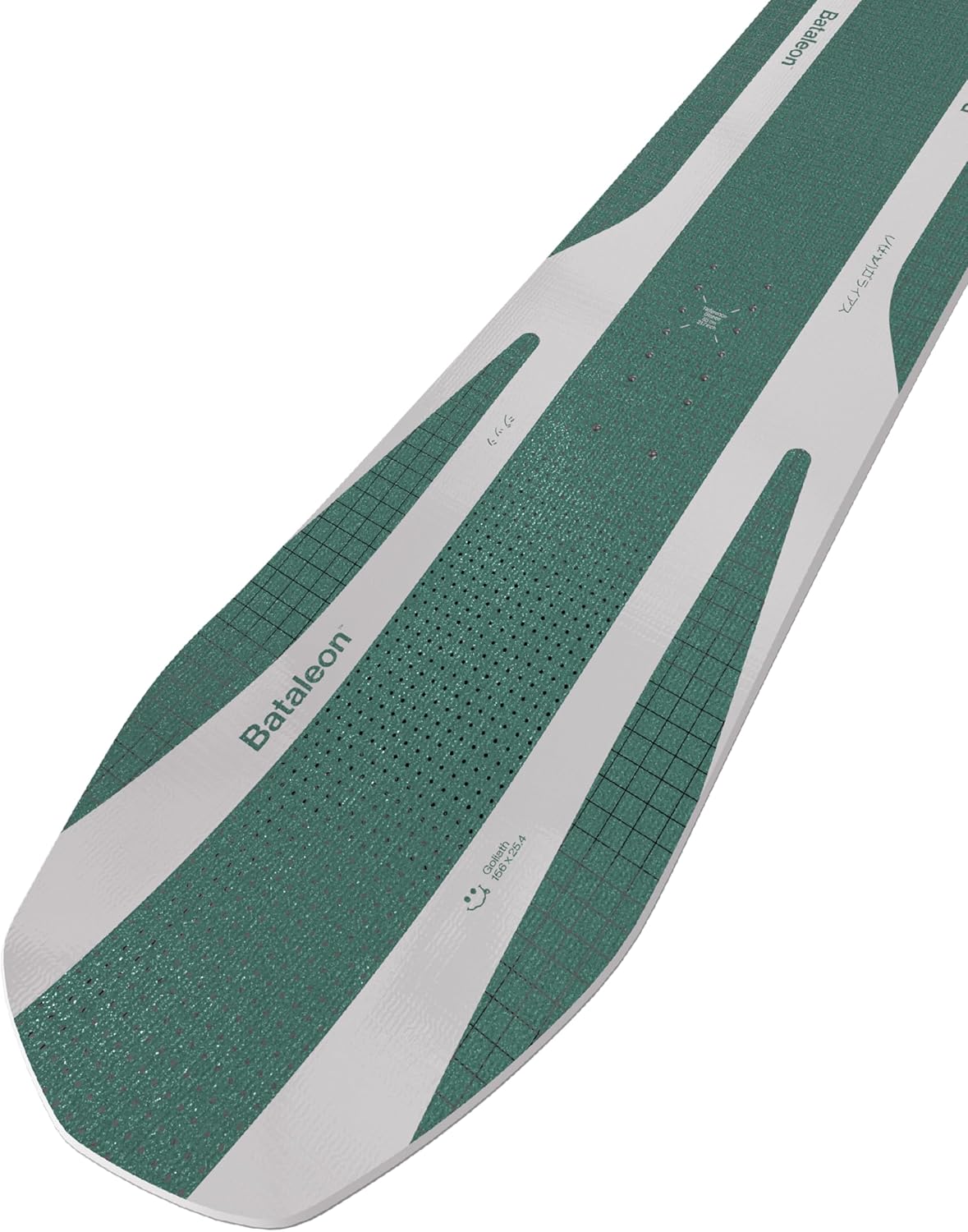
This is where the Goliath’s setback stance and lifted 3BT nose really shine. In deep, untracked snow, the board planes up quickly without demanding constant back-leg fatigue to keep the nose above the surface. Compared to a fully rockered powder-specific board, it won’t float quite as effortlessly in waist-deep conditions, but it makes up for that with far better performance once you’re back on firmer terrain — a trade-off many all-mountain riders are happy to make.
If deep powder is your primary priority every outing, it’s worth cross-shopping against dedicated powder shapes covered in our best snowboarding destinations and powder metrics guide, which also breaks down which resorts consistently deliver the deepest snow.
What’s particularly notable about the Goliath’s powder manners is how little rider effort it takes to keep the nose up. Boards with a traditional camber profile and no nose lift typically require the rider to actively weight the back foot and lean back to prevent the nose from diving under the snow surface — a technique that gets tiring fast and actively works against good technique. Because the Goliath’s 3BT nose is already lifted at rest, riders can maintain a more centered, athletic stance even in fairly deep snow, which pays off in the form of less leg fatigue by the end of a big powder day.
In tree runs and tighter powder lines, the shortened effective edge from the lifted nose and tail also helps the board pivot and slash more easily than a full-length camber board would. You’re not fighting the tail to bring the board around a tight line between trees, which matters a lot once you’re navigating variable, wind-loaded snow where quick direction changes are the difference between a clean line and an unplanned tree well encounter.
Deep, bottomless powder days are admittedly rare for most riders — the majority of “powder days” at most resorts involve six to twelve inches of fresh snow over a firmer base, sometimes with wind-affected pockets and variable density. This is actually the condition where the Goliath performs best relative to dedicated powder boards, because the underlying camber keeps the board connected to the firmer base layer while the lifted nose handles the loose surface snow on top.
6. Groomer & All-Mountain Performance
On groomed runs, the directional camber underfoot delivers the kind of predictable, locked-in carving that softer all-mountain boards can’t quite match. Speed checks and quick direction changes feel controlled rather than skatey, and the board holds a line through variable, chopped-up snow without deflecting.
Riders who split their time evenly between groomers and off-piste terrain will likely find this balance to be the Goliath’s biggest selling point — it doesn’t force you to choose between float and control.
Carving specifically stands out as a strength. Because the camber underfoot preloads the edge before you even initiate a turn, the board wants to spring back toward center rather than requiring you to muscle it through the full arc. Riders who enjoy laying out long, high-angle carves on groomed runs will notice the Goliath holds that edge angle far longer and with far less chatter than a softer, more rocker-heavy board would allow.
Variable, chopped-up snow — the kind you get by mid-morning on a busy resort day after the groomers get skied off — is another condition where the Goliath’s medium-stiff flex earns its keep. Softer boards tend to deflect off every bump and rut in that kind of terrain, forcing constant small corrections. The Goliath’s added stiffness lets it plow through that same terrain with noticeably less deflection, holding a straighter, more predictable line at speed.
Where it’s slightly less exceptional is very low-speed, technical maneuvering — tight beginner-run switchbacks or slow-speed traverses across flat catwalks. The board’s stiffness and directional bias mean it doesn’t pivot as effortlessly at a crawl as a soft, twin-shaped park board would. This is a minor trade-off in the context of the board’s overall design goals, but worth knowing if a meaningful part of your day involves navigating slow, flat terrain.
7. Edge Hold & Stability at Speed
Edge hold on hardpack and icy patches benefits from the progressive sidecut and the camber-dominant midsection. While no board with a lifted 3BT nose and tail will out-grip a full-camber race deck on solid ice, the Goliath performs well above average for a board this forgiving. At higher speeds, the medium-stiff flex and directional shape keep chatter to a minimum, which matters most on long, open groomer runs or when bombing between pow stashes.
Stability at speed comes down to three interacting factors: effective edge length, torsional stiffness, and base material — and the Goliath scores well on all three without maxing out any single one at the expense of the others. The sintered base contributes meaningfully here too, since a well-waxed sintered base simply glides faster and smoother than an extruded base, reducing the small vibrations that build into speed wobbles on long, fast pitches.
Riders coming off a season on a soft, playful all-mountain board often describe their first few high-speed runs on the Goliath as a genuine step change — the board tracks straighter, resists deflection off small bumps better, and doesn’t require constant micro-corrections to hold a line. That stability does come with the previously mentioned trade-off of reduced low-speed maneuverability, which is a fair exchange for most intermediate-to-advanced riders who spend the bulk of their day at moderate-to-high speed anyway.
Early-morning firm groomers — the scraped-off, semi-icy conditions common before the sun softens the snow — are arguably the toughest real-world test for any board’s edge hold. The Goliath handles this scenario better than most boards in its forgiving, freeride-leaning category, though riders chasing maximum ice performance specifically may still prefer a dedicated full-camber carving deck for that narrow use case.

View on Amazon
8. Sizing Chart & How to Choose
| Board Length | Rider Height | Rider Weight |
|---|---|---|
| 152 cm | 5’3″ – 5’7″ | 120 – 155 lbs |
| 156 cm | 5’6″ – 5’10” | 140 – 175 lbs |
| 159 cm | 5’8″ – 6’0″ | 155 – 195 lbs |
| 162 cm | 5’10” – 6’2″ | 170 – 215 lbs |
| 164 cm (Wide) | 5’11” – 6’3″ | 180 – 230 lbs |
For riders between sizes, sizing up generally favors better powder float, while sizing down favors quicker edge-to-edge response in trees and tighter terrain. Our full snowboard sizing guide by height and weight covers this decision in more depth if you’re still unsure which length fits your riding style.
Weight is generally a more reliable sizing input than height alone, since two riders of the same height can carry meaningfully different weight, which changes how much board is needed to support them properly in soft snow. If your weight falls between two rows on the chart, consider your riding style as the tiebreaker: riders who prioritize speed, big open turns, and deep powder days should lean toward the longer of the two sizes, while riders who prioritize quick, playful turns and tighter terrain should lean toward the shorter option.
Boot size also interacts with board width in ways that are easy to overlook. Riders with boots sized 10.5 US or larger should pay close attention to the standard-width options and strongly consider the wide 164 cm version, since boot overhang on a standard-width board increases the risk of toe and heel drag during aggressive carving — a problem that gets worse, not better, as edge angles increase on a board this capable of holding a hard carve.
It’s also worth factoring in your home mountain’s typical conditions. Riders based somewhere with consistently deep, dry snow — the Pacific Northwest, interior British Columbia, or similar snowbelt regions — often size up slightly relative to the chart to maximize float on the region’s characteristic powder days. Riders based at drier, harder-packed eastern or midwestern resorts may find the standard or even slightly shorter size within their range delivers a livelier, more maneuverable ride on the firmer conditions typical of those areas.
9. How It Compares to Other Freeride Boards
| Board | Camber Type | Best For | Flex |
|---|---|---|---|
| Bataleon Goliath | Camber + 3BT | All-mountain freeride | Medium-Stiff |
| Burton Flight Attendant | Camber | Big-mountain charging | Stiff |
| GNU Pickle BTX | Rocker/Camber blend | Playful all-mountain | Medium |
| Lib Tech Skate Banana | BTX Rocker | Forgiving freestyle | Soft-Medium |
For a broader look at how directional freeride shapes stack up against each other, our general snowboard comparison guide and Burton vs Capita breakdown are useful next reads.
Against the Burton Flight Attendant, the difference really comes down to intent. The Flight Attendant is built as a purpose-driven big-mountain charger, with a stiffer flex and a more aggressive camber profile intended for riders who spend most of their time seeking out steep, technical, high-consequence terrain. The Goliath, by comparison, is a more approachable all-mountain freeride option — still capable in serious terrain, but not demanding the same level of committed, expert-level technique to ride well. Riders torn between the two should honestly assess how much of their season is spent in genuinely advanced terrain versus general all-mountain cruising with occasional powder days.
Against the GNU Pickle BTX, the comparison flips in the other direction. The Pickle’s rocker/camber blend prioritizes playfulness and forgiveness over outright edge hold and speed stability, making it a better fit for riders who want a more freestyle-friendly, easygoing ride across a wider range of ability levels. The Goliath trades some of that easy forgiveness for noticeably better performance at speed and in firm, technical conditions.
The Lib Tech Skate Banana sits at the most forgiving end of this comparison set, with a soft-medium flex and full BTX rocker profile designed to make riding approachable and fun for a broad range of skill levels, including newer riders still building confidence. It’s an excellent board for its intended purpose, but it isn’t built to deliver the high-speed stability or hard-charging edge hold that the Goliath offers — the two boards are really solving different problems for different riders.
Taken together, the general pattern across this comparison set is a spectrum from playful and forgiving on one end to stiff and performance-oriented on the other, with the Goliath landing solidly in the middle-to-upper portion of that range — capable enough for serious terrain, but not so specialized that it becomes a liability everywhere else on the mountain.
10. Pros and Cons
Pros
- Excellent balance of powder float and groomer control
- 3BT reduces catch-prone edges without sacrificing grip
- Confident at speed with minimal chatter
- Setback stance genuinely helps in deep snow
- Durable sintered base holds wax well
Cons
- Not ideal for park or jib-focused riders
- Medium-stiff flex may feel demanding for true beginners
- Less effortless float than a dedicated powder shape
11. Recommended Bindings & Setup
Given the Goliath’s medium-stiff flex and directional intent, pairing it with a responsive, medium-to-stiff binding helps translate input more directly into the board. Riders often pair directional freeride boards like this with setups similar to those covered in our Union Atlas bindings review or the Union Strata review, both of which offer the kind of response that complements a camber-dominant board.
A setback stance, typically 1–2.5 cm depending on personal preference, helps maximize the board’s natural float advantage. Riders new to stance setup can reference our snowboard stance setup guide for a full walkthrough.
Stance width and angle also deserve attention on a board like this, since the medium-stiff flex is more responsive to precise input than a softer, more forgiving deck. Most riders find success starting with a stance roughly shoulder-width apart, then fine-tuning from there based on comfort and riding style. Freeride-focused riders often run slightly duck-footed angles (something like +18/-6 degrees) to support both strong forward drive and occasional switch riding in variable backcountry terrain, while more speed- and carving-focused riders may prefer a more forward-oriented stance closer to +21/-9.
Boot stiffness is worth matching to the board as well. A very soft, park-oriented boot will struggle to transmit input effectively through a board with this level of torsional stiffness, effectively wasting some of what makes the Goliath responsive in the first place. Riders investing in this board are generally well served pairing it with a medium-to-stiff boot, which lets the rigidity of the setup work together rather than fighting itself. Our snowboard boots guide and K2 snowboard boots review are good starting points for matching boot stiffness to a board like this.
12. Care, Waxing & Longevity
The sintered base on the Goliath holds wax longer than an extruded base and rewards regular maintenance with noticeably better glide. A hot wax every 4–6 days of riding keeps the base performing at its best; our how to wax a snowboard at home guide walks through the full process step by step. Between waxes, keeping edges rust-free — especially after wet or slushy days — extends the life of the board considerably; see our guide on removing rust from snowboard edges if you store your gear somewhere humid.
Temperature-specific waxing is worth understanding if you’re serious about getting the most out of this board’s base. Warm-temperature wax formulas are softer and grip better in wet, warmer snow, while cold-temperature formulas are harder and glide better in dry, cold conditions. Running the wrong wax for the day’s conditions can noticeably slow the board down or make it feel grabby, regardless of how well-built the base itself is — something worth keeping in mind before writing off a sluggish day as a board problem when it might just be a wax mismatch.
Edge tuning is the other major maintenance category, and it’s easy to neglect until a board starts feeling unpredictable on hardpack. A base and side edge bevel — typically somewhere around 1 to 3 degrees depending on riding style — keeps the effective edge sharp enough to bite reliably without becoming so aggressive that it catches unexpectedly during flat-basing or transitions. Riders who ride primarily on firm, groomed terrain generally benefit from a slightly sharper edge tune, while those spending more time in powder and soft snow can get away with a less frequent tuning schedule.
Off-season storage is the final piece of the longevity puzzle, and it’s the step most riders skip. Waxing the base before summer storage — without scraping it off — protects the base material from drying out and oxidizing over several months of inactivity. Storing the board flat or vertically in a cool, dry space away from direct sunlight and extreme temperature swings prevents warping, which is a far more common cause of long-term board problems than most riders realize.

Buy on Amazon
13. Riding the Goliath Across Different Terrain
Steeps are arguably where the Goliath’s directional design philosophy shows up most clearly. On a genuinely steep pitch, having a board that holds its edge without hesitation matters more than almost anything else, since a moment of edge slip on exposed terrain has real consequences. The board’s camber-dominant midsection bites confidently the instant you commit an edge, which lets riders make quicker, more decisive turns on steep faces rather than relying on a series of tentative, speed-checking turns.
Trees and tight glades benefit from the shortened effective edge created by the 3BT nose and tail. Quick pivots between trees don’t require as much muscle as they would on a full-length camber board, and the board’s overall responsiveness makes last-second line adjustments feel manageable rather than panicked. Riders spending a lot of time in tree runs may want to consider our backcountry snowboarding guide for broader terrain-selection and safety context beyond board choice alone.
Moguls are a genuinely tough test for any medium-stiff directional board, and the Goliath is competent here rather than exceptional. The firmer tail doesn’t absorb bump impacts quite as forgivingly as a softer freestyle-oriented board would, so riders spending most of their day in heavy mogul fields may find their legs working harder than on a dedicated bump board. That said, the board’s edge control makes threading a clean line through moguls more predictable, even if the ride itself is a bit firmer underfoot.
Side-country and short backcountry pushes off the top of a lift are a natural fit, since the board’s powder manners and stability at speed both come into play in that setting. Riders venturing further into true backcountry terrain should also review our backcountry snowboard safety protocol before relying on any board — including the Goliath — outside of patrolled terrain.
Cat tracks and flat traverses, as mentioned earlier, are the one terrain type where the board’s directional stiffness works against it slightly. A confident, weighted stance and a bit of momentum management go a long way here; riders who find themselves frequently stuck on flat run-outs may want to review basic snowboard beginner tips on maintaining speed through flats, since the technique applies regardless of skill level once a board gets stiffer and more directional.
14. Durability & Long-Term Reliability
Build quality is one of the more understated strengths of the Goliath. The full wood core with fiberglass laminate construction is a proven, time-tested combination that resists delamination and core shots better than cheaper composite or foam-core alternatives. Riders who put the board through a full season of mixed conditions — including the inevitable rock strikes near thin early- and late-season snow cover — generally report that the base and edges hold up well relative to boards in a similar price bracket.
Edge durability specifically benefits from the progressive sidecut design, which distributes stress more evenly along the effective edge rather than concentrating wear at a single contact point. Over a multi-season lifespan, this tends to translate into fewer edge repairs and a base that stays flatter and truer for longer, provided it’s stored and maintained properly during the off-season.
Topsheet graphics and durability are also worth a quick mention, since chipped or peeling topsheets are a common complaint on cheaper boards. The Goliath’s topsheet has held up well in long-term rider reports, without the widespread peeling or bubbling sometimes seen on budget all-mountain decks after a season or two of regular use.
For riders planning to keep this board for several seasons — which, given the price point, is the sensible way to think about the investment — proper off-season storage matters. A board stored improperly, especially in a garage or car trunk with major temperature swings, can warp or develop base issues over time regardless of how well it was built. Reviewing proper wax and storage habits, along with a general snowboard maintenance guide, is a worthwhile step for anyone treating this as a multi-season purchase rather than a one-off.
Binding compatibility is another quiet contributor to long-term reliability. Insert-based mounting systems distribute stress across a standardized pattern of threaded inserts embedded in the core, which is generally more durable over time than channel-based systems that rely on a continuous track and clamping mechanism. Riders who plan to swap bindings between multiple boards, or who anticipate upgrading bindings independently of the board itself, will find the insert-based approach simpler to work with and less prone to long-term wear at the mounting points.
Warranty coverage is worth checking directly with the retailer or manufacturer at the time of purchase, since coverage terms and duration can change and are best confirmed against current documentation rather than assumed from past model years. That said, a wood-core, fiberglass-laminate construction like this one is generally considered a reliable, low-risk build from a manufacturing-defect standpoint, with most long-term issues traced back to maintenance habits — inadequate waxing, unrepaired base gouges, or improper storage — rather than the board’s inherent construction quality.
Taken as a whole, the durability picture here is reassuring rather than remarkable: nothing about the construction suggests unusual fragility, and the materials used are proven choices with a long track record across the snowboard industry. Riders who put in a reasonable amount of seasonal maintenance should expect this board to remain a reliable part of their quiver for several years of regular use.
Frequently Asked Questions
Is the Bataleon Goliath good for beginners?
It’s better suited to intermediate and advanced riders. The medium-stiff flex and camber-dominant profile reward an established riding stance more than they forgive early mistakes.
Does the Goliath work well in powder?
Yes. The setback stance and lifted 3BT nose help it plane up quickly in deep snow, though dedicated powder boards will still float slightly more effortlessly in the deepest conditions.
How does 3BT differ from standard rocker?
3BT only lifts the very outer edges of the nose and tail rather than curving the entire tip and tail upward, which preserves more effective edge contact than a traditional rocker profile.
What size Goliath should I get?
Match your height and weight to the sizing chart above. Riders prioritizing powder float often size up slightly, while riders prioritizing quick turns size down.
Can the Goliath handle icy conditions?
It performs above average for a forgiving freeride board thanks to its camber-dominant midsection, though it won’t match a full-camber board on pure ice.
Is this board good for park riding?
Not really. It’s a directional freeride shape, so jibbing, rails, and switch riding aren’t its strong suit compared to a true twin.
What bindings pair best with the Goliath?
Medium-to-stiff response bindings complement the board’s flex and directional intent, helping translate rider input more directly into each turn.
How often should I wax the Goliath?
Every 4–6 days of riding is a good baseline, since its sintered base holds wax well but performs noticeably better when kept fresh.
Is the Goliath a directional or twin shape?
Directional. It’s designed to be ridden primarily in one direction, with a setback stance optimized for float and control rather than switch riding.
How does it compare to the Burton Flight Attendant?
The Flight Attendant leans stiffer and more purely camber-focused for big-mountain charging, while the Goliath offers a slightly more forgiving ride without giving up much control.
How long does a Bataleon Goliath typically last?
With regular waxing and proper off-season storage, the wood-core construction and sintered base generally hold up well across multiple seasons of consistent riding.
Does the Goliath work for mogul runs?
It’s competent but not specialized for moguls. The firmer tail doesn’t absorb bump impacts as forgivingly as a dedicated softer freestyle board, so expect a firmer ride through heavy bump fields.
Final Verdict
The Bataleon Goliath earns its reputation by doing something a lot of freeride boards struggle with: balancing genuine powder capability with confident, predictable performance on groomers. It’s not the right choice for park laps or absolute beginners, but for intermediate-to-advanced riders who want one board that can handle a full mountain’s worth of conditions, it’s a strong, durable option that holds up season after season.
If there’s one honest caveat to close on, it’s that the Goliath isn’t trying to be the flashiest board in the lineup, and it doesn’t need to be. Its value comes from consistency — from handing riders a board that behaves the same reliable way whether they’re carving a groomer at 8 a.m. or slashing through afternoon crud with tired legs. That kind of dependability is easy to undervalue on a spec sheet, but it’s exactly what most riders end up appreciating most once a board has logged real mileage.
Snowboard Bible Home · Best Snowboard Boots · Best Snowboard Bindings · Camber vs Rocker
Shop Now on Amazon


