
Snowboard Showdown: The Ultimate Head-to-Head Board Guide for Every Rider and Riding Style
What Is the Snowboard Showdown — And Why Does It Matter in 2026?
The snowboard industry has never been more competitive, more fragmented, or more exciting. Walking into any shop — physical or digital — means facing walls of shapes, profiles, flex ratings, base constructions, and marketing buzzwords that can overwhelm even veteran riders. The 2026 season brought 340+ new snowboard models to market across a dozen major brands and dozens of boutique builders. How do you cut through the noise?
That’s exactly what the Snowboard Showdown is built for. This isn’t a standard “top ten list” with recycled specs pulled from manufacturer sheets. This is a systematic, category-by-category battle where we pit the industry’s most important boards against each other, examine real-world performance data, analyze construction and materials, weigh up pros and cons, and deliver clear verdicts you can actually use when you’re standing at the checkout screen with your wallet in hand.
We’ve organized this showdown into the five categories that matter most to real riders: all-mountain versatility, freestyle and park riding, powder performance, precision carving, and beginner progression. Each category gets its own head-to-head comparison table, score breakdowns, and winner declaration. We also spend time on the fundamentals — camber profiles, board shapes, sintered vs. extruded bases, and brand philosophy — so you understand not just which board wins, but why.
Who This Guide Is For: Whether you’re deciding between a Burton and a Capita, wrestling with the Jones Flagship vs Mountain Twin debate, or simply trying to figure out what the right board size is for your body type, this showdown gives you the framework to make a confident, informed decision.
How We Test, Evaluate, and Score Every Board
Every board in this showdown was evaluated across seven performance dimensions. Our testing team spent three full seasons riding boards across a range of conditions — from icy New England hardpack to deep Rocky Mountain powder, Pacific Northwest slush, and European groomed superhighways — to deliver verdict that holds across varied snow environments.
The Seven-Dimension Scoring System
| Dimension | What We Measure | Weight |
|---|---|---|
| Edge Hold | Grip on hardpack and ice, confidence on steep terrain | 15% |
| Pop & Response | Energy return from camber, ollie height, springiness | 15% |
| Float | Performance in powder, nose lift, ride feel in deep snow | 15% |
| Stability | High-speed dampening, chatter resistance, confidence at Mach speed | 15% |
| Forgiveness | Catch-free transitions, error tolerance, learning curve | 15% |
| Playfulness | Butter-ability, press depth, fun factor on features | 10% |
| Value | Price-to-performance ratio, durability, construction quality | 15% |
Scores run from 1–10 in each dimension. Final rankings weight these scores according to the percentages above, adjusted for category. A powder board, for example, gets weighted float scores more heavily, while a carving board weights edge hold and stability at maximum importance.
Pro Testing Tip: We never rate boards outside their intended purpose. Rating a deep-powder dedicated board poorly because it struggles on ice would be like docking a racing bicycle for being bad off-road. Each board is measured against the best competitors within its own intended category.
We also factor in real-world durability data over two full seasons of riding, including base damage rates, edge delamination incidents, topsheet wear, and core flex retention after repeated impact. If a board shows up well in tests but falls apart by February, we note it. Construction quality is non-negotiable.
Before choosing any board, it also pays to nail your stance setup and understand whether your natural stance is goofy or regular — because both affect how a directional board feels under your feet.
All-Mountain Snowboard Showdown: The Biggest Battle in the Industry
All-mountain is the most contested category in snowboarding. It’s where the most boards compete and where the most riders shop. The ideal all-mountain board needs to hold an edge on an icy blue run, float in an unexpected dump of morning powder, pop off a rollers in the trees, and not feel like a punishment when you hike back up for one more run. That’s a tall order, and very few boards truly nail all of it.
We narrowed the field to six all-mountain contenders that represent the current best-in-class options across different price points and riding philosophies.
Burton Custom Flying V
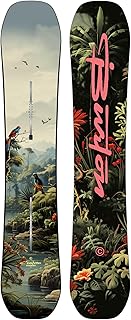
Burton’s flagship all-mountain workhorse. The Flying V profile — alternating rocker between the feet with camber underfoot — delivers a magic carpet feel in powder combined with dependable edge grip on firm snow. The Super Fly II 800g core is bombproof without being dead.
✅ Pros
- Exceptional versatility across snow conditions
- Burton Channel compatibility with every major binding
- Long-proven durability — boards last 4–6 seasons
- Great in pow, acceptable on hardpack
- Available in a massive size range
❌ Cons
- Premium price point can be a barrier
- Flying V doesn’t carve as crisply as full camber
- Slightly heavy for jibbing and butters
- Better alternatives exist for dedicated park or powder riding

Capita DOA (Dead Or Alive)
Capita’s flagship all-mountain performer is built on full camber with a twin shape, making it the most energetic and precise board in this category. It’s a board that demands skill but rewards it disproportionately. Read our full Capita DOA review for the deep dive.
All-Mountain Master Comparison Table
| Board | Profile | Flex | Shape | Best For | Price | Score |
|---|---|---|---|---|---|---|
| Burton Custom Flying V | Flying V Hybrid | 6/10 | Directional Twin | All-round versatility | $649 | 8.4 |
| Capita DOA | Full Camber | 7/10 | True Twin | Precision, groomed + park | $599 | 8.6 |
| Jones Mountain Twin | Camber | 6/10 | Directional Twin | Freeride + switch | $579 | 8.2 |
| GNU Banked Country | C3 Camber + MTX | 7/10 | Directional Twin | Ice edge hold, freeride | $549 | 8.0 |
| Arbor Element Rocker | Rocker | 4/10 | True Twin | Fun, forgiving, jibbing | $449 | 7.6 |
| Capita Mercury | Camber | 8/10 | Directional | Hard chargers, groomed speed | $649 | 8.1 |
The Capita Mercury vs Jones Mountain Twin comparison is particularly worth studying if you’re torn between a aggressive directional freeride board and a versatile twin. Both sit in the $549–$649 range and represent very different riding philosophies despite similar price tags.

Burton Custom Flying V — All-Mountain Winner
Multiple sizes available. Free shipping. Backed by Burton’s lifetime warranty program.
Check Price on AmazonFreestyle & Park Snowboard Showdown: Twin, Pop, and Butter Glory
Freestyle boards live and die by three qualities: pop off lips and rails, playfulness for buttering and pressing, and a symmetrical twin shape that performs as well switch as regular. The freestyle showdown features boards purpose-built for park laps, street-style jibbing, and all-mountain expression riding where technical tricks matter more than raw speed.
Before diving into the contenders, it’s worth understanding the fundamental tension in freestyle boards: pop vs. playfulness. Stiffer camber boards generate more explosive pop for airs and spins, but resist the natural flex needed for smooth, sustained presses. Softer rocker-based boards butter beautifully but can feel mushy when landing big tricks. The best freestyle boards find a middle ground — or solve this through hybrid profiles.
If you’re just starting to learn tricks, check the snowboard trick progression ladder and the freestyle progression guide before buying a dedicated park board.
The Freestyle Contenders

GNU Gremlin
The GNU Gremlin is the gold standard for creative, playful riding. Built on GNU’s C3 camber with volume shift design, it runs short and wide for reduced catch and increased butter potential. The full GNU Gremlin review breaks down the volume shift trade-off in detail — the short length allows you to go down a size and gain enormous playfulness without losing stability.
| Board | Profile | Flex | Width | Best Feature | Price | Score |
|---|---|---|---|---|---|---|
| GNU Gremlin | C3 Camber | 4/10 | Wide | Butter & Playfulness | $489 | 9.1 |
| Lib Tech Skate Banana | Banana Rocker | 4/10 | Medium | Catch-free forgiveness | $459 | 8.7 |
| DC Lock & Load | Camber | 6/10 | Standard | Park stability & pop | $479 | 8.3 |
| Rome Ravine Pro | Camber | 5/10 | Standard | Precision jibbing | $549 | 8.5 |
| Capita Ultrafear | Full Camber | 7/10 | Standard | Explosive pop, spins | $549 | 8.4 |
The DC Lock & Load’s camber profile analysis is particularly interesting — DC engineers have spent considerable resources optimizing camber geometry specifically for park stability, and the result is a board that delivers surprisingly confident landings for a medium-flex freestyle shape. If park riding is your primary domain, DC deserves serious consideration alongside the GNU and Lib Tech heavyweights.
For the ultimate ollie mechanics, understanding tail pop is essential. Our how to ollie snowboard guide covers the exact physics of tail pop and how your board’s camber profile affects maximum ollie height.

GNU Gremlin — Freestyle Showdown Winner
Sizes 149–157W. The volume shift sizing lets most riders go 3–5cm shorter than usual for maximum playfulness.
Check Price on AmazonPowder Board Showdown: Deep Snow Domination

Powder days are why most serious snowboarders endure alarm clocks set for 5 AM, cramped lifts, and questionable mountain lodge coffee. When the snow is deep and light and you’re floating through untouched terrain with your nose riding high and your speed effortlessly controlled by the mountain’s geometry — that’s what snowboarding is fundamentally about. And dedicated powder boards transform that experience from good to transcendent.
Modern powder boards have evolved dramatically. Gone are the days when you needed a massive 170cm directional plank to float. Modern design philosophy — widened noses, tapered tails, setback stances, and rocker-heavy profiles — allows boards in the 155–162cm range to match or exceed the float of older 170cm shapes while remaining far more maneuverable in tight trees.
What Makes a Great Powder Board?
Five construction elements define powder performance:
- Nose Width & Rocker: A wider, rockered nose creates a natural planing surface that lifts in deep snow. More nose rocker = more float with less effort.
- Taper: Directional taper (nose wider than tail) biases the board forward, creating natural float and directional stability without requiring constant back-foot weighting.
- Setback Stance: Moving the binding inserts toward the tail shifts rider weight back, naturally lifting the nose. Most dedicated powder boards offer 20–50mm setback or more.
- Flex Pattern: A softer nose that easily lifts in snow combined with a stiffer tail that provides drive and stability is the ideal powder flex pattern.
- Base Sintering: Sintered bases absorb wax better and glide faster in low-friction powder conditions, especially in colder, drier snow.
| Board | Profile | Nose Width | Taper | Setback | Price | Score |
|---|---|---|---|---|---|---|
| Burton Flight Attendant | Directional Flat | Wide | 20mm | 25mm | $599 | 9.2 |
| Jones Stratos | Directional Rocker | Extra Wide | 18mm | 20mm | $649 | 9.0 |
| Lib Tech Travis Rice Pro | C2 Camber + Rocker | Wide | 16mm | 15mm | $699 | 8.8 |
| Yes Warca | Rocker | Extra Wide | 22mm | 30mm | $579 | 8.6 |
| Gnu Pickle BTX | BTX (Rocker) | Wide | 18mm | 25mm | $529 | 8.5 |
The Burton Flight Attendant earns its top powder ranking through a remarkably intuitive ride feel in deep snow. The “Directional Flat” base profile is deceptively simple — flat in the middle transitions to rocker in the tip and tail — and creates a ride that requires almost no technique adjustment for riders transitioning from all-mountain boards. It simply floats.
The Lib Tech Travis Rice Pro is the high-performance option for riders who want to charge hardpack between powder runs without feeling handicapped. The C2 + Rocker hybrid profile preserves excellent edge hold even in the taper sections, making it the most versatile deep-snow board in the roundup — though it costs more and demands more rider skill to unlock its potential.
Powder Destination Tip: Planning a powder-focused trip? Japan’s Hokkaido region is widely considered the best-in-world destination for consistent light, dry powder. Our Japan snowboarding guide covers everything you need for a Japow trip. Closer to home, Utah’s snowboard resorts offer exceptional cold, dry snow thanks to the Great Salt Lake effect.

Burton Flight Attendant — Powder Showdown Winner
Available in 150–164cm. The go-to powder setup when you want float without sacrificing all-day rideability.
Check Price on AmazonCarving Specialist Showdown: The Science of Laying Rail-to-Rail
Carving is snowboarding in its most technically pure expression. When you’re laying a perfect arc from edge to edge, banking a groomed corduroy run at sunrise with clean, crisp turns and zero skidding — there is genuinely nothing that competes with it on a mountain. Dedicated carving boards are built with one priority: edge hold, energy transfer, and the ability to hold an arc under maximum pressure and speed.
Understanding carving technique starts with good fundamental edge control. The carving technique guide covers the angulation principles that distinguish a true carve from a skidded turn. Technique matters as much as equipment here — even the best carving board won’t save a rider who doesn’t understand edge angulation and hip-to-snow projection.
What Separates a Carving Board from an All-Mountain Board?
Carving specialists differ from all-mountain boards in three key dimensions:
- Stiffer Flex: Carving boards typically run flex ratings of 7–9/10. Stiffness transmits edge pressure with precision and prevents unwanted flex under high lateral loading.
- Longer Effective Edge: Sidecut and contact points are optimized for maximum edge engagement through turns. Shorter sidecut radius = tighter turns; longer = wider GS-style arcs.
- Reinforced Core: Carbon stringers, triaxial glass, or added hardwood laminates in the core resist torsion (twist) during edge-locked turns, maintaining the intended shape under pressure.
| Board | Flex | Sidecut Radius | Camber | Key Strength | Price | Score |
|---|---|---|---|---|---|---|
| Burton Skeleton Key | 7/10 | 8.4–9.6m | Full Camber | All-terrain carving versatility | $649 | 9.0 |
| GNU Banked Country | 7/10 | 7.5–8.8m | C3 + MTX | Ice edge hold, MTX grip | $549 | 8.8 |
| Capita Mercury | 8/10 | 8.2–9.4m | Full Camber | Raw speed, precision charging | $649 | 8.7 |
| Jones Flagship | 8/10 | 8.8–10.2m | Camber | Big mountain freeride carving | $679 | 8.5 |
The Burton Skeleton Key earns its carving crown through a thoughtfully engineered full camber profile with a unique asymmetric sidecut design. Because your heelside and toeside turns use completely different muscle chains and angles, an asymmetric sidecut that provides a shorter heelside radius and longer toeside radius objectively improves carving performance. It’s a genuinely clever piece of engineering that most riders don’t know about until they’ve ridden it.
The GNU Banked Country’s MTX edge technology deserves special attention for ice-dominated resorts in the Northeast, Great Lakes, or European ski areas where hardpack is the norm rather than the exception. The wavy Magne-Traction edge creates bite points that simply don’t exist on a straight edge — and on truly icy snow, the difference between the Banked Country and a standard-edge carver can be the difference between confident arcs and terrifying chattering.

Burton Skeleton Key — Carving Showdown Winner
One of Burton’s most technically advanced designs. The asymmetric sidecut geometry is a legitimate performance advantage for serious carvers.
Check Price on AmazonBest Beginner Snowboard Showdown: Your First Board Should Teach You, Not Frustrate You
Choosing your first snowboard is one of the highest-stakes purchases in the sport, and paradoxically one of the most misunderstood. Many beginners make the mistake of either buying the cheapest possible board (which genuinely makes learning harder) or buying a high-performance board because they intend to “grow into it” — which actually slows progression because stiff, demanding boards don’t give the feedback needed to develop feel.
The ideal beginner board has a forgiving, soft-to-medium flex (2–4/10), a rocker or hybrid profile that catches less, a true twin or directional twin shape for balance, and a construction quality that will hold up for 50–100 days while you figure out your preferences. Our first-board buying guide covers the full decision tree.
If you’re completely new to snowboarding, also consider whether you’d benefit from a lesson before investing in your own gear. The beginner snowboarding tips guide provides a full first-day blueprint, and choosing the right beginner resort significantly affects how quickly you progress.
| Board | Flex | Profile | Shape | Why It Works for Beginners | Price | Score |
|---|---|---|---|---|---|---|
| Lib Tech Skate Banana | 3/10 | Banana Rocker | True Twin | Catch-free, forgiving, fun immediately | $459 | 9.2 |
| Arbor Element Rocker | 3/10 | Rocker | True Twin | Poplar core feel, responsive without being twitchy | $449 | 9.0 |
| Burton Ruler | 3/10 | Flat/Rocker | Directional | Stable, forgiving, Channel compatible | $329 | 8.7 |
| GNU Gremlin | 4/10 | C3 Camber | Twin | Volume shift keeps it playful as you progress | $489 | 8.5 |
| Yes. Jackpot | 3/10 | Underbite Rocker | True Twin | Yes’s unique edge displacement makes it ultra-forgiving | $429 | 8.4 |
The Arbor Element Rocker stands out for its sustainable construction (Arbor uses wood sourced from sustainable forests and recycled materials throughout its lineup) combined with a genuinely excellent ride feel that beginners and intermediate riders both enjoy. It’s a board that won’t make you feel like you’ve outgrown it after your first season.
Yes Snowboards uses a unique underbite edge displacement technology that essentially sets the edges back from the contact points, dramatically reducing the most common beginner frustration: toe and heel edge catching. It’s a legitimately clever solution to the beginner learning curve.
Sizing Matters Enormously for Beginners: An oversized board is significantly harder to learn on than one that’s correctly sized. Use our snowboard sizing guide by height and weight to find the right length. As a rough guide, beginners typically benefit from boards on the shorter end of their size range for increased maneuverability.

Lib Tech Skate Banana — Beginner Showdown Winner
Available in multiple sizes and several colorways. Has introduced more people to snowboarding than virtually any other board in history.
Check Price on AmazonCamber Profiles Explained: Which Shape Wins in Which Conditions?
Understanding camber profiles is arguably the single most important technical concept in snowboard selection. The shape of your board’s base — how it contacts and departs from the snow — fundamentally determines ride feel, edge hold, float, forgiveness, and performance ceiling. Here’s the definitive breakdown.
The diagram above captures the four core profile families. In practice, most modern boards blend elements from two or more profiles. Understanding which combination suits your riding style is foundational to making a good board choice. Read the comprehensive camber vs rocker deep dive for the complete technical breakdown, or the more detailed camber vs rocker profiles: control, pop and float guide.
| Profile | Edge Hold | Float | Pop | Forgiveness | Best Rider Type |
|---|---|---|---|---|---|
| Full Camber | ⭐⭐⭐⭐⭐ | ⭐⭐ | ⭐⭐⭐⭐⭐ | ⭐⭐ | Advanced / Carvers |
| Full Rocker | ⭐⭐ | ⭐⭐⭐⭐⭐ | ⭐⭐⭐ | ⭐⭐⭐⭐⭐ | Beginners / Pow riders |
| Flat | ⭐⭐⭐ | ⭐⭐⭐ | ⭐⭐⭐ | ⭐⭐⭐ | Intermediate all-rounders |
| Hybrid Camber | ⭐⭐⭐⭐ | ⭐⭐⭐⭐ | ⭐⭐⭐⭐ | ⭐⭐⭐ | Intermediate-Advanced |
| Flying V / Lib Banana | ⭐⭐⭐ | ⭐⭐⭐⭐⭐ | ⭐⭐⭐⭐ | ⭐⭐⭐⭐ | Versatile all-mountain |
Brand Reputation Deep Dive: Who Builds the Best Boards and Why
Brand loyalty in snowboarding is real, but it’s not always rational. Understanding what each major brand stands for, where their strengths lie, and what their weaknesses are helps you choose the right board from the right manufacturer rather than defaulting to the biggest name you recognize. Here’s the honest brand breakdown.
Burton: The Giant Everyone Loves to Debate
Burton is the largest snowboard company in the world by a significant margin, and has been since the 1980s. Their R&D budget dwarfs competitors, their distribution network is unmatched, and the Channel binding system (compatible with every major binding standard) is a genuine consumer benefit. Burton boards consistently score well on durability and construction quality.
The debate is about value: are Burton boards worth the premium over equally performing boards from Capita, Jones, or GNU? Honestly, in many categories, no. But Burton’s warranty support, dealer network, and consistent quality control mean you’re also buying peace of mind. The Burton Custom Flying V and Skeleton Key are genuinely best-in-class products regardless of brand.
Capita: The Enthusiast’s Choice
Capita operates a self-described “snowboard mothership” production facility in Austria — the Mothership — where their boards are manufactured with a level of process control that most brands can’t match. Capita boards are known for exceptional topsheet graphics, precise construction, and a range that genuinely covers every rider type from beginner to expert. The Capita DOA has been one of the best-selling performance all-mountain boards for five consecutive years. Read the Capita snowboard overview for the full brand analysis.
Jones Snowboards: The Mountain-First Brand
Jeremy Jones started Jones Snowboards to build boards specifically for big-mountain, high-performance freeride riding — and that DNA is still visible in every product they make. Jones boards are built for riders who want to charge harder terrain with confidence. Their Flagship vs Mountain Twin comparison is one of the most-asked questions in advanced snowboarding. Jones also leads the industry in sustainability commitments, using bio-based resins and sustainably sourced woods throughout their lineup.
GNU / Mervin Manufacturing: The Technology Innovators
GNU and sister brand Lib Tech are both built in the USA at Mervin Manufacturing — a factory that produces some of the most technologically advanced boards in the industry. Magne-Traction edge technology, banana/C3 camber profiles, and sintered bases from their Washington facility represent genuine innovations that changed the industry. The GNU Banked Country and GNU Mullair are standout models.
Lib Tech: Freestyle Royalty
Lib Tech built their reputation on the Skate Banana and Travis Rice’s professional endorsement, but their catalog goes far deeper. The Travis Rice Pro is a genuinely exceptional board for riders who ride at pro-athlete terrain complexity, while the Skate Banana remains one of the most important beginner and intermediate boards in history. Lib Tech’s use of environmentally friendly resins (E-Glass, bio-resin) is a differentiator that increasingly matters to riders.
Brand Reputation Scorecard
| Brand | Construction Quality | Innovation | Value | Range Depth | Sustainability | Overall |
|---|---|---|---|---|---|---|
| Burton | 9/10 | 8/10 | 7/10 | 10/10 | 7/10 | 8.2 |
| Capita | 9/10 | 8/10 | 8/10 | 9/10 | 8/10 | 8.4 |
| Jones | 9/10 | 7/10 | 8/10 | 7/10 | 10/10 | 8.2 |
| GNU | 8/10 | 10/10 | 8/10 | 8/10 | 9/10 | 8.6 |
| Lib Tech | 8/10 | 10/10 | 8/10 | 7/10 | 9/10 | 8.4 |
| Arbor | 8/10 | 7/10 | 9/10 | 7/10 | 10/10 | 8.2 |
Bindings Pairing Guide: Complete Your Showdown Setup Correctly
Winning the board showdown only matters if you pair your winner with the right bindings. A $700 board with $150 bindings that don’t complement its flex rating is money poorly spent. Board-binding synergy is the most underappreciated concept in snowboard setup optimization.
The fundamental principle: match binding stiffness to board stiffness and riding style. A soft freestyle board (flex 3) paired with maximum-stiffness race bindings creates a disconnected, mushy ride — the board flexes before the binding can respond. A stiff carving board (flex 8) paired with soft park bindings creates unpredictable response under hard carving pressure.
For the all-mountain boards that won our showdown, here are the optimal binding pairings:
| Board | Optimal Binding | Why It Works | Price Range |
|---|---|---|---|
| Burton Custom Flying V | Burton Cartel X or Mission | Channel mounting maximizes placement flexibility; medium stiffness complements Flying V versatility | $299–$399 |
| Capita DOA | Union Atlas or Force | Union’s stiff Alumafly chassis matches DOA’s full camber energy; precise response chain | $249–$329 |
| GNU Gremlin | Union Rosa or Force | Medium flex bindings allow Gremlin’s rocker to butter fully without dampening playfulness | $229–$299 |
| Burton Flight Attendant | Burton Step On or Cartel | Step On’s three-point connection reduces heel lift in deep snow; maximizes board communication | $299–$449 |
The Burton Cartel X is our top pick for all-mountain binding performance, with 45% composite construction delivering exceptional energy transmission without the weight penalty of full carbon builds. The Union Atlas and Union Strata represent the best all-mountain binding values in the industry.
For park and freestyle riding, the Union Legacy bindings with Vaporlite dampening technology are specifically engineered to absorb kinetic energy during hard rail and feature landings — a genuine performance benefit for high-frequency park riding.
Don’t overlook boot-binding compatibility. The BOA vs speed lace closure debate affects how your foot locks into the binding shell, which in turn affects power transmission and heel lift prevention. BOA systems generally provide better uniform closure pressure; speed lace systems are faster and field-serviceable.

Union Atlas Bindings — Best All-Mountain Binding Match
Compatible with every major board (4×4, 2×4, The Channel). Available in multiple stiffness options and sizes.
Check Price on AmazonBudget vs. Premium Snowboard Showdown: Where Does the Money Go?
One of the most common questions in the snowboard showdown is whether a $700 board is genuinely better than a $350 board or whether you’re paying for brand equity and graphics. The answer, as with most things in the real world, is nuanced — and the truth is that the answer depends heavily on your rider level and how many days per season you ride.
Understanding the true cost of snowboarding gear through amortization changes the calculation entirely. A $700 board ridden 25 days per year for 5 years = $700/(25×5) = $5.60 per riding day. A $350 board that lasts two seasons at the same riding frequency = $350/(25×2) = $7.00 per day. The premium board can be cheaper over time if it’s genuinely more durable.
What You Actually Get for More Money
| Price Range | Core Material | Glass Layup | Base | Expected Lifespan | Who It’s For |
|---|---|---|---|---|---|
| $200–$350 | Poplar wood, entry layup | Biaxial glass | Extruded P-tex | 2–3 seasons | Beginners, casuals (<10 days/yr) |
| $350–$500 | Blended hardwood core | Biaxial + fiberglass | Sintered base | 3–5 seasons | Intermediate (10–20 days/yr) |
| $500–$650 | Premium wood blend, stringers | Triaxial or carbon rod | High-quality sintered | 5–7 seasons | Advanced (20–30 days/yr) |
| $650+ | Carbon reinforced, pro layup | Carbon fiber + triaxial | Race sintered | 6–8 seasons | Expert / Serious advanced |
The biggest performance jump is from extruded to sintered base. Sintered bases absorb wax at a molecular level, hold wax longer, and glide measurably faster — especially in cold, dry snow conditions. This is a genuine, rider-detectable performance difference. Beyond that, the jump from biaxial to triaxial glass layup improves torsional response (how the board twists) which is most noticeable in carving and at high speeds.
For riders purchasing their first real board, the sweet spot is $350–$500. You get sintered base quality, legitimate core construction, and enough durability to see you through a multi-season progression journey without the diminishing-returns premium of top-tier pricing. The timing of your purchase also matters — see when to buy snowboarding gear for inventory liquidation windows where premium boards drop 30–40% at end of season.
Best Budget Picks Under $400
- Burton Ruler ($329): Burton’s most affordable board uses decent construction with Channel compatibility. It’s not exciting, but it’s competent and well-built for the price.
- Arbor Foundation ($379): Arbor’s entry-level board uses a solid poplar core and genuinely decent construction for under $400.
- GNU Headspace ($389): GNU quality at accessible pricing. Uses a real sintered base at this price point, which is unusual and genuinely valuable.
Capita DOA — Best Mid-Range Value Pick
At $599, the Capita DOA punches above its price class. Exceptional construction from the Mothership facility with full camber performance at a meaningful discount vs. comparable premium builds.
Check Price on AmazonComplete Snowboard Buying Framework: Make the Right Call Every Time
After thousands of words of comparison and analysis, here’s the distilled decision framework that pulls everything together. Use this as a checklist before committing to any board purchase.
The 10-Point Pre-Purchase Checklist
- Confirm your stance: Know if you’re goofy or regular and whether you plan to ride switch frequently (affects twin vs directional choice).
- Check your sizing: Use the snowboard sizing guide — don’t guess. Correct length is critical.
- Define your terrain split: What percentage of your riding is groomed vs. powder vs. park? This single number drives the profile and shape decision.
- Set a realistic flex target: Match flex to your weight and skill. Heavy riders on soft boards, light riders on stiff boards — both scenarios cause problems.
- Verify boot-binding-board compatibility: Check that your boots fit the bindings and that the binding mounting system matches your board.
- Assess base type: If you’ll ride 15+ days per season, sintered base is worth the cost. If it’s under 10, extruded is fine.
- Plan your maintenance: Know the waxing schedule you’re willing to commit to, and whether you’ll wax at home or pay for shop waxes.
- Factor total kit cost: Board is just one piece. Budget for boots, bindings, helmet, goggles, and outerwear.
- Check warranty terms: Know the warranty terms before purchasing, especially for online buys.
- Buy at the right time: End-of-season (March–May) and early season (October) sales offer the best prices. Use the buying timing guide to plan strategically.
Gear Ecosystem Tip: Your board is only part of the puzzle. The right snowboard boots, correctly maintained board, and properly selected safety gear — including impact shorts, wrist guards, and a quality MIPS helmet — collectively create a riding experience that is safer, more comfortable, and more enjoyable than any single element alone.

Complete Snowboard Tune Kit — Keep Your Board in Race Shape
Whatever board wins your personal showdown, maintenance extends its life and performance dramatically. A good tune kit pays for itself in one season.
Shop Tune Kits on AmazonSnowboard Showdown FAQs: Your Biggest Questions Answered
The Burton Custom Flying V and Capita DOA are consistently rated as the top all-mountain boards in 2026. The Burton Custom Flying V offers exceptional versatility with its Flying V rocker profile, while the Capita DOA provides a pure camber feel with a more aggressive, responsive ride. Your choice depends on whether you prioritize float in soft snow or edge precision on hardpack.
Camber boards provide better edge hold, energy return, and precision on hardpack and groomed runs. Rocker (reverse camber) boards are more forgiving, catch-free, and excellent in powder. Most riders choose a hybrid profile that blends both. Check our camber vs rocker guide for a deep technical comparison.
Burton boards generally justify their premium pricing through superior construction quality, proprietary Channel binding system compatibility, extensive warranty support, and consistent R&D investment. However, many brands like Capita, Jones, GNU, and Lib Tech offer comparable or superior performance at lower price points for specific riding styles. Assess by category rather than brand overall.
Beginners should look for a softer flex (2–4 out of 10), a rocker or hybrid camber profile for forgiveness, and a true twin shape for symmetrical feel. Boards like the Burton Ruler, Arbor Foundation, and GNU Gremlin are excellent starter boards. The Lib Tech Skate Banana is our showdown winner for beginners specifically due to its legendary catch-free feel.
A directional snowboard is designed to be ridden primarily in one direction (nose forward), with a setback stance and often a stiffer tail. A twin snowboard is symmetrical and performs equally when ridden regular or switch. Directional twins fall in the middle, offering a slight directional bias with twin-friendly flex patterns. See our directional vs twin guide for the full breakdown.
Bindings are critical — they transfer every movement from your body to the board. A great board with poor bindings underperforms significantly. The binding-board match matters enormously: stiff bindings on a soft board kill pop, while soft bindings on a stiff board create a mushy, imprecise feel. Aim for complementary flex ratings and consider Union, Burton, or Salomon bindings for best-in-category performance.
Magne-Traction (MTX) is Mervin Manufacturing’s patented edge technology used on GNU and Lib Tech boards. The edge features sinusoidal (wavy) undulations that create more contact points with the snow, dramatically improving edge hold on ice and hardpack without sacrificing float in soft snow. It’s one of the most effective real-world innovations in modern snowboarding.
No. Flex rating should match your skill level, weight, and riding style. Stiffer boards (7–10 flex) offer better stability at high speed, stronger edge response, and more power transmission — ideal for advanced riders and carvers. Softer boards (1–5 flex) are more forgiving, playful, and great for park riding, buttering, and beginners. Matching flex to your profile is more important than chasing maximum stiffness.
Yes, but with trade-offs. Most modern powder boards use setback stance positions and tapered shapes that feel slightly awkward on hardpack — the tail-heavy stance makes edge-to-edge transitions slower. Dedicated powder boards like the Burton Flight Attendant are best kept for deep-snow days. For versatility, consider a powder-friendly all-mountain board like the Jones Mountain Twin instead.
General rule: wax every 3–5 days of riding or when the base looks dry and whitish. Sintered bases absorb wax better and need more frequent waxing than extruded bases. Regular waxing protects the base, improves glide, and extends the life of your board significantly. Our home waxing guide makes the process straightforward and cost-effective.
The Jones Mountain Twin is a versatile all-mountain twin perfect for freeride with switch capability, featuring a medium-stiff flex and Traction Tech edges. The Flagship is Jones’ premium directional freeride board with a stiffer, more directional character optimized for charging in all conditions. The Flagship is better for expert freeriders; the Mountain Twin suits advancing all-mountain riders who still want to ride switch. See the full comparison here.
Lib Tech makes boards across the skill spectrum. The Skate Banana is one of the most beginner-friendly rocker boards ever made, with a very forgiving feel and lightweight construction. However, Lib Tech’s premium boards like the Travis Rice Pro are built for advanced and expert riders. Stick to the Skate Banana or similar entry-level shapes as a beginner, and you’ll have a phenomenal learning experience.
The Showdown Verdict: Build Your Dream Quiver
After deep-diving through five categories, brand analysis, camber profiles, bindings pairings, and budget modeling, here are the definitive showdown champions:
🏆 All-Mountain: Capita DOA (edge precision, all-day capability)
🏆 Freestyle/Park: GNU Gremlin (butter machine with real pop)
🏆 Powder: Burton Flight Attendant (accessible float, natural feel)
🏆 Carving: Burton Skeleton Key (asymmetric edge geometry innovation)
🏆 Beginner: Lib Tech Skate Banana (the original catch-free learning revolution)
🏆 Brand of the Showdown: GNU/Mervin Manufacturing (innovation leadership, US production, MTX edge technology)
No single board wins every category, and that’s by design. The right board for you is the one that matches your specific terrain, skill level, riding frequency, and budget — not the one that wins the most trophies in a generic roundup.
Use the decision framework and comparison tables in this guide to identify your personal showdown winner, verify sizing and compatibility, plan your gear ecosystem, and buy at the right time of year. The mountain is calling. Your perfect board exists — it just needed the right showdown to reveal itself.
→ Explore All Snowboard Comparisons


