
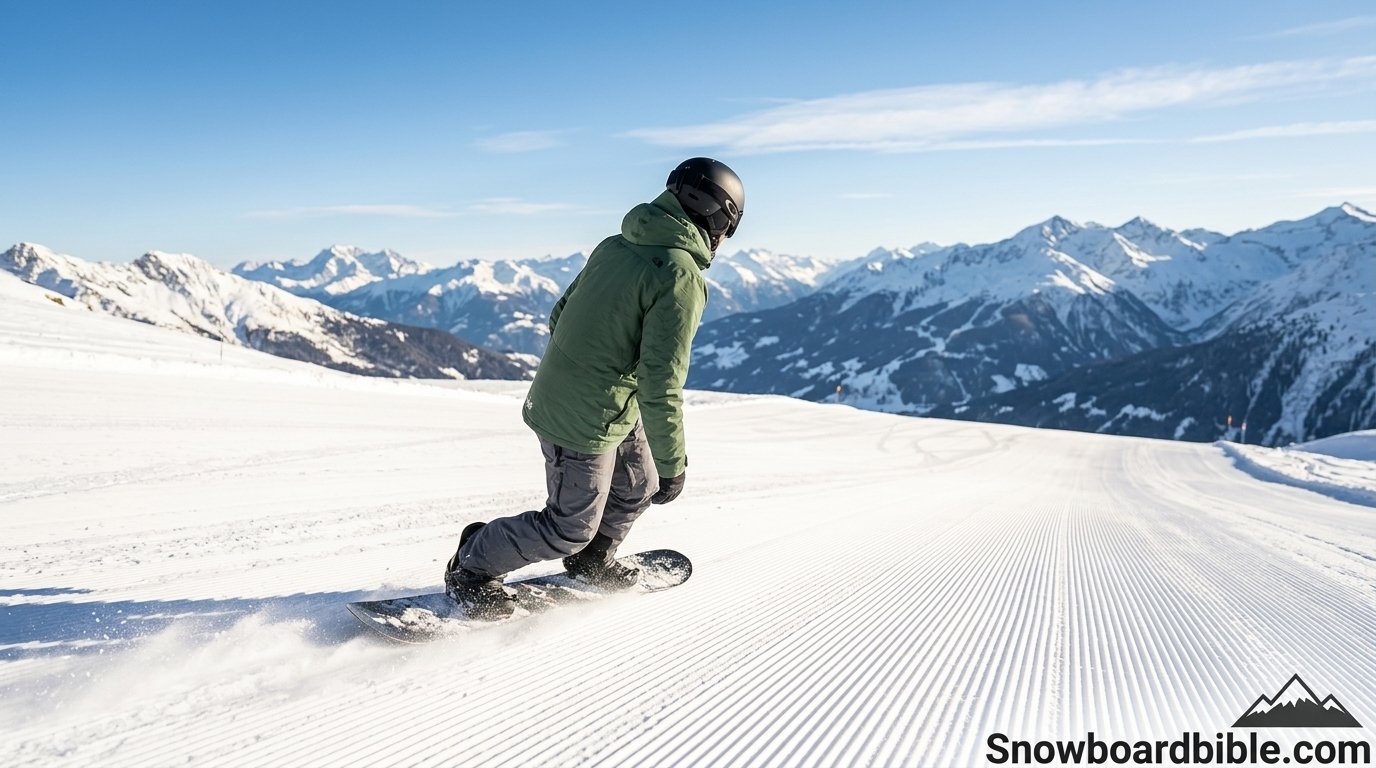
Do You Need a Helmet to Snowboard?
The honest, evidence-backed answer — plus what actually happens to your head when you fall, who can legally make you wear one, and how to choose a lid that fits your riding style.
The Short Answer
No law on most mountains will stop you from strapping in bare-headed, but the honest answer is yes — you need a helmet to snowboard. Not because a rulebook demands it, but because snow sports put your head within inches of hard-packed snow, ice patches, exposed rocks, trees, rails, and other riders moving at speed. A helmet will not prevent every injury, and it cannot guarantee you will never suffer a concussion. What it does is meaningfully reduce the odds of a skull fracture, cut the severity of many head impacts, and buy you a margin of safety that bare skin and a beanie simply cannot offer.
If you ride exclusively on mellow groomers at walking pace, the case is still strong, if slightly less urgent. If you ride terrain parks, trees, backcountry lines, or anywhere near rails and jumps, the case becomes close to non-negotiable. Nearly every professional rider, ski patroller, and orthopedic surgeon who studies snow sports will tell you the same thing: wear the helmet.
According to the most recent snowboard helmet safety statistics compiled by the National Ski Areas Association (NSAA) and other industry organizations, helmet usage among snowboarders has increased from less than 25% in the early 2000s to over 85% in recent seasons. This dramatic increase correlates with a measurable decrease in the rate of serious head injuries reported at ski resorts, even as the total number of riders and terrain park features has grown significantly.
Why People Still Ask This Question
Snowboarding culture has deep roots in rebellion against the buttoned-up rules of alpine skiing, and for a long time, going helmet-free was part of that identity. Beanies, unclipped jackets, and bare heads were the look. That aesthetic has faded fast over the last decade as the sport has matured, terrain parks have gotten bigger and more technical, and the medical community has published more data on traumatic brain injuries in snow sports.
Still, plenty of newer riders wonder whether a helmet is really necessary for a casual day on groomers, whether it will mess with their peripheral vision, or whether it’s just an extra expense on top of boots, bindings, and a board. Those are fair questions, and we’ll answer all of them here. If you’re brand new to the sport entirely, it’s worth reading our primer on how hard snowboarding actually is to learn alongside this article, since beginners fall more often and in less predictable ways than experienced riders.
The question of helmet necessity also intersects with several related queries riders search for every season: do snowboard helmets expire, how much does a snowboard helmet cost, what is the best snowboard helmet for beginners, and can you use a bike helmet for snowboarding. We’ll address each of these topics in detail throughout this guide.
What Actually Happens in a Fall
Understanding why helmets matter starts with understanding how a typical snowboarding fall unfolds. Unlike skiing, where a fall often involves a slower, twisting tumble, snowboarding falls tend to be sudden and directional. Because both feet are locked to a single board, a catch on your toe edge or heel edge can send you straight backward or forward with almost no time to brace.
A backward fall — often called “catching an edge” — is the classic mechanism behind snowboarding head injuries. The rider’s feet stop moving while their torso and head continue traveling forward or backward, and the head strikes the snow first. On a soft powder day, that impact might be a non-event. On a groomed, machine-packed run — which is hard-packed snow, not soft snow — that same fall can deliver a serious jolt to the skull, especially at higher speeds or on icy patches.
Why “It’s Just Snow” Is a Dangerous Assumption
Groomed runs are compacted by snowcats specifically so they hold an edge well, which also makes them firm — closer to packed dirt than to a snowball. Add variables like refrozen ice in the morning, exposed patches near lift lines, or hidden rocks near the surface late in the season, and “it’s just snow” stops being a reliable safety net.
For a deeper look at how falls happen and how to fall more safely when you do lose your balance, see our guide to snowboard fall safety technique.
What the Research Says
Head and traumatic brain injuries are consistently among the most common serious injuries recorded at ski resorts, and multiple independent studies over the past two decades have found that helmet use reduces the risk of head injury in snow sports without significantly increasing the risk of neck injury — a concern that was once raised as a counterargument to helmet use.
Researchers have also found that helmets are particularly effective at reducing the risk of skull fractures and lacerations, and they reduce the severity of many concussions even when they don’t prevent them outright. It’s important to be precise here: no helmet on the market eliminates concussion risk, because concussions are caused by rapid rotational and linear acceleration of the brain inside the skull, not just direct impact force. But reducing the raw force transmitted to the head is still a meaningful protective effect, which is why medical organizations that study winter sports injuries broadly recommend helmet use for all skiers and snowboarders, especially children.
The most recent snowboard helmet safety statistics from peer-reviewed studies and industry data reveal several key findings:
- Helmet use reduces the risk of any head injury by approximately 35% to 50% across all snow sports participants
- The reduction in risk for skull fractures specifically is even higher, with some studies showing a 60% to 70% reduction
- Helmeted riders are less likely to suffer severe traumatic brain injuries requiring hospitalization
- Children and adolescents show the greatest protective benefit from helmet use
- There is no statistically significant increase in neck or cervical spine injuries among helmet wearers compared to non-helmet wearers
- Terrain park injuries involving the head have decreased as helmet usage rates in parks have approached 90%+
| Injury Type | Effect of Helmet Use | Practical Takeaway |
|---|---|---|
| Skull fracture | Substantially reduced risk | Hard shell distributes impact force |
| Scalp lacerations | Greatly reduced | Shell and liner prevent direct contact with sharp edges/ice |
| Mild-to-moderate concussion | Reduced severity in many cases | Impact-absorbing foam slows deceleration |
| Rotational brain injury | Reduced with MIPS or similar tech | Look for rotational-impact systems, see below |
| Neck injury | No meaningful increase from helmet weight | Older “heavy helmet” concern is not supported by modern data |
| Fatal head trauma | Dramatically reduced | Most fatal snow sports head injuries occur in unhelmeted riders |
None of this means a helmet is a magic shield. It means a helmet shifts the odds meaningfully in your favor on the exact type of impact — a hard, sudden blow to the head — that snowboarding falls are especially prone to producing.
A comprehensive review published in the Journal of the American Medical Association (JAMA) and similar peer-reviewed publications analyzed over 20 years of ski resort injury data and concluded that helmets are the single most effective piece of protective equipment available to snowboarders and skiers, reducing both the frequency and severity of head injuries across all age groups, ability levels, and terrain types.

Ready to ride protected?
Check current prices on top-rated snowboard helmets with rotational impact protection.
Shop Snowboard Helmets →Are Helmets Legally Required?
In most of the world, there is no blanket law that requires recreational skiers and snowboarders to wear a helmet on public or resort-operated slopes. Helmet laws that do exist are usually narrower than people assume — some regions require helmets only for riders under a certain age, only within terrain parks, or only for participants in organized lessons and racing programs.
Ski resorts themselves sit somewhere in between voluntary and mandatory. Many resorts require helmets for children enrolled in lesson programs, for anyone using the terrain park, and for staff like ski patrol and lift operators. Independent adult riders on regular runs are typically free to choose, which is exactly why this remains an open question for so many people searching for an answer.
Helmet Laws by Region
Here’s a breakdown of how helmet regulations differ across major snowboarding destinations:
| Region | Helmet Requirements | Enforcement Level |
|---|---|---|
| United States | No federal law; some state-specific rules for minors in lessons or terrain parks | Resort-by-resort policies, generally educational rather than punitive |
| Canada | Provincial rules vary; Quebec and Ontario have considered mandatory helmet laws for minors | Mostly voluntary for adults, required for children in lessons |
| European Alps (France, Austria, Switzerland, Italy) | No EU-wide mandate; some regions require helmets for children under 14 in organized activities | Strongly encouraged but rarely enforced by law enforcement |
| Japan | No national helmet law for snow sports | Cultural expectation favors helmets, especially for children |
| Australia / New Zealand | No mandatory recreational helmet laws; ski area policies apply | High voluntary usage rates, especially in terrain parks |
Because rules vary by country, state, and even by individual resort, always check the specific mountain’s website or guest services desk before you assume the rule that applied at one resort applies everywhere.
Resort Rules and Mountain Culture
Regardless of the letter of the law, mountain culture has shifted hard toward near-universal helmet use. Multiple industry surveys over the last several seasons have put helmet usage rates among all skiers and snowboarders at well above 80%, and the number climbs even higher among terrain park riders, racers, and children. What used to mark you as overly cautious now marks you as the outlier if you’re the one rider on the chairlift without a lid.
This cultural shift matters practically, too. Terrain parks are busier and more crowded than ever, jump features have grown larger, and rail setups have become more technical. Riding among that traffic without head protection is a very different risk calculation than it was when parks were smaller and quieter.
The cultural transformation has been driven by several factors, including high-profile professional snowboarders publicly endorsing helmet use, consistent messaging from resort operators and instructors, and the visible impact of helmet technology improvements that make modern lids lighter, warmer, and more comfortable than the bulky designs of the 1990s and early 2000s. When riders like Shaun White, Travis Rice, and Chloe Kim appear in competition and film segments wearing helmets, the message that helmets are both safe and stylish reaches millions of fans.
If you’re planning a trip and want to know what to expect from a specific destination’s terrain and crowd levels, our guide to the best snowboarding destinations breaks down terrain type by resort, which can help you judge how seriously to take helmet use at each one.
Who Needs a Helmet Most
While the general recommendation is “everyone,” a few groups face measurably higher risk and should treat a helmet as absolutely essential rather than optional.
Beginners
New riders fall far more often than experienced ones, and they fall less predictably — catching an edge on flat, hard-packed terrain near the base area is one of the most common early-season injury mechanisms. If you’re just getting started, pair a helmet with proper fundamentals from our beginner tips guide and consider that formal lessons reduce fall frequency by teaching proper falling and edge control technique early. The best snowboard helmet for beginners is typically a lightweight in-mold model with excellent ventilation, since new riders generate significant body heat while learning and falling repeatedly.
Kids and Teens
Children’s skulls and necks are still developing, and their balance and reaction time lag behind adults. Nearly every children’s lesson program at major resorts requires a helmet for this reason. If you’re introducing a child to the sport, our guide on the best age to teach a child to snowboard covers age-appropriate gear, including properly sized kids’ helmets.
Terrain Park and Freestyle Riders
Jumps, rails, and boxes introduce height, rotation, and hard, unforgiving landing surfaces. A rider attempting even modest airs is exposed to a very different fall profile than someone cruising a blue groomer, and helmet use in park settings is close to universal among experienced riders for good reason.
Backcountry and Off-Piste Riders
Ungroomed, unpatrolled terrain adds rocks, stumps, tree wells, and variable snow conditions to the equation, all of which raise the stakes of any fall. Read our backcountry safety protocol for a full picture of what off-piste riding demands beyond a helmet alone.
Riders With Previous Concussions
If you’ve suffered a concussion in the past, your risk of another one is significantly elevated, and the consequences of a second impact can be more severe. Riders with a concussion history should treat helmet use as non-negotiable and consider adding rotational impact protection like MIPS to their setup.
How Much Does a Snowboard Helmet Cost?
One of the most common questions riders ask is how much does a snowboard helmet cost, and the answer varies more than you might expect depending on technology, brand, and features. Understanding the price tiers helps you make an informed decision without overspending or sacrificing safety.
Budget Snowboard Helmets ($40–$80)
At this price point, you’ll find basic in-mold helmets from reputable brands that still meet safety certification standards. These helmets typically feature fixed ventilation (no adjustable vents), simple fit systems, and basic liner materials. They’re perfectly safe for casual resort riding, and they’re the smart choice for budget snowboard helmets if you’re new to the sport and not yet sure how often you’ll ride. The trade-off is typically weight — budget helmets tend to be slightly heavier — and fewer comfort features like audio compatibility or magnetic buckle closures.
Mid-Range Snowboard Helmets ($80–$150)
This is the sweet spot for most riders. Mid-range helmets add adjustable ventilation, lighter construction, improved fit systems with better micro-adjustment, and often include features like goggle clip retention systems and audio-compatible ear pads. Some models in this range begin to include basic rotational impact protection or are constructed with hybrid shell designs that balance weight and durability. For most recreational riders, a helmet in this range represents the best balance of cost, comfort, and protection.
Premium Snowboard Helmets ($150–$300+)
Premium helmets push the boundaries of technology and weight savings. You’ll find full MIPS or proprietary rotational protection systems, carbon fiber or advanced composite shells, the lightest weights on the market, premium liner materials like merino wool or antimicrobial fabrics, and advanced ventilation systems with multiple adjustable zones. Some premium models include integrated technology like Bluetooth audio systems, heated visors, or heads-up displays. These helmets are favored by dedicated park riders, backcountry athletes, and anyone who wants the absolute best protection and comfort available.
Cost vs. Protection: What the Data Shows
Importantly, safety testing shows that a certified $60 helmet provides essentially the same baseline impact protection as a $250 helmet. The additional money buys comfort, weight reduction, ventilation control, and premium features — not fundamentally better baseline safety. That said, rotational impact protection systems like MIPS do represent a genuine safety upgrade that’s typically found at the upper end of the mid-range and throughout the premium tier.
| Price Range | Typical Features | Best For | Safety Certification |
|---|---|---|---|
| $40–$80 | Basic in-mold shell, fixed vents, simple fit system | Casual riders, first-time buyers | ASTM F2040 / CE EN1077 |
| $80–$150 | Adjustable vents, lightweight, better fit systems, audio compatible | Most recreational riders | ASTM F2040 / CE EN1077 |
| $150–$300+ | MIPS, carbon/advanced materials, premium liners, advanced ventilation | Park riders, backcountry, frequent riders | ASTM F2040 / CE EN1077 + rotational protection |
Top Snowboard Helmet Brands Compared
Understanding the major snowboard helmet brands helps you narrow your search and identify which manufacturers align with your priorities. Each brand has distinct strengths, and knowing these differences can save you time and money.
Smith Optics
Smith is one of the most established names in snow sports, known for seamless goggle-helmet integration through their proprietary AirEvac ventilation system. Their helmets feature excellent ventilation, lightweight construction, and a wide range of models from budget-friendly to premium. The Smith Vantage and Smith Quantum models are consistently rated among the best all-mountain helmets available. Smith’s BOA fit system on premium models offers precise, micro-adjustable fit that many riders consider best-in-class.
Giro
Giro has been a leader in helmet technology since the 1980s and was among the first brands to introduce MIPS to snow sports helmets. Their range spans from affordable entry-level models to the premium Giro Range and Giro Jackson with full MIPS integration. Giro helmets are known for their comfortable fit, excellent ventilation, and commitment to safety innovation. The brand’s In Form fit system allows for easy adjustment even with gloves on.
Anon (Burton)
Anon is Burton’s helmet and goggle brand, designed specifically with snowboarders in mind. Their helmets feature magnetic buckle closures for easy one-handed operation with gloves on, deep-shell designs that provide extra coverage at the back of the head (important for snowboarders’ backward falls), and seamless integration with Anon goggles. The Anon Prime and Anon Logan models are popular choices among park riders and all-mountain snowboarders.
POC
POC takes a scientific, data-driven approach to helmet design, emphasizing rotational impact protection across nearly their entire range. Their helmets feature distinctive Scandinavian design and robust safety credentials, though they tend to run slightly heavier than some competitors due to their focus on maximum protection. The POC Obex and POC Artic SL are excellent choices for riders who prioritize safety above all else. POC helmets often include MIPS, SPIN, or both technologies.
Oakley
Oakley entered the snow helmet market with a focus on integration with their popular goggle line. Their helmets feature modular brim systems that allow riders to match brim sizes to goggle sizes, ensuring a gap-free fit. Oakley helmets often include BOA fit systems and premium liners. The Oakley MOD5 and MOD3 are well-regarded options in the mid-to-premium price range.
Salomon
Salomon offers a range of helmets that emphasize lightweight construction and comfort. Their custom-fit technology uses heat-moldable liners that conform to your head shape for a truly personalized fit. Salomon helmets are often praised for their excellent ventilation and low profile, making them popular among riders who want protection without bulk. The Salomon MTN Lab and Salomon QST Charge are notable models.
Sweet Protection
Sweet Protection is a premium Norwegian brand known for exceptional build quality and attention to detail. Their helmets feature advanced carbon fiber construction in premium models, excellent ventilation, and a fit that many riders describe as the most comfortable available. Sweet Protection helmets are expensive, but they offer some of the best impact protection available. The Sweet Protection Switcher and Sweet Protection Grimnir are flagship models.
Other Notable Brands
Several other brands deserve mention: Bern offers affordable, stylish helmets popular among urban and park riders; Pret specializes in lightweight, low-profile designs favored by freestyle riders; Sandbox offers low-profile helmets with a skate-inspired aesthetic; and K2 and Atomic both produce solid, value-oriented options that cover the basics well at competitive prices.
Snowboard Helmet Sizing Guide & How to Measure
Getting the right snowboard helmet sizing is arguably more important than choosing the right brand or model. A helmet that’s too loose won’t stay in position during a fall, while one that’s too tight will cause headaches and distraction. Here’s exactly how to measure your head for a snowboard helmet and interpret sizing charts.
How to Measure Your Head for a Helmet
You’ll need a flexible cloth measuring tape, a mirror, and about two minutes. Follow these steps:
- Position the tape: Place the measuring tape approximately one inch (2.5 cm) above your eyebrows, wrapping it horizontally around the widest part of your head. This should pass just above your ears and over the bump at the back of your skull.
- Keep it level: Use a mirror to ensure the tape is level all the way around — not tilted up in front or sagging at the back.
- Measure multiple times: Take three measurements and use the largest number. Head circumference can vary slightly depending on hair thickness and tape tension.
- Record in centimeters: Most helmet sizing charts use centimeters as the primary measurement, so record your measurement in cm even if you also note inches.
Snowboard Helmet Sizing Chart
Once you have your measurement, use this general sizing chart as a starting point. Always check the specific brand’s chart, as sizing varies slightly between manufacturers.
| Helmet Size | Head Circumference (cm) | Head Circumference (inches) | Typical Age Range |
|---|---|---|---|
| XS | 48–52 cm | 18.9–20.5 in | Young children (3–6 years) |
| S | 52–55.5 cm | 20.5–21.9 in | Older children, petite adults |
| M | 55.5–59 cm | 21.9–23.2 in | Most adult women and smaller adult men |
| L | 59–62.5 cm | 23.2–24.6 in | Most adult men and larger adult women |
| XL | 62.5–65 cm | 24.6–25.6 in | Larger adult heads |
Proper Snowboard Helmet Position and Fit Test
The proper snowboard helmet position is level on your head, sitting low enough to cover your forehead without obstructing your vision. Here’s how to verify correct fit:
- Forehead coverage: The helmet should sit about one to two finger-widths above your eyebrows. If it rides too high on your forehead, it won’t protect the front of your skull in a forward fall.
- Shake test: With the chin strap unbuckled, shake your head firmly from side to side and up and down. The helmet should stay in place without sliding. If it shifts, tighten the fit system or size down.
- Pressure points: Wear the helmet for 10–15 minutes in the store. If you feel any sharp pressure points or hot spots, the shape doesn’t match your head, even if the size seems right.
- Goggle gap check: Put on your goggles with the helmet. There should be minimal or no gap between the top of the goggle frame and the helmet brim. A large gap exposes your forehead to cold and reduces protection.
Head Shape Considerations
Not all heads are shaped the same way. Most people fall into one of three categories: round oval (wider side-to-side), intermediate oval (balanced proportions), or long oval (longer front-to-back). Different brands tend to favor different head shapes — Giro and Smith often fit intermediate oval heads best, while POC and Sweet Protection accommodate rounder head shapes. If a particular brand consistently causes discomfort, try another brand rather than sizing up, which compromises protection.
Snowboard Helmet for Glasses Wearers
If you wear prescription glasses or prefer over-the-glasses goggles, look for helmets with wider ear pad cutouts and flexible shell designs. Many modern helmets include channels in the ear pads specifically designed to accommodate glasses temples without pressure. Models from Smith and Giro are frequently recommended for snowboard helmet for glasses wearers due to their generous ear pad design and compatible goggle integration.
Types of Snowboard Helmets Explained
Not all snowboard helmets look or function the same way. Understanding the different types of snowboard helmets helps you match your choice to your riding style, climate, and aesthetic preferences.
In-Mold Snowboard Helmets
In-mold helmets feature an expanded polystyrene (EPS) foam liner that’s fused directly to a thin polycarbonate outer shell during manufacturing. This construction creates a lightweight, low-profile helmet with excellent impact absorption. In-mold helmets are the most common type for recreational riders, offering the best balance of weight and protection for everyday all-mountain use. The trade-off is slightly less durability against multiple minor impacts and general wear compared to hard-shell designs.
Hard Shell (ABS) Snowboard Helmets
Hard shell helmets use a thicker ABS plastic outer shell bonded over the EPS foam liner. This construction is heavier than in-mold but offers superior durability against dings, scratches, and repeated minor impacts. Hard shell helmets are favored by terrain park riders who frequently knock their heads on rails, boxes, and during tricks, as well as backcountry riders who navigate tight trees and exposed terrain. The added weight is the primary drawback.
Hybrid Snowboard Helmets
Hybrid helmets combine in-mold and hard shell construction, typically featuring a hard shell over high-impact zones and in-mold construction elsewhere. This approach provides durability where you need it most while keeping overall weight lower than a full hard shell. Hybrid helmets are increasingly popular and represent a significant portion of the mid-range and premium markets.
Snowboard Half Helmet vs. Full Shell
The question of snowboard half helmet vs full shell often confuses new riders. In snowboarding, “half shell” typically refers to helmets that provide less ear coverage and a lower profile, similar in concept to skate-style helmets. Full shell helmets extend lower over the ears and back of the head, providing more coverage and warmth. For snowboarding, full shell coverage is generally recommended because backward falls are more common than in skiing, and the added rear and ear protection is valuable. Some freestyle riders prefer lower-profile designs for aesthetics and reduced weight, but this comes at the cost of some protection.
Snowboard Helmet with Visor
Integrated visor helmets replace the need for separate goggles, featuring a built-in shield that flips up and down. These snowboard helmet with visor models offer convenience and consistent fit, eliminating the goggle-helmet gap issue entirely. However, they tend to be heavier, less versatile in varying light conditions (unless the visor is photochromic or interchangeable), and more expensive than traditional helmet-plus-goggle setups. Visor helmets are most popular among recreational riders who value simplicity and comfort riders who want protection from wind and glare without managing separate goggles.
Low-Profile Snowboard Helmets
Low-profile helmets minimize bulk and visual mass, sitting closer to the head and reducing the “mushroom head” appearance that some riders dislike. Brands like Bern, Sandbox, and Pret specialize in this aesthetic, which appeals to park riders and riders transitioning from a beanie-wearing background. The low profile doesn’t necessarily mean less protection — these helmets still meet safety certifications — but they often have less ventilation and fewer features than traditional designs.
| Helmet Type | Weight | Durability | Best For | Typical Price Range |
|---|---|---|---|---|
| In-Mold | Lightest | Good | All-mountain, casual riders | $60–$250 |
| Hard Shell (ABS) | Heavier | Excellent | Park, backcountry, aggressive riding | $80–$200 |
| Hybrid | Moderate | Very Good | Versatile all-around use | $100–$300 |
| Visor Integrated | Heavier | Good | Recreational riders, simplicity seekers | $150–$350 |
| Low-Profile | Light | Good | Park, style-conscious riders | $70–$200 |
Snowboard Helmet Safety Certifications Explained
Understanding snowboard helmet safety certifications ensures you’re buying a helmet that has passed rigorous independent testing, not just one that looks protective. Here’s what the labels mean and why they matter.
ASTM F2040 (North America)
The ASTM F2040 standard is the primary safety certification for recreational snow sports helmets in North America. Helmets bearing this certification have passed impact absorption tests, penetration resistance tests, retention system strength tests, and coverage area requirements. The standard also includes testing for performance across a range of temperatures, ensuring the helmet protects in both warm spring conditions and deep cold. When shopping in the US or Canada, look for the ASTM F2040 label as your minimum standard.
CE EN1077 (Europe)
The CE EN1077 standard is the European equivalent, covering both Class A (full shell) and Class B (half shell) snow sports helmets. CE EN1077 testing includes similar impact, penetration, and retention requirements, with additional emphasis on cold-weather performance. Helmets sold in Europe must carry this certification, and many helmets sold internationally carry both ASTM and CE certifications.
Why Certification Matters
A certified helmet has been independently tested and verified to meet specific minimum safety thresholds. An uncertified helmet — even one that looks and feels identical to a certified model — has not undergone this verification. When buying from reputable retailers and established brands, certification is nearly universal. However, be cautious of extremely cheap helmets from unknown manufacturers, especially from online marketplaces that may not enforce safety standards.
MIPS Certification
MIPS (Multi-directional Impact Protection System) is not a safety certification in itself but an additional technology layer that addresses rotational impacts. MIPS-equipped helmets still meet ASTM or CE standards, but they add a low-friction slip plane that allows the helmet to rotate slightly relative to the head during angled impacts, potentially reducing rotational forces on the brain. MIPS is independently tested and validated, making it a meaningful safety upgrade beyond baseline certification.
Pros and Cons of Riding With a Helmet
To weigh the decision honestly, it helps to look at both sides rather than assume the answer is obvious.
Pros
- Meaningfully reduces skull fracture and laceration risk
- Can reduce the severity of many concussions
- Keeps your head and ears warm in cold or windy conditions
- Many models integrate goggle clips and audio compatibility
- Signals awareness and courtesy to other riders in shared terrain
- Provides a stable platform for mounting action cameras
- Modern helmets are lightweight and barely noticeable after a few runs
- Most models include removable, washable liners for hygiene
- Protects against incidental contact with tree branches and lift bars
- Required for most lessons, racing programs, and terrain park access
- Reduces wind noise and improves hearing of nearby riders
- Long-term cost savings by reducing injury risk and medical expenses
Cons
- Added upfront cost on top of other gear
- Poorly fitted models can feel bulky or restrict visibility
- Can trap heat on warm spring days if ventilation is poor
- Requires occasional cleaning and eventual replacement
- Does not eliminate concussion risk entirely
- Slight additional weight on your head
- May require goggle compatibility checks before purchase
- Can feel uncomfortable for riders not used to wearing headgear
- Storage space needed when traveling
Nearly every con on this list is solved by choosing the right helmet rather than skipping one entirely — a well-ventilated, properly sized model addresses the heat and comfort complaints, and the cost is modest compared to a single emergency room visit. The long-term cost savings of helmet use are substantial: a single head injury can result in thousands of dollars in medical bills, missed work, and long-term health consequences that far exceed the price of even a premium helmet.
Common Myths, Debunked
“Helmets increase neck injury risk.”
This idea traces back to older, heavier helmet designs and has not held up under modern research, which shows no meaningful increase in neck injury risk from today’s lightweight helmets. Multiple large-scale studies comparing helmeted and unhelmeted snow sports participants found no statistically significant difference in neck injury rates, and some research suggests helmets may actually reduce neck injury risk by distributing impact forces more evenly.
“A beanie is basically the same thing.”
A beanie offers warmth and essentially zero impact protection. It provides no rigid shell to distribute force and no foam liner to absorb energy, which are the two components that actually reduce head injury severity. The difference in protection between a beanie and a helmet is not a matter of degree — it’s the difference between having impact protection and having none at all.
“I only ride slow groomers, so I don’t need one.”
Speed is only one variable. A stationary fall on hard-packed snow near a lift line can still produce a hard, sudden impact to the back or side of the head, which is exactly the mechanism helmets are designed to soften. Additionally, your speed doesn’t control other people’s speed — collisions with faster riders or skiers are a real risk even on beginner terrain.
“Helmets block your hearing and peripheral vision.”
Most modern shells sit close to the head and are specifically shaped to avoid interfering with goggle fit or sound; ear pads are typically thin enough to hear lift announcements and nearby riders clearly. In fact, many riders report that helmets reduce wind noise, improving their ability to hear other riders approaching from behind.
“Expensive helmets are much safer than cheap ones.”
As discussed in the pricing section, all certified helmets meet the same minimum safety standards, regardless of price. The additional cost of premium helmets buys comfort, weight reduction, ventilation, and convenience features — not dramatically better baseline protection. Rotational protection systems like MIPS do represent a genuine safety upgrade, but they’re available at moderate price points as well as premium ones.
“I’ve been riding for years without one and I’m fine.”
This is a classic example of survivorship bias. The fact that you haven’t been injured yet doesn’t mean you won’t be in the future, and it doesn’t account for the riders who did suffer head injuries and are no longer around to share their experience. Snowboarding falls are inherently unpredictable, and experience level doesn’t eliminate the risk — professional riders with decades of experience still wear helmets and still suffer head impacts.
“Helmets make you take more risks.”
The concept of risk compensation — the idea that protective gear makes people behave more recklessly — has been studied in snow sports, and the evidence doesn’t support the concern. Most riders report that wearing a helmet doesn’t meaningfully change their risk tolerance, and the overwhelming protective benefit of helmets far outweighs any theoretical behavioral offset.
How to Choose the Right Helmet
Not all helmets are created equal, and the “best” one depends heavily on your riding style, climate, and head shape. Here’s what actually matters when shopping.
Fit First, Features Second
A helmet that doesn’t fit snugly won’t protect you properly no matter how advanced its technology is. It should sit level on your head, cover your forehead just above your eyebrows, and not shift when you shake your head side to side. Try helmets on with the goggles you actually plan to wear, since gaps between helmet and goggle can let in cold air and expose your forehead.
Shell Construction
| Shell Type | How It’s Made | Best For |
|---|---|---|
| In-mold | Foam liner fused directly to a thin outer shell | Lightweight all-mountain riding, everyday comfort |
| Hard shell (ABS) | Hard plastic shell bonded over foam | Park riders, durability-focused riders, frequent rail contact |
| Hybrid | Combines in-mold and hard-shell zones | Riders who want durability without extra weight |
Ventilation Systems
Adjustable vents matter more than they seem to on paper. Riders who tour uphill, ride in spring conditions, or simply run warm will appreciate helmets with sliding vent controls that can be closed on chairlifts and opened during exertion. Modern snowboard helmet ventilation systems range from simple fixed openings to complex adjustable channels that direct airflow across the scalp and out the back of the helmet. Look for helmets with goggle-compatible venting that prevents fogging by channeling warm air away from the goggle lens.
Certifications
Look for helmets certified to recognized snow sports safety standards. These certifications indicate the helmet has passed standardized impact testing, and while they don’t guarantee protection in every scenario, a certified helmet has cleared a meaningful safety bar that an uncertified one has not.
Fit Adjustment Systems
Modern helmets feature various fit adjustment systems, from simple foam pads to sophisticated micro-adjustable dials. Key systems include:
- BOA Fit System: A precision dial that tightens a cable network around the head, providing micro-adjustment in 1mm increments. Found on premium Smith, Anon, and Oakley helmets.
- In Form Fit System (Giro): An ergonomic dial that adjusts both tension and vertical positioning, accommodating different head shapes.
- Adjustable padding: Simple and affordable, but less precise than dial systems.
- Ratchet systems: Quick-adjust straps that can be tightened or loosened with gloves on.
For a full side-by-side breakdown of specific models across budgets, our best snowboard helmets guide covers everything from budget-friendly options to premium park-ready shells.
MIPS and Other Safety Technology
Most falls don’t deliver a perfectly straight-on impact — they involve some rotational force as the head twists on contact with the snow. Rotational impact protection systems, most commonly known by the brand name MIPS, add a low-friction layer inside the helmet that allows a small amount of independent movement between the shell and your head during an angled impact, which is designed to reduce the rotational force transmitted to the brain.
How MIPS Works
The MIPS system consists of a thin, low-friction polycarbonate layer positioned between the helmet’s EPS foam and the rider’s head. During an angled impact, this layer allows the helmet to slide 10–15mm relative to the head, mimicking the natural protective sliding motion of the scalp and cerebrospinal fluid. This sliding motion redirects rotational energy that would otherwise be transmitted to the brain. MIPS technology was developed by brain surgeons and scientists over more than two decades and has been adopted by hundreds of helmet manufacturers across cycling, snow sports, and motor sports.
Alternative Rotational Protection Technologies
Several brands have developed their own rotational protection systems as alternatives or complements to MIPS:
- POC SPIN: Uses silicone gel pads inside the helmet that allow multidirectional movement during impacts.
- Koroyd: A honeycomb-like structure that absorbs impact energy through controlled crushing, used in Smith and some other premium helmets.
- WaveCel (Anon/Burton): A cellular structure designed to flex, crumple, and glide during impacts, providing both linear and rotational protection.
- 360° Turbine Technology (Leatt): Small, disc-shaped turbines embedded in the liner that allow omnidirectional movement during impacts.
Is Rotational Protection Worth the Extra Cost?
For most riders, yes. Rotational protection systems typically add $30–$80 to the price of a helmet, and the potential benefit — reduced risk of concussion and traumatic brain injury from the most common type of snowboarding fall — represents excellent value. This is especially true for park riders, backcountry riders, children, and anyone with a history of head injuries. If your budget allows, choose a helmet with MIPS or equivalent rotational protection.
This kind of technology doesn’t replace good shell and foam construction — it works alongside it. When comparing two similarly priced helmets, one with a rotational protection system and one without, the added protection is generally worth the modest price difference, particularly for park riders and anyone riding aggressive terrain. Our full breakdown of MIPS snowboard helmet technology goes deeper into how these systems are engineered and tested.
Kids Snowboard Helmets: A Complete Guide
Choosing kids snowboard helmets requires special attention to fit, weight, and comfort, as children’s heads and necks are proportionally different from adults’. Here’s what parents need to know to keep their young riders protected.
Why Kids Need Helmets More Than Adults
Children are at higher risk for head injuries in snow sports for several reasons. Their heads are proportionally larger relative to their bodies, raising their center of gravity and making them more prone to falls. Their neck muscles are weaker, providing less stabilization during impacts. And their developing brains are more vulnerable to the effects of concussive forces. Studies consistently show that helmet use provides the greatest protective benefit for children and adolescents.
Kids Helmet Sizing
Children’s helmets use the same sizing principles as adult helmets but span smaller circumference ranges. Most kids’ helmets fit head circumferences from 48–55 cm, corresponding to ages roughly 3–12. Measure your child’s head using the method described in the sizing section above, and choose a helmet that fits now, not one they’ll “grow into.” A helmet that’s too large compromises protection and may shift during a fall.
Features to Look For
- Lightweight construction: Lighter helmets reduce neck strain for young riders, and modern in-mold kids’ helmets are remarkably light.
- Easy-to-use buckles: Kids should be able to operate the buckle themselves, but it should also be secure enough to stay fastened during falls.
- Adjustable fit systems: Kids grow quickly, and helmets with adjustable fit systems can accommodate small growth spurts.
- Bright colors: Visibility matters. Brightly colored helmets make your child easier to spot on the mountain.
- Goggle compatibility: Choose goggles and helmet together to ensure a proper fit without gaps.
When to Replace Kids’ Helmets
Children outgrow helmets faster than adults for obvious reasons. Check fit before every season and replace the helmet if it’s become too tight, has been involved in a significant impact, or shows signs of wear. Most kids’ helmets last 1–3 seasons, depending on growth rate and usage frequency.
Women’s Snowboard Helmets and Small Head Fit
Finding the right women’s snowboard helmet or best helmet for small heads requires attention to shape and sizing differences that often go overlooked. While many helmets are marketed as unisex, the reality is that head shapes vary, and some brands fit certain profiles better than others.
Are Women’s Helmets Different?
In most cases, women’s snowboard helmets share the same shell construction and safety technology as men’s models but come in smaller sizes and different colorways. The primary differences are:
- Size range: Women’s helmets typically span XS through M, accommodating head circumferences from 48–58 cm.
- Fit profile: Some women’s models feature slightly different internal shaping to accommodate typically rounder head profiles.
- Color and design: Women’s models often include different color options and lower-profile styling.
- Liner materials: Some women’s helmets include liner fabrics designed to be gentler on longer hair and compatible with ponytails or braids.
Best Helmets for Small Heads
Riders with head circumferences below 52 cm often struggle to find helmets that fit properly. Look for brands that offer XS sizing and true small-head fit:
- Smith: Offers XS sizes in several models with adjustable BOA fit systems that can be dialed down snugly.
- Giro: The In Form fit system accommodates smaller circumferences well, and Giro offers youth-to-adult sizing transitions.
- Anon: Burton’s helmet brand includes small sizes in most models with deep shell designs for back-of-head coverage.
- Pret: Known for low-profile designs that work well on smaller heads without looking bulky.
- Bern: Offers a wide range of sizing including smaller options, with an emphasis on style and low profile.
Hair Considerations
Riders with thick, long, or textured hair face unique helmet fit challenges. Hair volume can affect how a helmet sits and feels, and tight styles may create pressure points under the helmet. Consider helmets with removable, washable liners that can accommodate different hair styles, and look for models with deeper ear pad cutouts if you wear your hair down while riding. Some riders prefer to adjust their hairstyle for riding — braids, low buns, or ponytails positioned below the helmet line all work well. Whatever your preference, test the helmet fit with your hair styled the way you’ll wear it on the mountain.
Bluetooth and Audio-Integrated Snowboard Helmets
Bluetooth snowboard helmets have evolved from novelty items into genuinely useful gear for riders who want music, phone calls, or communication with riding partners. Here’s what to consider if you’re interested in audio integration.
Built-In vs. Aftermarket Audio
Two approaches exist for adding audio to your snowboarding setup. Built-in systems feature speakers and controls integrated directly into the helmet at the factory, offering the cleanest installation and best fit. Aftermarket systems, like Outdoor Tech Chips or similar products, install into any helmet with audio-compatible ear pads, providing more flexibility if you already own a helmet you like.
Pros of Audio-Integrated Helmets
- Music and podcasts for long chairlift rides and solo sessions
- Hands-free phone calls without removing gloves or helmet
- Communication with riding partners in crowded terrain or backcountry settings
- Integration with action cameras for voice control features
- No tangled wires or uncomfortable earbuds
Cons and Considerations
- Added cost — integrated audio typically adds $50–$150 to helmet price
- Reduced situational awareness — music can mask the sound of approaching riders
- Battery management — audio systems require charging and may run out of power during long sessions
- Additional weight — speakers and batteries add grams to the helmet
- Compatibility issues — some systems only work with specific helmet models
Safety Considerations for Audio Use
If you ride with audio, keep the volume low enough to hear what’s happening around you. The sound of another rider approaching from behind or a shouted warning can be critical on busy slopes. Some riders prefer to use only one speaker, leaving one ear open to ambient sound. Whatever your setup, prioritize situational awareness over entertainment — the mountain demands your full attention.
Snowboard Helmet Accessories You Should Know About
Several snowboard helmet accessories can enhance comfort, functionality, and style. Here are the most useful additions to consider.
Helmet Covers and Hoods
Helmet covers add style and identity to your setup. From fun animal designs to custom team colors, covers slide over the helmet and transform its appearance. Beyond aesthetics, covers can provide additional warmth in extreme cold and protect the helmet from scratches during transport.
Action Camera Mounts
Many riders mount GoPro or similar cameras to their helmets for capturing runs. Choose mounts designed specifically for your helmet model and follow manufacturer guidelines for attachment. Avoid drilling or permanently modifying the helmet, as this can compromise structural integrity and void the safety certification.
Replacement Liners
Most helmet liners are removable and washable, but they eventually wear out. Replacement liners can extend the life of the helmet shell, though the EPS foam’s protective capacity still degrades over time. Replacing liners is worthwhile for hygiene and comfort, but don’t use liner replacement as a reason to delay helmet replacement beyond the recommended lifespan.
Helmet Bags
A padded helmet bag protects your investment during travel and storage. Look for bags with ventilation to prevent moisture buildup and enough structure to prevent crushing in luggage. Many riders store their goggles and gloves in the same bag for convenience.
Helmet Locks
If you leave your helmet on a rack or in a base lodge, a simple helmet lock can prevent opportunistic theft. These lightweight cable locks attach through the helmet and around a fixed object, similar to a bike lock. Premium helmets are worth protecting.
Beanie Liners
Some riders add a thin beanie or skull cap under their helmet for extra warmth on cold days. If you do this, ensure the helmet still fits properly — a beanie adds bulk and may require loosening the fit system. Choose thin, non-bulky liners designed for helmet compatibility.
Renting vs. Buying a Snowboard Helmet
The snowboard helmet rental vs buying decision depends on how often you ride and how much you value fit consistency. Both options have merit in different situations.
Renting a Snowboard Helmet
For first-time riders or occasional visitors taking one or two trips per season, renting makes practical sense. Resort rental shops typically carry current-model helmets that meet safety standards, and rental staff can help with proper sizing. Rental helmets are cleaned between uses and inspected for damage, though they won’t have a documented impact history. Expect to pay $10–$20 per day for helmet rental, which is often bundled with board, boot, and binding rental packages.
Buying a Snowboard Helmet
If you ride more than 3–5 days per season, buying your own helmet quickly becomes more economical than renting. The break-even point is typically one to two seasons of rental fees. Beyond economics, owning your helmet provides several advantages:
- Consistent fit: The helmet conforms to your head over time, improving comfort and protection.
- Known history: You know exactly what impacts the helmet has experienced and when it needs replacement.
- Hygiene: Your own helmet contains only your sweat, not a season’s worth of other riders’.
- Features matched to you: You can choose ventilation, audio, and fit features that match your preferences.
- Goggle compatibility: You can ensure your goggles and helmet work together seamlessly.
Pairing a Helmet With the Rest of Your Kit
A helmet is one piece of a larger protective system, not a standalone solution. Riders who take safety seriously typically pair it with a few other items depending on their terrain:
- Goggles sized to your helmet — a proper seal keeps wind, snow, and UV glare out. See our best snowboarding goggles guide.
- Wrist guards — wrists are one of the most commonly injured joints in snowboarding, especially for beginners who instinctively reach out during a fall. Check our best wrist guards roundup.
- Impact shorts — protect the tailbone during backward falls, which are extremely common when learning. Our impact shorts guide has options for every budget.
- Knee pads — useful for park riders and anyone spending time on rails or boxes. See best snowboard knee pads.
- Back protectors — a step up in protection for backcountry or aggressive park riders. Our back protector guide explains when this extra layer makes sense.
Goggle-Helmet Compatibility
The most important pairing is between your helmet and goggles. A proper fit should leave minimal gap between the top of the goggle frame and the helmet brim. Major brands design their helmet and goggle lines to work together, and staying within a brand often yields the best integration. Smith helmets pair best with Smith goggles, Anon with Anon, Oakley with Oakley, and so on. However, most modern helmets and goggles are reasonably cross-compatible if the sizes are appropriate.

Complete your protective setup
Pair your helmet with wrist guards and impact shorts for a full safety kit.
Shop Protective Gear →Signs of a Concussion After a Snowboard Fall
Even with a helmet, head impacts can cause concussions. Recognizing the signs of concussion after snowboard fall is critical for proper treatment and recovery. If you or someone you’re riding with experiences any of these symptoms after a head impact, stop riding and seek medical evaluation.
Immediate Signs to Watch For
- Loss of consciousness, even briefly
- Confusion, disorientation, or difficulty answering simple questions
- Amnesia about the fall or events before or after
- Headache or pressure in the head
- Dizziness, balance problems, or vertigo
- Nausea or vomiting
- Blurred or double vision
- Ringing in the ears
- Slurred speech
- Unusual drowsiness or difficulty staying awake
- Sensitivity to light or sound
- Feeling “foggy” or “not right”
- Emotional changes — irritability, sadness, or unusual emotional responses
What to Do If You Suspect a Concussion
- Stop riding immediately: Continuing to ride with a concussion increases the risk of a more serious injury. A second impact before recovery can have catastrophic consequences.
- Seek help: Alert ski patrol or visit the resort’s medical facility. Most resorts have trained personnel who can assess concussions on-site.
- Don’t be alone: Stay with the injured person and monitor their condition. Concussion symptoms can worsen over time.
- Get medical clearance: Before returning to riding, get clearance from a medical professional. Return-to-sport should be gradual and symptom-free.
- Replace your helmet: If your helmet absorbed a significant impact, replace it regardless of visible damage.
Long-Term Concussion Risks
Repeated concussions, especially before full recovery from a previous concussion, can lead to long-term neurological problems including chronic headaches, memory issues, mood changes, and increased susceptibility to future concussions. In rare cases, a second impact before recovery can cause a dangerous condition called second impact syndrome, which can be fatal. Taking concussions seriously is not optional — it’s essential for long-term brain health.
Helmet Care and When to Replace It
A helmet’s protective foam is designed to compress and absorb energy during an impact, which means that energy-absorbing capacity is often used up even if the shell looks undamaged from the outside. As a general guideline, replace your helmet after any hard impact, even if you feel fine afterward and see no visible cracks.
Daily and Seasonal Care
- Wipe down the shell: Use a soft, damp cloth with mild soap to clean the exterior. Avoid harsh chemicals or solvents that can degrade the shell material.
- Air dry liners: After each ride day, remove the liner and allow it to air dry completely before reinstalling. This prevents mold, mildew, and odor.
- Wash liners periodically: Most liners are machine washable on gentle cycle with mild detergent. Check the manufacturer’s instructions for your specific model.
- Store properly: Keep your helmet in a cool, dry place away from direct sunlight and heat sources. Avoid storing in a car trunk during summer months, as extreme heat accelerates foam degradation.
- Avoid chemical exposure: Don’t apply stickers with strong adhesives, paint, or solvents to the helmet, as these can weaken the shell material.
Impact-Related Replacement
Any hard impact — whether the helmet shows visible damage or not — necessitates replacement. The EPS foam compresses permanently during impact, and this compression reduces or eliminates its ability to absorb future impacts. This is true even for impacts that don’t produce visible cracks or dents in the outer shell. When in doubt, replace the helmet. The cost of a new helmet is minimal compared to the cost of inadequate protection during your next fall.
Beyond impact-related replacement, foam liners degrade slowly over years of temperature swings, sun exposure, and sweat, so most manufacturers recommend replacing a helmet every several seasons of regular use even without a major impact. Store it away from direct heat, avoid tossing it loosely in your car trunk where hard objects can crack the shell, and wipe the liner down periodically to prevent odor and bacteria buildup.
If you’re not sure whether foot or boot discomfort is related to how your gear fits overall, it’s also worth checking our guide on why your feet hurt when snowboarding, since head-to-toe fit consistency matters for a comfortable, safe day on the mountain.
Do Snowboard Helmets Expire? Understanding Helmet Lifespan
The question do snowboard helmets expire is one of the most common queries from riders evaluating whether their current helmet is still safe to use. The answer is nuanced: helmets don’t have a fixed expiration date like food, but their protective capacity does degrade over time.
How Long Does a Snowboard Helmet Last?
Most manufacturers recommend replacing a snowboard helmet every 3–5 years of regular use, even without any notable impacts. This recommendation is based on several factors:
- Foam degradation: EPS foam slowly breaks down over time, losing its impact-absorbing properties. Temperature fluctuations, UV exposure, sweat, and natural aging all contribute to this degradation.
- Shell fatigue: The outer shell material can become brittle with age, especially if exposed to UV radiation and extreme temperatures regularly.
- Comfort liner wear: Liners compress with use, affecting fit and potentially allowing the helmet to shift during impacts.
- Technology advancement: Helmet technology — including rotational protection systems, ventilation design, and materials — has improved significantly. A 10-year-old helmet, even in perfect condition, lacks the safety features of modern designs.
Factors That Shorten Helmet Lifespan
- Frequent use: Helmets used 30+ days per season wear faster than occasional-use helmets
- Extreme temperature exposure: Repeated freezing and thawing accelerates material degradation
- Sun exposure: UV radiation damages both shell and liner materials over time
- Sweat and moisture: Moisture absorbed into the foam can contribute to degradation
- Minor impacts: Even small bumps and drops accumulate damage over time
- Improper storage: Heat from car trunks, attics, or garages accelerates degradation
Signs Your Helmet Needs Replacement
- Visible cracks, dents, or deformation in the shell
- Loose or non-functional fit adjustment systems
- Crumbling or compressed foam liner
- Faded or chalky shell material indicating UV damage
- Persistent odor that doesn’t resolve with cleaning
- Age exceeding manufacturer’s recommended replacement interval
- Any significant impact to the head while wearing the helmet
Snowboard Helmet vs. Bike Helmet: Key Differences
Many riders wonder whether a bike helmet can substitute for a snowboard helmet, or whether one helmet can serve both purposes. The snowboard helmet vs bike helmet comparison reveals important differences that make dedicated snowboard helmets the right choice for winter sports.
Design and Coverage Differences
Snowboard helmets are designed for a different impact profile than bike helmets. Snowboard helmets provide coverage lower on the back of the head and over the ears, protecting against the backward falls that are characteristic of snowboarding. Bike helmets typically sit higher on the head with less rear and temporal coverage. Snowboard helmets also include insulated liners and ear pads for cold-weather comfort, while bike helmets are designed for maximum ventilation in warm conditions.
Impact Protection Differences
While both helmet types are tested to their respective safety standards, the tests differ. Snowboard helmets (tested to ASTM F2040 or CE EN1077) undergo impact testing at multiple temperatures to ensure protection in cold conditions. Bike helmets (tested to CPSC standards) are tested at room temperature. The foam and shell materials used in snowboard helmets are formulated to maintain protective properties in freezing temperatures, while bike helmet materials prioritize heat dissipation and lightweight construction.
Can You Use a Bike Helmet for Snowboarding?
Technically, a bike helmet provides some protection in a snowboarding fall, but it’s not recommended for several reasons. The reduced coverage exposes the back of your head and ears to impact and cold. The ventilation design allows snow and cold air direct access to your head. The materials may become brittle in extreme cold, reducing protective capacity. And the fit is likely compromised by winter accessories like goggles and balaclavas. If you snowboard with any regularity, invest in a proper snowboard helmet.
Can You Use a Snowboard Helmet for Biking?
Some snowboard helmets carry dual certification for both snow sports and cycling, but this is not universal. Snowboard helmets are typically heavier and less ventilated than bike helmets, making them uncomfortable for warm-weather cycling. If you want one helmet for both activities, look specifically for dual-certified models that have been tested to both ASTM F2040 and CPSC standards. These are rare and tend to be compromised in both applications rather than optimized for either.
Frequently Asked Questions
Is it mandatory to wear a helmet while snowboarding?
At most resorts, no — helmets are not legally required for adult recreational riders, though some regions and resorts mandate them for children, lesson participants, and terrain park users. Always check the specific resort’s policy before your trip.
Can you snowboard without a helmet?
Yes, it’s physically and typically legally possible at most resorts, but medical evidence strongly supports wearing one given how common and unpredictable head impacts are in snow sports.
Do helmets actually prevent concussions?
Not entirely. Helmets reduce the force transmitted to the skull and can lower the severity of many concussions, but no helmet can fully eliminate concussion risk because concussions result from rapid brain movement inside the skull, not just direct impact.
What’s the difference between a ski helmet and a snowboard helmet?
Functionally, very little — most modern helmets are designed and certified for both sports. Some snowboard-specific models add slightly more coverage at the back of the head, since snowboarders are statistically more prone to backward falls than skiers.
How should a snowboard helmet fit?
It should sit level on your head, cover your forehead just above the eyebrows, feel snug without pinching, and not shift when you shake your head. Try it on with your goggles to check for gaps.
Do I need to replace my helmet after every fall?
Only after a hard impact to the head, not for routine falls onto your hip or backside. If your head made contact with the ground, ice, a rail, or another object, replace the helmet even if it looks undamaged.
Are cheaper helmets less safe than expensive ones?
Not necessarily — certified helmets at any price point have passed baseline impact testing. Higher-priced models typically add features like better ventilation, lighter materials, and rotational impact protection rather than fundamentally different safety.
Can wearing a helmet make me overconfident and take more risks?
This is sometimes called “risk compensation,” and while it’s a reasonable concern in theory, it shouldn’t be a reason to skip protective gear — the solution is riding within your ability regardless of what you’re wearing, not avoiding a helmet.
Do helmets keep your head warm too?
Yes, most helmets include insulated liners and ear pads that keep you considerably warmer than a beanie alone, particularly in wind or on chairlifts.
Should kids always wear a helmet when snowboarding?
Yes — most instructors and pediatric safety guidelines strongly recommend helmets for children given their higher fall frequency and developing skulls and necks.
What is MIPS and do I really need it?
MIPS is a rotational impact protection system built into many modern helmets. It’s not mandatory, but it’s a worthwhile upgrade for park riders and anyone riding aggressive or fast terrain, since it targets angled impacts that straight impact-absorbing foam doesn’t fully address.
How long does a snowboard helmet last?
Most manufacturers recommend replacement every 3–5 seasons of regular use, or immediately after any hard impact, whichever comes first.
How do I measure my head for a snowboard helmet?
Wrap a flexible measuring tape around your head approximately one inch above your eyebrows, passing just above your ears and over the bump at the back of your skull. Use the largest of three measurements and match it to the manufacturer’s sizing chart.
Can I use a bike helmet for snowboarding?
It’s not recommended. Snowboard helmets provide more coverage, are designed for cold-weather impact protection, and include insulation and ear protection that bike helmets lack. The materials in bike helmets may also become brittle in freezing temperatures.
Do snowboard helmets have an expiration date?
Helmets don’t carry a printed expiration date, but the foam and shell materials degrade over time. Most manufacturers recommend replacing helmets after 3–5 seasons of regular use, regardless of visible condition.
What should I do if I hit my head while snowboarding?
Stop riding immediately and assess for concussion symptoms. If you experience any symptoms — headache, dizziness, confusion, nausea, vision changes, or unusual drowsiness — seek medical evaluation. Replace your helmet after any significant head impact.
Are Bluetooth snowboard helmets safe?
Yes, as long as you keep volume low enough to maintain situational awareness. The ability to hear other riders and ambient sounds is important for safety, so use audio systems responsibly and avoid full-volume listening in crowded terrain.
How much should I spend on a snowboard helmet?
A helmet in the $80–$150 range offers the best balance of safety, comfort, and features for most riders. Budget options under $80 are safe if certified, and premium models over $150 add comfort and advanced protection like MIPS.
Can I wear a beanie under my snowboard helmet?
A thin, non-bulky beanie can be worn under a helmet for extra warmth, but it may affect fit. Ensure the helmet still sits properly and doesn’t shift. Thick or bulky beanies should be avoided as they can compromise the helmet’s protective function.
What’s the difference between ASTM and CE helmet certifications?
Both are legitimate safety standards. ASTM F2040 is the North American standard, while CE EN1077 is the European standard. Many helmets carry both certifications. Either certification indicates the helmet has passed rigorous impact testing.
How do I clean my snowboard helmet liner?
Most liners are removable and machine washable on gentle cycle with mild detergent. Air dry completely before reinstalling. Wipe the shell with a damp cloth and mild soap, avoiding harsh chemicals.
Should I rent or buy a snowboard helmet?
If you ride more than 3–5 days per season, buying is more economical and provides better fit consistency and hygiene. Renting makes sense for first-timers or occasional riders taking one or two trips per season.
Final Verdict: Wear the Helmet
Do you legally need a helmet to snowboard? In most places, no. Do you need one in every practical, medical, and common-sense sense of the word? Yes. Snowboarding falls happen fast, often without warning, and frequently onto hard-packed snow that behaves more like a firm surface than a soft cushion. A well-fitted, properly certified helmet won’t make you invincible, but it dramatically improves your odds in exactly the kind of fall that snowboarding produces most often — a sudden, direct hit to the head.
Whether you’re a first-timer working on your first linked turns or a seasoned park rider stacking rail combos, the calculation is the same: a helmet is inexpensive, comfortable once properly fitted, and genuinely protective. There’s no strong argument left for skipping one.
The evidence is overwhelming: helmets reduce head injury risk by 35–50%, dramatically cut the severity of impacts that do occur, and have no meaningful downside beyond the modest initial cost. With modern helmets weighing as little as 400–500 grams, offering advanced ventilation, and featuring technologies like MIPS for rotational impact protection, the comfort argument against helmets has evaporated. Today’s snowboard helmets are lighter, warmer, more ventilated, and more stylish than the beanies many riders wore in the sport’s early days.
Invest in a certified helmet that fits properly, replace it after impacts or every 3–5 seasons, and ride with confidence knowing you’ve made the single most impactful safety decision available to any snowboarder. Your brain is worth it.
Find your perfect fit
Browse top-rated, certified snowboard helmets for every budget and riding style.
Shop Snowboard Helmets Now →


