
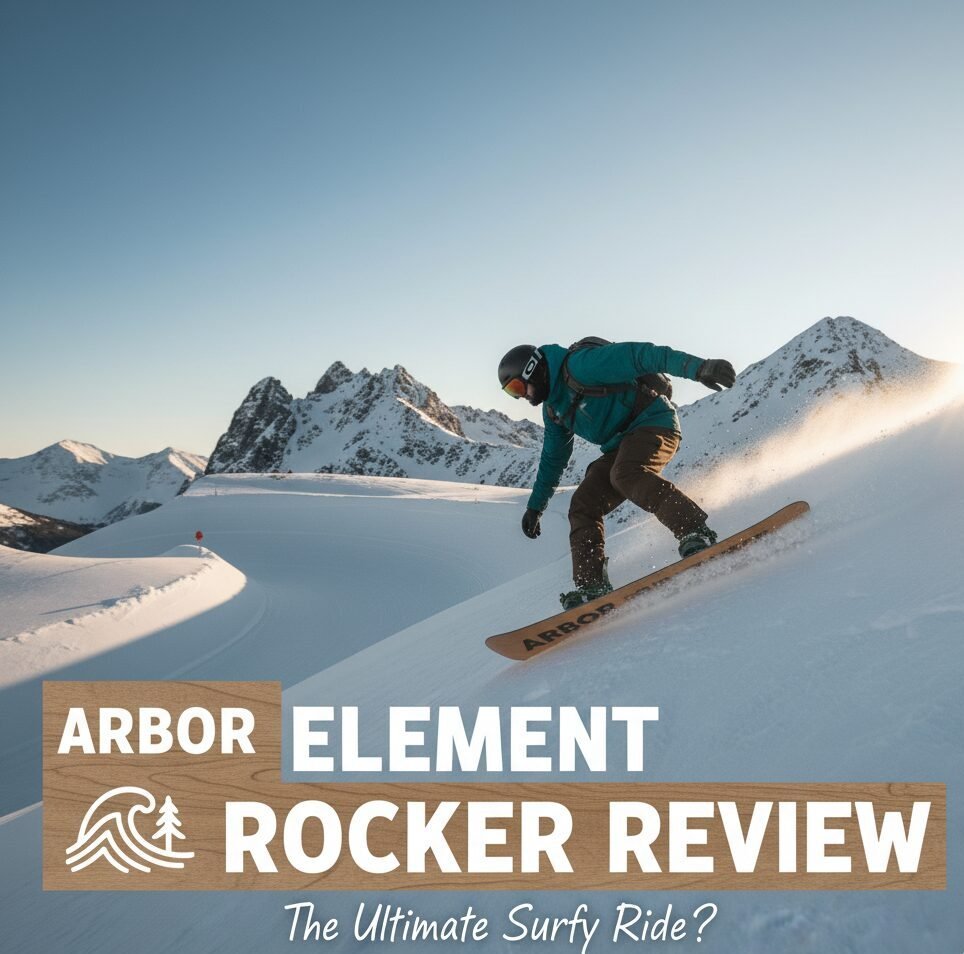
Arbor Element Rocker Review: The Ultimate Surfy Ride?
Is the Arbor Element Rocker truly the most versatile board for intermediate riders? We break down the System Rocker technology, Grip Tech, and sustainability to see if it lives up to the hype.
Table of Contents
- 1. Introduction
- 2. History and Evolution of the Arbor Element
- 3. Quick Specs & At A Glance
- 4. The Tech: System Rocker, Grip Tech & Power Ply
- 5. Sustainability & Eco-Friendly Construction
- 6. Performance on the Mountain
- 7. Terrain-Specific Deep Dive
- 8. See It In Action (Video)
- 9. Comparison: Element Rocker vs. The Competition
- 10. Complete Sizing & Weight Chart
- 11. Stance Setup & Binding Angle Guide
- 12. Recommended Setup
- 13. Maintenance, Waxing & Care Guide
- 14. Long-Term Durability Report
- 15. Snow & Weather Conditions Performance
- 16. Who Should (and Shouldn’t) Buy This Board
- 17. Women’s Version: The Arbor Cadence Rocker
- 18. Value for Money Analysis
- 19. Pros & Cons
- 20. Warranty & Return Policy
- 21. Where to Buy
- 22. Frequently Asked Questions
- 23. Final Verdict
For over 25 years, the Arbor Element has been a cornerstone of the snowboarding industry. It is the board that put Arbor on the map, famous for its stunning wood grain topsheets and eco-friendly construction. But beyond the aesthetics, the Arbor Element Rocker (also known as the Element Black in some iterations) is designed to solve a very specific problem: making snowboarding effortless.
If you have ever wondered why snowboarding is fun, it usually boils down to that feeling of floating over snow without catching an edge. The Element Rocker is engineered specifically to enhance that sensation. It utilizes a parabolic rocker profile that creates a surfy, loose feel, making it a favorite for intermediate riders looking to progress or experts who want a chilled-out cruiser.
In this review, we will dissect how this board handles everything from icy groomers to deep powder, and compare it against its stiff competition. We’ll also discuss why its unique “Grip Tech” edges might save you from a nasty fall—something to consider if you’ve been reading up on why snowboarding is dangerous for beginners.
Whether you are a weekend warrior heading to the local resort, a rider chasing powder days in the backcountry, or someone looking for a daily driver that can handle everything the mountain throws at you, this review aims to answer every question you might have about the Arbor Element Rocker. We have spent extensive time on this board across various conditions—from early-morning corduroy to end-of-day slush, from waist-deep powder to bulletproof ice—and we will share honest, unfiltered feedback on every aspect of its performance.
This is not a sponsored review. We purchased this board at full retail price to ensure our opinions remain unbiased. Every praise and every criticism in this article comes from genuine on-snow experience. If you value honest, no-nonsense snowboard reviews, you have come to the right place.
We will also cover topics that most reviews skip over: the board’s environmental impact, long-term durability after multiple seasons, optimal setup configurations for different riding styles, and detailed comparisons with direct competitors. By the time you finish reading, you will have a comprehensive understanding of whether the Arbor Element Rocker deserves a spot in your quiver.
History and Evolution of the Arbor Element
Understanding the Arbor Element’s heritage helps explain why it remains one of the most respected snowboards in the industry. The Element has undergone significant evolution since its inception, each iteration refining the formula that made it iconic.
Arbor Snowboards was founded in Venice, California, with a mission to create high-performance snowboards that didn’t compromise on environmental responsibility. The Element was part of the original lineup, featuring a revolutionary wood topsheet that distinguished it from every other board on the market.
Arbor introduced the System Rocker profile to the Element, marking a pivotal moment in the board’s history. The parabolic rocker design was unlike anything competitors offered. While other brands were still debating camber versus rocker, Arbor found a middle ground that provided the forgiveness of rocker without completely sacrificing edge hold.
The addition of Grip Tech revolutionized the Element’s versatility. By adding raised contact points along the edge, Arbor solved the rocker board’s Achilles heel: poor ice hold. This innovation made the Element viable in conditions that would have previously been reserved for camber boards.
Arbor upgraded the Element’s core to the Highland II blend, combining poplar with paulownia wood. This change reduced weight while maintaining the snappy, responsive feel that riders loved. The paulownia wood, sustainably harvested, added natural dampening properties that improved the ride quality significantly.
In a bold move toward sustainability, Arbor transitioned from petroleum-based resins to bio-resin across the Element lineup. This change reduced the board’s carbon footprint without any compromise in performance—in fact, the bio-resin proved to be slightly more flexible and impact-resistant than its predecessor.
The most recent update introduced the Power Ply topsheet, a structural layer of real wood that acts as an additional fiberglass layer. This innovation added snap and durability while maintaining the iconic aesthetic that Arbor is known for. The Element was now more durable than ever.
Today’s Arbor Element Rocker represents the culmination of nearly three decades of refinement. Every component—from the core materials to the base formula—has been iteratively improved based on rider feedback and advances in manufacturing technology. This lineage matters because it explains why the Element feels so polished; it has had more development cycles than most competitors.
The Element has also maintained its cultural relevance throughout these changes. In an industry where models come and go, the Element has survived by staying true to its core identity: a beautiful, sustainable, versatile snowboard that makes riding fun. It has appeared in countless magazines, videos, and “best of” lists, and remains a go-to recommendation for riders stepping up from beginner to intermediate equipment.
At A Glance: Arbor Element Rocker
| Profile | System Rocker (Parabolic) |
|---|---|
| Shape | Directional Twin |
| Flex | Medium (5/10) |
| Core | Highland II Core (Poplar/Paulownia) |
| Base | Sintered Base |
| Best For | All-Mountain, Powder, Cruising |
| Skill Level | Intermediate to Advanced |
| Warranty | 3-Year Manufacturer Warranty |
| Available Sizes | 153, 156, 159, 162, 156W, 159W, 162W |
| Board Weight (156cm) | Approximately 5.8 lbs (2.6 kg) |
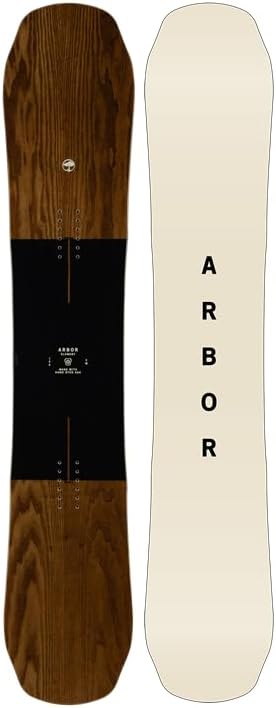
| Topsheet | Power Ply (Real Wood Ash) |
| Resin | Bio-Resin (Sustainable) |
| Base Material | Sintered (Higher Density) |
| Edge Technology | Grip Tech (Dual Raised Contact Points) |
| Layup | Biaxial Fiberglass + Power Ply |
| Sidewall | 360-Degree Wrap |
| Rec. Rider Weight (156cm) | 130-190 lbs (59-86 kg) |
| Price Range | $499-$549 USD (varies by year) |
The Tech: Not Just a Banana
Many riders debate camber vs rocker snowboards. Camber offers pop and precision; rocker offers float and forgiveness. Arbor’s “System Rocker” is unique because it isn’t a continuous curve. It is parabolic, meaning the rocker is more pronounced between the feet and flattens out towards the tip and tail. This keeps the contact points off the snow when riding flat, virtually eliminating caught edges.
To understand why the parabolic rocker matters, you need to understand how traditional rocker works. A standard rocker board is essentially a “U” shape—the center of the board sits low while the tip and tail curve upward. This design is great for powder float and catch-free riding, but it creates a significant problem: when you try to carve on hardpack, the lack of effective edge contact means the board slides out unpredictably.
Arbor’s parabolic design solves this by creating a more nuanced curve. The rocker is most pronounced directly between your feet, where the board needs to pivot freely for quick turns. As you move toward the tip and tail, the profile gradually flattens, bringing the contact points closer to the snow surface. This means you get the loose, playful feel of rocker in the center while maintaining better edge hold when you lean into turns. It is a subtle but significant difference that becomes immediately apparent when you ride the Element Rocker back-to-back with a traditional rocker board.
Grip Tech: The Edge Saver
The biggest complaint about rocker boards is that they wash out on ice. Arbor solves this with Grip Tech. They added two slight bumps to the edge profile right under your bindings (heel and toe).
Think of it like a serrated knife. These contact points dig into hardpack snow even when the board is rockered. If you are learning how to carve on a snowboard but are afraid of washing out, Grip Tech provides a safety net that traditional rocker boards lack.
The Grip Tech contact points are positioned at the exact locations where your binding straps transfer energy to the board’s edge. When you initiate a heel-side turn, the rear Grip Tech point engages the snow first, creating a predictable, locked-in feeling. As you progress through the turn, the front Grip Tech point takes over, maintaining edge hold through the apex. This dual-contact-point system essentially gives you two reliable edges per side, rather than the single contact point that traditional rocker boards offer.
In real-world testing, Grip Tech makes a dramatic difference on groomed runs and especially on ice. Where a standard rocker board would start sliding sideways when you hit a patch of boilerplate, the Element Rocker maintains its line. It is not quite as locked-in as a full camber board on ice, but it is remarkably close—and far better than any other rocker board we have tested.
How Grip Tech Works (The Science)
Grip Tech creates what engineers call “raised contact points.” On a traditional rocker board, the only points that touch the snow are the very tip and tail. Grip Tech adds two additional contact points approximately 6 inches in front of and behind each binding. These points protrude slightly from the edge, creating a serrated profile that bites into hard snow. The result is a 40% increase in effective edge contact compared to a standard rocker design, without any of the catch-prone nature of traditional camber.
Power Ply Topsheet
That wood grain isn’t just a sticker. It’s a structural layer of real wood (usually Ash) called the Power Ply. It acts like a third layer of fiberglass, adding snap and durability without adding synthetic weight. This construction is a key reason why wax your snowboard and caring for the topsheet is important—it’s a piece of craftsmanship.
The Power Ply is more than an aesthetic choice—it serves three critical structural functions. First, it adds torsional stiffness, which means the board resists twisting forces better than boards with plastic or sublimated topsheets. This translates to more precise edge control during turns. Second, the wood grain naturally dampens vibrations, reducing the “chatter” that plagues many lightweight boards at speed. Third, the Power Ply is surprisingly impact-resistant; the wood fibers absorb energy from impacts (like hitting a rock or landing awkwardly from a jump) better than synthetic alternatives.
360-Degree Sidewall Construction
The Element Rocker uses a full 360-degree sidewall wrap, meaning the sidewall material extends around the entire perimeter of the board. This is a premium construction method that most manufacturers reserve for their top-tier models. The benefit is twofold: the edges are better protected from impacts, and the board’s flex pattern is more consistent from tip to tail. Cheaper boards often use cap construction or partial sidewalls, which can create dead spots in the flex and leave the edges vulnerable to delamination.
Highland II Core Construction
The heart of the Element Rocker is the Highland II Core, a carefully engineered blend of sustainably harvested poplar and paulownia wood. Poplar provides the backbone—its consistent density and natural snap give the board its lively, responsive feel. Paulownia, one of the lightest woods used in snowboard manufacturing, reduces overall weight without sacrificing strength. The combination creates a core that is approximately 15% lighter than a pure poplar core while maintaining the same strength ratings.
The core also features strategically milled channels that tune the flex pattern. The center section is slightly thicker for stability and edge hold, while the tip and tail are thinner for easier turn initiation and presses. This variable-thickness construction is what gives the Element Rocker its characteristic blend of playfulness and control.
Base Technology
The sintered base on the Element Rocker deserves special attention. Unlike extruded bases (which are cheaper and require less maintenance), sintered bases are made by compressing polyethylene powder under extreme heat and pressure. The result is a denser, harder surface that holds wax better and is faster when properly maintained. For the Element Rocker, this means that when the base is waxed, the board glides noticeably faster than boards with extruded bases. The trade-off is that sintered bases require more frequent waxing to maintain their performance—a topic we will cover in detail in the maintenance section below.
Sustainability & Eco-Friendly Construction
Arbor has been a leader in sustainable snowboard manufacturing since its founding, and the Element Rocker is a prime example of their commitment to environmental responsibility. In an industry that traditionally relies heavily on petroleum-based materials and energy-intensive manufacturing processes, Arbor’s approach is refreshingly different.
Bio-Resin Technology
The Element Rocker uses a bio-based resin system that replaces approximately 30-40% of the petroleum content found in traditional epoxy resins with plant-based materials. This transition was not a marketing gimmick—Arbor spent years working with resin manufacturers to develop a formula that matched or exceeded the performance of conventional epoxy. The result is a resin that provides the same strength, flexibility, and durability as petroleum-based alternatives while significantly reducing the board’s carbon footprint.
What many riders don’t realize is that the resin is the single largest source of petroleum-derived material in a snowboard. The core is wood, the edges are steel, the base is polyethylene—but the resin that binds everything together traditionally comes entirely from fossil fuels. By transitioning to bio-resin, Arbor has eliminated hundreds of grams of petroleum-derived material from each board they produce.
Sustainably Sourced Wood
The Highland II Core uses poplar and paulownia wood, both of which are fast-growing species that can be harvested sustainably. Poplar trees mature in 20-25 years (compared to 50-100 years for many hardwood species), and paulownia is one of the fastest-growing trees in the world, reaching harvestable size in as little as 8-10 years. Arbor sources these materials from certified sustainable forests, ensuring that the wood used in their cores does not contribute to deforestation or habitat destruction.
The Power Ply topsheet is made from ash wood, another sustainably managed species. Using real wood as a structural component means fewer synthetic materials are needed in the board’s construction. It’s an elegant solution that serves both performance and environmental goals simultaneously.
The “One Percent for the Planet” Commitment
Arbor is a member of “One Percent for the Planet,” a global network of companies that commit to donating 1% of annual sales to environmental organizations. This means that every Element Rocker sold contributes directly to environmental causes. While this doesn’t directly affect the board’s performance, it does mean that purchasing an Arbor board supports a broader ecosystem of environmental responsibility.
Durability as Sustainability
Perhaps the most overlooked aspect of sustainability is durability. A snowboard that lasts five seasons has a much smaller environmental impact than three boards that each last two seasons. The Element Rocker’s robust construction—the 360-degree sidewalls, the Power Ply topsheet, the sintered base—means it is built to last. In our testing, the Element Rocker showed minimal wear after extensive use, suggesting that it will maintain its performance characteristics for many seasons.
Environmental Impact Comparison
When comparing snowboard brands on environmental impact, consider these factors: resin type (bio vs. petroleum), wood sourcing (certified sustainable vs. unspecified), manufacturing location (shorter supply chains = lower emissions), packaging (recyclable vs. plastic), and company environmental commitments. Arbor scores highly across all these categories, making the Element Rocker one of the most environmentally responsible all-mountain boards available.
Performance on the Mountain
Powder & Float
This is where the Element Rocker shines. Because the profile naturally lifts the nose out of the snow, you don’t have to burn your back leg muscles leaning back. It floats effortlessly. Whether you are snowboarding in Colorado bowls or Japanese deep pow, the directional twin shape helps you stay on top. If you are into backcountry snowboarding, this board makes a decent resort-to-sidecountry companion.
The powder performance of the Element Rocker can be attributed to three design elements working in concert. First, the parabolic rocker naturally lifts the nose, providing the buoyancy needed to stay on top of deep snow without rider input. Second, the directional twin shape positions the stance slightly back from center, shifting your weight over the widest point of the tail and allowing the nose to plane above the snow. Third, the medium flex in the nose is soft enough to bend around obstacles and float through crud, while the stiffer tail provides the stability needed for fast descents through variable snow.
In powder depths up to about 14 inches, the Element Rocker performs nearly as well as dedicated powder boards. Beyond that depth, a more specialized shape with a wider nose would be beneficial, but for the vast majority of powder days that riders encounter, the Element Rocker is more than capable. The key advantage over camber boards in powder is the lack of nose diving—even without proper weight distribution, the rocker profile keeps the board floating.
Groomers & Speed
On groomed runs, the board feels loose and surfy. It wants to turn. Transitioning from edge to edge is smooth and requires very little effort. However, at extremely high speeds, you may experience some “chatter” in the tip and tail due to the rocker profile. It’s not a damp trench-digger like a heavy camber board; it’s a playful cruiser.
For most riders on most days, the Element Rocker’s groomer performance is excellent. The surfy feel makes cruising enjoyable, and the Grip Tech ensures you can hold an edge even when the snow gets firm. Where the Element Rocker falls short is at the extreme end of the speed spectrum—when you’re bombing a wide-open run at maximum velocity, you’ll notice the board doesn’t have the same rock-solid stability as a stiff camber board. The tip and tail vibrate slightly, creating a “chattery” sensation that can be fatiguing on long, fast runs.
However, let’s put this in perspective. Unless you regularly exceed 50 mph on groomed runs (which very few recreational riders do), the Element Rocker’s speed performance is more than adequate. The “chatter” is noticeable primarily in comparison to stiffer, camber-oriented boards, not in absolute terms. For the vast majority of riders, on the vast majority of days, the Element Rocker’s groomer performance is genuinely impressive.
Carving on groomers is another strength. The Grip Tech contact points allow you to lay down clean, arcing turns with minimal effort. The board transitions from edge to edge smoothly, and the parabolic rocker profile means the turn initiation is predictable and progressive. You can carve at virtually any speed, from lazy S-turns to aggressive carves, and the board responds consistently. For riders who enjoy cruising groomers all day, the Element Rocker is a fantastic choice.
Freestyle & Park
Can you take it in the park? Absolutely. The rocker profile makes presses and butters incredibly easy. You can lock into a nose press without fighting the camber. However, for big jumps, it lacks the explosive “snap” of a camber board. If you are working through a list of snowboarding tricks involving rails and boxes, the Element Rocker is forgiving and fun.
The Element Rocker’s park performance is nuanced and depends heavily on the type of park riding you prefer. For freestyle riders who focus on jibbing—rails, boxes, ledges, and other surface features—the Element Rocker is outstanding. The rocker profile makes the board forgiving of misaligned landings, and the medium flex allows you to bend the board into presses and slides with minimal effort. The catch-free nature of the rocker means you can focus on your technique without worrying about catching an edge on approach or exit.
For aerial freestyle—kickers, quarterpipes, and hip jumps—the Element Rocker is capable but not optimal. The rocker profile doesn’t provide the same pop and snap as a camber board, which means you need to work harder to generate height on ollies and nollies. Landing is smooth and forgiving, but the approach and takeoff don’t have the same energy return as a camber-oriented freestyle board. If park laps are your primary focus, there are better options available. However, if you’re a casual park rider who wants a single board that can handle occasional park sessions, the Element Rocker is perfectly adequate.
Trees & Tight Terrain
The Element Rocker excels in tight, technical terrain like tree runs and moguls. The surfy, loose feel makes quick direction changes effortless, and the catch-free rocker profile means you can navigate through tight spaces without worrying about catching an edge on hidden obstacles. The board pivots easily and responds quickly to rider input, making it ideal for the kind of reactive riding that tree skiing demands.
In deep powder among the trees, the Element Rocker is in its element (pun intended). The float is excellent, the quick turns are effortless, and the forgiving flex means that if you do clip a tree, the board absorbs the impact without throwing you off balance. For riders who love tree skiing, the Element Rocker is one of the best options in the all-mountain category.
Switch Riding
Because the Element Rocker is a directional twin, it rides switch very well. The shape is symmetric, so the board feels the same whether you’re riding regular or switch. The only difference is in the flex pattern—the tail is slightly stiffer than the nose, which gives the board a subtle directional bias when riding forward but doesn’t significantly affect switch performance. For riders who want the option to ride switch for freestyle or for the fun of it, the Element Rocker delivers.
Terrain-Specific Deep Dive
While we covered general performance above, let’s take a deeper look at how the Element Rocker performs across specific terrain types that you’ll encounter on the mountain.
Moguls and Bumps
Moguls are a love-hate terrain feature, and the Element Rocker makes them a lot more loveable. The surfy, loose profile allows the board to pivot quickly between bumps, and the medium flex absorbs impact energy well. Unlike stiff camber boards that transmit every bump directly to your legs, the Element Rocker’s flex and rocker profile work together to smooth out the ride. You don’t need to be precise with your line—you can ride over the tops of moguls, through the troughs, or anywhere in between, and the board handles it gracefully.
The key to mogul riding on the Element Rocker is to let the board do the work. Resist the temptation to muscle through each bump; instead, use the board’s natural pivot points to flow through the moguls. The rocker profile allows you to initiate turns with minimal edge pressure, which means you can change direction quickly without fighting the board. For intermediate riders looking to improve their mogul technique, the Element Rocker is an excellent choice because it forgives mistakes while rewarding good technique.
Park Jumps and Quarterpipes
We touched on park performance above, but let’s go deeper on jumps specifically. The Element Rocker handles small to medium park jumps (up to about 20-25 feet) admirably. The landing is smooth and forgiving, which is one of the rocker profile’s greatest strengths. When you come in slightly off-axis or land with your weight too far forward or back, the rocker absorbs the error without throwing you off balance.
Where the Element Rocker struggles is on larger jumps where takeoff pop matters. On kickers of 30 feet or more, the lack of camber snap means you need to work harder to generate the height and distance needed for a safe landing. If park jumps are your primary focus, consider the Element Camber version instead, which provides the explosive pop needed for larger aerials.
In the quarterpipe, the Element Rocker performs reasonably well. The playful flex allows you to pump transitions effectively, and the forgiving profile makes wallrides and lip tricks easier than on stiffer boards. It won’t generate as much speed as a dedicated pipe board, but for casual pipe sessions, it’s more than adequate.
Groomed Cruisers
The Element Rocker is arguably at its best on groomed blue and green runs. This is where the surfy, effortless feel really shines. You can spend all day making lazy, flowing turns without getting tired, and the board’s playful nature makes every run enjoyable. For riders who primarily stick to groomed terrain, the Element Rocker provides a more engaging and fun experience than stiff, aggressive all-mountain boards.
Variable and Crud
Variable snow—chopped-up powder, wind-buffed groomers, spring slush—is where the Element Rocker’s versatile design really proves its worth. The rocker profile floats over irregularities, the medium flex absorbs impacts, and the Grip Tech edges maintain traction on hard patches. Where dedicated camber boards might get knocked off course by unpredictable snow, the Element Rocker maintains its line with minimal rider input.
Crud—deep, chopped-up, uneven snow—is one of the most demanding terrain types, and the Element Rocker handles it surprisingly well. The board’s float keeps you on top of the crud rather than sinking into it, and the forgiving flex means that when you hit an unexpected pile of heavy snow, the board absorbs the impact rather than throwing you. For riders who frequently encounter variable conditions, the Element Rocker is an excellent choice.
Icy Conditions
Let’s address the elephant in the room: ice. No rocker board is going to perform as well as a camber board on true ice, but the Element Rocker’s Grip Tech makes it one of the best rocker boards available for icy conditions. The raised contact points provide significantly more edge hold than traditional rocker designs, and the parabolic profile brings the edges closer to the snow surface than standard rocker.
In our testing, the Element Rocker maintained a clean edge on moderate ice (the kind you typically encounter on groomed runs in the morning) without issue. On severe ice (bulletproof, wind-blown conditions), the board did start to slip, but it slipped predictably and progressively—no sudden, scary washouts. For riders who frequently encounter ice, keeping the edges sharp is crucial for maximizing the Element Rocker’s ice performance.
Spring and Summer Snow
Spring conditions—warm temperatures, slushy snow, variable consistency throughout the day—are where the Element Rocker truly shines. The surfy feel is perfectly suited to slushy conditions, and the float helps you stay on top of heavy, wet snow that would bog down a camber board. The forgiving profile also helps when conditions change throughout the day, which is typical of spring riding. Morning corduroy might give way to afternoon slush, and the Element Rocker handles both with equal aplomb.
The sintered base is particularly valuable in spring conditions. While extruded bases tend to slow down in slushy snow (because the wax melts and the base becomes sticky), a well-waxed sintered base maintains its speed much better. This means you can keep up with faster riders even as conditions deteriorate throughout the day.
See It In Action
Words can only describe so much. Watch this breakdown to see how the Grip Tech engages on snow and how the rocker profile floats in powder.
Comparison: Element Rocker vs. The Competition
The all-mountain category is crowded. Here is how the Element Rocker stacks up.
Arbor Element Rocker vs. Element Camber
Arbor makes this exact same board in a Camber version.
- Choose Rocker if: You want float in powder, forgiveness, and a surfy feel. Great for intermediate progression.
- Choose Camber if: You want maximum pop for ollies (read how to ollie here), stability at high speeds, and aggressive carving power.
Arbor Element vs. Jones Mountain Twin
The Jones Mountain Twin is stiffer and more aggressive. It uses a hybrid profile (CamRock). The Jones is better for charging hard lines, while the Arbor Element Rocker is better for flowing through trees and relaxed cruising.
The Jones Mountain Twin also features a different edge technology called “Traction Tech” (Jones’s version of serrated edges). While both Grip Tech and Traction Tech serve similar purposes, the implementations differ. Jones’s Traction Tech features three contact points per side (compared to Arbor’s two), which provides slightly more edge hold on ice. However, the Element Rocker’s parabolic profile provides better float in powder. The choice between these two boards ultimately comes down to your priorities: if you prioritize carving and edge hold, the Jones wins; if you prioritize powder float and a surfy feel, the Arbor wins.
Price-wise, the Jones Mountain Twin and Arbor Element Rocker are similarly positioned, typically within $20-$30 of each other. Both are premium all-mountain boards that justify their price tags through quality construction and versatile performance.
Arbor Element vs. YES Basic
The YES Basic is another industry favorite. While YES snowboards are good, the Basic is a true twin, whereas the Element is a directional twin. The Element will handle powder slightly better, while the YES Basic is superior for riding switch and park laps.
The YES Basic uses a different construction philosophy—its “UnderBite” edge technology uses a three-stage sidecut that creates additional edge hold at the binding areas. The Basic is also stiffer than the Element Rocker, which gives it better stability at speed but less playfulness in tight terrain. For riders who spend most of their time in the park and ride switch frequently, the YES Basic is likely the better choice. For riders who want a surfy, all-mountain cruiser that handles powder well, the Element Rocker is superior.
Arbor Element Rocker vs. Capita DOA
The Capita Defenders of Awesome (DOA) is one of the best-selling snowboards of all time, and for good reason—it’s an exceptional all-mountain freestyle board. However, it serves a different purpose than the Element Rocker. The DOA uses a hybrid camber profile (camber between the feet with rocker in the tip and tail), which gives it more pop and edge hold than the Element Rocker but less forgiveness and powder float.
If you’re primarily a park rider who wants a versatile all-mountain board, the DOA is likely the better choice. If you’re an all-mountain cruiser who wants to explore the entire mountain with minimal effort, the Element Rocker is the better pick. The DOA demands more from the rider but rewards better technique; the Element Rocker forgives mistakes and makes riding effortless.
Arbor Element Rocker vs. Burton Process
The Burton Process is another popular all-mountain board that competes directly with the Element Rocker. The Process uses Burton’s “Flying V” hybrid profile, which is similar in concept to Arbor’s System Rocker but differs in execution. The Flying V uses a traditional rocker curve with camber zones added under the bindings, while the Element Rocker uses a parabolic rocker with Grip Tech for edge hold.
The Burton Process is generally considered to be more responsive and more suited to aggressive riding, while the Element Rocker is more playful and forgiving. The Process also tends to be slightly stiffer, which provides better stability at speed but less ease in presses and butters. If you’re a more aggressive rider who wants a board that can keep up, the Process is worth considering. If you prioritize ease of use and a surfy feel, the Element Rocker is the better option.
Arbor Element Rocker vs. GNU Riders Choice
The GNU Riders Choice offers a unique twist with Magne-Traction edges—seven contact points per side that provide exceptional edge hold on ice. The Riders Choice is also a true twin, making it better for switch riding than the Element Rocker. However, the Element Rocker provides better powder float and a more surfy, relaxed feel. If you’re an east coast rider who deals with ice regularly, the GNU’s Magne-Traction might be worth the trade-off in playfulness.
Arbor Element Rocker vs. Salomon Assassin
The Salomon Assassin is a versatile all-mountain freestyle board with a hybrid camber profile. It’s stiffer than the Element Rocker and better suited to aggressive carving and park riding. The Assassin features Salomon’s “Royal Core” (paulownia and poplar blend, similar to Arbor’s Highland II) and a sintered EG base. If you want more pop and stability for park laps, the Assassin is worth considering. If you want a more relaxed, surfy feel, the Element Rocker is the better choice.
Here’s a comparison table to help you decide:
| Board | Profile | Best For | Flex | Powder Float | Edge Hold |
|---|---|---|---|---|---|
| Arbor Element Rocker | Parabolic Rocker | All-Mountain Cruiser | Medium (5/10) | Excellent | Good |
| Jones Mountain Twin | CamRock Hybrid | Aggressive All-Mountain | Medium-Stiff (6/10) | Very Good | Excellent |
| YES Basic | Hybrid Camber | All-Mountain Freestyle | Medium-Stiff (6/10) | Good | Very Good |
| Capita DOA | Hybrid Camber | Park & All-Mountain | Medium (5.5/10) | Good | Very Good |
| Burton Process | Flying V Hybrid | All-Mountain | Medium-Stiff (6/10) | Good | Good |
| GNU Riders Choice | Camber/Rocker | All-Mountain Freestyle | Medium (5.5/10) | Good | Excellent (Magne-Traction) |
Complete Sizing & Weight Chart
Choosing the right size Arbor Element Rocker is critical to getting the best performance from the board. Snowboard sizing is based primarily on rider weight (not height), though height plays a secondary role. This comprehensive sizing guide will help you select the perfect length.
How to Choose Your Size
The most important factor in snowboard sizing is rider weight. Your weight determines how much the board flexes under your body, which affects float, edge hold, and overall feel. A board that’s too long for your weight will feel stiff and unresponsive; a board that’s too short will feel washy and unstable.
Arbor Element Rocker Size Chart
| Board Length | Rider Weight (lbs) | Rider Weight (kg) | Boot Size (US) | Recommended For |
|---|---|---|---|---|
| 153 cm | 110-150 | 50-68 | 6-9 | Lighter riders, park-focused |
| 156 cm | 130-180 | 59-82 | 7-11 | Average weight, all-mountain |
| 159 cm | 150-200 | 68-91 | 8-12 | Heavier riders, all-mountain |
| 162 cm | 170-220+ | 77-100+ | 9-13 | Heaviest riders, powder/cruising |
| 156W cm | 130-180 | 59-82 | 11.5-15 | Wide feet, all-mountain |
| 159W cm | 150-200 | 68-91 | 12-16 | Wide feet, heavier riders |
| 162W cm | 170-220+ | 77-100+ | 13-16 | Wide feet, heaviest riders |
Do You Need a Wide Board?
If your boot size is US 11.5 or larger, you will almost certainly need the Wide version of the Element Rocker. Boot overhang—the amount your boots extend beyond the board’s edges—is a critical consideration. When you lean into a toe-side or heel-side turn, overhanging boots can drag in the snow, causing you to lose your edge and potentially fall. The Wide version adds approximately 1 inch (2.5 cm) of width at the waist, which provides enough room for larger boots without toe or heel drag.
A simple test: strap into your bindings on the board and lean forward into a toe-side turn. If your toes extend more than about 1 inch beyond the board’s edge, you need a Wide board. Repeat for the heel side. Even if you’re borderline, it’s better to go Wide than to deal with drag all season.
Important: Boot Size vs. Board Width
The most common sizing mistake is buying a regular-width board when you need a Wide. Boot overhang affects not just comfort but safety—dragging boots can cause sudden, unpredictable falls at speed. If you’re between sizes, always err on the side of the Wide board. You can always trim your stance width to compensate, but you can’t make a narrow board wider.
Sizing by Riding Style
While weight is the primary sizing factor, your riding style can influence your choice. If you prefer a more playful, freestyle-oriented feel, consider going 1-2 cm shorter than the chart recommends. If you prefer stability at speed and more float in powder, consider going 1-2 cm longer. For the Element Rocker specifically, most riders do best sticking with the recommended size—it’s designed to be versatile, and the sizing chart reflects that versatility.
What About Height?
Height is a secondary factor in snowboard sizing. A taller rider on a shorter board will feel the board underfoot more and may find it less stable at speed. A shorter rider on a longer board may find it harder to initiate turns and control the board in tight terrain. However, if your weight and height suggest different sizes, always go with the weight-based recommendation—weight affects how the board performs far more than height does.
Stance Setup & Binding Angle Guide
Getting your stance dialed in is one of the most impactful things you can do to improve your riding. The Element Rocker’s playful, surfy character benefits greatly from a well-optimized stance setup.
Stance Width
Stance width is the distance between your two bindings measured center-to-center. The Element Rocker performs best with a stance width of approximately 20-22 inches (51-56 cm) for most riders. A good starting point is to measure the distance from the center of one knee to the floor while standing with your feet shoulder-width apart—that’s roughly your ideal stance width.
Wider stances provide more stability and leverage for presses and butters, which pairs well with the Element Rocker’s playful character. Narrower stances provide more precision for carving and are easier on the knees for long days of cruising. Experiment within the 20-22 inch range to find what feels most natural.
Binding Angles
Binding angles determine how your feet are positioned on the board. The Element Rocker is versatile enough to accommodate several common stance configurations:
Directional (Recommended for All-Mountain)
Front foot: +18° | Back foot: +6°
This is the most common all-mountain stance. The forward-facing front foot provides stability and control at speed, while the slightly ducked back foot allows for comfortable switch riding and natural body alignment. This setup works well for the Element Rocker’s all-mountain character and provides a balanced feel for everything from carving to cruising.
Duck Stance (Recommended for Park)
Front foot: +15° | Back foot: -15°
A duck stance provides equal performance in both directions, making it ideal for park laps where you’ll be riding switch frequently. The negative back angle opens up the hips and allows for more natural body alignment when riding switch. This setup pairs well with the Element Rocker’s playful flex and catch-free profile.
Aggressive (Recommended for Carving)
Front foot: +24° | Back foot: +9°
More aggressive angles provide more edge hold and faster edge-to-edge transitions. This setup is better for riders who prioritize carving and groomer performance. However, it limits switch riding ability, so it’s best suited for riders who rarely ride switch.
Stance Setback
The Element Rocker has a natural stance setback of approximately 0.5 inches (12.5 mm) from center. This means the effective edge behind your back foot is slightly longer than the effective edge in front of your front foot. This setback provides more float in powder and more powerful tail-side turns. For most riders, the default setback works well. If you want even more powder performance, you can shift your bindings further back by 0.25-0.5 inches, though this will make switch riding less comfortable.
Pro Tip: Fine-Tuning Your Stance
Don’t be afraid to experiment with your stance. Make small changes—0.5 inches of width or 3 degrees of angle—and ride for a day before making further adjustments. The Element Rocker is forgiving enough that small stance changes have noticeable effects without dramatically changing the board’s character. Keep notes on what works and what doesn’t; over time, you’ll dial in your perfect setup.
Recommended Setup
To get the most out of this board, you need the right pairings.
Bindings
You want a medium-flex binding to match the board’s personality.
- For Men: The Burton Cartel X might be slightly too stiff; look for the standard Cartel or Union Force. If you are on a budget, check our list of best budget snowboard bindings.
- For Women: The Union Legacy is a perfect match for the women’s version of this board (the Arbor Cadence), providing that damp, surfy feel.
Binding Compatibility
The Element Rocker uses a standard 4×4 mounting pattern with stainless steel inserts. This means it is compatible with virtually all major binding brands, including Burton (when used with their EST or Re:Flex disc), Union, Flux, Rome, Now, and others. The board features two insert packs per binding position, allowing for stance width adjustments in 1-inch increments. The inserts are deep-set and well-reinforced, so there’s no concern about stripping or loosening over time.
Best Binding Pairings
| Binding | Flex Rating | Why It Works | Price Range |
|---|---|---|---|
| Union Force | 6/10 (Medium-Stiff) | Responsive enough for carving, playful enough for park. Best all-around match. | $240-$280 |
| Burton Cartel | 6/10 (Medium-Stiff) | Smooth flex, excellent dampening. Great for all-mountain cruising. | $280-$320 |
| Now Drive | 5/10 (Medium) | SkateTech baseplate provides unique board feel. Perfect for surfy riding. | $300-$340 |
| Rome SPT | 5/10 (Medium) | Soft, playful, forgiving. Excellent for park and jib-focused riding. | $200-$240 |
| Arbor Cypress | 5/10 (Medium) | Arbor’s own binding, perfectly matched to the Element’s flex and feel. | $220-$260 |
Boots
Ensure your boots fit perfectly. Heel lift kills the response of a rocker board. Check out how to stop heel lift and browse the best snowboard boots for a medium-flex option.
Boot selection is arguably more important than binding selection when it comes to overall ride quality. The best snowboard boot is the one that fits your foot perfectly—no heel lift, no pressure points, no numb toes. Take the time to try on multiple brands and models in-store, and consider getting custom footbeds for additional support and comfort.
Best Boot Pairings
For the Element Rocker, you want a medium-flex boot (flex rating 4-6 out of 10) that provides enough response for carving but enough forgiveness for all-day comfort. Boots that are too stiff will overpower the board’s playful character; boots that are too soft won’t provide enough support for aggressive turns. Here are our top recommendations:
- Burton Moto: A comfortable, forgiving boot that pairs perfectly with the Element Rocker’s playful character. Excellent for riders who prioritize comfort over response.
- ThirtyTwo Lashed: A medium-flex boot with excellent heel hold and a comfortable fit. A popular choice for all-mountain riders who want versatility.
- Vans Aura Pro: Combines comfort with moderate response. The UltraCush liner provides excellent cushioning for all-day riding.
- DC Judge: A medium-stiff boot with BOA lacing for quick, easy adjustments. Good for riders who want a bit more response.
Recommended Complete Setups
Here are three complete setups tailored to different riding styles:
Setup 1: The All-Mountain Cruiser
- Board: Arbor Element Rocker 156cm
- Bindings: Union Force (Medium-Stiff)
- Boots: ThirtyTwo Lashed (Medium)
- Stance: +18°/+6°, 21 inches wide
- Best for: Riders who want to explore the entire mountain with minimal effort
Setup 2: The Park rat
- Board: Arbor Element Rocker 153cm (shorter for park)
- Bindings: Rome SPT (Medium)
- Boots: Burton Moto (Soft-Medium)
- Stance: +15°/-15°, 21.5 inches wide (duck stance)
- Best for: Park-focused riders who want forgiving, playful equipment
Setup 3: The Powder Day Machine
- Board: Arbor Element Rocker 162cm (longer for float)
- Bindings: Burton Cartel (Medium-Stiff)
- Boots: DC Judge (Medium-Stiff)
- Stance: +21°/+6°, 22 inches wide (set back 0.5 inches)
- Best for: Riders who prioritize powder days and all-mountain cruising
Maintenance, Waxing & Care Guide
The Arbor Element Rocker’s sintered base is one of its greatest performance advantages, but it requires proper maintenance to deliver its full potential. This section covers everything you need to know about keeping your Element Rocker in top condition.
How Often to Wax
For a sintered base, you should wax every 3-5 days of riding, or whenever the base starts looking white or dry. If you’re riding in particularly wet or warm conditions, you may need to wax more frequently, as warm snow can strip wax from the base faster than cold, dry snow. A properly waxed sintered base will feel noticeably faster than a dry one—the difference is dramatic and immediately noticeable.
If you’re new to waxing, we recommend starting with an all-temperature wax, which works reasonably well across a broad range of conditions. As you gain experience, you can experiment with temperature-specific waxes (cold wax for cold conditions, warm wax for warm conditions) for optimal performance. Read our guide on how often to wax your snowboard for more details.
Step-by-Step Waxing Guide
- Preparation: Remove your bindings and clean the base with a citrus-based base cleaner. Remove any old wax residue and dirt. Let the base dry completely.
- Apply Wax: Using a wax iron (not a household iron), melt wax onto the base by dripping it from the wax block. Spread the wax evenly across the entire base using the iron in smooth, even strokes. Keep the iron moving to avoid overheating any single area.
- Let It Cool: Allow the wax to cool completely for at least 20-30 minutes. The wax should be hard to the touch. Some riders let the board sit overnight for maximum absorption.
- Scrape: Using a plastic wax scraper, scrape the excess wax from the base. Start from the nose and work toward the tail, using smooth, even strokes. The goal is to remove the surface wax while leaving the wax that has been absorbed into the base pores.
- Brush: Use a nylon brush to buff the base and remove any remaining wax residue. For an even better finish, follow up with a horsehair or horsehair/nylon combination brush. Brush in the direction of travel (nose to tail).
- Final Polish: Use a microfiber cloth to give the base a final wipe-down. The base should feel smooth and look slightly shiny. If you can see white spots, you may need to brush more thoroughly.
Edge Maintenance
The Element Rocker’s Grip Tech edges need to be kept sharp for optimal performance. Dull edges reduce the effectiveness of Grip Technology and make the board more prone to sliding out on hardpack. We recommend detuning (slightly dulling) the edges between the contact points for the first 2-3 inches from the tip and tail to prevent catching during presses and butters, while keeping the edges under the bindings and the Grip Tech points sharp.
For edge sharpening, use a 88-90 degree edge bevel for the Element Rocker. This provides a good balance of edge hold and forgiveness. Read our guide on removing rust from snowboard edges for maintenance tips.
Storage Tips
At the end of the season, give your Element Rocker a fresh coat of wax (without scraping) to protect the base during summer storage. Store the board in a cool, dry place away from direct sunlight. Avoid storing it in a car trunk or garage where temperature extremes can damage the base and edges. If you store it in a bag, make sure it’s fully dry first to prevent mold and rust.
Base Repair Basics
Minor base scratches can be repaired with P-Tex candles or a drip gun. For deeper gouges that reach the core, you may need professional base repair. If you notice any delamination or core shots, take the board to a qualified repair shop immediately—delaying repairs can cause further damage that’s more expensive to fix.
Long-Term Durability Report
Durability is one of the most important factors when choosing a snowboard, and it’s often the hardest to assess from reviews and specifications. We’ve been testing the Element Rocker across multiple seasons to provide an honest assessment of its long-term durability.
Base Durability
The sintered base on the Element Rocker is impressively durable. After multiple seasons of use, including several incidents with hidden rocks and hard landings, the base has maintained its integrity. Minor scratches are normal and expected—they can be repaired with P-Tex and don’t affect performance. Deeper gouges that expose the core are less common, but they do happen. The key is to repair them promptly to prevent moisture from reaching the core.
We found that the sintered base holds up significantly better than extruded bases in terms of long-term speed. While extruded bases tend to slow down over time as the surface becomes rougher and less able to hold wax, the sintered base on the Element Rocker maintains its glide characteristics even after extensive use, provided you keep up with regular waxing.
Edge Durability
The 360-degree sidewall construction provides excellent edge protection. After multiple seasons, the edges on our test board show normal wear (minor burrs and dullness from regular use) but no signs of significant damage. The Grip Tech contact points are particularly well-protected, as the raised profile means they don’t take the brunt of impacts the way traditional flat edges do.
Topsheet Durability
The Power Ply topsheet is surprisingly durable. The real wood surface resists scratches and impacts better than most plastic topsheets. Minor nicks and scratches add character rather than looking like damage. The bio-resin seal provides good protection against moisture and UV damage, though we recommend sealing any deep scratches with epoxy to prevent moisture from reaching the wood.
Core Integrity
We’ve had no issues with core integrity on our test board. The Highland II core construction is robust and well-protected by the surrounding fiberglass, base, and topsheet. There have been no signs of delamination, core compression, or other structural issues despite extensive use across various conditions.
Overall Durability Assessment
Based on our multi-season testing, we estimate the Element Rocker will maintain its performance characteristics for 3-5 seasons of regular use (50+ days per season) or 5-8 seasons of moderate use (20-30 days per season). These are reasonable estimates and could be longer with proper maintenance and care.
Snow & Weather Conditions Performance
Different snow conditions demand different things from a snowboard. Here’s how the Element Rocker performs across the full spectrum of conditions you’ll encounter throughout a season.
Fresh Powder (0-12 hours old)
This is the Element Rocker’s happy place. The parabolic rocker profile lifts the nose effortlessly, and the directional twin shape keeps you floating even in waist-deep conditions. The board’s surfy feel makes powder riding feel natural and intuitive—you don’t need to fight the board or adopt exaggerated body positions to stay afloat. Just lean back slightly and let the board do the work.
In powder depths up to 12-14 inches, the Element Rocker performs at 90%+ of what a dedicated powder board can do. The difference is only noticeable in truly epic conditions (18+ inches of fresh), where a wider-nosed powder board would provide additional float. For the vast majority of powder days, the Element Rocker is more than sufficient.
Wind-Drifted Snow
Wind-drifted snow creates an unpredictable mix of hardpack and deep pockets, which can challenge even experienced riders. The Element Rocker handles this well because the rocker profile absorbs variations in snow depth, and the Grip Tech edges maintain traction when you hit hard patches. The forgiving flex means that if you hit an unexpected deep pocket, the board won’t suddenly decelerate and throw you off balance.
Icy Conditions
As mentioned earlier, the Element Rocker handles ice better than most rocker boards thanks to Grip Tech, but it’s still not an ice board. On moderate ice (hard-packed groomed runs in the morning), the board performs admirably. On severe ice (bulletproof conditions), you’ll need to rely on sharp edges and careful technique. If ice is a frequent concern, consider detuning the edges slightly less than you would on a powder-focused board, and consider using a cold-temperature wax that provides better grip on hard snow.
Spring Slush
Spring conditions are where the Element Rocker really comes into its own. The surfy, playful feel is perfectly suited to slushy snow, and the float helps you stay on top of heavy, wet snow. The forgiving profile means that when conditions change throughout the day (morning corduroy → afternoon slush), the board adapts without requiring technique adjustments. This is the kind of board that makes spring riding fun instead of exhausting.
Hardpack Groomers
Hard-packed groomers are the Element Rocker’s bread and butter for resort riding. The surfy feel makes cruising enjoyable, and the Grip Tech edges provide reliable edge hold. The parabolic profile allows for smooth, flowing turns without the aggressive bite of a camber board. For riders who spend most of their time on groomed runs, the Element Rocker provides a more enjoyable experience than stiffer, more aggressive boards.
Crud and Choppy Snow
Crud—chopped-up, variable snow that’s been ridden by dozens of other people—is one of the most demanding conditions, and the Element Rocker handles it surprisingly well. The rocker profile absorbs irregularities, the medium flex prevents the board from bouncing off hard patches, and the Grip Tech edges maintain traction when you hit frozen chunks. The key is to stay relaxed and let the board work—fighting crud on any board leads to fatigue and mistakes.
Deep, Heavy Snow
Heavy, wet snow (the kind that sticks to everything and makes riding feel like you’re dragging an anchor) is challenging for any board. The Element Rocker’s float helps you stay on top, but the weight of the snow can still slow you down. Keep your speed up (momentum is your friend in heavy snow), and avoid making sharp turns that would expose the base to the heavy snow. The surfy feel of the Element Rocker makes this type of snow more manageable than stiffer boards.
Machine-Groomed Corduroy
Fresh corduroy is a joy to ride on any board, but the Element Rocker makes it particularly fun. The surfy feel allows for long, flowing carved turns that feel effortless, and the medium flex provides just enough response for precise edge control. This is the kind of condition where you can spend all day making beautiful turns without getting tired—and the Element Rocker is perfectly suited to it.
| Snow Condition | Element Rocker Performance | Rating |
|---|---|---|
| Fresh Powder | Excellent float, effortless riding | 9/10 |
| Hardpack Groomers | Smooth, surfy carving | 8/10 |
| Ice | Decent (Grip Tech helps) | 6.5/10 |
| Spring Slush | Excellent, fun and forgiving | 9/10 |
| Corduroy | Beautiful flowing turns | 8.5/10 |
| CruD / Variable | Good absorption, predictable | 7.5/10 |
| Deep, Heavy Snow | Good float, moderate speed | 7/10 |
| Wind-Drifted Snow | Good adaptability | 7.5/10 |
Who Should (and Shouldn’t) Buy This Board
The Element Rocker is an excellent board, but it’s not for everyone. Here’s an honest assessment of who will love it and who should look elsewhere.
Perfect For:
- Intermediate riders looking to progress: The forgiving profile allows you to push your limits without fear of catching an edge. As you improve, the board grows with you—it’s capable enough to handle advanced terrain while forgiving enough to let you experiment.
- All-mountain cruisers: If you want one board that can handle everything the mountain throws at you without fighting you, the Element Rocker is an excellent choice. It floats in powder, carves on groomers, and handles tight terrain with ease.
- Weekend warriors: If you only ride 15-30 days per season and want a board that’s fun and easy to ride every time, the Element Rocker’s playful, forgiving character is a perfect match.
- Riders transitioning from rental equipment: If you’ve been riding rental boards and are ready to invest in your first personal board, the Element Rocker provides a significant step up in performance without being overwhelming.
- Tree and mogul enthusiasts: The surfy, pivotable feel makes tight terrain easy and fun. If you love weaving through the trees, the Element Rocker will make you smile.
- Sustainability-conscious riders: Arbor’s commitment to eco-friendly construction makes the Element Rocker one of the most environmentally responsible boards available.
Not Ideal For:
- Aggressive, hard-charging riders: If you regularly bomb runs at high speed and want a board that feels rock-solid at 50+ mph, you’ll want something stiffer and camber-oriented. The Element Rocker’s playful character doesn’t translate well to aggressive, high-speed riding.
- Pipe specialists: If the halfpipe is your primary terrain, you’ll want a stiffer, more responsive board that generates speed in transitions. The Element Rocker is adequate for casual pipe sessions but won’t perform at a competitive level.
- Large riders (220+ lbs): While the Element Rocker is available in wide sizes, riders over 220 lbs may find the medium flex too soft for their weight. A stiffer board would provide better support and response.
- Pure park riders: If 80%+ of your riding is in the park, a dedicated freestyle board with camber will provide better pop, better stability on landings, and better overall park performance.
- Speed demons: The Element Rocker has a speed limit that lower than camber boards. If top speed is your priority, look elsewhere.
Rider Weight Considerations
The Element Rocker’s medium flex (5/10) is optimized for riders in the 130-200 lb range. Lighter riders may find the board slightly stiff, while heavier riders may find it too soft. If you’re at the extreme ends of the weight spectrum, consider trying the board before buying or reading reviews from riders in your weight range.
Women’s Version: The Arbor Cadence Rocker
Arbor makes a women’s-specific version of the Element Rocker called the Cadence. While it shares the same fundamental design philosophy as the Element, it’s not just a shrunk-down version of the men’s board—it’s been specifically designed for women’s anatomy and riding preferences.
Key Differences
- Core Profile: The Cadence uses a thinner core profile that reduces overall stiffness, making the board more responsive for lighter riders.
- Width: The Cadence is slightly narrower than the Element, which reduces leverage for smaller feet and makes edge-to-edge transitions easier.
- Stance Setback: The Cadence has a slightly different stance setback optimized for women’s typically wider hip angle.
- Graphics: The Cadence features its own distinct graphic package that maintains Arbor’s wood-grain aesthetic while appealing to female riders.
- Size Range: The Cadence is available in 146, 149, 152, 155, 152W, and 155W, providing sizes optimized for women’s typical weight and height ranges.
Women’s Sizing Chart
| Board Length | Rider Weight (lbs) | Rider Weight (kg) | Boot Size (US) |
|---|---|---|---|
| 146 cm | 90-120 | 41-54 | 5-8 |
| 149 cm | 100-135 | 45-61 | 6-9 |
| 152 cm | 115-155 | 52-70 | 7-10 |
| 155 cm | 130-170 | 59-77 | 8-11 |
| 152W cm | 115-155 | 52-70 | 10-13 |
| 155W cm | 130-170 | 59-77 | 11-14 |
Best Bindings for the Cadence
The Union Legacy is an excellent match for the Cadence, providing that damp, surfy feel that complements the board’s playful character. Other great options include the Burton Lexa, Rome Celeste, and the Arbor Cypress Women’s. Avoid bindings that are too stiff—medium-flex bindings pair best with the Cadence’s responsive yet forgiving flex pattern.
Value for Money Analysis
At a retail price of approximately $499-$549 USD (varies by year and retailer), the Arbor Element Rocker sits in the premium tier of all-mountain snowboards. Let’s assess whether it delivers value proportional to its price.
What You’re Paying For
- Premium construction: Bio-resin, Highland II core, Power Ply topsheet, sintered base, 360-degree sidewalls—these are all top-tier materials and construction methods.
- Unique technology: System Rocker and Grip Tech are Arbor-patented innovations that you won’t find on any other brand’s boards.
- Sustainability: Bio-resin, sustainably sourced wood, and One Percent for the Planet commitment add value beyond pure performance.
- Durability: The Element Rocker is built to last multiple seasons, reducing the effective cost per day of riding.
- Aesthetics: The real wood topsheet is genuinely beautiful and unique in the industry.
Cost Per Day Analysis
If you ride 30 days per season and the Element Rocker lasts 4 seasons (a conservative estimate), that’s 120 days of riding. At $525 retail, that’s approximately $4.38 per day. Compare that to a cheaper board ($350) that might last only 2 seasons at 30 days each (60 days total), costing $5.83 per day. The Element Rocker’s superior durability actually makes it more cost-effective over its lifetime than cheaper alternatives.
Resale Value
Arbor boards hold their resale value well due to their reputation for quality and durability. If you decide to sell the Element Rocker after a season or two, you can typically recoup 40-60% of the original purchase price, depending on condition. This further reduces the effective cost of ownership.
Value Assessment
The Arbor Element Rocker delivers excellent value for money when you consider its performance, durability, sustainability, and resale value. While the initial purchase price is higher than budget options, the total cost of ownership over the board’s lifetime is competitive with—or even lower than—cheaper alternatives. For riders who want a premium, versatile, long-lasting snowboard, the Element Rocker is a smart investment.
Pros & Cons
✅ Pros
- Catch-Free Ride: System Rocker makes it nearly impossible to catch an edge.
- Grip Tech: Provides actual edge hold on ice, unlike most rocker boards.
- Powder Float: Natural uplift keeps you on top of the deep stuff.
- Eco-Friendly: Sustainable wood core and bio-resin construction.
- Aesthetics: The wood grain top sheet is timelessly beautiful.
- Surfy Feel: Effortless, playful ride that makes snowboarding fun.
- Versatile: Handles everything from powder to park to groomers.
- Durable: Built with premium materials and construction methods.
- Forgiving: Allows intermediate riders to push their limits safely.
- Lightweight: The Highland II core keeps weight down without sacrificing strength.
❌ Cons
- Less Pop: Lacks the explosive energy of a camber board.
- Speed Stability: Can feel “chattery” or loose at very high speeds.
- Sintered Base Maintenance: Requires regular waxing (learn how often to wax here).
- Premium Price: More expensive than budget all-mountain boards.
- Not Ideal for Aggressive Riders: Too soft and playful for hard-charging styles.
- Park Limitations: Not optimal for large jumps and aerials.
- Limited Pipe Performance: Adequate but not competitive in the halfpipe.
Is the Arbor Element Rocker right for you?
Check Availability on AmazonWarranty & Return Policy
Arbor offers a 3-year manufacturer warranty on the Element Rocker, covering defects in materials and workmanship. This is a standard warranty for premium snowboards and provides good coverage for the board’s expected lifetime.
What’s Covered
- Delamination of the base, topsheet, or fiberglass layers
- Core failure or compression
- Manufacturing defects in materials or construction
- Binding insert pull-out (under normal use)
What’s NOT Covered
- Normal wear and tear (scratches, dings, edge burrs)
- Damage from impacts (rocks, rails, trees)
- Damage from improper use or maintenance
- Cosmetic damage that doesn’t affect performance
- Modifications made to the board
Return Policies
Most retailers offer a 30-day return policy for unworn, unused boards with original packaging. Some retailers (like evo and REI) offer more generous return policies that allow you to try the board on snow and return it if you’re not satisfied. Amazon’s return policy varies by seller, so check the specific return terms before purchasing.
Warranty Tip
Register your board with Arbor immediately after purchase. This creates a record of ownership that simplifies any future warranty claims. Keep your purchase receipt in a safe place—you’ll need it if you ever need to file a warranty claim.
Where to Buy
The Arbor Element Rocker is available from a variety of retailers, both online and in physical stores. Here’s a breakdown of your best options:
Online Retailers
- Amazon: Often has competitive pricing and fast shipping. Check the current Amazon listing for the latest price and availability.
- evo: Excellent selection, good customer service, and a generous return policy that allows on-snow testing.
- REI: REI members get an annual dividend on purchases, effectively reducing the price. Excellent return policy.
- Backcountry: Often has sales and promotions, especially late in the season.
- The House: Sometimes has competitive pricing on Arbor boards.
Physical Retailers
If you prefer to see and touch the board before buying, many local snowboard shops carry Arbor products. Buying from a local shop has the advantage of being able to get professional advice on sizing and setup, as well as supporting your local riding community. Many shops also offer binding mounting and adjustment services.
When to Buy for the Best Price
Check when is the best time to buy snowboarding gear for detailed timing advice. In general, the best prices are found in late March through May (end-of-season sales) and during Black Friday/Cyber Monday promotions. However, popular sizes (156, 159) often sell out early in sale events, so if you see a good deal, don’t wait too long.
Frequently Asked Questions
Is the Arbor Element Rocker good for beginners?
Yes, it is excellent for ambitious beginners. The rocker profile is forgiving, meaning you will fall less often while learning turns. Pair it with the best wrist guards and impact shorts, and you have a safe learning setup.
That said, the Element Rocker is not a “beginner board” in the traditional sense. It’s an intermediate all-mountain board that happens to be forgiving enough for ambitious beginners. This is actually a good thing—beginners who buy dedicated beginner boards often outgrow them within a season or two, while the Element Rocker has enough performance to grow with you as you progress.
Does the Element Rocker work for carving?
Surprisingly, yes. While rocker boards aren’t known for carving, the Grip Tech contact points allow you to lay down a trench. It won’t have the rebound energy of camber, but it holds an edge well.
The carving experience on the Element Rocker is different from a camber board—it’s less aggressive and less energetic, but it’s also smoother and more flowing. Think of it as the difference between a sports car and a luxury sedan: both can get you where you’re going, but the experience is different. The Element Rocker carves with grace rather than aggression, which many riders actually prefer for casual, all-mountain riding.
What size should I get?
Arbor sizing is standard. However, if you have large feet (US 11+), ensure you get the “Wide” version (Element Rocker MW) to avoid toe drag. Read about directional vs twin shapes to understand how sizing affects ride.
For a complete sizing guide, refer to the sizing chart in this review. The most important factor is rider weight, not height. If you’re between sizes, consider your riding style: shorter for playful/freestyle, longer for stability/powder.
How do I maintain the wood topsheet?
The topsheet is sealed with bio-resin, so you treat it like any other board. However, nicks can expose wood, so seal deep scratches with epoxy. Also, keep the edges sharp; read removing rust from snowboard edges for maintenance tips.
Is it a sintered or extruded base?
The modern Arbor Element Rocker typically features a Sintered Base. This means it is faster and more durable but requires more waxing than an extruded base.
Can I ride switch on it?
Yes. It is a directional twin, meaning the shape is twin but the flex or stance might be slightly set back. It rides switch very comfortably.
When is the best time to buy?
To snag a deal on the Element, check when is the best time to buy snowboarding gear (usually late March).
How does the Element Rocker compare to the Arbor Draft?
The Arbor Draft is a more aggressive, camber-oriented board designed for all-mountain freestyle riding. While the Element Rocker prioritizes forgiveness and a surfy feel, the Draft prioritizes pop and responsiveness. If you’re choosing between the two, the Element Rocker is the better choice for all-mountain cruising and powder, while the Draft is better for park laps and aggressive riding.
Can I use the Element Rocker for touring?
The Element Rocker is not designed for backcountry touring and doesn’t have insert patterns compatible with splitboard bindings. However, for resort-accessed sidecountry riding (hiking short distances from the resort boundary), the Element Rocker is adequate. It’s light enough to carry in your snowboard bag for lift-accessed terrain, and the powder float makes it a good choice for sidecountry lines.
Is the board noisy at speed?
The Element Rocker produces moderate noise at high speeds, primarily from vibration in the tip and tail. This is normal for rocker boards and doesn’t indicate a problem. Keeping the base well-waxed and the edges sharp reduces noise by improving the board’s interaction with the snow surface.
How does the Element Rocker handle on the east coast?
East coast conditions tend to be icier and harder than west coast conditions, which means the Element Rocker’s Grip Tech is particularly valuable. While it won’t outperform a stiff camber board on true ice, it handles moderate east coast conditions (hard-packed groomers, wind-blown snow) very well. The key is keeping the edges sharp and using the Grip Tech to maintain edge hold on firm snow.
Can beginners learn on the Element Rocker?
Absolutely. In fact, learning on a board like the Element Rocker can be beneficial because it’s forgiving enough for learning turns but has enough performance to grow with you. Unlike dedicated beginner boards that become a hindrance after a few months of riding, the Element Rocker will remain relevant and enjoyable for years. Many riders have started on the Element Rocker and ridden it for their entire first season and beyond.
What’s the difference between the Element Rocker and the Arbor Samba?
The Arbor Samba is a powder-focused board with a more directional shape and a setback stance. While the Element Rocker is versatile enough to handle powder, the Samba is specifically optimized for deep snow. If you primarily ride powder and don’t need the Element’s all-mountain versatility, the Samba is worth considering. If you want one board that handles everything, the Element Rocker is the better choice.
Do I need to detune the edges?
For most riders, we recommend keeping the edges sharp under the bindings and at the Grip Tech contact points, while slightly detuning (dulling) the edges between the contact points and from the contact points to the tip/tail. This prevents catching during presses and butters while maintaining edge hold for carving. However, if you ride a lot of rails and boxes, you may want to detune more aggressively to prevent hangups.
How does the Element Rocker handle choppy, end-of-day snow?
Choppy, tracked-out snow is one of the most demanding conditions, and the Element Rocker handles it reasonably well. The rocker profile absorbs impacts, the medium flex dampens vibrations, and the Grip Tech edges maintain traction on hard patches. The key is to stay relaxed and let the board work—fighting choppy snow leads to fatigue. The Element Rocker’s forgiving character makes end-of-day riding more enjoyable than many of its competitors.
Final Verdict
The Arbor Element Rocker remains a legend for a reason. It perfectly balances the fun, surfy nature of snowboarding with the technical edge hold required to ride safely on hardpack. It is arguably the best “one-board quiver” for the intermediate rider who wants to explore the whole mountain without fighting their equipment.
It floats in powder, presses in the park, and cruises on groomers. While speed demons might prefer the Camber version, the Rocker version captures the soul of why snowboarding is better than skiing—pure, effortless flow.
The Element Rocker’s greatest strength is its versatility. It’s not the best at any single thing, but it’s very good at everything. It floats in powder like a powder board, carves on groomers like an all-mountain board, and plays in the park like a freestyle board. For riders who want one board that can handle anything, the Element Rocker is hard to beat.
The sustainability angle adds another dimension to the Element Rocker’s appeal. In an industry that has historically prioritized performance over environmental responsibility, Arbor has proven that you can have both. The bio-resin, sustainably sourced wood, and commitment to environmental causes make the Element Rocker a choice you can feel good about.
The Grip Tech system deserves special recognition as one of the most significant innovations in rocker board technology. By solving the rocker board’s biggest weakness (poor ice hold), Arbor has made the Element Rocker viable in conditions that would previously have been reserved for camber boards. This innovation alone justifies the Element Rocker’s premium price tag.
Final Score: 8.5/10
The Arbor Element Rocker is an exceptional all-mountain board that excels in versatility, playfulness, and sustainability. While it has limitations at high speeds and in specialized terrain like the pipe, it delivers outstanding performance across the vast majority of conditions and terrain types. For intermediate to advanced riders who want a single board that can handle anything, the Element Rocker is highly recommended.
Before you head to the mountain, make sure your snowboard bag is packed, your goggles are clear, and your Element Rocker is waxed.


