

Best Snowboard Beanies: The Warmest, Most Durable Picks for Every Rider
A season on the mountain lives or dies by what’s on your head. We tested and researched the beanies snowboarders actually reach for — from merino wool classics to helmet-friendly cuffed knits — so you can skip the guesswork and buy once.
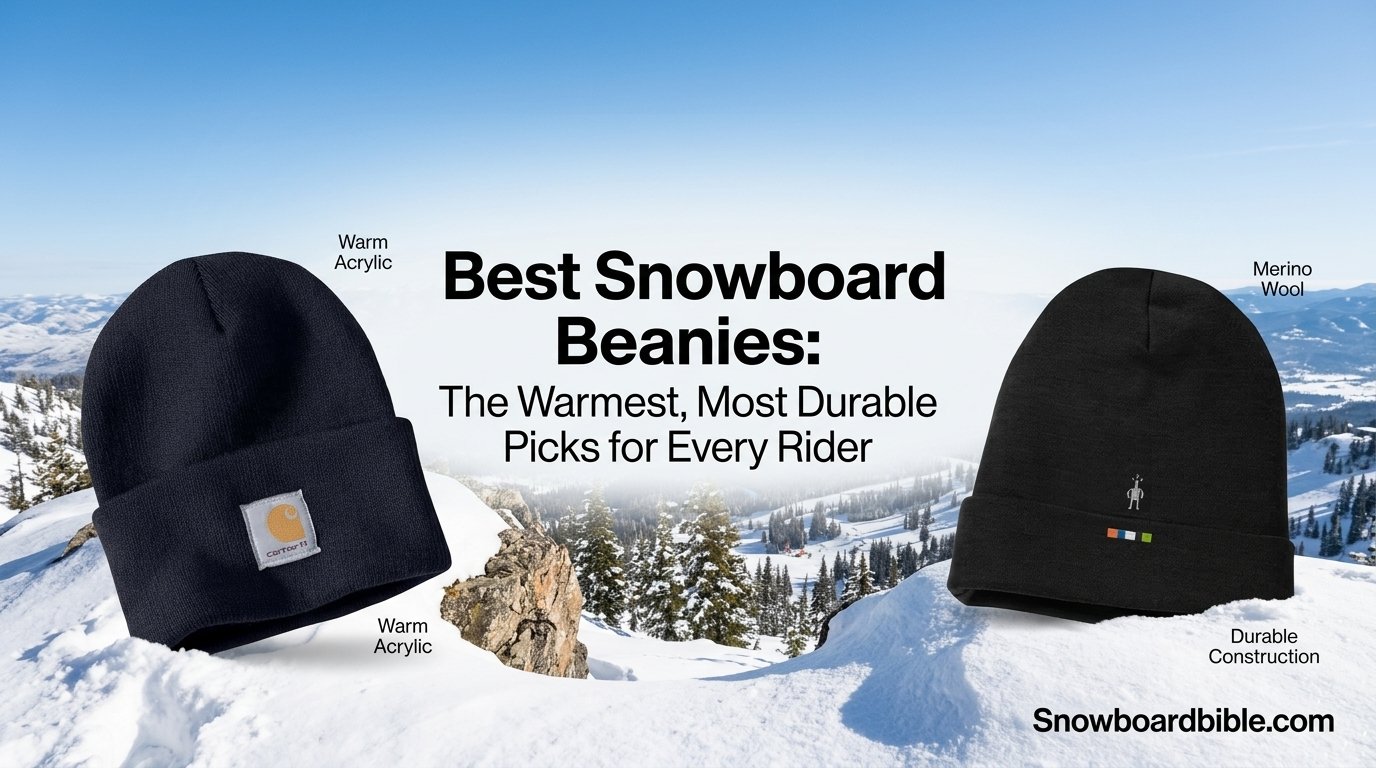
Why Your Beanie Choice Matters More Than You Think
Ask any patroller what riders complain about most on a cold chairlift, and “my head is freezing” ranks right up there with numb toes. It’s not a small detail. The head and neck lose heat fast when they’re exposed to wind, especially on a moving lift at elevation where the ambient temperature can be ten to twenty degrees colder than the base. A well-built beanie is not just a fashion layer — it is functional gear, on par with your socks or base layers, in how much it affects your comfort on the hill.
The catch is that not all beanies are built for snowboarding. A thin cotton cap that’s fine for a walk around town will soak through the first time snow gets kicked up under a chairlift, and once damp wool or acrylic loses its insulating properties, your head cools even faster than if you’d worn nothing. That’s why the beanies that show up again and again in snowboard shops and gear closets share a specific set of traits: tight, weather-resistant knit; moisture-wicking or quick-drying fiber; and a cut that plays nicely with goggles and a helmet.
We put together this guide by looking at the beanies riders and reviewers consistently reach for across a range of budgets and styles — wool classics, technical merino builds, oversized streetwear-inspired cuts, and multi-packs for people who lose gear constantly (you know who you are). Below, you’ll find a breakdown of each, a full comparison table, and a buying guide that walks through exactly what to look for before you check out.
It’s also worth mentioning that headwear tends to be one of the most overlooked line items when riders budget for a season. Most people put the bulk of their attention and money into the big-ticket items — a board, boots, a jacket — and treat a beanie as an afterthought grabbed at checkout. That approach often backfires, because unlike a board that only interacts with snow and bindings, a beanie is in direct, constant contact with your skin for the entire day, every day you ride. A poor match in material or fit doesn’t just underperform quietly in the background; it’s something you feel every single run, which is exactly why this category deserves the same deliberate research you’d put into choosing goggles or a helmet.
Quick Picks at a Glance
- Best Overall: SmartWool Thermal Merino Reversible Beanie
- Best Classic Wool: Carhartt Men’s Iconic A18 Watch Cap
- Best for Brand Loyalists: The North Face TNF Logo Box Cuffed Beanie
- Best Budget Buy: Fashion Beanie Hats Men Women
- Best 100% Merino: ACUSHLA 100% Merino Wool Beanie
- Best Slouchy Streetwear Fit: Wmcaps Winter Beanie
- Best Multi-Pack Value: Burton Recycled DND Beanie (3-Pack)
If you’re also outfitting the rest of your kit this season, our guides on snowboarding goggles and snowboard helmets pair naturally with this list, since beanie fit interacts directly with both.
Full Comparison Table
| Beanie | Material | Fit Style | Helmet Friendly | Best For |
|---|---|---|---|---|
| Carhartt Iconic A18 | Acrylic knit | Snug watch cap | Yes | Everyday warmth, durability |
| SmartWool Thermal Merino Reversible | Merino wool blend | Cuffed, reversible | Yes | All-day comfort, moisture control |
| The North Face TNF Logo Box | Acrylic | Cuffed | Yes | Brand-name reliability |
| Fashion Beanie Hats | Knit blend | Slouchy | Depends on thickness | Casual wear, tight budgets |
| ACUSHLA Merino Wool | 100% merino wool | Snug skull cap | Yes | Sensitive skin, natural fiber preference |
| Wmcaps Winter Beanie | Knit blend | Oversized slouchy | Better under helmet than over | Streetwear look off the hill |
| Burton Recycled DND (3-Pack) | Recycled acrylic blend | Snug | Yes | Backups, gifting, families |
Carhartt Men’s Iconic A18 Watch Cap Beanie

A Workwear Classic That Translates Perfectly to the Slopes
Carhartt built its name on gear that survives job sites, and the A18 watch cap carries that same no-nonsense construction into winter sports. It’s a tight, ribbed knit that sits snug against the head without slipping, which matters more than people expect once you’re carving turns or riding switch through moguls.
The acrylic knit resists pilling far longer than cheaper synthetic blends, and because the cap has no bulky folds or oversized cuff, it layers cleanly under a helmet without creating pressure points. Riders who prioritize function over flash tend to gravitate toward this one season after season.
Pros
- Extremely durable, workwear-grade knit
- Low-profile fit works well under helmets
- Affordable and widely available
Cons
- Acrylic isn’t as moisture-wicking as merino
- Limited color and style variety
SmartWool Unisex Adult Thermal Merino Reversible Cuffed Beanie

Two Beanies in One, Built on Merino’s Natural Advantages
SmartWool has built an entire reputation on merino wool performance layers, and this reversible beanie shows why the brand keeps landing on “best of” lists. Merino wool naturally regulates temperature, wicks moisture away from skin, and resists odor buildup across long trips — three things a synthetic-only beanie simply can’t match after a full day on the mountain.
The reversible design is more than a gimmick. It doubles your color and pattern options without doubling your pack weight, which is genuinely useful for multi-day trips where laundry isn’t an option. The cuffed construction adds an extra layer of coverage over the ears, and the fabric has enough stretch to fit comfortably over a wide range of head sizes.
Pros
- Merino wool wicks moisture and resists odor
- Reversible design doubles styling options
- Naturally temperature-regulating
Cons
- Priced higher than acrylic alternatives
- Some wool sensitivity possible for a small number of wearers
The North Face TNF Logo Box Cuffed Beanie

Reliable, Recognizable, and Ready for Cold Chairlifts
The North Face doesn’t need much introduction on a mountain. The TNF Logo Box beanie is the brand’s staple cuffed knit, and it earns its popularity through simple, consistent execution rather than flashy features. The double-layer cuff traps warm air near the ears and forehead, and the acrylic knit is thick enough to block wind without feeling stiff.
It’s a go-to pick for riders who want a name they trust paired with a fit that just works, session after session, without needing to think too hard about it.
Pros
- Trusted, well-known outdoor brand
- Cuffed design adds ear and forehead coverage
- Solid wind resistance for the price
Cons
- Bulkier than low-profile watch caps
- Logo styling won’t appeal to everyone
Fashion Beanie Hats Men Women

A No-Frills Option That Still Gets the Job Done
Not every rider needs a technical, merino-lined beanie for casual laps or a resort day where warmth is a “nice to have” rather than a survival requirement. This budget-friendly knit hits the basics: a soft, stretchy fit that works across a wide range of head sizes and enough thickness to take the edge off a cold lift ride.
It won’t outperform a merino wool piece on a brutal powder day, but for beginners still figuring out what they like, or for anyone who wants a spare in the car, it’s a smart low-risk pickup — similar in philosophy to grabbing an affordable pair of snowboard socks before investing in premium ones.
Pros
- Very affordable
- Soft, flexible fit for most head sizes
- Good as a backup or gift
Cons
- Less insulation than technical wool options
- Durability varies batch to batch
ACUSHLA 100% Merino Wool Beanie for Men & Women

Pure Merino Construction for Riders Who Want Natural Fiber Only
Where the SmartWool option blends merino with synthetic fibers for durability, ACUSHLA leans fully into 100% merino wool. That means maximum breathability and temperature regulation, along with the naturally itch-resistant, fine-fiber feel that separates quality merino from the coarser wool found in cheaper knits.
Riders with sensitive skin who’ve struggled with scratchy acrylic caps in the past tend to notice the difference immediately. It’s a snug skull-cap fit designed to sit close to the head, which also makes it easy to layer a hood or helmet over without added bulk.
Pros
- 100% natural merino wool
- Soft, itch-resistant fiber
- Snug fit layers well under a helmet
Cons
- Requires gentler washing care than synthetics
- Fewer color options than mass-market brands
Wmcaps Winter Beanie for Men Women

An Oversized, Streetwear-Inspired Knit for Off-Hill Style
Not every beanie needs to disappear under a helmet. The Wmcaps slouchy knit is built for the walk from the parking lot to the lodge, or for après-ski hangouts where a relaxed, oversized fit reads more “streetwear” than “technical layer.” It’s roomy through the crown, with a slight slouch that pairs naturally with a hoodie or puffer jacket.
On the hill, it works best worn underneath a helmet rather than over one, since the extra fabric volume can bunch up if layered on top. Riders who split time between lift laps and hangs at the base lodge tend to like having one of these in the bag.
Pros
- Relaxed, trendy oversized fit
- Comfortable for everyday wear off the mountain
- Affordable price point
Cons
- Bulkier fit doesn’t sit well under a helmet
- Less technical performance than merino options
Burton Recycled DND Beanie (3-Pack)

Sustainable Materials, Snowboard-Brand Fit, Three Chances Not to Lose It
Burton is one of the most recognizable names in snowboarding for a reason, and the Recycled DND beanie brings that credibility to headwear made from recycled fibers. The snug, snowboard-specific fit is designed with helmet compatibility in mind from the start, unlike beanies borrowed from general outdoor or streetwear lines.
The real draw here is the three-pack format. Beanies are notoriously easy to lose on a trip — left on a chairlift, forgotten in a rental car, buried in a backpack — and having spares on hand means a lost cap doesn’t derail your day. It’s also a practical pick for families or riding groups gearing up together, alongside other bulk-friendly items like stomp pads or snowboard locks.
Pros
- Made from recycled materials
- Snowboard-brand fit, helmet compatible
- Three-pack means built-in backups
Cons
- Colors/patterns may vary by pack
- Individual unit cost is harder to compare to single beanies
How to Choose a Snowboard Beanie
With the individual picks out of the way, it’s worth slowing down and walking through what actually separates a good snowboard beanie from a bad one. The differences aren’t always obvious from a product photo, so here’s what to actually check before buying.
Material: Merino Wool vs. Acrylic vs. Blends
Merino wool is the gold standard for cold-weather headwear because it wicks moisture, regulates temperature, and resists odor over multi-day trips — all while staying soft against skin, unlike coarser traditional wool. Acrylic is cheaper and more durable against pilling, but it doesn’t manage moisture as well, meaning sweat can leave your head feeling clammy on warmer days or during high-exertion riding. Blends try to split the difference, borrowing acrylic’s durability and merino’s comfort. If you’re deciding between fiber types, our comparison of merino wool vs. synthetic base layers covers the same trade-offs in more depth.
Fit: Snug vs. Slouchy
A snug, low-profile fit is almost always the better choice for actual riding, since it layers cleanly under a helmet without adding pressure points or bulk that throws off helmet fit. Slouchy, oversized beanies look great at the lodge or on the drive home, but they’re a poor match for anything worn underneath protective headgear.
Coverage: Cuffed vs. Uncuffed
Cuffed beanies fold back over the ears and forehead, adding a second layer of insulation exactly where wind chill hits hardest on a chairlift. Uncuffed styles are lighter and less bulky, which some riders prefer specifically because they run warm or plan to wear the beanie under a helmet where the extra fabric isn’t needed.
Thickness and Breathability
Thicker knits trap more heat but can cause overheating on high-output days, spring sessions, or during hikes to backcountry lines. If you split time between resort laps and more strenuous backcountry snowboarding, a mid-weight, breathable option will serve you better across conditions than a single ultra-thick beanie.
Price vs. Long-Term Value
It’s tempting to default to the cheapest option on a beanie, since even premium picks in this category rarely cross into serious money the way a board or set of snowboard boots might. But the price difference between a budget acrylic cap and a technical merino option is usually small in absolute terms, while the performance gap in moisture management and durability can be significant across a full season of hard use. Think of a beanie purchase less like a one-time impulse buy and more like a small, low-risk investment in comfort that pays off every single day you’re on the mountain.
Reading Reviews Before You Buy
Beyond the specs listed on a product page, real buyer reviews are one of the most useful tools for catching issues that don’t show up in marketing copy — things like a knit that runs unusually tight, colors that look different in person, or seams that come loose after repeated washing. Pay particular attention to reviews from buyers who mention using the beanie specifically for skiing or snowboarding, since general winter-wear reviews don’t always reflect how a product performs during active riding in cold, wet conditions.
Beanie vs. Helmet Liner: What’s the Difference?
A common point of confusion for newer riders is whether a beanie and a helmet liner serve the same purpose. They don’t, exactly. A helmet liner is typically a thin, moisture-wicking layer designed specifically to sit under a snowboard helmet without adding bulk, while a beanie is a standalone piece meant to be worn with or without a helmet.
Many riders use a beanie as their helmet liner by choosing a snug, low-profile style — several of the picks above, like the Carhartt A18 and the ACUSHLA merino cap, work well in this dual role. If your helmet already fits tightly with a thin liner, adding a bulky slouchy beanie underneath can throw off the fit and reduce protection, so match beanie thickness to your helmet’s internal volume before combining the two.
For riders who ditch the helmet entirely on mellow groomer days, a beanie becomes the primary layer of head protection against wind and cold, which is exactly where cuffed, wind-resistant options like The North Face TNF Logo Box earn their keep.
Beanies vs. Other Headwear: Balaclavas, Neck Gaiters, and Hoods
A beanie isn’t the only option for keeping your head and neck warm on the mountain, and it’s worth understanding how it stacks up against the alternatives, since some riders end up layering several of these pieces together depending on conditions.
Balaclavas
A balaclava covers the head, neck, and most of the face, leaving only an opening for the eyes or a small area around the nose and mouth. It’s the right call on extremely cold, windy days, or on high-alpine lines where exposed skin is a genuine frostbite risk. The trade-off is breathability and comfort during warmer stretches, since a balaclava traps far more heat and moisture against the face than a simple beanie. Many riders keep one in their bag as a backup layer rather than wearing it as their default headwear every day.
Neck Gaiters
Neck gaiters, sometimes called tube scarves, cover the neck and lower face but leave the top of the head exposed, which means they’re almost always paired with a beanie or helmet rather than used alone. They’re particularly useful for blocking wind against the neck and chin on a fast chairlift ride, an area a standard beanie doesn’t cover at all.
Jacket Hoods
Most snowboard jackets include a built-in hood, and some riders assume that’s enough insulation without needing a separate beanie underneath. In practice, a hood alone tends to let cold air in around the face and doesn’t provide the snug, consistent coverage a beanie offers, especially once you’re moving at speed. Hoods work best as an outer shell layered over a beanie during storms, rather than as a standalone substitute.
Why a Beanie Still Wins for Everyday Riding
For the vast majority of resort days, a well-chosen beanie strikes the best balance between warmth, breathability, and comfort without the bulk or restricted visibility that comes with a full balaclava. Save the heavier coverage options for genuinely extreme conditions, and let a quality beanie handle the rest of the season.
Choosing a Beanie Based on Who’s Wearing It
Different riders have different priorities when it comes to headwear, and it’s worth thinking through your own situation rather than assuming the “best overall” pick is automatically the right one for you.
Beginners Still Building Their Kit
If you’re new to the sport and still working out what gear you actually need, a budget-friendly option like the Fashion Beanie Hats pick or a multi-pack like the Burton Recycled DND makes sense — you’ll get functional warmth without a big investment while you figure out your preferences, the same logic that applies when picking your first board using our guide on how to choose your first snowboard.
Frequent Riders and Season Pass Holders
If you’re on the mountain dozens of days a season, investing in a technical merino option like the SmartWool or ACUSHLA beanie pays off quickly. The moisture management and durability advantages compound over repeated wear in ways a budget acrylic cap simply can’t match after enough use.
Riders With Sensitive Skin
Anyone who has struggled with itchy, irritating wool in the past should specifically seek out fine-fiber merino, like the ACUSHLA pick, rather than assuming all wool feels the same. The difference between coarse, cheap wool and premium merino is significant enough that it can make or break whether wool is even a viable material for you.
Parents Buying for Kids
Kids lose gear constantly and grow out of sizes quickly, making multi-packs and budget options a more practical choice than a single premium beanie. Pair headwear decisions with the rest of a child’s kit using resources like our guide to women’s and youth snowboarding gear for a fuller picture of building out a growing rider’s setup.
Style-Focused Riders
If how you look at the lodge matters as much as performance on the hill, the oversized, streetwear-inspired fit of the Wmcaps beanie or the reversible styling of the SmartWool option gives you more room to express personal style without fully sacrificing function.
Brand Spotlight: What Sets Each Maker Apart
Beyond individual product specs, it helps to understand what each brand behind these beanies actually stands for, since that context often explains design choices you’ll notice once you’re wearing the gear on the hill.
Carhartt
Carhartt built its reputation on rugged workwear designed to survive job sites, not ski resorts, and that heritage shows up directly in the A18 watch cap’s simple, durable construction. There’s no attempt at trend-chasing here — just a knit built to hold up to repeated abuse, which happens to translate well to snowboarding’s demands on outerwear.
SmartWool
SmartWool has spent years refining merino wool performance layers for hikers, runners, and skiers alike, and that specialization is exactly why their beanies consistently rank among the best for technical performance. The brand’s focus on natural fiber engineering, rather than synthetic shortcuts, is a deliberate positioning choice that shows up in the reversible beanie’s moisture management and temperature regulation.
The North Face
Few outdoor brands carry the same universal recognition as The North Face, and that brand equity is part of what you’re paying for with the TNF Logo Box beanie. Beyond the name, the brand has decades of experience building cold-weather gear for serious alpine conditions, which is reflected in the cuffed beanie’s wind-resistant knit.
Burton
Burton isn’t just a headwear brand — it’s one of the companies that effectively built modern snowboarding as a sport. That snowboard-specific design philosophy carries through to the Recycled DND beanie’s fit, which is cut with helmet compatibility and on-hill performance in mind from the start, rather than being adapted from a general outdoor or streetwear line. If you’re curious how Burton’s snowboard-specific engineering shows up elsewhere in their lineup, our reviews of the Burton Custom Flying V and Burton Cartel X bindings go into more detail on how the brand approaches performance design.
Independent and Emerging Brands
Options like ACUSHLA, Wmcaps, and various budget-focused fashion beanie lines represent a different category entirely — smaller or newer brands competing primarily on price and specific niche features, like ACUSHLA’s commitment to 100% merino construction. These brands can offer excellent value, but it’s worth reading recent reviews before buying, since quality control can vary more than it does with established, long-standing outdoor brands.
Sustainability and Material Sourcing
Sustainability has become a bigger factor in outdoor gear purchases generally, and beanies are no exception. Materials matter here in two distinct ways: how the fiber is sourced, and how long the finished product actually lasts before ending up in a landfill.
Recycled acrylic and polyester, like the fibers used in Burton’s Recycled DND beanie, repurpose existing plastic waste — often reclaimed bottles or manufacturing scraps — into new yarn rather than relying entirely on virgin synthetic material. This doesn’t make the product biodegradable, but it does reduce the demand for new raw plastic production, which is a meaningful step for a category of gear that’s produced and replaced in huge volumes every winter.
Merino wool, used in the SmartWool and ACUSHLA picks, is a renewable natural fiber that biodegrades far more readily than synthetic alternatives at the end of its life. Well-sourced merino also tends to come from farms with specific animal welfare certifications, though the specifics vary by brand and it’s worth checking a company’s sourcing claims if this is a priority for you.
Beyond the raw material question, the single biggest sustainability lever any buyer actually controls is longevity. A durable, well-cared-for beanie that lasts five seasons has a smaller overall footprint than five cheap beanies replaced annually, regardless of what either is made from. That’s part of why the buying guide above leans so heavily on fit, material quality, and proper care — durability is itself a sustainability decision, not just a value one.
Packing and Traveling With Your Beanie
If your season includes any travel — a destination trip to Utah, a bucket-list run through Japan, or a long weekend at a beginner-friendly resort — how you pack your beanie matters more than you’d expect. Beanies take up very little space, but they’re also easy to lose track of in a packed duffel or carry-on, especially with multiple similar-looking knit caps in the mix.
A few practical habits help: pack at least one spare beanie separate from your primary one, in case one gets left behind at a lodge or lift; keep beanies in an easily accessible outer pocket rather than buried at the bottom of a bag, since you’ll want quick access before boarding a lift; and if you’re checking luggage on a flight, consider keeping at least one beanie in your carry-on in case checked bags are delayed. None of this is complicated, but it’s the kind of small logistical detail that prevents a genuinely frustrating start to a trip you’ve been planning for months.
For longer trips where laundry access is limited, a reversible option like the SmartWool beanie effectively doubles your available looks without adding extra packed volume, which is a small but genuinely useful advantage over carrying two separate single-sided beanies.
Caring for Your Beanie So It Lasts the Season
Beanies take more abuse than most riders realize — stuffed into jacket pockets, soaked with snowmelt, tossed in gear bags between trips. A little care goes a long way toward keeping shape and insulation intact.
- Merino wool: Hand wash in cold water with a wool-safe detergent, then lay flat to dry. Machine washing and tumble drying can shrink and felt the fibers.
- Acrylic and synthetic blends: Machine washable on a gentle, cold cycle. Avoid high heat when drying, as it can warp the knit’s shape.
- Between sessions: Let a damp beanie air dry fully before stuffing it back into a bag — trapped moisture is what breaks down fibers and causes odor over a season of use.
- Storage: Keep beanies loosely folded rather than compressed for long stretches to help the knit retain its shape.
Treat your beanie with the same attention you’d give your snowboard maintenance routine, and it’ll outlast a season or two of hard use rather than needing replacement every year.
Frequently Asked Questions
What material is best for a snowboard beanie?
Merino wool is generally considered the best material because it wicks moisture, regulates temperature, and resists odor across multi-day trips, while still staying soft against skin. Acrylic is a durable, budget-friendly alternative, though it manages moisture less effectively.
Should a snowboard beanie be snug or loose?
A snug fit is better for actual riding, especially if you plan to wear the beanie under a helmet. Loose, slouchy styles are better suited to lodge time or casual wear off the mountain.
Can I wear a beanie under my snowboard helmet?
Yes, as long as it’s thin and low-profile. Bulky or slouchy beanies can throw off helmet fit and reduce the protection your helmet is designed to provide, so choose a snug style specifically for helmet use.
How many beanies do I actually need for a snowboard trip?
Most riders benefit from at least two: one snug, technical option for riding under a helmet, and one more relaxed style for lodge time or travel days. Multi-packs, like the Burton Recycled DND 3-Pack, cover this need efficiently.
Are cuffed beanies warmer than uncuffed ones?
Generally yes, since the folded-back cuff adds a second insulating layer over the ears and forehead, which is where wind chill is felt most on a chairlift.
Is merino wool itchy?
High-quality merino wool, like that used in options such as the ACUSHLA and SmartWool beanies, uses finer fibers than traditional wool and is significantly less itchy. Cheaper wool blends can still feel scratchy against sensitive skin.
Can I machine wash a wool snowboard beanie?
It depends on the blend. 100% merino wool beanies typically need hand washing in cold water to avoid shrinking, while acrylic and synthetic blends are usually machine washable on a gentle, cold cycle.
Do beanies actually make a noticeable difference in warmth?
Yes. The head and neck lose heat quickly in cold, windy conditions like a chairlift ride, so a well-insulated beanie meaningfully improves overall comfort compared to riding bare-headed or with an inadequate cap.
What’s the difference between a beanie and a helmet liner?
A helmet liner is a thin layer built specifically to sit under a helmet without adding bulk, while a beanie is a standalone piece that can be worn with or without a helmet. Many riders use a snug, low-profile beanie to serve both purposes.
Are oversized slouchy beanies practical for snowboarding?
They’re better suited to off-hill wear, like walking to the lodge or hanging out after a session, since the extra fabric volume can bunch up uncomfortably under a helmet.
How do I stop losing my beanie on trips?
Beanies are easy to misplace on chairlifts, in rental cars, or buried in gear bags. Buying a multi-pack, like the Burton Recycled DND 3-Pack, is a simple way to make sure a lost beanie doesn’t ruin the rest of your trip.
Do recycled-material beanies perform as well as standard ones?
Yes, in most cases. Brands like Burton have refined recycled fiber construction to match the warmth and durability of standard materials, while reducing the environmental footprint of production.
Sizing and Fit: Getting It Right the First Time
Beanie sizing rarely gets the attention it deserves, mostly because knit fabric stretches and “one size fits most” labels make it easy to assume every beanie will just work. In practice, head circumference, hair volume, and knit density all interact to determine whether a beanie feels snug and secure or loose enough to slide off mid-run.
Most adult beanies are built to comfortably fit head circumferences between roughly 21 and 24 inches, with stretch knits accommodating a bit beyond that range. If you’re between sizes, or if you plan to wear the beanie under a helmet, sizing down slightly is usually the safer call — a beanie that’s a touch snug will still stretch to fit, while one that’s too loose has nowhere to go but off your head on a windy chairlift.
Measuring Your Head Correctly
Wrap a soft tape measure around the widest part of your head, roughly an inch above your eyebrows and ears, keeping the tape snug but not tight. Compare that number against the sizing chart on the product listing rather than guessing based on hat sizes from other brands, since knit stretch varies significantly between acrylic, wool, and blended yarns.
Kids and Youth Sizing
If you’re shopping for a younger rider, avoid simply buying a “small” adult beanie and assuming it will work. Youth-specific beanies are cut with a shorter overall height and tighter crown to avoid the loose, floppy fit that makes adult styles slide down over a child’s eyes. This matters just as much as getting sizing right on other youth gear, the same way our guide on the best age to teach a child to snowboard stresses matching gear to a child’s actual proportions rather than sizing up “for growth room.”
Matching Your Beanie to Conditions and Riding Style
Not every day on the mountain calls for the same headwear, and riders who own more than one beanie tend to rotate based on conditions rather than reaching for the same cap regardless of forecast. Thinking through a few common scenarios makes it easier to decide which of the picks above actually fits your riding calendar.
Deep Powder and Storm Days
On heavy snowfall days, wind-resistant, tightly knit beanies like the Carhartt A18 or The North Face TNF Logo Box earn their keep. Powder days also mean more falls and more snow contact, so a beanie that resists soaking through — rather than one built from loosely knit, decorative yarn — keeps your head warm even after a faceplant in fresh snow.
Spring and Bluebird Days
Warmer spring sessions call for breathability over raw insulation. A lighter merino option like the ACUSHLA or SmartWool beanie regulates temperature better across a wide range without causing overheating once the sun is out and temperatures climb toward the afternoon.
Backcountry and Uphill Touring
Riders hiking for their turns generate significantly more body heat than those riding lifts, which changes the calculus entirely. A thinner, more breathable beanie — sometimes even removed entirely during the climb and put back on at the top — works better than a thick, cuffed style that traps heat during exertion. Pair the right headwear with a broader safety mindset by reviewing our backcountry snowboard safety protocol before heading out of bounds.
Resort Days With Minimal Hiking
Standard lift-served days are where cuffed, insulated beanies shine, since most of the cold exposure happens standing still on a chairlift rather than during active movement. This is the scenario where the extra ear coverage of a cuffed design like the North Face or SmartWool option makes the biggest practical difference.
Color, Style, and Matching Your Kit
Function matters most, but style isn’t irrelevant either — a beanie is one of the most visible pieces of gear you wear all day, showing up in every lift photo and lodge selfie. Neutral tones like black, navy, and heather grey tend to be the safest choice because they match easily with any jacket or pant combination, which is part of why classics like the Carhartt A18 remain popular season after season.
Brighter colors and bold patterns, like some of the options in the Wmcaps and Fashion Beanie Hats lines, work well for riders who want their headwear to stand out against a sea of black and navy jackets on a crowded lift line. If you’re coordinating a full outfit, it’s worth checking your beanie choice against your existing outerwear before buying, particularly if you already have baggy snowboard pants or a jacket in a specific colorway you want to match.
Reversible options, like the SmartWool pick, solve the color-matching problem elegantly by giving you two looks in a single piece of gear — useful for riders who don’t want to pack multiple beanies but still want some visual variety across a multi-day trip.
Common Mistakes When Buying a Snowboard Beanie
A surprising number of returns and complaints around beanies trace back to a handful of avoidable mistakes. Knowing what to watch for ahead of time saves you from ending up with gear that looks right in a product photo but doesn’t perform on the hill.
- Buying based on looks alone: A beanie that photographs well on a model isn’t necessarily built with performance-grade materials. Always check the fabric composition, not just the color and cut.
- Ignoring helmet compatibility: If you ride with a helmet most of the season, a bulky, oversized beanie will constantly fight against a proper helmet fit. Check helmet compatibility before falling in love with a slouchy style.
- Skipping the material label: “Wool blend” can mean anything from mostly wool to a tiny fraction of wool mixed with cheaper synthetic fiber. Read the actual percentage breakdown when it’s listed.
- Assuming one beanie covers every condition: As covered above, storm days, spring days, and backcountry touring all call for different levels of insulation and breathability. A single do-it-all beanie is a compromise, not an optimal choice for every scenario.
- Overlooking care instructions: Throwing a 100% merino beanie into a hot dryer is one of the fastest ways to shrink it beyond usability. Check the care label before your first wash, not after.
Final Verdict
If you want one beanie that handles almost everything a season on the mountain throws at it, the SmartWool Thermal Merino Reversible Cuffed Beanie is the strongest all-around pick — merino’s natural temperature regulation and moisture-wicking properties simply outperform synthetic alternatives once you’re a few runs into a cold day. Budget-conscious riders will do just fine with the Carhartt Iconic A18 or the Fashion Beanie Hats option, while anyone who wants dedicated backups should look at the Burton Recycled DND 3-Pack.
Whichever you choose, pair it with the rest of a properly layered setup — check out our guides on snowboard layering and snowboard helmets next to make sure your whole kit works together, not just your head.
Shop Our Top Pick on Amazon


