
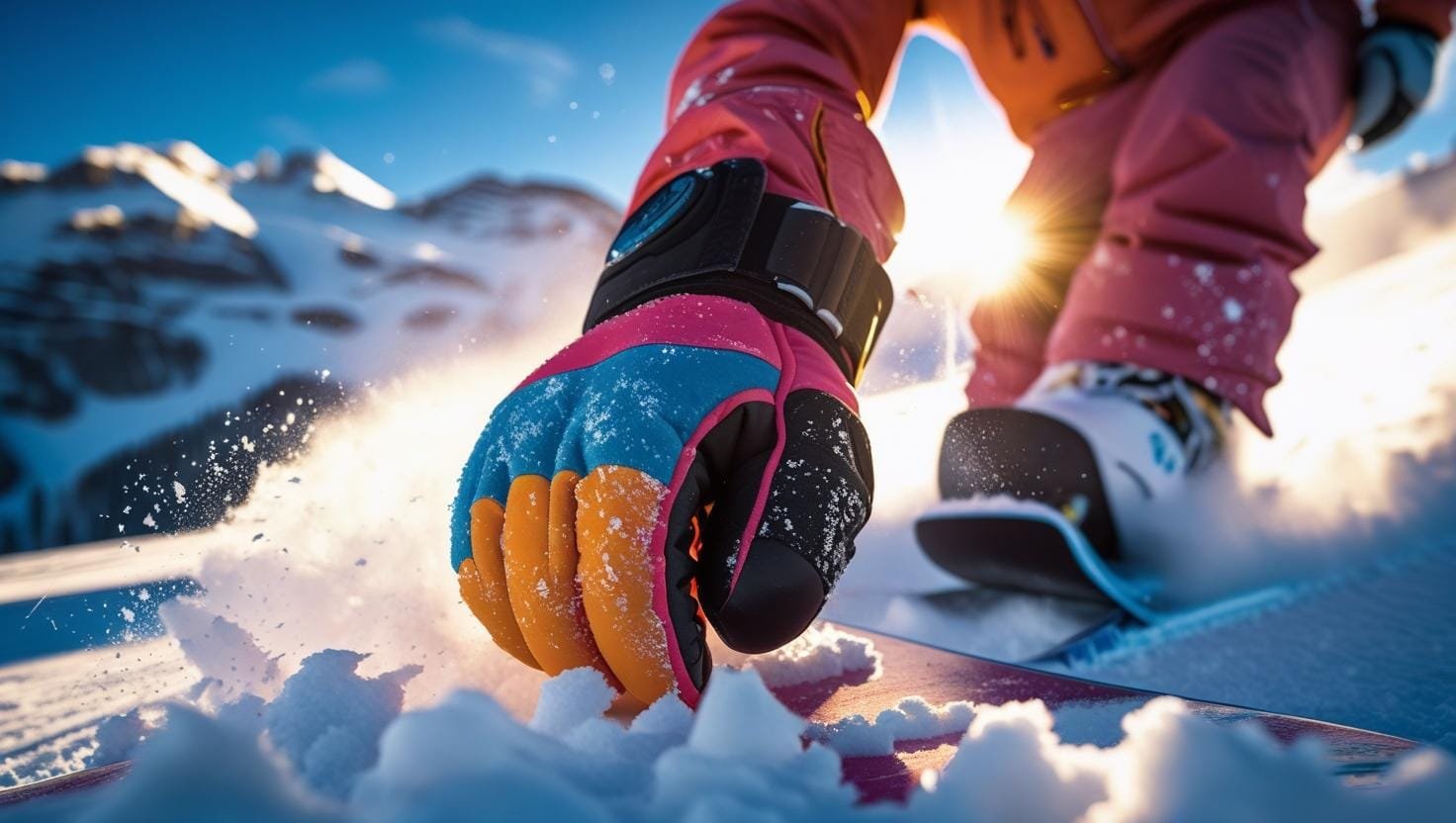
The Comprehensive Guide to Why Snowboarders Wear Mittens: 2026 Edition
Look around any lift line or terrain park from Whistler to Hakuba, and you’ll notice a clear trend: snowboarders love their mittens. While gloves offer the dexterity of individual fingers, a huge portion of the riding community opts for the classic “crab claw” design. This isn’t just a style choice—it’s a calculated decision based on superior warmth, practical functionality, and all-day comfort. In this authority guide, we explore the biomechanics, thermodynamics, and material science that make mittens the king of the mountain. Whether you’re buying your first snowboard or you’re a seasoned rider logging 100+ days a season, understanding why mittens dominate snowboard culture will change how you think about handwear forever.
The Primary Reason: Superior Warmth & Thermodynamics
The number one reason snowboarders choose mittens is rooted in the simple physics of thermodynamics. By keeping your four fingers together in a single, unified compartment, they share their collective body heat. This creates a much warmer pocket of air compared to gloves, where each finger is isolated and must generate its own heat to stay warm. In a glove, each finger has a much higher surface-area-to-volume ratio, meaning it radiates heat to the environment far more rapidly. In a mitten, the fingers act as a single heat source, maintaining a stable internal microclimate even when ambient temperatures drop well below zero.
[Image showing a thermal heat map comparison between a gloved hand and a mittened hand in sub-zero temperatures]Think of your hand like a room. A glove is like a house where every finger is a separate room with three exterior walls; it is incredibly difficult to keep each room warm. A mitten is like a large, open-concept living area where everyone sits around a central fireplace. The collective metabolic heat produced by your circulatory system is shared, creating a feedback loop of warmth. On cold and stormy days, this difference is significant. Warmer hands mean better circulation, less discomfort, and ultimately, more time on the mountain before you have to retreat to the lodge. For a sport where you’re constantly in contact with snow—whether you’re strapping in, pushing off, or carving deep heelside turns where your knuckles might graze the slope—maximizing warmth is a top priority.
Furthermore, mittens allow for the easy addition of chemical heat packs. In a glove, a hand warmer usually sits on the back of the hand or in a specialized pocket, providing indirect heat to the blood vessels. In a mitten, you can hold the warmer directly against your fingertips, providing immediate relief during those brutal chairlift rides in January. Many professional riders who spend 100+ days a season on the snow argue that a high-quality mitten is the only way to prevent chronic cold-weather conditions like Raynaud’s syndrome or general frost-nip. When the wind chill is biting at 40mph on the ridge, the shared warmth of four fingers is your best defense against the elements.
Lastly, the psychological aspect of warmth cannot be understated. Cold hands are one of the fastest ways to end a day early. When your digits go numb, you lose proprioception and fine motor control over your board — whether you’re on a Burton Custom Flying V or a beginner rental. By choosing mittens, you are essentially investing in more “runs per day.” You stay comfortable longer, which allows you to maintain focus on your technique rather than the biting wind. In 2026, with the introduction of aerogel-insulated mittens, this warmth advantage has only widened, making mittens the undisputed choice for anyone riding in temperatures below freezing.
A Note on Raynaud’s and Chronically Cold Hands
It’s worth being precise about the Raynaud’s connection mentioned above, since it’s a real and fairly common condition rather than just a turn of phrase. Raynaud’s is a circulatory condition, affecting an estimated 5 to 10 percent of the population, in which the small blood vessels in the fingers overreact to cold or stress by constricting suddenly, cutting off blood flow and causing the fingers to turn white, then blue, then a flushed red as circulation returns. Mittens are widely recommended by people who manage Raynaud’s specifically because keeping the fingers together, rather than isolated in individual glove channels, helps maintain whatever blood flow is available rather than fighting it. Mittens aren’t a cure or medical treatment for the condition, but for riders who run cold or have been diagnosed with Raynaud’s, sizing up to a roomier mitten — rather than going snug — and prioritizing a windproof, breathable shell over sheer insulation thickness tends to make a meaningfully bigger difference than most riders expect.
The Altitude Factor: How Elevation Affects Your Hands
Altitude is a variable that most mitten guides overlook entirely, yet it has a measurable effect on how warm your hands stay during a day on the mountain. As elevation increases, atmospheric pressure drops, and with it the density of the air surrounding your body. Thinner air holds less thermal energy, which means convective heat loss — the process by which moving air strips warmth from your skin — accelerates at altitude even when the ambient temperature reading on the resort thermometer looks identical to a lower-elevation day. At 10,000 feet, the air is roughly 30 percent less dense than at sea level, and that difference compounds when wind is factored in. A 15-mile-per-hour wind at the base area might feel brisk; the same wind speed at the summit, where the air is thinner and often moving faster due to exposed ridgelines, strips heat from exposed skin at a dramatically accelerated rate.
The physiological response to altitude compounds the problem. Your body redirects blood flow to protect core organs, reducing peripheral circulation as a survival mechanism. Your fingers and toes — already the farthest points from your heart — receive even less warm blood than they would at lower elevations. This is why riders who feel perfectly comfortable in mittens at a Pacific Northwest resort at 3,000 feet sometimes find their fingers going numb by midmorning at a Colorado resort sitting above 10,000 feet, even on a sunny day. The solution isn’t necessarily thicker insulation; it’s understanding that altitude demands a systems approach to hand warmth. Pairing a windproof mitten shell with a moisture-wicking liner, ensuring your socks aren’t so thick that they compress the blood vessels in your wrist, and avoiding gloves that are too tight around the cuff all contribute to maintaining the circulation your hands need at elevation. Some high-altitude riders also swear by pre-warming their mittens with a chemical hand warmer stuffed inside the shell before they put them on, essentially starting the day with a head start on warmth rather than asking cold mitten material to absorb heat from their fingers for the first twenty minutes of the ride.
For riders who frequent high-alpine terrain above treeline — where wind exposure is constant and shelter is nonexistent — the mitten advantage becomes even more pronounced. The shared-heat design that makes mittens superior at the base becomes essential at the summit. At extreme altitude, even the best five-fingered glove struggles to keep the pinky and ring finger warm because those fingers receive the least blood flow and have the worst surface-area-to-volume ratio. In a mitten, those weaker fingers are tucked against the stronger middle and index fingers, borrowing their heat. This isn’t a trivial comfort issue; numb fingers on exposed alpine terrain can be genuinely dangerous when you need to grip your bindings during a traverse or self-arrest on an icy bootpack. For riders exploring high-alpine lines on boards like the Jones Flagship or Mountain Twin, warm hands aren’t a luxury — they’re a safety requirement.
Surprisingly Good Functionality: Dexterity vs. Practicality
The main argument against mittens is a perceived lack of dexterity. However, the tasks required while snowboarding don’t demand the fine motor skills required for, say, playing a piano or performing surgery. Snowboarding is a sport of “macro-movements.” Think about what you actually need to do with your hands while riding: you need to ratchet down your binding buckles (whether you’re riding Union Force or Atlas bindings), pull up your jacket zipper, adjust your goggles, and perhaps carry your board through the parking lot. Modern mittens are designed with enough flexibility and articulated shapes to handle all these tasks with ease.
The “ratchet” movement—the most common hand task for a snowboarder—is actually perfectly suited for mittens. The thumb and the unified “claw” provide more than enough leverage to pull a binding strap tight. In fact, many riders find that the added surface area of the mitten makes it easier to find and grip the buckle when their vision is obscured by a helmet or goggles. Furthermore, modern mitten designs often feature “articulated fingers” inside the lining or pre-curved shapes that mimic a relaxed hand position, reducing hand fatigue over an eight-hour day. The transition from “finger dexterity” to “grip strength” is one that most riders find surprisingly intuitive within just a few runs.
Moreover, the integration of technology has evolved. Most high-quality mittens in 2026 come with removable, thin fleece liners that are touch-screen compatible. This provides a “dual-layer” system. On the chairlift, you can temporarily slide your hand out of the warm outer shell while remaining protected by the thin liner to use your phone, find a snack in your pocket, or adjust your music. This system actually provides *more* functional dexterity than a single-layer glove because it allows you to regulate your exposure to the cold air. You only expose your fingers when absolutely necessary, and you return them to the “oven” of the mitten immediately afterward.
It is also worth noting that many “freestyle” maneuvers, such as grabs, are actually easier with mittens. Grabbing the edge of your board requires a broad, strong grip rather than finger-tip precision. The unified surface of a mitten palm provides a consistent friction area against the board’s top sheet or edges — whether you’re on a Lib Tech Skate Banana, a Capita DOA, or any other freestyle deck. This reliability helps riders “bone out” grabs with more confidence. When you aren’t worried about catching a finger in a binding strap or misplacing a finger on the edge, you can focus entirely on the style and execution of the trick. In the world of snowboarding, practical utility beats theoretical dexterity every time. For riders working on their turn technique, not having to think about what their hands are doing means more mental bandwidth for what their feet and body are doing.
Mittens and Board Control: The Grip Factor
One aspect of the mitten-vs-glove debate that rarely gets the attention it deserves is how handwear choice directly affects your ability to control the board during transitions, when you’re on the ground, and in the moments where your hands make contact with snow. When you’re learning to ride — or when you’re pushing yourself into new terrain — your hands are constantly interacting with the snow surface. Beginners planting a hand to brace a fall, intermediate riders dragging a hand through a deep heelside carve, and advanced riders executing butter tricks all rely on hand-to-snow contact as a fundamental part of their riding.
In a mitten, the broad, flat palm surface distributes pressure evenly across the snow. This creates a predictable, consistent滑-slide surface that behaves the same way every time your hand touches the ground. In a glove, the individual fingers create uneven pressure points that can catch unpredictably on hardpack or ice, potentially wrenching a finger in an unexpected direction. Park riders who regularly hand-drag through carves or use their hands to stabilize flatground tricks strongly prefer mittens for this reason — the consistent palm surface is essentially a small, reliable snowboard for your hand.
For riders interested in stopping techniques, mittens also offer a practical advantage when you’re learning to fall safely. The recommendation from most snowboard schools is to make a fist and land on the forearm rather than extending an open hand during a fall (to protect the wrist). In a mitten, making a fist is natural and comfortable — your fingers are already grouped together, and the fist simply compresses them tighter. In a glove, making a fist can feel constrictive, especially if the glove is slightly stiff or the fingers are individually articulated. The mitten’s design essentially encourages the safer falling position that instructors have been teaching for decades. This connection between handwear choice and fall safety is one that many experienced riders understand intuitively even if they’ve never articulated it.
The grip advantage extends to carrying your board as well. Whether you’re hauling your deck across a parking lot, up a set of stairs to the lodge, or through a flat section of cat track, you’re gripping the board’s edge with your hand. Mittens provide a larger friction surface against the metal edge, which means less grip strength is required to maintain control. Over the course of a day where you might carry your board dozens of times — especially if you’re lapping a terrain park or navigating a resort with a lot of walking — that reduced grip fatigue adds up. Riders who wax their boards regularly know that a clean, well-maintained base is slippery; a mitten’s broad grip surface compensates for that slipperiness far better than glove fingers that can slide along the edge.
The Best of Both Worlds: Lobster, Trigger, and 3-Finger Mitts
For riders who genuinely can’t decide between the warmth of a mitten and the dexterity of a glove, an entire category exists specifically to split the difference. Variously called “lobster mitts,” “trigger mitts,” or “3-finger gloves” — much like the debate between Burton Mission and Cartel bindings, sometimes the best choice is the hybrid that gives you the best of both worlds. these designs free up the index finger (and sometimes the thumb) into its own separate compartment while keeping the remaining three fingers bundled together in a shared chamber. The logic is simple: most of the fine-motor tasks a rider actually performs — operating a touchscreen, threading a small zipper pull, adjusting a tiny strap — rely heavily on the index finger and thumb, while the middle, ring, and pinky fingers do comparatively little independent work. By isolating just the index finger, a trigger mitt can deliver noticeably more usable dexterity than a true mitten while sacrificing only a small amount of the shared-heat warmth advantage.
This hybrid category has become particularly popular among backcountry and splitboard riders, who need enough dexterity during an uphill tour — adjusting skins, operating a beacon, eating a snack — without giving up serious warmth on the descent. Several well-regarded trigger mitts on the market today use a thin, breathable softshell construction specifically so they don’t trap excess sweat during the aerobic uphill effort, while still offering enough warmth for the downhill once the rider stops generating heat through movement. For riders who find snowboarding so enjoyable that they want to extend their time on snow, a trigger mitt is the perfect piece of gear — if you’re wondering why snowboarding is so fun, having comfortable hands is a big part of the answer. If you’ve tried mittens and found them frustratingly limiting, or tried gloves and found your fingers going numb on cold chairlift rides, a trigger mitt is very often the actual answer you’ve been looking for rather than a compromise you have to settle for. Riders who spend time in the backcountry should also check out our powder binding guide, since the extra dexterity of a trigger mitt pairs perfectly with the binding adjustments required for deep-snow setups.
Durability and Simplicity: Fewer Seams, Longer Life
From a construction standpoint, a pair of gloves is a nightmare of engineering. A standard glove has many more seams than a mitten—typically one for each side of every finger, plus the gussets between the fingers. More seams mean more potential points of failure where stitching can break, abrasion can occur, or waterproofing can fail. The simpler construction of a mitten often translates to better long-term durability, especially in high-wear areas like the fingertips and the “crotch” between the thumb and forefinger. For a snowboarder, who is constantly handling the sharp metal edges of their board — whether it’s a Ride Warpig or a Lib Tech Travis Rice Pro — seam integrity is vital.
[Image showing the high-stress seam areas on a glove compared to the reinforced, low-seam construction of a mitten]Durability is particularly important for park riders and those who perform “grabs” in the air. Grabbing the edge of a snowboard puts immense stress on the palm and fingers of a glove. In a mitten, the palm is often constructed from a single, large piece of high-grade goatskin or synthetic leather. This reduces the number of “catch points” where a sharp edge can snag a thread. Because the stress is distributed over a larger surface area, the leather or fabric is less likely to tear. This “overbuilt” nature is why you’ll often see work-wear brands like Kinco being used by lift operators and local riders — they value the raw toughness of a simple leather mitten over the technical complexity of a five-fingered glove. If you’re choosing between Arbor and Salomon boards, you already understand that sometimes simpler, tougher construction beats flashy features.
Simplicity also extends to maintenance. Mittens are easier to dry out at the end of the day. Because there are no narrow finger channels, air can circulate much more freely inside the shell when it’s placed on a boot dryer or near a heater. This prevents the buildup of bacteria and odors that often plague gloves. When you’re traveling for a week-long trip, the ability to have dry, fresh gear every morning is a major factor in your overall comfort. Furthermore, applying leather balm or waterproofing wax is much faster on a mitten’s smooth surface than it is on the intricate crevices of a glove. A mitten is a no-nonsense tool designed for a high-abuse environment; it does one job (keeping you warm and protected) and it does it for multiple seasons without falling apart at the seams.
Finally, we must consider the “Simplicity of Use” factor. Putting on a glove when your hands are slightly damp or cold can be an agonizing struggle of trying to align each finger with its respective tunnel. With a mitten, your hand slides in effortlessly. This might seem like a small detail, but when you’re in the middle of a blizzard and need to quickly transition from your phone back to your riding gear, that ease of entry is a godsend. It reduces frustration and keeps your focus on the shred. In the harsh alpine environment, simplicity is the ultimate sophistication.
Washing and Long-Term Care
Beyond the daily end-of-day drying routine, mittens benefit from periodic deeper cleaning that most riders skip simply because they don’t know it’s safe to do. Most non-leather, synthetic-shell mittens can be machine washed on a gentle cycle, provided any removable liners are taken out first and the mitten is air-dried afterward rather than tumble-dried, since high heat can damage waterproof membranes or degrade DWR (durable water repellent) coatings. Leather-paneled mittens require a different approach entirely: they should never go in a washing machine, and instead need an occasional application of a leather-specific conditioning balm to keep the hide supple and to restore water resistance that wears off through repeated exposure to snow and friction. A good rule of thumb is to reapply leather balm roughly once per season for moderate use, or more frequently for riders logging 50-plus days, since dried-out leather cracks and loses its waterproofing far faster than well-conditioned leather does. Some riders even keep a pair of loose-fit snowboard pants for particularly harsh days, as the relaxed fit allows better airflow and prevents the claustrophobic feeling that can come with full storm gear.
Breaking In and Customizing Leather Mittens
High-quality leather mittens — particularly those made from full-grain goatskin or cowhide like the Hestra models beloved by resort riders and ski patrol alike — require a break-in period that synthetic mittens do not. Fresh out of the box, a leather mitten can feel stiff and slightly uncomfortable, with the hide resisting the natural curl of your fingers. This initial stiffness is actually a sign of quality: full-grain leather is denser and more durable than the pre-softened, chemically treated leather found on cheaper products, and that density is exactly what gives the mitten its long lifespan and wind resistance.
The break-in process for leather mittens is straightforward but requires patience. The most effective method is to apply a thin layer of leather conditioning balm — Hestra’s proprietary leather balm is the gold standard, though any quality beeswax-based leather conditioner will work — and then spend a few evenings flexing the mittens by hand, repeatedly making fists, spreading your fingers, and bending the mitten at the natural crease points. The oils from the conditioner penetrate the hide and lubricate the fibers, allowing them to flex more freely without cracking. After two or three sessions of this manual flexing combined with a single conditioning application, most leather mittens will have softened enough to feel comfortable on the mountain without losing the structural integrity that makes them durable.
Some riders accelerate the break-in by wearing their new leather mittens around the house for an evening — doing dishes, reading a book, scrolling their phone with the liner pulled out — or by wearing them on a few warm spring days before committing them to deep-winter duty. The key is to let the leather mold to the specific shape of your hand, which it will do naturally over time as your body heat and hand oils are absorbed into the hide. Within a handful of days on snow, a quality leather mitten will have molded into a shape that’s uniquely yours, fitting better than any synthetic mitten ever could because it has literally taken the impression of your hand. This is also why borrowing a friend’s well-broken-in leather mitten can feel surprisingly comfortable — the leather has already adapted to a hand shape, and it will partially re-mold to yours with a short break-in of its own.
For riders who want to customize the fit further, some leather mittens can be slightly stretched using a mallet and a wooden dowel (inserted into the finger area and gently worked to expand tight spots), though this should be done carefully and only on mittens that are genuinely too tight in specific areas rather than a full size too small. The more common customization is adding aftermarket wrist leashes, replacing stock liners with merino wool options for added warmth, or applying additional waterproofing wax to the exterior shell for riders who spend a lot of time in wet Pacific Northwest conditions. Leather is one of the few mitten materials that rewards this kind of ongoing attention, which is part of why the best leather mittens last a decade or more while synthetic alternatives typically need replacing every two to three seasons. The same principle applies to snowboard maintenance — gear that’s cared for outlasts gear that’s neglected. For more on keeping your gear in top shape, our outerwear care guide covers principles that apply to mittens as well.
Mittens vs. Gloves: The Technical Comparison
Mittens: The Warmth Advantage
- Thermal Mass: Shared heat from four fingers creates a stable core temperature.
- Radiant Heat: Less surface area means less heat is lost to the atmosphere.
- Add-ons: Perfect shape for holding chemical hand warmers.
- Maintenance: Significantly faster drying times and easier leather care.
Mittens: The Compromises
- Fine Detail: Not suitable for handling small screws or camera buttons.
- Ventilation: Can get overly warm during spring slush sessions.
Gloves: The Precision Advantage
- Fine Motor: Best for photographers or those using tools on the mountain.
- Individual Movement: Essential for holding poles (mostly for skiers).
- Cooling: Easier to vent individual fingers on warm days.
Gloves: The Weak Points
- Seam Stress: 5x the number of potential leakage and tear points.
- Cold Circulation: Fingers are prone to rapid cooling and numbness.
- Drying: Moisture gets trapped in finger tips leading to odor.
The “Trigger” Compromise: Can’t decide? Look for “3-finger” or “lobster” mitts, which combine a mitten’s warmth with a separate index finger for extra dexterity. It’s the ultimate hybrid for 2026. For a deeper comparison, see our full mittens vs. gloves breakdown.
Why This Calculus Is Different for Snowboarders Than Skiers
One detail that explains a lot about why mittens skew so heavily toward snowboard culture specifically is the simple fact that snowboarders don’t hold poles. A skier’s hands are doing constant, repetitive work all day — gripping a pole shaft, planting it, releasing it, adjusting the strap, over and over for every single turn and every push across a flat section. That repetitive grip-and-release motion genuinely benefits from individual finger articulation, which is part of why ski gloves dominate among skiers even in extremely cold conditions where a mitten would technically be warmer. A snowboarder’s hands, by contrast, spend the vast majority of a run simply hanging at their sides or lightly touching the snow during a deep carve, with hand-intensive tasks — buckling in, adjusting goggles, the occasional grab — happening only intermittently between long stretches of doing nothing in particular. That fundamental difference in how the sport actually uses your hands is a big part of why the mitten-to-glove ratio tilts so differently between the two communities, even though both sports face the exact same cold and the exact same mountain. Whether you’re riding regular or goofy, the mitten advantage remains constant.
This distinction also helps explain the cultural dimension of the mitten-vs-glove choice. Snowboarding has always positioned itself as the more relaxed, surf-inspired cousin of skiing, and the mitten — with its simple, chunky silhouette and its association with childhood warmth — fits that identity perfectly. When snowboard culture was crystallizing in the late 1980s and early 1990s, riders like Jeremy Jones and the early Lib Tech crew were already gravitating toward mittens not just for warmth but as a visual statement of difference from the buttoned-up, pole-carrying ski establishment. That cultural DNA persists today: walk through the terrain park at any resort and you’ll see mittens outnumbering gloves by a significant margin, a pattern that holds even in spring conditions where warmth is less of a factor. The mitten has become part of the snowboarder’s identity in a way that transcends pure function, and riders who switch from gloves to mittens often report that it changes how they feel about their day on the mountain in ways that go beyond just warmer fingers. If you’re curious about the broader appeal of snowboarding culture, our piece on why snowboarding is the best winter sport explores more of those cultural dynamics.
Understanding Mitten Materials: From Leather to Synthetic and Beyond
The material composition of a mitten is arguably more important than its insulation rating or membrane technology, because the outer shell is what interacts directly with the environment — wind, snow, abrasion from board edges, UV radiation at altitude, and the constant flex-and-release cycle of your hand throughout the day. Understanding what your mitten is made of — and what each material does well and poorly — is the key to choosing a product that will perform for multiple seasons rather than falling apart after one winter. The three primary material categories dominating the 2026 market are natural leather, synthetic shells, and hybrid constructions that combine elements of both, and each has a distinct profile of strengths, weaknesses, and ideal use cases.
Natural Leather: Goatskin, Cowhide, and Pigskin
Leather has been the premium mitten material for over a century, and for good reason: no synthetic material has yet matched the combination of wind resistance, natural water repellency, durability, and hand-molding comfort that quality leather provides. Within the leather category, three hides dominate the snowboard mitten market, and understanding the differences between them helps explain why a Hestra mitten costs three times as much as a generic leather mitten from a big-box store.
Goatskin is the most commonly used leather in high-end snowboard and ski mittens. It’s prized for its exceptional softness-to-strength ratio — goatskin is thinner and more supple than cowhide while being surprisingly resistant to abrasion and tearing. It naturally conforms to the shape of the rider’s hand faster than any other leather, which is why mittens made from goatskin often feel “broken in” within just a few days of riding. Hestra, the Swedish manufacturer that dominates the premium mitten market, uses specially tanned “Army Goat Leather” that has been treated for enhanced water resistance while preserving the hide’s natural breathability. Goatskin also has a naturally pebbled grain texture that provides excellent grip on binding buckles and board edges, even in wet conditions. The main drawback of goatskin is that it’s less stiff than cowhide, which means it provides slightly less impact protection if you jam your hand into a pile of hard snow or rock.
Cowhide is the material of choice for riders who prioritize maximum durability over supple comfort. It’s thicker, stiffer, and heavier than goatskin, which makes it ideal for riders who are hard on their gear — park riders who grab their board constantly, lift operators who spend all day in the elements, or anyone who needs a mitten that can survive contact with sharp metal edges day after day. Brands like Kinco and Swany have built their reputations on cowhide mittens that can take a beating and keep performing. The tradeoff is that cowhide takes longer to break in, is heavier on the hand, and doesn’t breathe as well as goatskin. In warm spring conditions, a thick cowhide mitten can feel clammy and hot in a way that a goatskin mitten would not. For riders who want the durability of cowhide without the weight, some manufacturers now offer “split cowhide” — cowhide that’s been thinned on the flesh side while retaining the full-grain surface — as a middle ground.
Pigskin is a less common but increasingly popular alternative that occupies an interesting middle ground. Pigskin is naturally more porous than either goatskin or cowhide, which gives it superior breathability — a significant advantage for riders who run warm or who spend long days in the backcountry where managing sweat is critical. The porosity also means pigskin absorbs leather conditioner more readily, making it faster to break in and easier to maintain. The downside is that pigskin’s porosity makes it less naturally water-resistant than goatskin, so pigskin mittens typically rely more heavily on their DWR coating and waterproof membrane to keep moisture out. Several emerging brands are gravitating toward pigskin specifically because it aligns with the growing demand for materials that balance performance with breathability.
Synthetic Shells: Nylon, Polyester, and Technical Fabrics
Synthetic-shell mittens dominate the market by volume because they’re cheaper to manufacture, lighter than leather, and can be engineered with specific performance characteristics that natural materials can’t match. The two primary synthetic shell materials are nylon and polyester, and the difference between them matters more than most riders realize.
Nylon is the workhorse of the synthetic mitten world. It’s exceptionally abrasion-resistant — a critical quality for a material that’s constantly in contact with snow, ice, and metal board edges — and it takes dye beautifully, which is why the most colorful and graphically bold mittens on the market tend to use nylon shells. Nylon is also naturally more water-resistant than polyester, since its fibers absorb less moisture. The main drawback of nylon is that it’s less UV-resistant than polyester, meaning it can become brittle and fade with prolonged sun exposure over multiple seasons. For riders who store their gear in a sunny garage or who ride frequently in high-UV spring conditions, this degradation can shorten the shell’s effective lifespan. However, modern nylon fabrics treated with UV-stabilizing coatings have largely mitigated this issue in premium products.
Polyester is the other major synthetic option, and it brings a different set of advantages. Polyester is inherently more UV-resistant than nylon, making it the better choice for spring and summer glacier riding. It’s also hydrophobic — it absorbs less than 1% of its weight in water — which means a polyester-shell mitten dries faster and stays lighter in wet conditions than a nylon equivalent. The downside is that polyester is slightly less abrasion-resistant than nylon, which means polyester-shell mittens may show wear sooner in high-friction areas like the palm and fingertips. Many manufacturers address this by using polyester on the back of the hand (where UV resistance and weight matter most) and nylon or leather reinforcement on the palm (where abrasion resistance matters most).
Beyond basic nylon and polyester, the premium synthetic market has embraced several advanced fabric technologies. Softshell fabrics — typically a woven face fabric laminated to a breathable membrane — offer a unique combination of wind resistance, water repellency, and four-way stretch that neither nylon nor polyester can match alone. These fabrics are particularly relevant for riders on freestyle-oriented boards who need maximum flexibility for park maneuvers. Softshell mittens are particularly popular among backcountry riders because the stretch fabric moves with the hand during the aerobic uphill effort, reducing fatigue and improving dexterity. Cordura fabric, a brand-name nylon known for its exceptional tear and abrasion resistance, is increasingly used in the palm areas of high-end synthetic mittens where grip and durability are paramount. And ripstop nylon, which incorporates a grid of reinforced threads that prevent small tears from spreading, has become the standard shell material for premium synthetic mittens from brands like Burton, Volcom, and 686.
Hybrid Construction: Combining the Best of Both Worlds
The most advanced mittens on the 2026 market don’t force riders to choose between leather and synthetic — they combine both materials in strategic locations to exploit each material’s strengths. The most common hybrid design uses a full-grain leather palm for grip, abrasion resistance, and board-edge durability, paired with a synthetic back-of-hand panel for reduced weight, improved breathability, and vivid graphics. This construction philosophy recognizes that the palm and the back of the hand face fundamentally different demands: the palm needs to grip, flex, and survive contact with sharp edges, while the back of the hand needs to shed snow, resist wind, and vent heat.
Brands like Burton, Gordini, and Outdoor Research have refined this hybrid approach to an art form. The Burton Baker 2-in-1, for example, uses a premium goat leather palm gusseted for maximum flex, paired with a ripstop nylon back panel that houses a removable liner. The Gordini GTGauntlet combines a goatskin palm with a polyester shell and a waterproof-breathable membrane, creating a mitten that’s warm, dry, and grippy while remaining lighter than an all-leather equivalent. These hybrid designs often represent the best value proposition on the market because they deliver 90% of the performance of an all-leather mitten at 60% of the weight and 70% of the price.
The Rise of Vegan and Sustainable Materials
The growing demand for animal-free and environmentally responsible products has pushed several brands to develop synthetic materials that mimic the performance of leather without using animal hides. Microfiber suede — a ultra-fine polyester material engineered to replicate the texture and grip of natural suede — has become the leading vegan alternative for mitten palms. While it doesn’t quite match full-grain goatskin for long-term durability, high-quality microfiber suede provides surprisingly comparable grip and abrasion resistance, and it has the advantage of being machine-washable (something leather can never claim). Brands like Picture Organic, Volcom, and Burton’s “green” lines have invested heavily in microfiber suede technology, and the best vegan mittens on the market in 2026 are genuinely difficult to distinguish from their leather counterparts in a blind grip test.
Beyond microfiber suede, the sustainability wave has brought recycled nylon (made from post-consumer waste like fishing nets and fabric scraps) and PFC-free DWR coatings (eliminating the persistent “forever chemicals” traditionally used for water repellency) into mainstream mitten production. For riders who prioritize environmental responsibility alongside performance, these material innovations mean you no longer have to choose between a mitten that performs well and one that aligns with your values. If you’re building a complete eco-conscious snowboard kit, our guides to sustainable snowboard socks and comfortable boot fit cover other areas where material choices make a difference.
Best Mittens by Riding Style: A Discipline-Specific Guide
Not all snowboarders ride the same terrain, and the mitten that’s perfect for a park rat who spends all day hitting rails is fundamentally different from the one a backcountry splitboarder needs for a four-hour uphill tour followed by a steep descent in below-zero temperatures. Matching your mitten to your primary riding style ensures you get the right balance of warmth, durability, dexterity, and weight for the specific demands of how you ride.
Park and Urban Riding
Priority: Durability, grip, and dexterity. Park riders grab their boards constantly, slide on rails, and need to adjust bindings frequently between runs. A mitten with a reinforced leather or Cordura palm, articulated fingers, and a removable liner for phone access is ideal. The Hestra Fall Line, Burton Baker, and Kinco 901T are perennial favorites in the park crowd. Park riders also tend to prefer shorter cuffs that don’t interfere with boot-top flex, and many opt for slightly thinner insulation (100g–150g) since park sessions generate significant body heat through constant movement. If you’re building a complete park setup, the right park bindings paired with the right mittens makes a noticeable difference in how dialed your sessions feel.
Powder and Deep Snow
Priority: Waterproofing, gauntlet length, and warmth. Deep-snow riders need a mitten with a long gauntlet-style cuff that cinches over or under the jacket sleeve to prevent snow ingress during falls and deep turns. Insulation should be heavy (200g–400g), and the membrane should be top-tier — GORE-TEX or equivalent — because powder days are wet days. The Outdoor Research Alti, Dakine Titan GORE-TEX, and Swany X-Therm are purpose-built for deep conditions. A mitten’s natural advantage — the enclosed chamber that prevents snow from reaching individual fingers — is amplified in powder riding, where you’re literally submerged in snow on every fall. For more on getting your powder setup dialed, our powder bindings guide covers the full picture.
Backcountry and Splitboarding
Priority: Breathability, lightweight construction, and dexterity. Splitboarders face a unique challenge: they need enough warmth for the downhill descent but enough breathability and dexterity for the uphill tour, where they’re sweating heavily and need to adjust skins, operate a beacon, eat snacks, and handle their board repeatedly. Trigger mitts or 3-finger mitts are the most popular choice in the backcountry because they split the difference between mitten warmth and glove dexterity. Softshell construction is preferred for breathability, and the insulation should be minimal (under 100g) to prevent overheating on the ascent. The Black Diamond Guide Trigger and Outdoor Research Stormtracker are backcountry favorites. Critical safety note: Battery-heated mittens can interfere with avalanche transceiver signals — always test your beacon with your mitten on before relying on the combination in the field. For backcountry riders, our guides to board sizing and stance setup are essential reading for dialing in your splitboard configuration.
All-Mountain and Resort Riding
Priority: Versatility, comfort, and value. Most resort riders need a mitten that can handle everything from groomed runs to occasional powder stashes to spring slush sessions without being specialized for any single condition. A medium-weight (150g–200g) mitten with a quality waterproof membrane, removable liner, and leather or synthetic palm covers the widest range of conditions. The Dakine Titan, Burton Gore-Tex Overmitt, and Gordini Stash are top all-mountain picks. All-mountain riders should also consider a two-mitten quiver: a heavy-duty insulated pair for cold days and a lighter, more breathable pair for spring conditions. This approach ensures you’re never too hot or too cold, regardless of what the weather does. Our snowboard comparison tool can help you match your board to the same all-mountain versatility you’re seeking in your handwear.
Freeride and Big Mountain
Priority: Maximum warmth, bombproof durability, and reliable grip in extreme conditions. Big-mountain riders — the kind of people who drop into Alaskan chutes, ride exposed ridgelines above treeline, and spend full days in the most hostile conditions the mountain can throw at them — need the most robust mitten available. Insulation should be maximum (300g–400g or heated), the membrane should be the best available (GORE-TEX Pro or SympaTex), and the shell should be leather or reinforced synthetic that can survive contact with rock and ice. The Hestra Army Leather Gore-Tex, Swany X-Cell, and Black Diamond Guide are the mittens you’ll see on the hands of professional big-mountain riders. These riders choose boards like the Lib Tech Travis Rice Pro because they demand the absolute best from every piece of their kit. These mittens are heavier and bulkier than resort alternatives, but in extreme conditions, the tradeoff is non-negotiable: warm, functional hands are a safety requirement, not a luxury. If you’re riding big terrain, you should also be reading our guides to back protectors and helmets — your mitten choice is part of a complete safety system.
The Price Spectrum: Budget to Premium Mitten Guide
The mitten market spans an enormous price range — from sub-$30 options at big-box retailers to $300+ handmade leather mittens from boutique manufacturers — and understanding what you get (and don’t get) at each price tier is essential for making a smart purchase. The price differences aren’t arbitrary; they reflect genuine differences in materials, construction quality, membrane technology, insulation, and design refinement that compound over multiple seasons of use.
Budget Tier: Under $50
What you get: Synthetic shell (usually polyester or basic nylon), simple insulation (usually polyfill or basic Thinsulate), basic waterproofing (often just a DWR coating rather than a true membrane), and limited features. Brands in this tier include Worn (sold at Costco), Dakine’s entry-level line, and various unbranded options on Amazon.
Who this is for: Beginners who aren’t sure they’ll stick with the sport, casual resort riders who only get out a few days per year, or riders who need a “beater” pair for particularly wet or icy days when they don’t want to risk their good mittens. If you’re just starting out and still figuring out your boot choice, budget mittens are a reasonable entry point — but don’t expect them to perform like mittens costing three or four times as much. If you’re just starting out, our lesson guide might be a better investment than premium gear at this stage.
Key limitation: Waterproofing is the first thing to go. After a few days of riding in wet snow, budget mittens often soak through, leaving you with cold, damp hands by early afternoon. The insulation also compresses permanently after a single season, meaning the warmth you had in December is noticeably reduced by February. For riders on a tight budget, spending $40–$50 on a budget mitten and planning to replace it every season is more realistic than expecting it to last multiple years.
Mid-Range Tier: $50–$120
What you get: Quality synthetic shell (ripstop nylon or softshell), branded insulation (Primaloft or Thinsulate, 100g–200g), a genuine waterproof-breathable membrane (usually Hydratech, Dintex, or brand proprietary), removable liner with touchscreen compatibility, leather or reinforced palm, and a wrist leash. This is where brands like Dakine (Titan and Mission lines), Burton (Gore-Tex Mitt and Profile), Volcom, 686, and Gordini compete most fiercely.
Who this is for: The majority of resort riders. Mid-range mittens offer the best price-to-performance ratio in the market, delivering 80% of the warmth, waterproofing, and durability of premium options at a fraction of the cost. A quality mid-range mitten from a reputable brand will typically last three to five seasons of regular use with proper care, making the cost-per-season competitive with budget options while delivering dramatically better performance every day you’re on the mountain. This is also the tier where the Dakine Titan — arguably the most popular snowboard mitten in the world — lives, and its dominance at this price point is no accident. For the best overall value in snowboarding gear, check our comprehensive boots guide, bindings guide, and K2 boot review — the same value principles apply.
Key advantage: This is where you get a genuine waterproof membrane rather than just a DWR coating. The difference is significant: a DWR-treated mitten repels light snow but saturates in sustained wet conditions, while a membrane-equipped mitten provides a true waterproof barrier that keeps your hands dry even when you’re sitting in slush. If you ride more than 10 days per season, investing in this tier is the single best upgrade you can make to your comfort on the mountain.
Premium Tier: $120–$220
What you get: GORE-TEX or equivalent premium membrane, Primaloft Gold or equivalent high-loft insulation, full-grain leather palm or full-leather construction, articulated fit, removable moisture-wicking liner, reinforced high-wear zones, and often a water-resistant zipper stash pocket for hand warmers. Brands in this tier include Hestra (entry models), Burton (premium lines), Outdoor Research, Black Diamond, and Dakine’s top-end offerings.
Who this is for: Dedicated riders who log 30+ days per season and want gear that performs flawlessly in the widest range of conditions. The step up from mid-range to premium is primarily in membrane quality (GORE-TEX’s breathability is measurably superior to most proprietary membranes), leather quality, and attention to construction detail. Premium mittens are also typically more comfortable out of the box because they use higher-quality liner fabrics and more refined ergonomic shaping. If you ride regularly in extreme cold (below -10°F), wet coastal conditions, or high-altitude environments, the premium tier’s superior membrane and insulation justify the price premium. Our goggle guide, helmet guide, and knee pad guide cover the same premium tier for other essential gear categories.
Key advantage: GORE-TEX membrane performance. The difference between GORE-TEX and a mid-range proprietary membrane is most noticeable on high-exertion days when your hands are generating a lot of sweat. GORE-TEX’s breathability rating (typically 25,000g+) allows moisture vapor to escape far more efficiently than membranes rated at 10,000–15,000g, meaning your hands stay dry from the inside even during hard riding. This breathability advantage also means premium mittens tend to have a wider comfortable temperature range — they don’t overheat as quickly on warm days because they vent moisture more effectively.
Ultra-Premium Tier: $220+
What you get: Hand-sewn construction, premium full-grain leather (often Army Goat Leather), GORE-TEX Pro membrane, maximum insulation, hand-specific left/right construction (rather than ambidextrous), outseam construction for reduced interior bulk, and multi-year repair/reproofing programs from the manufacturer. The undisputed king of this tier is Hestra, with their Army Leather Gore-Tex line, but Swany, Black Diamond (Guide line), and several Japanese brands also compete here.
Who this is for: Professional riders, guides, patrol members, and riders who demand the absolute best and are willing to pay for it. Ultra-premium mittens are investment pieces designed to last a decade or more with proper care. Hestra, for example, offers a factory reconditioning service where you can send in worn mittens and have them cleaned, re-leathered, re-membraned, and re-proofed for a fraction of the replacement cost — a service that effectively makes the mitten a lifetime purchase. The cost-per-season of a $280 Hestra mitten that lasts 10 years is $28, which is actually cheaper per season than a $50 budget mitten that needs replacing every year. If you’re investing in a premium snowboard setup, our Burton binding comparison shows how the same buy-once philosophy applies across your kit.
Key advantage: Outseam construction and hand-specific fit. Most mittens (and all gloves) use inseam construction, where the seams are stitched on the inside and then turned right-side-out. This creates a smooth exterior but puts the seam allowance inside the mitten, where it can create pressure points and hot spots against your fingers. Hestra’s signature outseam construction reverses this: the seams are stitched on the outside, leaving the interior completely smooth. Combined with left/right-specific patterns (rather than one ambidextrous shape), this creates a fit that conforms to the natural shape of each hand. It’s a subtle difference that becomes immediately noticeable after a full day on the mountain — your hands feel less fatigued, there are no pressure points, and the mitten feels like an extension of your hand rather than a box you’ve stuffed your hand into.
The Value Sweet Spot: For the vast majority of riders, the mid-range to premium tier ($70–$180) represents the optimal balance of performance, durability, and cost. Spending less means accepting significant compromises in waterproofing and longevity; spending more delivers diminishing returns unless you’re riding professionally or in extreme conditions. The exception is leather mittens, where the premium tier’s superior hide quality and construction methods genuinely translate to a dramatically longer lifespan, making the higher upfront cost more economical over time. For a complete picture of where to allocate your gear budget, our gear showdown guide helps you compare value across every equipment category.
Brand Spotlight: The Major Players in Snowboard Mittens
The snowboard mitten market is dominated by a mix of dedicated handwear specialists, snowboard-specific brands, and outdoor-industry conglomerates, each bringing different philosophies to the same basic design problem. Understanding what each brand does best helps you narrow your search to the products most likely to match your needs, priorities, and budget.
Hestra — The Handwear Purist
Founded in 1936 in the small Swedish town of Hestra, this family-owned company makes nothing but gloves and mittens. That singular focus is their superpower: every dollar of R&D, every material choice, and every construction decision is directed at making the best possible handwear rather than splitting attention across jackets, pants, boots, and boards. Hestra’s snowboard and ski mittens use hand-sewn outseam construction, premium Army Goat Leather, and are available in left/right-specific fits — features that are rare or nonexistent at lower price points. Their leather care system (including a proprietary leather balm) is the most comprehensive in the industry, and their factory repair service means a well-maintained pair of Hestra mittens can literally last decades. The downside is price: Hestra mittens start around $150 and quickly climb past $250 for their top models. But for riders who value craftsmanship and longevity, Hestra is the undisputed benchmark. See how Hestra compares to other premium options in our comprehensive comparison guide.
Burton — The Industry Giant
As the largest and most recognizable brand in snowboarding, Burton’s mitten lineup is vast, spanning from entry-level sub-$50 options to premium GORE-TEX models that compete directly with Hestra. Burton’s strength is breadth: whatever your budget, riding style, or hand size, they make a mitten that fits. Their Screen Grab technology (touchscreen-compatible fingertips built into the shell itself rather than a removable liner) was an industry innovation, and their Thermacore insulation provides reliable warmth at a competitive price. Burton mittens also tend to fit slightly wider than average, making them a good choice for riders with broader palms. For context on how Burton fits into the broader equipment ecosystem, our Burton Custom review, Flight Attendant review, Skeleton Key review, and Burton vs. Capita comparison cover their board philosophy in depth.
Dakine — The Value Champion
If Hestra is the premium handwear specialist, Dakine is the value-for-money champion. Based in Hood River, Oregon, Dakine’s mitten lineup — anchored by the ubiquitous Titan — delivers GORE-TEX waterproofing, quality insulation, and thoughtful features (removable liners, zipper pockets, nose-wipe patches) at price points that undercut most competitors by 20–30%. The Titan has become the default recommendation for riders who want a serious mitten without a serious investment, and its ubiquity on the mountain is a testament to how well it executes the fundamentals. Dakine’s fit tends to run average to slightly narrow, and their sizing runs true, making them a safe online purchase. For riders building a complete Dakine kit, check our board bag guide where Dakine also dominates.
Kinco — The Working Rider’s Secret
Kinco doesn’t market to snowboarders, which is part of why snowboarders love them. Originally making work gloves for farmers and ranchers, Kinco’s leather mittens — particularly the iconic 901T and 901TGW (gold wing) models — have become legendary among lift operators, patrollers, and budget-conscious riders who want genuine leather durability without the premium price tag. A pair of Kinco 901T mittens costs roughly $25–$35 and can survive an entire season of daily resort abuse. The catch is that they lack the membrane technology, refined fit, and removable liners of purpose-built snowboard mittens — they’re simple, tough, leather mittens and nothing more. Many riders use Kincos as their “work” pair — the mittens they wear on particularly wet or icy days when they don’t want to risk their good gear — and keep a premium pair for normal conditions. It’s a two-mitten strategy that maximizes both value and performance. If you appreciate the no-nonsense, built-to-work philosophy, our piece on why snowboarding is objectively better than skiing resonates with the same anti-gadget ethos.
686 — The Style Leader
686 (pronounced “six-eight-six”) has always been the brand most focused on the intersection of technical performance and streetwear-inspired style. Their mitten designs feature bold graphics, unique colorways, and fashion-forward silhouettes that stand out from the conservative designs offered by most technical brands. But 686 isn’t all style and no substance: their GORE-TEX Infidry mittens feature genuine waterproof-breathable membranes, quality Primaloft insulation, and their Infidry system (which uses a waterproof zippered cuff to seal out snow) is one of the most effective snow-exclusion designs on the market. 686 mittens tend to run slightly larger than average, which works well for riders who like to layer a thin liner underneath. For riders who want their handwear to match their personal aesthetic, 686 offers the widest range of color and graphic options in the industry.
Volcom, Gordini, and the Rest of the Field
Several other brands deserve mention for specific strengths. Volcom has invested heavily in sustainable mitten production, with PFC-free waterproofing and recycled materials across their lineup — ideal for the environmentally conscious rider. Gordini specializes in leather mittens at price points below Hestra but above Kinco, making them an excellent middle ground for riders who want genuine leather without the ultra-premium price. Outdoor Research brings mountaineering-grade technology (their Alti mittens are designed for Himalayan conditions) to the snowboard market, offering some of the warmest mittens available at any price. Swany is a Japanese brand that dominates the Japanese ski market and has a cult following among North American riders who value meticulous construction and innovative features like heated battery compartments and dual-layer liner systems. Black Diamond, known primarily for climbing gear, makes excellent backcountry-oriented mittens with trigger-finger designs that are ideal for splitboarders. And Picture Organic leads the sustainable mitten movement with 100% recycled shells and plant-based leather alternatives that perform surprisingly well against their traditional counterparts. For a broader view of what’s available across the sport, our Nitro review, DC review, Yes Snowboards review, and Gilson review cover brands beyond the mainstream.
Sustainability and Eco-Friendly Mitten Options for 2026
The snowboard industry has historically had a complicated relationship with environmental responsibility — the sport depends on snow, which climate change is steadily reducing, yet the gear manufacturing process relies heavily on petroleum-based synthetics, fluorocarbon waterproofing chemicals, and global supply chains with significant carbon footprints. In recent years, however, the mitten segment has become one of the brightest spots in snowboarding’s sustainability story, with multiple brands making genuine, measurable progress toward cleaner production without sacrificing performance.
The most significant shift has been the industry-wide move away from PFC-based DWR (durable water repellent) coatings. PFCs — perfluorinated chemicals — are the “forever chemicals” that make water bead up and roll off fabric surfaces, and for decades they were considered essential for any waterproof garment. The problem is that PFCs are extremely persistent in the environment, accumulating in water supplies and wildlife, and they don’t break down on any meaningful human timescale. In 2026, most major brands — including Burton, Patagonia, Picture Organic, and Fjallraven — have switched to PFC-free DWR alternatives that achieve comparable water repellency without the environmental persistence. The new PFC-free coatings aren’t quite as durable as their chemical ancestors (they need to be reapplied more frequently, typically once or twice per season), but the environmental tradeoff is considered overwhelmingly worthwhile by both manufacturers and consumers.
Beyond waterproofing chemistry, the materials revolution in mitten construction is gaining real momentum. Recycled polyester and nylon — made from post-consumer waste including plastic bottles, fishing nets, and factory scraps — now account for a significant percentage of shell fabrics in brands like Picture Organic (100% recycled shells across their entire line), Burton (their “Greensphere” line uses recycled materials), and Volcom (their “Eco-True” certification ensures recycled content in shell and liner fabrics). The performance gap between virgin and recycled synthetics has narrowed to the point where most riders cannot detect a difference in durability, water resistance, or breathability — the recycled fibers are chemically identical to virgin fibers, just sourced from waste streams rather than petroleum.
Leather sustainability is a more nuanced topic. Leather is a byproduct of the meat industry, which means its environmental footprint is partially offset by the fact that it’s using a material that would otherwise be discarded. However, the tanning process — particularly chrome tanning, which is used for the majority of leather products — involves toxic chemicals that can damage water supplies if not properly contained. Some premium manufacturers, including Hestra, use vegetable-tanned leather (tanned with plant-based tannins rather than chromium), which is more environmentally friendly but more expensive and less consistent in color and texture. For riders who want genuine leather performance without the environmental concerns, mushroom-based leather alternatives (mycelium leather) and pineapple-fiber leather (Piñatex) are emerging technologies that several smaller brands are beginning to incorporate into mitten prototypes, though these materials are not yet widely available in snowboard-specific products.
The practical takeaway for eco-conscious riders is that 2026 offers more genuinely sustainable mitten options than ever before, and choosing them doesn’t require sacrificing performance. A Picture Organic mitten with a 100% recycled shell, PFC-free DWR, and a Primaloft Bio insulation (made from 55% post-consumer recycled content and designed to biodegrade in landfill conditions) performs comparably to a conventional mitten at a similar price point. The sustainability advantage is real, measurable, and comes at no performance cost — which is exactly how sustainable products should work. For riders building a complete eco-friendly kit, pairing sustainable mittens with sustainable outerwear from the same brands creates a cohesive system of responsible choices.
Wrist Protection and Impact Safety Under Mittens
Wrist injuries are the single most common snowboarding injury, accounting for an estimated 25–40% of all snowboard-related emergency room visits according to injury studies published in the British Journal of Sports Medicine. The mechanism is intuitive: when a snowboarder falls, the natural instinct is to extend the hands to break the fall, directing the full impact force through the wrist joint. This makes wrist protection a critical safety consideration, and the interaction between wrist guards and mittens is a topic that deserves far more attention than it typically receives.
There are three approaches to combining wrist protection with mitten use, each with distinct tradeoffs. The first is built-in wrist guard mittens — mittens that incorporate a rigid or semi-rigid splint directly into the mitten’s palm area. Brands like Demon Flexforce and Hilaknit have pioneered this approach, embedding a removable (or sometimes fixed) polyethylene or carbon-fiber splint into the mitten structure. The advantage is convenience: you put on one item and get both warmth and protection. The disadvantage is that built-in wrist guards add bulk and stiffness to the palm area, which reduces grip dexterity and makes the mitten feel less natural during normal riding. They also limit the mitten’s ability to conform to your hand’s natural shape over time, which can create pressure points during long riding days.
The second approach is separate wrist guards worn under mittens. This involves wearing a standalone wrist guard — like the Flexmeter, Triple 8, or Pro-Tec models commonly used in skateboarding — underneath a traditional mitten. The advantage is that you can choose the best wrist guard for protection and the best mitten for warmth independently, rather than accepting a compromised combination of both. The disadvantage is that wrist guards add significant bulk to the hand, which means you typically need to size up your mitten to accommodate the guard underneath. A mitten that fits perfectly over a bare hand will be painfully tight over a wrist guard, and an overly large mitten sacrifices warmth and dexterity. Riders who go this route should always try on their mitten with the wrist guard in place before committing to a size.
The third approach — and the one that many experienced riders ultimately choose — is technique-based prevention combined with adequate mitten protection. This means learning to fall correctly (making a fist and landing on the forearm rather than extending an open hand, as we discussed in the Board Control section), building wrist strength through off-season exercise, and choosing a mitten with adequate palm padding to cushion any incidental wrist impact. Many premium mittens include EVA foam padding in the palm area that, while not a substitute for a dedicated wrist guard, provides meaningful impact absorption. For riders who haven’t had wrist issues and are committed to learning proper falling technique, this approach provides the best combination of protection, comfort, and dexterity. For more on snowboard safety fundamentals, our fall safety guide and knee pad guide cover the full spectrum of rider protection.
Beyond the Wrist: Other Safety Considerations
Wrist injuries get the most attention, but mittens play a role in several other safety considerations that riders should be aware of. Fingertip injuries — jammed, bent, or cut fingers — are less common than wrist injuries but potentially more long-lasting, and a mitten’s enclosed finger chamber provides significantly more protection against these injuries than a glove’s individual finger channels. When you jam a finger in a glove, the impact is absorbed by a single finger; in a mitten, the force is distributed across all four fingers and the surrounding air pocket, dramatically reducing the peak force on any individual digit.
Impact protection is another area where mitten design matters. Premium mittens from brands like Gordini and Burton include EVA foam padding on the back of the hand and across the knuckles, providing cushioning against impacts from board edges, hard snow, or obstacles. This padding is thin enough to be unnoticeable during normal riding but provides meaningful protection during falls. Riders who spend time in terrain parks — where collisions with rails, boxes, and features are an inherent risk — should prioritize mittens with back-of-hand padding, since the back of the hand is the most likely impact zone during a park fall. Our helmet guide covers head protection, but hand protection is an equally important piece of the safety puzzle.
Visibility and identification is a final safety consideration that’s easy to overlook. Bright-colored mittens serve a dual purpose: they make your hands more visible to other riders in flat light, fog, or snowfall, reducing the chance of collisions; and they make it easier to spot dropped mittens in the snow. A white mitten dropped in fresh powder is essentially invisible; a bright orange, red, or neon green mitten stands out immediately. Several brands now offer high-visibility colorways specifically for safety-conscious riders, and the added visibility is a genuine safety benefit that costs nothing extra. If safety is a priority across your entire kit, our goggle guide covers lens choices that improve visibility in the same conditions where bright mittens help.
What to Look For When Buying Mittens: 2026 Tech Guide
If you’re ready to make the switch to the warmest hands of your life, you need to look beyond the colors and graphics. In 2026, the best mittens utilize a “sandwich” of technologies to keep you dry and warm. From membrane science to insulation loft, here is the technical breakdown of a pro-grade mitten. You aren’t just buying clothing; you are buying a portable climate-controlled environment for your hands.
1. Membrane Science: Waterproofing & Breathability
Wet hands are cold hands. In the high-moisture environment of a snowboard slope, your mitten must be a one-way street: it must keep external water (snow and sleet) out while allowing internal water vapor (sweat) to escape. This is achieved through a microporous membrane. GORE-TEX remains the gold standard, featuring billions of pores per square inch that are 20,000 times smaller than a water droplet but 700 times larger than a water vapor molecule. However, newer membranes like SympaTex are gaining ground for being 100% recyclable and PTFE-free while offering 20k+ waterproofing ratings. Always look for a “Breathability” rating of at least 15,000g to ensure your hands don’t get soggy from the inside out during high-intensity riding.

Case Study: Dakine Titan GORE-TEX Mitt
The Dakine Titan is the most popular mitten in the world for a reason. It utilizes a GORE-TEX + Warm technology insert that is specifically tested to keep hands warmer for longer after the activity has stopped. The inclusion of a water-repellent zipper “stash pocket” for hand warmers and a removable touch-screen compatible liner makes it the most versatile mid-range option on the market. It’s the “daily driver” for thousands of resort riders who need reliable protection without the boutique price tag.
2. Insulation Strategy: Synthetic vs. Natural Loft
Insulation works by trapping air. Primaloft Gold and Thinsulate are the leaders in synthetic insulation; they are hydrophobic, meaning they retain their “loft” and warmth even if they get wet. For extremely dry, arctic conditions, Down offers the best warmth-to-weight ratio, but it becomes useless if it gets damp. Most modern snowboard mittens use a heavy-duty synthetic (usually 200g-400g) on the back of the hand and a thinner layer on the palm to maintain grip feel. In 2026, we are also seeing the rise of Aerogel inserts — an ultra-thin, NASA-derived material that provides incredible thermal resistance without any of the bulk. If you find mittens that feel “thin” but are rated for sub-zero temperatures, they likely contain Aerogel technology.

Case Study: Hestra Fall Line 3-Finger
Hestra represents the luxury end of the spectrum. The Fall Line uses a 3-finger design that provides the “pinch” dexterity of a glove with the shared warmth of a mitten. Constructed from supple, proofed cowhide and featuring outseams for increased comfort, it is widely considered the most comfortable mitten ever made. It uses a soft polyester lining and foam insulation that molds to the shape of your hand over time. It’s an investment piece designed to last a decade with proper leather care using Hestra’s specialized leather balm.
3. Cuff Architecture: The Under vs. Over Debate
How the mitten interacts with your jacket is a critical safety and comfort feature. Gauntlet-style mittens (Over-the-cuff) feature a long sleeve with a cinch cord. These are the best for deep powder days as they create a physical barrier that prevents snow from entering your jacket sleeves during a fall. Under-the-cuff mittens are shorter and sit inside your jacket’s wrist closure. They offer a cleaner look and better wrist mobility, but they require a jacket with high-quality gaskets to be effective in deep snow. For 2026, many brands are moving toward “low-profile gauntlets” that offer the protection of an over-cuff with the sleek look of an under-cuff. Whichever you choose, ensure the “pull-tab” is large enough to be operated with your other hand already in a mitten.
4. Battery-Powered Heated Mittens: The 2026 Frontier
The fastest-growing category in cold-weather handwear right now is the battery-heated mitten and glove, and 2026 product lineups from brands like Hestra, Outdoor Research, and Seirus reflect just how mainstream the technology has become. These designs embed thin heating elements — usually concentrated across the back of the hand and sometimes extending into the fingers — connected to a rechargeable lithium battery pack, typically tucked into the gauntlet near the wrist to keep weight balanced. Most current models offer two or three heat settings, with runtime ranging from roughly two hours on the highest setting up to eight or more hours on low, giving riders the ability to dial in exactly how much extra warmth they need for the conditions of the day.
Heated mittens are a genuine game-changer for riders with chronically cold hands, including many people managing Raynaud’s, since they sidestep the insulation-versus-bulk tradeoff entirely by generating active warmth rather than just trapping passive body heat. That said, there are two practical caveats worth knowing before investing in a pair. First, the battery and wiring add real weight and bulk compared to a non-heated mitten, and battery life inevitably degrades over multiple seasons of charge cycles, the same way any rechargeable battery does. Second, and more importantly for backcountry and ski-touring riders specifically, the electronic components in heated gloves and mittens can interfere with avalanche transceiver signals if worn too close to a beacon, which is why most manufacturers and guides recommend treating heated handwear as a resort-only solution rather than backcountry gear unless you’ve specifically tested your beacon’s reception with the heated mitten on.
5. Getting the Fit Right
Even the most technically advanced mitten underperforms if it’s sized incorrectly, and fit mistakes run in both directions. A mitten that’s too tight compresses the insulation and restricts blood flow to the fingers — the exact mechanism that makes cold hands worse, not better — while a mitten that’s too loose lets warm air pump out with every movement and makes fine tasks like binding adjustments needlessly clumsy. This same principle applies across your entire stance setup — comfort and fit drive performance at every level. The standard sizing method is to measure the circumference of your dominant hand around the widest part of your palm, just below the knuckles, excluding the thumb, and compare that measurement against the brand’s specific size chart, since sizing is not standardized across manufacturers.
| Hand Circumference | Typical Size | Notes |
|---|---|---|
| Under 7 inches (under 18 cm) | XS / Youth Large | Check youth-specific sizing first for younger riders |
| 7–7.5 inches (18–19 cm) | Small | Common for smaller-framed adults |
| 7.5–8.5 inches (19–21.5 cm) | Medium | The most common adult size band |
| 8.5–9.5 inches (21.5–24 cm) | Large | Size up if you plan to wear a liner glove underneath |
| Over 9.5 inches (over 24 cm) | XL / XXL | Check brand-specific charts — sizing varies more at this range |
For riders buying for kids, sizing deserves extra attention since growing hands change size every season. Most brands publish youth-specific mitten and glove lines with their own size charts based on age range and hand measurement, and it’s generally worth sizing slightly larger rather than snug, both to extend the usable life of the mitten across a growth spurt and because a slightly roomier fit still performs better for warmth than a glove pulled too tight. Unlike helmets, where a too-large fit compromises safety, an oversized mitten on a child is a minor, easily-tightened-with-a-wrist-cinch inconvenience rather than a real problem — so when in doubt for a growing rider, size up.
Women’s Snowboard Mittens: Fit, Features, and What’s Different
Women’s hands are, on average, smaller and differently proportioned than men’s hands — not just narrower, but typically featuring shorter fingers relative to palm width, a narrower wrist circumference, and a more tapered shape from the base of the palm to the fingertips. These differences matter in mitten design because a mitten that’s simply a scaled-down version of a men’s pattern won’t fit a woman’s hand correctly: it will be too long in the fingers (creating dead space that robs warmth), too wide across the knuckles (reducing grip precision), and potentially too tight across the back of the hand where women tend to have less surface area relative to their palm width.
The best women’s-specific mittens on the 2026 market — from Hestra’s women’s line, Burton’s Ak women’s collection, Dakine’s Verge series, and Gordini’s women’s options — address these differences with hand patterns designed specifically around women’s hand anthropometry rather than simply shrinking men’s patterns. The result is a mitten that fits more naturally: the finger chamber is proportionally shorter, the palm is shaped to match the narrower geometry, and the cuff is designed to seal around a typically smaller wrist. Beyond fit, women’s mittens sometimes include subtle functional differences like slightly thinner insulation on the palm (to maintain grip feel for riders with typically smaller, more delicate hands) and wider pull-tabs (to accommodate the narrower wrist for easier on/off).
One common misconception worth addressing is the assumption that women’s mittens are always thinner or less warm than men’s. This is not inherently true — many women’s mittens use identical insulation weights and membranes as their men’s counterparts, simply packaged in a different pattern. The exception is that some brands do reduce insulation in women’s models based on the (sometimes accurate, sometimes not) assumption that women run slightly warmer or ride less aggressively. If you’re a female rider who runs cold, don’t hesitate to choose a men’s model in the appropriate size rather than accepting a women’s model that’s under-insulated for your needs. The fit will be slightly roomier than an ideal women’s fit, but the extra insulation is worth the minor size compromise. And if you’re pairing your new mittens with new boots, our Vans boot sizing guide covers another area where women-specific fit matters.
Kids and Youth Snowboard Mittens: A Parent’s Guide
Kids present a unique set of challenges for mitten selection because they’re simultaneously the riders who need the most protection from cold (kids lose body heat faster than adults due to their higher surface-area-to-mass ratio) and the riders least capable of communicating when their hands are cold (young children often don’t realize their hands are going numb until the cold has already become painful). This combination makes choosing the right kids’ mitten more important — and more impactful on your child’s enjoyment of the sport — than almost any other piece of their kit.
The single most important feature in a kids’ mitten is a reliable cinch system at the wrist. Children are remarkably talented at losing mittens — they take them off to play in the snow, they pull them off when they’re frustrated, they fail to secure them properly after taking them off for a lift line snack, and they wave their arms in ways that defeat inadequate wrist straps. A mitten with a robust Velcro wrist cinch (not just an elastic band) and a connecting leash (often called a “bonded pair” or “idiot string”) that links the two mittens together dramatically reduces the chances of a lost mitten ruining the day. Some brands go further with jacket-to-mitten attachment systems that clip the mitten directly to the jacket cuff, making it physically impossible to lose a mitten even if the child takes it off completely.
Beyond retention, the material priorities for kids’ mittens differ from adult mittens. Waterproofing matters even more for kids because they spend significantly more time sitting in the snow (falling down, building snow forts, sitting on sleds) than adults, and wet mittens on a cold child are the fastest path to a miserable kid and an early end to the day. Synthetic-shell mittens with a genuine waterproof membrane (not just DWR coating) are strongly recommended over leather for kids because synthetic mittens can be machine-washed after muddy park sessions and they dry faster — critical when you have a limited window between morning and afternoon riding sessions. Leather mittens, while more durable, require care that most kids (and many parents) won’t provide consistently. For a complete family riding guide, our snowboard sizing guide covers how to match board length to your child’s height and weight.
Temperature rating is another area where parents should err on the side of caution. Kids’ mittens are often marketed with temperature ratings (e.g., “rated to -20°F”), but these ratings assume the child is active and generating body heat. When kids are riding the chairlift — where they’re sitting still in the wind for 10–15 minutes at a stretch — the effective temperature rating of their mitten drops dramatically. Buying a mitten rated 15–20 degrees colder than the coldest conditions you expect to ride in is a smart hedge against lift-ride cold. Many experienced parents use a layering approach: a thin fleece liner mitten inside a heavier insulated shell, allowing them to adjust the system based on conditions. On cold days, both layers go on; on warm spring days, just the shell provides enough protection without overheating. For more gear guidance that applies to the whole family, our boot guide includes youth-specific recommendations.
Layering Systems: Liners, Shells, and the Modular Approach
The modular mitten system — a waterproof outer shell paired with a separate, removable inner liner — has become the dominant design paradigm in 2026, and for good reason: it gives riders the ability to adapt their handwear to changing conditions throughout the day without carrying multiple pairs of mittens. Understanding how to use this system effectively is the difference between having the right warmth for every condition and suffering through either sweaty hands on warm afternoons or frozen fingers on cold mornings.
The outer shell is the mitten’s primary defense against the elements: it houses the waterproof membrane, the primary insulation layer, and the durable exterior fabric that takes abuse from snow, ice, and board edges. The liner is a separate, removable glove or mitten — typically made from fleece, merino wool, or thin synthetic knit — that sits inside the shell and provides the first layer of warmth closest to your skin. The liner also serves as a hygienic barrier, absorbing sweat and oils from your skin and preventing them from saturating the shell’s insulation, which is the primary cause of long-term odor and insulation degradation.
The modular system’s greatest strength is its flexibility. On a cold January morning, you wear both liner and shell for maximum warmth. As the day warms up and you start generating more body heat through riding, you can pull the shell off on the chairlift while keeping the liner on, giving you enough warmth to be comfortable during the ride while allowing your hands to vent excess heat. On spring days, you might ride with just the liner (no shell at all) when temperatures are above freezing, and slide the shell on for the chairlift ride back up. This adaptability means one mitten system can cover an enormous range of conditions, which is both more practical and more economical than owning separate mittens for cold days and warm days.
The quality of the liner matters more than most riders realize. The cheapest liners are generic fleece tubes that provide basic warmth but wick moisture poorly, becoming clammy and cold during high-exertion riding. Premium liners — like Hestra’s Mercerized polyester liner, Burton’s Thermacore liner, or aftermarket merino wool options from Smartwool and Icebreaker — actively wick moisture away from the skin, dry quickly, and maintain their insulating properties even when damp. Upgrading from a stock liner to a premium merino wool liner is one of the cheapest and most effective comfort improvements you can make to your mitten system. For a complete layering philosophy that extends beyond your hands, our sock guide covers the same moisture-management principles that apply to liner mittens.
Off-Season Storage and Multi-Season Longevity
The care your mitten receives during the off-season has a direct impact on how it performs when you pull it out of storage the following fall. Mittens that are thrown into a gear bin while still damp from their last day on snow will develop mold, mildew, and odors that degrade both the insulation and the waterproof membrane over the summer. Leather mittens that are stored without conditioning will dry out, crack, and lose their water resistance. Proper off-season storage takes twenty minutes of effort and can extend your mitten’s functional lifespan by one or more additional seasons.
The process is straightforward but should be followed in order. First, remove the liners from the shells and wash them separately (most liners can be machine-washed on a gentle cycle with a mild detergent, then air-dried). Second, clean the shells: synthetic shells can be wiped down with a damp cloth to remove dirt and salt stains, then air-dried completely; leather shells should be cleaned with a leather-specific cleaner, conditioned with leather balm, and allowed to dry at room temperature away from direct heat or sunlight. Third, once everything is completely dry, store the liners loosely folded (not compressed) and the shells laid flat or hung on a hanger in a cool, dry, dark location. Avoid compressing mittens into tight storage bags, as this permanently reduces the insulation loft — the same principle that makes sleeping bag storage sacks wider than the compressed stuff sack you use on the trail. For riders who store their gear in garages or basements, consider placing the mittens in a breathable cotton storage bag rather than a plastic bin, which can trap residual moisture and promote mildew growth. Our outerwear care guide covers similar storage principles that apply across your entire winter gear collection.
Common Mistakes Snowboarders Make With Mittens
Even riders who understand the theoretical advantages of mittens often undermine their investment through avoidable errors in selection, use, and maintenance. These are the most common mistakes we see, and the straightforward fixes for each.
Mistake 1: Buying Too Small
The most prevalent mitten-buying error is choosing a size that’s too snug, either because the rider is used to buying fitted gloves and applies the same logic, or because a tighter mitten “feels” warmer in the store. In reality, a mitten that’s too small compresses the insulation (reducing its trapping-air efficiency), restricts blood flow to the fingers (actively making them colder), and eliminates the warm air pocket between your fingers and the shell that provides much of the mitten’s thermal advantage. The correct fit is snug enough that the mitten doesn’t slide around on your hand, but loose enough that you can fully close your fist without feeling any pressure on your fingertips. When in doubt, always size up. The extra air volume in a slightly roomier mitten weighs nothing and provides measurable additional warmth.
Mistake 2: Ignoring the Liner
Many riders buy a premium mitten shell and then ignore the liner that comes with it, never removing it for washing, never upgrading to a better option, and never adjusting the liner-shell combination for different conditions. The liner is the layer closest to your skin — it’s the first line of defense against moisture management, comfort, and fit. A dirty, compressed, or low-quality liner can undermine even the best shell. Take the liner out, wash it regularly, and consider upgrading to a merino wool or high-wicking synthetic option if the stock liner doesn’t meet your needs.
Mistake 3: Not Maintaining Waterproofing
Every waterproof-breathable membrane and DWR coating degrades over time through use, washing, UV exposure, and abrasion. Riders who never reapply DWR treatment to their mitten shells are riding with a progressively less effective waterproof barrier, which means their hands get wetter sooner in wet conditions. Reapplying a spray-on or wash-in DWR treatment once or twice per season takes ten minutes and restores the shell’s ability to shed water. For leather mittens, reapplying leather conditioner serves the same waterproofing-restoration function. Our waxing guide covers the same maintenance philosophy — gear that’s maintained performs better and lasts longer.
Mistake 4: Using Heated Mittens in the Backcountry
This mistake can be genuinely dangerous. Battery-heated mittens contain electronic heating elements that can interfere with avalanche transceiver signals, potentially reducing the range and accuracy of both transmit and search functions. If you ride in the backcountry, always test your beacon with your heated mitten on before relying on the combination in the field, and consider reserving heated mittens for resort use only. The convenience of active warmth is not worth compromising your avalanche safety system.
Mistake 5: Storing Mittens Wet
Throwing damp mittens into a gear bin at the end of the season and forgetting about them until fall is a guaranteed recipe for mold, mildew, and degraded insulation. Always ensure mittens are completely dry before off-season storage, and follow the storage guidelines outlined in the previous section. The twenty minutes it takes to properly clean and dry your mittens at the end of the season pays dividends in the form of fresh, functional gear when the first snow falls.
Mistake 6: One-Size-Fits-All Thinking for the Family
Parents often buy the largest kids’ mitten they can find, planning for the child to “grow into it.” While some sizing-up is smart for growing kids (as discussed in the Kids section), there’s a limit. A child’s hand swimming in an adult-sized mitten can’t grip properly, can’t adjust bindings, and loses so much warm air volume that the insulation advantage is negated. Size up one size maximum for growing kids, and invest in new mittens every one to two seasons as they grow. The alternative — a frustrated child who can’t grip anything and whose hands are cold — is a reliable way to end their interest in snowboarding before it starts.
The Future of Snowboard Handwear: Smart Textiles and What’s Coming Next
The snowboard mitten of 2030 will likely be a fundamentally different product than the mitten of 2020, driven by material science innovations that are currently moving from laboratory prototypes to commercial products. Understanding these emerging technologies gives riders a preview of what’s coming and helps inform purchasing decisions today — specifically, whether to buy now or wait for the next generation of handwear technology.
Graphene-infused fabrics are perhaps the most exciting near-term innovation. Graphene — a single layer of carbon atoms arranged in a hexagonal lattice — is the strongest material ever measured while also being an exceptional thermal conductor. When incorporated into mitten fabrics (as a coating or as fibers blended into the shell material), graphene can distribute heat evenly across the fabric surface, eliminating hot and cold spots and creating a more uniform thermal environment inside the mitten. Early graphene-enhanced mittens from brands like Inov-8 and Graphene-X have shown measurable improvements in heat distribution and moisture management in laboratory testing, and several major snowboard brands are reportedly developing graphene-integrated mitten lines for the 2027-2028 season.
Phase-change materials (PCMs) represent a different approach to thermal management. Rather than trapping heat (as insulation does) or generating heat (as battery-powered elements do), PCMs absorb and release heat as they change between solid and liquid states at specific temperatures. When your hands are warm, the PCM absorbs excess heat (preventing overheating); when your hands cool down, the PCM releases stored heat (preventing cold). This creates a self-regulating thermal environment that maintains a consistent temperature without batteries, active heating, or the bulk of heavy insulation. Several outdoor clothing brands have begun incorporating microencapsulated PCMs into base layers and socks, and the extension to mittens is a natural next step that’s expected within the next two to three product cycles.
Smart sensors and haptic feedback are the more speculative end of the innovation spectrum, but they’re closer to reality than most riders realize. Prototype mittens with embedded temperature sensors can warn riders when their fingers are approaching dangerously low temperatures, prompting them to add a hand warmer or head to the lodge before frostbite becomes a risk. Haptic feedback systems — tiny vibration motors in the fingertips — are being explored as a way to provide directional feedback to visually impaired riders or as a notification system for avalanche beacon alerts. These technologies are not yet commercially available in snowboard mittens, but the underlying sensor and haptic technology is mature enough that commercial products are likely within five years.
For riders making purchasing decisions today, the practical takeaway is that current-generation mittens from top brands are already excellent, and the incremental improvements coming in the next few years — while genuinely exciting — are unlikely to make today’s mittens obsolete. Buying a quality mitten from a reputable brand in 2026 is a sound investment that will serve you well for multiple seasons, regardless of what innovations are on the horizon. The fundamental physics of mitten warmth hasn’t changed, and the best brands are already incorporating the most impactful emerging technologies (aerogel, PFC-free DWR, recycled materials) into their current product lines.
Snowboarding Mittens: Expert FAQ
1. Why do mittens feel warmer than gloves even with the same insulation?
This is due to the reduction of surface area. Fingers in a glove are isolated cylinders that lose heat from all sides. In a mitten, the fingers are in a single chamber where they share heat, reducing the total surface area exposed to the cold by approximately 40%. This creates a stable “oven” effect.
2. Can I use my phone while wearing mittens?
Directly, no. However, 90% of modern high-end mittens come with removable touch-screen compatible liners. You can pull the shell off on the lift, use your phone with the liner on, and put the shell back on without ever exposing your bare skin to the freezing wind. It’s a much safer system for your skin.
3. How do I know what size mitten to buy?
Measure the circumference of your hand at the widest point (excluding the thumb). Most brands provide a size chart in inches or centimeters. You want a mitten that is snug but allows you to fully clench your fist without feeling restricted. If you’re between sizes, always go up to allow for more warm air volume.
4. Are leather mittens better than synthetic ones?
Leather is superior for durability, grip, and wind-proofing, and it naturally molds to your hand over time. However, it requires maintenance (leather balm) to stay supple. Synthetics are easier to care for, lighter, and often more breathable, making them great for spring riding.
5. What is the “nose wipe” patch on the thumb?
Most mittens have a soft, suede or microsuede patch on the thumb. This is designed for wiping your nose or your goggles without scratching the lens or irritating your skin in cold weather. It’s a small but essential comfort feature found on almost all pro-grade mittens.
6. Do I really need a wrist leash?
Yes! A wrist leash (or “idiot string”) ensures that if you take your mitten off on the chairlift to take a photo or adjust your goggles, you don’t drop it into the abyss. It’s a $10 feature that saves you $100+ in lost gear and a ruined day.
7. How should I dry my mittens at the end of the day?
Never put them directly on a radiator or in a dryer—this can melt the waterproof membrane or crack the leather. Air dry them in a warm room, ideally with the liners removed and the openings facing upward on a boot/glove dryer that uses low-heat forced air.
8. Why are Hestra mittens so expensive compared to others?
Hestra is a family-owned Swedish company that uses premium materials like Army Goat Leather and features complex, hand-sewn outseams. They are designed as heirloom products that can be repaired and re-proofed for years, whereas budget mitts are often “disposable” after two seasons.
9. What is a “Trigger” mitten?
A trigger mitten (or lobster mitt) has a separate compartment for your index finger. This provides the warmth of a mitten for three fingers while giving you the dexterity of a glove for your index finger, making it easier to pull zippers or operate a camera.
10. Are mittens considered “cool” in snowboard culture?
In terms of style? Absolutely. Mittens have been the staple of snowboard culture since the late 80s, representing a more relaxed, surf-inspired approach compared to the rigid, technical look of ski gloves. They are part of the “core” rider aesthetic.
11. Are heated mittens worth the extra cost?
For riders with chronically cold hands or conditions like Raynaud’s, many find heated mittens worth it, since active heat generation sidesteps the bulk-versus-warmth tradeoff entirely. For most other riders, a high-quality non-heated mitten with good insulation and a reliable waterproof membrane gets the job done at a fraction of the cost and without battery maintenance to think about.
12. Can heated mittens interfere with my avalanche beacon?
Potentially, yes. The electronic heating components in battery-powered gloves and mittens can interfere with avalanche transceiver signals. If you split-board or tour in the backcountry, treat heated handwear as resort-only gear unless you’ve specifically tested your beacon’s range while wearing it.
13. Why do skiers seem to wear gloves more often than snowboarders?
It largely comes down to pole use. Skiers grip and release ski poles continuously throughout a run, which rewards individual finger articulation. Snowboarders don’t hold poles, so their hands spend most of a run simply at rest, making the warmth advantage of a mitten a more straightforward win with less dexterity cost. If you’re exploring the differences between the sports, our snowboarding vs. skiing piece dives deeper into the cultural and practical distinctions.
14. Can I wash my mittens in a washing machine?
Most synthetic-shell mittens can be machine washed on a gentle cycle with liners removed, then air-dried — never tumble-dried, since heat can damage waterproof membranes. Leather mittens should never go in a washing machine; they need leather balm instead.
15. What size mittens should I get for my kids?
Check the brand’s youth-specific size chart based on age and hand measurement, and size slightly larger rather than snug. A roomier mitten still performs well for warmth and gives a growing child more mileage out of the same pair across a season.
16. What’s the best mitten for someone who’s never tried mittens before?
Start with a mid-range synthetic mitten with a removable liner from a reputable brand like Dakine or Burton. This gives you a quality waterproof membrane, decent warmth, and the ability to experiment with the liner system without a major investment. The Dakine Titan is the most commonly recommended “first mitten” in the snowboard community. If you’re also new to the sport, our beginner turns guide and stopping techniques guide will help you get started on the right foot.
17. How many pairs of mittens should a regular rider own?
Two pairs is the sweet spot for most resort riders: a primary insulated mitten for cold-to-moderate conditions, and a lighter, more breathable mitten or trigger mitt for spring and warm-weather riding. If you also ride backcountry, a third pair — a lightweight, highly breathable trigger mitt for the uphill — completes the quiver. Three pairs of quality mittens covering every condition is the mark of a dialed rider’s kit.
18. Should I buy mittens or gloves for my first season?
For most beginners, mittens are the better choice. The warmth advantage is immediate and significant, and the dexterity limitation is negligible for the tasks a beginner actually performs (strapping in, falling down, and sitting on the chairlift). Gloves make more sense for riders who already know they need finger articulation for photography, tool use, or pole-dependent activities. The good news is that our comprehensive mittens vs. gloves guide covers this decision in even greater depth.
Conclusion: The Warm and Sensible Choice for 2026
At the end of the day, snowboarders wear mittens because they are the warmest, toughest, and most comfortable option for a day on the hill. They provide all the necessary functionality for the sport while keeping your hands toasty, which means you can ride longer and have more fun. For most riders, making the switch from gloves to mittens is a comfort upgrade they’ll never go back on. Whether you’re a beginner catching edges or a pro dropping cliffs, the switch from gloves to mittens is a massive quality-of-life upgrade. The science is clear, the riding community has spoken with its wallet, and the 2026 mitten market offers more excellent options at every price point than ever before. Snowboarding is an inherently dynamic and demanding sport, and the gear you choose — from your board to your boots to your mittens — shapes every moment of your experience on the mountain. Whether you’re riding a Burton Flight Attendant or a GNU Mullair, your hands deserve the same quality protection.
Protect your digits, embrace the claw, and we’ll see you in the powder.
This guide was updated for the 2026 winter season. For more snowboard gear guidance, explore our complete library of snowboard comparisons, boot reviews, and binding guides to dial in every piece of your kit. Stay warm, ride hard.


