
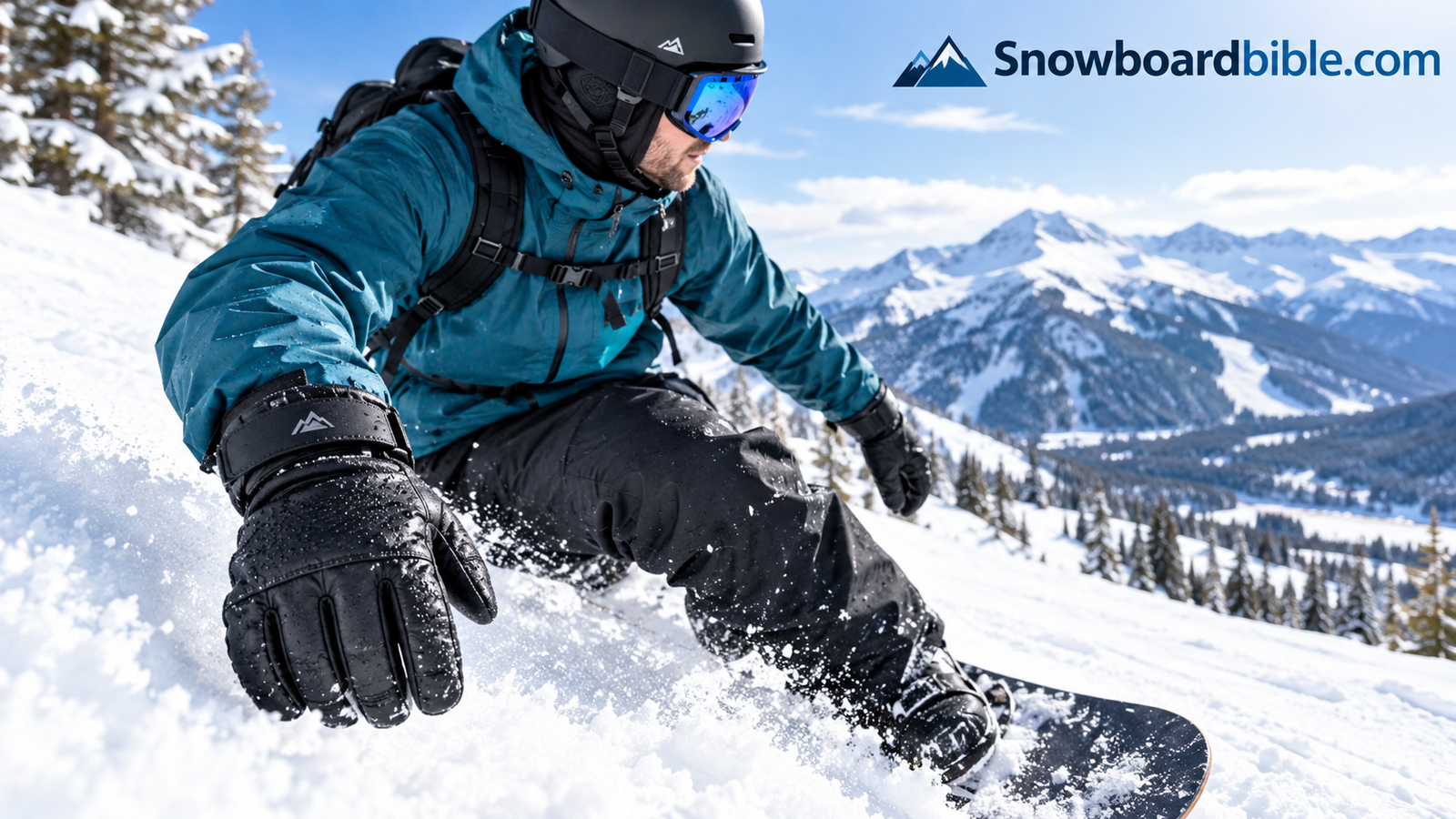
Best Snowboard Gloves: 10 Warm, Waterproof Pairs Worth Your Money
Cold hands end more snowboard days than sore legs do. This guide walks through ten proven gloves, what each one does best, and how to pick the pair that fits the way you ride.
You can tolerate a lot on a snowboard. Burning thighs, a cold chairlift, a surprise ice patch on the second run. What you cannot tolerate for long is numb fingers. Snowboarders have a particular problem here, because your hands spend the day inches from the snow. You strap in with them, you push yourself up with them, and you catch a fall with them. A glove that leaks, bunches up, or goes stiff by lunchtime can quietly wreck your whole session.
The good news is that the glove market is full of excellent options. The challenge is sorting the genuinely warm, waterproof, durable pairs from the ones that look the part and fall apart by February. This guide covers ten gloves that riders keep returning to, from premium leather workhorses to budget-friendly waterproof pairs that cost far less. For each one, you will find who it suits, where it shines, and where it falls short.
Before the individual reviews, we cover what actually matters in a snowboard glove: waterproofing, insulation, materials, cuff design and fit. Once you understand those pieces, the right pair becomes much easier to spot. If you are still putting together your whole setup, our snowboard layering guide shows how gloves fit into a complete warmth system, and our snowboard beginner tips cover the other basics that keep first-timers comfortable.
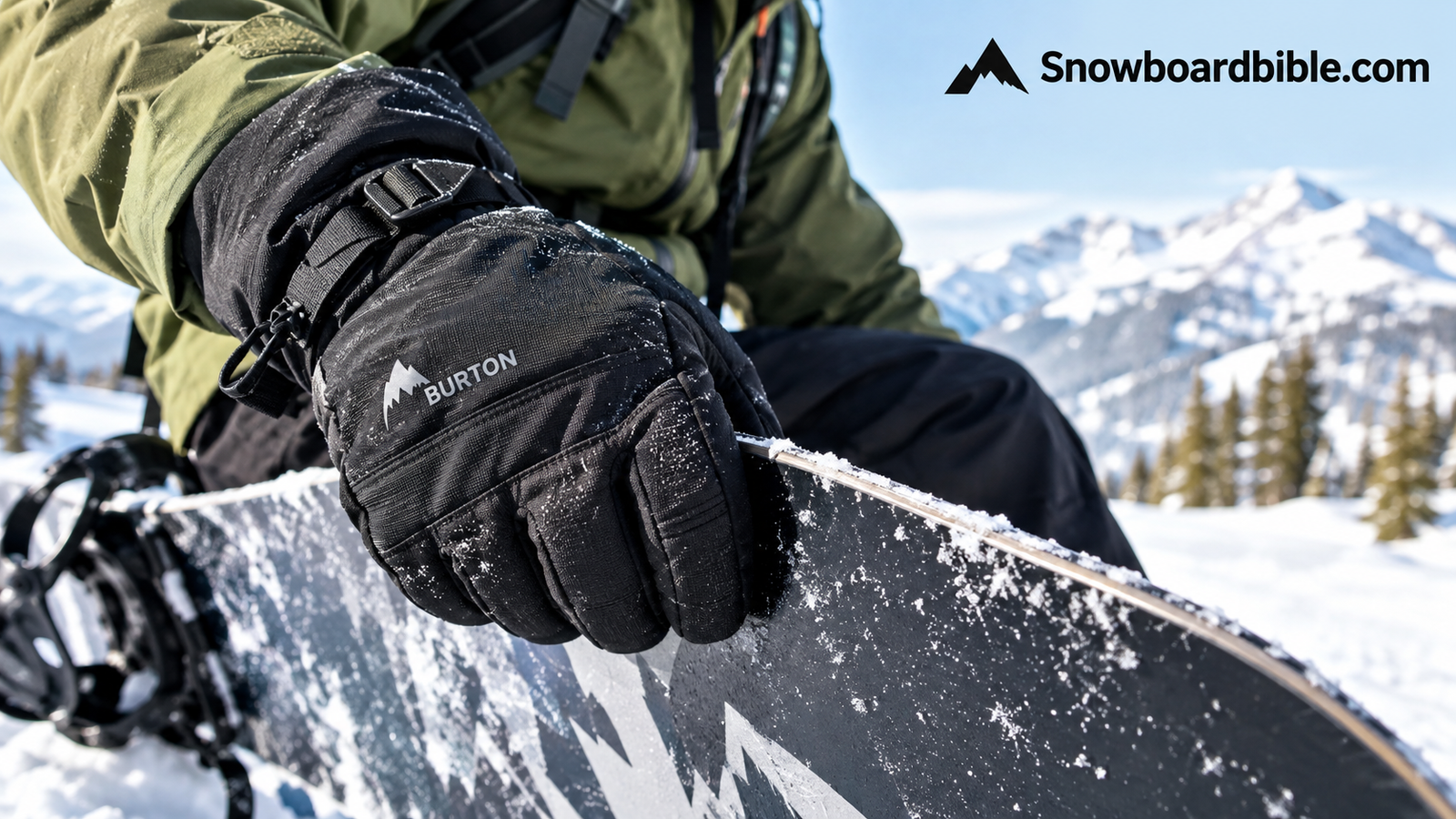
What Makes a Great Snowboard Glove
A snowboard glove has a tougher job than a normal winter glove. It needs to stay dry through wet snow and slush, hold heat when you are sitting still on a lift, flex enough for you to buckle a binding, and survive repeated contact with snow, edges and the occasional fall. Those goals pull in different directions, which is why the best gloves are really a set of smart compromises.
Waterproofing comes first
Once your hands get wet, they get cold, and no amount of insulation fixes that. The top-tier gloves use a waterproof, breathable membrane, with GORE-TEX being the best known. The membrane sits between the outer shell and the lining. It blocks liquid water from getting in while letting sweat vapor escape. Several gloves in this guide use GORE-TEX inserts for exactly that reason. Other brands use their own membranes, such as Gordini’s Aquabloc. Both approaches can work well. The key is that the membrane is a separate waterproof layer, not just a water-repellent coating on the outside that wears off within a season.
Insulation and how much you really need
More insulation is not always better. A thickly padded glove can feel warm in the parking lot and clammy by the second run, particularly if you ride hard or spend time in spring conditions. Down insulation is extremely warm for its weight but loses performance when wet unless it is protected, which is why down gloves are usually paired with a waterproof insert. Synthetic fill keeps working when damp and tends to cost less. Wool and fleece liners add warmth and often come removable, which gives you flexibility. A removable liner is one of the most useful features in a glove because you can swap in a spare, dry it separately, or wear the shell alone on warmer days.
Leather versus synthetic shells
Leather palms and shells are the gold standard for durability. They grip well, resist abrasion, and mold to your hand over time. They do need occasional conditioning to stay water-resistant and supple. Synthetic shells, usually nylon or polyester, are lighter, dry faster, and often cost less. Many gloves combine the two, using leather where the wear happens and fabric where flexibility matters. Snowboarders tend to put more stress on their palms and fingertips than skiers because of constant contact with the board and snow, so a reinforced palm is worth looking for.
Cuff style and wrist coverage
Cuff design decides whether snow finds its way into your glove. A long gauntlet cuff goes over the sleeve of your jacket and cinches down, creating a seal that keeps powder out. A shorter cuff slips under the sleeve and works well for riders who prefer a slimmer profile. Neither is universally better. If you ride a lot of deep snow, gauntlets are hard to beat. If you spend your time in the park and want to see your watch and adjust your cuffs easily, a shorter glove is often more convenient. Your jacket matters here too, so it helps to read our guide to the best snowboard jackets and check how the cuff closures work together.
Dexterity and grip
You will take your gloves off less often if they let you do small tasks while wearing them. That means pre-curved fingers, flexible materials at the knuckles, and a palm that grips straps and buckles. It also means a snug but not tight fit. If you can pinch a binding strap or zip a pocket without taking the glove off, the glove is doing its job.
Breathability and liners
Sweat is the hidden enemy of warm hands. When you work hard, your palms produce moisture, and if the glove cannot move that vapor out, it condenses inside and chills you the moment you stop. This is why breathable membranes and moisture-wicking liners matter just as much as insulation. A soft, brushed lining feels better against the skin and pulls dampness away from your fingers. If a glove has a removable liner, you also gain the option to swap in a fresh, dry one halfway through a long trip, which feels like putting on a brand-new glove.
Quick rule: Prioritize waterproofing, then fit, then insulation. A dry, well-fitting glove with moderate warmth beats a heavily padded glove that leaks or slides around.
Ready to compare current styles and sizes? Browse top-rated snowboard gloves on Amazon.
Shop snowboard gloves on AmazonTop Picks at a Glance
If you want the short version, this table puts all ten gloves side by side. Details on each pair follow in the sections below. Prices and exact specs change from season to season, so check the product page before you buy.
| Glove | Best for | Waterproofing | Shell | Cuff |
|---|---|---|---|---|
| Burton GORE-TEX Gloves | All-around resort riding | GORE-TEX membrane | Leather and fabric blend | Gauntlet style |
| Hestra Army Leather Heli Ski Glove | Long-lasting premium warmth | Waterproof insert, leather shell | Leather | Long cuff |
| Black Diamond Guide Gloves | Cold, serious mountain days | GORE-TEX membrane | Leather | Long cuff |
| Dakine Leather Titan GORE-TEX Glove | Deep snow and storms | GORE-TEX membrane | Leather | Long gauntlet |
| Dakine Titan GORE-TEX Short Glove | Park and groomer days | GORE-TEX membrane | Leather and fabric | Short |
| Outdoor Research Revolution II GORE-TEX Gloves | Versatile value pick | GORE-TEX membrane | Synthetic with reinforced palm | Mid-length |
| Gordini Aquabloc Down Gauntlet IV | Coldest conditions | Aquabloc insert | Durable synthetic | Long gauntlet |
| Hestra Fall Line 3-Finger | Warmth with some dexterity | Waterproof construction | Leather | Standard |
| Carhartt Waterproof Insulated Glove | Budget and tough use | Waterproof insert | Rugged synthetic | Standard |
| Kombi The Storm Waterproof Winter Gloves | Budget everyday riding | Waterproof insert | Synthetic | Standard |
How to use this list
Start with your riding conditions. If you ride in cold climates or spend hours on chairlifts, lean toward the long, heavily insulated options like the Black Diamond, Hestra or Gordini gloves. If you ride on mild days, in the park, or in spring, a lighter glove like the Dakine short model or the Outdoor Research pair will keep you from overheating. And if you are building your kit on a budget, the Carhartt and Kombi gloves prove you do not need to spend premium money to stay dry.
It also helps to think about how often you ride. Someone who hits the mountain thirty days a season will get more value from an expensive leather glove that lasts for years. Someone who rides a few weekends a year might be better served by a solid budget pair. If cost is a concern, our breakdown of how expensive snowboarding is can help you decide where your money matters most, and the guide on the best time to buy snowboarding gear explains when prices tend to drop.
Quick picks by rider type
Beginners who spend a lot of time sitting in the snow should prioritize waterproofing and a tough palm, which points toward the Burton, Outdoor Research or Kombi gloves. Park riders who want a clean sleeve line and plenty of feel will likely enjoy the short Dakine Titan. Powder chasers and backcountry riders will appreciate the long cuffs and serious warmth of the Hestra Heli, Black Diamond Guide and Dakine Leather Titan. Riders who simply run cold should look hardest at the Gordini down gauntlet and the Hestra three-finger glove. And anyone who also works outdoors in winter may find the Carhartt glove earns its keep well beyond the mountain.
Compare prices and sizes across all of these styles in one place.
See waterproof snowboard glovesBurton GORE-TEX Gloves

Best all-around pick for resort riding
Burton built its reputation on snowboarding, and its gloves reflect that. The GORE-TEX version is the brand’s dependable do-it-all glove, designed by people who spend their days on a board. It pairs a waterproof, breathable membrane with a durable shell and a palm built to handle straps, buckles and the occasional face-first tumble.
What stands out about this glove is how little it asks of you. You do not have to baby it, and you do not have to think about whether your hands will stay dry on a wet day. The GORE-TEX insert does the work of keeping moisture out, while the lining adds a comfortable layer of warmth that suits most resort conditions. It is not the thickest glove in this guide, which is actually a benefit for riders who tend to overheat or who want to keep some feel for their bindings.
Fit is true to the snowboard-specific cut you would expect from Burton. The fingers are shaped to stay slightly curled, which reduces fatigue over a long day and makes it easier to grab your board. The cuff is long enough to cover the wrist gap that often forms between glove and jacket, a classic spot for snow to sneak in. If you wear a Burton jacket, the two work together neatly, though the glove pairs with any jacket that has a reasonably wide sleeve opening.
Who should buy it
This is a great fit for intermediate to advanced riders who want one dependable glove for most of the season. It also suits beginners who want to buy once and stop worrying. If you are still learning, you will spend a lot of time sitting in the snow and pushing yourself up, so a waterproof glove with a reinforced palm makes the learning curve more comfortable. Our guide on how long it takes to learn to snowboard is a good companion read if you are just starting out.
What we like
- Reliable GORE-TEX waterproofing
- Snowboard-specific shape and durable palm
- Balanced warmth that avoids overheating
- Long cuff seals out snow
What to watch
- May feel light for extremely cold climates
- Priced above budget options
Check current sizes and pricing for the Burton GORE-TEX Gloves.
View Burton GORE-TEX Gloves on AmazonHestra Army Leather Heli Ski Glove

Best premium glove built to last for years
Few gloves have the following that Hestra’s leather models do. Hestra is a Swedish family company with a long history of glove-making, and the Army Leather Heli Ski glove is a favorite among riders, guides and ski patrollers who need hands that work in serious cold. Despite the ski name, snowboarders love it for the same reasons: tough leather, real warmth and a fit that gets better with age.
The defining feature here is the leather. It is thick, grippy and genuinely long-lasting, which means a pair can stay in rotation for many seasons when cared for. Leather also molds to your hand over time, so the glove feels more like a second skin after a few weeks of riding. You do need to put a little effort into upkeep. Treating the leather with a conditioner keeps it supple and helps maintain its water resistance, and letting the gloves dry slowly away from direct heat prevents cracking.
Warmth is where this glove earns its reputation. The insulated, removable liner traps heat without making your hands feel clumsy, and the removable design means you can dry the liner separately overnight. For snowboarders who battle cold hands on long, windy chairlift rides, that is a major upgrade. It also handles wet snow well, though like any leather glove it benefits from regular care to keep moisture out.
Who should buy it
This glove is for riders who value long-term quality over a low upfront cost. If you ride often, spend time in cold climates or backcountry terrain, or you simply want one glove that will stay with you for years, it is a strong choice. It is a bit stiff at first, so give it a few days to break in. If you like the idea of leather for your whole kit, you may also enjoy our guide to backcountry snowboarding, where durable, warm gear really pays off.
What we like
- Exceptional leather durability
- Warm removable liner
- Molds to your hand over time
- Excellent grip on straps and edges
What to watch
- Needs conditioning to stay water-resistant
- Higher price and a short break-in period
See sizing and current availability for the Hestra Army Leather Heli Ski Glove.
View Hestra Heli Ski Glove on AmazonBlack Diamond Guide Gloves

Best for cold, demanding mountain days
Black Diamond designs gear for people who spend long days in harsh alpine conditions, and the Guide glove is a staple of that world. It is a leather-and-GORE-TEX glove with a removable liner, built to keep working when the temperature drops and the wind picks up.
The Guide glove is the kind of equipment you reach for when comfort is a safety issue. Cold hands are not just unpleasant at altitude, they make it harder to manage straps, zippers and other gear. This glove approaches the problem with a full waterproof membrane, a warm insulated interior and a durable leather outer that handles abrasion. The combination keeps heat in and moisture out, which is precisely what you want when you are riding long lines or waiting in the lift line on a frozen morning.
Because it is designed for mountain professionals, the glove is tougher than most riders strictly need. That has a downside, since the added insulation can feel warm on mild days. But for riders in cold regions, or anyone who tends to run cold, the extra warmth is a feature rather than a flaw. The removable liner makes it more versatile than it first appears, because you can use the shell on its own when conditions warm up.
Who should buy it
Choose this glove if you ride in cold climates, ride powder days that involve a lot of hiking or lift laps, or simply hate cold fingers. It makes particular sense if you spend time in regions known for frigid mornings. If you are planning trips, our roundups of snowboarding in Colorado and Utah snowboard resorts are a good place to start, and both are places where a warm glove earns its keep.
What we like
- GORE-TEX waterproofing with leather durability
- Very warm for cold, windy conditions
- Removable liner adds flexibility
- Built for long, hard days
What to watch
- Can be too warm in spring conditions
- Bulkier than lightweight park gloves
Check the latest sizes and prices on the Black Diamond Guide Gloves.
View Black Diamond Guide Gloves on AmazonDakine Titan GORE-TEX: The Long and Short Versions
Dakine is a snowboard-centric brand, and the Titan line is among its best-known glove designs. The interesting thing about Titan is that it comes in more than one length, so you can choose the cuff that matches how you ride. We cover both versions here because the choice between them really comes down to your style.
Dakine Leather Titan GORE-TEX Glove

Best for deep snow and stormy days
The long Titan is a leather glove with a GORE-TEX insert and a generous gauntlet cuff. It is designed to be worn over your jacket sleeve and cinched tight, creating a barrier that stops snow from creeping in at the wrist. In powder, that matters enormously. Anyone who has taken a face-plant in deep snow knows how quickly a loose cuff fills up.
The leather construction gives this glove the toughness that riders want for repeated use, and the waterproof insert keeps your hands dry through wet conditions. It sits in the mid to upper range for warmth, so it handles cold days well without turning into an oven. The long cuff also makes it a practical partner for wrist guards, which we cover in more detail in our guide to the best wrist guards for snowboarding.
Dakine Titan GORE-TEX Short Glove

Best for park laps and groomed runs
The short version keeps the same GORE-TEX waterproofing but trims the cuff, so it fits under your sleeve and looks cleaner for freestyle riding. If you do not ride in deep powder, the lower profile is often more comfortable and less fussy. It is easier to put on and take off between laps, and it will not bunch up inside a slim jacket sleeve.
The trade-off is simple. With the shorter cuff you have less protection from snow in deep conditions, so it is better suited to groomed runs, park sessions and mild to moderate weather. Riders who spend a lot of time practicing tricks often prefer this style. If that sounds like you, our lists of freestyle snowboarding tricks and snowboarding tricks will give you plenty to work on.
What we like
- Two cuff lengths for different riding styles
- GORE-TEX waterproofing across the line
- Leather durability on the long model
- Snowboard-focused design
What to watch
- Short version lets in snow in deep powder
- Neither is the warmest option for extreme cold
Choose the cuff length that matches your riding style.
Outdoor Research Revolution II GORE-TEX Gloves

Best versatile value in a GORE-TEX glove
Outdoor Research has a long record of making technical gear that works without a premium price attached. The Revolution II is a good example: a GORE-TEX glove with a synthetic shell, a reinforced palm and a comfortable lining, aimed at riders who want waterproof performance without paying for a full leather build.
Synthetic shells give this glove a few practical advantages. It is lighter than a leather glove, dries faster after a wet day, and needs little maintenance. You can toss it on the boot dryer, hang it up and expect it to be ready the next morning. The flexibility of the materials also makes it easier to use your fingers for small tasks, which is a real plus when you are fiddling with bindings or phone screens.
It is the kind of glove that works across a wide range of conditions. On a cold day it offers enough warmth for most riders, and on a spring day it does not feel like overkill. If you sometimes ride in rain or heavy, wet snow, the GORE-TEX membrane gives you extra confidence. For a closer look at how weather affects your gear choices, read our piece on whether you can snowboard in the rain.
Who should buy it
This is a smart choice for riders who want proven waterproofing at a more approachable price, or who prefer low-maintenance gear. It works well as a first serious glove or as a second pair for variable weather. Riders who need maximum warmth for frigid climates may want to look at a more heavily insulated model instead.
What we like
- GORE-TEX waterproofing at a friendlier price
- Lightweight and quick drying
- Reinforced palm for durability
- Low maintenance
What to watch
- Not as long-lived as full leather
- May be cool for extremely cold conditions
See current pricing and size options for the Revolution II.
View Revolution II Gloves on AmazonGordini Aquabloc Down Gauntlet IV Gloves

Best for the coldest days and cold-handed riders
Gordini has been making winter hand gear for decades, and the Aquabloc Down Gauntlet is its answer to bitter cold. As the name suggests, it combines down insulation with a waterproof Aquabloc insert and a long gauntlet cuff that seals against your jacket.
Down is one of the most efficient insulators available. It traps a lot of heat for very little weight, which means a down glove can feel warm without feeling like a boxing mitt. The catch with down is that it performs poorly when wet, so the waterproof insert is essential. Here, it keeps the insulation protected and working. As long as you avoid soaking the glove through the cuff, the warmth stays reliable.
The long gauntlet is a deliberate part of the design. It goes over your sleeve and cinches closed, which keeps cold air and snow from creeping in. For riders who suffer from cold hands, this style of glove can be the difference between a miserable morning and a good one. It is also a good option for people who stand around a lot, such as instructors, parents watching kids or photographers.
Who should buy it
If your hands are the first thing to freeze, or you ride in cold regions, this is a top contender. It also pairs well with a thick jacket since the cuff slides over the sleeve. Because it is warm, it can feel like too much during spring riding, so think of it as a deep-winter specialist. Our guide to the best mid-layers for snowboarding will help you build a body setup to match.
What we like
- Down insulation delivers serious warmth
- Waterproof Aquabloc insert protects the fill
- Long gauntlet seals out snow and wind
- Great for people who run cold
What to watch
- Overkill for mild or spring days
- Bulkier feel reduces fine dexterity
Check the Gordini Aquabloc Down Gauntlet IV for current sizes and pricing.
View Gordini Down Gauntlet on AmazonHestra Fall Line 3-Finger Glove

Best for warmth without full mitten clumsiness
The three-finger design is an elegant compromise. Your index and middle fingers share one compartment, while the ring and pinky share another, with the thumb on its own. It is a layout often called a lobster style, and it delivers more warmth than a standard five-finger glove while keeping more dexterity than a full mitten.
Fingers share heat when they are grouped together, which is why mittens are generally warmer than gloves. The three-finger setup captures much of that benefit. Your index finger stays paired with your middle finger, so you can still pull straps, grip a buckle and work a zipper without removing the glove. If you have ever envied mitten warmth but disliked the fumbling, this style may be the answer.
As with other Hestra models, the build quality is a highlight. Leather construction and careful stitching mean the glove feels solid from the first ride. It takes a little getting used to if you are accustomed to individual fingers, but most riders adapt within a day or two. If you are still deciding between different hand coverings, our articles on mittens versus gloves for snowboarding and why snowboarders wear mittens explain the trade-offs in depth.
Who should buy it
This glove suits cold-weather riders who want better heat retention but still need to handle small tasks. It is also a smart choice for people who find five-finger gloves cold but dislike mittens. Riders who need maximum finger independence, such as those who frequently use touch screens or small buckles, may still prefer a traditional glove.
What we like
- Warmer than most five-finger gloves
- More dexterity than full mittens
- Quality leather build
- Great for cold chairlift rides
What to watch
- Short adjustment period
- Less finger independence than a standard glove
See sizes and current pricing for the Hestra Fall Line 3-Finger glove.
View Hestra Fall Line on AmazonCarhartt and Kombi: The Budget-Friendly Picks
Not everyone wants to spend premium money on gloves, and nobody should have to. These two options show that you can stay dry and reasonably warm without stretching your budget. Both are less specialized than the snowboard-focused brands above, but they are practical, widely available and well suited to casual riders.
Carhartt Waterproof Insulated Glove

Best for rugged, affordable everyday use
Carhartt is best known for work gear, and that heritage shows. This glove is tough, insulated and waterproof, which makes it a sensible choice for riders who want something that can take abuse. It is also useful around the house for shoveling or clearing the driveway, so it can pull double duty.
Where it falls short is in snowboard-specific design. The cut is more general than a dedicated snowboard glove, so you may notice less precision around the fingers and a shorter cuff. But for the price, the toughness and warmth are hard to ignore. It is a smart choice for a beginner who is not sure how often they will ride, or for a backup pair that lives in your car.
Kombi The Storm Waterproof Winter Gloves

Best low-cost waterproof glove for casual riders
Kombi is a Canadian brand with a focus on winter hand wear, and The Storm model delivers waterproof protection at an easy price. It is the type of glove that makes sense for weekend riders, families and anyone who wants reliable protection without going all in on technical features.
It will not match the durability of a premium leather glove, and it is not meant to. But it keeps water out, provides sensible insulation and offers a comfortable fit that works for most days at the resort. If you are building a first kit and keeping an eye on the total cost, it is a solid value. Pair it with a good pair of snowboard socks and a warm snowboard beanie, and you will cover your extremities without breaking the bank.
What we like
- Affordable waterproof protection
- Easy to find and easy to replace
- Comfortable for casual riding
What to watch
- Less durable than leather models
- Fewer snowboard-specific features
Compare both budget-friendly options before you decide.
Gloves, Mittens and Getting the Fit Right
With ten options on the table, the final decision comes down to two questions: glove or mitten, and which size. Getting those right matters more than picking the fanciest brand.
Gloves versus mittens
Mittens keep your fingers together, so they share warmth and lose less heat to the air. Gloves give you separate fingers, which means better dexterity but more surface area for cold to creep in. For most riders, a glove offers the right balance. If you have poor circulation or ride in very cold regions, a mitten or a three-finger design is worth considering. You can read the full argument in our guide to mittens versus gloves. A simple trick is to wear a thin liner glove inside a mitten, which gives you warmth outside and dexterity when you need to remove the shell.
How a glove should fit
A good fit is snug without squeezing. Your fingertips should reach the end of the fingers without being crushed, and the glove should not feel so loose that it bunches up when you make a fist. Too tight, and you restrict circulation, which actually makes hands colder. Too loose, and you lose both warmth and grip. A small pocket of air around the fingers helps insulate, but too much gap lets the glove slip when you pull a strap.
Bring a measuring tape and measure around the widest part of your palm, excluding the thumb. Compare the number to the brand’s size chart, because sizing varies between companies. Leather gloves tend to stretch slightly with use, so if you are between sizes and choosing leather, you may want the snugger size. Synthetic gloves stretch less, so the more comfortable size is usually the better bet. If you are shopping for women’s gear specifically, our guide to women’s snowboarding gear covers fit differences in more detail.
Match gloves to your jacket and your protection
Gloves are part of a system. Check that your jacket sleeve opening is wide enough to fit over or under the cuff, and consider whether you plan to wear wrist guards. A long gauntlet usually plays nicely over a wrist guard, while a short cuff can bunch under one. If you fall often while learning, injury prevention and snowboard fall safety are well worth a read.
Common mistakes when buying snowboard gloves
The most frequent mistake is buying on warmth alone. A glove that is thick but not truly waterproof will soak through, and a soaked glove is colder than a thin dry one. The second mistake is ignoring the cuff. A great glove with a cuff that does not match your jacket will let in snow every time you fall. The third is buying a size too large for comfort. A loose glove feels roomy in the store but slides around on the mountain, which hurts both grip and warmth. Finally, many riders forget about care. Even a premium glove performs poorly when it is stored wet or baked on a heater, so build good habits from the first day.
| If you… | Look for |
|---|---|
| Ride in very cold climates | Down or heavily insulated gloves, a three-finger style, or a mitten |
| Ride deep powder | Long gauntlet cuffs that cinch over the sleeve |
| Ride the park | Short cuffs, flexible fingers and a grippy palm |
| Want a long-term investment | Full leather construction with a removable liner |
| Ride a few times a season | Budget waterproof gloves with solid insulation |
| Overheat easily | Lighter insulation and a breathable membrane |
Browse insulated gloves and mittens in your size.
Shop gloves and mittens on AmazonCare, Layering and Making Your Gloves Last
Even the best pair will wear out early if it is treated badly. A few habits can add seasons to your gloves and keep them performing at their best.
Dry them properly
After a day on the mountain, take your gloves out of your bag. Pull out any removable liners, open the cuffs, and let everything dry in a well-ventilated spot at room temperature. Avoid putting leather gloves directly on a radiator or in front of a heater, because rapid heat makes leather stiff and can crack it. A boot dryer on a low setting or a spot near, but not on top of, a vent works better. Gloves that stay damp overnight can smell, and the lining can break down faster.
Condition leather and refresh waterproofing
Leather gloves need occasional conditioning with a product made for the job. This keeps them soft and helps them shed water. Synthetic shells often have a water-repellent finish that fades over time. A wash-in or spray-on treatment restores it, which keeps water beading on the surface instead of soaking in. Check the care instructions that come with your pair, since the right product depends on the materials.
Build the whole warmth system
Gloves work best as part of a complete setup. A thin liner glove adds warmth and lets you take your outer glove off briefly without exposing bare skin. Make sure your base layers are doing their share too. Our comparison of merino wool versus synthetic base layers can help you choose. Your lower half matters just as much, so check out the best baggy snowboard pants and the debate over snowboard pants versus ski pants.
Finish the kit with protective gear. A good snowboard helmet and clear snowboarding goggles make a huge difference to comfort and safety, and our snowboard bag packing checklist will help you remember a spare pair of gloves. Bringing a backup is a quiet trick that experienced riders swear by, since a dry pair after lunch can rescue an otherwise soggy afternoon.
Store them well in the off-season
At the end of the season, make sure your gloves are completely dry, then clean them gently according to the care label. Condition leather one last time, and store the gloves loosely in a cool, dry place rather than crushed at the bottom of a gear bin. Keeping them flat or loosely stuffed with tissue helps them hold their shape, and it means they will be ready to go when the first snow arrives. A few minutes of attention in spring can save you from discovering a stiff, musty pair in November.
Know when to replace them
If your gloves start leaking despite proper care, the palm has worn through, or the insulation has gone flat, it is time to retire them. A worn-out glove costs you more in comfort than it saves in money. You can also check our advice on snowboard maintenance to build habits that protect all of your gear.
Stock up on a spare pair or liner gloves before your next trip.
Shop glove liners on AmazonFrequently Asked Questions
What are the best snowboard gloves overall?
It depends on how and where you ride, but the Burton GORE-TEX Gloves and the Dakine Titan models are among the strongest all-around options. If you want the best long-term quality, the Hestra leather gloves are hard to beat. For cold climates, the Black Diamond Guide and Gordini down gauntlet are excellent choices.
Are snowboard gloves different from ski gloves?
The two overlap heavily, and many gloves are marketed for both sports. Snowboard gloves tend to have reinforced palms and fingertips because riders touch the snow more often, and they often have a longer cuff or wrist protection. Ski gloves can be a little lighter and more flexible. Either can work if they are waterproof and fit well.
Is GORE-TEX worth paying extra for?
For most riders who spend real time in wet or variable snow, yes. A GORE-TEX membrane gives you dependable waterproofing and breathability, so your hands stay drier from both outside moisture and sweat. Other membranes can perform well too, so the key is making sure the glove has a proper waterproof insert rather than just a water-resistant coating.
Should I choose gloves or mittens for snowboarding?
Gloves are better for dexterity, while mittens are generally warmer. If you ride in moderate conditions and want to handle straps and zippers easily, gloves are a good pick. If you run cold or ride in frigid weather, consider mittens or a three-finger design. Our mittens versus gloves guide goes deeper on the trade-offs.
How should snowboard gloves fit?
They should feel snug but not tight. Your fingertips should reach the ends of the fingers without being squashed, and you should be able to make a fist comfortably. Too much extra room reduces warmth and grip, while too little cuts circulation and makes hands colder.
Why do my hands get cold even in insulated gloves?
Common causes include moisture inside the glove, a fit that is too tight, poor circulation, or cold feet and core. Make sure your gloves are dry and well fitted, keep your torso warm, and consider a liner glove or a warmer style such as a down or three-finger model. Taking short breaks to warm your hands can also help.
Are leather gloves better than synthetic ones?
Leather offers excellent durability, grip and long-term value, but it needs conditioning and dries more slowly. Synthetic gloves are lighter, dry faster and often cost less, though they may wear out sooner. Both types can keep you warm and dry when they have a waterproof insert.
What is the difference between long and short cuffs?
Long gauntlet cuffs go over the jacket sleeve and cinch tight, keeping snow out in deep conditions. Short cuffs tuck under the sleeve and feel slimmer, which many park and groomer riders prefer. Choose based on the snow you usually ride and how your jacket sleeves are cut.
Can I wear wrist guards with my snowboard gloves?
Yes. Many riders wear wrist guards, particularly while learning. A long cuff often fits neatly over a wrist guard, while a short cuff may bunch up. Try your gloves with the guards on before your first day if you can. See our wrist guard guide for options.
How do I dry snowboard gloves quickly?
Remove any liners, open the gloves and let them dry in a ventilated spot at room temperature. A boot dryer on a low setting works well. Avoid direct high heat, which can damage leather and glues. Rotating between two pairs makes it much easier to start each day with dry hands.
How long do good snowboard gloves last?
With regular care, a quality leather glove can last many seasons, while lighter synthetic gloves may last a few. Frequent riding, hard falls and poor drying habits shorten the lifespan. When the palm wears through or the glove starts leaking despite care, it is time for a new pair.
Should I bring a spare pair of gloves?
For long days or wet weather, absolutely. A dry pair after lunch is one of the simplest comfort upgrades you can make. It is especially helpful for beginners, who spend more time in contact with the snow. Our packing checklist covers other items worth tossing in your bag.
Still comparing? See the full range of snowboard gloves in one search.
Browse snowboard gloves on AmazonFinal Thoughts on Choosing the Best Snowboard Gloves
The best snowboard glove is the one that keeps your hands dry, warm and comfortable on the kind of days you actually ride. For most people, that points toward a waterproof glove with sensible insulation, a durable palm and a cuff that matches their jacket and terrain.
If you want one dependable do-it-all pair, the Burton GORE-TEX Gloves and the Dakine Titan models are strong starting points. If you want a glove that will last for years and handle serious cold, the Hestra, Black Diamond and Gordini options deliver. The Outdoor Research Revolution II is a great value pick, the Hestra three-finger glove is ideal for riders who want mitten warmth with more control, and the Carhartt and Kombi gloves prove that staying dry does not need a big budget.
Pick the one that fits your climate, your riding style and your budget, take care of it, and bring a spare. Warm hands make every other part of snowboarding easier, from learning new tricks to enjoying one more lap at the end of the day.
Ready to upgrade your hand protection? Find your pair and get back on the mountain.
Find your snowboard gloves on AmazonYou May Also Like
Keep exploring with more guides, reviews and tips from Snowboard Bible.


